
Introduction to computing Why study computer science It
- Slides: 9
Introduction to computing Why study computer science? • It encompasses many things. • There is a multiplicity of university and industry courses available. • A lot is happening in many fields. • It’s an exciting time to be involved. • Skilled computer scientists are highly employable.
What is computer science about? • • Designing and building hardware. Designing and writing software. Managing information. Developing a wide range of systems. But at its most fundamental it is about the algorithm: a step-by-step process for carrying out an aim.
What makes a good computer scientist? • • Being up to date. Being organised. Grasping the big picture. Thinking ‘outside the box’ (in more ways than one). Understanding the basics. Being a good communicator. Being numerate but not necessarily a mathematician. Being aware of the business or domain that uses/will use the system.
History The history of computing is fascinating in itself but it also makes it easier to understand the nitty-gritty of the subject. Some major stages: • Turing’s machine – computability • information theory – Shannon • mechanical programmable devices • electronic programmable devices – Colossus • programming languages and operating systems • transistors • integrated circuits and silicon chips
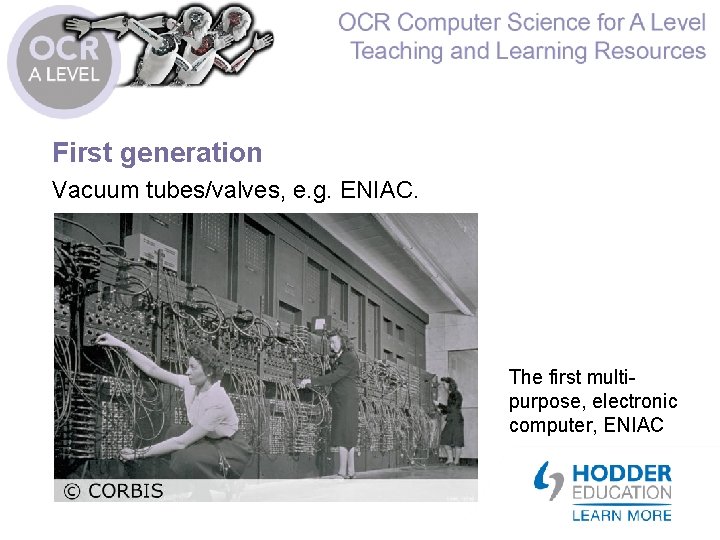
First generation Vacuum tubes/valves, e. g. ENIAC. The first multipurpose, electronic computer, ENIAC
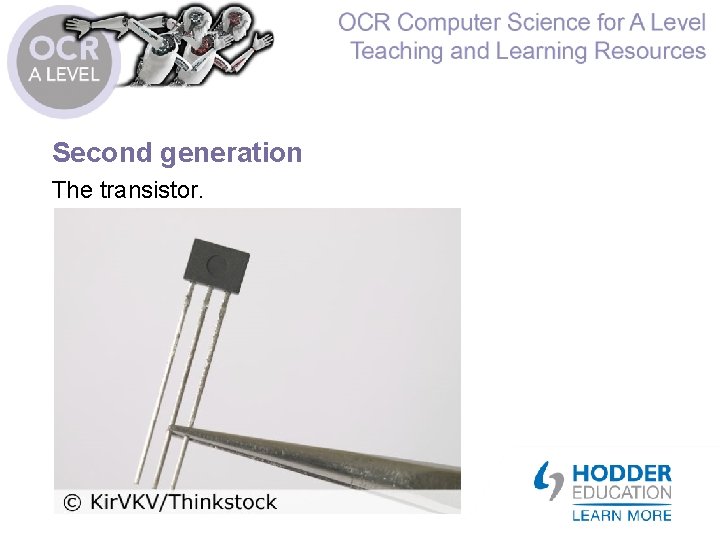
Second generation The transistor.
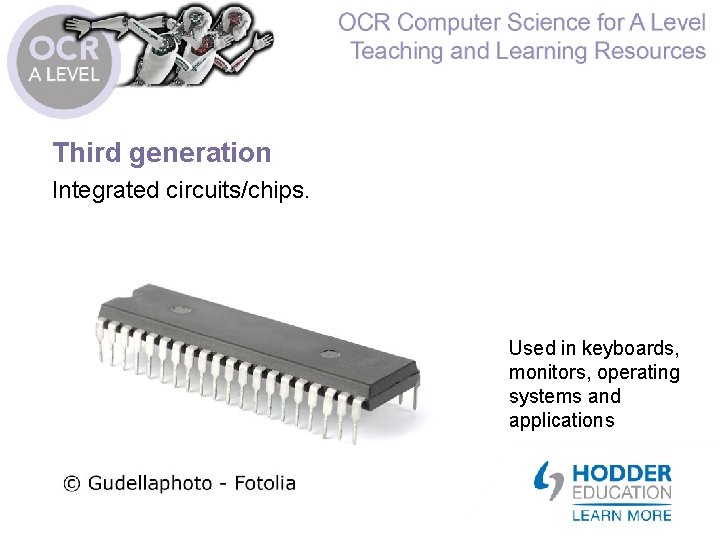
Third generation Integrated circuits/chips. Used in keyboards, monitors, operating systems and applications .
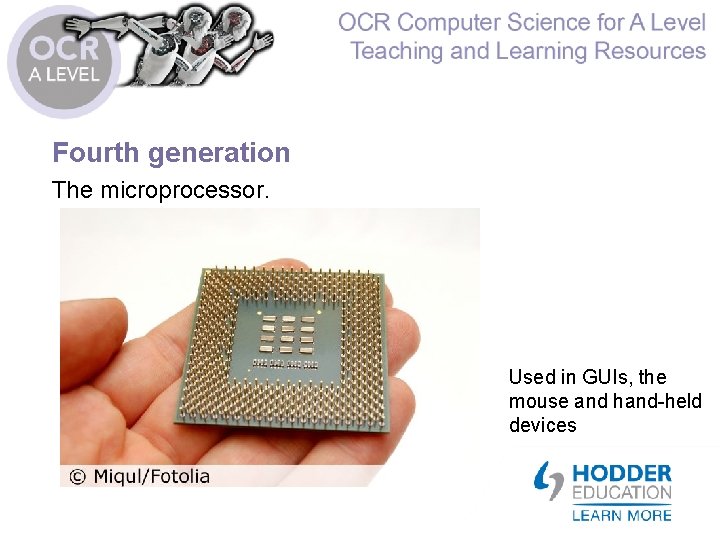
Fourth generation The microprocessor. Used in GUIs, the mouse and hand-held devices
Fifth generation Work in progress, e. g: • artificial intelligence • voice recognition • parallel processing • quantum computation • nanotechnology • natural language • machine learning