
Introduction To Computers Hardware In this section of

- Slides: 49
Introduction To Computers: Hardware In this section of notes you will learn about the basic parts of a computer and how they work. James Tam
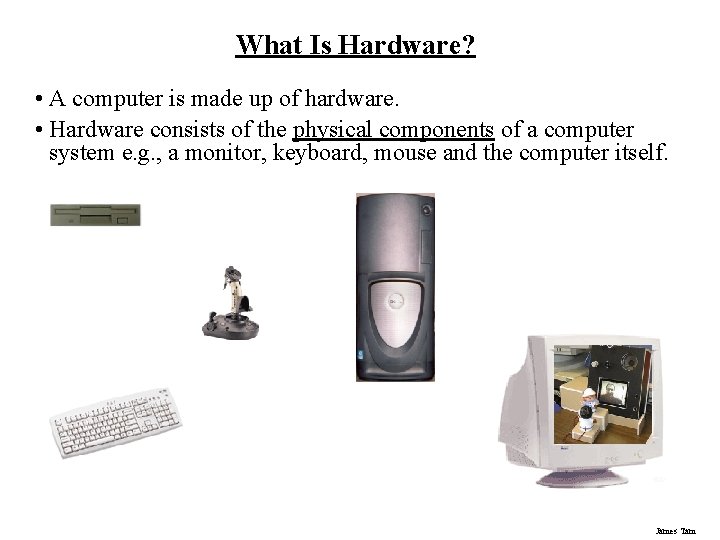
What Is Hardware? • A computer is made up of hardware. • Hardware consists of the physical components of a computer system e. g. , a monitor, keyboard, mouse and the computer itself. James Tam
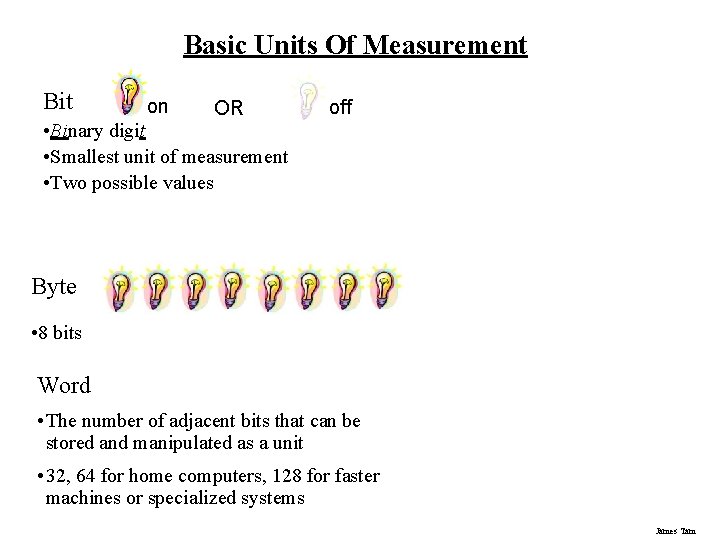
Basic Units Of Measurement Bit on OR • Binary digit • Smallest unit of measurement • Two possible values off Byte • 8 bits Word • The number of adjacent bits that can be stored and manipulated as a unit • 32, 64 for home computers, 128 for faster machines or specialized systems James Tam
Large Units Of Measurement (Memory, Storage) • Note: powers of two are used because computer memory and storage are based on the basic unit (bit). • Kilobyte (KB) – a thousand bytes (1, 024 = 210) • Megabyte (MB) - a million (1, 048, 576 = 220) • Gigabyte (GB) – a billion (1, 073, 741, 824 = 230) ~ A complete set of encyclopedias requires about 600 MB of storage • Terabyte (TB) – a trillion (1, 099, 511, 627, 776 = 240) ~ 20 million four-drawer filing cabinets full of text ~ 200 DVD’s of information James Tam
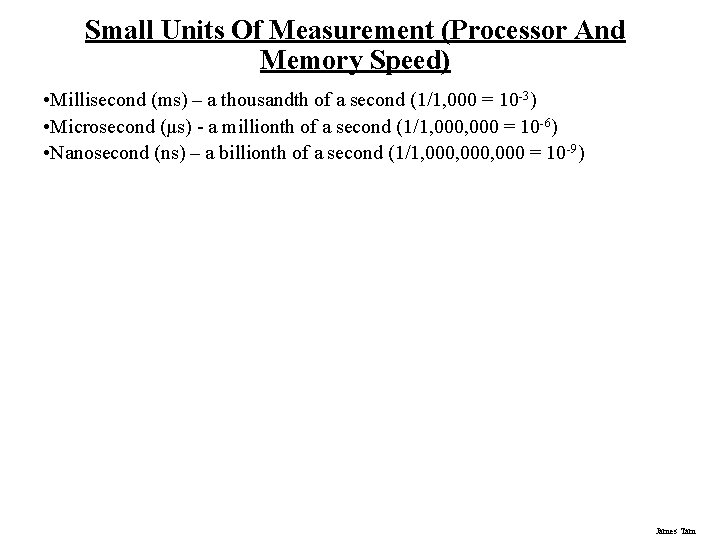
Small Units Of Measurement (Processor And Memory Speed) • Millisecond (ms) – a thousandth of a second (1/1, 000 = 10 -3) • Microsecond (μs) - a millionth of a second (1/1, 000 = 10 -6) • Nanosecond (ns) – a billionth of a second (1/1, 000, 000 = 10 -9) James Tam
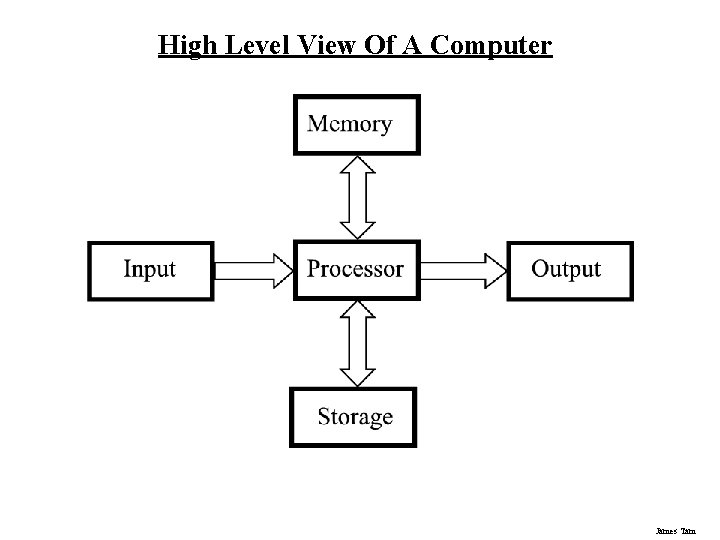
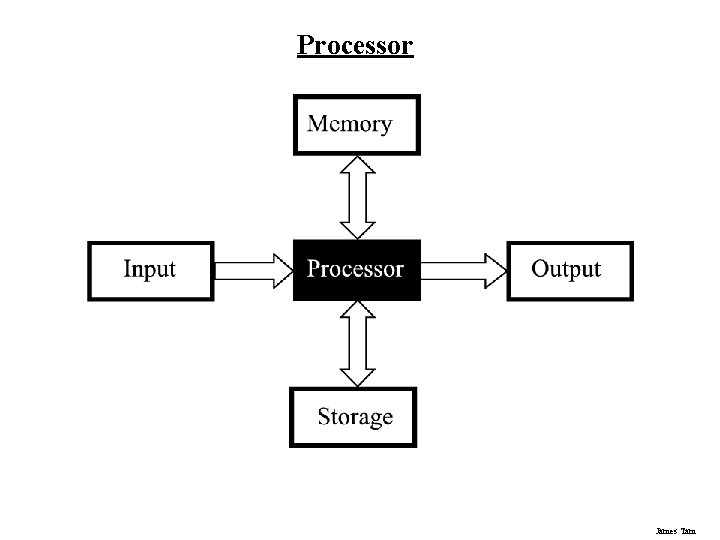
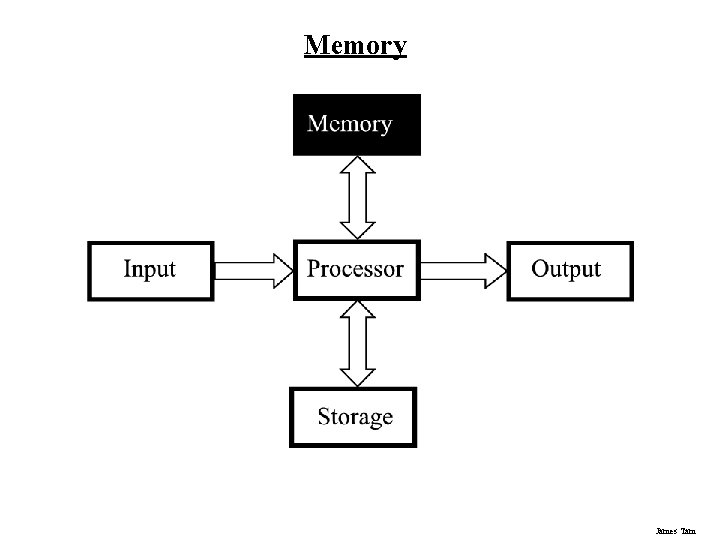
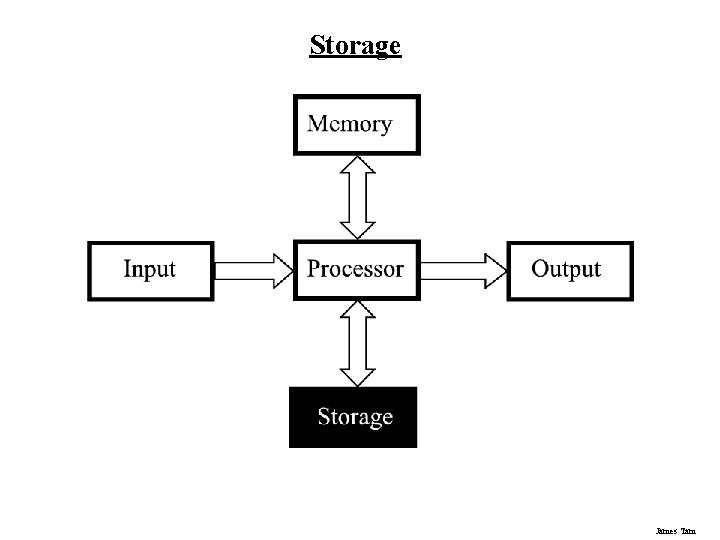
High Level View Of A Computer James Tam
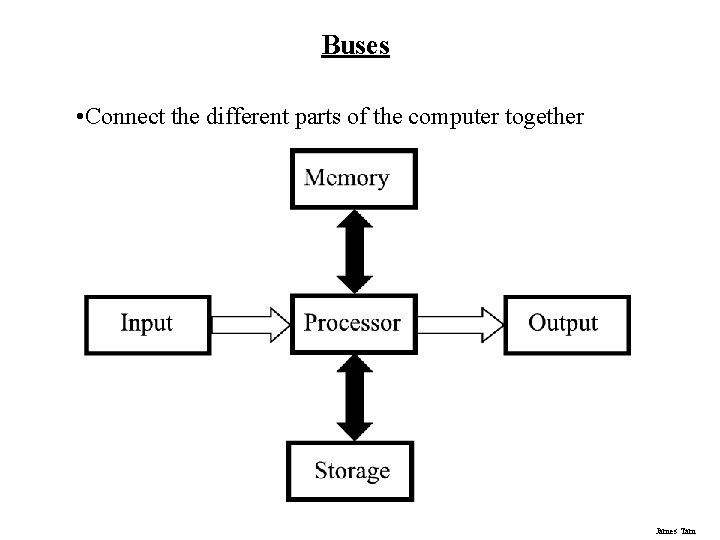
Buses • Connect the different parts of the computer together James Tam
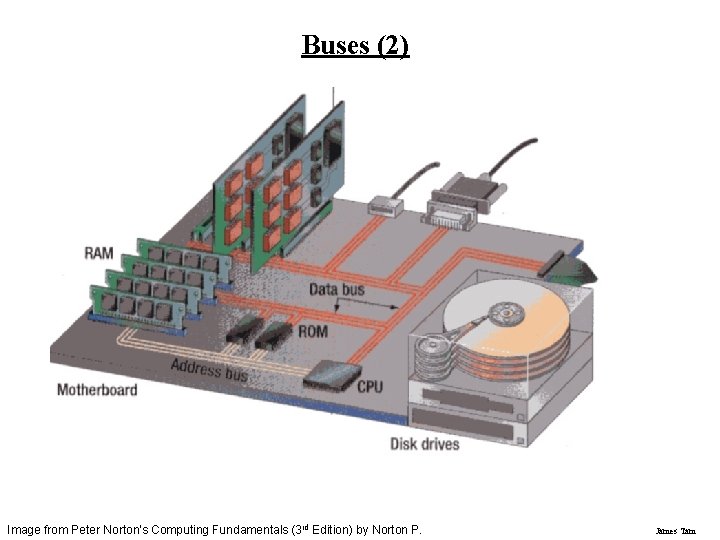
Buses (2) Image from Peter Norton's Computing Fundamentals (3 rd Edition) by Norton P. James Tam
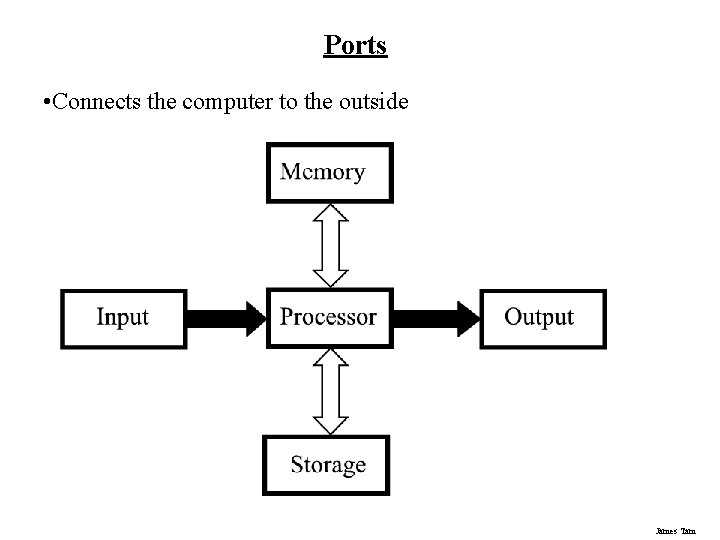
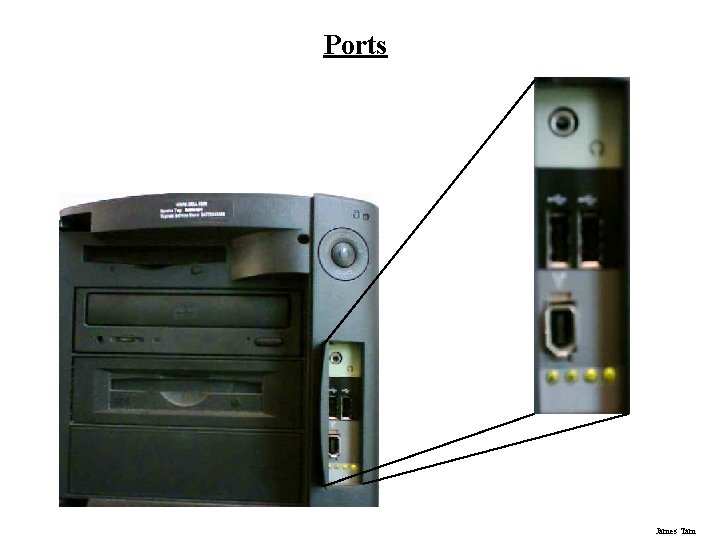
Ports • Connects the computer to the outside James Tam
Ports James Tam
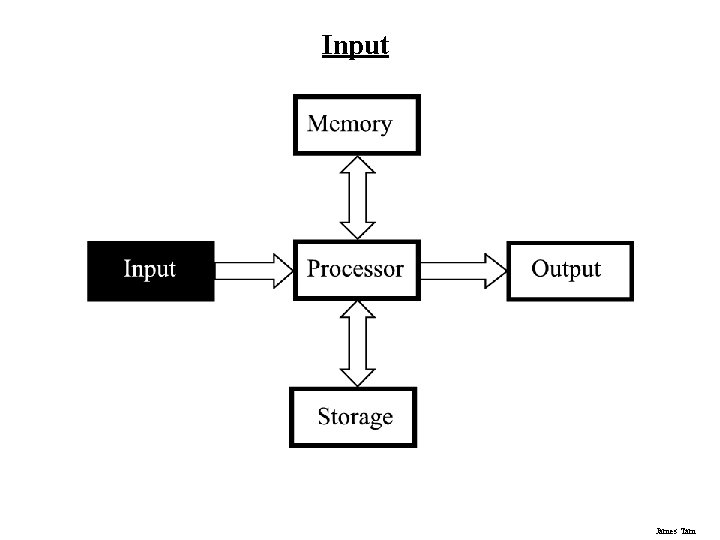
Input James Tam
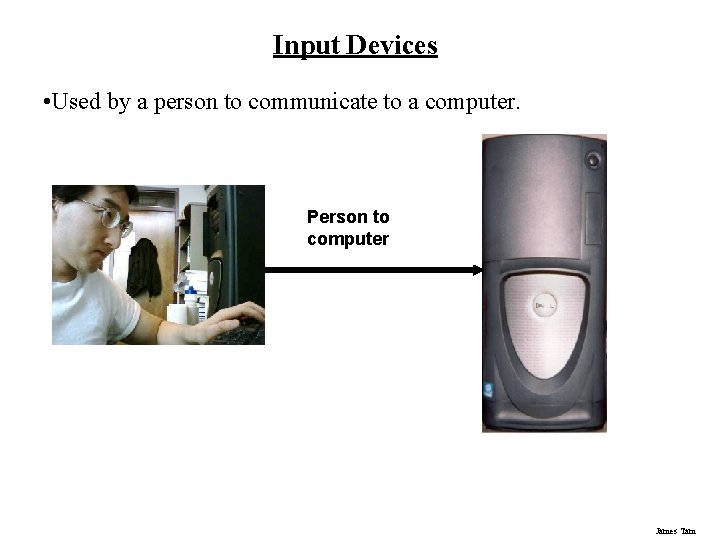
Input Devices • Used by a person to communicate to a computer. Person to computer James Tam
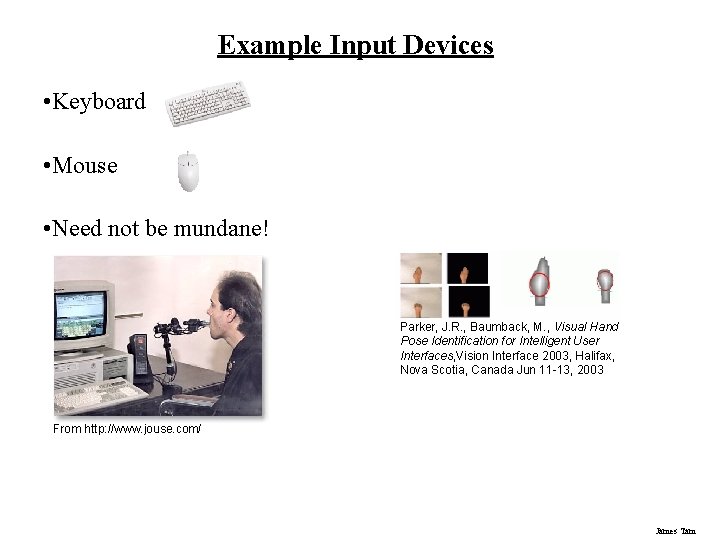
Example Input Devices • Keyboard • Mouse • Need not be mundane! Parker, J. R. , Baumback, M. , Visual Hand Pose Identification for Intelligent User Interfaces, Vision Interface 2003, Halifax, Nova Scotia, Canada Jun 11 -13, 2003 From http: //www. jouse. com/ James Tam
Processor James Tam
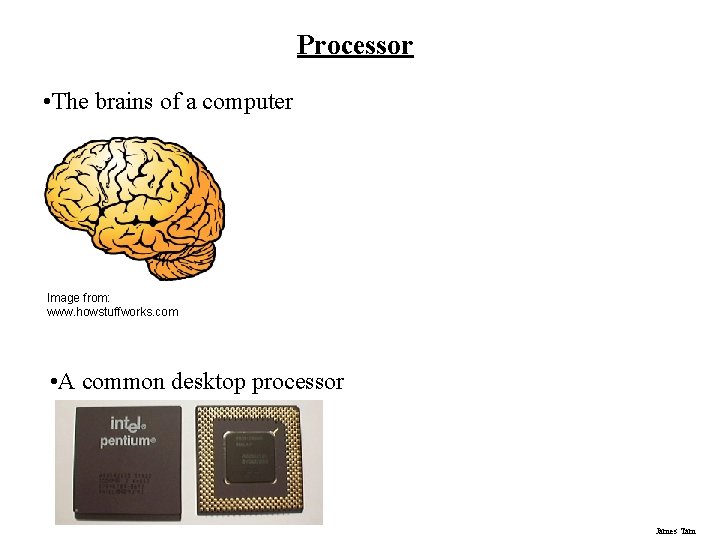
Processor • The brains of a computer Image from: www. howstuffworks. com • A common desktop processor James Tam
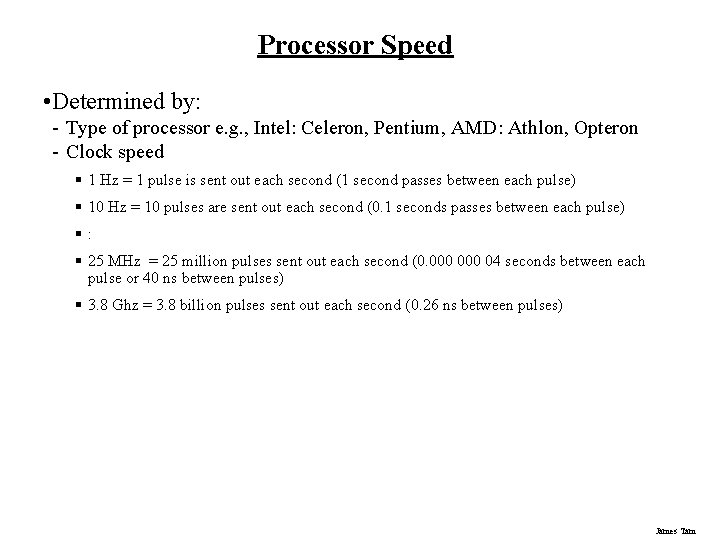
Processor Speed • Determined by: - Type of processor e. g. , Intel: Celeron, Pentium, AMD: Athlon, Opteron - Clock speed § 1 Hz = 1 pulse is sent out each second (1 second passes between each pulse) § 10 Hz = 10 pulses are sent out each second (0. 1 seconds passes between each pulse) §: § 25 MHz = 25 million pulses sent out each second (0. 000 04 seconds between each pulse or 40 ns between pulses) § 3. 8 Ghz = 3. 8 billion pulses sent out each second (0. 26 ns between pulses) James Tam
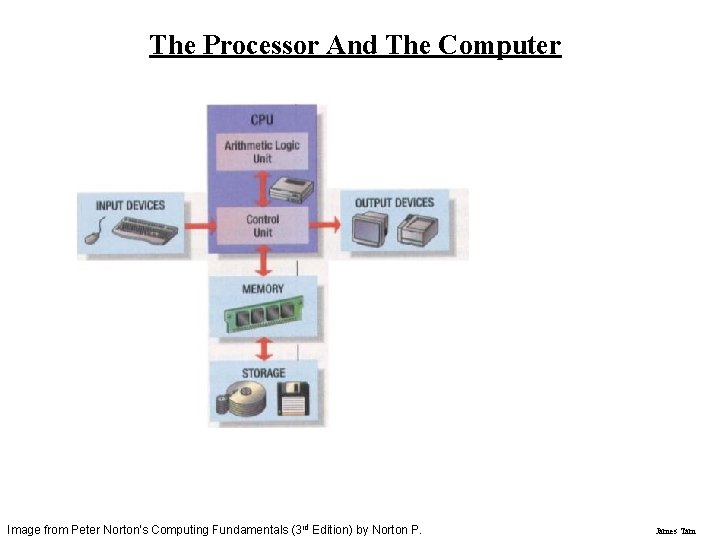
The Processor And The Computer Image from Peter Norton's Computing Fundamentals (3 rd Edition) by Norton P. James Tam
Memory James Tam
RAM • Random Access Memory • Volatile • Used for temporary storage • Typical ranges 256 MB - 4 GB James Tam
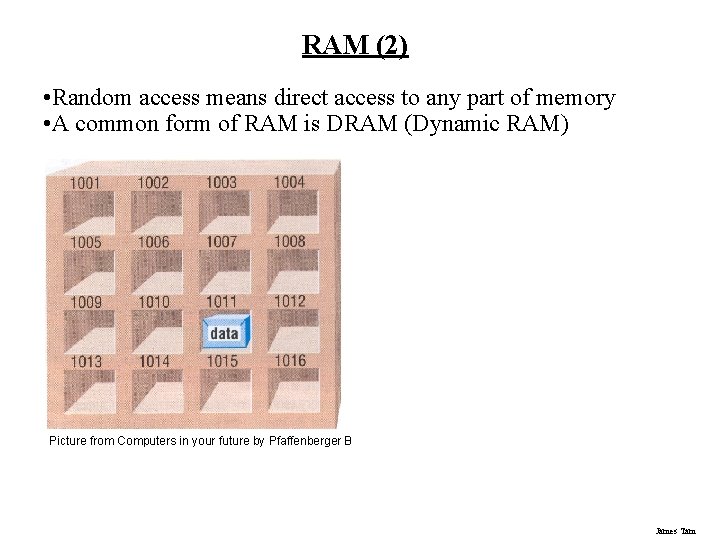
RAM (2) • Random access means direct access to any part of memory • A common form of RAM is DRAM (Dynamic RAM) Picture from Computers in your future by Pfaffenberger B James Tam
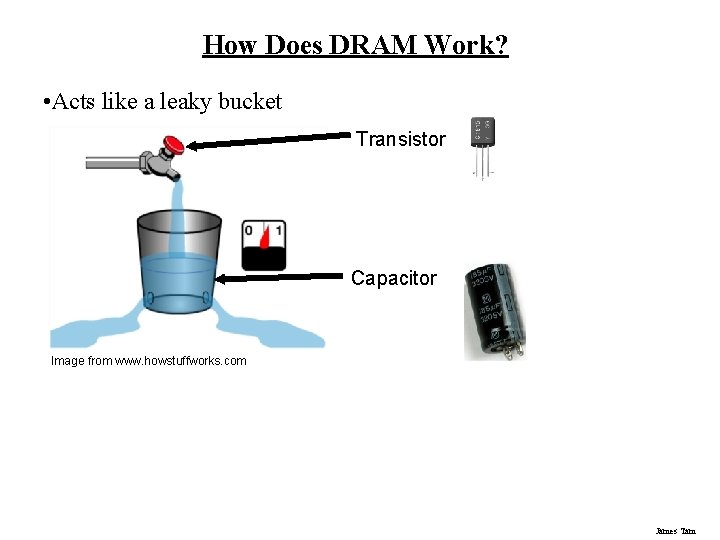
How Does DRAM Work? • Acts like a leaky bucket Image from www. howstuffworks. com James Tam
How Does DRAM Work? • Acts like a leaky bucket Transistor Capacitor Image from www. howstuffworks. com James Tam
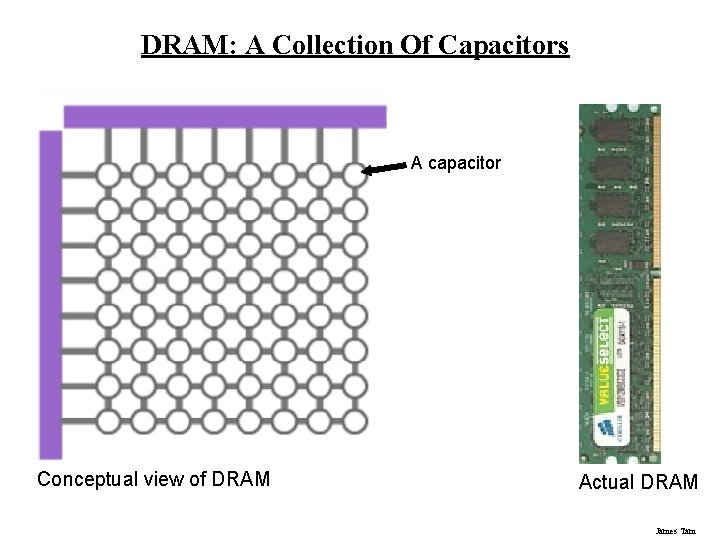
DRAM: A Collection Of Capacitors A capacitor Conceptual view of DRAM Actual DRAM James Tam
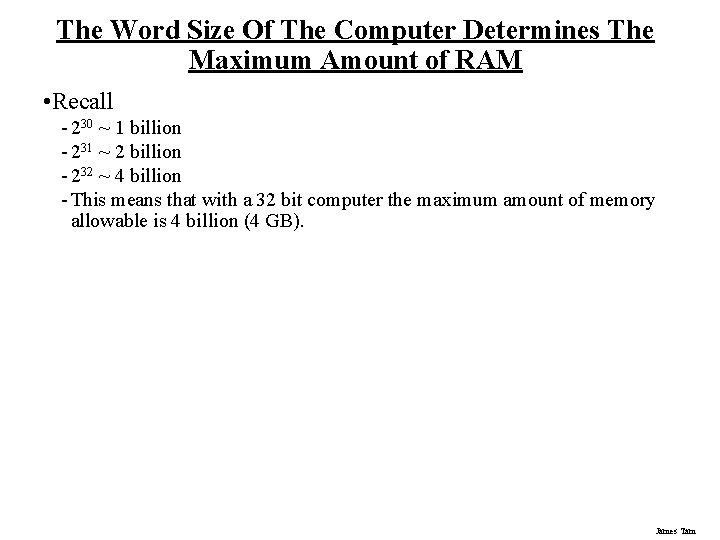
The Word Size Of The Computer Determines The Maximum Amount of RAM • Recall - 230 ~ 1 billion - 231 ~ 2 billion - 232 ~ 4 billion - This means that with a 32 bit computer the maximum amount of memory allowable is 4 billion (4 GB). James Tam
Storage James Tam
Storage Vs. Memory (e. g. , RAM) • Keep the information for a shorter period of time (usually volatile) • Faster • More expensive Storage (e. g. , Hard disk) • The information is retained longer (non-volatile) • Slower • Cheaper James Tam
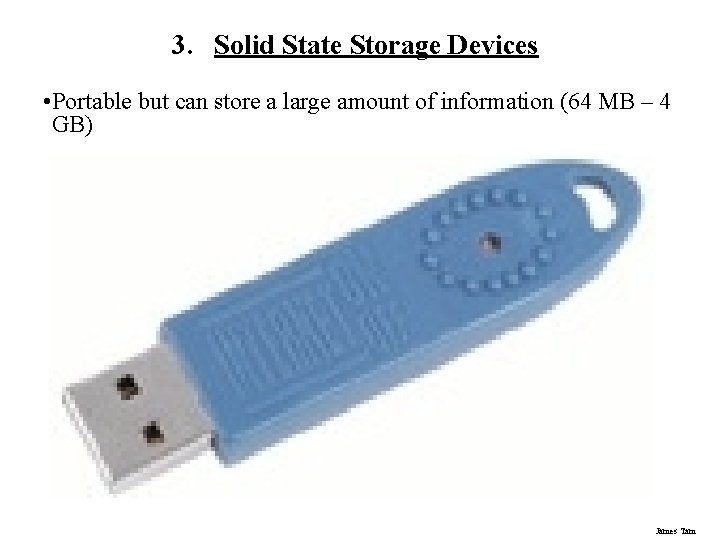
Categories Of Storage 1. Magnetic - Floppy disks - Zip disks - Hard drives 2. Optical - CD-ROM - DVD 3. Solid state storage devices - USB Key (a very common form of solid state storage) James Tam
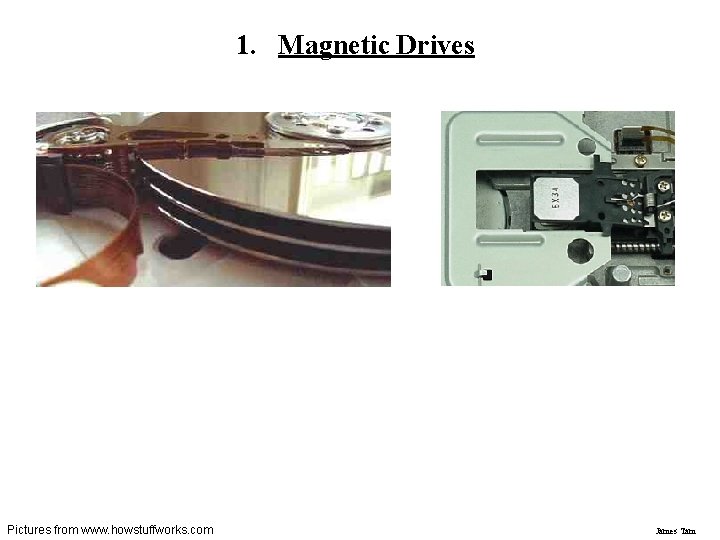
1. Magnetic Drives Pictures from www. howstuffworks. com James Tam
1. Magnetic Drives: Storage Capacities • Floppy disks - ~ 1 MB • Zip disks - 100, 250, 750 MB • Hard drives - ~80 – 400 GB James Tam
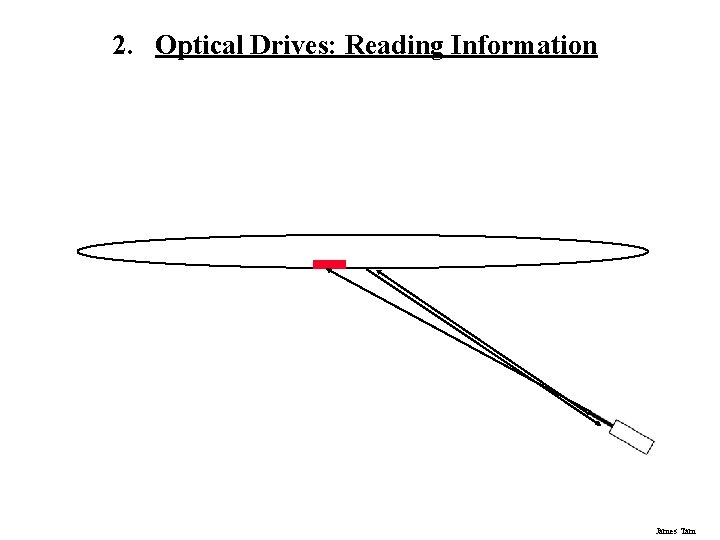
2. Optical Drives: Reading Information James Tam
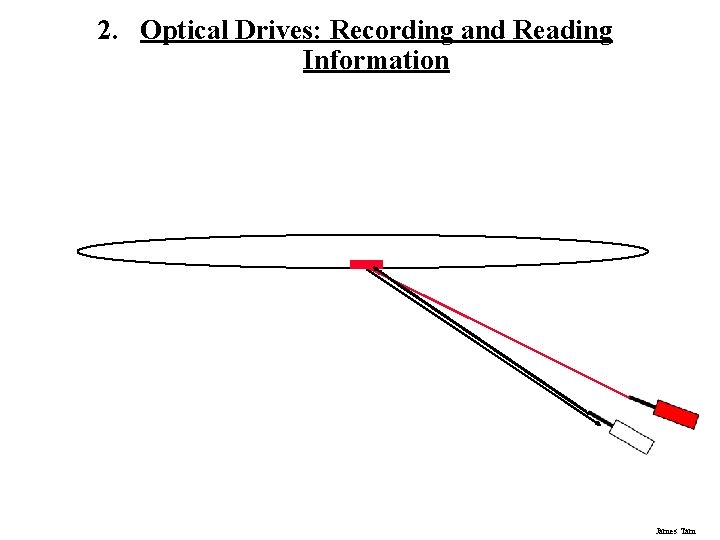
2. Optical Drives: Recording and Reading Information James Tam
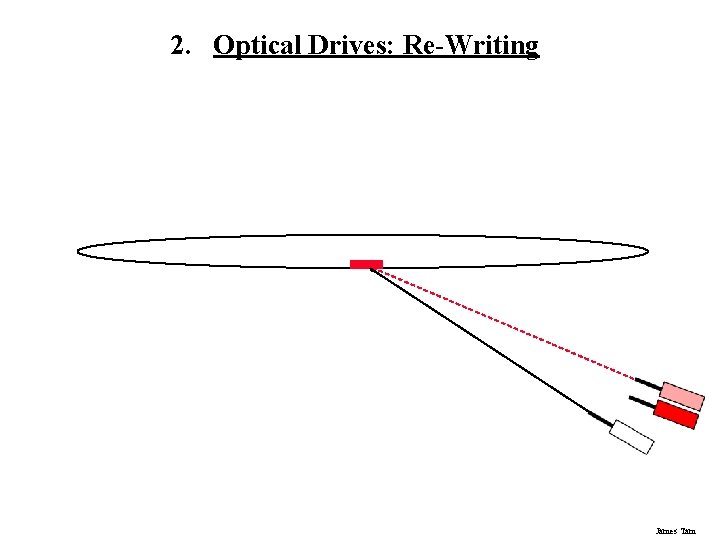
2. Optical Drives: Re-Writing James Tam
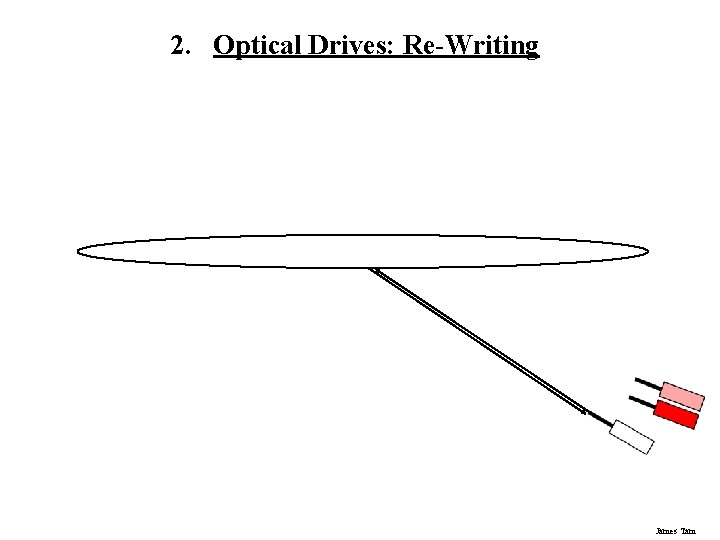
2. Optical Drives: Re-Writing James Tam
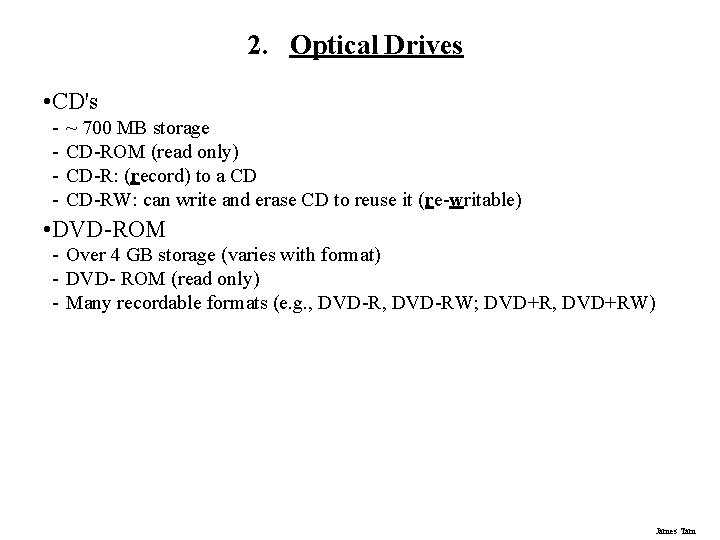
2. Optical Drives • CD's - ~ 700 MB storage CD-ROM (read only) CD-R: (record) to a CD CD-RW: can write and erase CD to reuse it (re-writable) • DVD-ROM - Over 4 GB storage (varies with format) - DVD- ROM (read only) - Many recordable formats (e. g. , DVD-RW; DVD+R, DVD+RW) James Tam
3. Solid State Storage Devices • Portable but can store a large amount of information (64 MB – 4 GB) James Tam
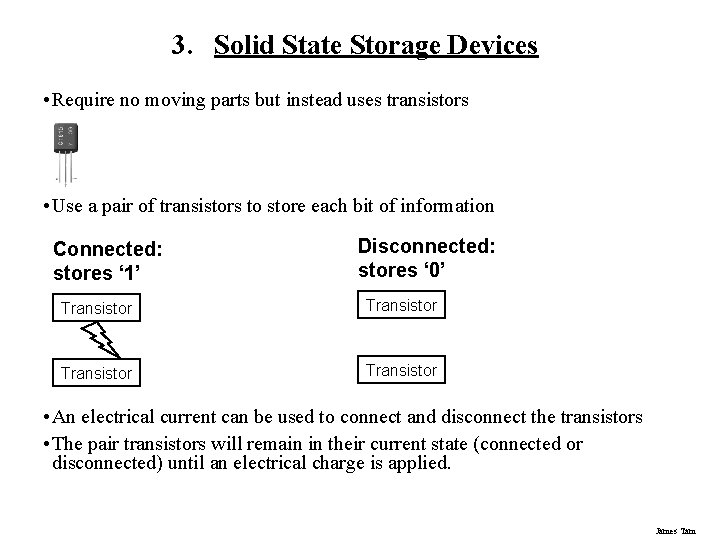
3. Solid State Storage Devices • Require no moving parts but instead uses transistors • Use a pair of transistors to store each bit of information Connected: stores ‘ 1’ Disconnected: stores ‘ 0’ Transistor • An electrical current can be used to connect and disconnect the transistors • The pair transistors will remain in their current state (connected or disconnected) until an electrical charge is applied. James Tam
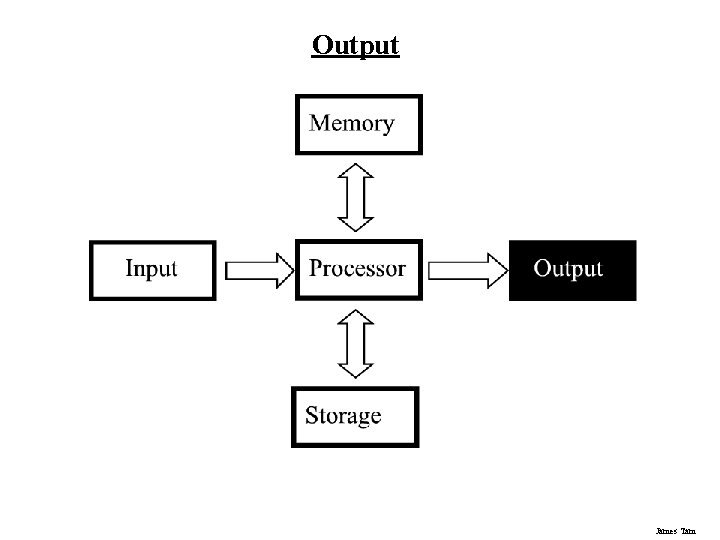
Output James Tam
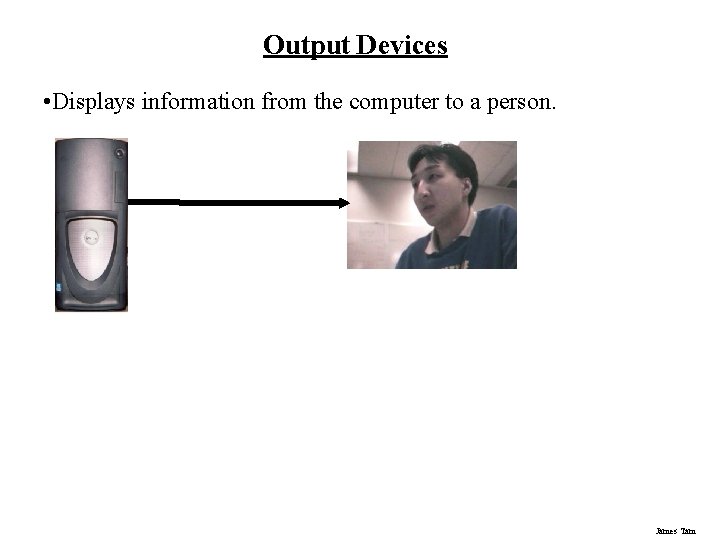
Output Devices • Displays information from the computer to a person. James Tam
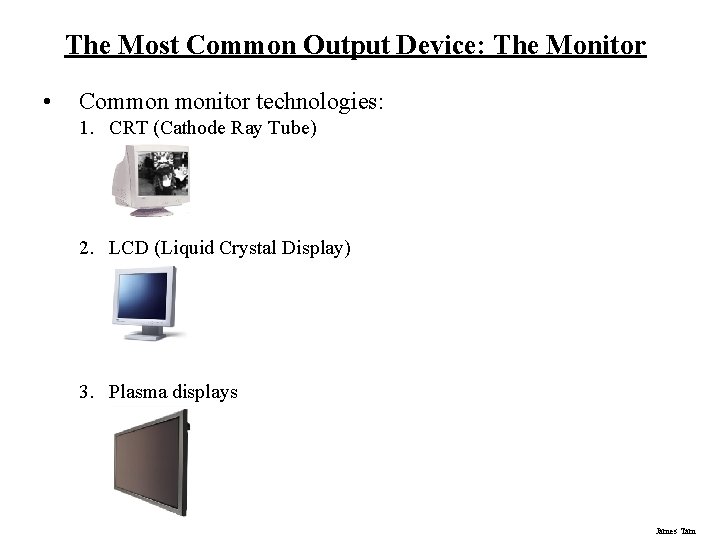
The Most Common Output Device: The Monitor • Common monitor technologies: 1. CRT (Cathode Ray Tube) 2. LCD (Liquid Crystal Display) 3. Plasma displays James Tam
How Images Are Drawn On Monitors • Images and text are drawn with tiny dots (Pixels: Picture elements) A James Tam
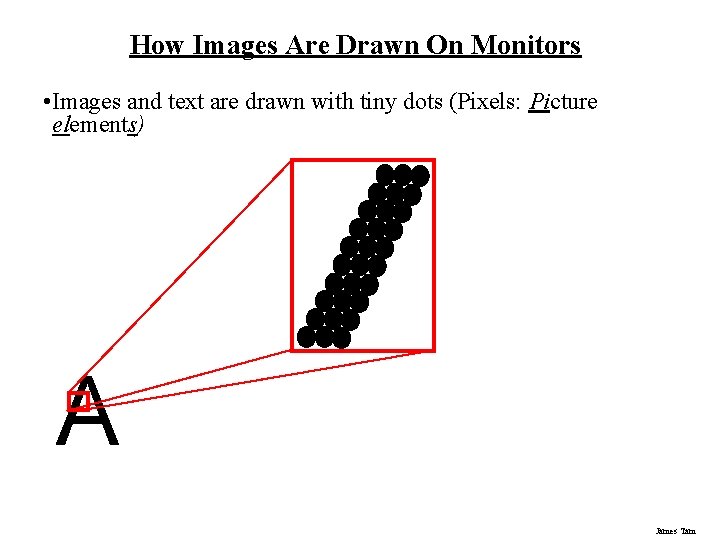
How Images Are Drawn On Monitors • Images and text are drawn with tiny dots (Pixels: Picture elements) A James Tam
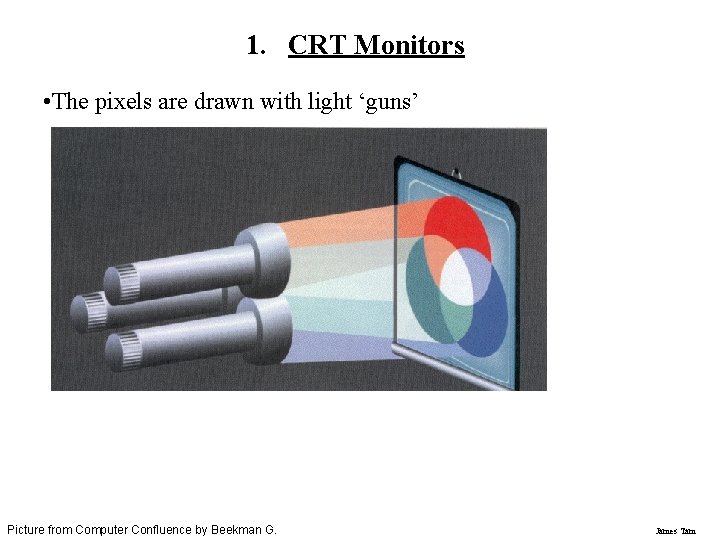
1. CRT Monitors • The pixels are drawn with light ‘guns’ Picture from Computer Confluence by Beekman G. James Tam
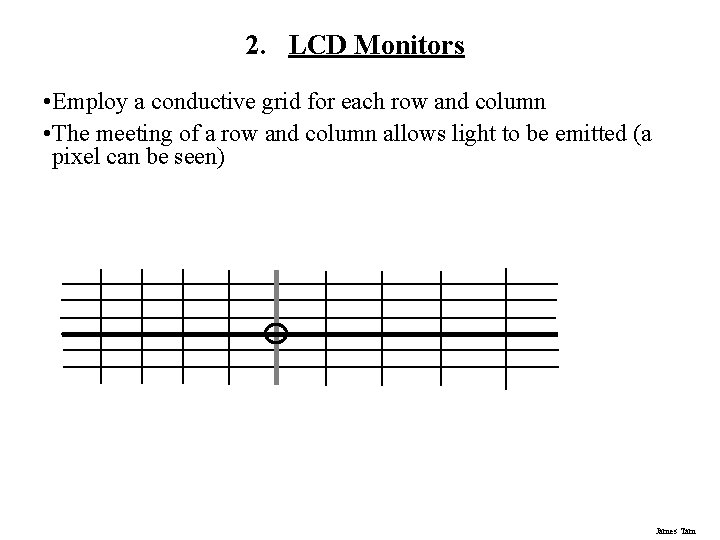
2. LCD Monitors • Employ a conductive grid for each row and column • The meeting of a row and column allows light to be emitted (a pixel can be seen) James Tam
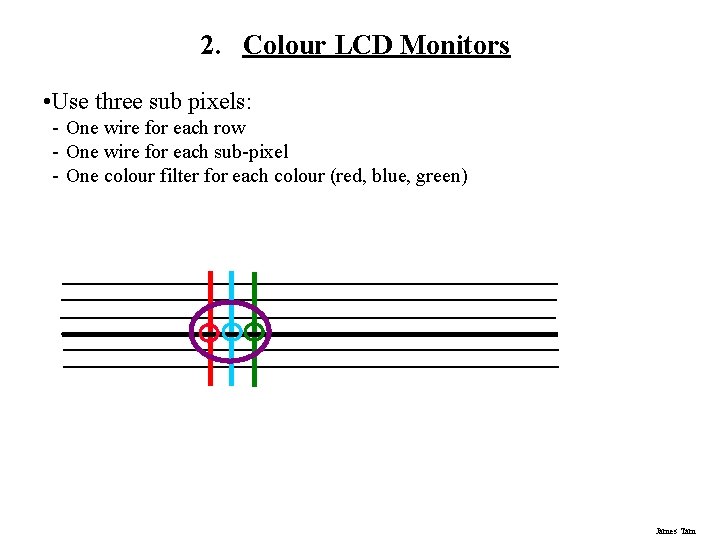
2. Colour LCD Monitors • Use three sub pixels: - One wire for each row - One wire for each sub-pixel - One colour filter for each colour (red, blue, green) James Tam
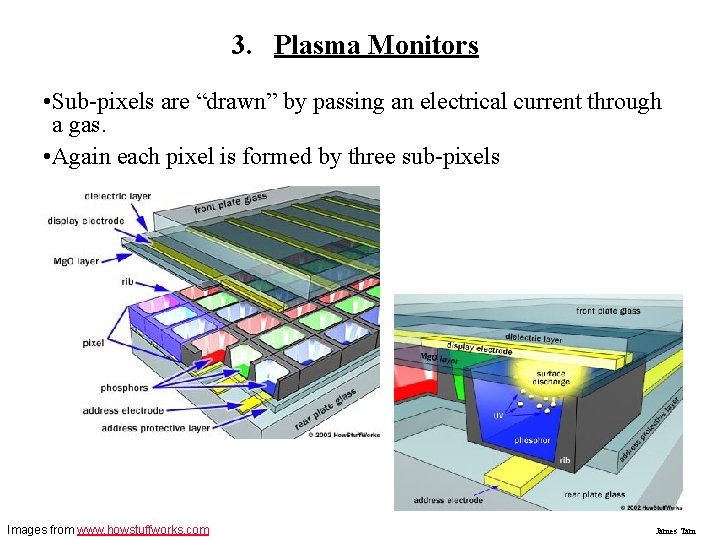
3. Plasma Monitors • Sub-pixels are “drawn” by passing an electrical current through a gas. • Again each pixel is formed by three sub-pixels Images from www. howstuffworks. com James Tam
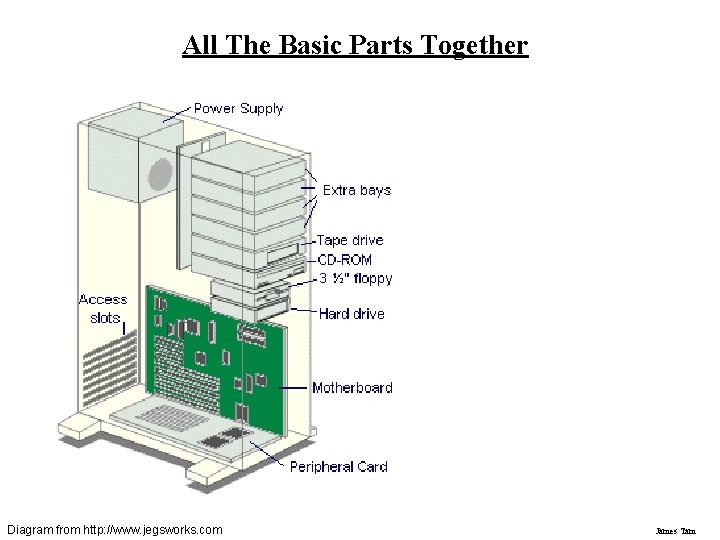
All The Basic Parts Together Diagram from http: //www. jegsworks. com James Tam
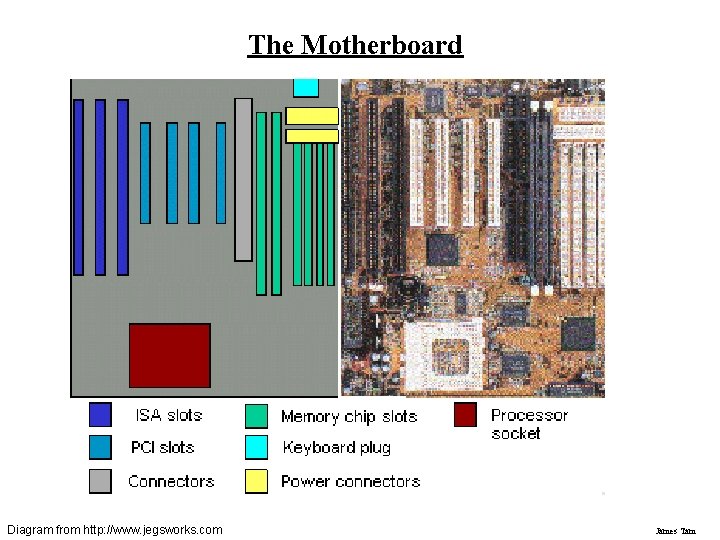
The Motherboard Diagram from http: //www. jegsworks. com James Tam
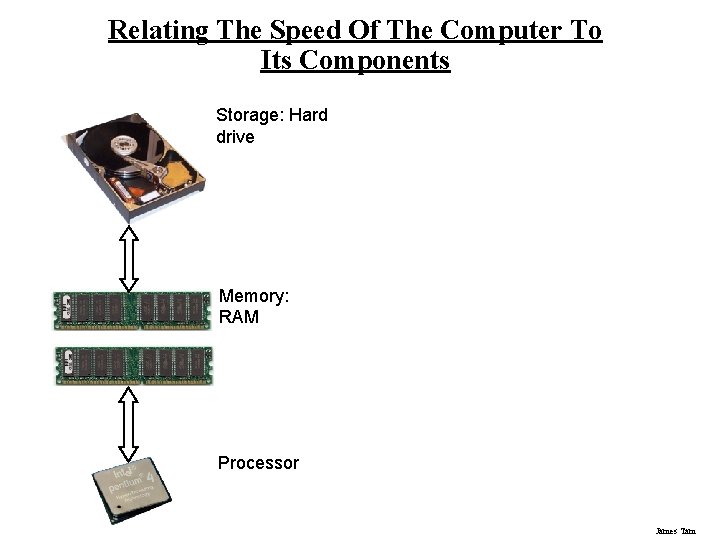
Relating The Speed Of The Computer To Its Components Storage: Hard drive Memory: RAM Processor James Tam
You Should Now Know • • • • What are common units of measurement What are the basic parts of the high level view of a computer Example input devices The role of the processor in a computer What determines processor speed What are the characteristics of RAM How does DRAM work The difference between storage and memory What are the different categories of storage devices as well as common examples of each How do different storage devices work The approximate storage capacity of memory and different storage devices How do computer monitors work How the different hardware components affects the speed of the system James Tam