
Introduction to Computer Security David Brumley Vyas Sekar
Introduction to Computer Security David Brumley Vyas Sekar
Today: Overview • • • Course Staff Trusting Trust Course Overview Example Applications Course Mechanics CMU CTF Team 2
You will find at least one error on each set of slides. : ) 3
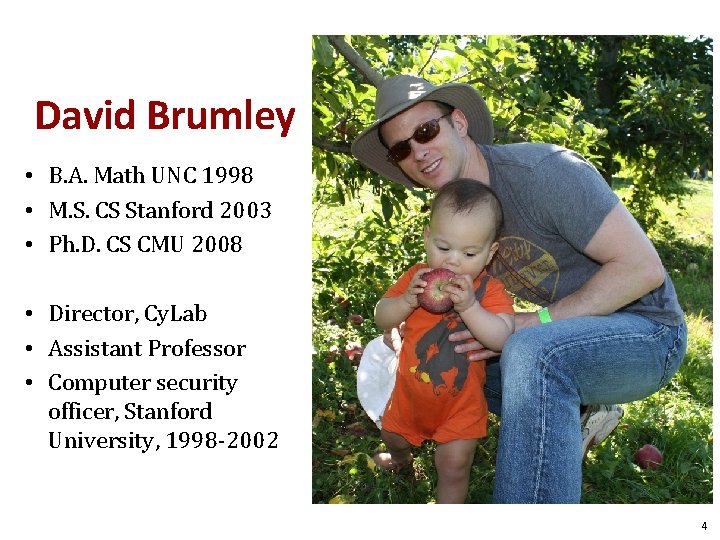
David Brumley • B. A. Math UNC 1998 • M. S. CS Stanford 2003 • Ph. D. CS CMU 2008 • Director, Cy. Lab • Assistant Professor • Computer security officer, Stanford University, 1998 -2002 4
Teaching Assistants 1. Dominic Chen 2. Alison Kao 3. Anita Zhang 5

My Research Thrusts • Automatic Exploit Generation – AEG and Mayhem • Binary code analysis – Decompilation • Vetting whole systems 6
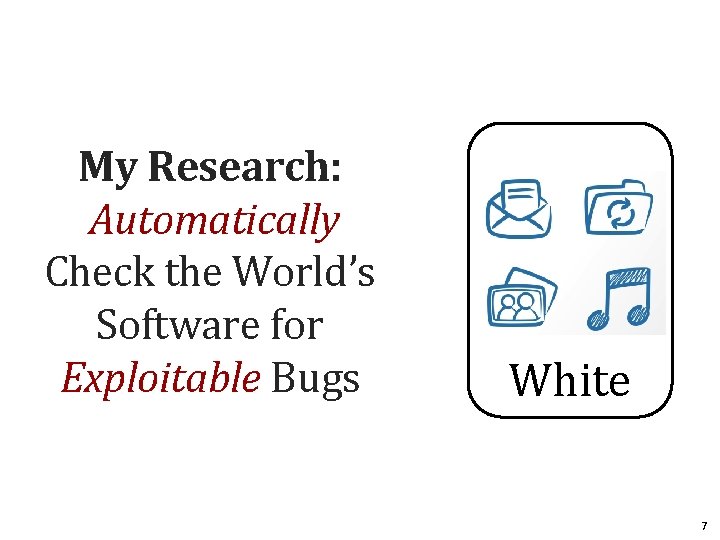
My Research: Automatically Check the World’s Software for Exploitable Bugs White 7
8
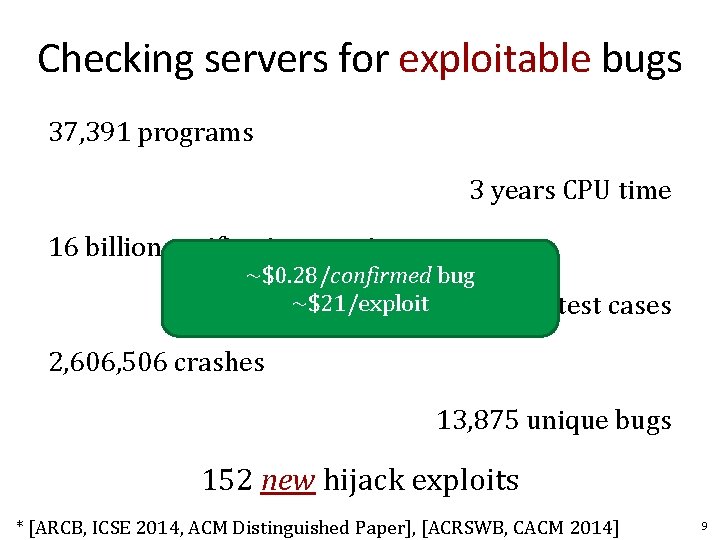
Checking servers for exploitable bugs 37, 391 programs 3 years CPU time 16 billion verification queries ~$0. 28/confirmed bug ~$21/exploit 209, 000, 00 test cases 2, 606, 506 crashes 13, 875 unique bugs 152 new hijack exploits * [ARCB, ICSE 2014, ACM Distinguished Paper], [ACRSWB, CACM 2014] 9

Trusting Trust 10
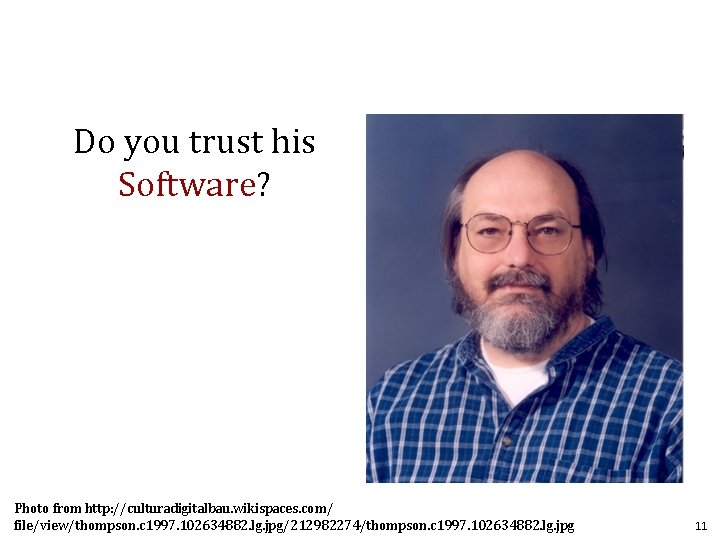
Do you trust his Software? Photo from http: //culturadigitalbau. wikispaces. com/ file/view/thompson. c 1997. 102634882. lg. jpg/212982274/thompson. c 1997. 102634882. lg. jpg 11
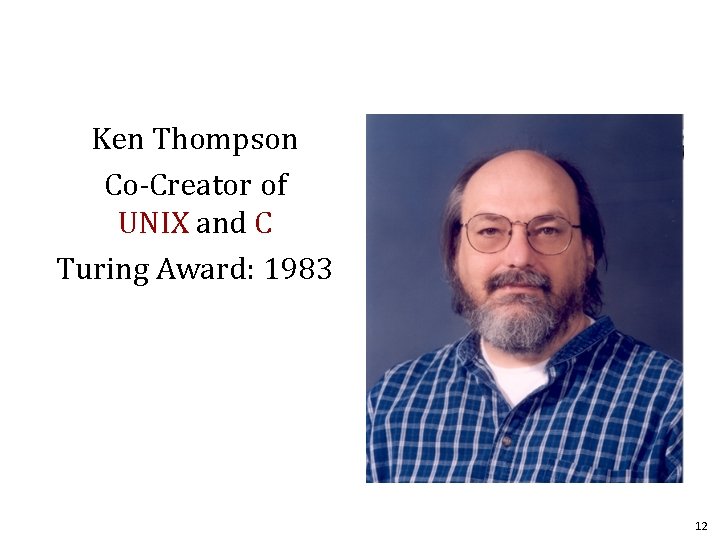
Ken Thompson Co-Creator of UNIX and C Turing Award: 1983 12
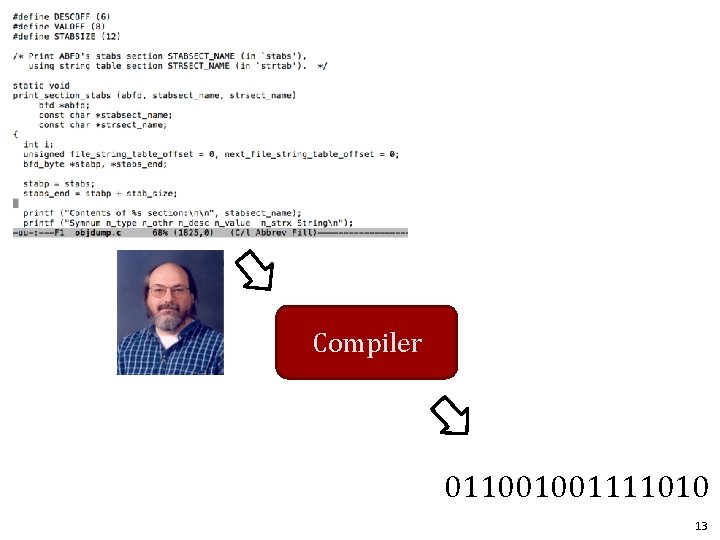
Compiler 011001001111010 13
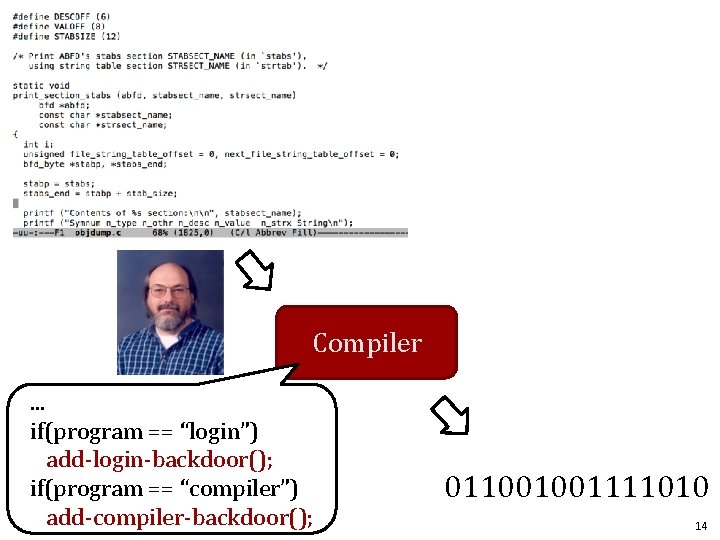
Compiler. . . if(program == “login”) add-login-backdoor(); if(program == “compiler”) add-compiler-backdoor(); 011001001111010 14
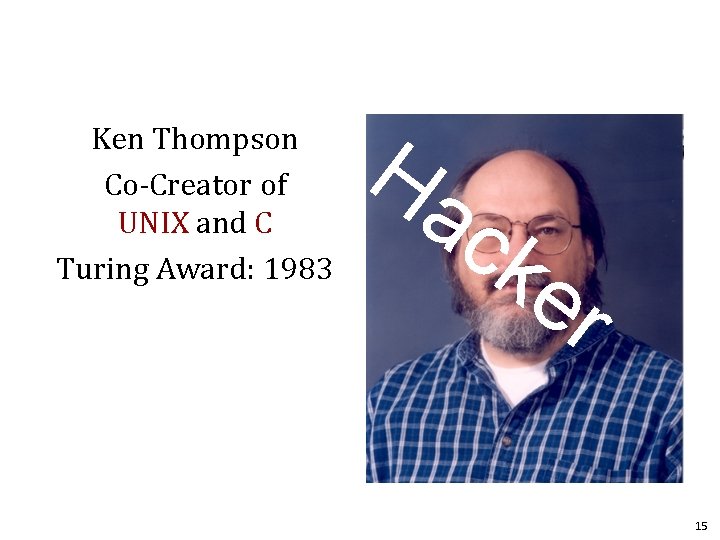
Ken Thompson Co-Creator of UNIX and C Turing Award: 1983 Ha ck er 15
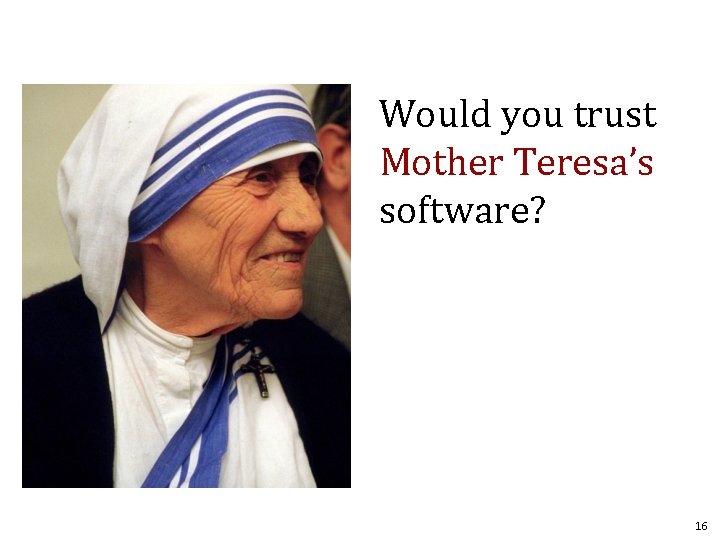
Would you trust Mother Teresa’s software? 16
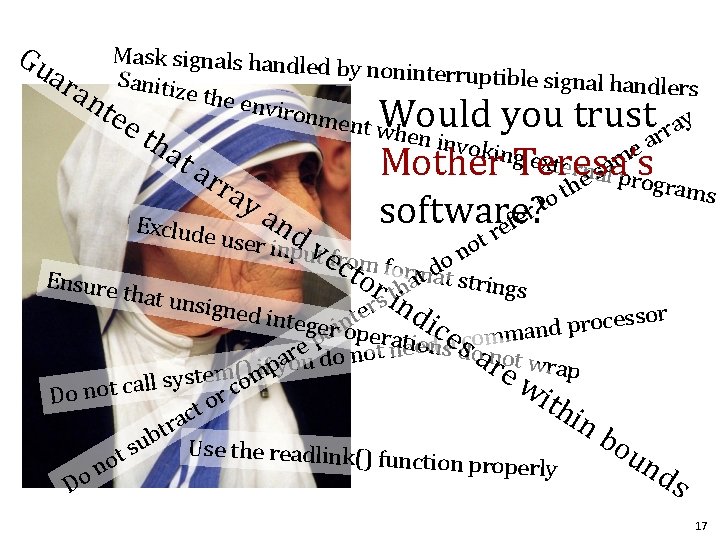
Gu ara Mask signals handled by noninterruptible Sanitiz signal handlers e the en nte vironm y ent wh et a r en inv r a ha oking extern ame ta asl prog rra e rams h t ya to r e f n Exclude e r user ind t o v putefrom n o c f o tor ramt adt string Ensure h s that un t i s n signed integerinter dic ssor e c o r p d o operatiod eascomman p e do not nee ns doa not r a wrap ou r y p f i ) ( e m e t m sys l o l wi a c t c o n r Do thi o t c a n r t b b U u o s se the readlink() fun u t c ti o o n p nd r o p e r ly n o s D Would you trust Mother Teresa’s software? 17
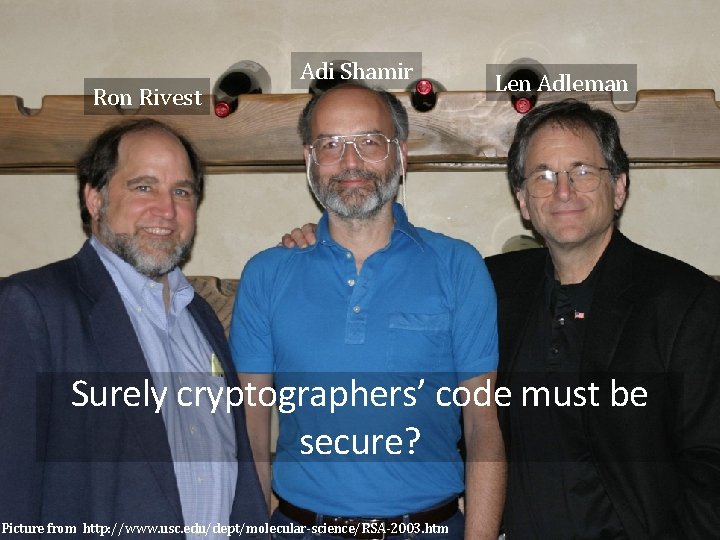
Ron Rivest Adi Shamir Len Adleman Surely cryptographers’ code must be secure? Picture from http: //www. usc. edu/dept/molecular-science/RSA-2003. htm 18
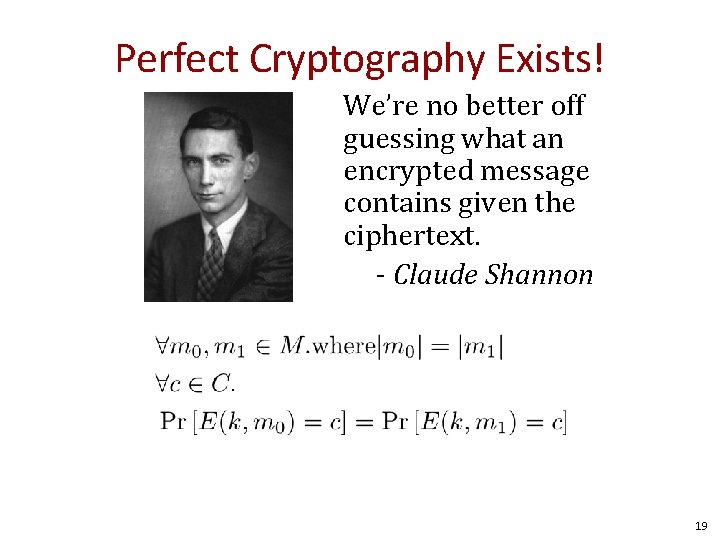
Perfect Cryptography Exists! We’re no better off guessing what an encrypted message contains given the ciphertext. - Claude Shannon 19
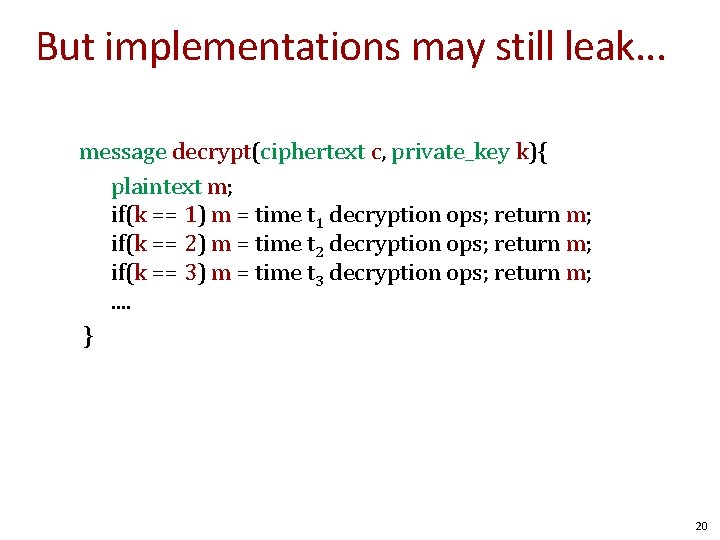
But implementations may still leak. . . message decrypt(ciphertext c, private_key k){ plaintext m; if(k == 1) m = time t 1 decryption ops; return m; if(k == 2) m = time t 2 decryption ops; return m; if(k == 3) m = time t 3 decryption ops; return m; . . } 20
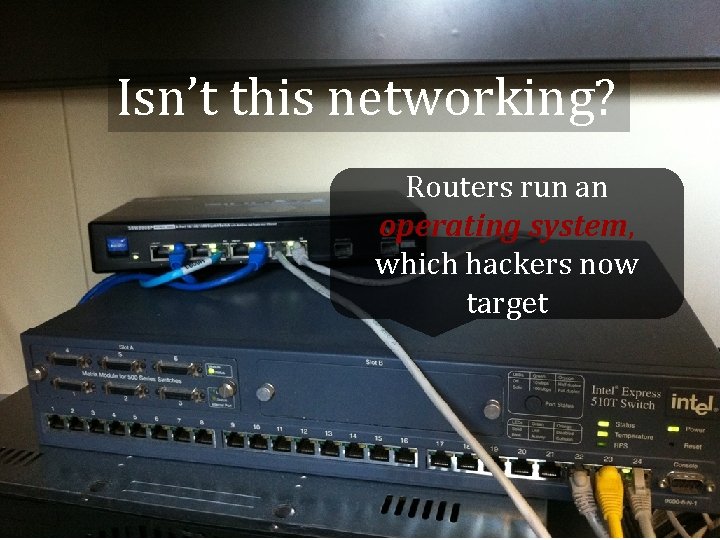
Isn’t this networking? Routers run an operating system, which hackers now target 21
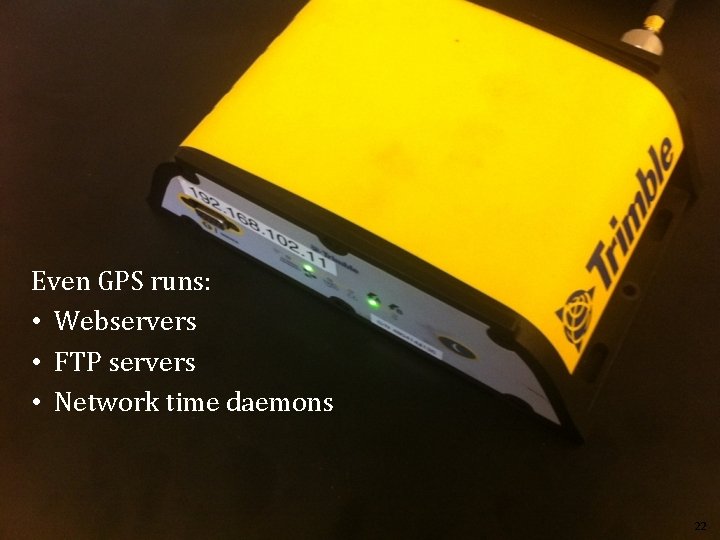
Even GPS runs: • Webservers • FTP servers • Network time daemons 22
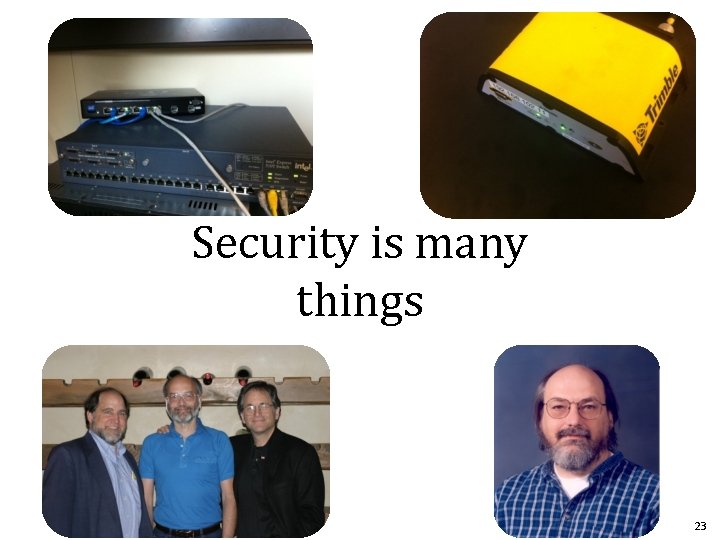
Security is many things 23
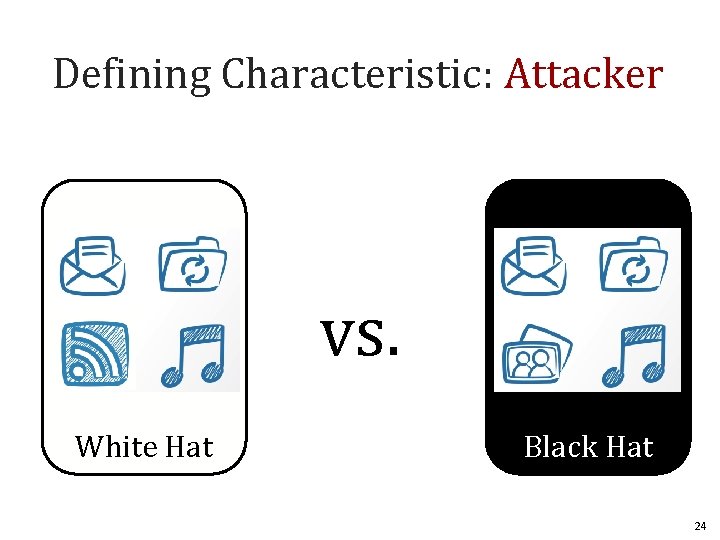
Defining Characteristic: Attacker vs. format c: White Hat Black Hat 24
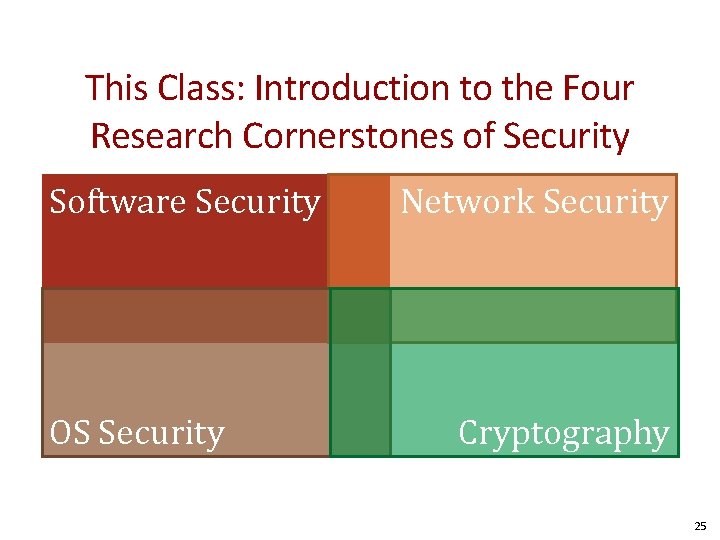
This Class: Introduction to the Four Research Cornerstones of Security Software Security OS Security Network Security Cryptography 25
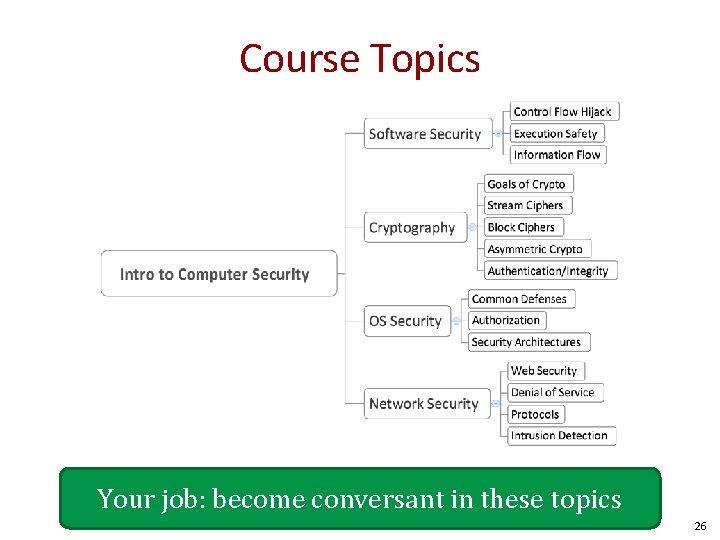
Course Topics Your job: become conversant in these topics 26
Software Security 27
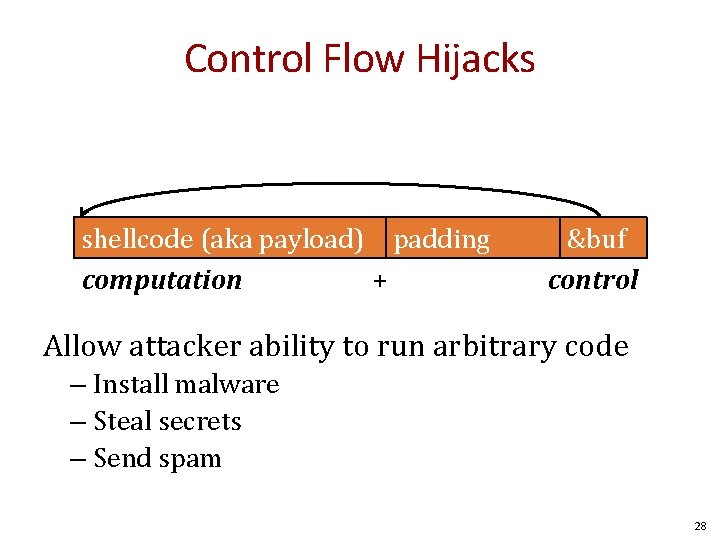
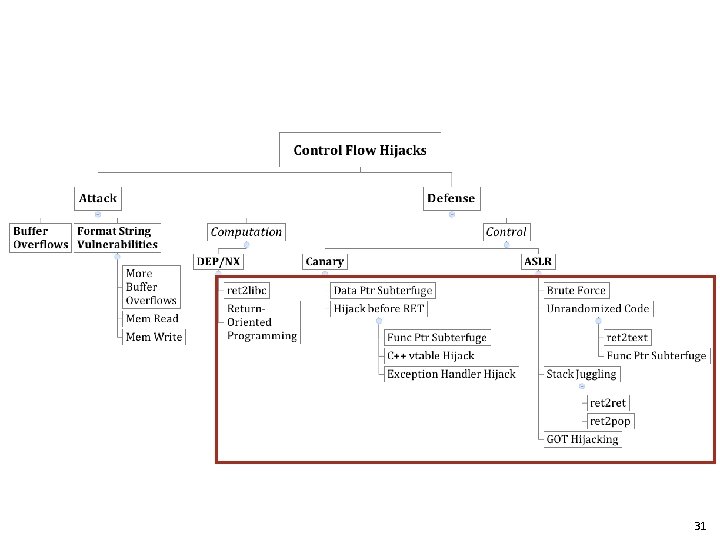
Control Flow Hijacks shellcode (aka payload) padding computation + &buf control Allow attacker ability to run arbitrary code – Install malware – Steal secrets – Send spam 28
29
30
31
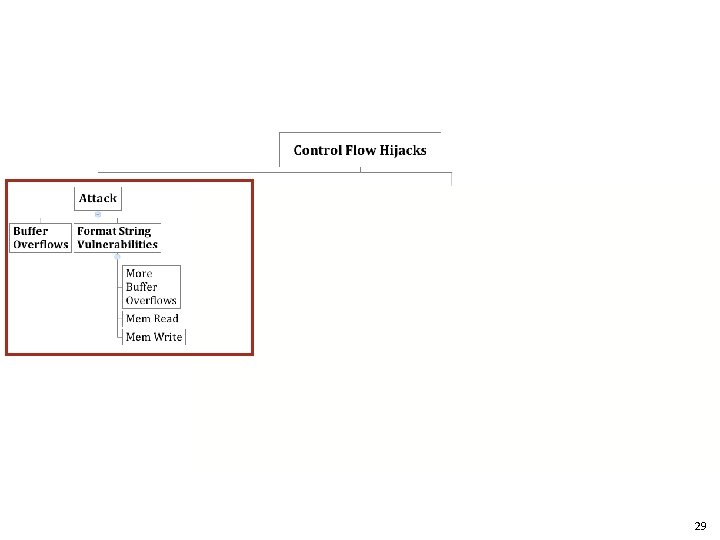
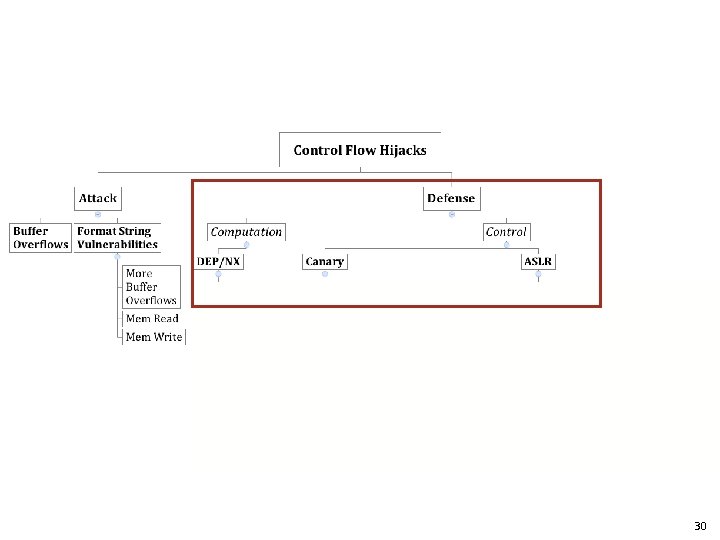
Software Security • Recognize and exploit vulnerabilities – Format string – Buffer overflow – Gist of other control flow hijacks, e. g. , heap overflow • Understand defenses in theory and practice – – ASLR DEP Canaries Know the limitations! 32
Cryptography 33
Everyday Cryptography • • ATM’s On-line banking SSH Kerberos
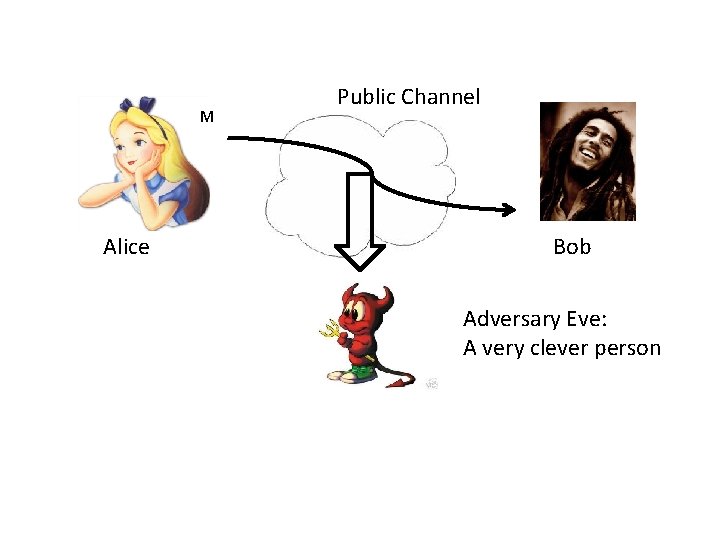
M Alice Public Channel Bob Adversary Eve: A very clever person
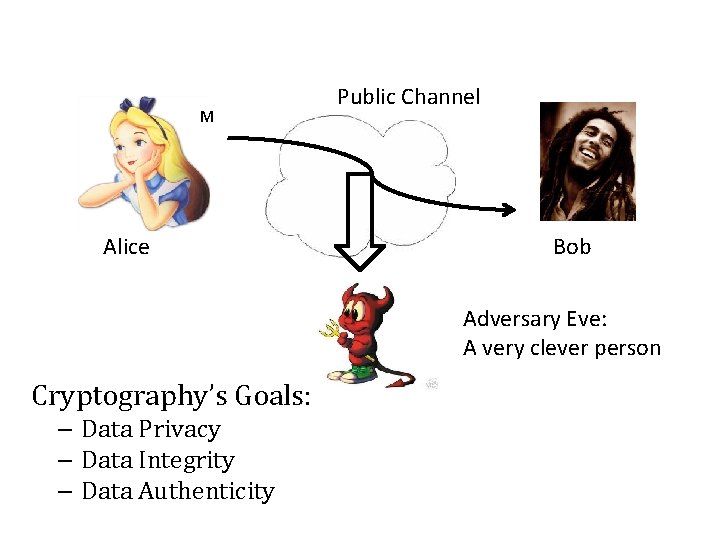
M Alice Public Channel Bob Adversary Eve: A very clever person Cryptography’s Goals: – Data Privacy – Data Integrity – Data Authenticity
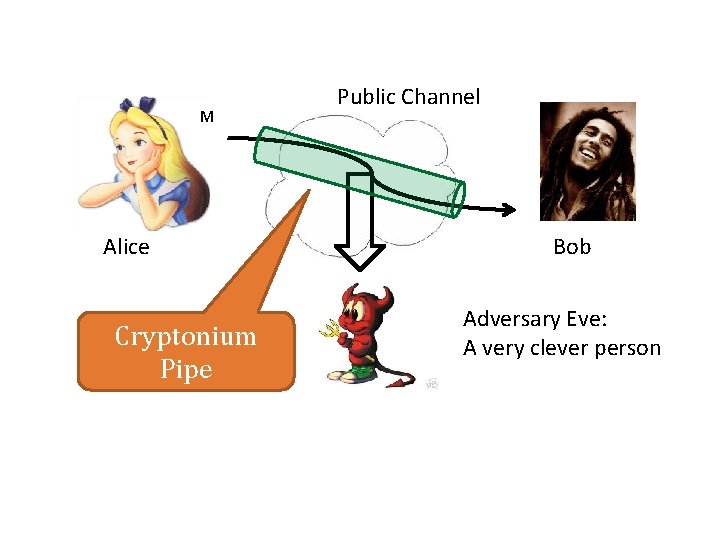
M Alice Cryptonium Pipe Public Channel Bob Adversary Eve: A very clever person
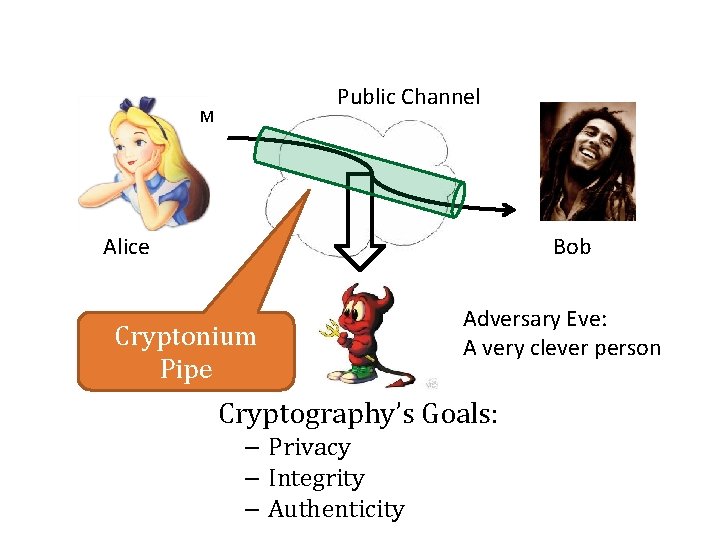
Public Channel M Alice Bob Cryptonium Pipe Adversary Eve: A very clever person Cryptography’s Goals: – Privacy – Integrity – Authenticity

39
Goals • Understand believe you should never, ever invent your own algorithm • Goals – Encryption – Integrity – Authentication • Concepts – – Symmetric key crypto Hashes Macs Signatures • Example pitfalls 40
Network Security 41
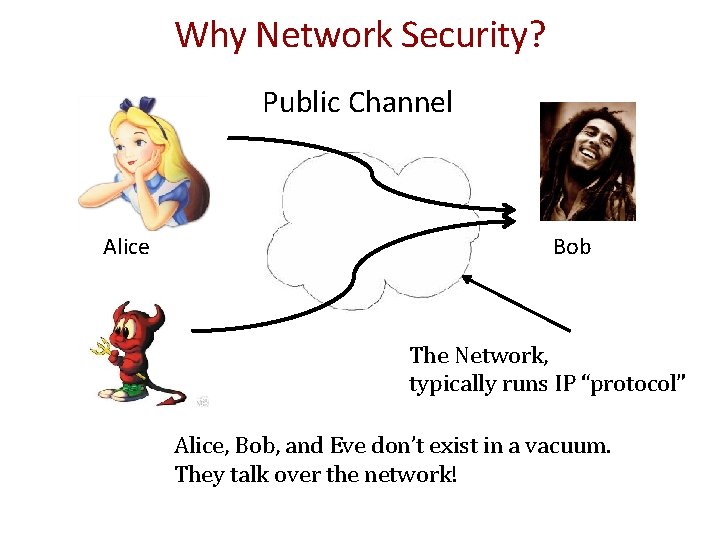
Why Network Security? Public Channel Alice Bob The Network, typically runs IP “protocol” Alice, Bob, and Eve don’t exist in a vacuum. They talk over the network!
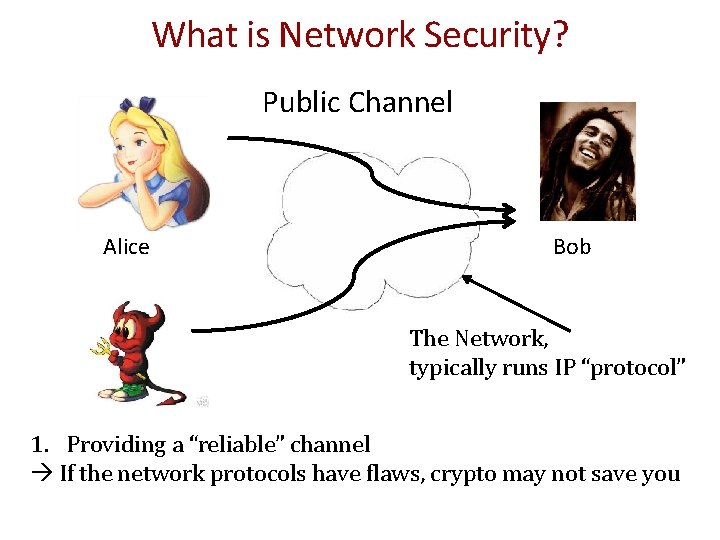
What is Network Security? Public Channel Alice Bob The Network, typically runs IP “protocol” 1. Providing a “reliable” channel If the network protocols have flaws, crypto may not save you
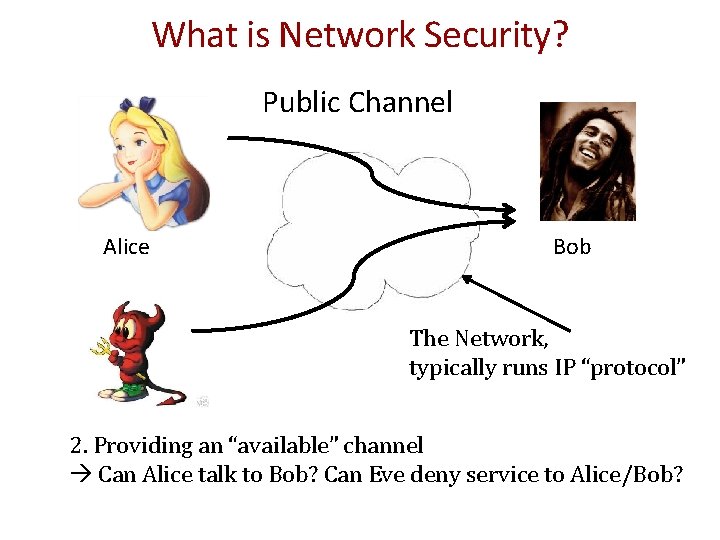
What is Network Security? Public Channel Alice Bob The Network, typically runs IP “protocol” 2. Providing an “available” channel Can Alice talk to Bob? Can Eve deny service to Alice/Bob?
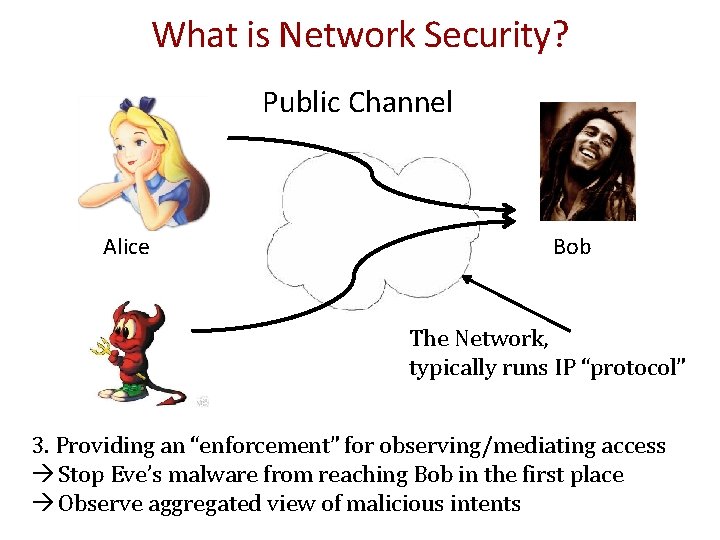
What is Network Security? Public Channel Alice Bob The Network, typically runs IP “protocol” 3. Providing an “enforcement” for observing/mediating access Stop Eve’s malware from reaching Bob in the first place Observe aggregated view of malicious intents

46

47

48
Network Security Segment Goals • Understand the base rate fallacy and it’s application to IDS • Be able to recognize and perform basic web attacks • State what a DDo. S is, and how CDN’s mitigate their effect 49
OS/Systems Security (If time, some semesters we do not. ) 50
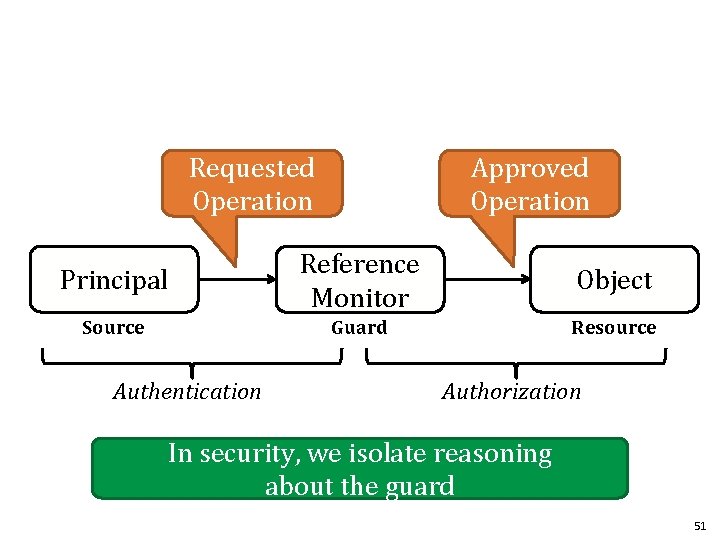
Requested Operation Approved Operation Principal Reference Monitor Object Source Guard Resource Authentication Authorization In security, we isolate reasoning about the guard 51
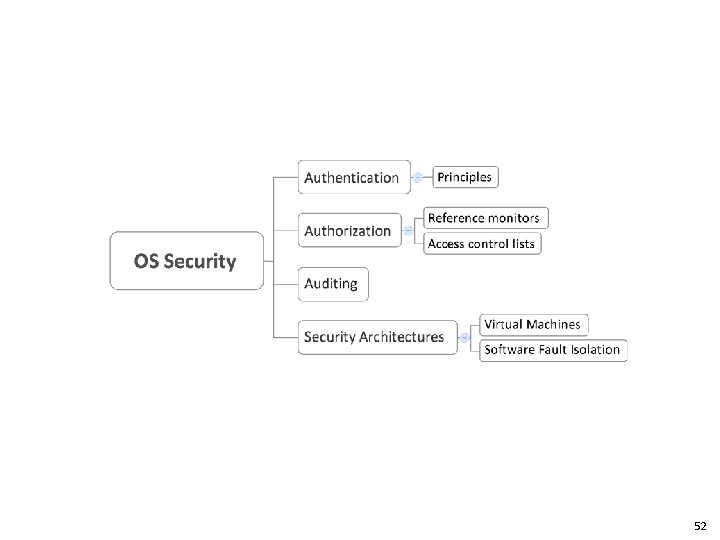
52
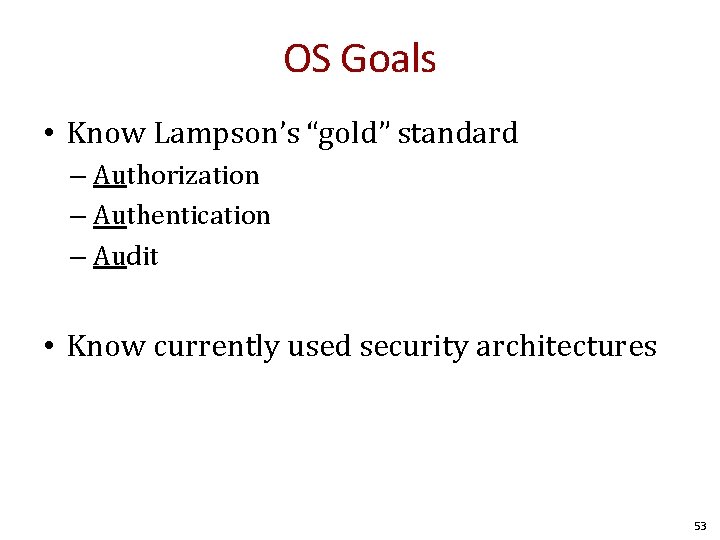
OS Goals • Know Lampson’s “gold” standard – Authorization – Authentication – Audit • Know currently used security architectures 53

Course Mechanics 54
Website http: //users. ece. cmu. edu/~dbrumley/courses/18487 -f 15/ 55
Basics • Pre-req: – Basic UNIX development (gcc, gdb, etc. ) – 15 -213 or similar is recommended • Read all papers before lecture – – Read Underline Question Review • Course website: http: //www. ece. cmu. edu/~dbrumley/courses/18487 -f 15 56
Workload • 3 homework assignments • 3 exams, keep highest 2 grades 57
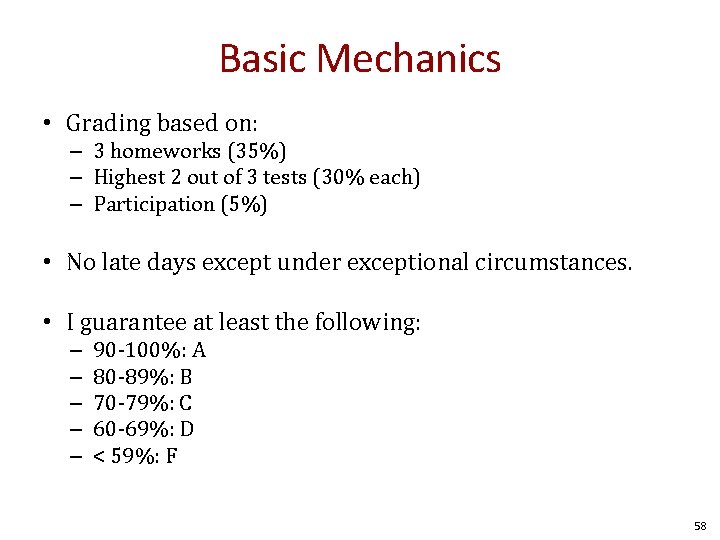
Basic Mechanics • Grading based on: – 3 homeworks (35%) – Highest 2 out of 3 tests (30% each) – Participation (5%) • No late days except under exceptional circumstances. • I guarantee at least the following: – – – 90 -100%: A 80 -89%: B 70 -79%: C 60 -69%: D < 59%: F 58
! S C I H T E • Obey the law • Do not be a nuisance • Don’t cheat, copy others work, let others copy, etc. 59

Capture the Flag 60
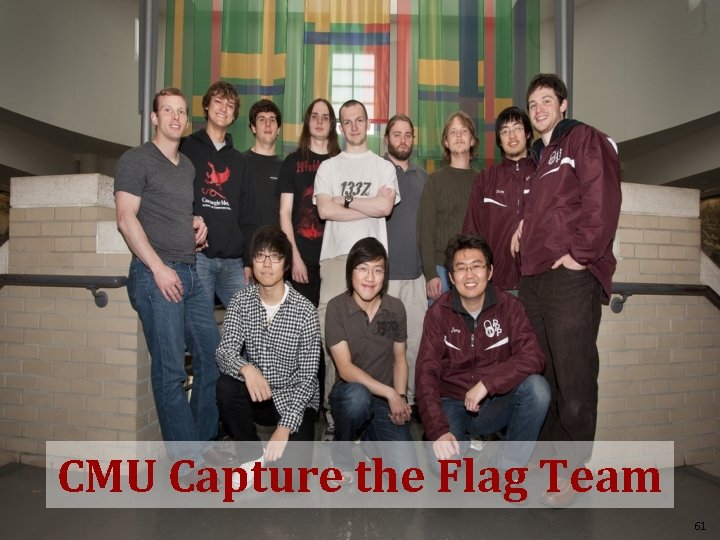
CMU Capture the Flag Team 61
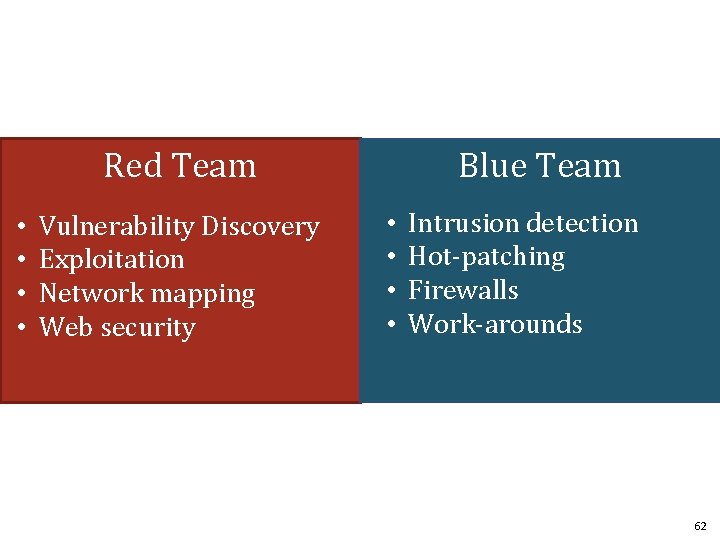
Blue Team Red Team • • Vulnerability Discovery Exploitation Network mapping Web security • • Intrusion detection Hot-patching Firewalls Work-arounds 62
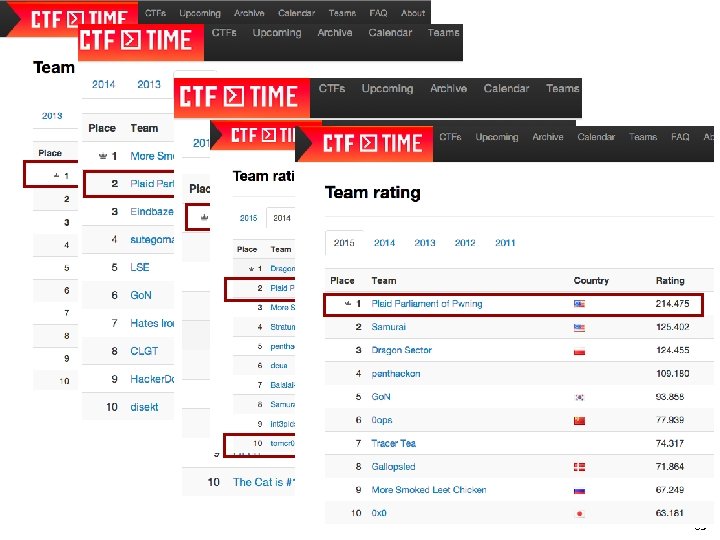
63
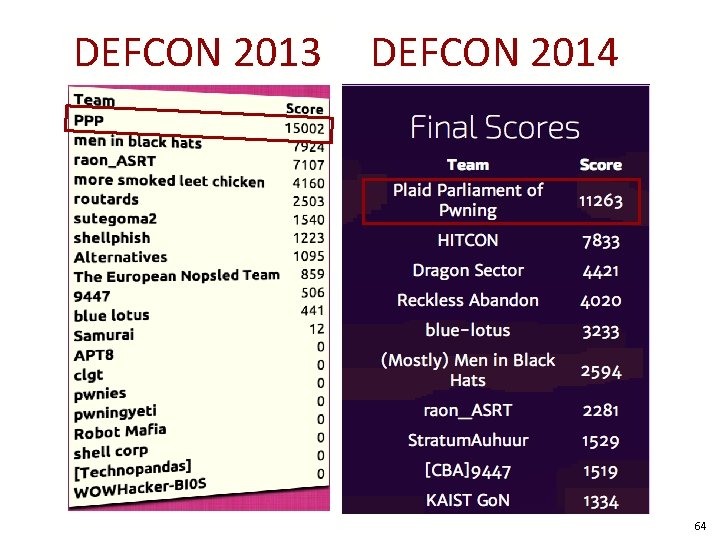
DEFCON 2013 DEFCON 2014 64
65
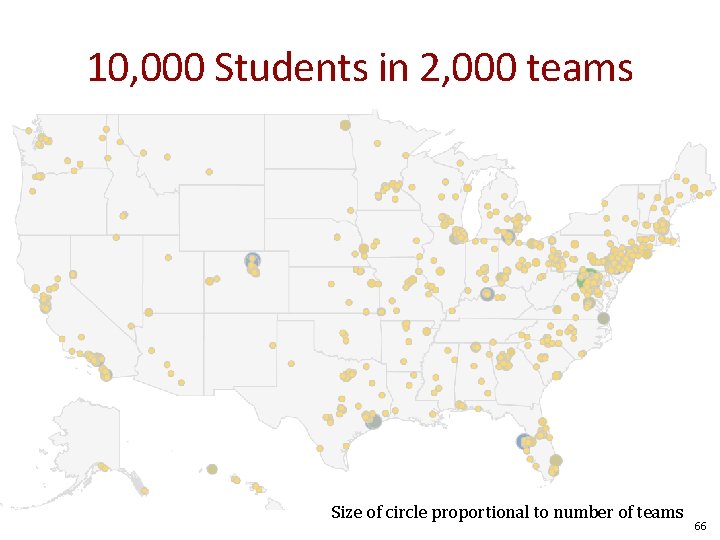
10, 000 Students in 2, 000 teams Size of circle proportional to number of teams 66
67
68
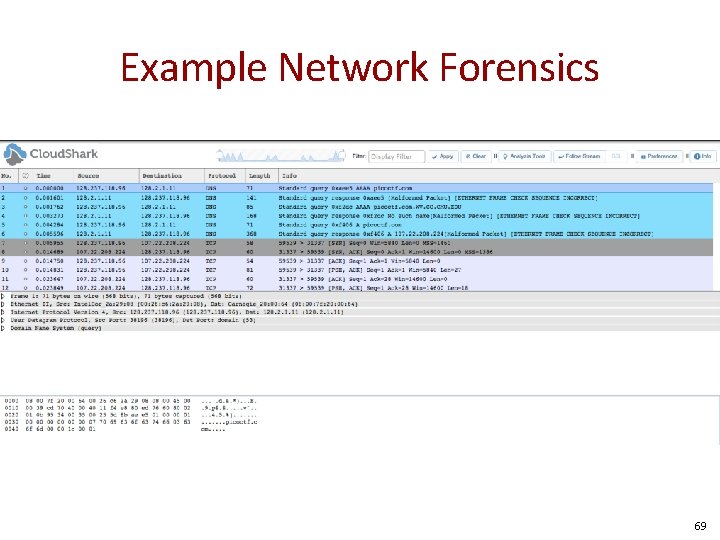
Example Network Forensics 69
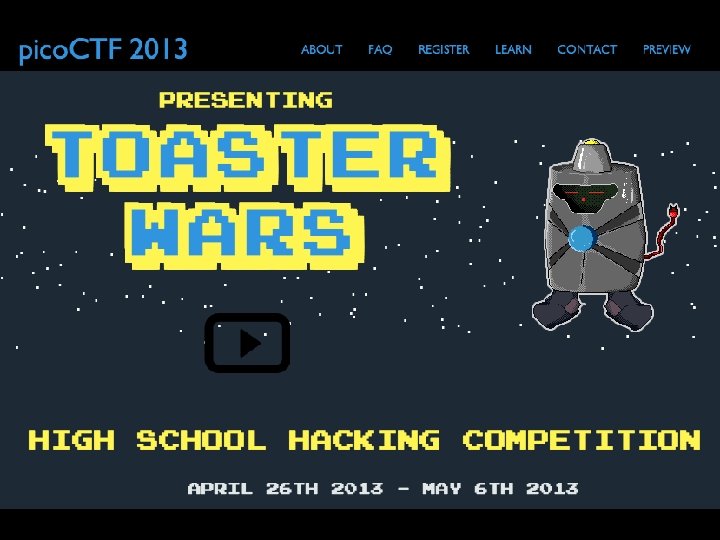
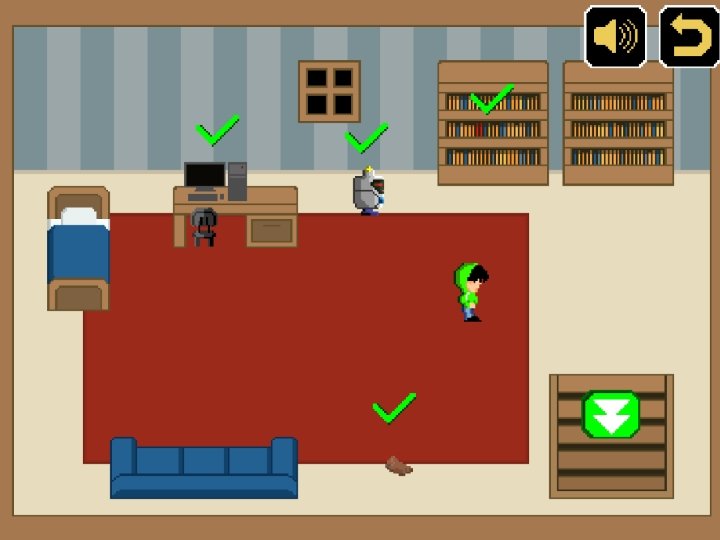
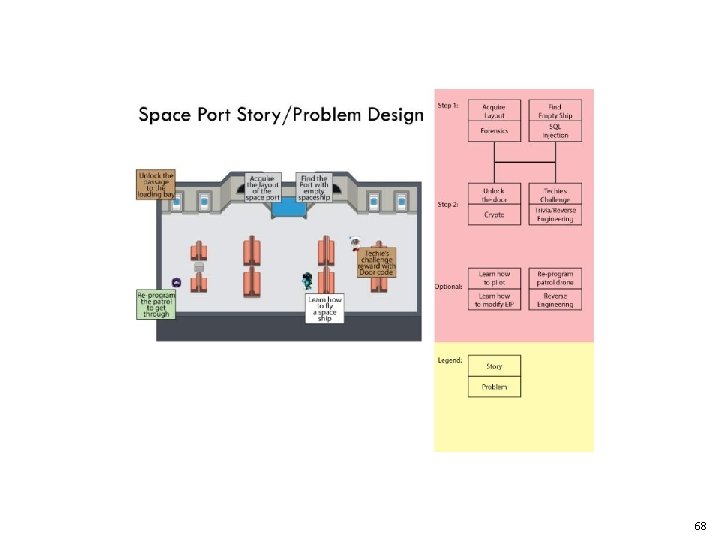
Pico. CTF • 10, 000 students • 600 teams solving advanced problems – ROP attacks – Breaking incorrect use of modern crypto • Identified the best of the best “I learned more in one week than the last two years in CS courses. ” 70
Red Bull and PPP 71

Questions? 72
Errors • Assistant professor? • Where is vyas? (Error of omission) 73

END
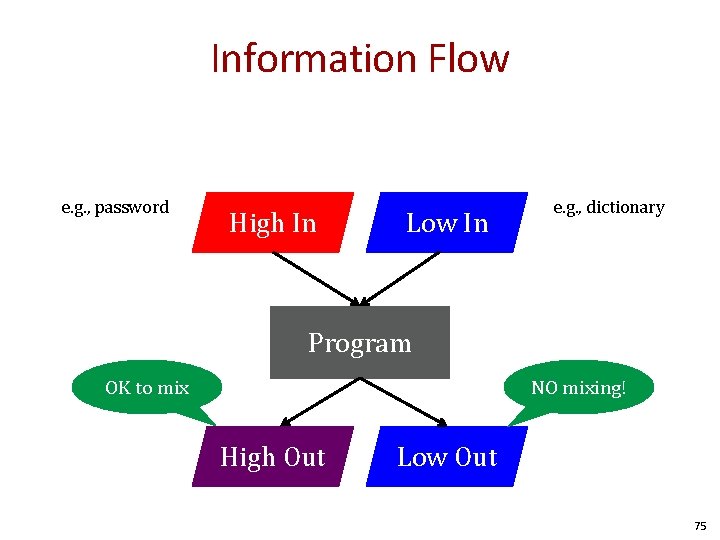
Information Flow e. g. , password High In Low In e. g. , dictionary Program OK to mix NO mixing! High Out Low Out 75
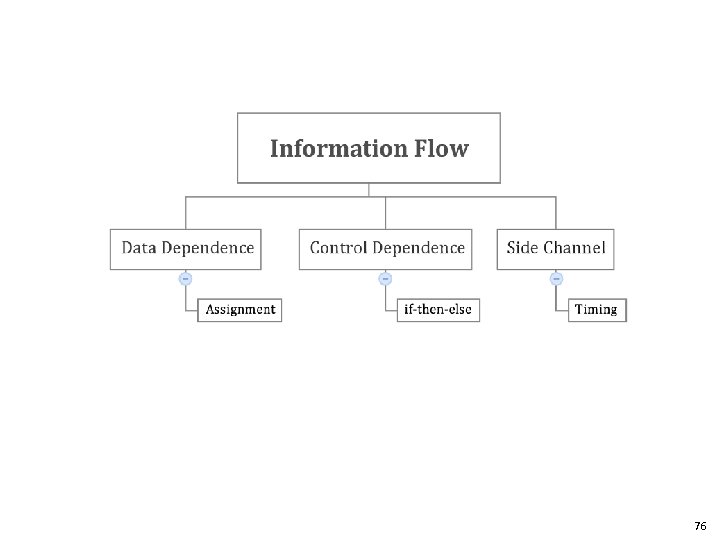
76
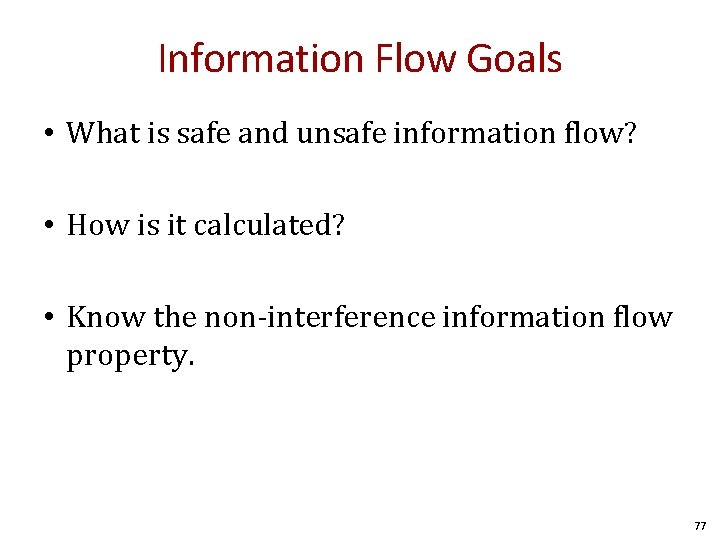
Information Flow Goals • What is safe and unsafe information flow? • How is it calculated? • Know the non-interference information flow property. 77
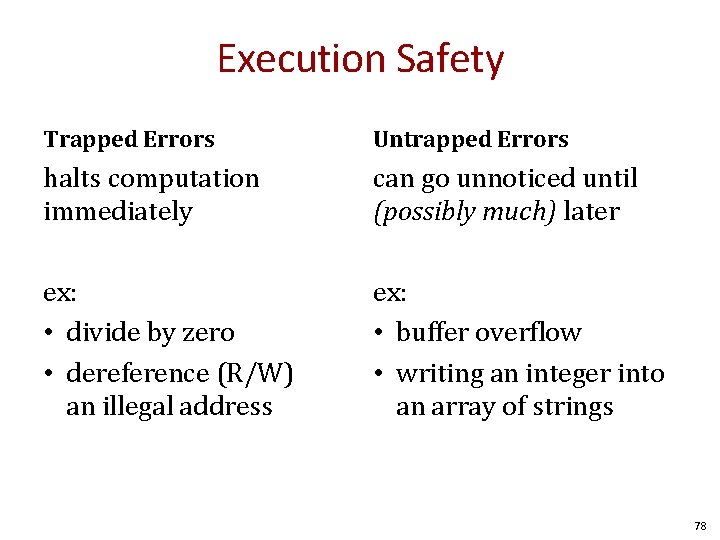
Execution Safety Trapped Errors Untrapped Errors halts computation immediately can go unnoticed until (possibly much) later ex: • divide by zero • dereference (R/W) an illegal address ex: • buffer overflow • writing an integer into an array of strings 78

79
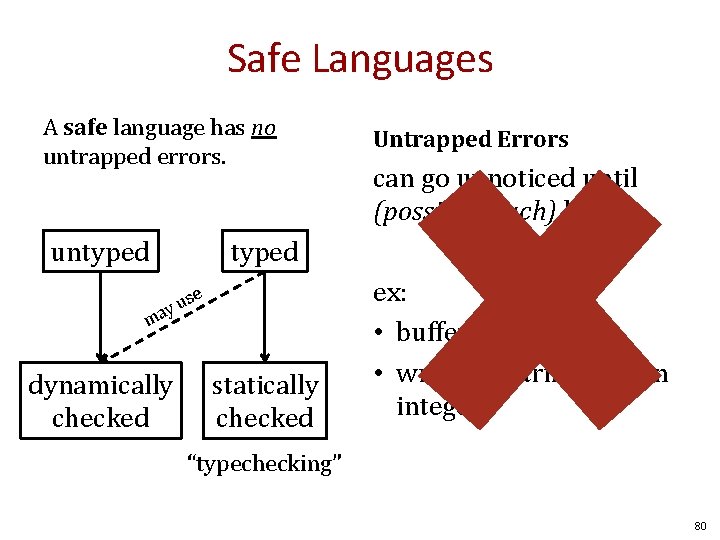
Safe Languages A safe language has no untrapped errors. untyped Untrapped Errors can go unnoticed until (possibly much) later typed use y a m dynamically checked statically checked ex: • buffer overflow • writing a string into an integer “typechecking” 80
Execution Safety Goals • State what type safety means. • Read typing inference rules. • Give examples of differences between type safety and security. • State control flow integrity – Give examples of vulnerabilities protected by CFI – Give examples of vulnerabilities not protected by CFI 81
1996 #1 Song: The Macarena Spice Girls Play Olympics Windows 95 Reigned 82
Ping of Death! 83
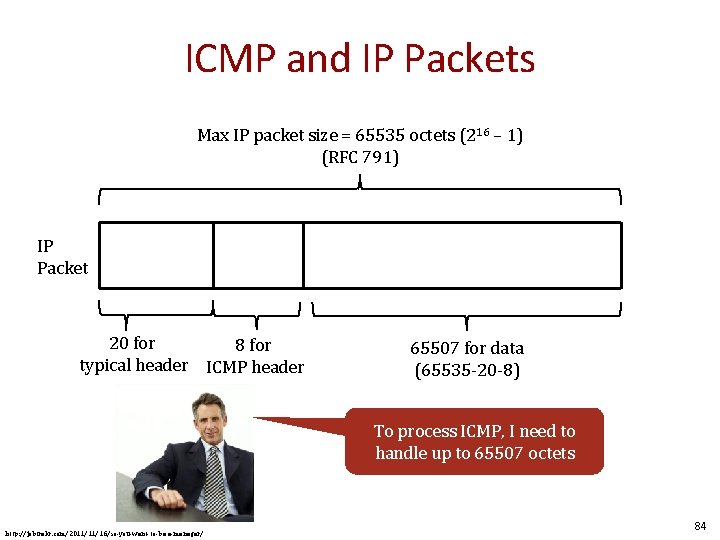
ICMP and IP Packets Max IP packet size = 65535 octets (216 – 1) (RFC 791) IP Packet 20 for 8 for typical header ICMP header 65507 for data (65535 -20 -8) To process ICMP, I need to handle up to 65507 octets http: //jobtrakr. com/2011/11/16/so-you-want-to-be-a-manager/ 84
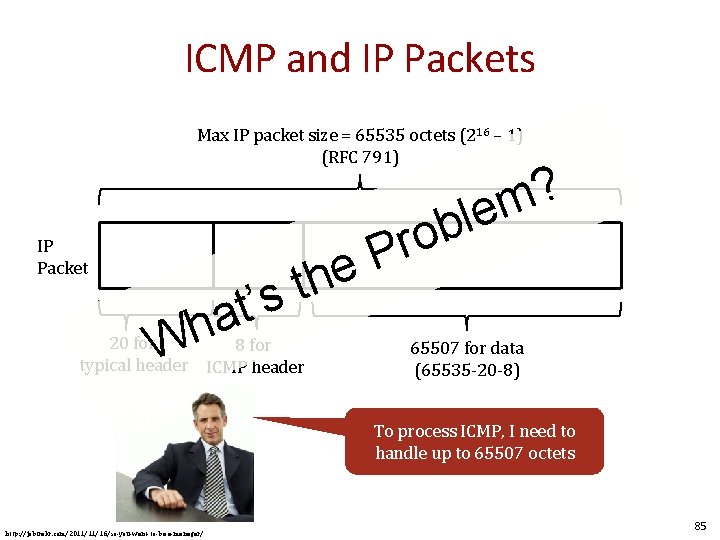
ICMP and IP Packets Max IP packet size = 65535 octets (216 – 1) (RFC 791) ? m e l b o r P e h t s ’ IP Packet t a h W 20 for 8 for typical header ICMP header 65507 for data (65535 -20 -8) To process ICMP, I need to handle up to 65507 octets http: //jobtrakr. com/2011/11/16/so-you-want-to-be-a-manager/ 85
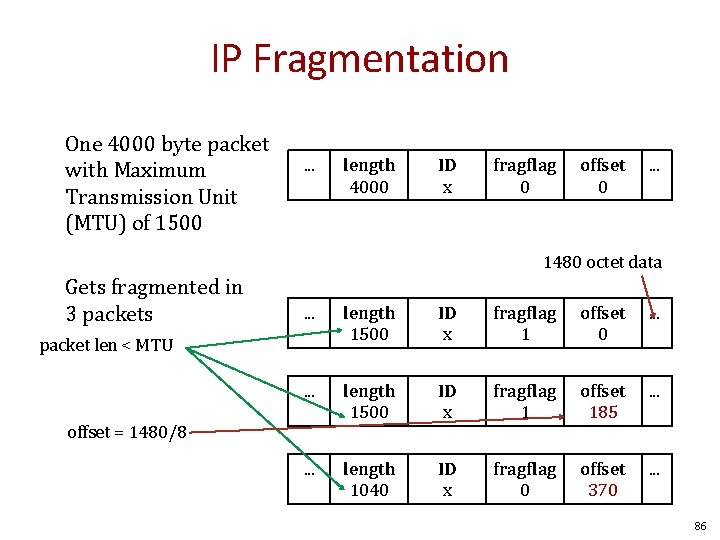
IP Fragmentation One 4000 byte packet with Maximum Transmission Unit (MTU) of 1500 . . . length 4000 ID x fragflag 0 offset 0 . . . 1480 octet data Gets fragmented in 3 packets . . . length 1500 ID x fragflag 1 offset 0 . . . length 1500 ID x fragflag 1 offset 185 . . . length 1040 ID x fragflag 0 offset 370 . . . packet len < MTU offset = 1480/8 86
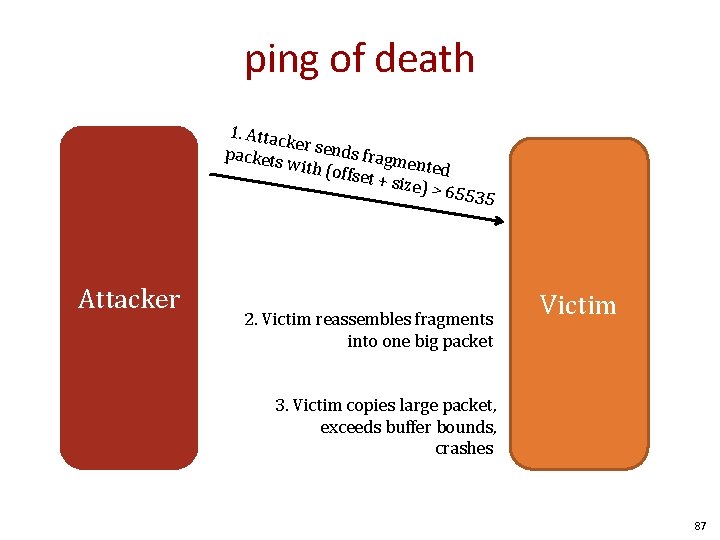
ping of death 1. Attac ke packets r sends fragm e with (o ffset + s nted ize) > 6 5535 Attacker 2. Victim reassembles fragments into one big packet Victim 3. Victim copies large packet, exceeds buffer bounds, crashes 87
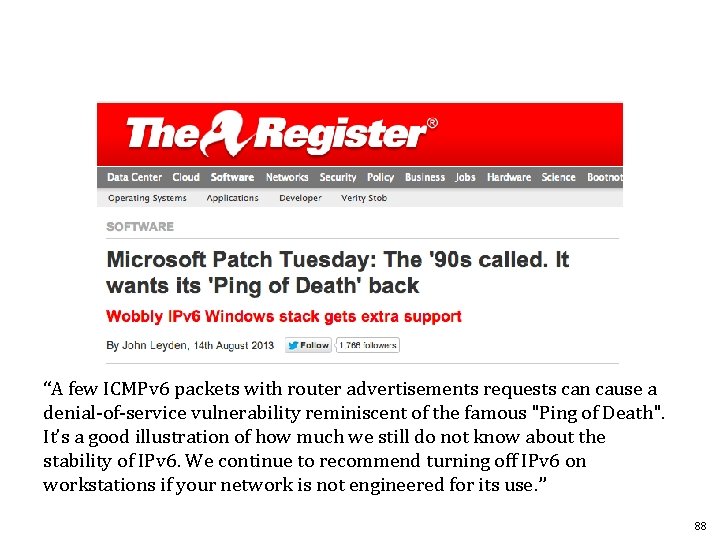
“A few ICMPv 6 packets with router advertisements requests can cause a denial-of-service vulnerability reminiscent of the famous "Ping of Death". It’s a good illustration of how much we still do not know about the stability of IPv 6. We continue to recommend turning off IPv 6 on workstations if your network is not engineered for its use. ” 88
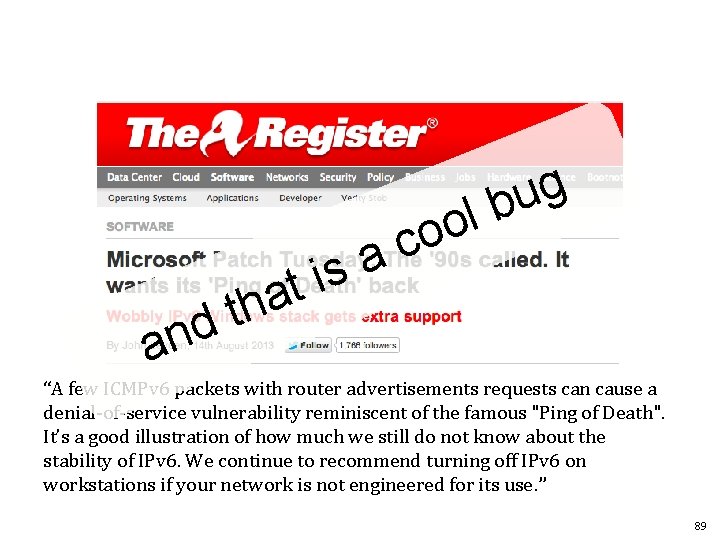
g u lb s i t ha t d n a o o ac “A few ICMPv 6 packets with router advertisements requests can cause a denial-of-service vulnerability reminiscent of the famous "Ping of Death". It’s a good illustration of how much we still do not know about the stability of IPv 6. We continue to recommend turning off IPv 6 on workstations if your network is not engineered for its use. ” 89
- Slides: 89