
Introduction to Computer Science Computer Programming Lecture e
- Slides: 18
Introduction to Computer Science Computer Programming Lecture e This material (Comp 4 Unit 4) was developed by Oregon Health & Science University, funded by the Department of Health and Human Services, Office of the National Coordinator for Health Information Technology under Award Number 90 WT 0001. This work is licensed under the Creative Commons Attribution-Non. Commercial-Share. Alike 4. 0 International License. To view a copy of this license, visit http: //creativecommons. org/licenses/by-nc-sa/4. 0/.
Computer Programming Learning Objectives - 1 • Define the purpose of programming languages (Lecture a) • Differentiate between the different types of programming languages and list commonly used ones (Lecture a) • Explain the compiling and interpreting process for computer programs (Lecture b) 2
Computer Programming Learning Objectives - 2 • Learn basic programming concepts including variable declarations, assignment statements, expressions, conditional statements and loops (Lectures c, d) • Describe advanced programming concepts including objects and modularity (Lecture e) 3
Object-Oriented Programming • Object-oriented programming (OOP) is a popular paradigm. Examples: – C++, C#, Java, Python, Ruby • Supports important software engineering principles • Graphical user interface (GUI) programming naturally conforms to OOP 4
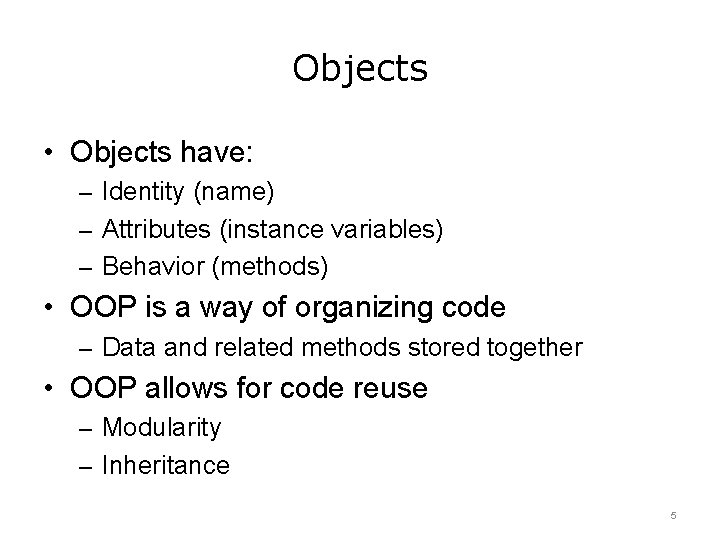
Objects • Objects have: – Identity (name) – Attributes (instance variables) – Behavior (methods) • OOP is a way of organizing code – Data and related methods stored together • OOP allows for code reuse – Modularity – Inheritance 5
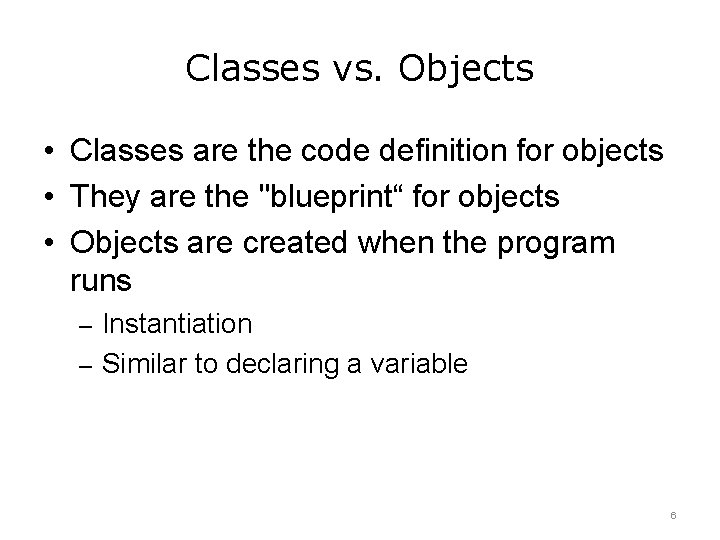
Classes vs. Objects • Classes are the code definition for objects • They are the "blueprint“ for objects • Objects are created when the program runs – Instantiation – Similar to declaring a variable 6
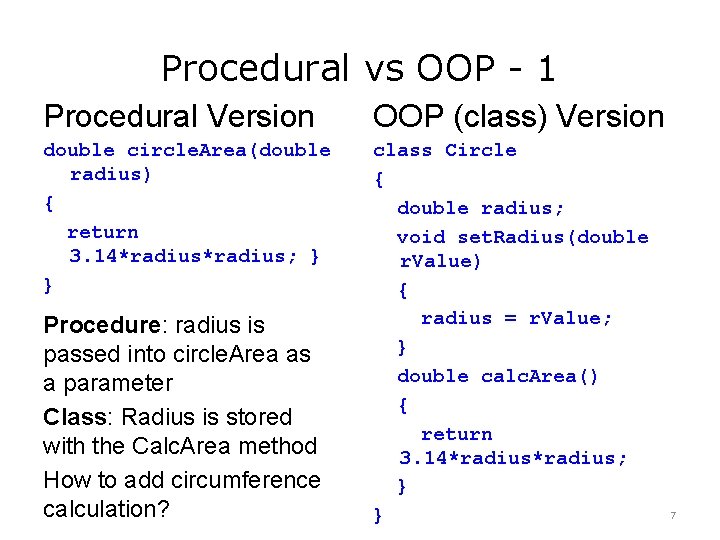
Procedural vs OOP - 1 Procedural Version OOP (class) Version double circle. Area(double radius) { return 3. 14*radius; } } class Circle { double radius; void set. Radius(double r. Value) { radius = r. Value; } double calc. Area() { return 3. 14*radius; } } Procedure: radius is passed into circle. Area as a parameter Class: Radius is stored with the Calc. Area method How to add circumference calculation? 7
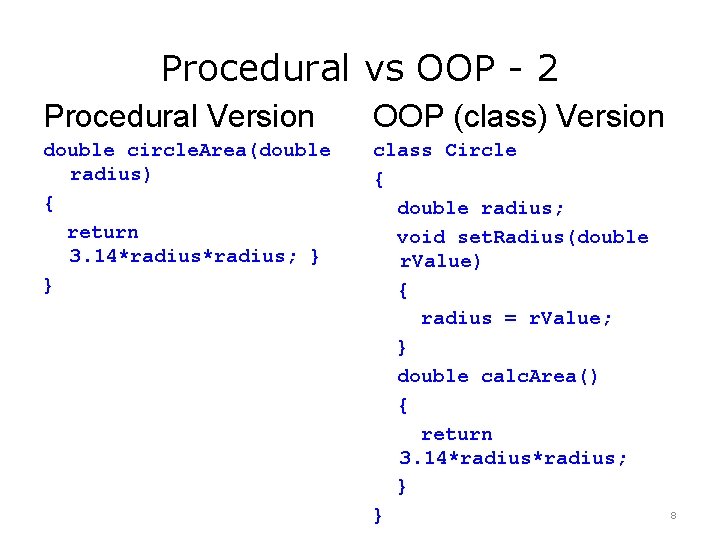
Procedural vs OOP - 2 Procedural Version OOP (class) Version double circle. Area(double radius) { return 3. 14*radius; } } class Circle { double radius; void set. Radius(double r. Value) { radius = r. Value; } double calc. Area() { return 3. 14*radius; } } 8
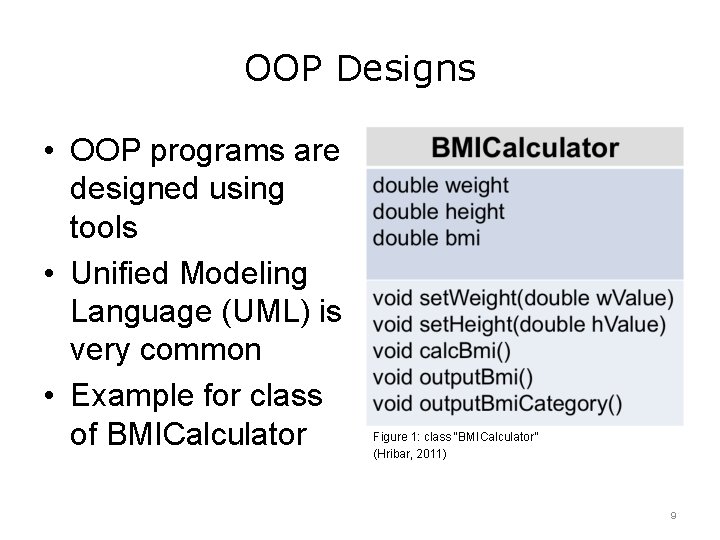
OOP Designs • OOP programs are designed using tools • Unified Modeling Language (UML) is very common • Example for class of BMICalculator Figure 1: class “BMICalculator” (Hribar, 2011) 9
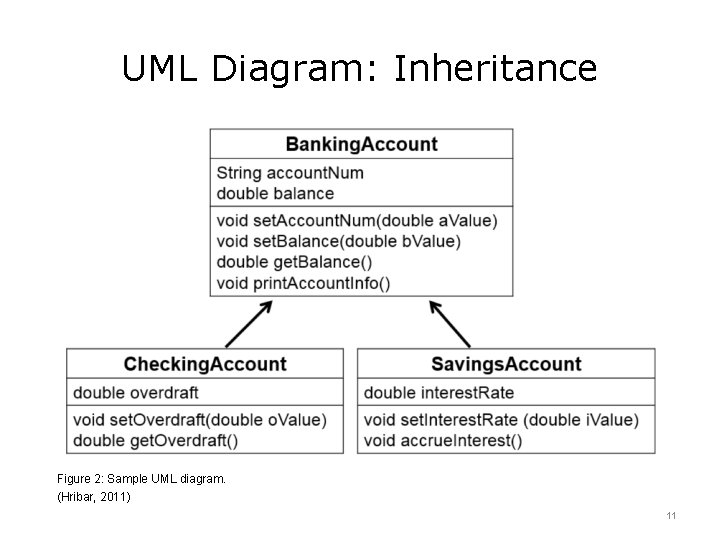
Inheritance • Inheritance is a powerful feature of OOP • Classes can inherit methods and instance variables • Makes coding less redundant • Allows for polymorphism 10
UML Diagram: Inheritance Figure 2: Sample UML diagram. (Hribar, 2011) 11
Modularity • Separation of code into components such as objects • Non-OOP languages implement modularity – Procedures • Allows for – Reuse of code – Maintainability 12
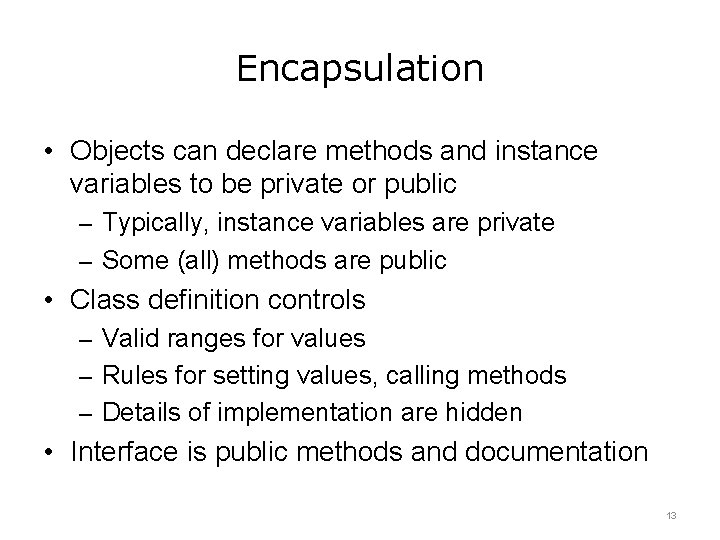
Encapsulation • Objects can declare methods and instance variables to be private or public – Typically, instance variables are private – Some (all) methods are public • Class definition controls – Valid ranges for values – Rules for setting values, calling methods – Details of implementation are hidden • Interface is public methods and documentation 13
Computer Programming Summary – Lecture e • This lecture introduced: – Object-oriented programming – Inheritance – Modularity – Encapsulation – Differences between classes and objects 14
Computer Programming Summary • This unit covered: – The purpose of programming languages – Different types of programming languages – The compilation/interpreter process – Programming language constructs – Object-oriented programming (OOP) – How programs are designed and implemented – What code looks like – What objects are and why they are used 15
Computer Programming References – 1 – Lecture e References Eck, D. (2011). Introduction to Programming Using Java (6 th ed. ). Retrieved from http: //math. hws. edu/javanotes/ Lesson: Object-Oriented Programming Concepts (2011). In The Java Tutorials. Retrieved November 13, 2011. Available from http: //docs. oracle. com/javase/tutorial/java/concepts/. Morley, D. , & Parker, C. S. (2010). Chapter 13: Program Development and Programming Languages. In Understanding Computers Today and Tomorrow, 12 th Edition introductory. Boston: Course Technology. Parsons, J. J. , & Oja, D. (2010). Chapter 12: Computer Programming. In New Perspectives on Computer Concepts 2011: Comprehensive (13 th ed. ). Boston: Course Technology. Gosling, J. (1995, February). Java: An Overview. Reprinted in: Treichel, J. & Holzer, M. , (Eds. ). Sun Microsystems Laboratories: The First Ten Years 1991− 2001. (7 -2). Sierra, K. , & Bates, B. (2009). Head First Java (2 nd Ed. ). O’Reilly Media. 16
Computer Programming References – 2 – Lecture e Charts, Tables, Figures Figure 1: BMI Calculator (Hribar, 2011) Figure 2: Child classes inherit all methods and instance variables from parent class (Hribar, 2011). 17
Introduction to Computer Science Computer Programming Lecture e This material was developed by Oregon Health & Science University, funded by the Department of Health and Human Services, Office of the National Coordinator for Health Information Technology under Award Number 90 WT 0001. 18