
INTRODUCTION TO COMPARATIVE POLITICS STUDENT NOTES SET 2
- Slides: 49
INTRODUCTION TO COMPARATIVE POLITICS STUDENT NOTES – SET 2
The Comparative Method • Comparative politics through much of the Cold War (late 1940 s–early 1990 s) was dominated by the • Three Worlds System: The typology that prevailed during the Cold War, dividing states into three groups: the democratic world, the Communist World, and the poor (as measured by HDI or per capita GDP). • Developed Countries, Developing Countries, and Least Developed Countries.
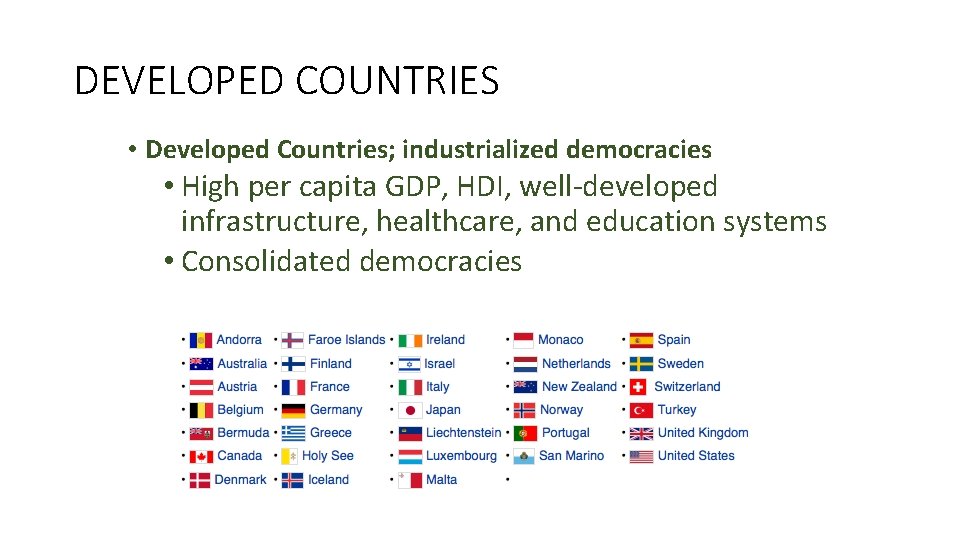
DEVELOPED COUNTRIES • Developed Countries; industrialized democracies • High per capita GDP, HDI, well-developed infrastructure, healthcare, and education systems • Consolidated democracies
DEVELOPING COUNTRIES • Developing Countries – also known as Newly Industrialized Countries (NICs) or Transitional democracies • Rapid economic growth, but still rather low per capita GDP, weaknesses in infrastructure, healthcare, and/or education
UNDERDEVELOPED COUNTRIES • Least Developed Countries • Low to no economic growth, poorest of the poor. Little development in infrastructure, healthcare, and education
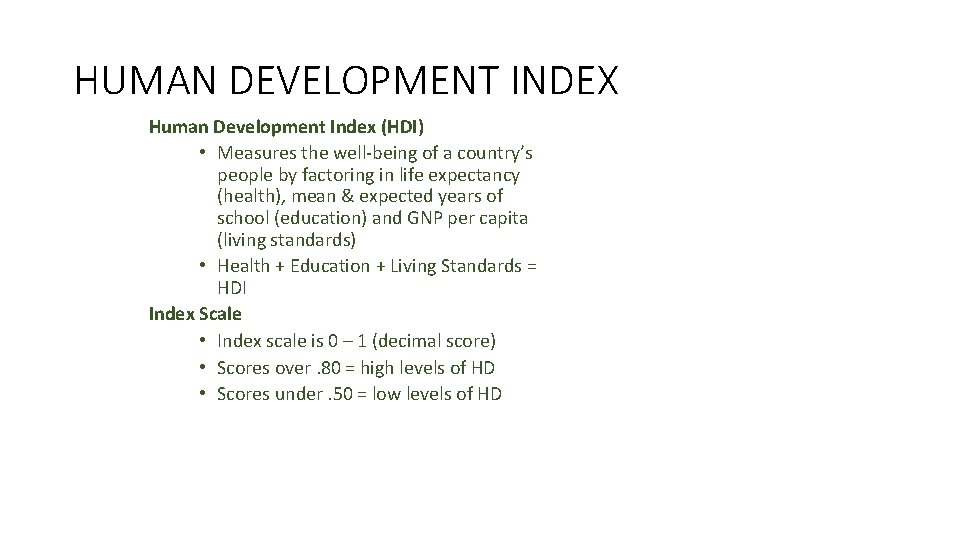
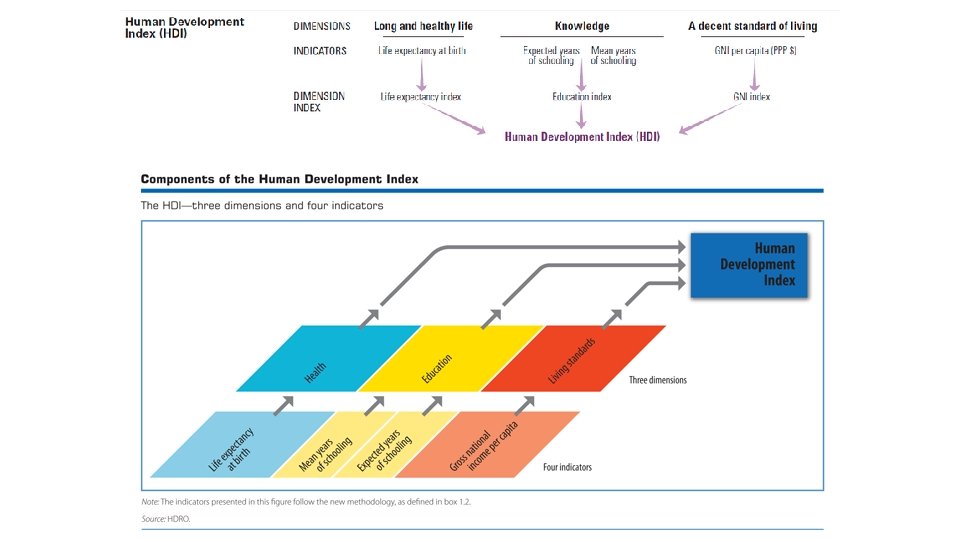
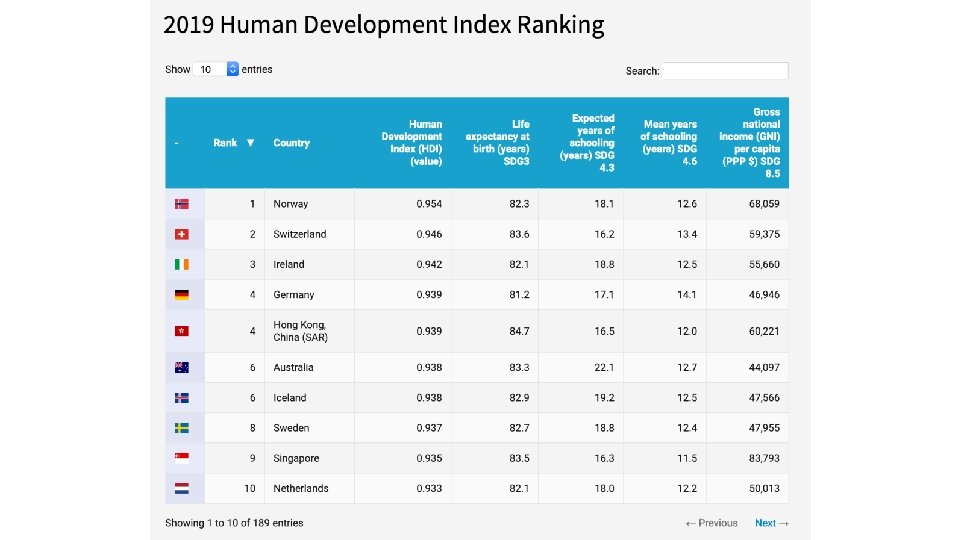
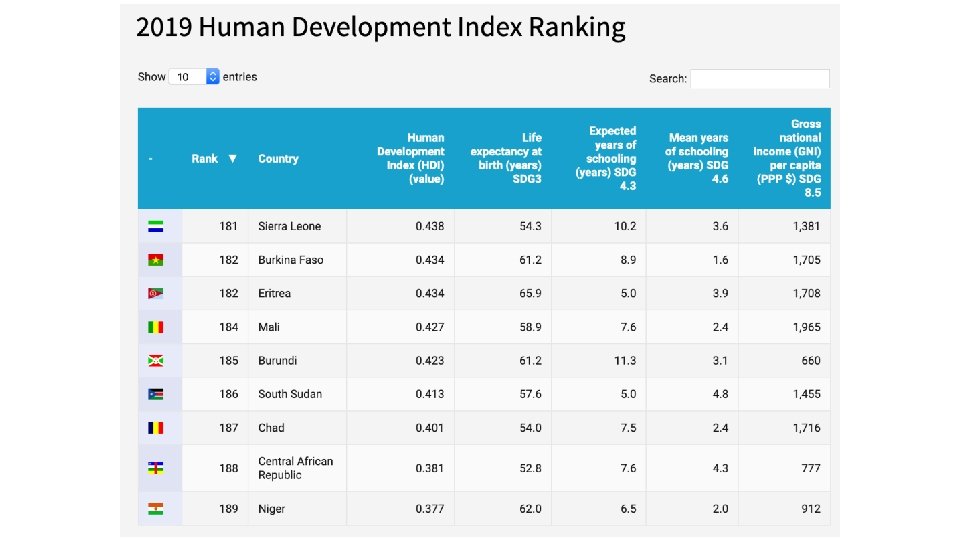
HUMAN DEVELOPMENT INDEX Human Development Index (HDI) • Measures the well-being of a country’s people by factoring in life expectancy (health), mean & expected years of school (education) and GNP per capita (living standards) • Health + Education + Living Standards = HDI Index Scale • Index scale is 0 – 1 (decimal score) • Scores over. 80 = high levels of HD • Scores under. 50 = low levels of HD
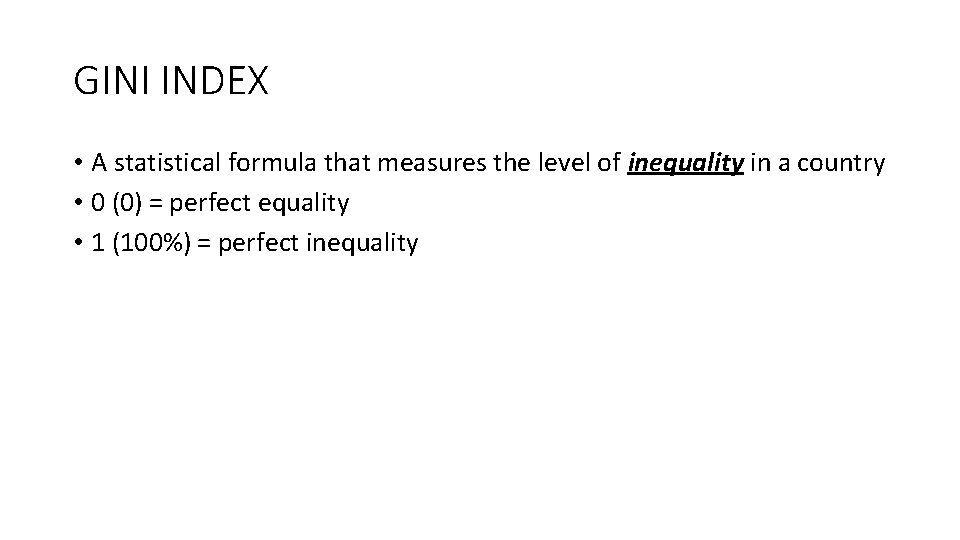
GINI INDEX • A statistical formula that measures the level of inequality in a country • 0 (0) = perfect equality • 1 (100%) = perfect inequality
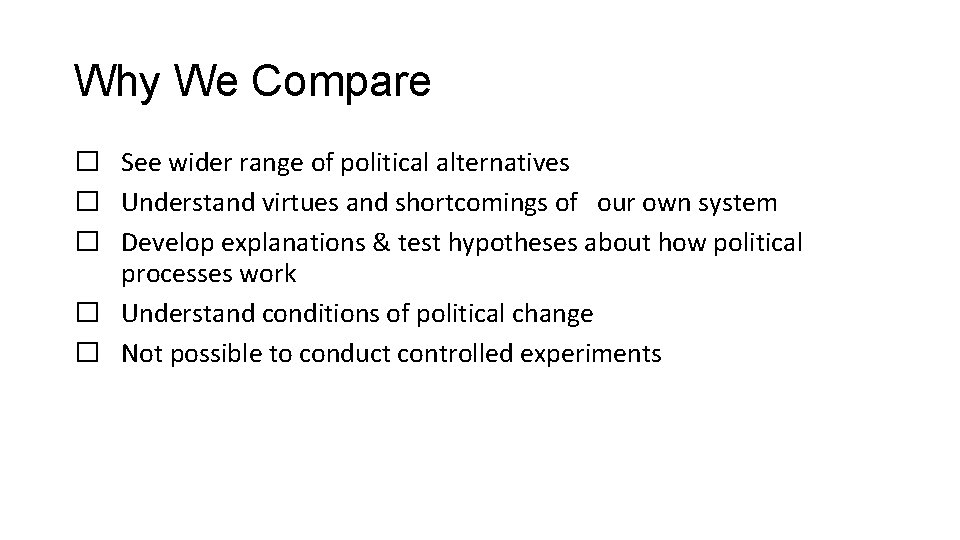
Why We Compare � See wider range of political alternatives � Understand virtues and shortcomings of our own system � Develop explanations & test hypotheses about how political processes work � Understand conditions of political change � Not possible to conduct controlled experiments
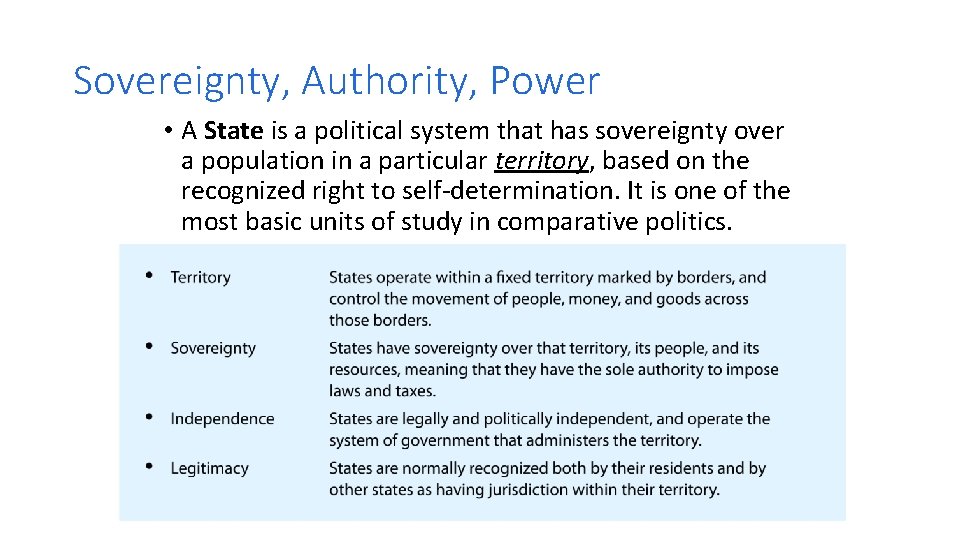
Sovereignty, Authority, Power • A State is a political system that has sovereignty over a population in a particular territory, based on the recognized right to self-determination. It is one of the most basic units of study in comparative politics.
Sovereignty, Authority, Power • Nation: Refers to a reasonably large group of people with a common culture that occupy a territory • Bound by unity arising from shared beliefs and customs (religion, language, values, institutions) • Multination states: contains more than one nation • Russia • Why would this be more difficult to govern?
NATIONALISM • Pride in one’s people and the belief that they have a unique political destiny
Sovereignty, Authority, Power • Some NATIONS do not have STATES • Can you provide an example? • Nation-state: territory of a state is occupied by only one distinct nation or people • Japan, Poland, Denmark
Sovereignty, Authority, Power • SOVEREIGNTY: The ability to carry out actions (legal authority) independent of internal actors w/I a territory • Rests with those who have ultimate right to make political decisions
LACKING SOVEREIGNTY • A state that is unable to exercise sovereignty lacks autonomy • May be exploited – may result in corruption
Sovereignty, Authority, Power • Government is the leadership or the elite in charge of running the state. • Organizations of individuals who have the power to make binding decisions • Operators of politics • Weakly institutionalized – not seen as irreplaceable • THINK: Government are the people, politics is the process by which they make decisions.
INSTITUTIONS • Executive, legislative, judiciary, and bureaucracy • Organizations that are self-perpetuating and are intrinsically valued
REGIME Regimes are the fundamental rules and norms of politics. Endure beyond individual governments and leaders Determines level of democracy • • • – Stems from regimen – guidance, rules Regimes can be institutions and/or individuals. Examples of changes in regimes: • • French Revolution overthrowing the monarchy South Africans overthrowing apartheid white rule
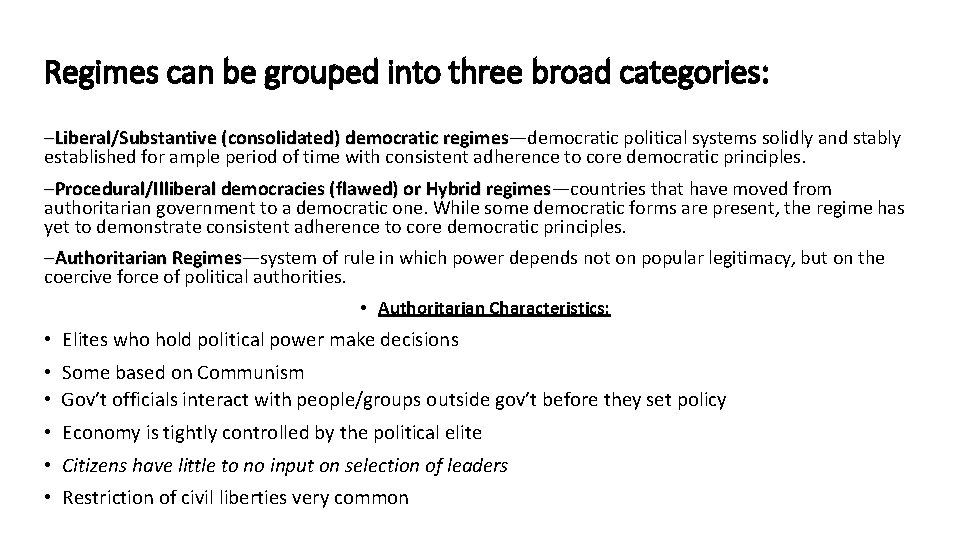
Regimes can be grouped into three broad categories: –Liberal/Substantive (consolidated) democratic regimes—democratic political systems solidly and stably regimes established for ample period of time with consistent adherence to core democratic principles. –Procedural/Illiberal democracies (flawed) or Hybrid regimes—countries that have moved from regimes authoritarian government to a democratic one. While some democratic forms are present, the regime has yet to demonstrate consistent adherence to core democratic principles. –Authoritarian Regimes—system of rule in which power depends not on popular legitimacy, but on the Regimes coercive force of political authorities. • Authoritarian Characteristics: • Elites who hold political power make decisions • Some based on Communism • Gov’t officials interact with people/groups outside gov’t before they set policy • Economy is tightly controlled by the political elite • Citizens have little to no input on selection of leaders • Restriction of civil liberties very common
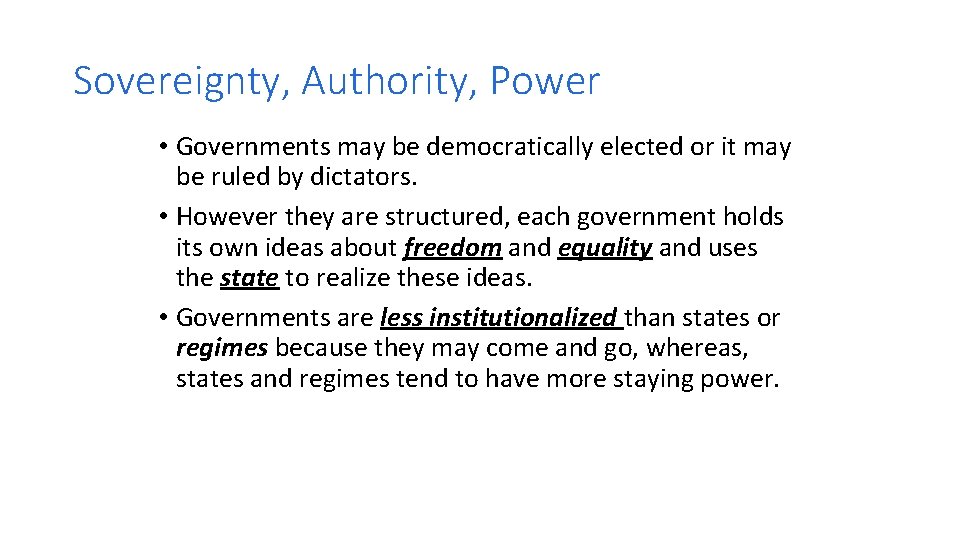
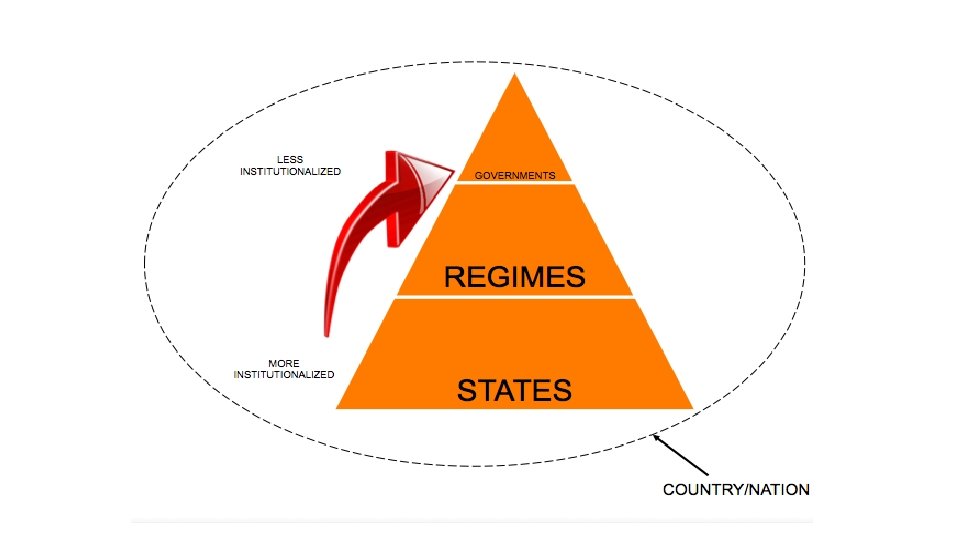
Sovereignty, Authority, Power • Governments may be democratically elected or it may be ruled by dictators. • However they are structured, each government holds its own ideas about freedom and equality and uses the state to realize these ideas. • Governments are less institutionalized than states or regimes because they may come and go, whereas, states and regimes tend to have more staying power.
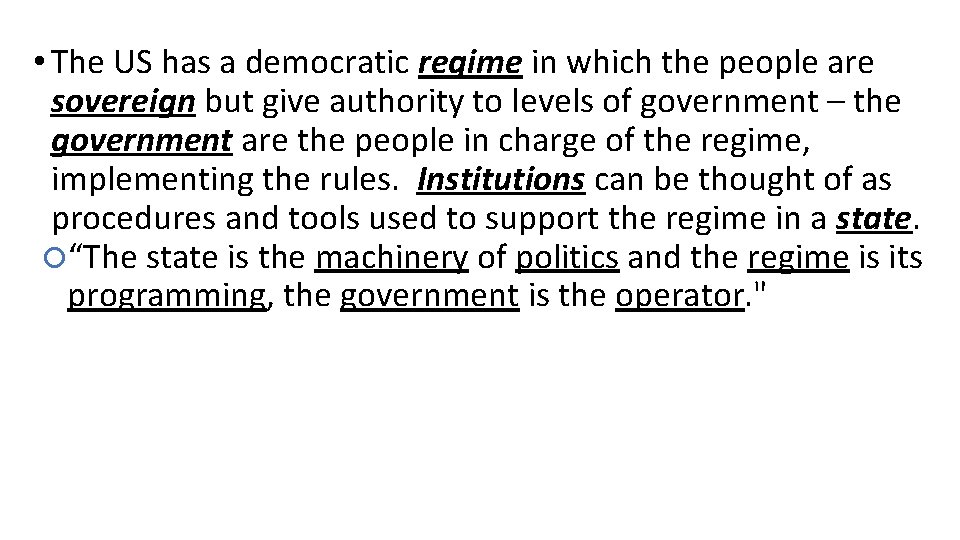
• The US has a democratic regime in which the people are sovereign but give authority to levels of government – the government are the people in charge of the regime, implementing the rules. Institutions can be thought of as procedures and tools used to support the regime in a state. “The state is the machinery of politics and the regime is its programming, the government is the operator. "
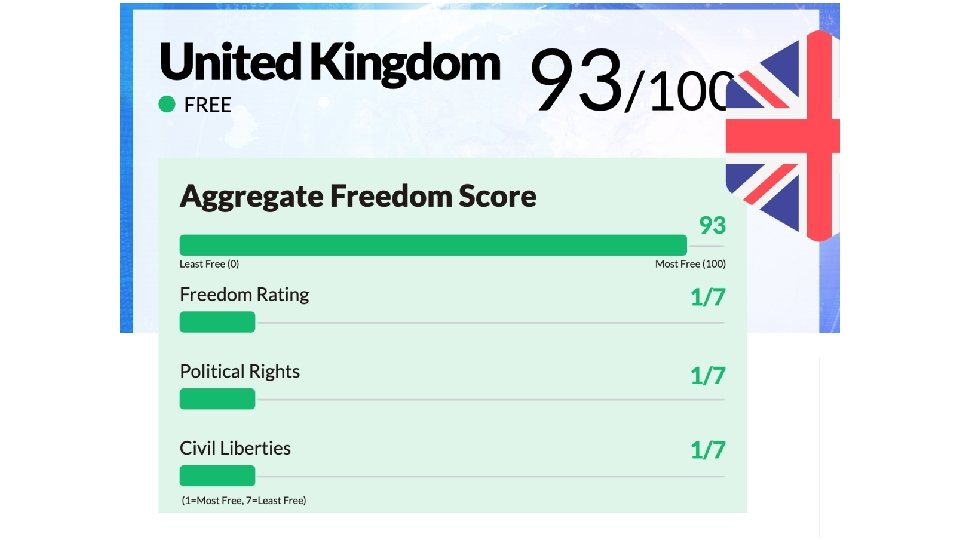
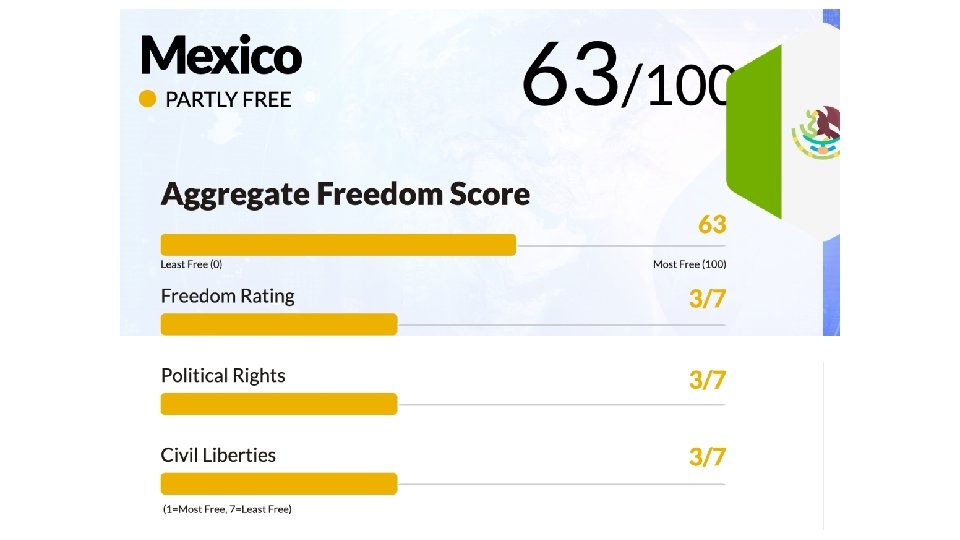
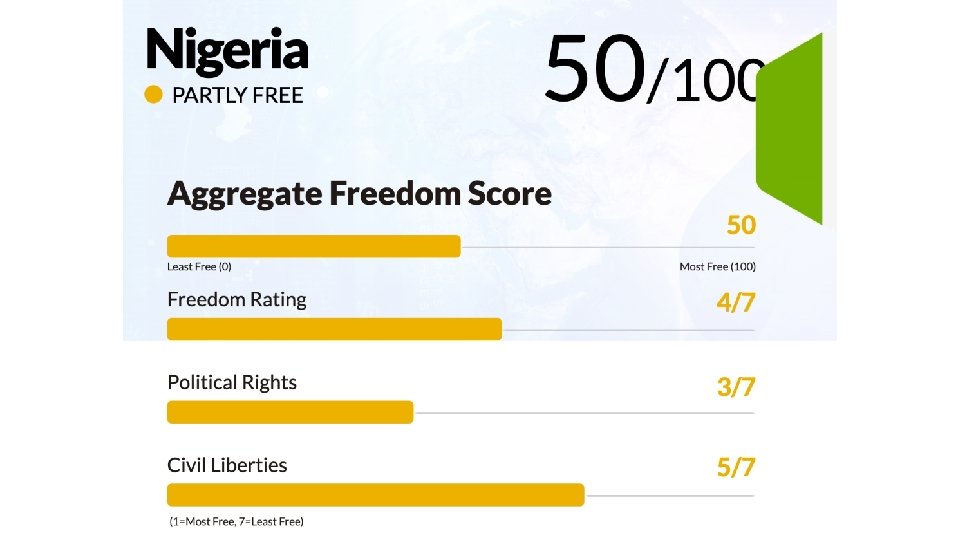
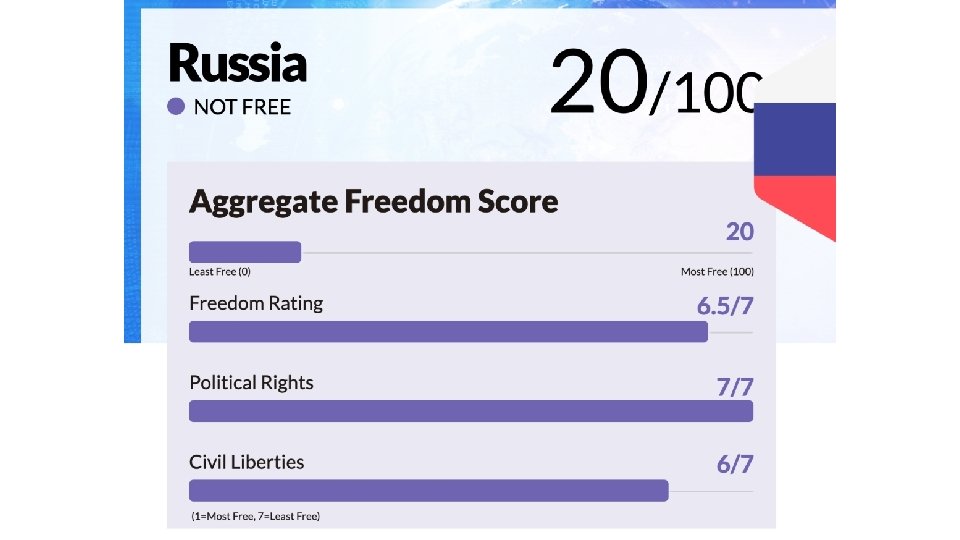
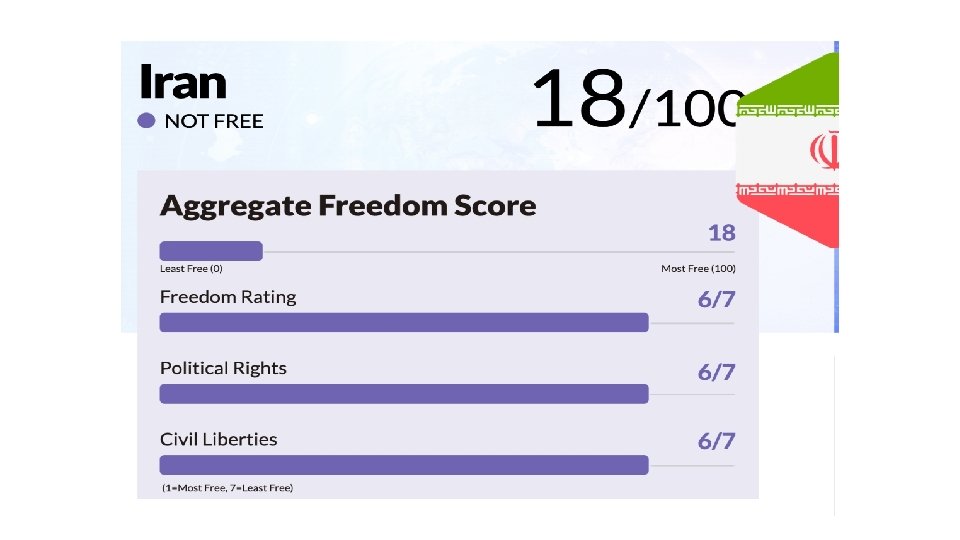
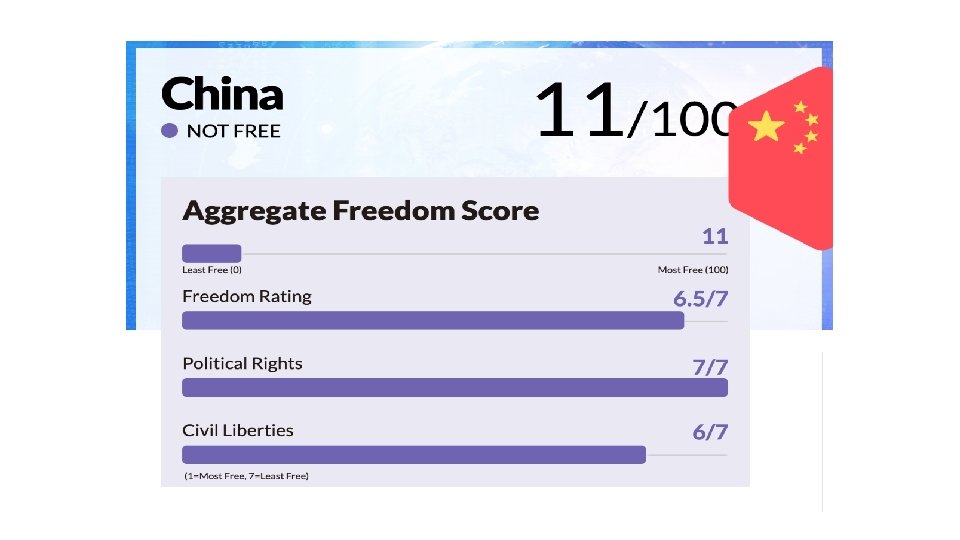
SOURCES OF POWER/AUTHORITY • Sources of power and authority include constitutions, religions, military forces, political parties, legislatures, and popular support • The Communist Party’s control over China’s military, which provided power and authority to maintain regime stability • The transition of power from dictatorial rule in Iran to a theocracy based on Islamic Sharia law after the 1979 Revolution • The transition of power in Nigeria and Mexico to multiparty republics following military rule and single-party dominance, respectively • The political elite’s backing of a strong president in Russia, creating a managed democracy with election rules favoring one party • Constitutional reforms in the United Kingdom that devolved power to multiple parliaments, allowing the regime to maintain stability
LEGITIMACY • Who has the authority to rule? • Acceptance of the government’s right to rule • The popular and voluntary acceptance of an authority • Usually a blend of three types of legitimacy
SOURCES OF LEGITIMACY • Sources of legitimacy for both democratic and authoritarian regimes can include popular elections as well as constitutional provisions. Other sources of legitimacy include nationalism, tradition, governmental effectiveness, economic growth, ideology, religious heritage and organizations, and the dominant political party’s endorsement.
Constitution (alism) • A supreme law that defines the structure of a nationstate’s regime and the legal processes governments must follow • When followed, this establishes rule of law • Needn’t be one document • Contains a set of decisive rules
Rule of Law • A governance system operating predictably under a known and transparent set of procedural rules (laws) • Also know as, constitutionalism • In all disputes, no matter how important or influential the person is, “the piece of paper wins!”
RULE OF LAW • Government and its officials are subordinate to the law • Citizens are actively engaged in making the laws that govern them by consent or direct involvement • These laws are fairly and equally applied to everyone to protect individual freedom • Citizens agree among themselves to obey the laws for the protection of all • An independent judiciary provides for equitable and impartial access to justice.
REVOLUTION • Uprising of the MASSES • Usually followed by fundamental change of government or regime type • Different than a social movement
COUP D’ETAT • Conducted by MILITARY forces • Few individuals • Often leads to military rule • Ex: Nigeria
When classifying governments, you can ask five questions to help you classify them: 1. Who can participate? 2. How is power distributed? 3. How are the legislative, executive, and judicial branches structured? 4. What is the relationship between the legislative and executive branch? 5. What type of electoral systems do they have?
Sovereignty, Authority, and Power 1. ) Who can participate? ► The two classifications are authoritarian or democratic ► Measured by: ► Electoral process and pluralism ► Civil liberties ► Functioning of government ► Political participation ► Political culture ► NEVER use the word democracy without the following: substantive, procedural, liberal, illiberal
LIBERAL DEMOCRACY • SUBSTANTIVE DEMOCRACY • Also known as CONSOLIDATED • A democracy with strong protections of civil rights and liberties, access to information, political competition and economic freedom • Focuses substantially on ELECTIONS • Should be competitive and results are likely representative of the political views of the population w/ peaceful transitions
Sovereignty, Authority, and Power 1. ) Who can participate? • LIBERAL DEMOCRACY: limits the power of the government Characterized by: • Sustained and recurring national elections • Competitive political parties • Civilian control over the military • An independent judiciary • Usually a fairly high level of economic development • Civil liberties/human rights protected
LIBERAL OR NOT? • No constitutionally sanctioned local authorities dilute national power • No constitutional court to decide constitutionality of laws • Majority in legislature has virtually unchecked power • No constitutional limits on central government
FACTORS OF CONSOLIDATED DEMOCRACIES • Free and fair elections • Regular or frequent elections • Competitive elections or competitive party system • Free civil society • Civil liberties • Civil rights • Independent judiciary • Free or independent media • Rule of law • Peaceful alternation of power • Popular sovereignty or representation of the will of the people • Civilian control of the military • Checks on executive power • All citizens eligible to run for office • Government accountability to the public • Acceptance of election results • Transparency of government actions • High political efficacy
ILLIBERAL DEMOCRACY • PROCEDURAL DEMOCRACY • A democracy without strong protections of civil rights and liberties, where the process may be censored and a low level of political competition and/or economic freedom • ELECTIONS are held BUT – fraud or vetting of candidates – results may not be reflective of people
Sovereignty, Authority, and Power 1. ) Who can participate? • Illiberal democracies - appear like other established democracies but, procedurally, are not democratic. • Elections are held without regard to civil liberties/rights/human rights or electoral competition. • Large-scale disenfranchisement, probably on ethnic/racial grounds • Access to the media is often restricted or freedom of the press is greatly curtailed. • State institutions like the judiciary, the military, or state-run industries are under the direct control of government who, then, uses it to control political opposition. • Small/weak civil society
DEMOCRATIZATION • The transformation process by which a non-democratic state changes to a government that allows free and fair elections. This eventually leads to a greater protection of civil rights and liberties and greater political and economic competition
POLITICAL LIBERALIZATION • The process of minimizing government interference/supervision of individuals and/or society • Increasing the rights enjoyed by citizens • A necessary part of democratization