
Introduction to CNS pharmacology By S Bohlooli Ph
Introduction to CNS pharmacology By S. Bohlooli, Ph. D School of medicine, Ardabil University of Medical Sciences
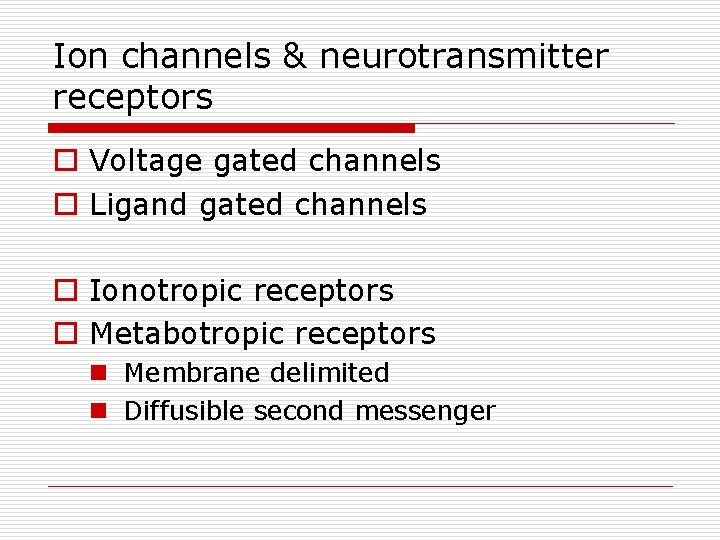
Ion channels & neurotransmitter receptors o Voltage gated channels o Ligand gated channels o Ionotropic receptors o Metabotropic receptors n Membrane delimited n Diffusible second messenger
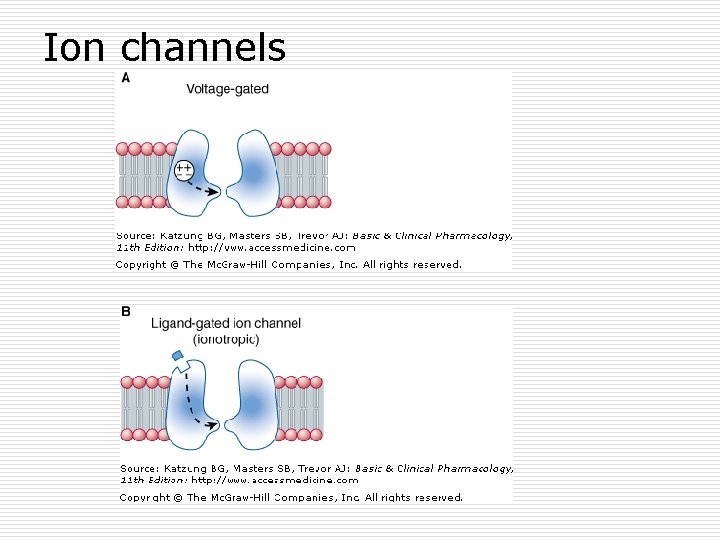
Ion channels
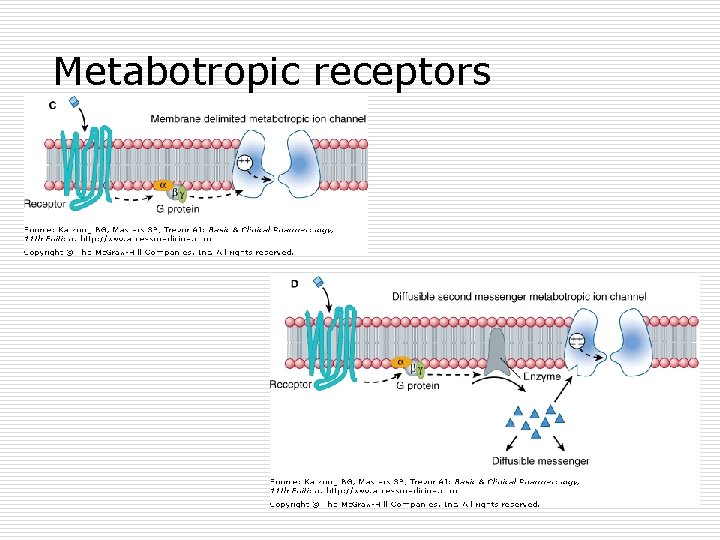
Metabotropic receptors
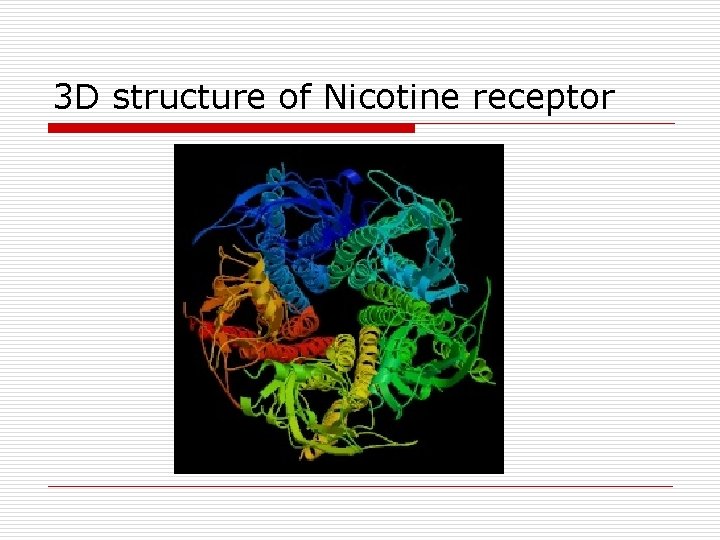
3 D structure of Nicotine receptor
The synapse & synaptic potentials o Excitatory n Excitatory post-synaptic potential (EPSP) n Ionotropic receptor o Inhibitory n Inhibitory post-synaptic potential (IPSP) n Presynaptic inhibition
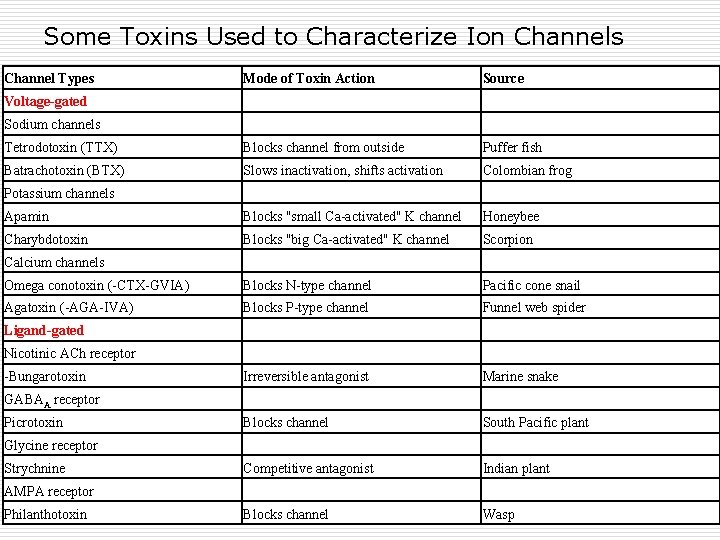
Some Toxins Used to Characterize Ion Channels Channel Types Mode of Toxin Action Source Tetrodotoxin (TTX) Blocks channel from outside Puffer fish Batrachotoxin (BTX) Slows inactivation, shifts activation Colombian frog Apamin Blocks "small Ca-activated" K channel Honeybee Charybdotoxin Blocks "big Ca-activated" K channel Scorpion Omega conotoxin (-CTX-GVIA) Blocks N-type channel Pacific cone snail Agatoxin (-AGA-IVA) Blocks P-type channel Funnel web spider Irreversible antagonist Marine snake Blocks channel South Pacific plant Competitive antagonist Indian plant Blocks channel Wasp Voltage-gated Sodium channels Potassium channels Calcium channels Ligand-gated Nicotinic ACh receptor -Bungarotoxin GABAA receptor Picrotoxin Glycine receptor Strychnine AMPA receptor Philanthotoxin
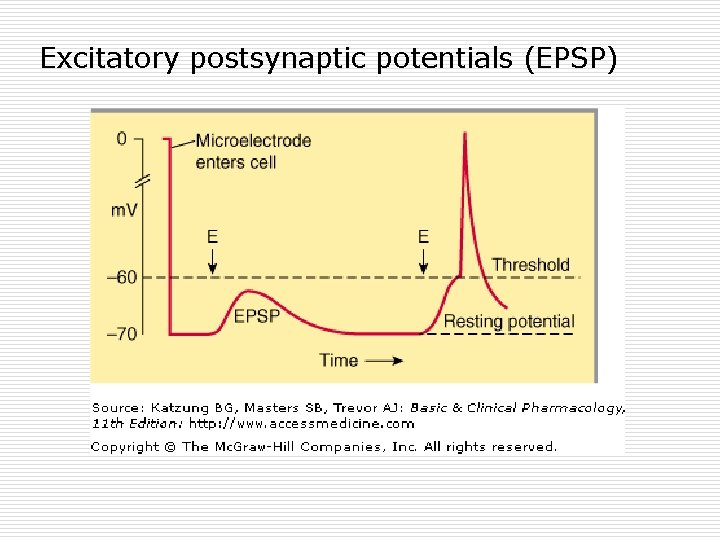
Excitatory postsynaptic potentials (EPSP)
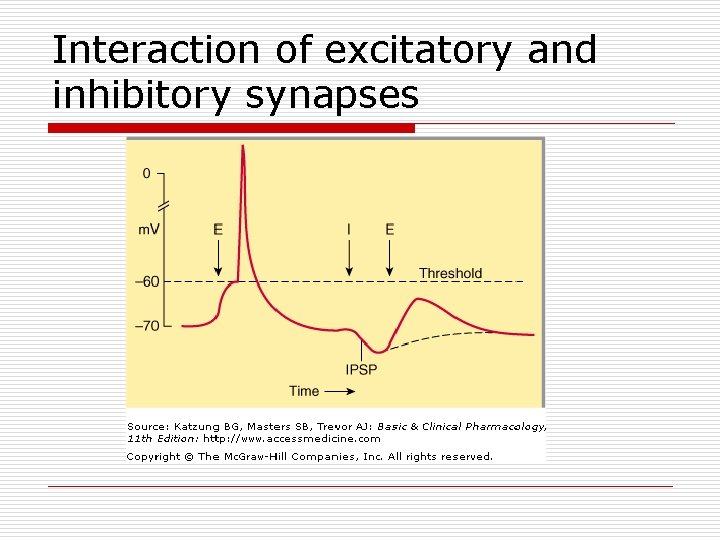
Interaction of excitatory and inhibitory synapses
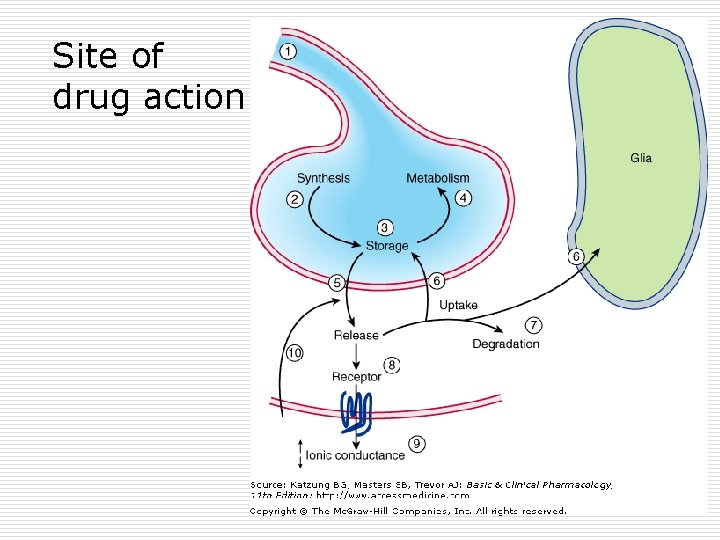
Site of drug action
Identification of central neurotransmitters o More difficult for CNS n Anatomic complexity n Limitation of available techniques
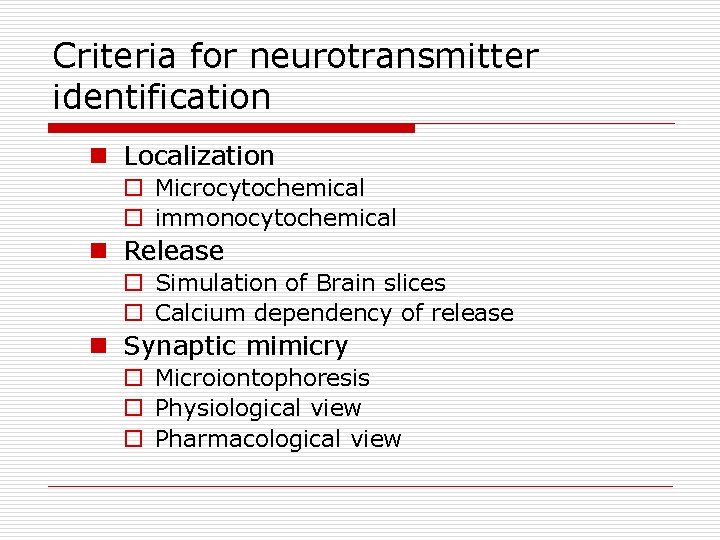
Criteria for neurotransmitter identification n Localization o Microcytochemical o immonocytochemical n Release o Simulation of Brain slices o Calcium dependency of release n Synaptic mimicry o Microiontophoresis o Physiological view o Pharmacological view
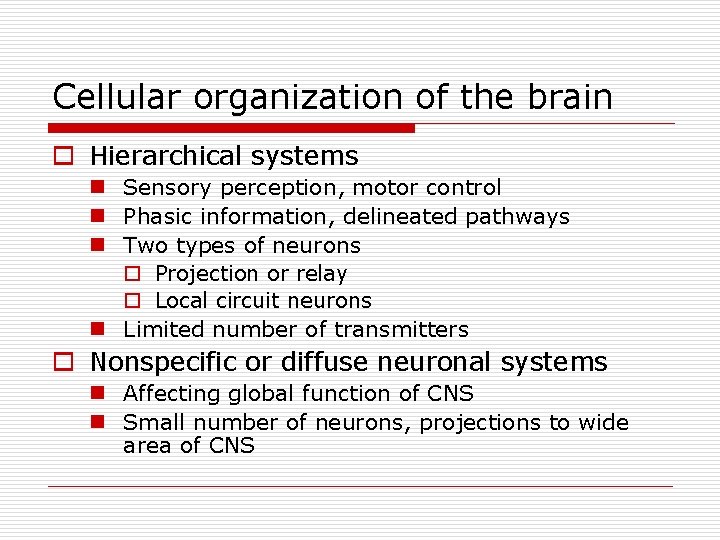
Cellular organization of the brain o Hierarchical systems n Sensory perception, motor control n Phasic information, delineated pathways n Two types of neurons o Projection or relay o Local circuit neurons n Limited number of transmitters o Nonspecific or diffuse neuronal systems n Affecting global function of CNS n Small number of neurons, projections to wide area of CNS
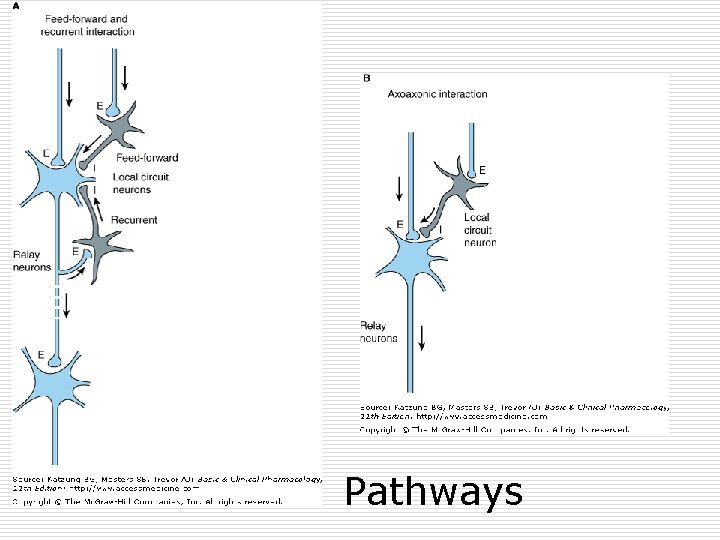
Pathways
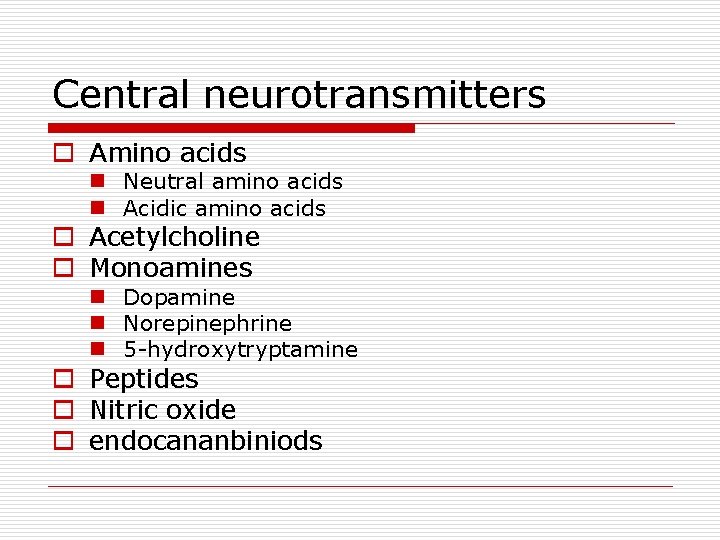
Central neurotransmitters o Amino acids n Neutral amino acids n Acidic amino acids o Acetylcholine o Monoamines n Dopamine n Norepinephrine n 5 -hydroxytryptamine o Peptides o Nitric oxide o endocananbiniods
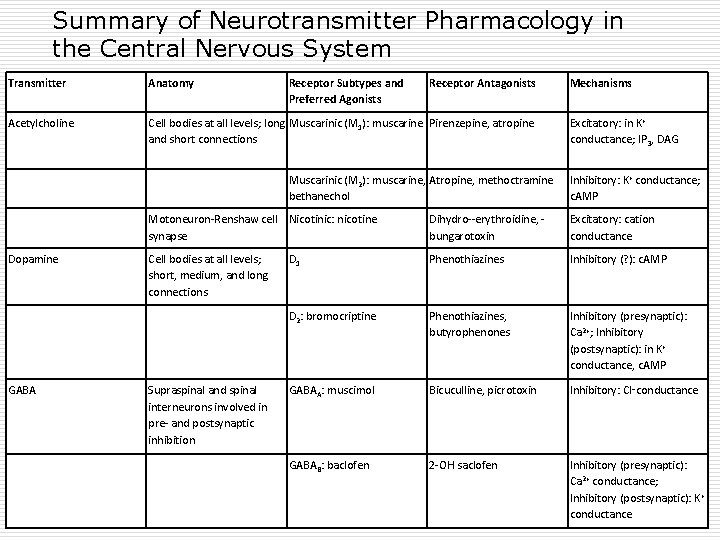
Summary of Neurotransmitter Pharmacology in the Central Nervous System Transmitter Anatomy Receptor Subtypes and Preferred Agonists Receptor Antagonists Acetylcholine Cell bodies at all levels; long Muscarinic (M 1): muscarine Pirenzepine, atropine and short connections Muscarinic (M 2): muscarine, Atropine, methoctramine bethanechol Dopamine GABA Mechanisms Excitatory: in K+ conductance; IP 3, DAG Inhibitory: K+ conductance; c. AMP Motoneuron-Renshaw cell Nicotinic: nicotine synapse Dihydro--erythroidine, bungarotoxin Excitatory: cation conductance Cell bodies at all levels; short, medium, and long connections D 1 Phenothiazines Inhibitory (? ): c. AMP D 2: bromocriptine Phenothiazines, butyrophenones Inhibitory (presynaptic): Ca 2+; Inhibitory (postsynaptic): in K+ conductance, c. AMP GABAA: muscimol Bicuculline, picrotoxin Inhibitory: Cl–conductance GABAB: baclofen 2 -OH saclofen Inhibitory (presynaptic): Ca 2+ conductance; Inhibitory (postsynaptic): K+ conductance Supraspinal and spinal interneurons involved in pre- and postsynaptic inhibition
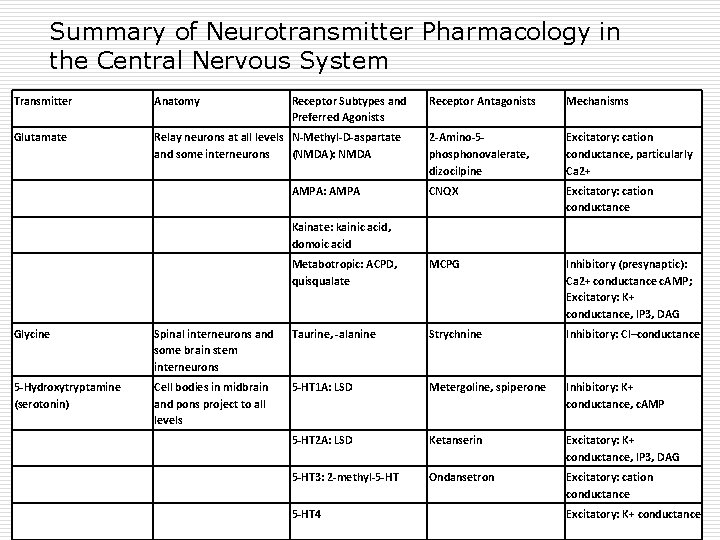
Summary of Neurotransmitter Pharmacology in the Central Nervous System Transmitter Anatomy Receptor Subtypes and Preferred Agonists Receptor Antagonists Mechanisms Glutamate Relay neurons at all levels N-Methyl-D-aspartate and some interneurons (NMDA): NMDA 2 -Amino-5 phosphonovalerate, dizocilpine Excitatory: cation conductance, particularly Ca 2+ CNQX Excitatory: cation conductance Metabotropic: ACPD, quisqualate MCPG Inhibitory (presynaptic): Ca 2+ conductance c. AMP; Excitatory: K+ conductance, IP 3, DAG AMPA: AMPA Kainate: kainic acid, domoic acid Glycine Spinal interneurons and some brain stem interneurons Taurine, -alanine Strychnine Inhibitory: Cl–conductance 5 -Hydroxytryptamine (serotonin) Cell bodies in midbrain and pons project to all levels 5 -HT 1 A: LSD Metergoline, spiperone Inhibitory: K+ conductance, c. AMP 5 -HT 2 A: LSD Ketanserin Excitatory: K+ conductance, IP 3, DAG 5 -HT 3: 2 -methyl-5 -HT Ondansetron Excitatory: cation conductance 5 -HT 4 Excitatory: K+ conductance

Summary of Neurotransmitter Pharmacology in the Central Nervous System Transmitter Anatomy Receptor Subtypes and Preferred Agonists Receptor Antagonists Mechanisms Norepinephrine Cell bodies in pons and brain stem project to all levels 1: phenylephrine Prazosin Excitatory: K+ conductance, IP 3, DAG 2: clonidine Yohimbine Inhibitory (presynaptic): Ca 2+ conductance; Inhibitory: K+ conductance, c. AMP 1: isoproterenol, dobutamine Atenolol, practolol Excitatory: K+ conductance, c. AMP 2: albuterol Butoxamine Inhibitory: may involve in electrogenic sodium pump; c. AMP H 1: 2(m-fluorophenyl)histamine Mepyramine Excitatory: K+ conductance, IP 3, DAG H 2: dimaprit Ranitidine Excitatory: K+ conductance, c. AMP H 3: R--methyl-histamine Thioperamide Inhibitory autoreceptors Histamine Cells in ventral posterior hypothalamus

Summary of Neurotransmitter Pharmacology in the Central Nervous System Transmitter Anatomy Receptor Subtypes and Receptor Antagonists Mechanisms Preferred Agonists Opioid peptides Cell bodies at all levels; long and short connections Mu: bendorphin Naloxone Inhibitory (presynaptic): Ca 2+ conductance, c. AMP Delta: enkephalin Naloxone Inhibitory (postsynaptic): K+ conductance, c. AMP Kappa: dynorphin Naloxone Tachykinins Primary sensory NK 1: Substance P neurons, cell bodies at methylester, all levels; long and aprepitant short connections Aprepitant Excitatory: K+ conductance, IP 3, DAG Rimonabant Inhibitory (presynaptic): Ca 2+ conductance, c. AMP NK 2 NK 3 Endocannabinoids Widely distributed CB 1: Anandamide, 2 arachidonyglycerol
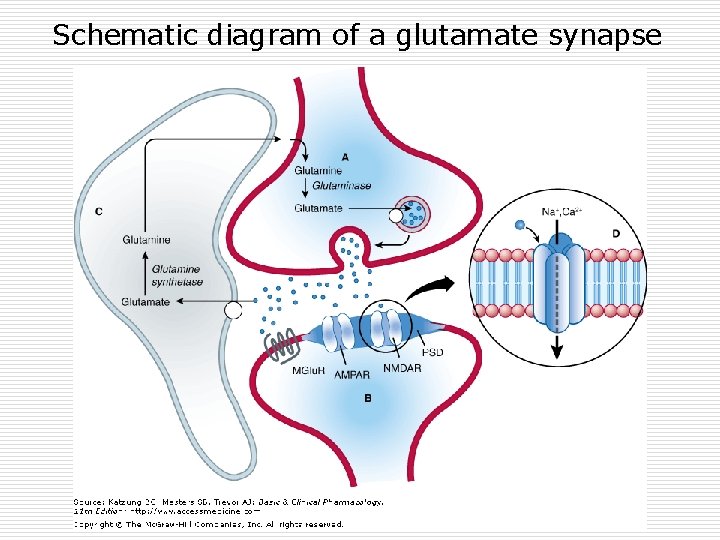
Schematic diagram of a glutamate synapse
- Slides: 20