
Introduction to Climate Change in the East African
- Slides: 46
Introduction to Climate Change in the East African Savanna: Supplementary Material to Lesson 1 of the “East Africa Climate Change Curriculum Unit” Available at http: //www. eaclipse. msu. edu/teaching_materials. html Lesson 1 by Barbara Naess. The Eaclipse Project is supported by National Science Foundation Award No. BCS/CNH 0709671. http: //eaclipse. msu. edu © 2010 Michigan State University Board of Trustees
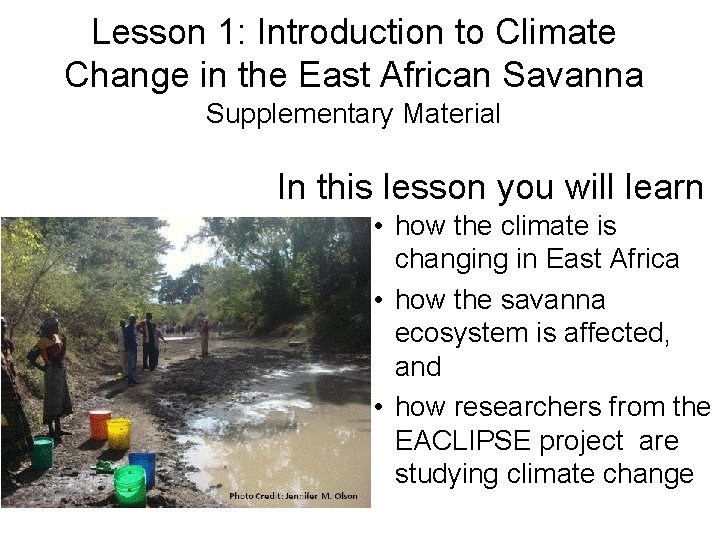
Lesson 1: Introduction to Climate Change in the East African Savanna Supplementary Material In this lesson you will learn • how the climate is changing in East Africa • how the savanna ecosystem is affected, and • how researchers from the EACLIPSE project are studying climate change
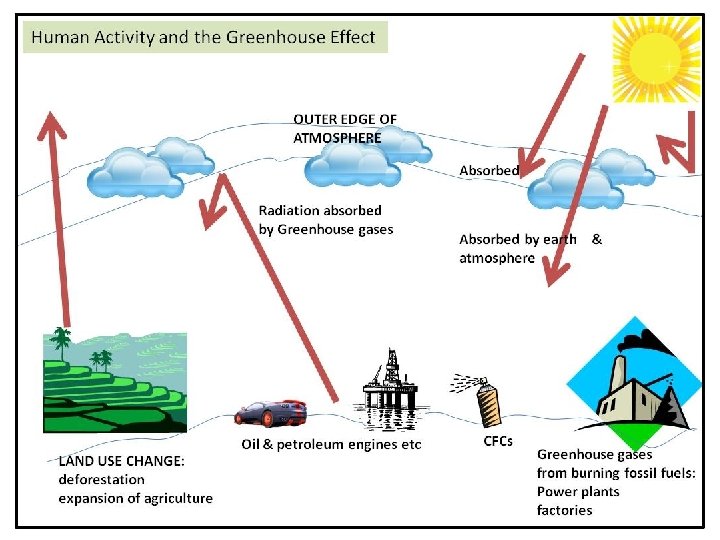
Why is it important to learn about climate change in East Africa? • Climate change affects all parts of the globe. • Our actions in the US affect other countries. • Greenhouse gases from the US contribute to changes in climate in other parts of the world. • Climate change in other parts of the world affects the US. • When people cut forests or remove vegetation in other parts of the world, it reduces the amount of oxygen produced globally. • We rely on resources that come from all over the world for food, medicine, raw materials, and energy. • What we learn about climate change in East Africa can help us understand climate change elsewhere. 3
4
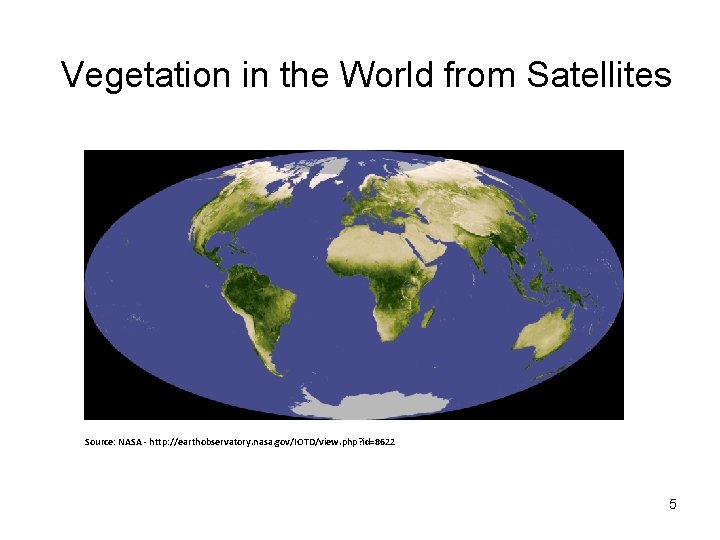
Vegetation in the World from Satellites Source: NASA - http: //earthobservatory. nasa. gov/IOTD/view. php? id=8622 5
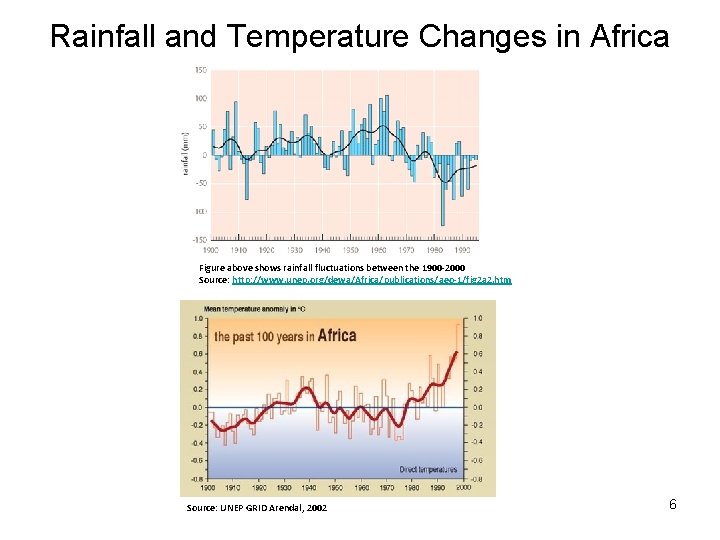
Rainfall and Temperature Changes in Africa Figure above shows rainfall fluctuations between the 1900 -2000 Source: http: //www. unep. org/dewa/Africa/publications/aeo-1/fig 2 a 2. htm Source: UNEP GRID Arendal, 2002 6
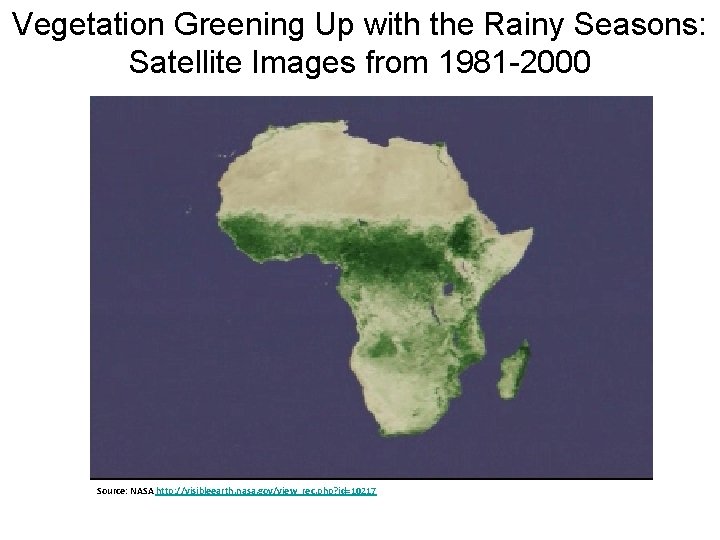
Vegetation Greening Up with the Rainy Seasons: Satellite Images from 1981 -2000 Source: NASA http: //visibleearth. nasa. gov/view_rec. php? id=10217
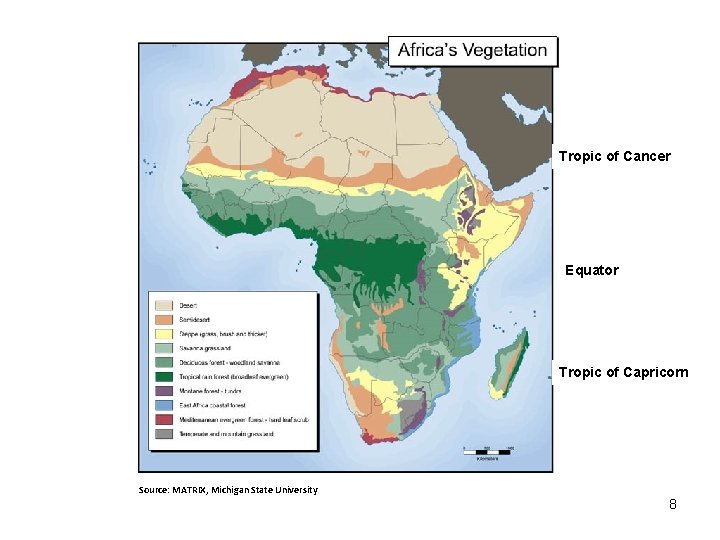
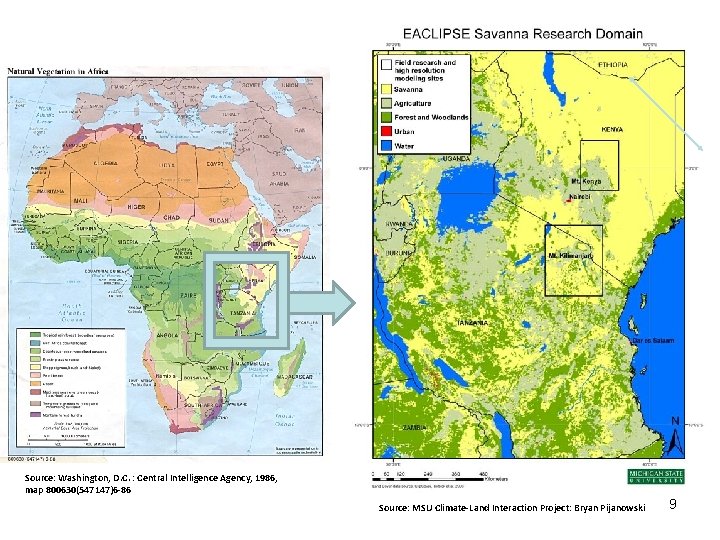
Tropic of Cancer Equator Tropic of Capricorn Source: MATRIX, Michigan State University 8
Source: Washington, D. C. : Central Intelligence Agency, 1986, map 800630(547147)6 -86 Source: MSU Climate-Land Interaction Project: Bryan Pijanowski 9
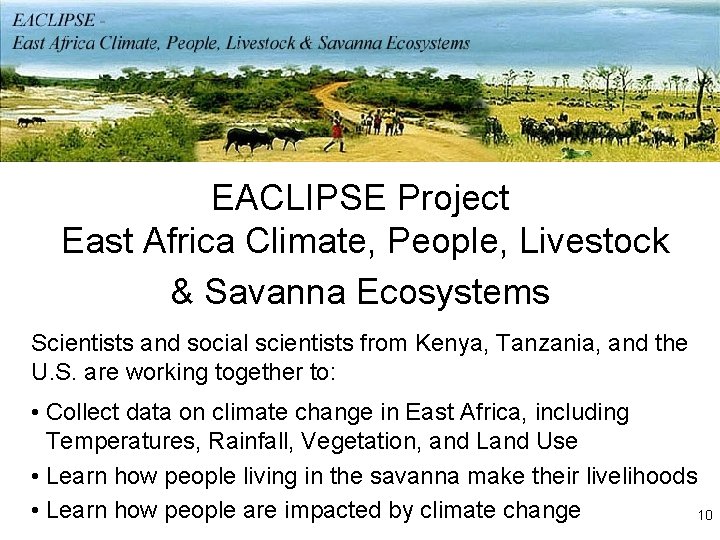
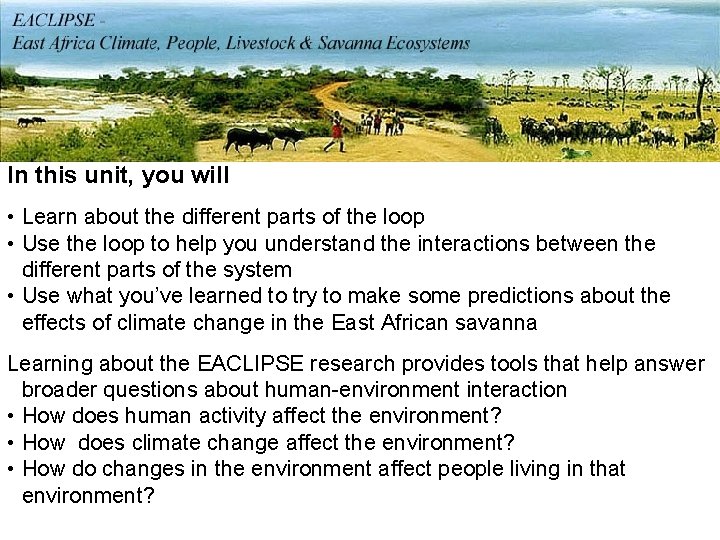
EACLIPSE Project East Africa Climate, People, Livestock & Savanna Ecosystems Scientists and social scientists from Kenya, Tanzania, and the U. S. are working together to: • Collect data on climate change in East Africa, including Temperatures, Rainfall, Vegetation, and Land Use • Learn how people living in the savanna make their livelihoods • Learn how people are impacted by climate change 10
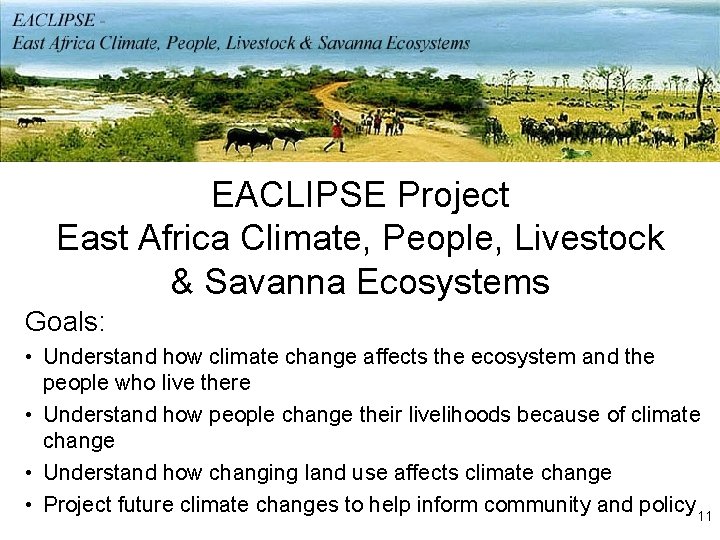
EACLIPSE Project East Africa Climate, People, Livestock & Savanna Ecosystems Goals: • Understand how climate change affects the ecosystem and the people who live there • Understand how people change their livelihoods because of climate change • Understand how changing land use affects climate change • Project future climate changes to help inform community and policy 11
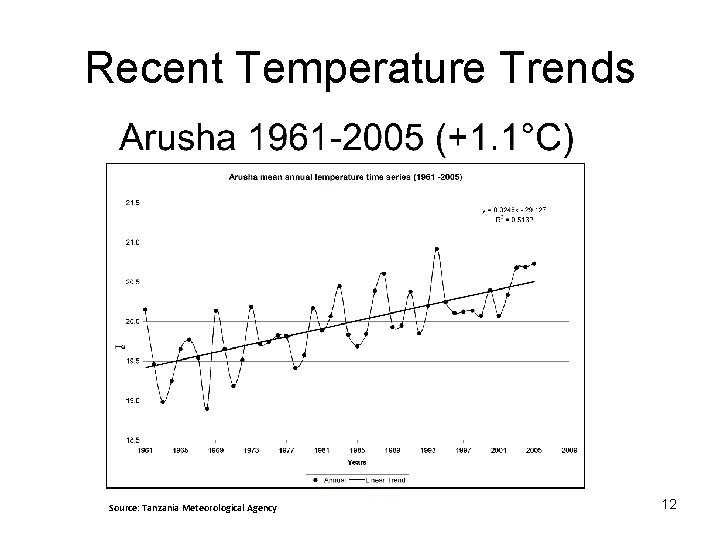
Recent Temperature Trends Source: Tanzania Meteorological Agency 12
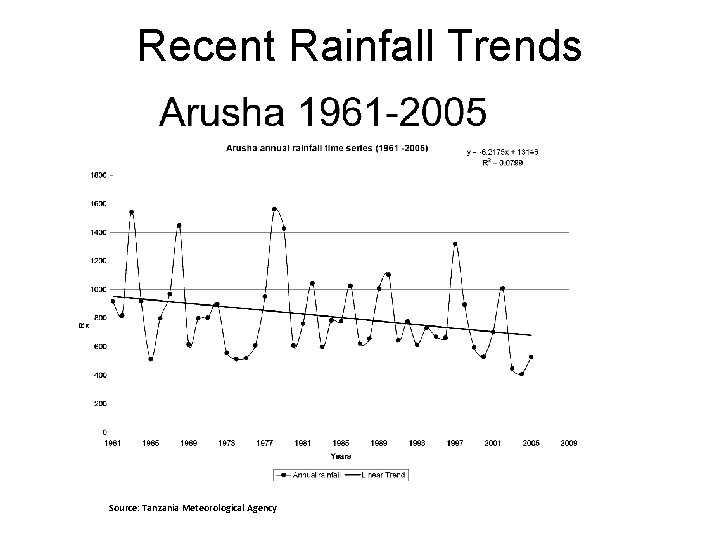
Recent Rainfall Trends Source: Tanzania Meteorological Agency
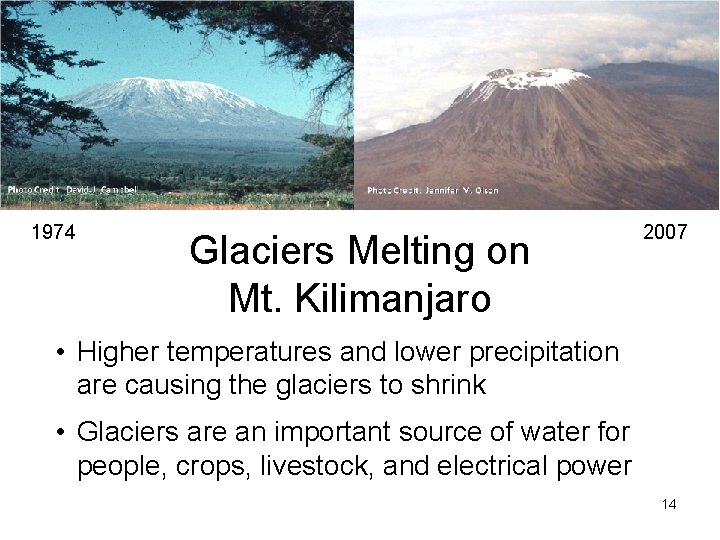
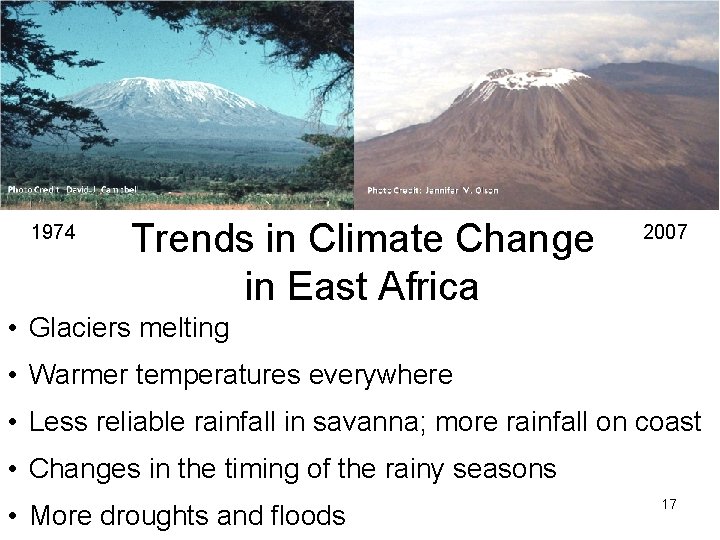
1974 Glaciers Melting on Mt. Kilimanjaro 2007 • Higher temperatures and lower precipitation are causing the glaciers to shrink • Glaciers are an important source of water for people, crops, livestock, and electrical power 14
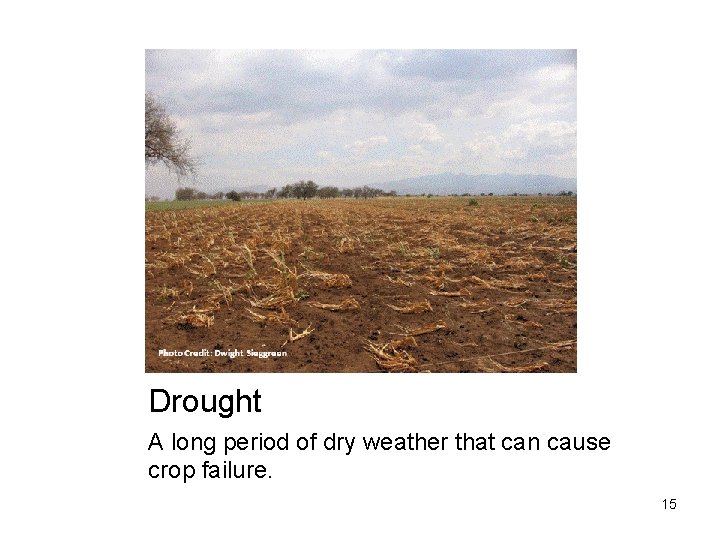
Photo credit: Dwigt Sieggreen Drought A long period of dry weather that can cause crop failure. 15
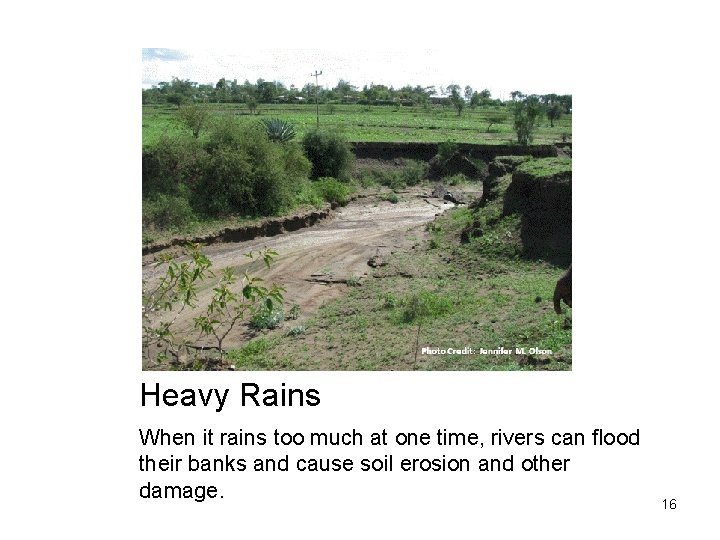
Heavy Rains When it rains too much at one time, rivers can flood their banks and cause soil erosion and other damage. 16
1974 Trends in Climate Change in East Africa 2007 • Glaciers melting • Warmer temperatures everywhere • Less reliable rainfall in savanna; more rainfall on coast • Changes in the timing of the rainy seasons • More droughts and floods 17
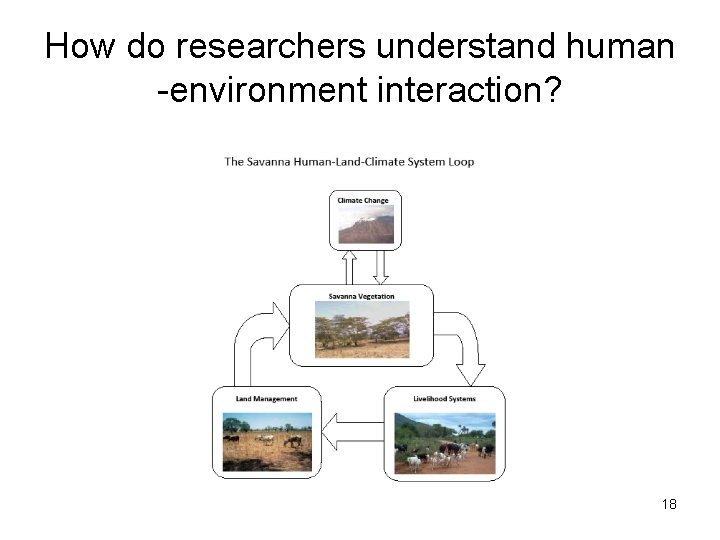
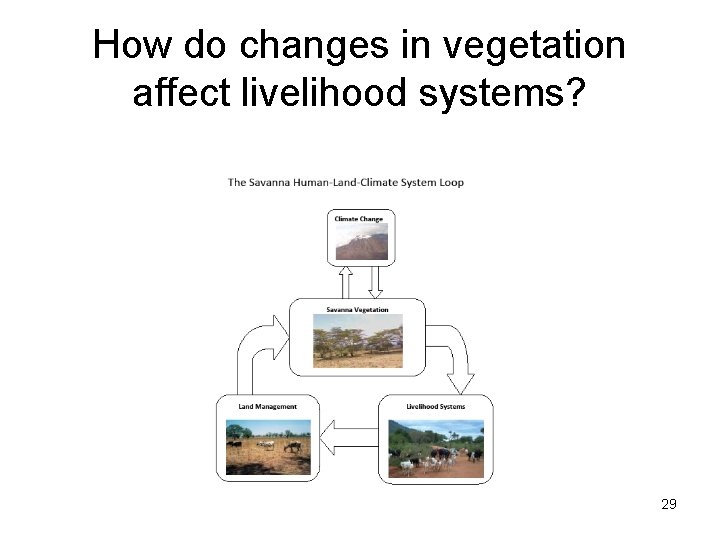
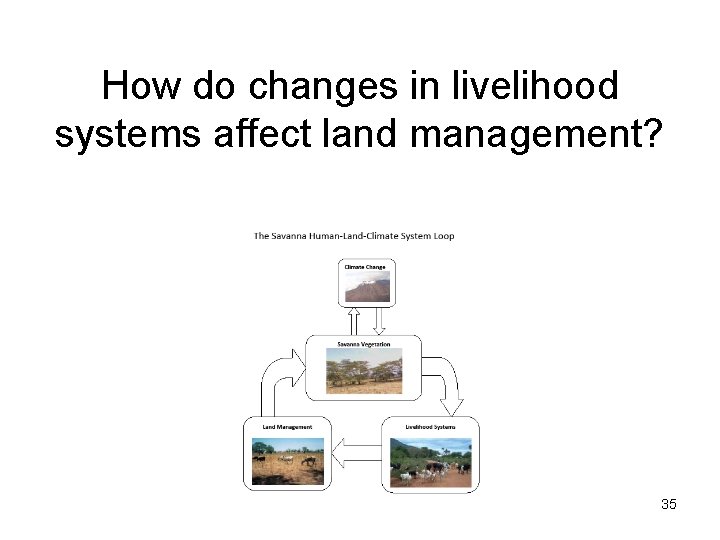
How do researchers understand human -environment interaction? 18
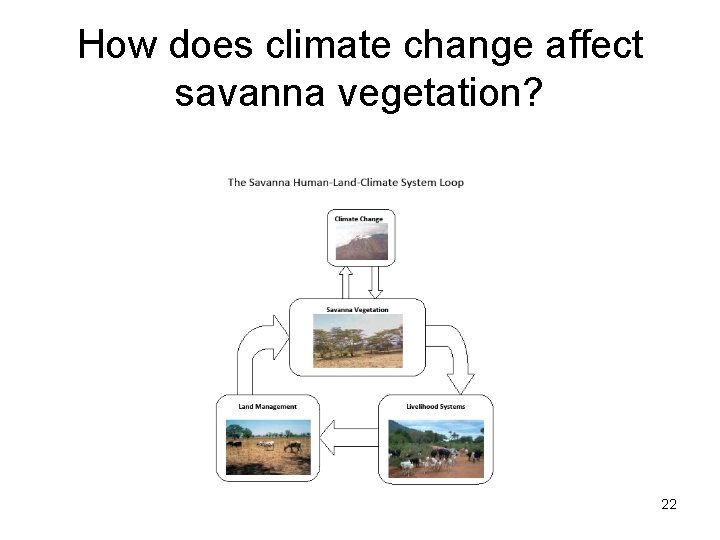
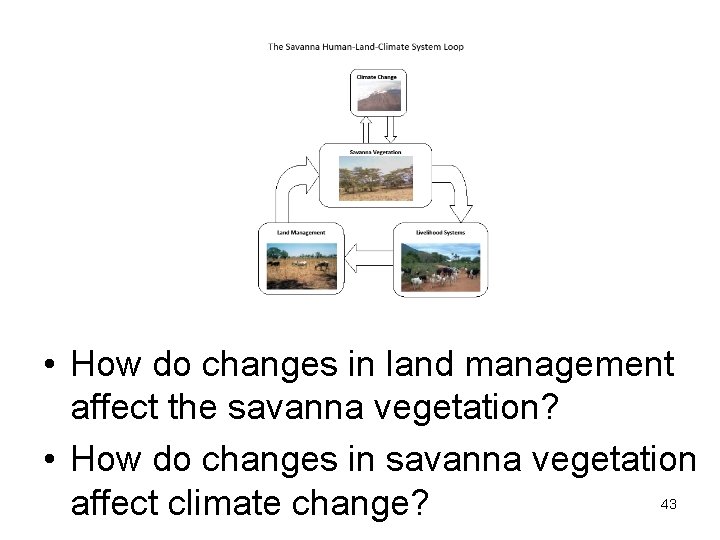
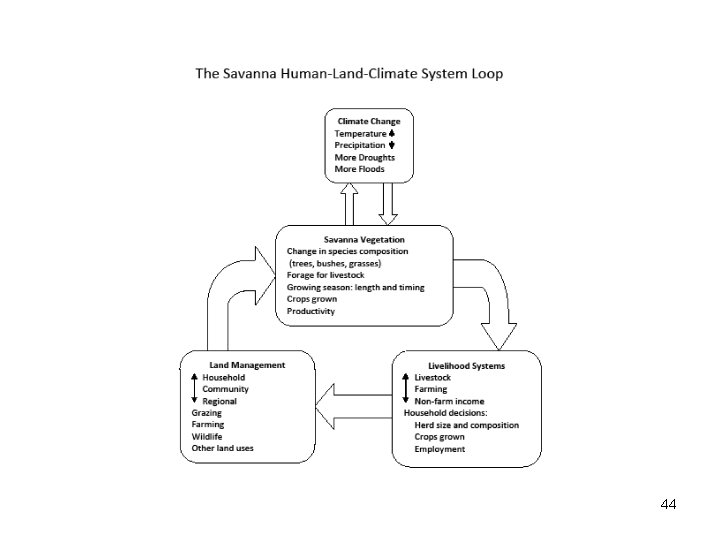
In this unit, you will • Learn about the different parts of the loop • Use the loop to help you understand the interactions between the different parts of the system • Use what you’ve learned to try to make some predictions about the effects of climate change in the East African savanna Learning about the EACLIPSE research provides tools that help answer broader questions about human-environment interaction • How does human activity affect the environment? • How does climate change affect the environment? • How do changes in the environment affect people living in that environment?
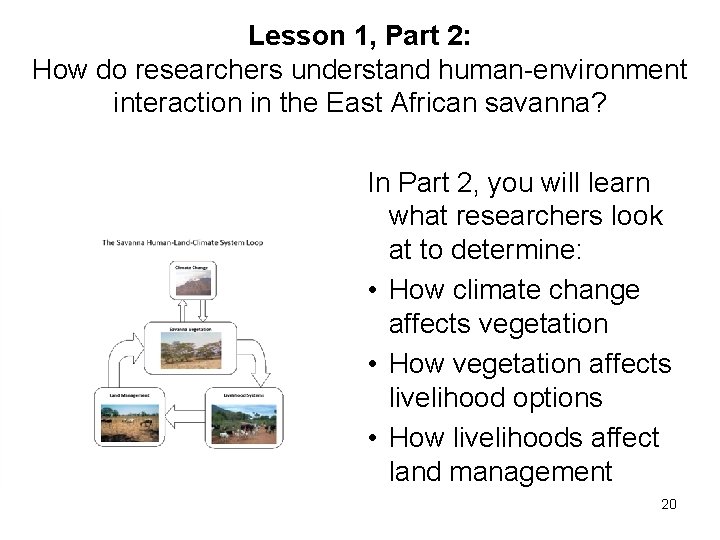
Lesson 1, Part 2: How do researchers understand human-environment interaction in the East African savanna? In Part 2, you will learn what researchers look at to determine: • How climate change affects vegetation • How vegetation affects livelihood options • How livelihoods affect land management 20
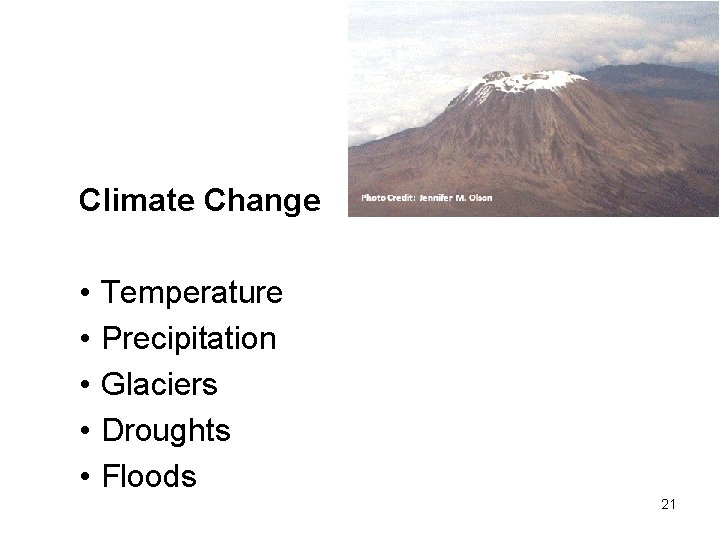
Climate Change • • • Temperature Precipitation Glaciers Droughts Floods Photo Credit: Jennifer M. Olson 21
How does climate change affect savanna vegetation? 22
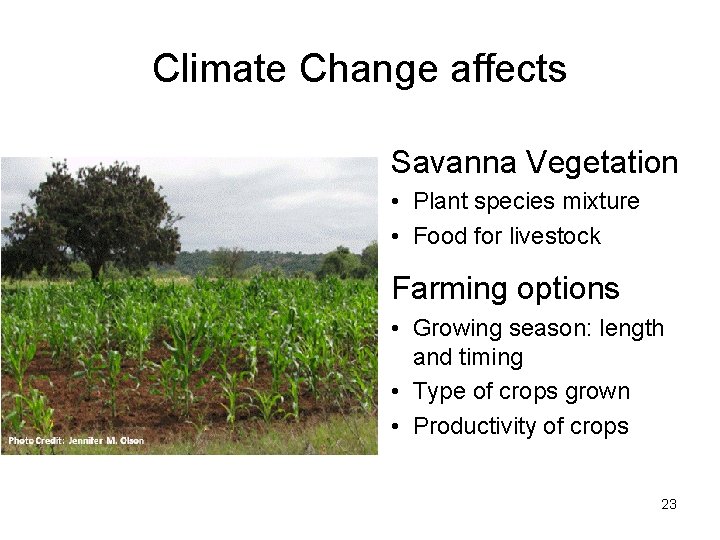
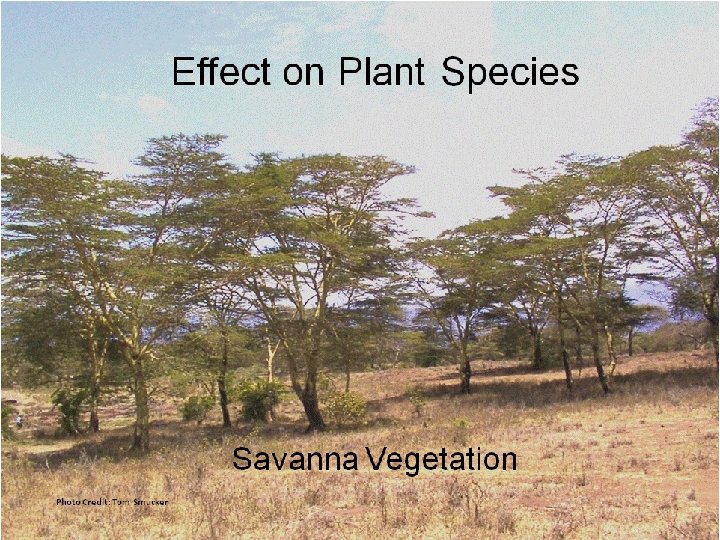
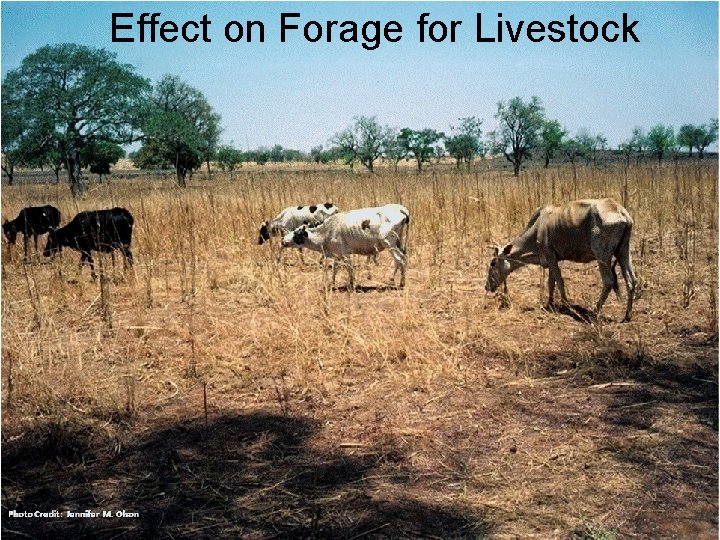
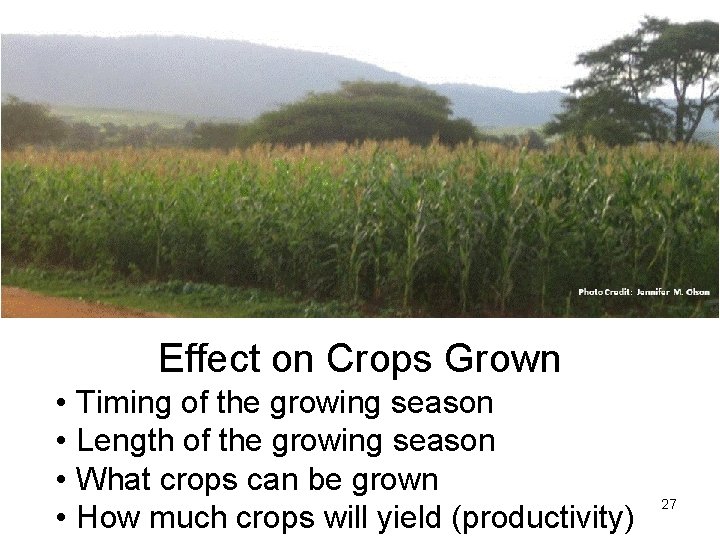
Climate Change affects Savanna Vegetation • Plant species mixture • Food for livestock Farming options • Growing season: length and timing • Type of crops grown • Productivity of crops 23
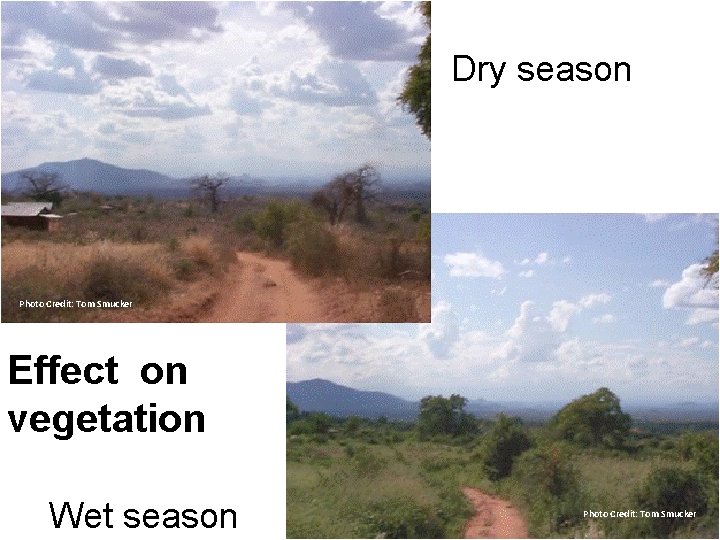
Dry season Photo Credit: Tom Smucker Effect on vegetation Wet season Photo Credit: Tom Smucker
25
Effect on Forage for Livestock 26
Effect on Crops Grown • • Timing of the growing season Length of the growing season What crops can be grown How much crops will yield (productivity) 27
Savanna Vegetation • Change in species composition – trees, bushes, grasses • • Forage for livestock Growing season: length and timing Crops grown Productivity 28
How do changes in vegetation affect livelihood systems? 29
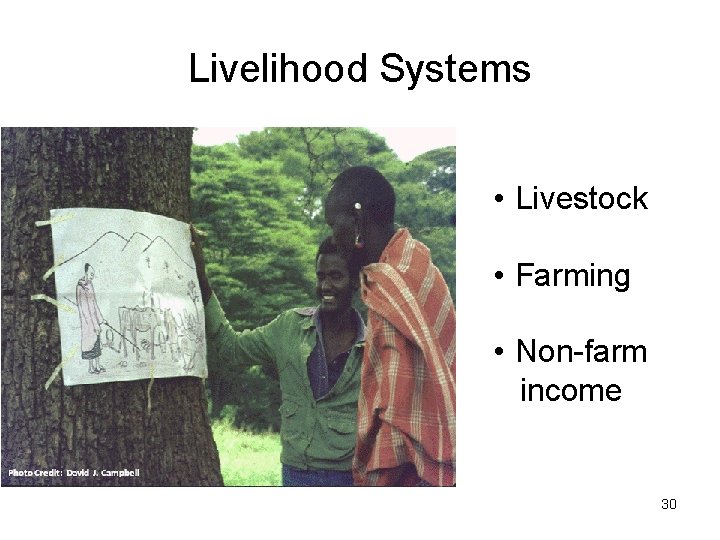
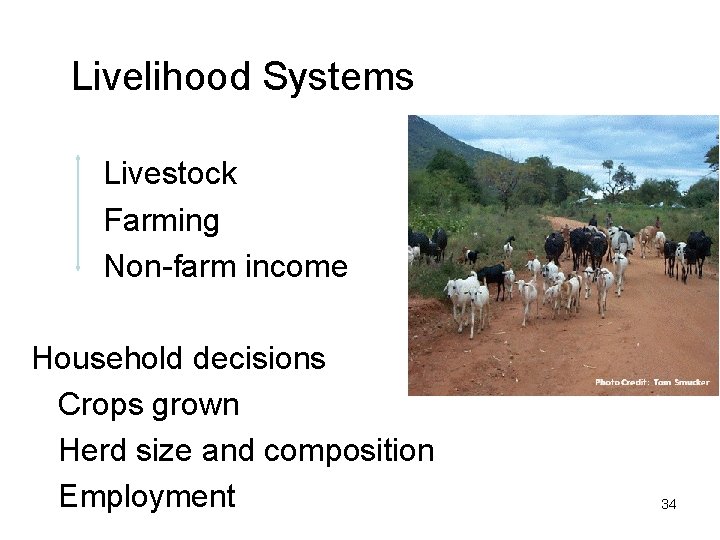
Livelihood Systems • Livestock • Farming • Non-farm income 30
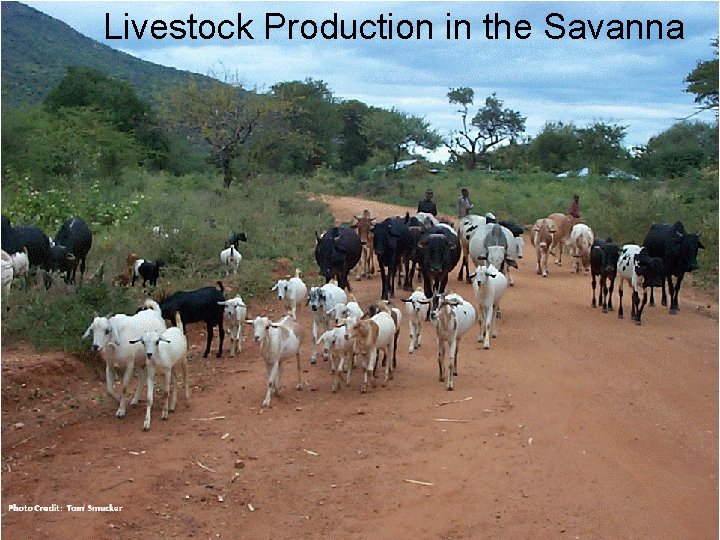
Livestock Production in the Savanna 31
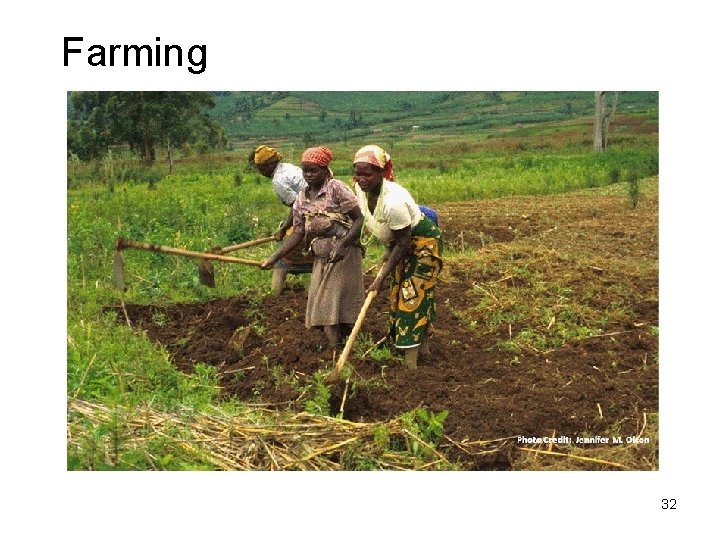
Farming Photo Credit: Jennifer M. Olson 32
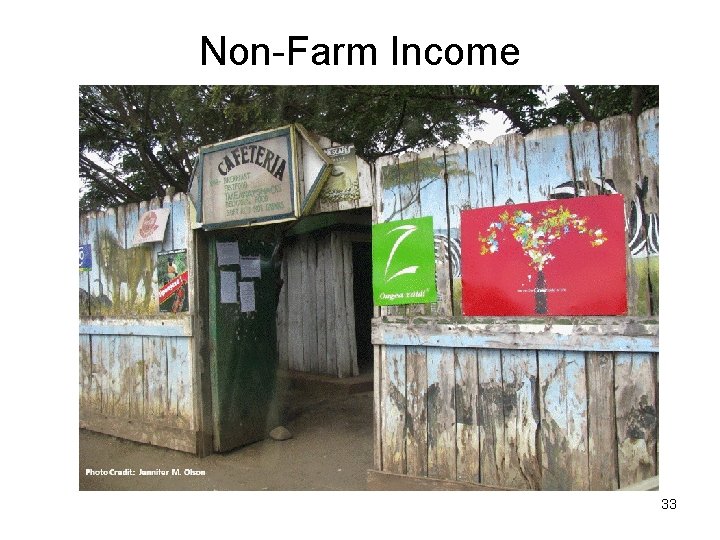
Non-Farm Income 33
Livelihood Systems Livestock Farming Non-farm income Household decisions Crops grown Herd size and composition Employment 34
How do changes in livelihood systems affect land management? 35
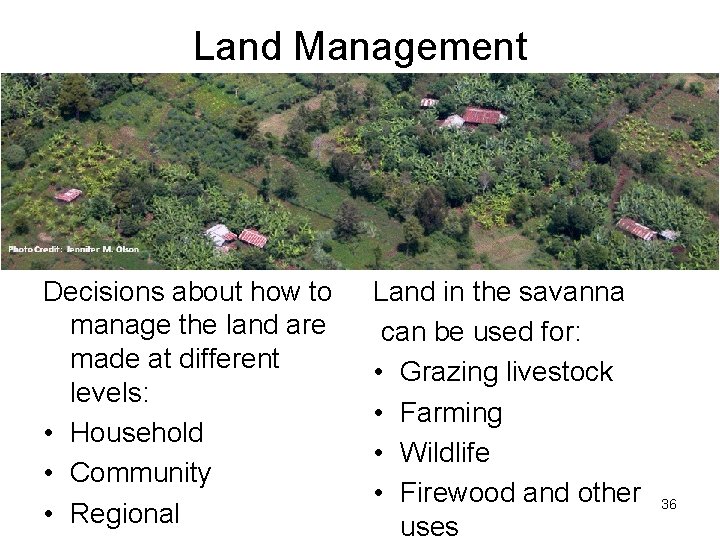
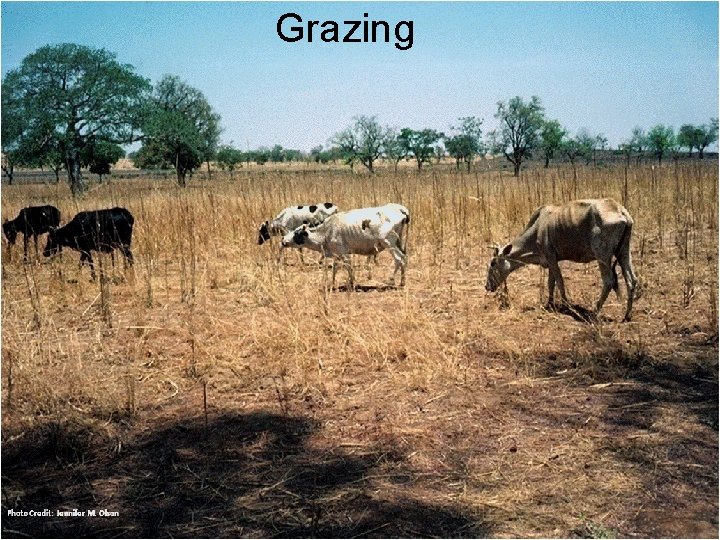
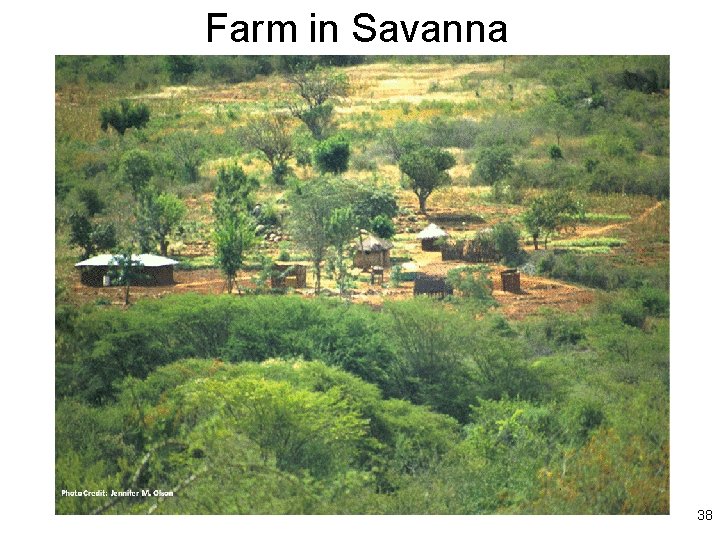
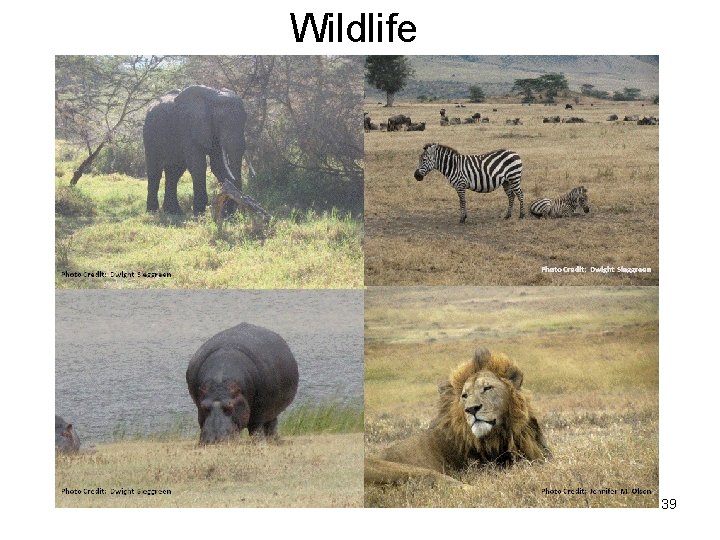
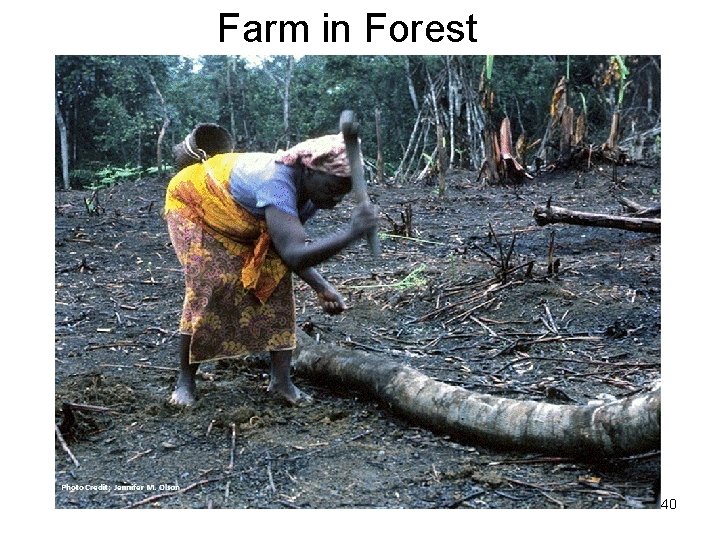
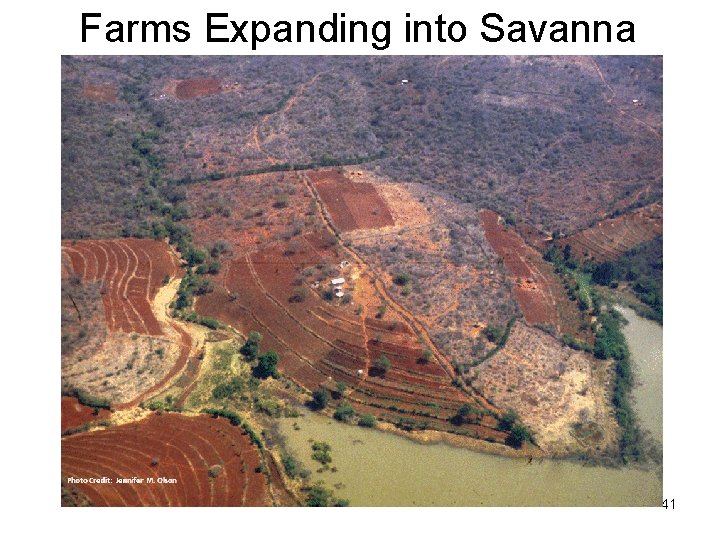
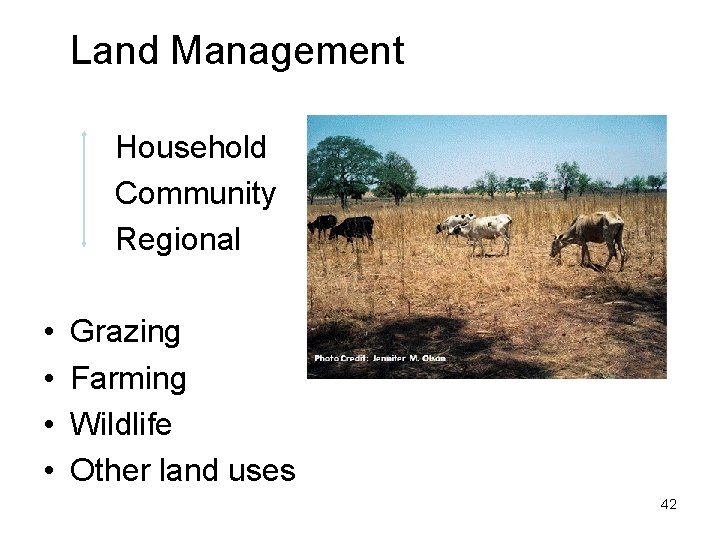
Land Management Decisions about how to manage the land are made at different levels: • Household • Community • Regional Land in the savanna can be used for: • Grazing livestock • Farming • Wildlife • Firewood and other uses 36
Grazing 37
Farm in Savanna Farming Photo Credit: Jennifer M. Olson 38
Wildlife 39
Farm in Forest Photo Credit: Jennifer M. Olson 40
Farms Expanding into Savanna Photo Credit: Jennifer M. Olson 41
Land Management Household Community Regional • • Grazing Farming Wildlife Other land uses 42
• How do changes in land management affect the savanna vegetation? • How do changes in savanna vegetation affect climate change? 43
44
EACLIPSE Research Questions • How does savanna vegetation respond to a changing climate? • What are the combined effects of land management and climate change on savanna vegetation? • Does land management have a large enough impact on savanna vegetation to change the local or regional climate? • How are people adapting their livelihood 45 systems in response to climate change?
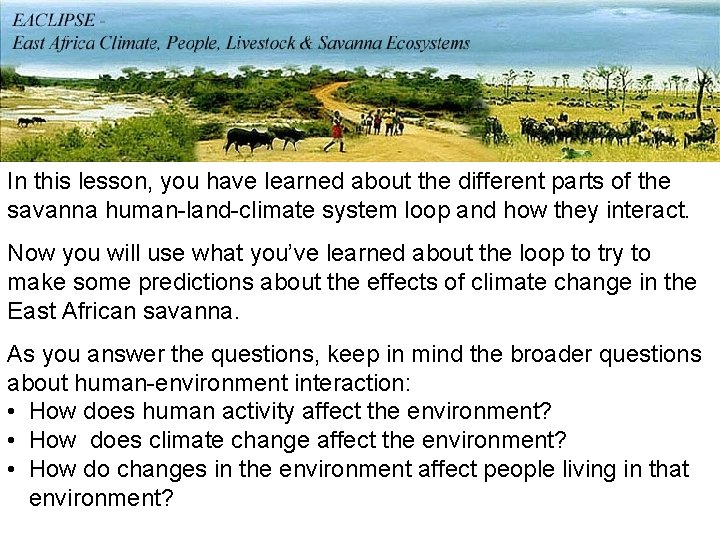
In this lesson, you have learned about the different parts of the savanna human-land-climate system loop and how they interact. Now you will use what you’ve learned about the loop to try to make some predictions about the effects of climate change in the East African savanna. As you answer the questions, keep in mind the broader questions about human-environment interaction: • How does human activity affect the environment? • How does climate change affect the environment? • How do changes in the environment affect people living in that environment?