
Introduction to Class in America Mr Slack Senior



- Slides: 13
Introduction to Class in America Mr. Slack Senior Economics
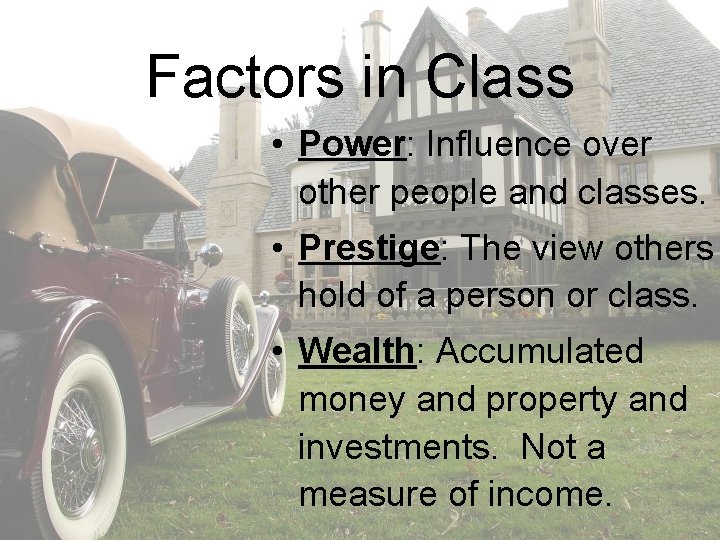
Factors in Class • Power: Influence over other people and classes. • Prestige: The view others hold of a person or class. • Wealth: Accumulated money and property and investments. Not a measure of income.
Defining Class Dominants Mostly Dominants Ruling/Owning Class Middle Class “Haves” “Have Mores” Mostly Subordinants Working Class Poor/Low-Income “Have Nots”
Defining Class • Definitions of class change between economists, sociologists, and the general population. • Most people and most economic studies assume four to six classes. • Market research companies have defined upwards of 60 American classes.
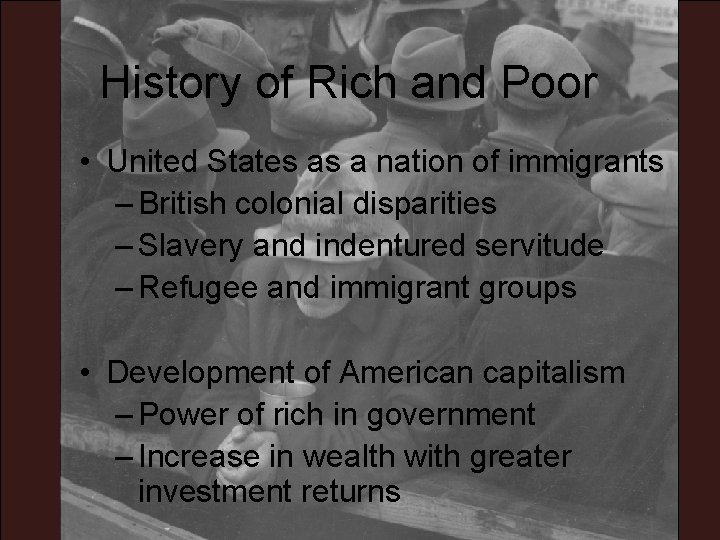
History of Rich and Poor • United States as a nation of immigrants – British colonial disparities – Slavery and indentured servitude – Refugee and immigrant groups • Development of American capitalism – Power of rich in government – Increase in wealth with greater investment returns
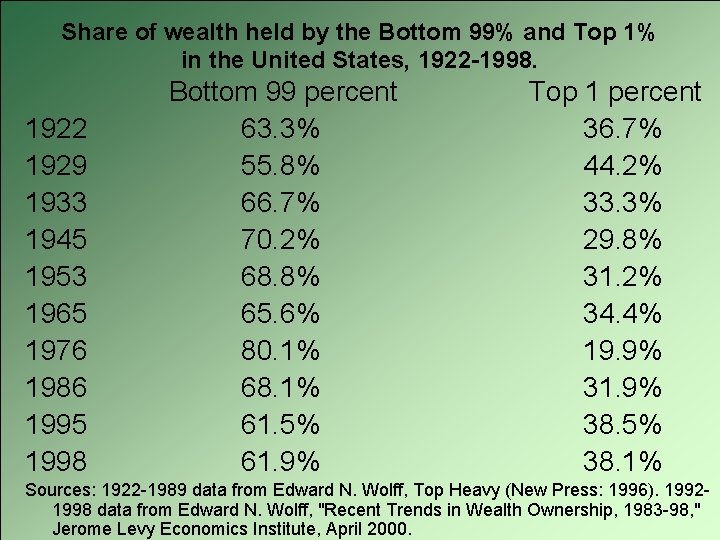
Share of wealth held by the Bottom 99% and Top 1% in the United States, 1922 -1998. 1922 1929 1933 1945 1953 1965 1976 1986 1995 1998 Bottom 99 percent 63. 3% 55. 8% 66. 7% 70. 2% 68. 8% 65. 6% 80. 1% 68. 1% 61. 5% 61. 9% Top 1 percent 36. 7% 44. 2% 33. 3% 29. 8% 31. 2% 34. 4% 19. 9% 31. 9% 38. 5% 38. 1% Sources: 1922 -1989 data from Edward N. Wolff, Top Heavy (New Press: 1996). 19921998 data from Edward N. Wolff, "Recent Trends in Wealth Ownership, 1983 -98, " Jerome Levy Economics Institute, April 2000.
"The American Dream is that dream of a land in which life should be better and richer and fuller for everyone, with opportunity for each according to ability or achievement. It is a difficult dream for the European upper classes to interpret adequately, and too many of us ourselves have grown weary and mistrustful of it. It is not a dream of motor cars and high wages merely, but a dream of social order in which each man and each woman shall be able to attain to the fullest stature of which they are innately capable, and be recognized by others for what they are, regardless of the fortuitous circumstances of birth or position. ”--James Truslow Adams, 1931
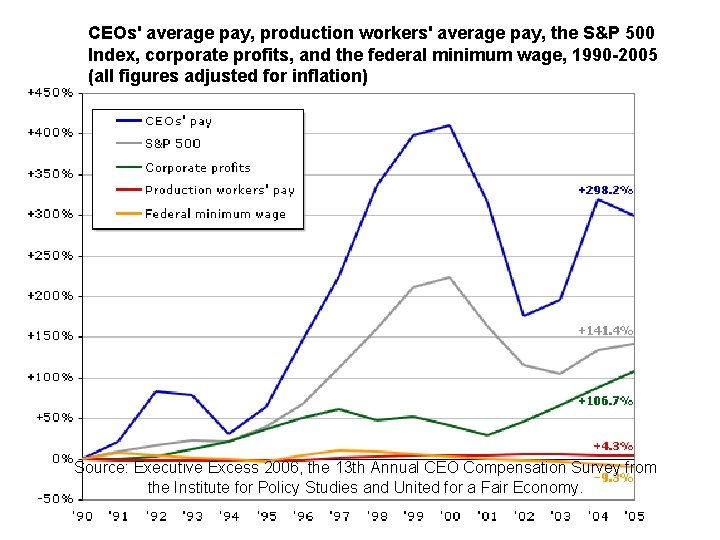
CEOs' average pay, production workers' average pay, the S&P 500 Index, corporate profits, and the federal minimum wage, 1990 -2005 (all figures adjusted for inflation) Source: Executive Excess 2006, the 13 th Annual CEO Compensation Survey from the Institute for Policy Studies and United for a Fair Economy.
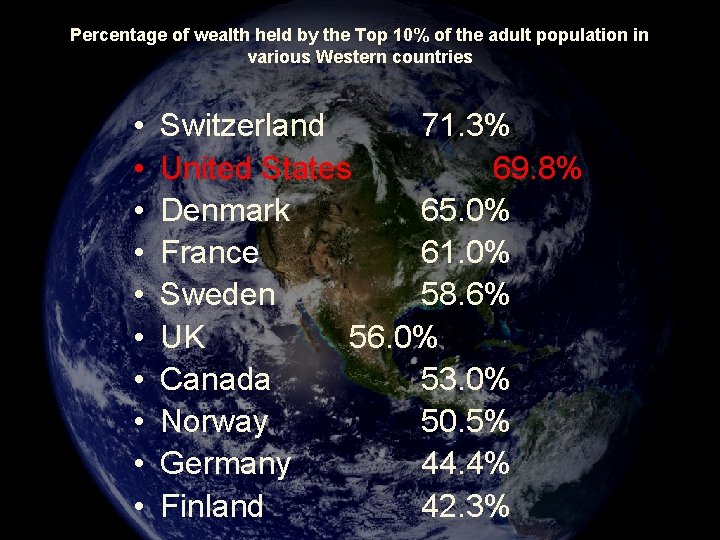
Percentage of wealth held by the Top 10% of the adult population in various Western countries • • • Switzerland 71. 3% United States 69. 8% Denmark 65. 0% France 61. 0% Sweden 58. 6% UK 56. 0% Canada 53. 0% Norway 50. 5% Germany 44. 4% Finland 42. 3%
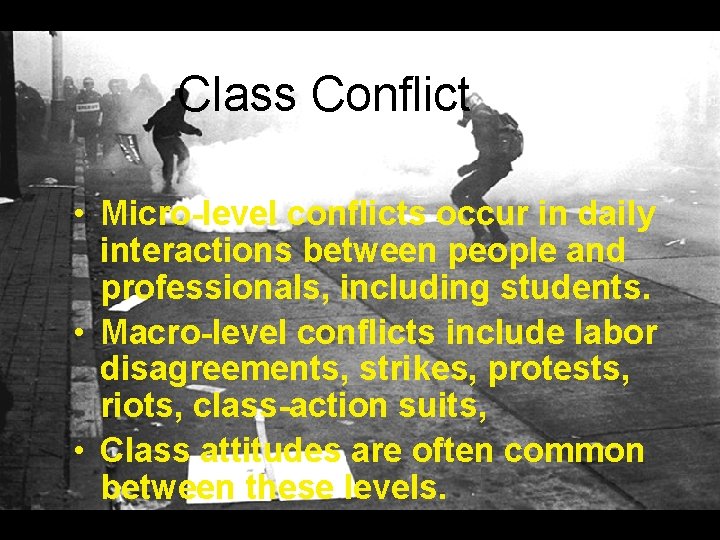
Class Conflict • Micro-level conflicts occur in daily interactions between people and professionals, including students. • Macro-level conflicts include labor disagreements, strikes, protests, riots, class-action suits, • Class attitudes are often common between these levels.
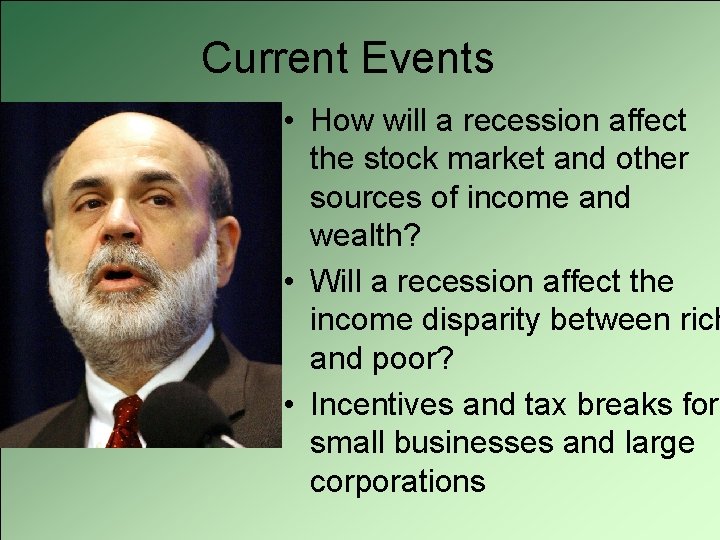
Current Events • How will a recession affect the stock market and other sources of income and wealth? • Will a recession affect the income disparity between rich and poor? • Incentives and tax breaks for small businesses and large corporations
For Next Time: • This will count for our regular Friday current events presentations. • Research the current government action in response to the bankruptcy of large • Bring one article from a major news source (NY Times, CNN, BBC, FOXNews, etc. ) to give a short presentation on. Be sure to turn in the regular write-up.