
Introduction to cisgenesis dr ir Henk Schouten Example

- Slides: 19
Introduction to cisgenesis dr ir Henk Schouten
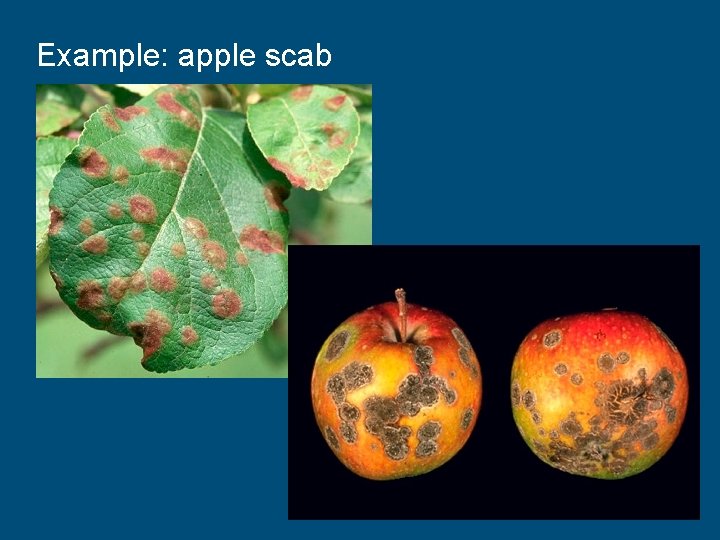
Example: apple scab
Apple scab n 20 - 30 times sprayed with fungicides per year on susceptible cultivars l l n conventional farming: synthetic fungicides organic farming: sulfur (copper) Not desired, because of l l l Costs Environment Chemical residuals on fruits (MRLs)
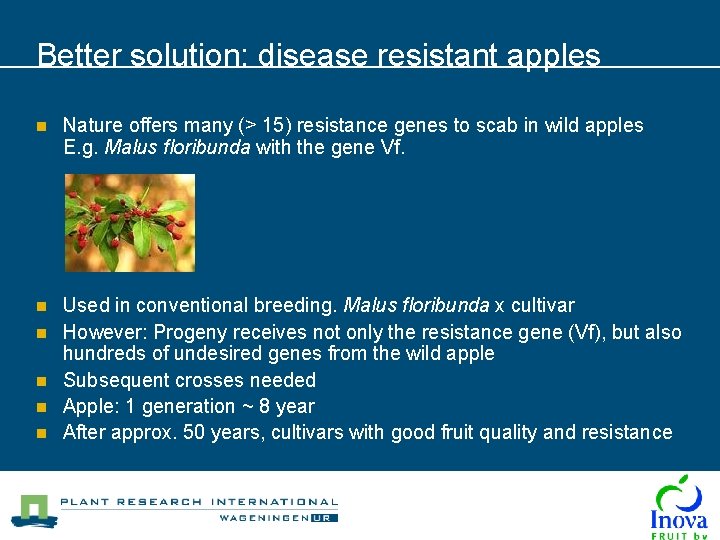
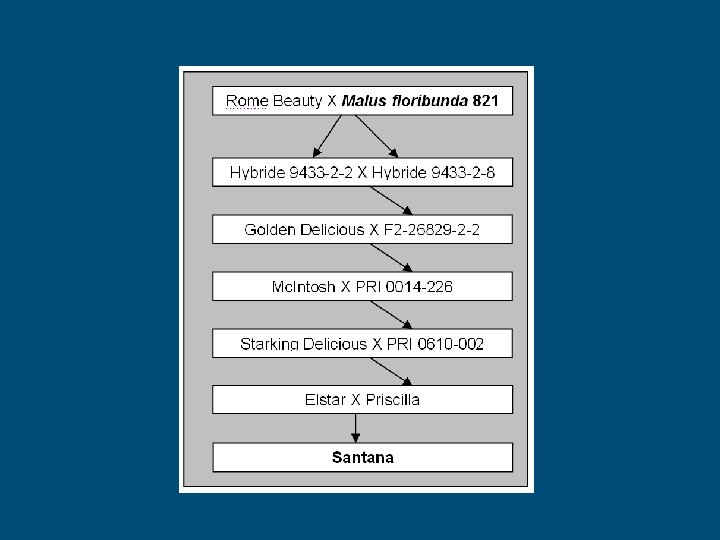
Better solution: disease resistant apples n Nature offers many (> 15) resistance genes to scab in wild apples E. g. Malus floribunda with the gene Vf. n Used in conventional breeding. Malus floribunda x cultivar However: Progeny receives not only the resistance gene (Vf), but also hundreds of undesired genes from the wild apple Subsequent crosses needed Apple: 1 generation ~ 8 year After approx. 50 years, cultivars with good fruit quality and resistance n n
Sustainable production n For sustainable production we need more resistance genes to different diseases Possible by means of conventional breeding Problem: l Long-lasting (!) process (approx. 40 years). Because of: 1. Long youth period 2. Hitchhiking of hundreds of unwanted genes n Possible solution l n Insert the desired gene only: Cisgenesis Aim: strong reduction of input of chemicals and sulfur
Definition n n A cisgenic plant is genetically modified with one or more genes from a related, crossable plant The gene must be natural and complete. No foreign genes Same genes as in conventional breeding In principle, the cultivar could have been developed via classical breeding.
Different types of genetic modification Cisgenesis - Transgenesis n n Cis = this side Trans = other side l l n Cisgenesis uses the same gene pool as conventional breeding Transgenesis uses foreign and synthetic genes Cisgenic – transgenic
Why cisgenesis? 7 reasons
Why cisgenesis? n Strong reduction of pesticides
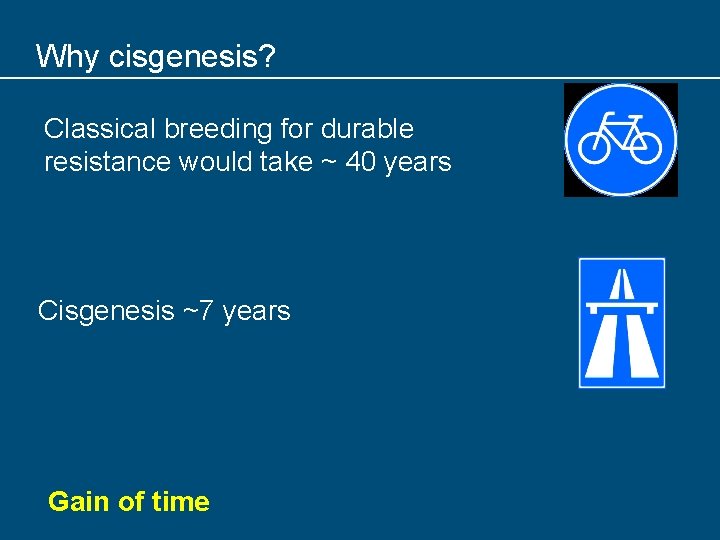
Why cisgenesis? Classical breeding for durable resistance would take ~ 40 years Cisgenesis ~7 years Gain of time
Why cisgenesis? n Specific and targeted l Only desired genes are added. More controlled compared to conventional breeding.
Why cisgenesis? At least as safe as classical breeding n n Only known, natural genes from conventional breeding are added to an existing variety Less unintended effects than in conventional breeding. More controlled. Escape of foreign genes via pollen flow to natural vegetation can be a problem for transgenesis. However, for cisgenesis genes are taken from wild relatives in vegetation. Gene escape no issue. Safety is explained in scientific publications. www. cisgenesis. com
Why cisgenesis? n n n Cisgenesis respects natural crossing borders Remains within the order of the creation Many consumers prefer cisgenesis compared to transgenesis
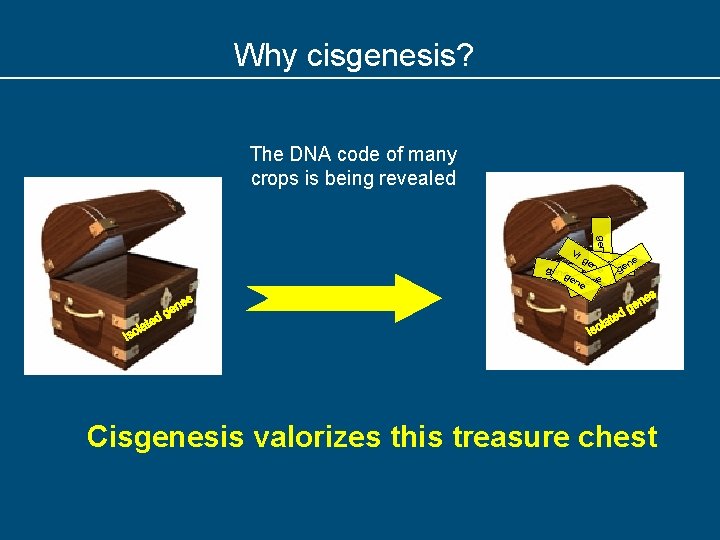
Why cisgenesis? The DNA code of many crops is being revealed gene Vf ge gen e ene ne gene g ge negene Cisgenesis valorizes this treasure chest
Regulation n Cisgenesis uses GM as method n Cisgenic crops might therefore be under the GMO Regulation n However: cisgenic plants are very comparable to conventionally bred plants. At least as safe as. Same genes. n The EU Regulation does not distinguish cisgenesis from transgenesis
Politics n The present GMO regulation leads to high approval costs (6 M€ per cultivar in the EU). This cannot be afforded by small companies and for niche crops. n GMO regulation lags behind the technical innovations n EC: A Technical Working group is studying the position of novel breeding technologies (also cisgenesis) in the EU Regulation. n The GMO regulation should exclude methods that do not introduce foreign genes, such as cisgenesis.
GMO Directive 2001/18/EC Annex 1 A: A GMO contains new combinations of genetic material. n However, cisgenic plants do NOT contain new combination of genetic material, compared to classical breeding. Therefore, cisgenic plants should NOT be treated as GMOs. Thus, cisgenic plants should NOT be under the GMO Regulation.
Conclusions n Why cisgenesis? l l l l Durable resistance for reduction of pesticides Gain of time More controlled Natural genes of the same species Within the order of the creation Consumers prefer cisgenic products to transgenic products Valorisation of the wealth of knowledge of plant genes Cisgenic plants do not contain novel combinations of genetic material (2001/18, Annex 1 A), and should not be treated as GMOs.