
INTRODUCTION TO CHRISTIANITY 11 1 16 MAJOR CHARACTERISTICS
- Slides: 12
INTRODUCTION TO CHRISTIANITY 11. 1. 16
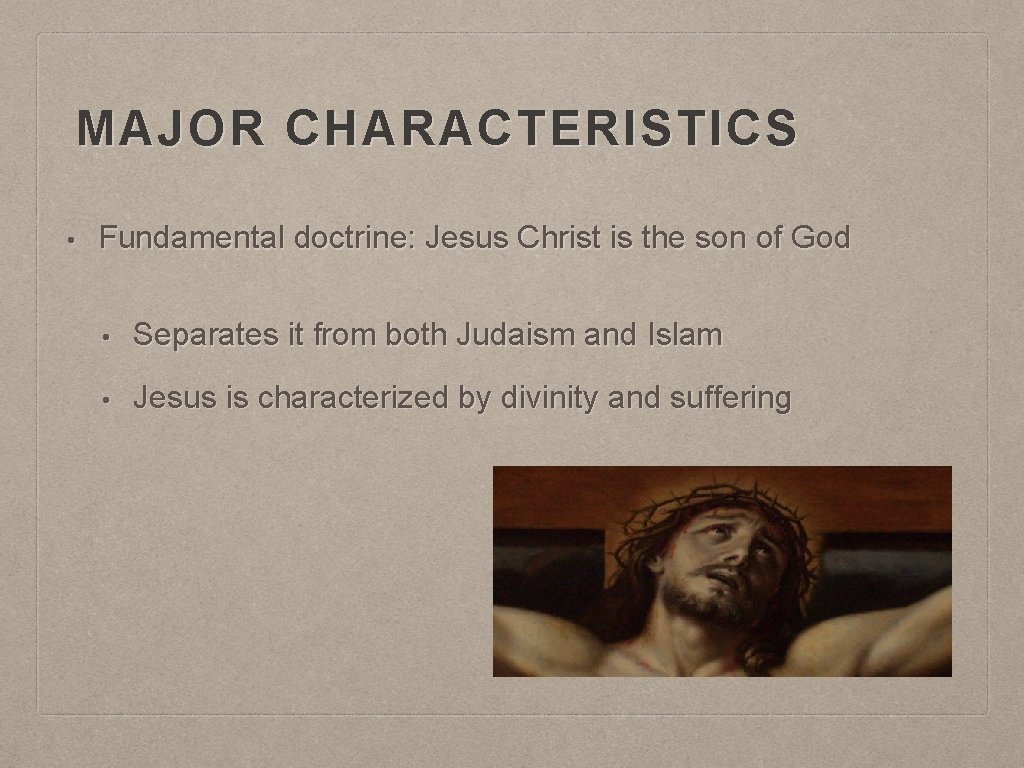
MAJOR CHARACTERISTICS • Fundamental doctrine: Jesus Christ is the son of God • Separates it from both Judaism and Islam • Jesus is characterized by divinity and suffering
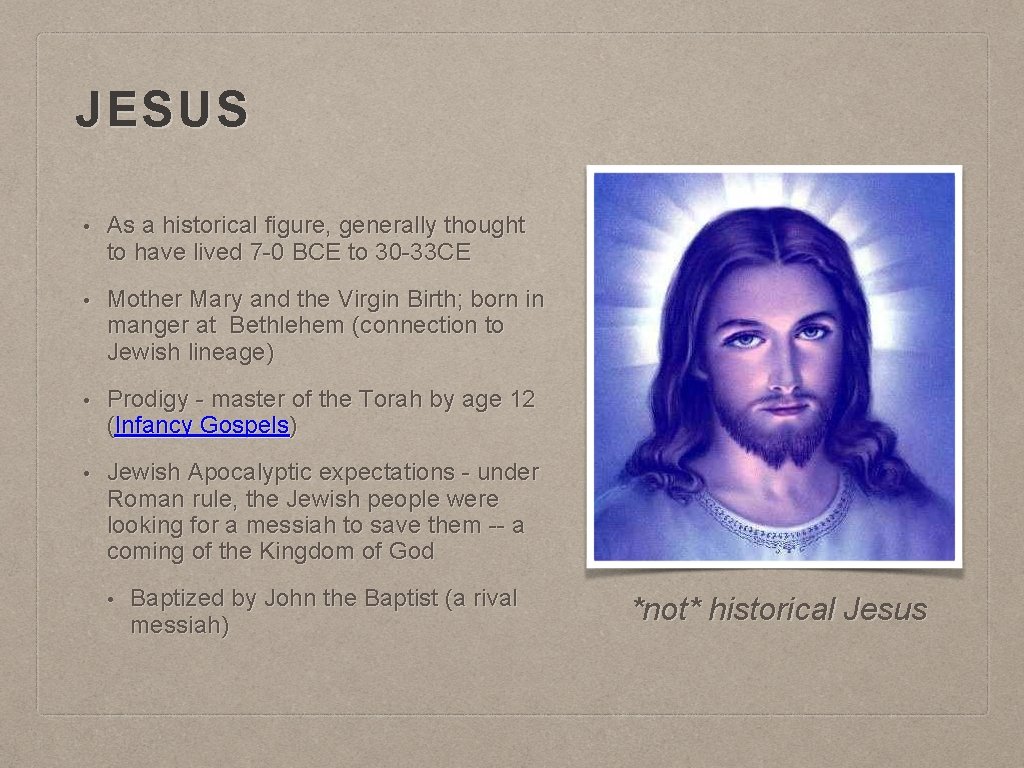
JESUS • As a historical figure, generally thought to have lived 7 -0 BCE to 30 -33 CE • Mother Mary and the Virgin Birth; born in manger at Bethlehem (connection to Jewish lineage) • Prodigy - master of the Torah by age 12 (Infancy Gospels) • Jewish Apocalyptic expectations - under Roman rule, the Jewish people were looking for a messiah to save them -- a coming of the Kingdom of God • Baptized by John the Baptist (a rival messiah) *not* historical Jesus
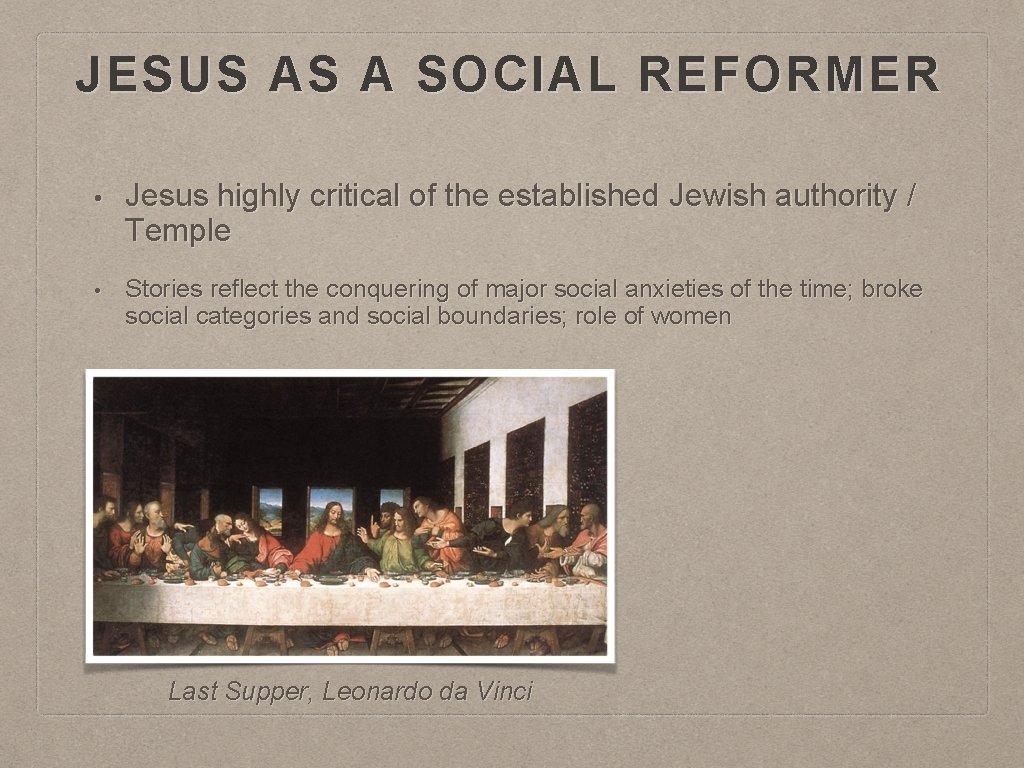
JESUS AS A SOCIAL REFORMER • Jesus highly critical of the established Jewish authority / Temple • Stories reflect the conquering of major social anxieties of the time; broke social categories and social boundaries; role of women Last Supper, Leonardo da Vinci
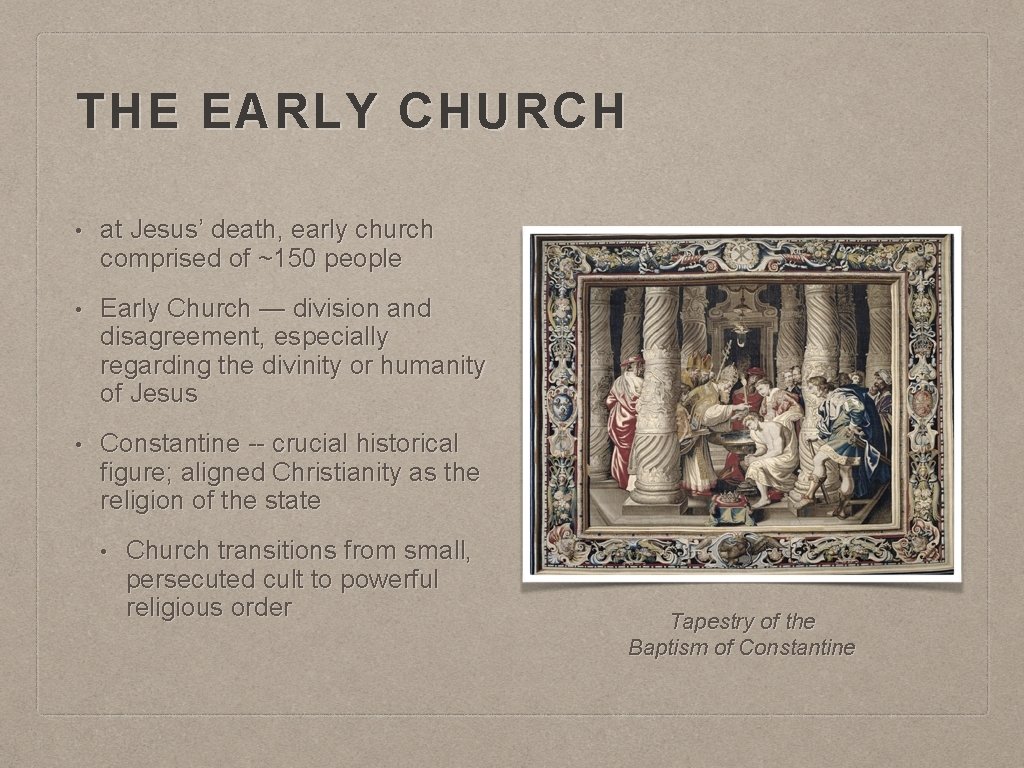
THE EARLY CHURCH • at Jesus’ death, early church comprised of ~150 people • Early Church — division and disagreement, especially regarding the divinity or humanity of Jesus • Constantine -- crucial historical figure; aligned Christianity as the religion of the state • Church transitions from small, persecuted cult to powerful religious order Tapestry of the Baptism of Constantine
BRANCHES OF CHRISTIANITY • Eastern Orthodox -- Established in Constantinople • Roman Catholic -- Established in Rome • Schism between Eastern Orthodoxy and Catholicism happens in 10 th century; mainly political but also disagreement regarding the role of the Pope • Protestant -- Established in Europe (England) • • Split from Catholicism in 1500's; Major figures of Protestant Reformation is Martin Luther Common Beliefs -- Christ as son of God, the Virgin Birth, and the Resurrection
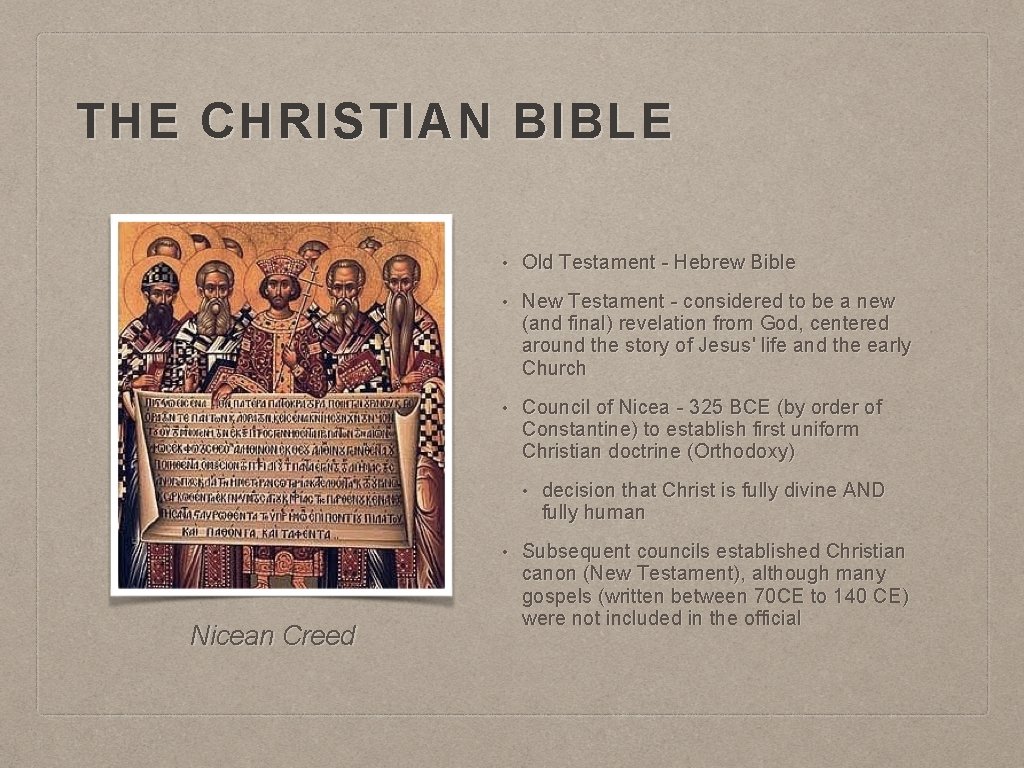
THE CHRISTIAN BIBLE • Old Testament - Hebrew Bible • New Testament - considered to be a new (and final) revelation from God, centered around the story of Jesus' life and the early Church • Council of Nicea - 325 BCE (by order of Constantine) to establish first uniform Christian doctrine (Orthodoxy) • • Nicean Creed decision that Christ is fully divine AND fully human Subsequent councils established Christian canon (New Testament), although many gospels (written between 70 CE to 140 CE) were not included in the official
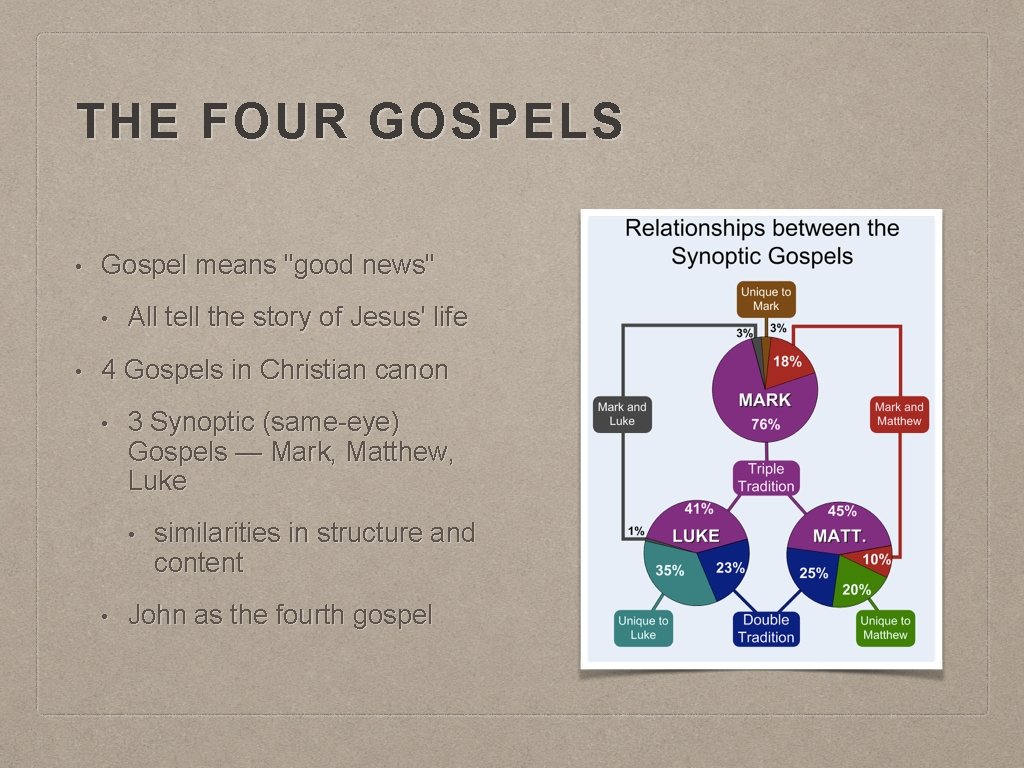
THE FOUR GOSPELS • Gospel means "good news" • • All tell the story of Jesus' life 4 Gospels in Christian canon • 3 Synoptic (same-eye) Gospels — Mark, Matthew, Luke • • similarities in structure and content John as the fourth gospel
THE GOSPELS CONTINUED MARK -- 70 CE LUKE -- 85 CE • other gospels draw from Mark as a source • Appeals to gentiles (outsiders); Greek audience • written to Roman audience; focused on power of Jesus as “Son of God” and emperor of the world • written in connection with Acts • Establishes Jesus as human, connection to Adam • no lineage nor resurrection narrative MATTHEW -- 80 CE • • Appeals to Jews; concerned with confirming Jesus as a Jewish Messiah Establishing his connection as a descendent of Judaen kingdoms (birth narrative) JOHN -- 92 CE • Universal audience • completely different stories from other gospels • focus on theology; Jesus as God and savior
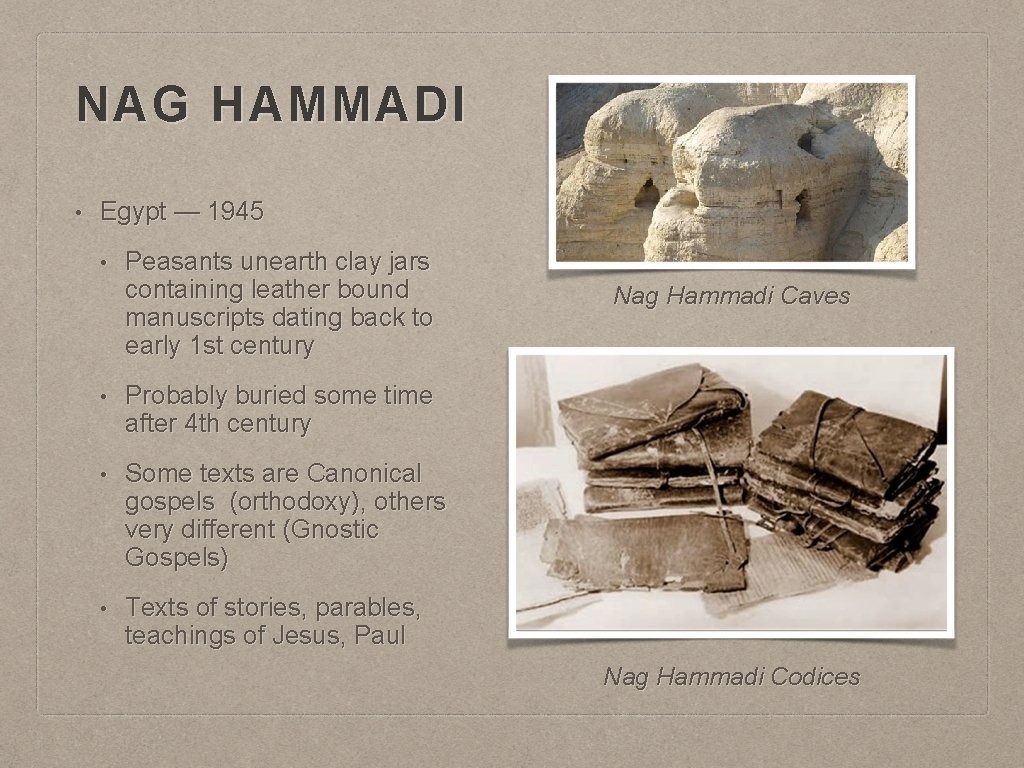
NAG HAMMADI • Egypt — 1945 • Peasants unearth clay jars containing leather bound manuscripts dating back to early 1 st century • Probably buried some time after 4 th century • Some texts are Canonical gospels (orthodoxy), others very different (Gnostic Gospels) • Texts of stories, parables, teachings of Jesus, Paul Nag Hammadi Caves Nag Hammadi Codices
GNOSTIC GOSPELS • Gnosis — “knowledge” • salvation not about grace or works, but through secret insight • • Judaism, Christianity and Islam are uniquely distinguished from other religions by the absence of feminine symbolism • • “Eye to see, ears to hear” In parts of early Christianity, women were considered to be equal to men, revered as prophets, teachers, evangelists, etc Gnostic communities • Challenged conception of gender; spirit matters, thus body/gender don’t matter • Mary as chosen disciple
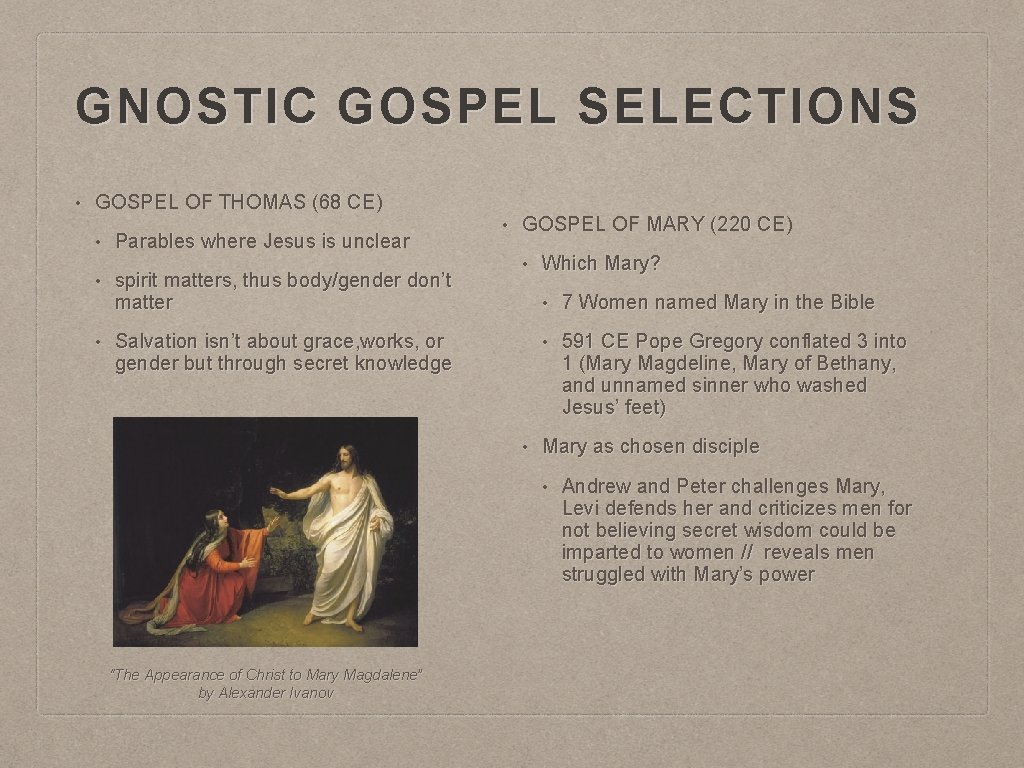
GNOSTIC GOSPEL SELECTIONS • GOSPEL OF THOMAS (68 CE) • • • Parables where Jesus is unclear spirit matters, thus body/gender don’t matter • GOSPEL OF MARY (220 CE) • Salvation isn’t about grace, works, or gender but through secret knowledge • Which Mary? • 7 Women named Mary in the Bible • 591 CE Pope Gregory conflated 3 into 1 (Mary Magdeline, Mary of Bethany, and unnamed sinner who washed Jesus’ feet) Mary as chosen disciple • "The Appearance of Christ to Mary Magdalene” by Alexander Ivanov Andrew and Peter challenges Mary, Levi defends her and criticizes men for not believing secret wisdom could be imparted to women // reveals men struggled with Mary’s power