
Introduction to Chapter Managing Employees 11 Learning Objectives

Introduction to Chapter Managing Employees 11
Learning Objectives § § Uraikan teori motivasi. Jelaskan bagaimana perusahaan dapat tingkatkan kepuasan kerja dan tingkatkan motivasi.
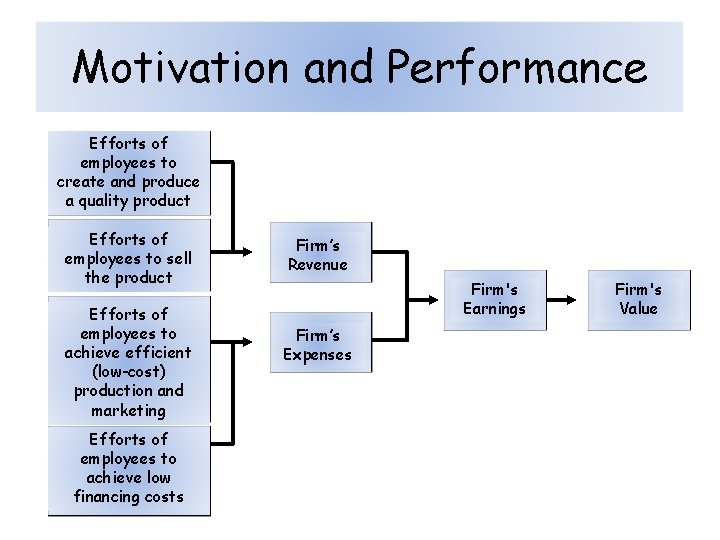
Motivation and Performance Efforts of employees to create and produce a quality product Efforts of employees to sell the product Efforts of employees to achieve efficient (low-cost) production and marketing Efforts of employees to achieve low financing costs Firm’s Revenue Firm's Earnings Firm’s Expenses Firm's Value
Major Theories on Motivation • • Hawthorne Studies Maslow’s Hierarchy of Needs Herzberg’s Job Satisfaction Study Theory X, Y, and Z Expectancy Theory Equity Theory Reinforcement Theory
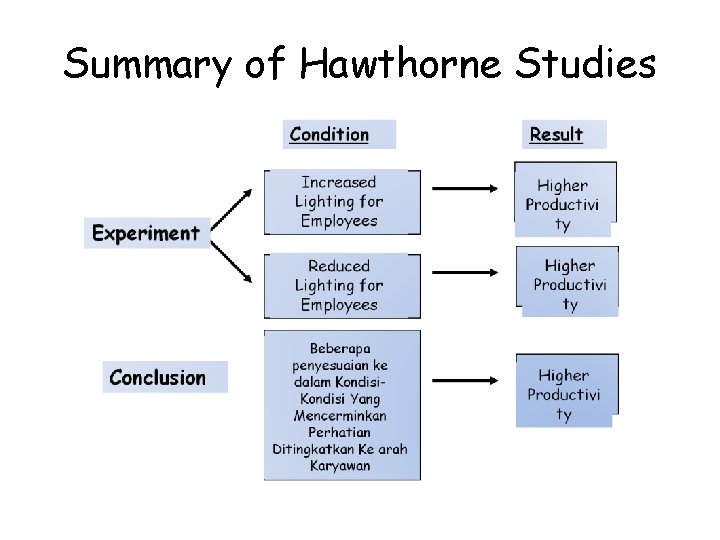
Summary of Hawthorne Studies
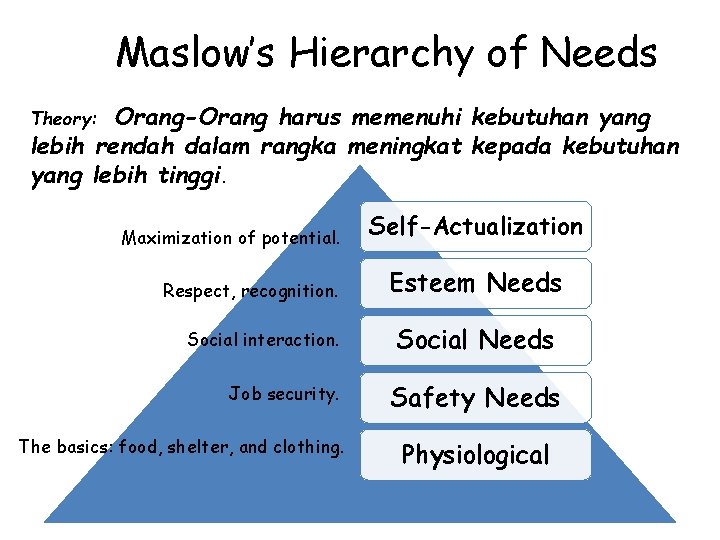
Maslow’s Hierarchy of Needs Orang-Orang harus memenuhi kebutuhan yang lebih rendah dalam rangka meningkat kepada kebutuhan yang lebih tinggi. Theory: Maximization of potential. Respect, recognition. Social interaction. Job security. The basics: food, shelter, and clothing. Self-Actualization Esteem Needs Social Needs Safety Needs Physiological
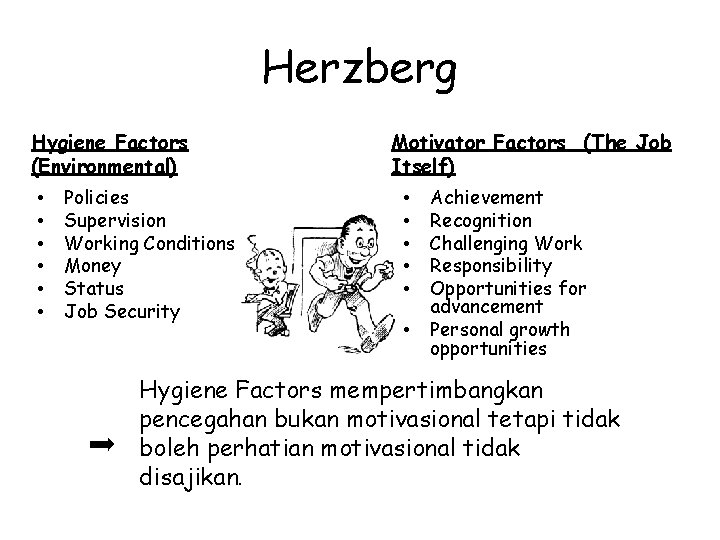
Herzberg Hygiene Factors (Environmental) • • • Policies Supervision Working Conditions Money Status Job Security Motivator Factors (The Job Itself) • • • Achievement Recognition Challenging Work Responsibility Opportunities for advancement Personal growth opportunities Hygiene Factors mempertimbangkan pencegahan bukan motivasional tetapi tidak boleh perhatian motivasional tidak disajikan.
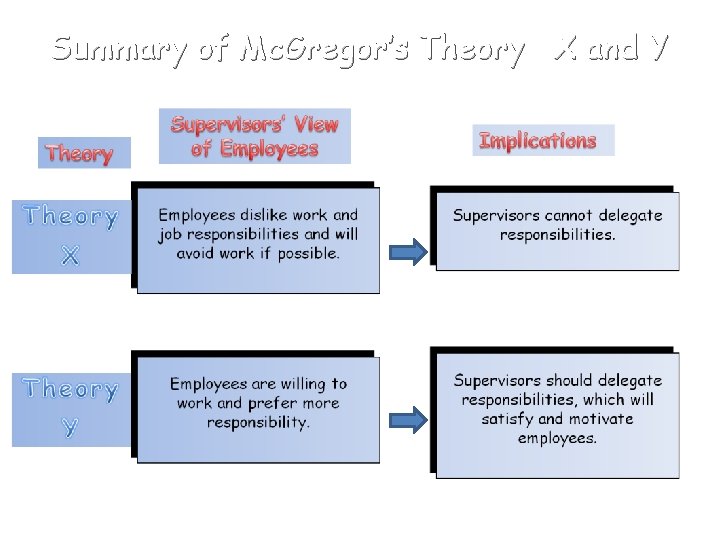
Summary of Mc. Gregor’s Theory X and Y
Expectancy Theory • Teori: Suatu usaha pekerja dipengaruhi oleh hasil yang diharapkan (penghargaan). Dua kebutuhan: • Penghargaan yang diinginkan. • Kesempatan penerima penghargaan
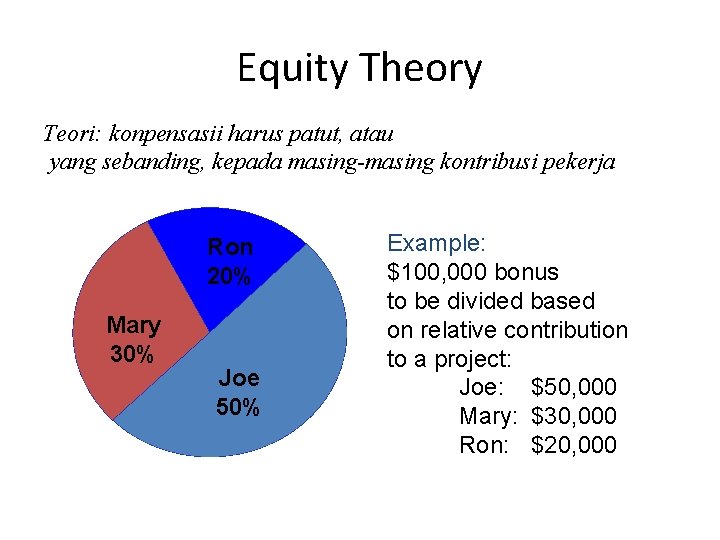
Equity Theory Teori: konpensasii harus patut, atau yang sebanding, kepada masing-masing kontribusi pekerja Ron 20% Mary 30% Joe 50% Example: $100, 000 bonus to be divided based on relative contribution to a project: Joe: $50, 000 Mary: $30, 000 Ron: $20, 000
Reinforcement Theory: Reinforcement dapat mengendalikan prilaku. Positive reinforcement: provides rewards for high performance. -Contoh: Bonus, promotion, oral compliment. Negative reinforcement: memotivasi karyawan dengan memberi sangsi -Contoh: Teguran, PHK, dll.
Guidelines to Motivation Employee will: Employer should: • Compare compensation and contribution. • Not be satisfied with compensation alone. • Be motivated if they can gain a reward. • Ensure compensation is proportionate to contribution. • Ensure employees have other needs met: respect, self-esteem, etc. • Motivate using positive reinforcement.
Key Characteristics Affecting Job Satisfaction • Money or compensation programs. • Security. • Work schedule. • Employee involvement programs.
Three Compensation Programs Merit system – Raise according to merit. Across-the-board system – All employees get similar raise. Incentive plans – Various forms of compensation based on specific performance.
Characteristics of a Compensation Program Sesuaikan rencana konpensasi dengan tujusan bisnis. Sesuaikan konpensasi dengan atujuan karyawan tertentu. Menetapkan tujuan yang mungkin dapat dicapai oleh karyawan. Ijinkan karyawan memberikan masukan tentang rencana konpensasi.
Flexible Work Schedule (Flextime Programs) Pekerjaan yang dimampatkan : • Mampatkan beban kerja ke dalam lebih sedikit hari per minggu. • Tujuan utama akan mengijinkan karyawan untuk mempunyai tiga hari di akhir pekan. Pekerjaan yang berbagi (Job sharing) • Dua atau lebih orang-orang berbagi full-time tertentu ( 40 jam) rencana kerja. • Ini mengijinkan karyawan untuk bekerja part-time. Banyak dari karyawan ini tidak ingin bekerja fulltime.
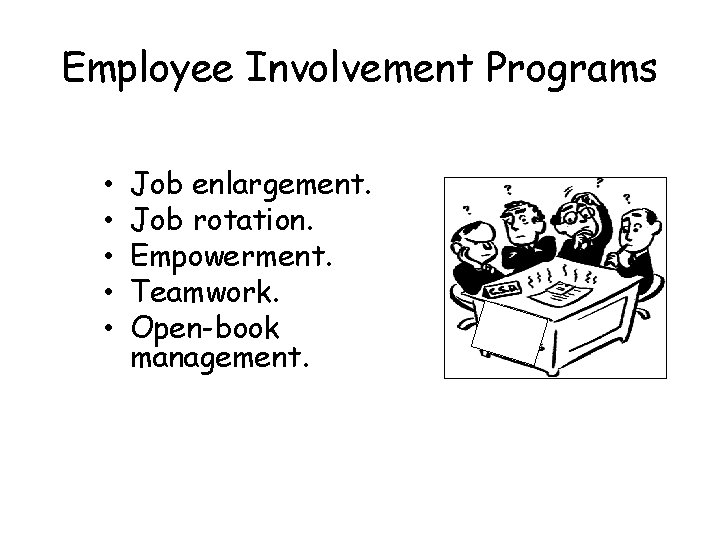
Employee Involvement Programs • • • Job enlargement. Job rotation. Empowerment. Teamwork. Open-book management.
- Slides: 17