
Introduction to cells Marco Y W Zaki Ph

- Slides: 14
Introduction to cells Marco Y. W. Zaki; Ph. D, m. Sc. , B. Sc
Part one Objectives • Name the scientists who first observed living and nonliving cells. • Summarize the research that led to the development of the cell theory. • State three principles of the cell theory. • Explain why the cell is considered to be the basic unit of life.
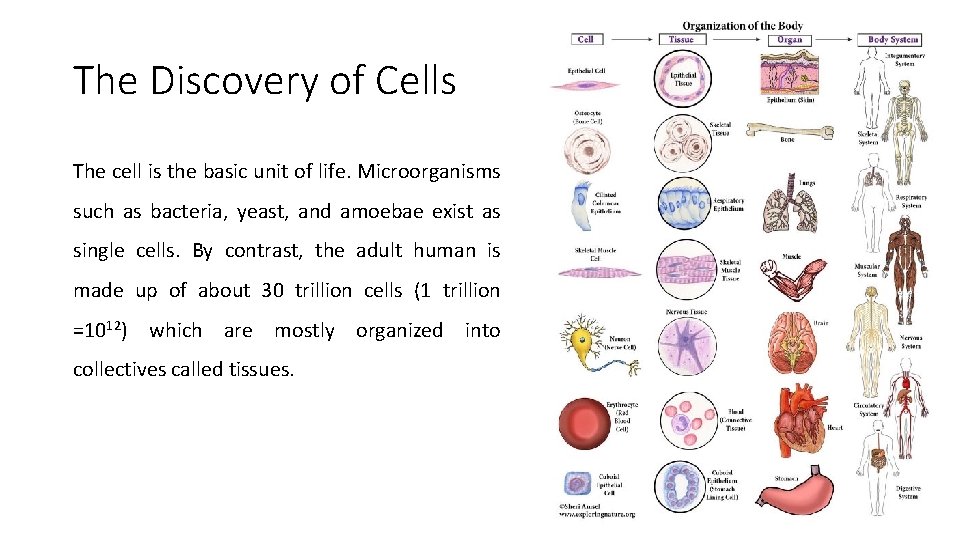
The Discovery of Cells The cell is the basic unit of life. Microorganisms such as bacteria, yeast, and amoebae exist as single cells. By contrast, the adult human is made up of about 30 trillion cells (1 trillion =1012) which are mostly organized into collectives called tissues.
The Discovery of Cells, continued • Hooke – In 1665, Robert Hooke discovered cells in slices of cork. • Leeuwenhoek – In 1673, Anton van Leeuwenhoek was the first to observe living cells in microorganisms; Leeuwenhoek called these organism animalcules ~ we now call them protists.
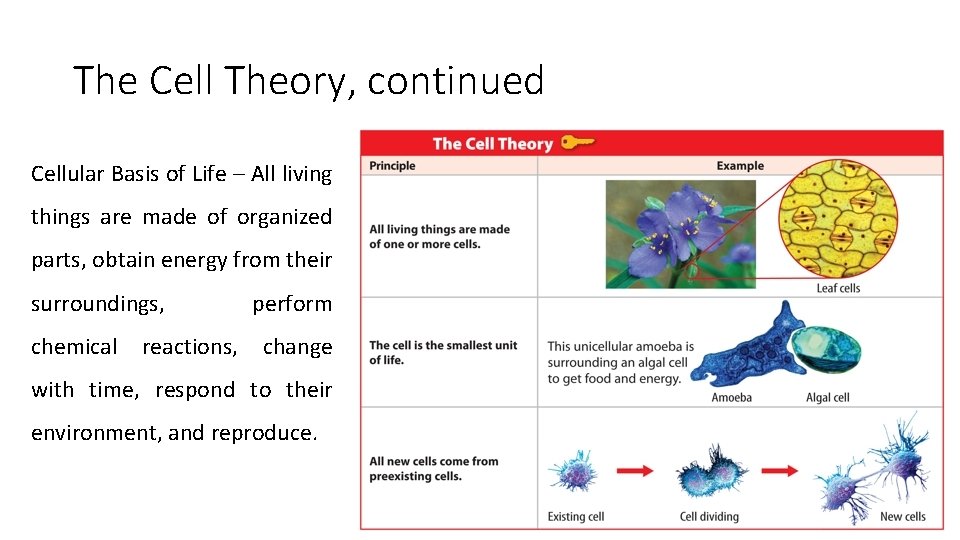
The Cell Theory • The cell theory states that all living organisms are made of one or more cells, cells are the basic units of structure and function, and cells come only from preexisting cells. • In 1838, the German botanist Matthias Schleiden concluded that all plants were composed of cells • In 1839, Theodor Schwann concluded the same thing for animals • In 1855, Rudolf Virchow noted that all cells come from other cell.
The Cell Theory, continued Cellular Basis of Life – All living things are made of organized parts, obtain energy from their surroundings, chemical reactions, perform change with time, respond to their environment, and reproduce.
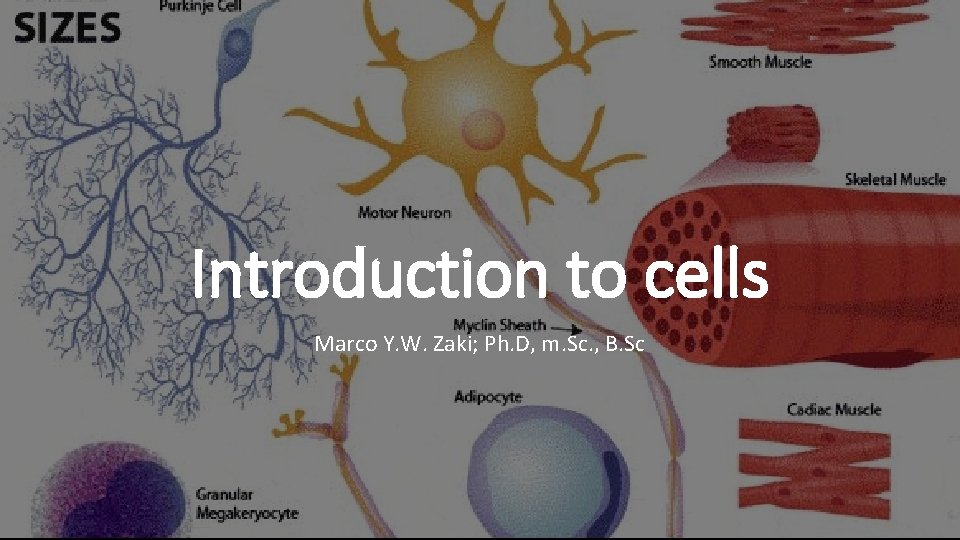
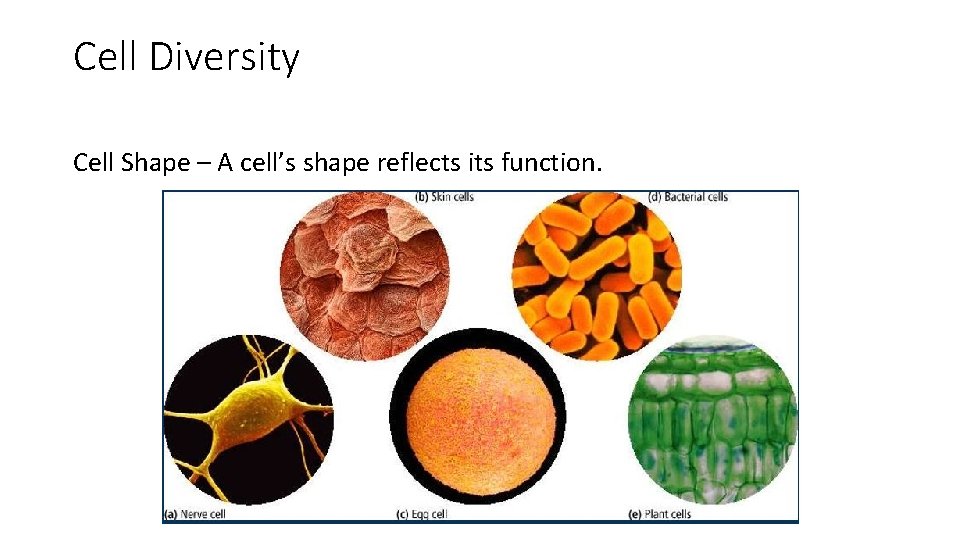
Cell Diversity Cell Shape – A cell’s shape reflects its function.
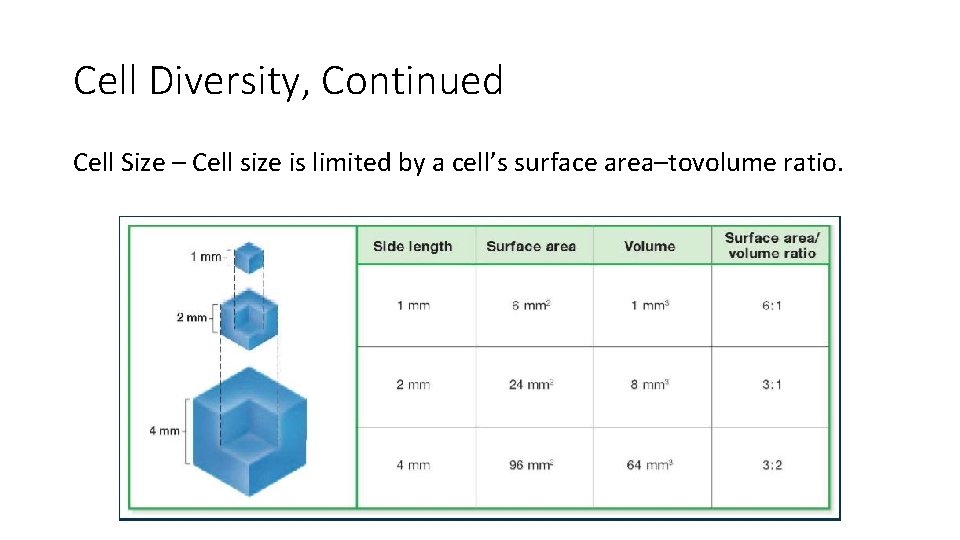
Cell Diversity, Continued Cell Size – Cell size is limited by a cell’s surface area–tovolume ratio.
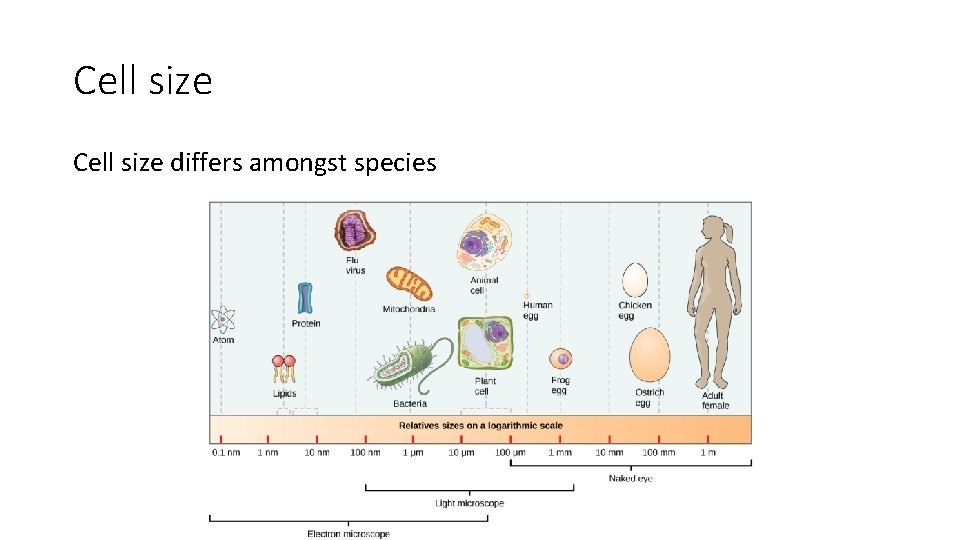
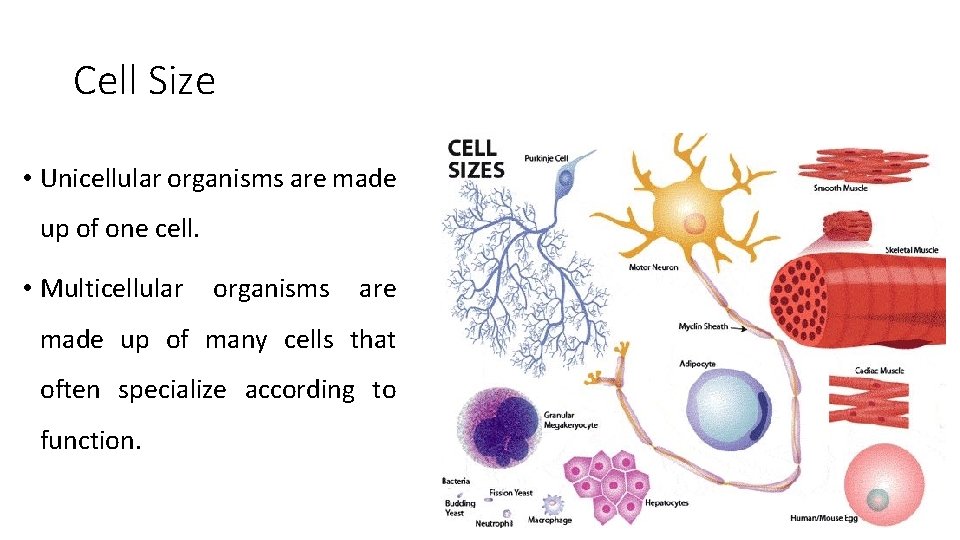
Cell size differs amongst species
Cell Size • Unicellular organisms are made up of one cell. • Multicellular organisms are made up of many cells that often specialize according to function.
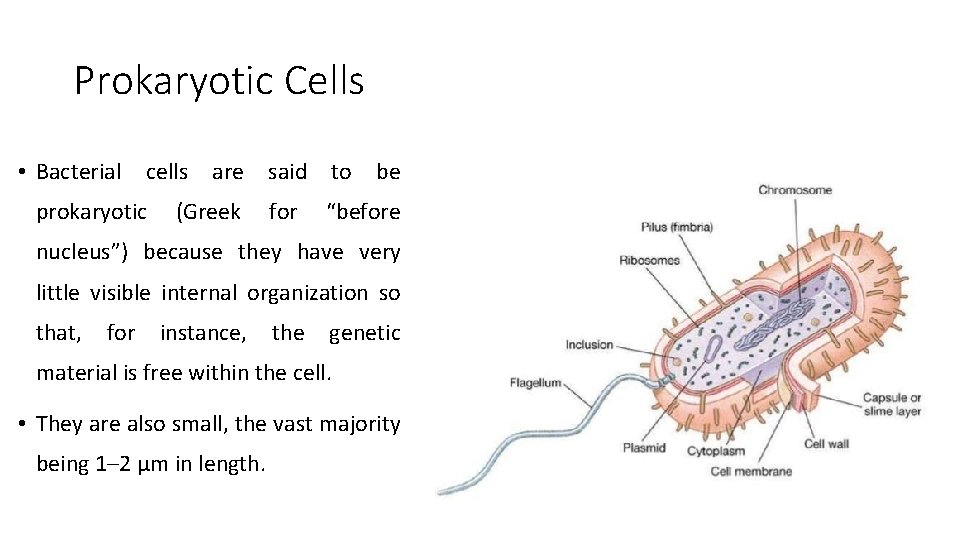
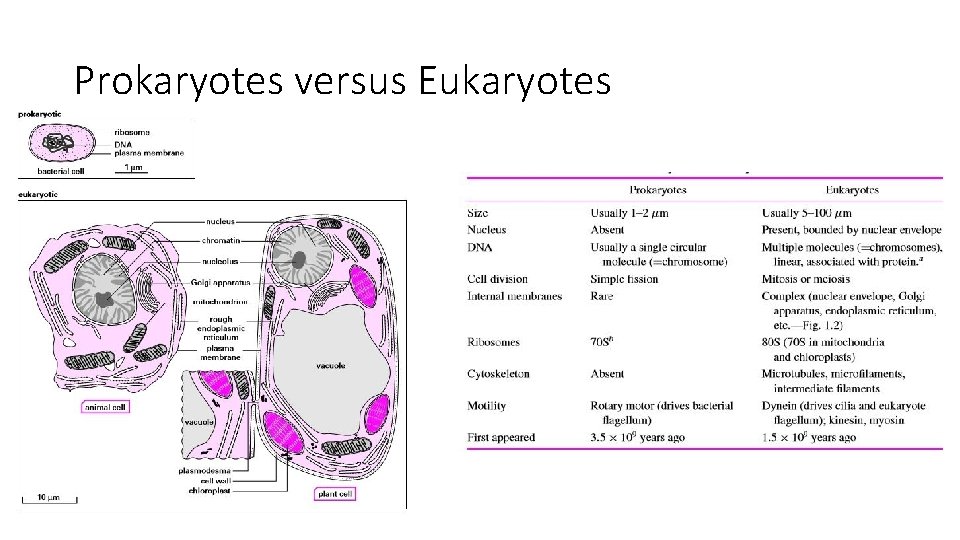
Prokaryotic Cells • Bacterial cells are said to be prokaryotic (Greek for “before nucleus”) because they have very little visible internal organization so that, for instance, the genetic material is free within the cell. • They are also small, the vast majority being 1– 2 µm in length.
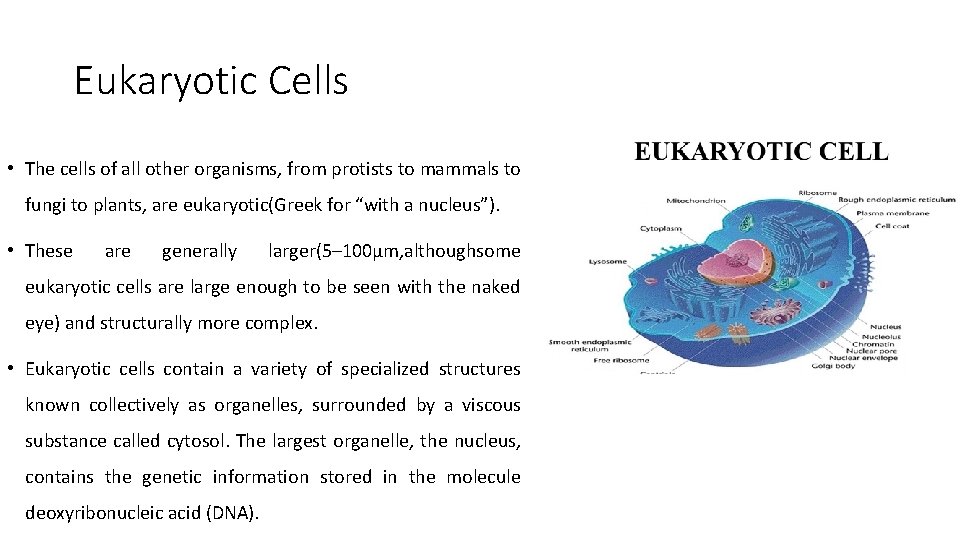
Eukaryotic Cells • The cells of all other organisms, from protists to mammals to fungi to plants, are eukaryotic(Greek for “with a nucleus”). • These are generally larger(5– 100µm, althoughsome eukaryotic cells are large enough to be seen with the naked eye) and structurally more complex. • Eukaryotic cells contain a variety of specialized structures known collectively as organelles, surrounded by a viscous substance called cytosol. The largest organelle, the nucleus, contains the genetic information stored in the molecule deoxyribonucleic acid (DNA).
Prokaryotes versus Eukaryotes
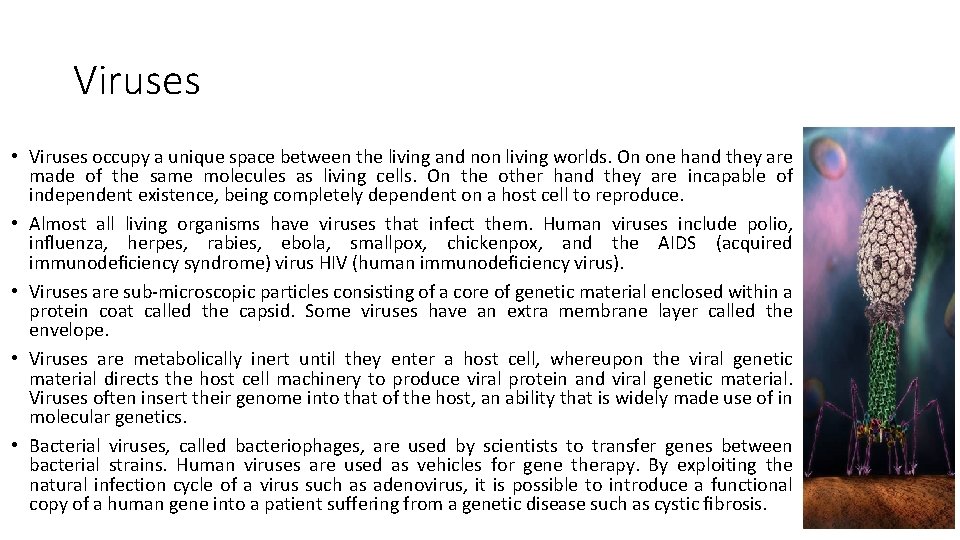
Viruses • Viruses occupy a unique space between the living and non living worlds. On one hand they are made of the same molecules as living cells. On the other hand they are incapable of independent existence, being completely dependent on a host cell to reproduce. • Almost all living organisms have viruses that infect them. Human viruses include polio, influenza, herpes, rabies, ebola, smallpox, chickenpox, and the AIDS (acquired immunodeficiency syndrome) virus HIV (human immunodeficiency virus). • Viruses are sub-microscopic particles consisting of a core of genetic material enclosed within a protein coat called the capsid. Some viruses have an extra membrane layer called the envelope. • Viruses are metabolically inert until they enter a host cell, whereupon the viral genetic material directs the host cell machinery to produce viral protein and viral genetic material. Viruses often insert their genome into that of the host, an ability that is widely made use of in molecular genetics. • Bacterial viruses, called bacteriophages, are used by scientists to transfer genes between bacterial strains. Human viruses are used as vehicles for gene therapy. By exploiting the natural infection cycle of a virus such as adenovirus, it is possible to introduce a functional copy of a human gene into a patient suffering from a genetic disease such as cystic fibrosis.