
Introduction to Cells are the basic building blocks
Introduction to Cells are the basic building blocks of all living things. • The human body is composed of trillions of cells. • They provide structure for the body • They carry out specialized functions • They take in nutrients from food and convert those nutrients into energy • They contain the body’s hereditary material (DNA) • They can make copies of themselves
Introduction to Cells Organelle - specialized structure that performs certain tasks within the cell Cell Theory • All living organisms are composed of one cell (unicellular) or many cells (multicellular) • The cell is the most basic unit of life with structure and function • All cells arise from pre-existing, living cells
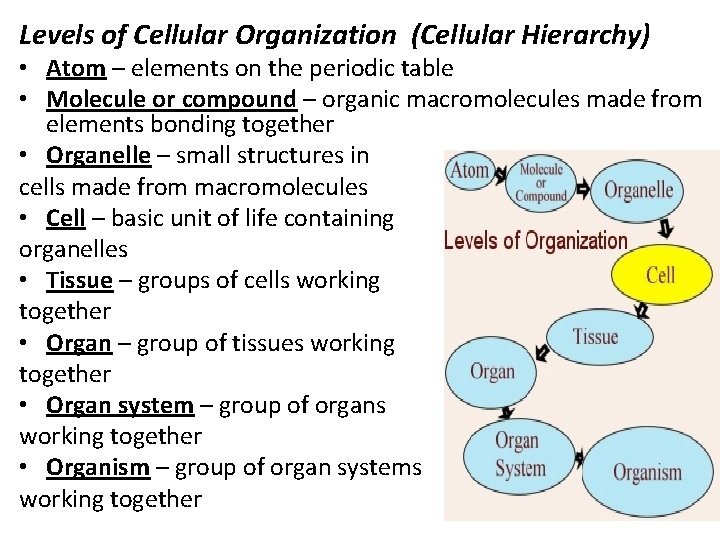
Levels of Cellular Organization (Cellular Hierarchy) • Atom – elements on the periodic table • Molecule or compound – organic macromolecules made from elements bonding together • Organelle – small structures in cells made from macromolecules • Cell – basic unit of life containing organelles • Tissue – groups of cells working together • Organ – group of tissues working together • Organ system – group of organs working together • Organism – group of organ systems working together
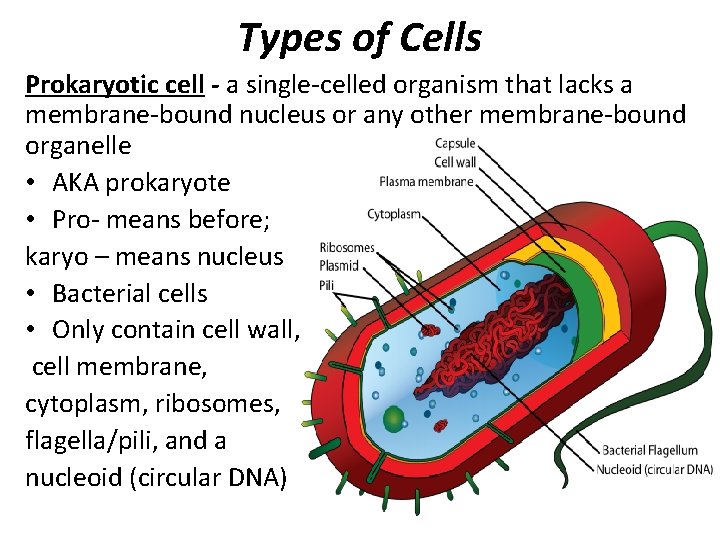
Types of Cells Prokaryotic cell - a single-celled organism that lacks a membrane-bound nucleus or any other membrane-bound organelle • AKA prokaryote • Pro- means before; karyo – means nucleus • Bacterial cells • Only contain cell wall, cell membrane, cytoplasm, ribosomes, flagella/pili, and a nucleoid (circular DNA)
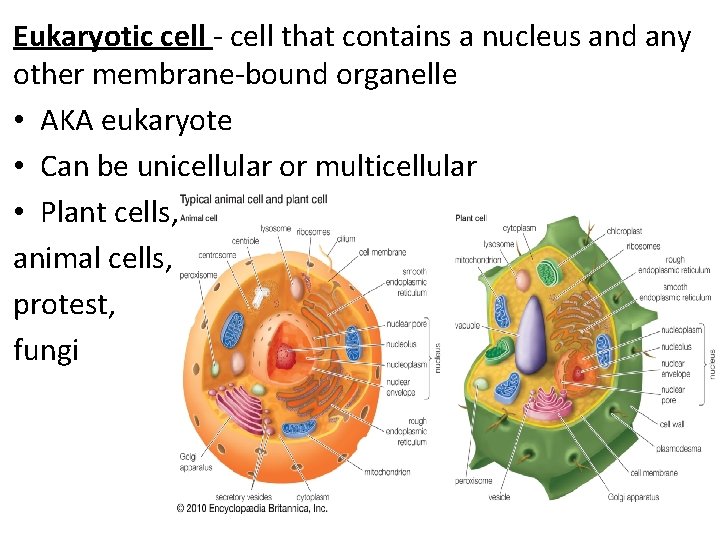
Eukaryotic cell - cell that contains a nucleus and any other membrane-bound organelle • AKA eukaryote • Can be unicellular or multicellular • Plant cells, animal cells, protest, fungi
- Slides: 5