
Introduction to CELLS 1 THE CELL The basic
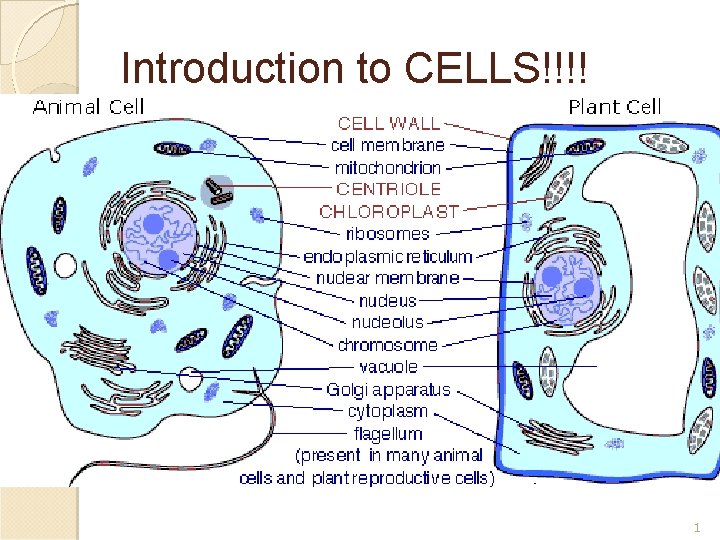
Introduction to CELLS!!!! 1
THE CELL ◦ The basic unit of life ◦ Discovery made possible by the invention of the microscope 2
Cell Theory: All organisms are made up of one or more cells. The cell is the basic unit of life Cells can only come from other living cells. 3
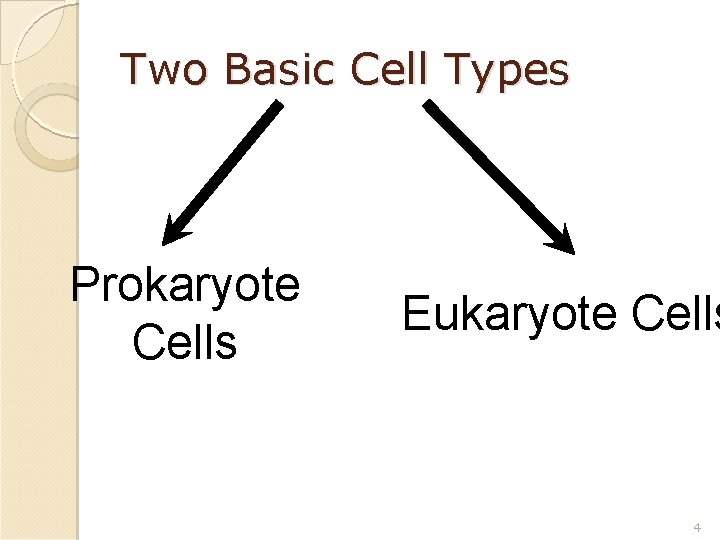
Two Basic Cell Types Prokaryote Cells Eukaryote Cells 4
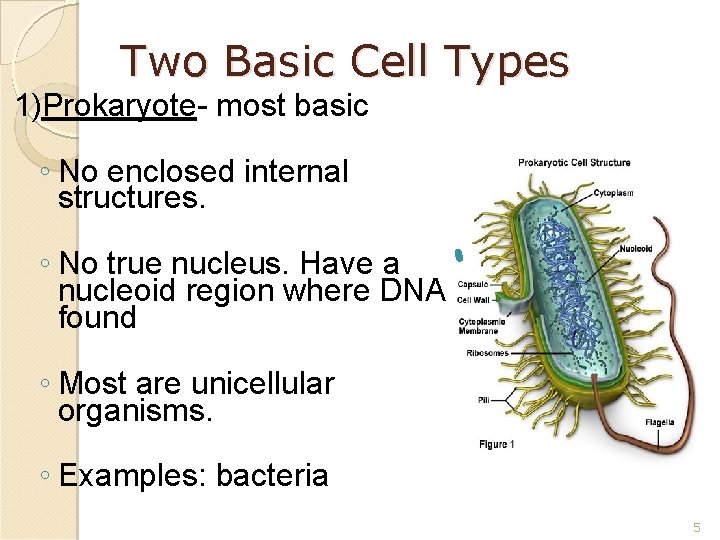
Two Basic Cell Types 1)Prokaryote- most basic ◦ No enclosed internal structures. ◦ No true nucleus. Have a nucleoid region where DNA is found ◦ Most are unicellular organisms. ◦ Examples: bacteria 5
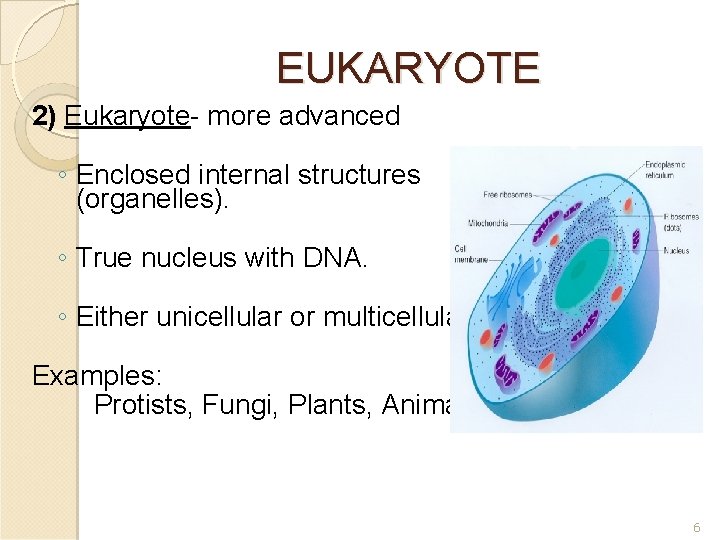
EUKARYOTE 2) Eukaryote- more advanced ◦ Enclosed internal structures (organelles). ◦ True nucleus with DNA. ◦ Either unicellular or multicellular. Examples: Protists, Fungi, Plants, Animals 6
Cell’s Main Parts 1. Plasma/Cell Membrane 2. Cell Wall 3. Cytoplasm 7
Plasma/Cell Membrane It encloses all cells 3 important Jobs: • Protects the inside of the cell • Supports & gives the cell shape • Controls what enters & exits the cell 1. Maintains homeostasis 8
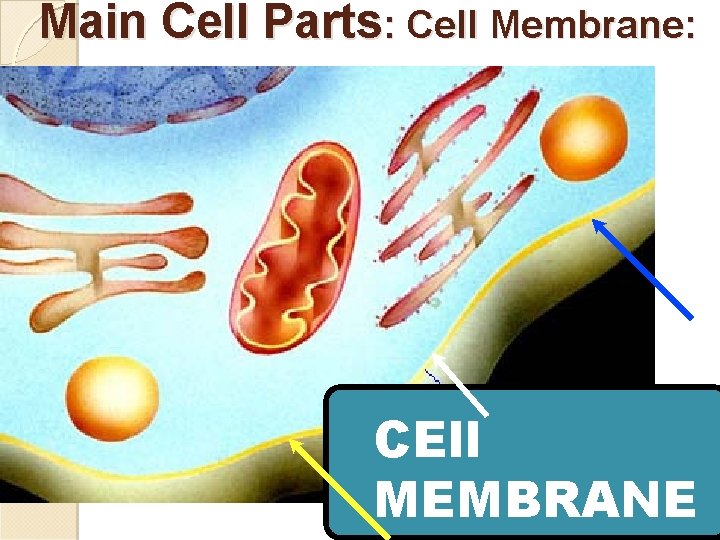
Main Cell Parts: Cell Membrane: CEll MEMBRANE 9
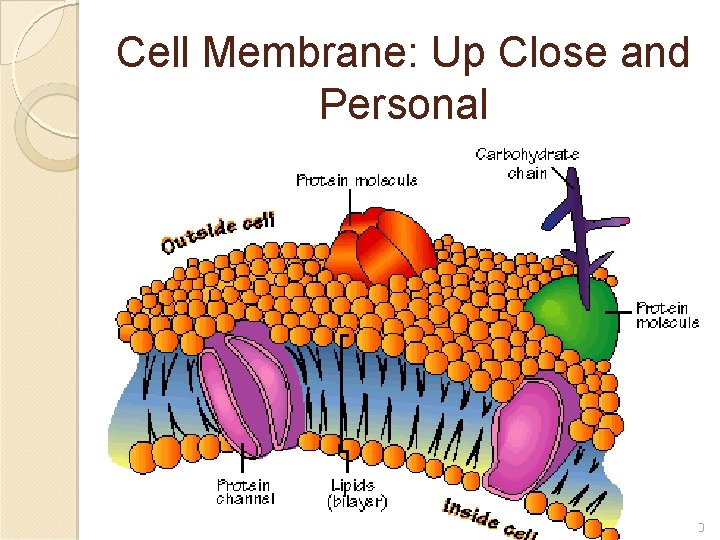
Cell Membrane: Up Close and Personal 10
Cell Wall ONLY in PLANT CELLS Protects the cell Gives the cell shape Made of cellulose 11
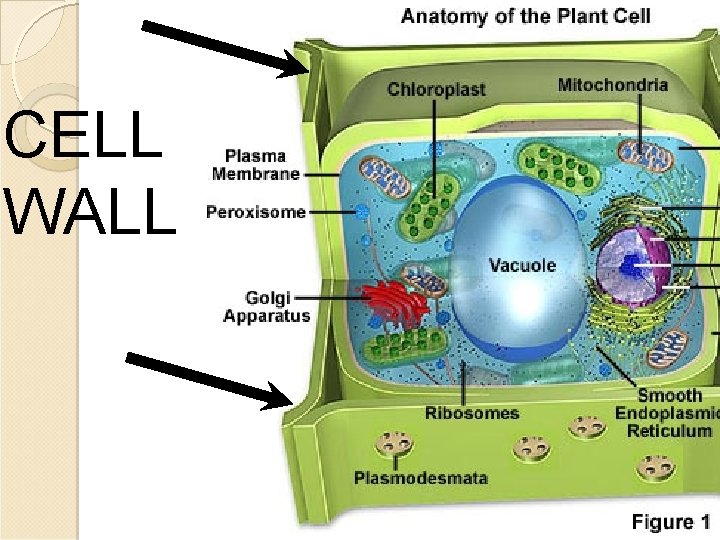
CELL WALL 12
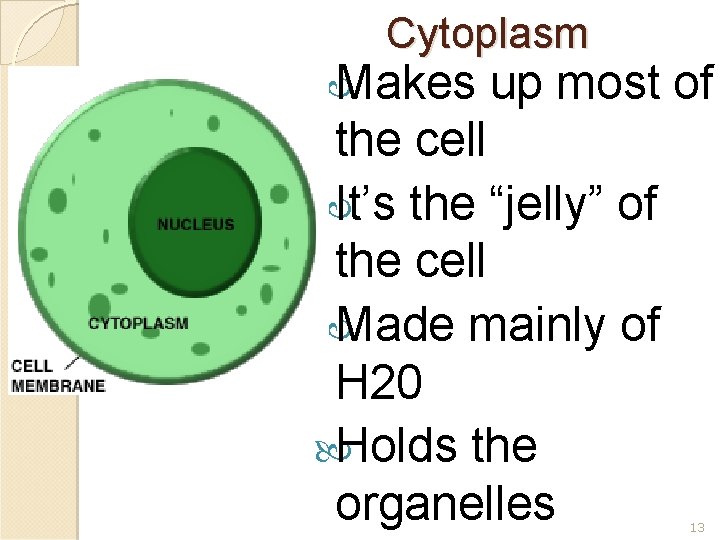
Cytoplasm Makes up most of the cell It’s the “jelly” of the cell Made mainly of H 20 Holds the organelles 13
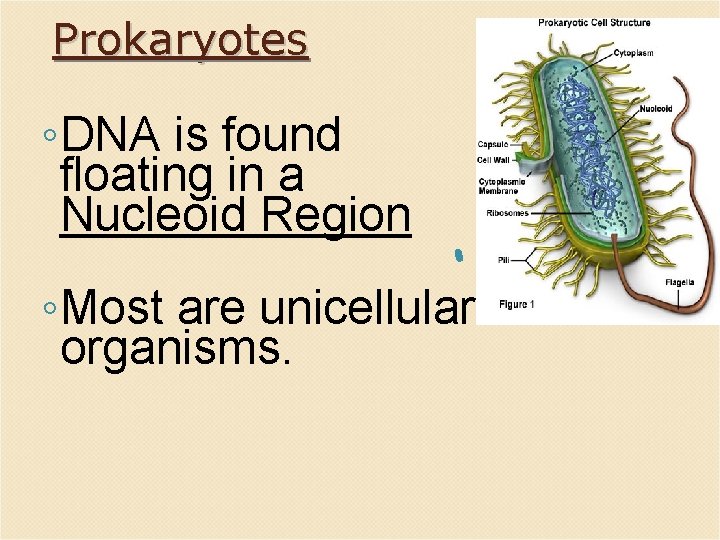
Prokaryotes ◦ DNA is found floating in a Nucleoid Region ◦ Most are unicellular organisms.
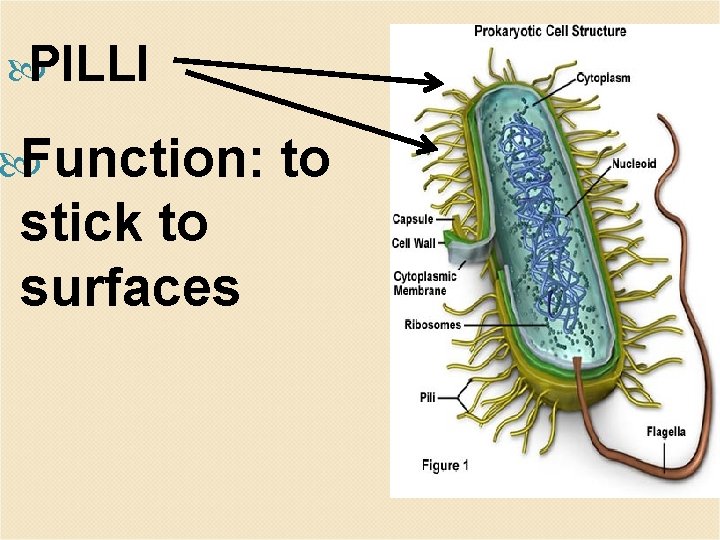
PILLI Function: stick to surfaces to
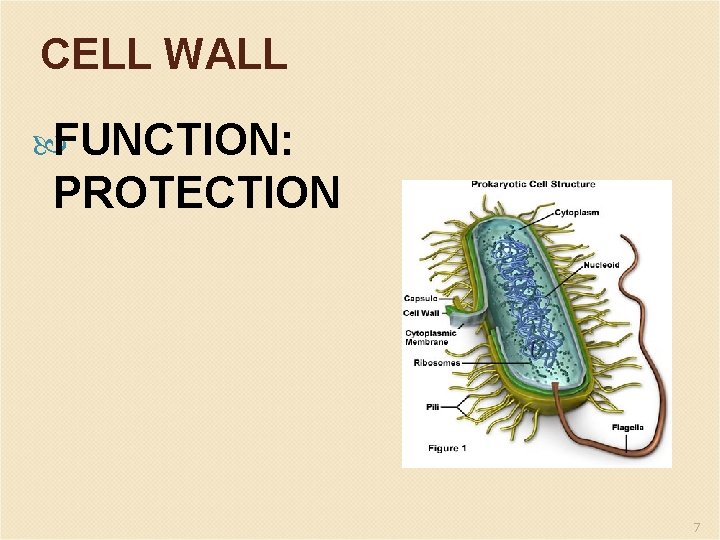
CELL WALL FUNCTION: PROTECTION 7
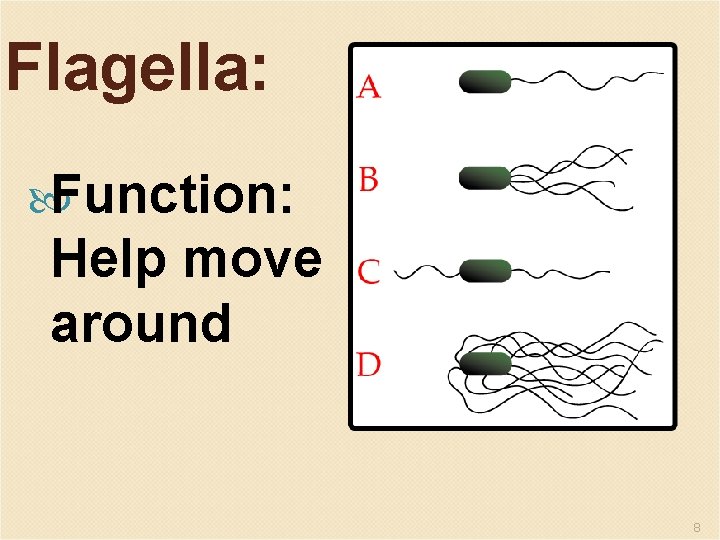
Flagella: Function: Help move around 8
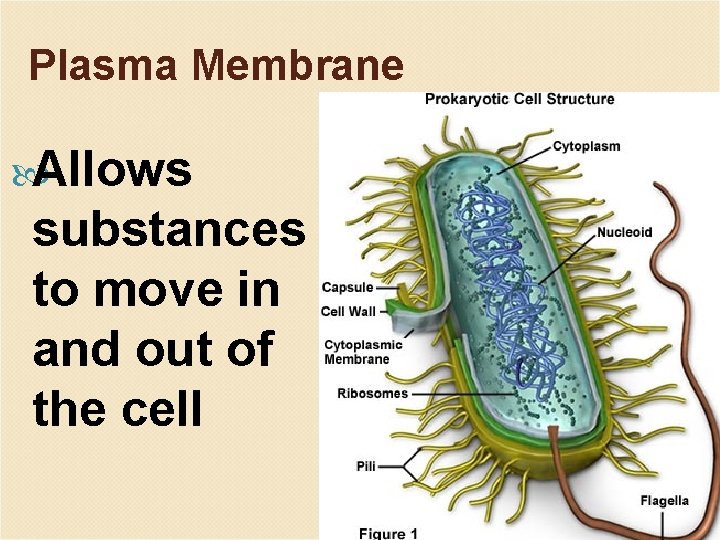
Plasma Membrane Allows substances to move in and out of the cell 18
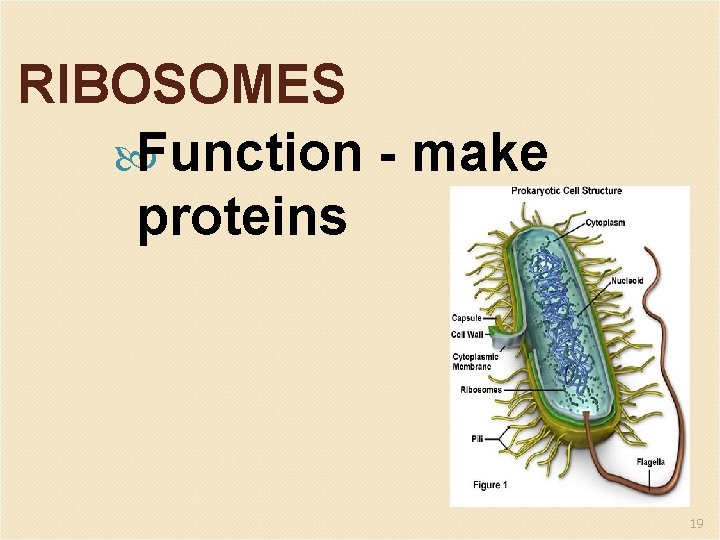
RIBOSOMES Function - make proteins 19

STOP 14
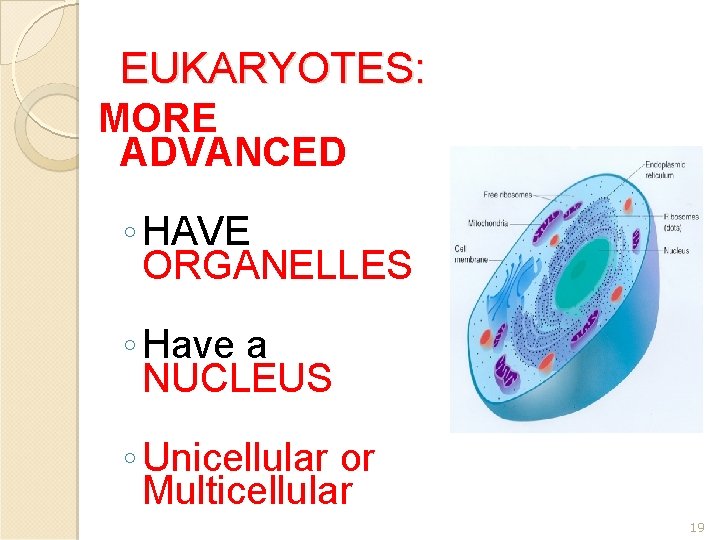
EUKARYOTES: MORE ADVANCED ◦ HAVE ORGANELLES ◦ Have a NUCLEUS ◦ Unicellular or Multicellular 19
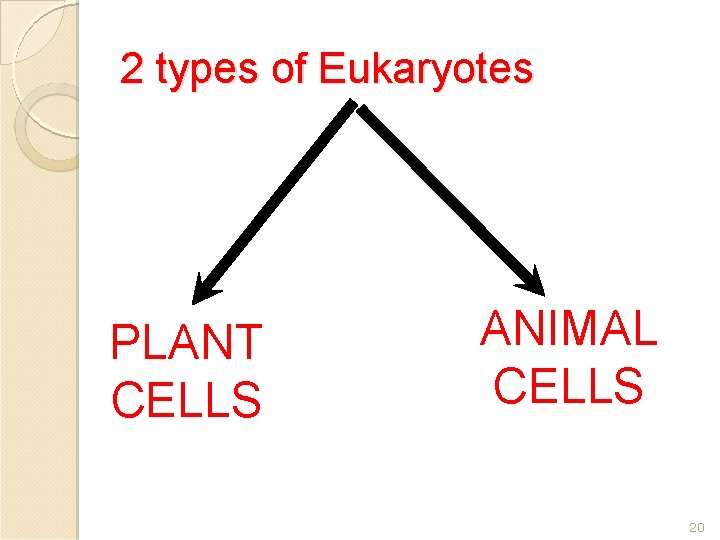
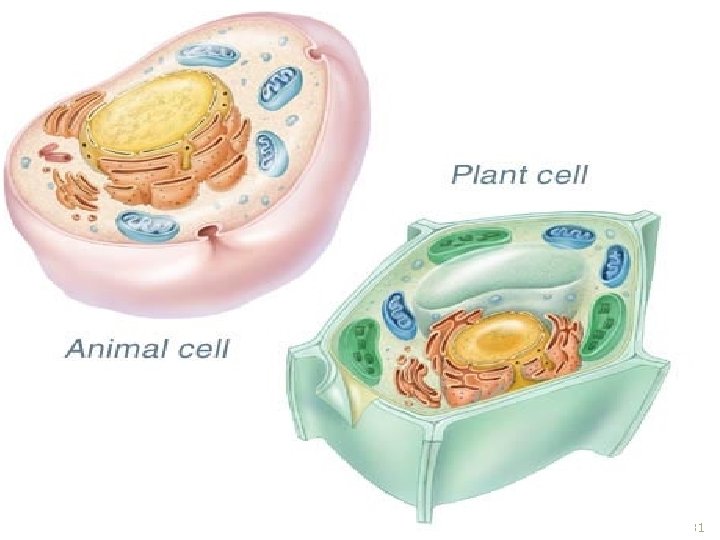
2 types of Eukaryotes PLANT CELLS ANIMAL CELLS 20
Cell Organelles Each part of a cell has a specific job Organelles- small structures located within the cytoplasm “baby organs!” 16
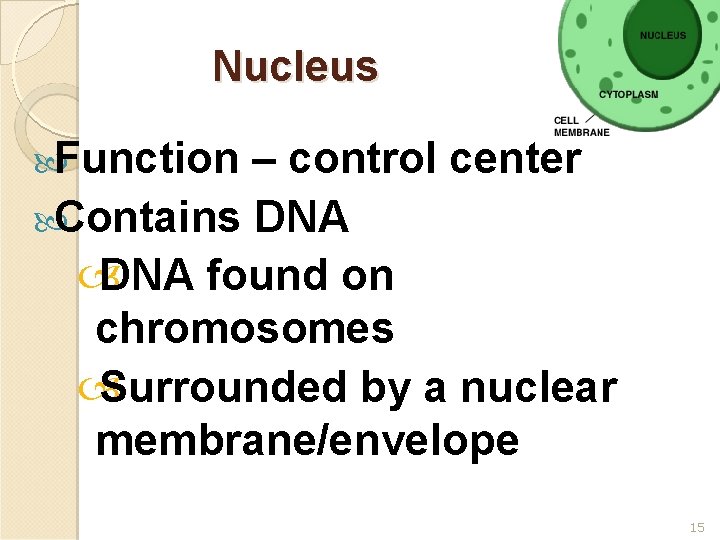
Nucleus Function – control center Contains DNA found on chromosomes Surrounded by a nuclear membrane/envelope 15
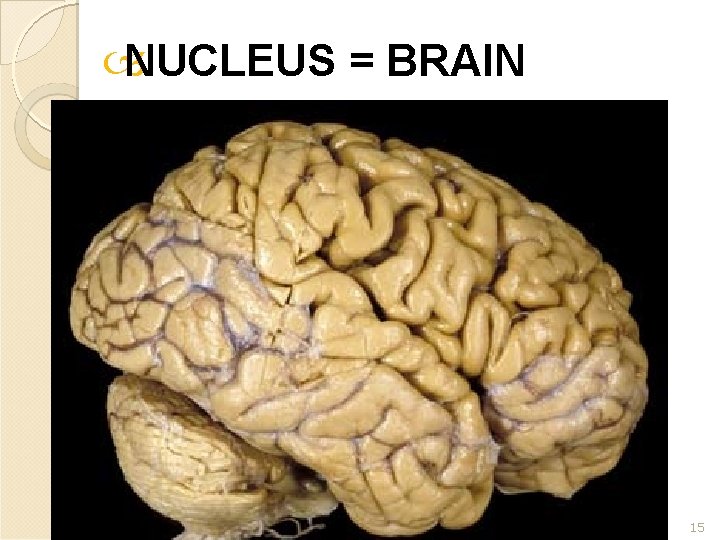
NUCLEUS = BRAIN 15
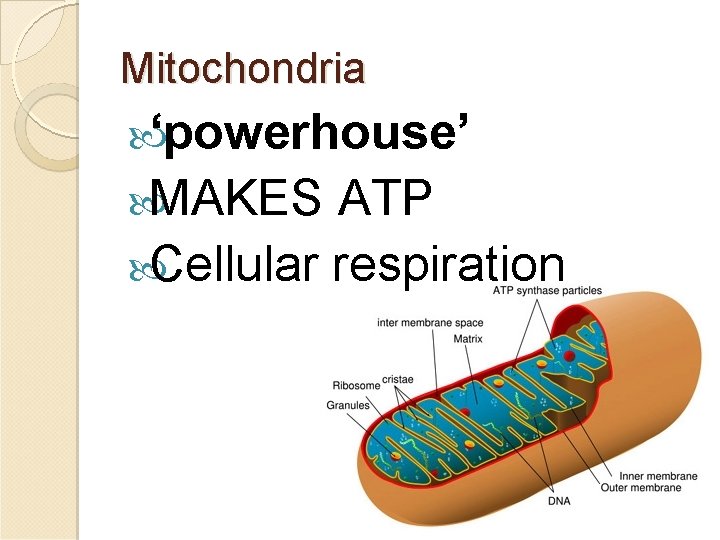
Mitochondria ‘powerhouse’ MAKES ATP Cellular respiration 17
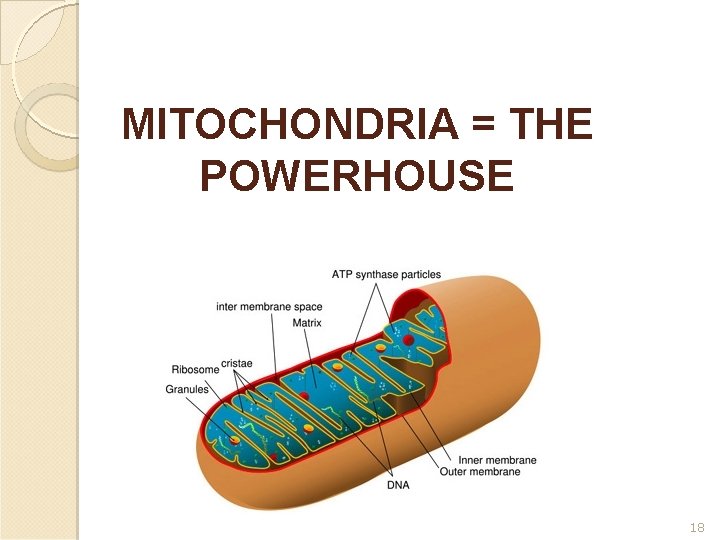
MITOCHONDRIA = THE POWERHOUSE 18
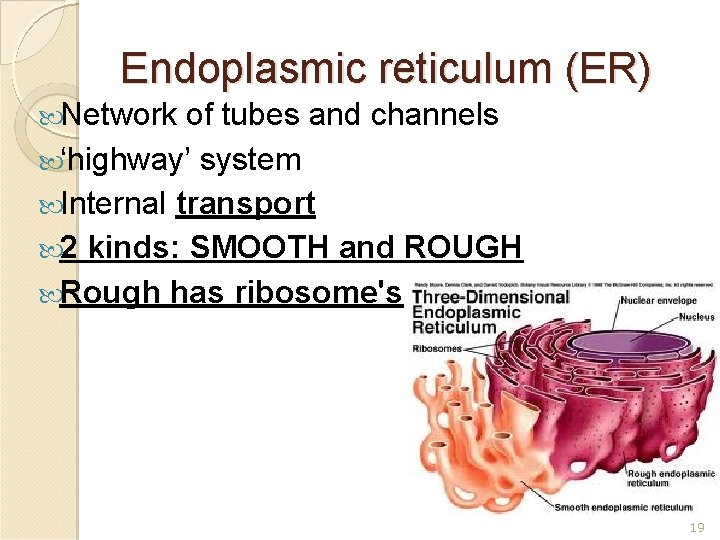
Endoplasmic reticulum (ER) Network of tubes and channels ‘highway’ system Internal transport 2 kinds: SMOOTH and ROUGH Rough has ribosome's 19
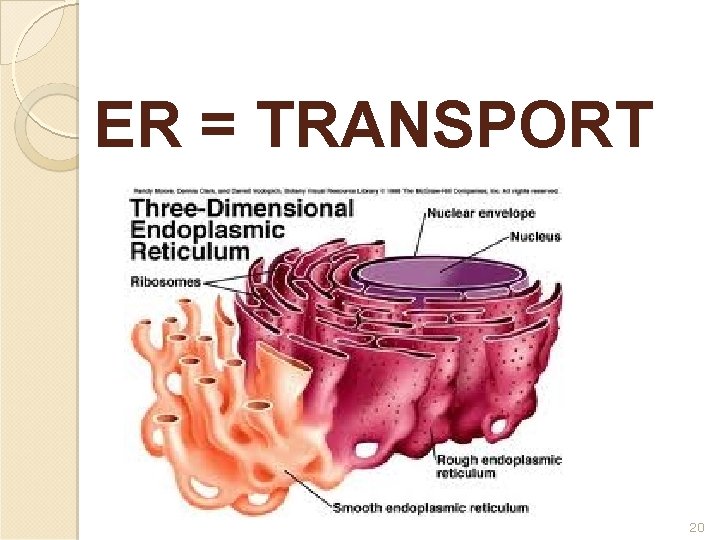
ER = TRANSPORT 20
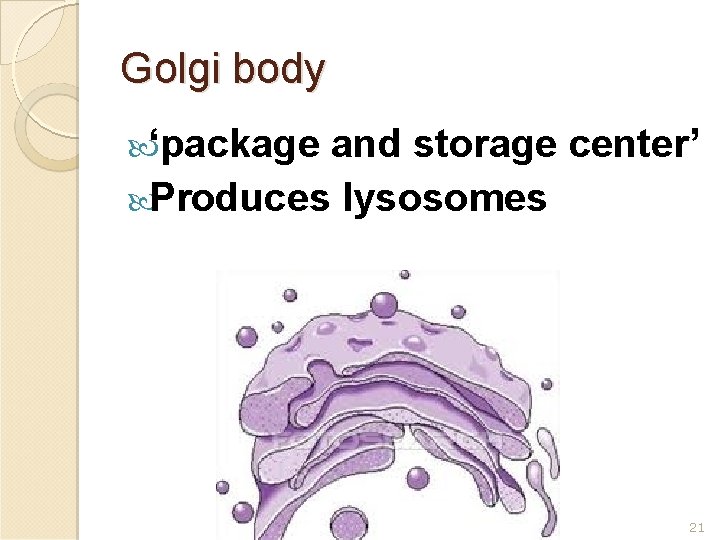
Golgi body ‘package and storage center’ Produces lysosomes 21
GOLGI BODY = PACKAGES 22
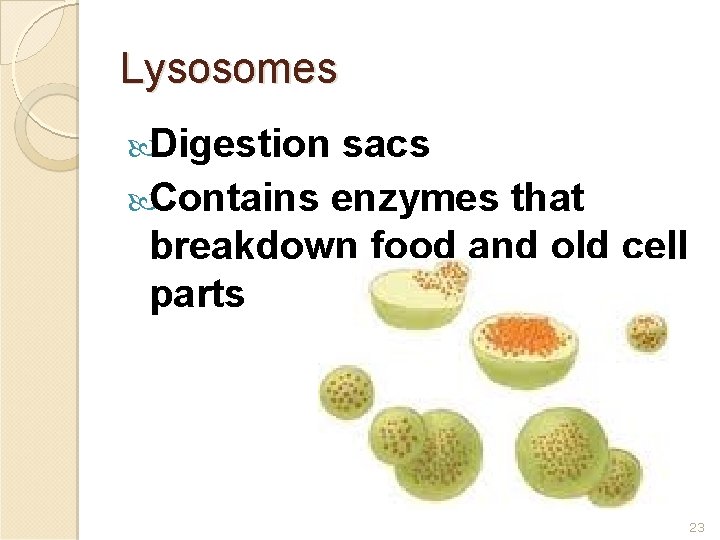
Lysosomes Digestion sacs Contains enzymes that breakdown food and old cell parts 23
LYSOSOMES: BREAK DOWN 24
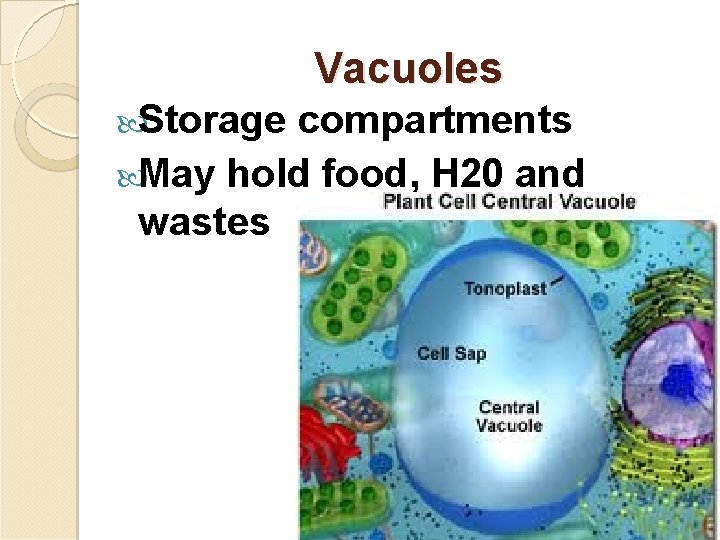
Vacuoles Storage compartments May hold food, H 20 and wastes 25
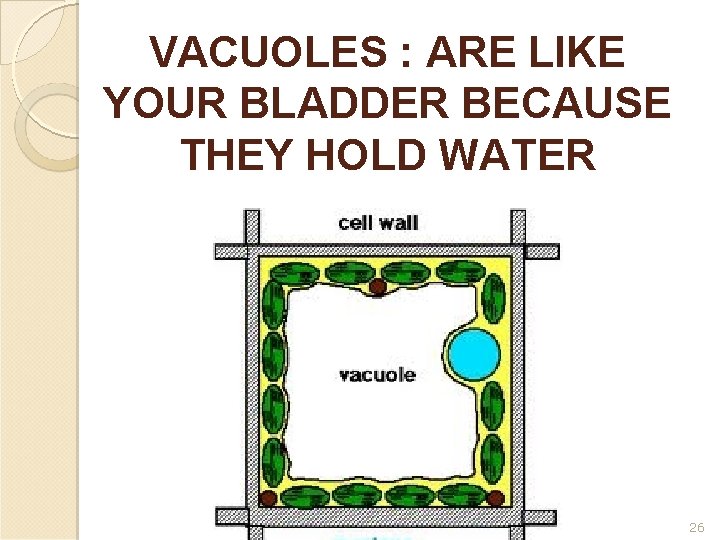
VACUOLES : ARE LIKE YOUR BLADDER BECAUSE THEY HOLD WATER 26
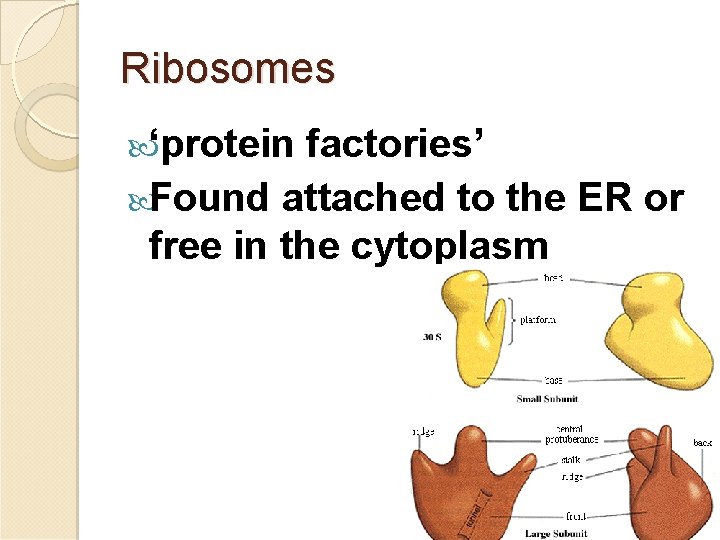
Ribosomes ‘protein factories’ Found attached to the ER or free in the cytoplasm 27
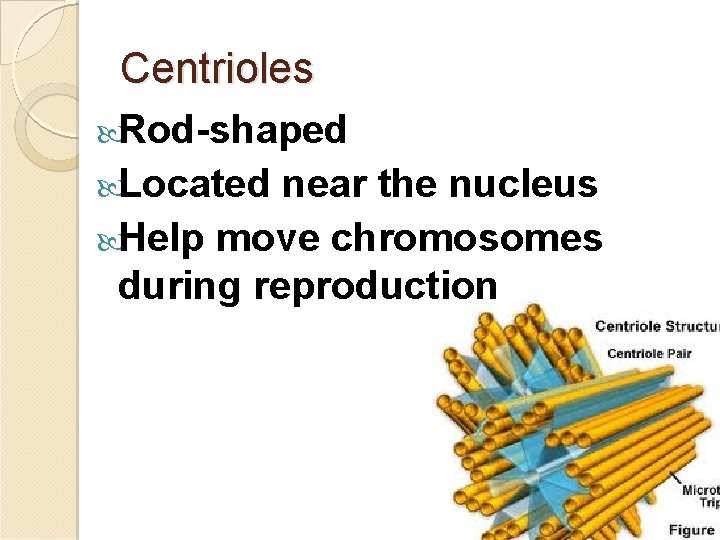
Centrioles Rod-shaped Located near the nucleus Help move chromosomes during reproduction 28
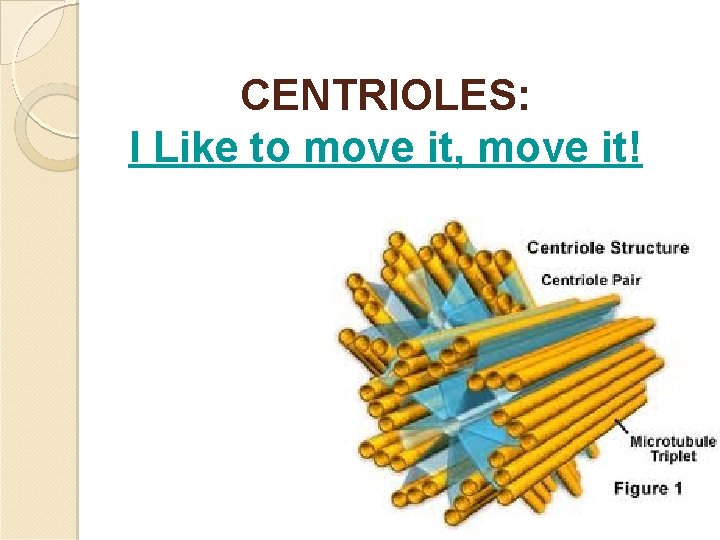
CENTRIOLES: I Like to move it, move it! 29
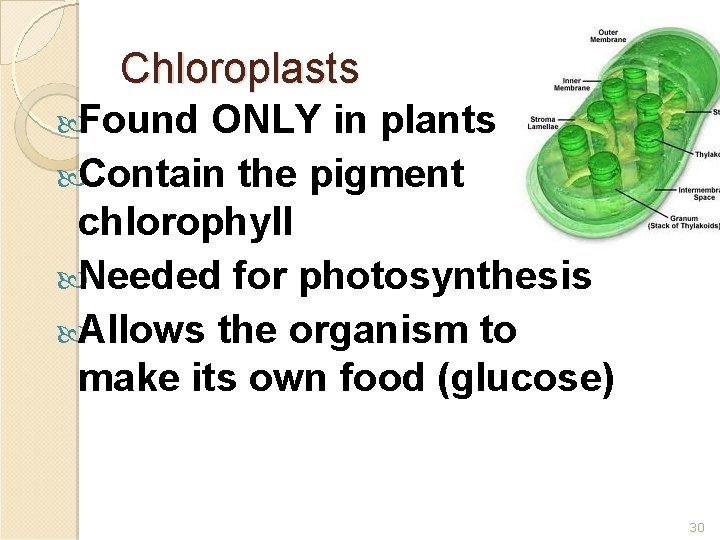
Chloroplasts Found ONLY in plants Contain the pigment chlorophyll Needed for photosynthesis Allows the organism to make its own food (glucose) 30
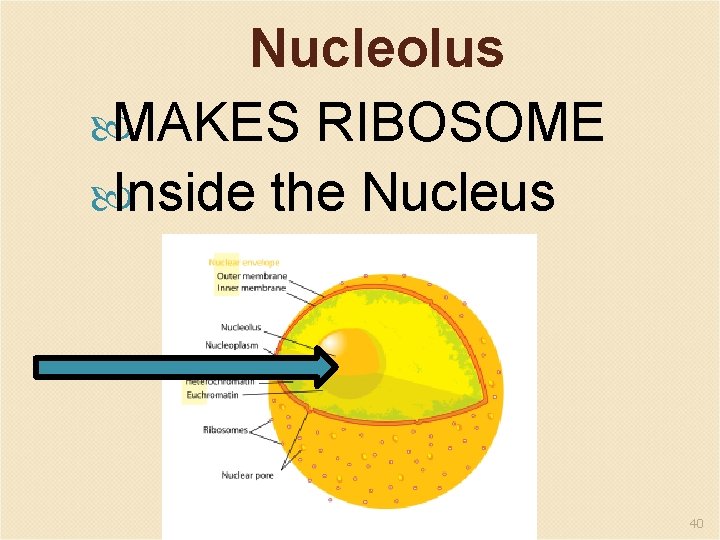
Nucleolus MAKES RIBOSOME Inside the Nucleus 40
31
- Slides: 41