
Introduction to Cell Biology Think about all of
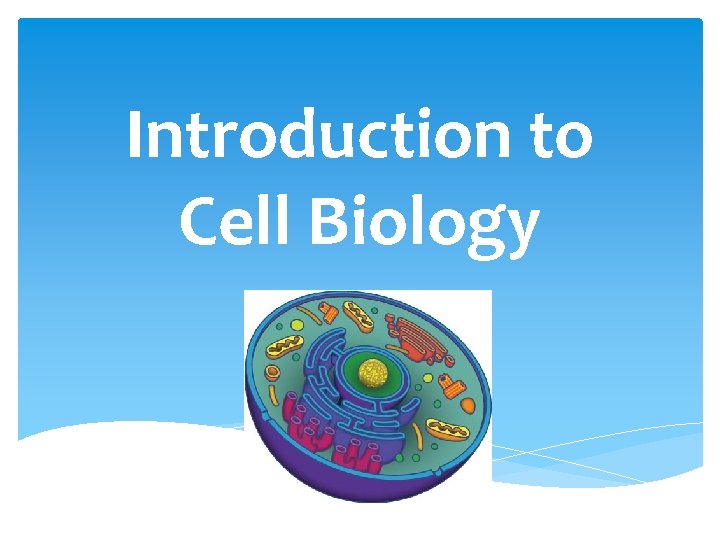
Introduction to Cell Biology
Think about all of the things the human body does to keep you alive. Your heart pumps blood, your skin protects you, your stomach digests food…
However, the parts of your body do have 1 thing in common. They are all made of… CELLS! Cell – the most basic unit of life
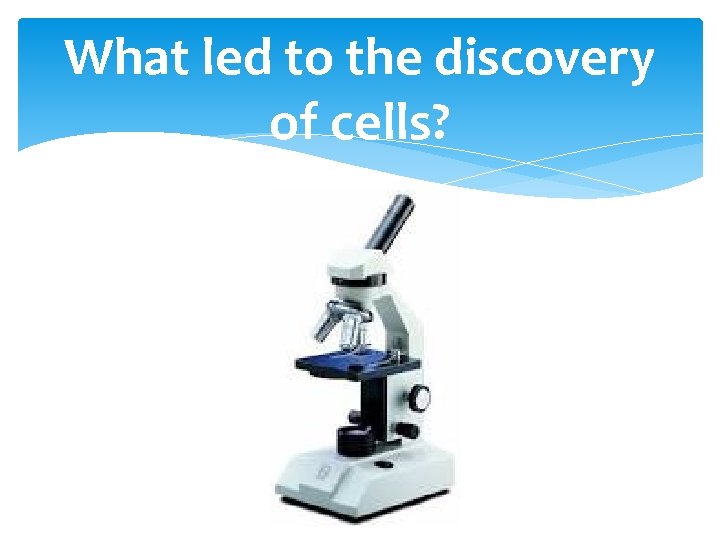
What led to the discovery of cells?

Timeline 1590 – Hans and Zacharias Janssen (father & son) invent the first compound microscope 1665 – Robert Hooke observes cork and names the tiny chambers he sees, “cells” Father of Microscopy
FYI Cork is the tough outer bark of a species of oak tree. The plant cells Hooke observed were dead so he was really only looking at cell walls and empty space.
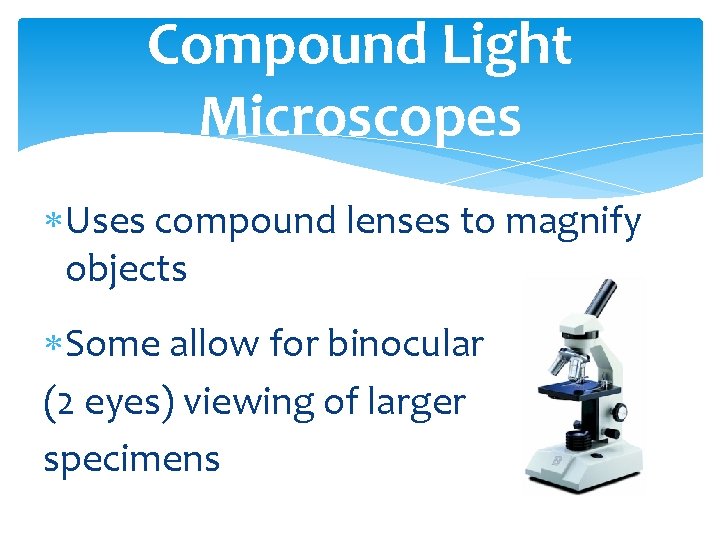
Compound Light Microscopes Uses compound lenses to magnify objects Some allow for binocular (2 eyes) viewing of larger specimens
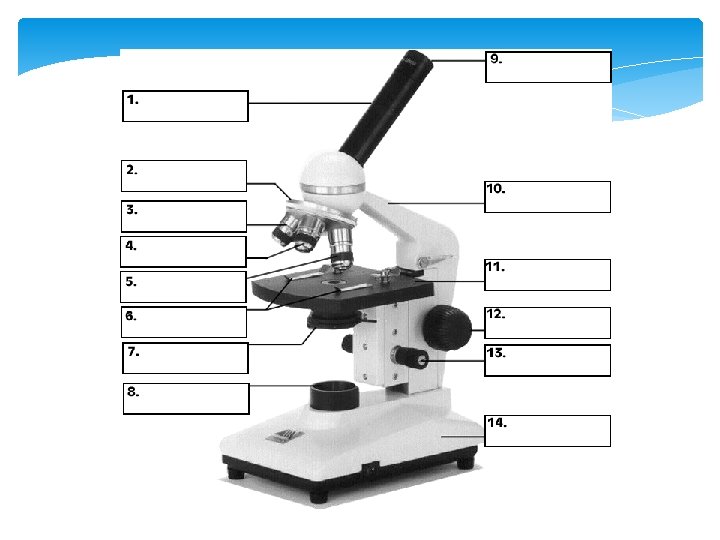
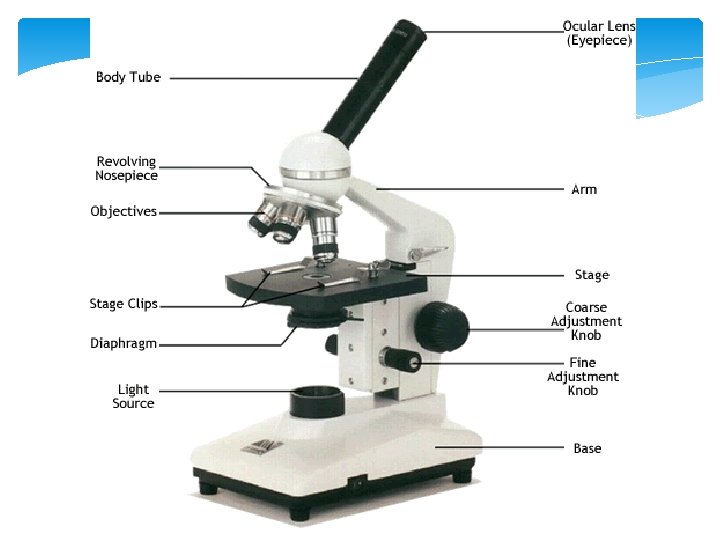
How Does a Microscope Work?
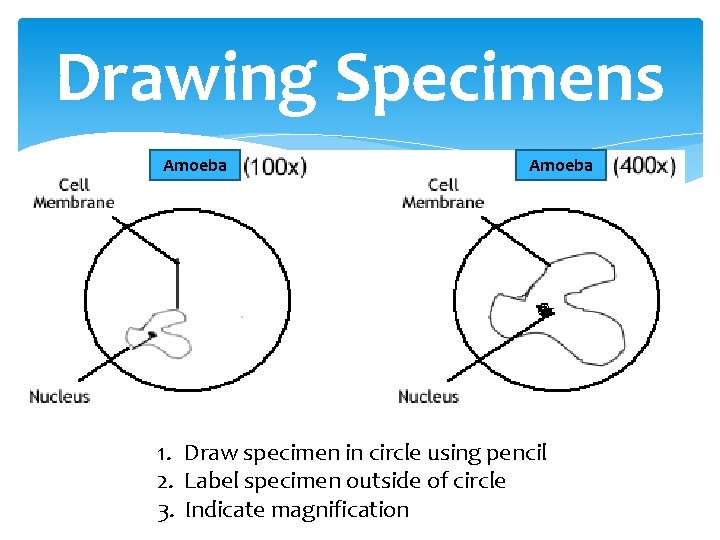
Drawing Specimens Amoeba 1. Draw specimen in circle using pencil 2. Label specimen outside of circle 3. Indicate magnification
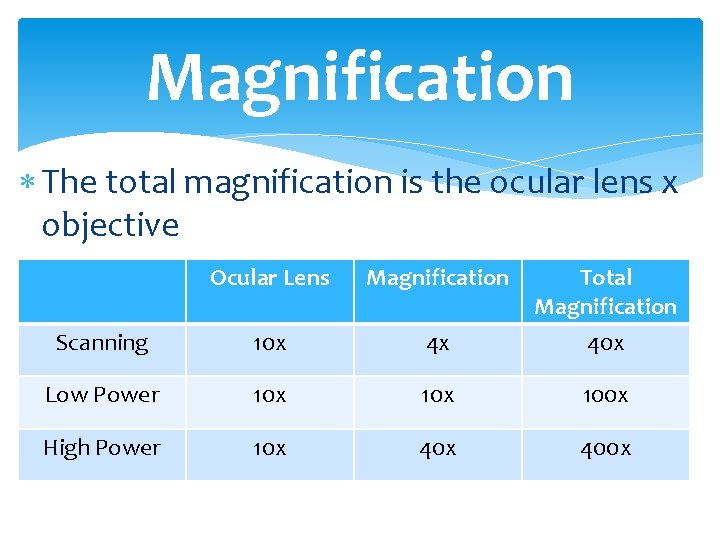
Magnification The total magnification is the ocular lens x objective Ocular Lens Magnification Total Magnification Scanning 10 x 4 x 40 x Low Power 10 x 100 x High Power 10 x 400 x
Observations Observe a pre-made slide Draw your observation under scanning and low power Label the specimen and magnification
- Slides: 13