
INTRODUCTION TO BUSINESS LECTURE1 TEACHING ASSESSMENT PLAN COURSE
INTRODUCTION TO BUSINESS LECTURE-1
TEACHING & ASSESSMENT PLAN COURSE NAME - INTRODUCTION TO BUSINESS COURSE CODE - MNGT 151 CREDIT HOURS - 03 CONTACT HOURS - 48 HOURS
COURSE DESCRIPTION This is an introductory course in Business, it explains the nature of business & types of business organizations. It also provides an insight on organization structure and other functions of a business organization. It explains the ethics and social responsibility of business.
LEARNING OUTCOMES Students should understand the terminology and basic concepts of business Ø Understand the role of business in Economics and social development Ø Understanding the various types of business ownerships and their characteristics Ø
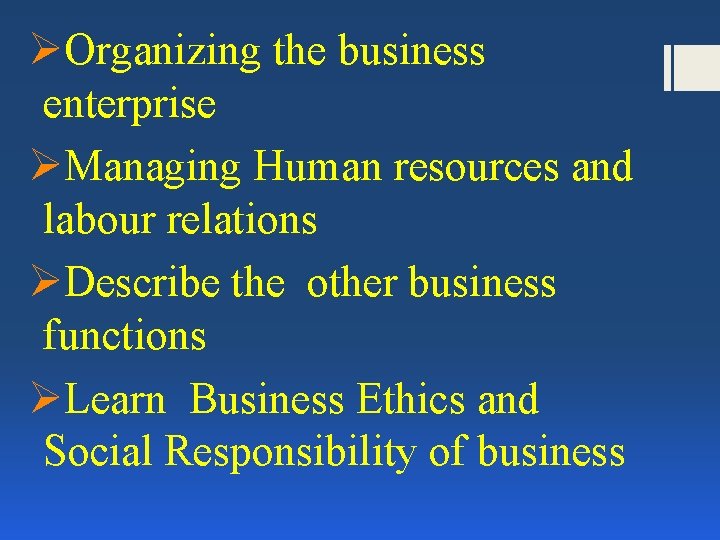
ØOrganizing the business enterprise ØManaging Human resources and labour relations ØDescribe the other business functions ØLearn Business Ethics and Social Responsibility of business
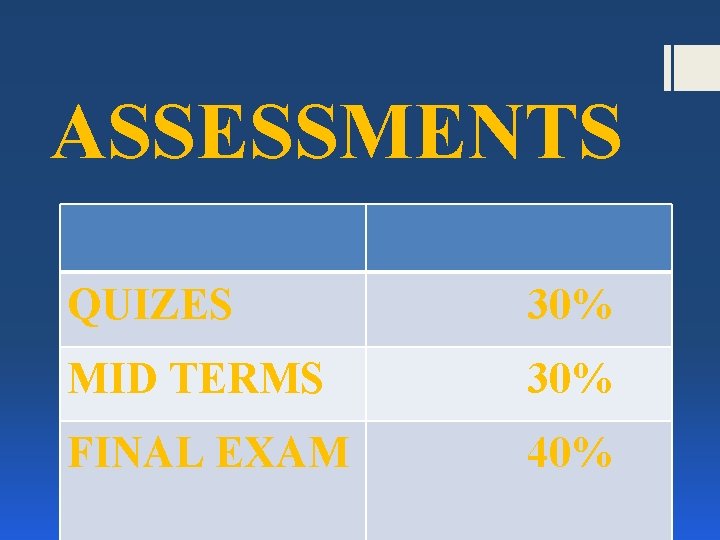
ASSESSMENTS QUIZES 30% MID TERMS 30% FINAL EXAM 40%
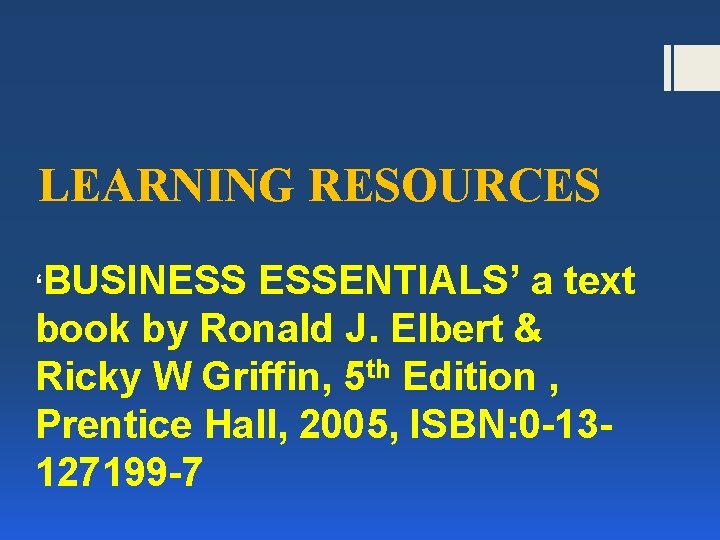
LEARNING RESOURCES ‘BUSINESS ESSENTIALS’ a text book by Ronald J. Elbert & Ricky W Griffin, 5 th Edition , Prentice Hall, 2005, ISBN: 0 -13127199 -7
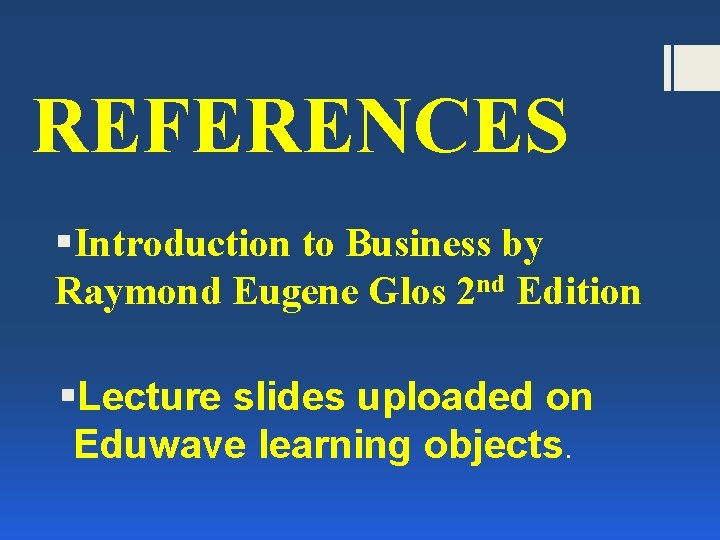
REFERENCES §Introduction to Business by Raymond Eugene Glos 2 nd Edition §Lecture slides uploaded on Eduwave learning objects.
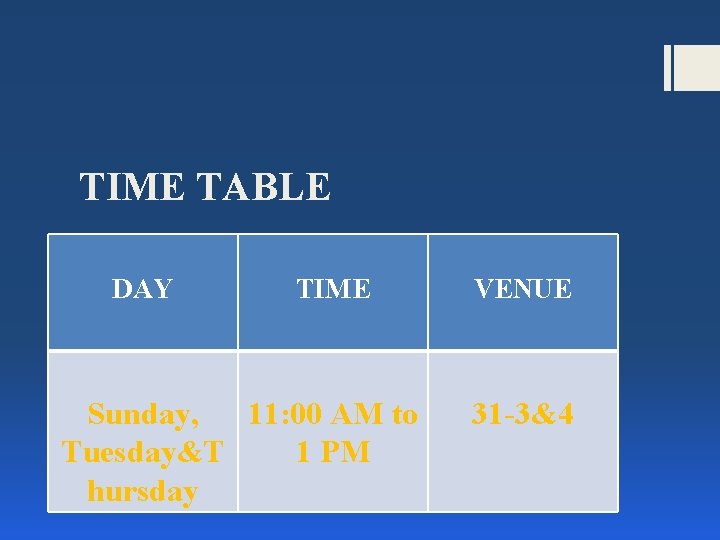
TIME TABLE DAY TIME Sunday, 11: 00 AM to Tuesday&T 1 PM hursday VENUE 31 -3&4
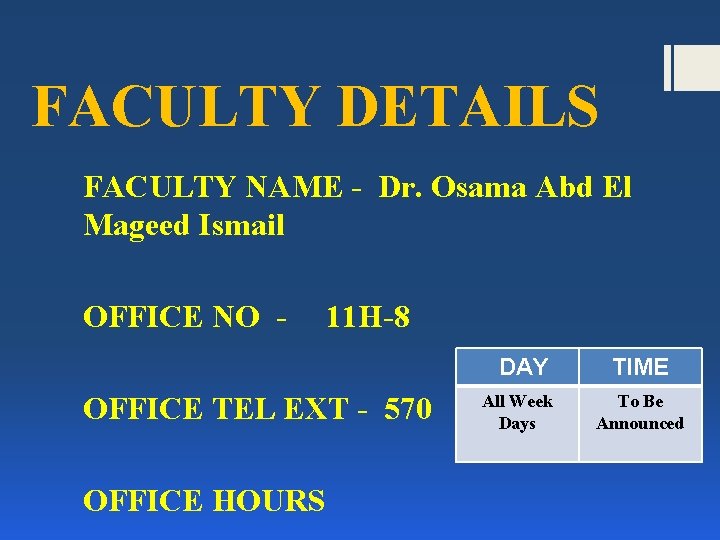
FACULTY DETAILS FACULTY NAME - Dr. Osama Abd El Mageed Ismail OFFICE NO - 11 H-8 DAY OFFICE TEL EXT - 570 OFFICE HOURS All Week Days TIME To Be Announced
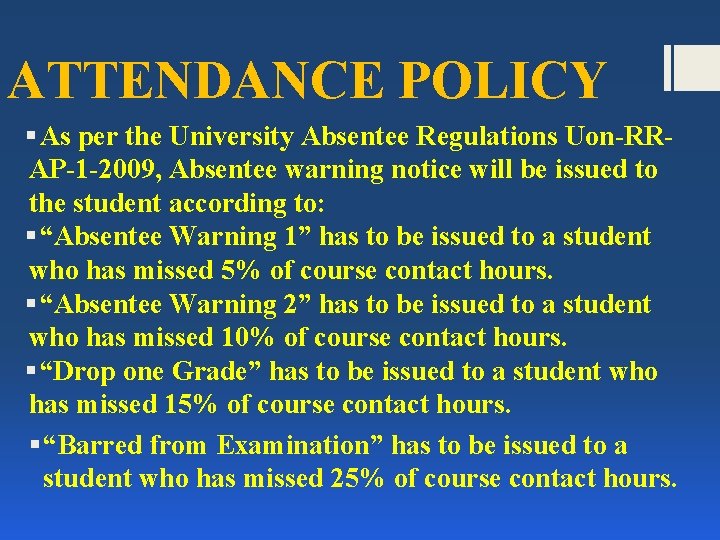
ATTENDANCE POLICY § As per the University Absentee Regulations Uon-RRAP-1 -2009, Absentee warning notice will be issued to the student according to: § “Absentee Warning 1” has to be issued to a student who has missed 5% of course contact hours. § “Absentee Warning 2” has to be issued to a student who has missed 10% of course contact hours. § “Drop one Grade” has to be issued to a student who has missed 15% of course contact hours. § “Barred from Examination” has to be issued to a student who has missed 25% of course contact hours.
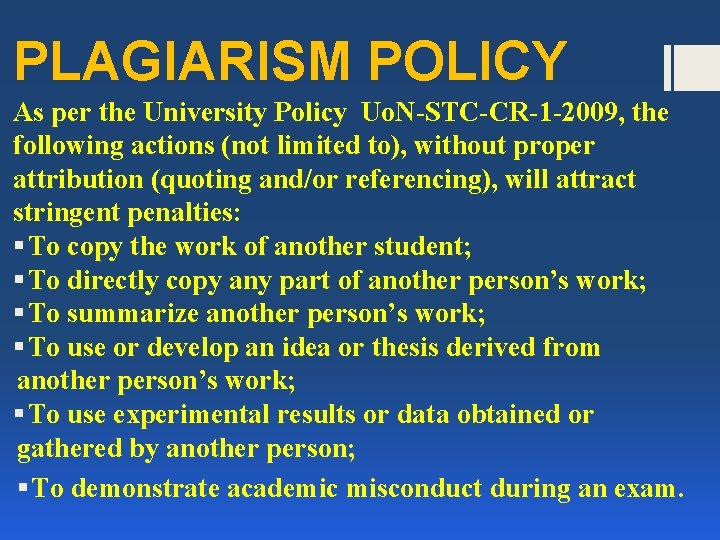
PLAGIARISM POLICY As per the University Policy Uo. N-STC-CR-1 -2009, the following actions (not limited to), without proper attribution (quoting and/or referencing), will attract stringent penalties: § To copy the work of another student; § To directly copy any part of another person’s work; § To summarize another person’s work; § To use or develop an idea or thesis derived from another person’s work; § To use experimental results or data obtained or gathered by another person; § To demonstrate academic misconduct during an exam.
SYLLABUS : CHAPTER-1 UNDERSTANDING THE BUSINESS ENVIRONMENT § The concept of Business §The concept of profit §Factors of Production §Types of Economic systems §Demand Supply in a Market economy
CHAPTER-2 UNDERSTANDING ENTREPRENEURSHIP AND BUSINESS OWNERSHIPS §Small Business § Entrepreneurship § Business ownerships § Sole Proprietor § Partnership and its types §Corporations and Their types §Franchising
CHAPTER-3 ORGANISING THE BUSINESS ENTERPRISES § Organisational structure §Specialisation and departmentalisation §Various forms of organisational structures § Formal Vs. Informal organisations
CHAPTER-4 MANAGING BUSINESS ENTERPRISE § Setting goals and objectives § Planning §Organising §Directing §Controlling
CHAPTER-5 MANAGING OPERATIONS § Defining goods and services operations §Creating value through operations §The operations process §Difference between service and manufacturing operations

CHAPTER-6
CHAPTER-7 UNDERSTANDING MARKETING PROCESS § Marketing- concept and definition § Providing value and satisfaction §The marketing environment § The Marketing Mix
CHAPTER-8 MANAGING HUMAN RESOURCES AND LABOUR RELATIONS § Definition and concept § Human resource planning, staffing and selection § Compensation and benefits- salary and incentive programs § Equal employment opportunity
CHAPTER-9 UNDERSTANDING PRINCIPLES OF BUSINESS ACCOUNTING § What is Accounting § Financial versus managerial accounting § Understanding various terms used in business accounting (Assets and liabilities, owner’s equity, balance sheets, income statements, revenue, expenses, profit, loss, cash flow and budget etc)
CHAPTER-10 BUSINESS ETHICS AND SOCIAL RESPONSIBILITY § Concept of ethics and ethical behavior § Business and managerial ethics § Social responsibility of Businesses § Responsibility towards environment, customers, employees and investors.
- Slides: 22