
Introduction to Bridges Tech EdEngineering 8 th Grade
Introduction to Bridges Tech Ed/Engineering 8 th Grade Mr. Parsons
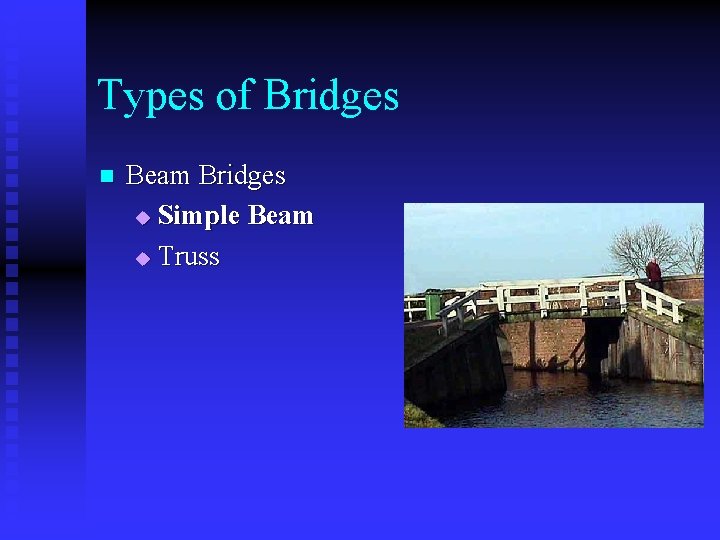
Types of Bridges n Beam Bridges u Simple Beam u Truss
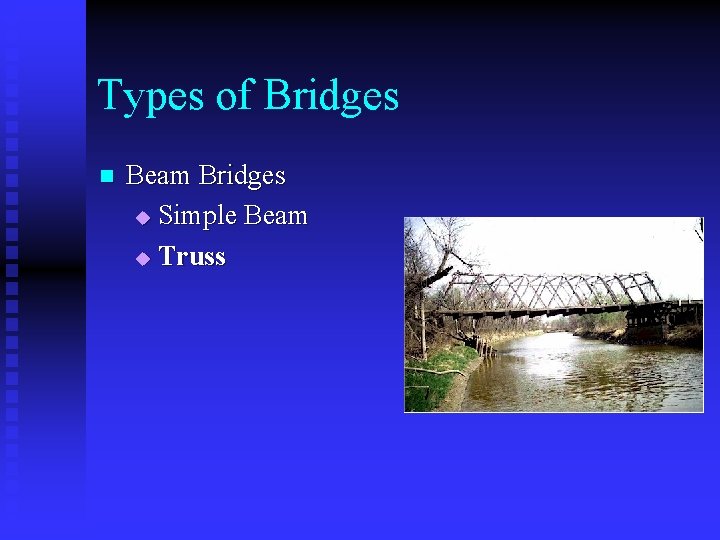
Types of Bridges n Beam Bridges u Simple Beam u Truss
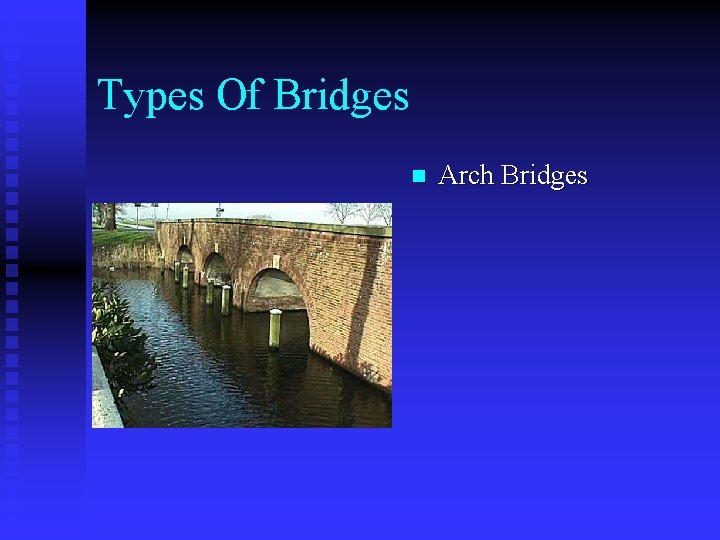
Types Of Bridges n Arch Bridges
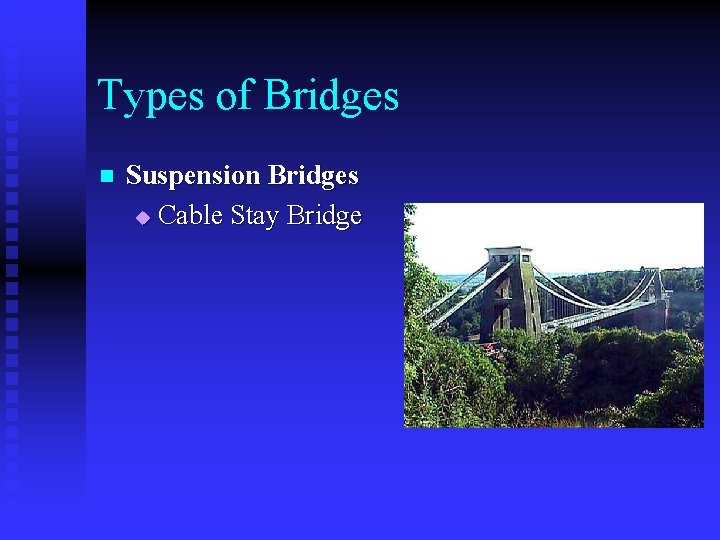
Types of Bridges n Suspension Bridges u Cable Stay Bridge
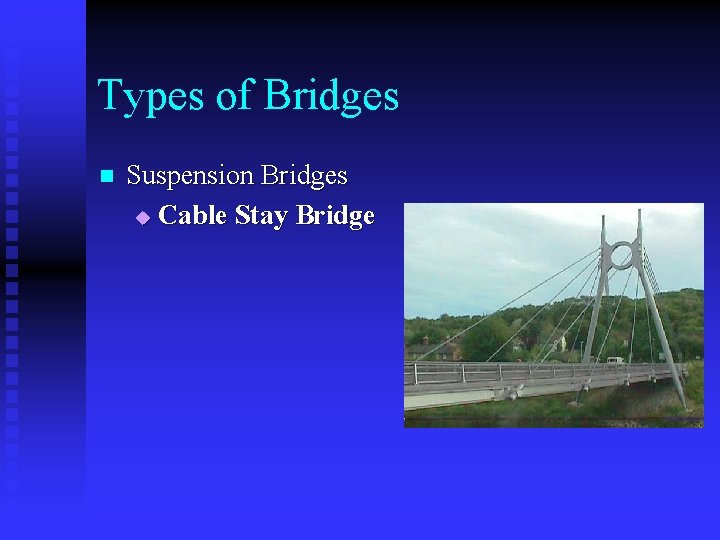
Types of Bridges n Suspension Bridges u Cable Stay Bridge

Forces on Bridges Tension: Stretching n Compression: Squeezing n Torque: Twisting n Shear: The force that slides one material past another. n
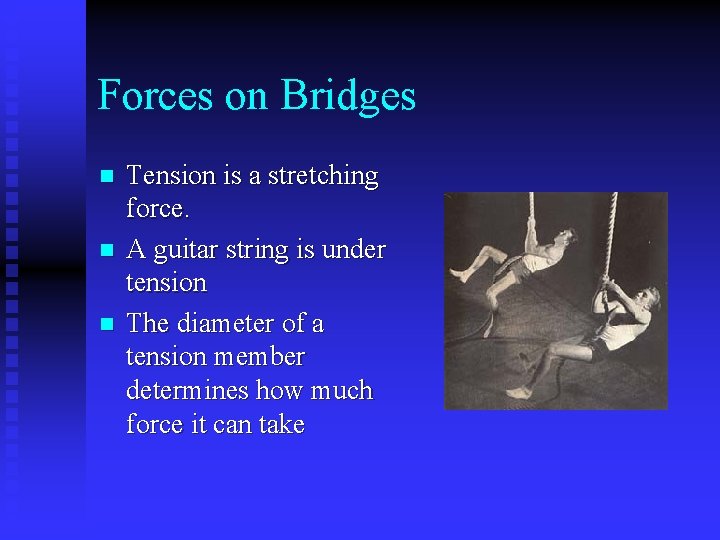
Forces on Bridges n n n Tension is a stretching force. A guitar string is under tension The diameter of a tension member determines how much force it can take
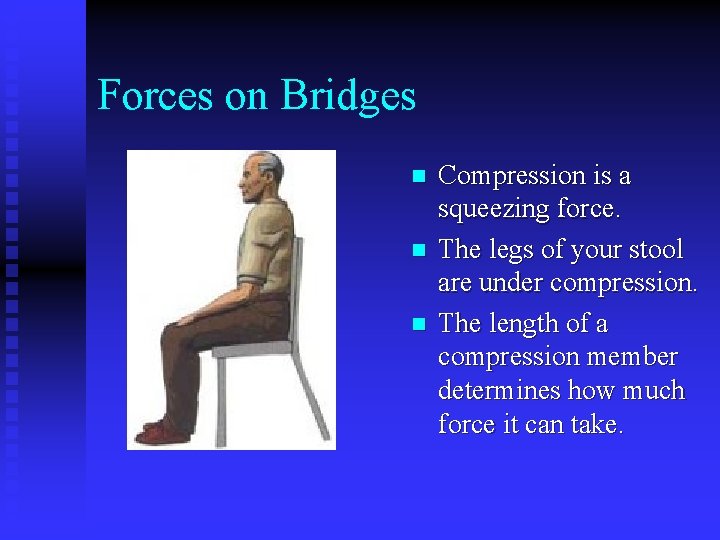
Forces on Bridges n n n Compression is a squeezing force. The legs of your stool are under compression. The length of a compression member determines how much force it can take.
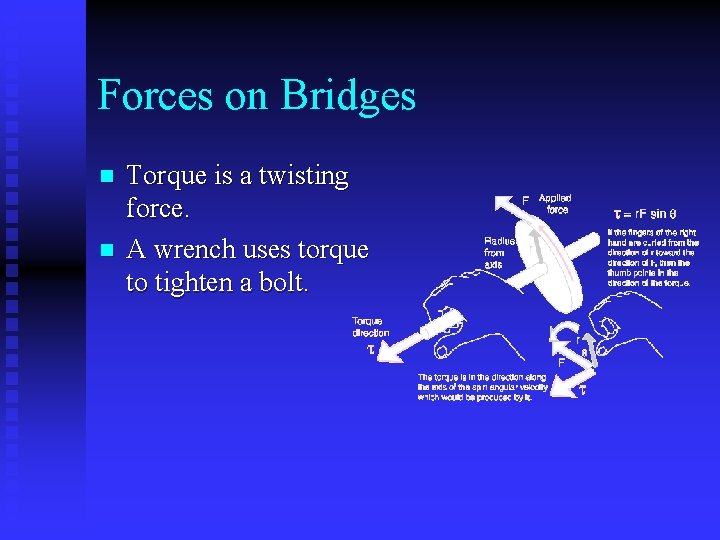
Forces on Bridges n n Torque is a twisting force. A wrench uses torque to tighten a bolt.
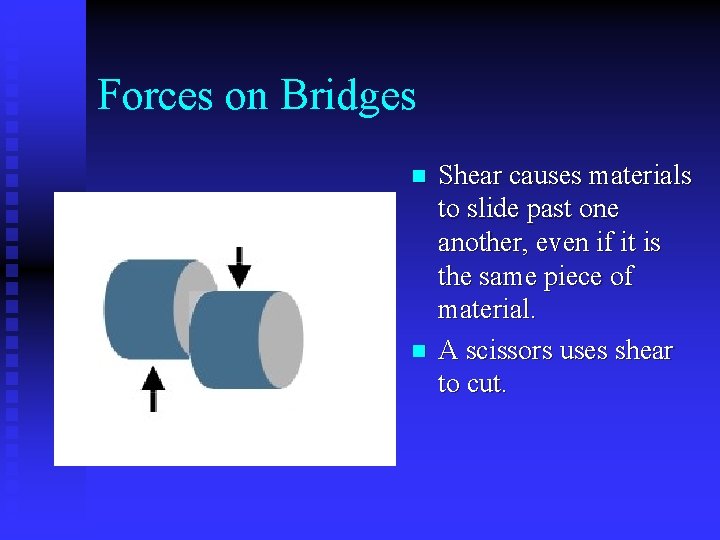
Forces on Bridges n n Shear causes materials to slide past one another, even if it is the same piece of material. A scissors uses shear to cut.
Equilibrium of Forces All forces in a bridge (or any structure) must be in equilibrium (the sums equaling zero). n If the force on the bridge is greater than the force the bridge or foundation can exert, it will collapse. n If the force a bridge or foundation exerts is higher, the bridge will fly off into space. n
Equilibrium of Forces How the force is distributed is a ratio of the distance between where the force is placed and where the support is. Consider a simple beam bridge….
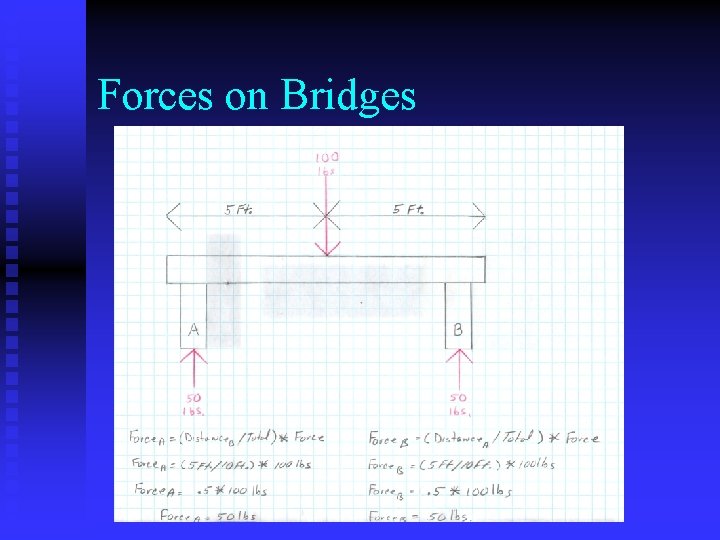
Forces on Bridges
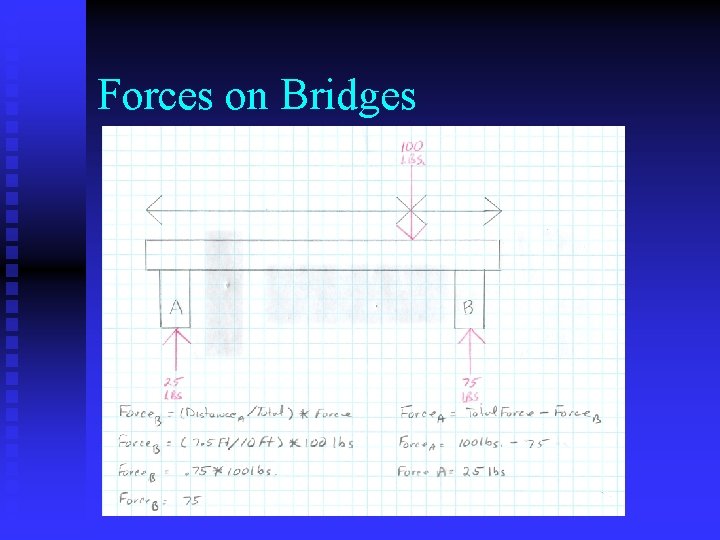
Forces on Bridges
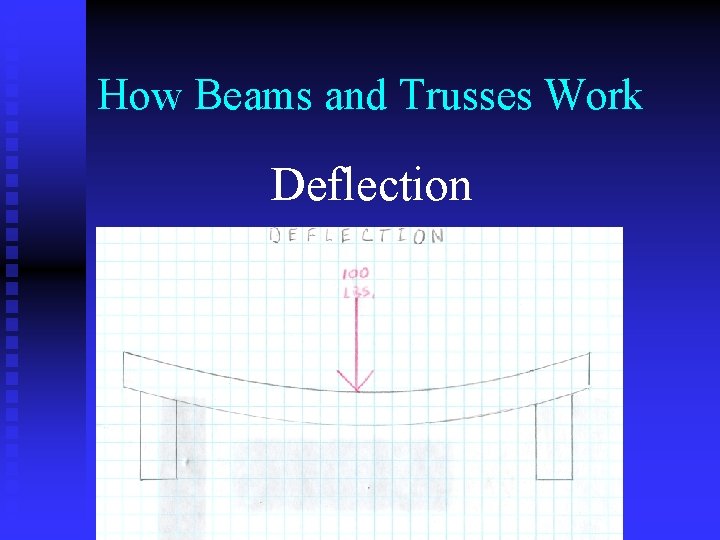
How Beams and Trusses Work Deflection
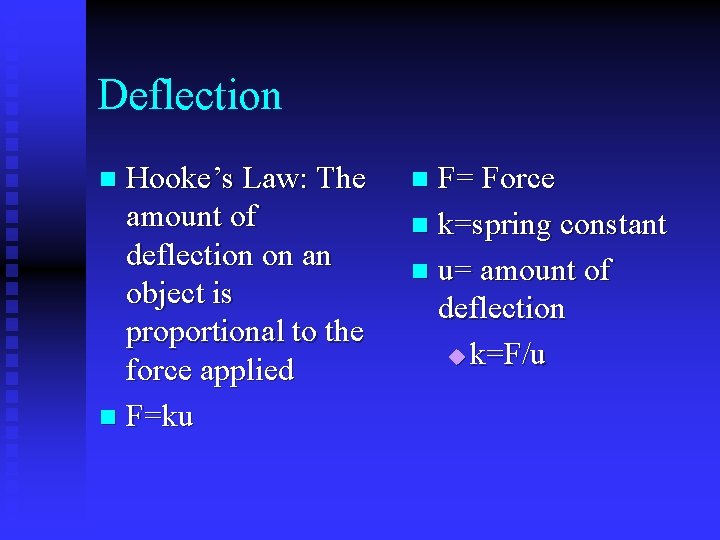
Deflection Hooke’s Law: The amount of deflection on an object is proportional to the force applied n F=ku n F= Force n k=spring constant n u= amount of deflection u k=F/u n
Stress n Stress is the measure of how much the material is being compressed or pulled at the molecular level n S=P/A u Stress=load/cross sectional area
Strain n Strain in the amount of distortion that a force causes on the length of an object n e=l/L u u u e=strain l= change in length L=original length
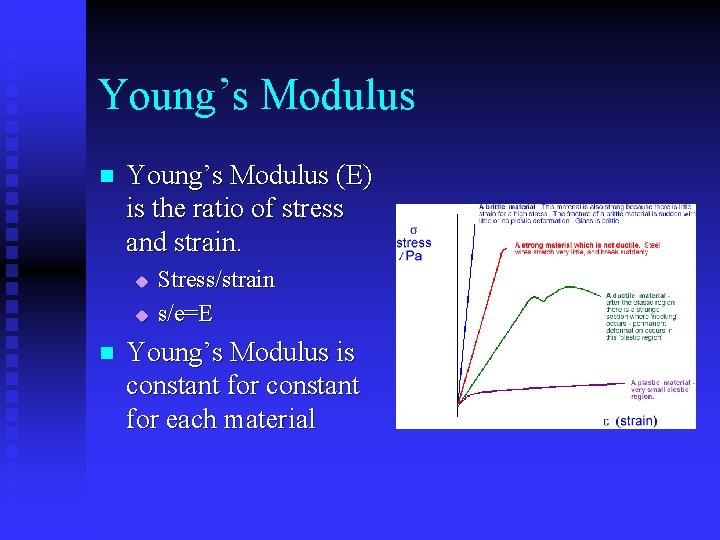
Young’s Modulus n Young’s Modulus (E) is the ratio of stress and strain. u u n Stress/strain s/e=E Young’s Modulus is constant for each material
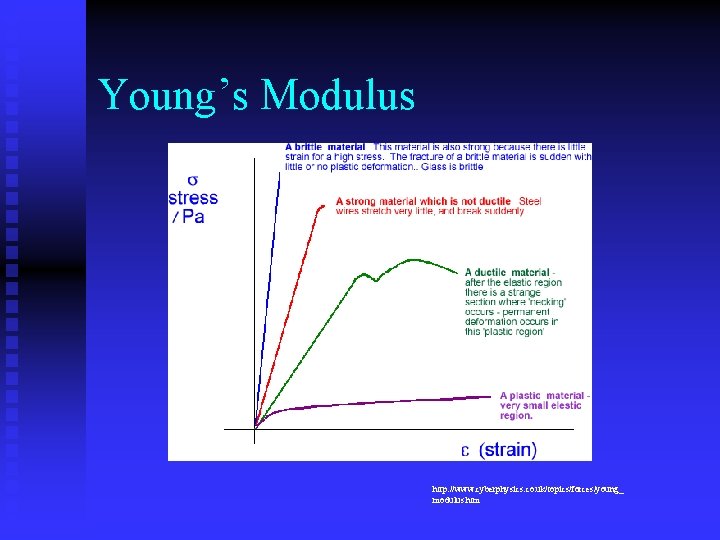
Young’s Modulus http: //www. cyberphysics. co. uk/topics/forces/young_ modulus. htm
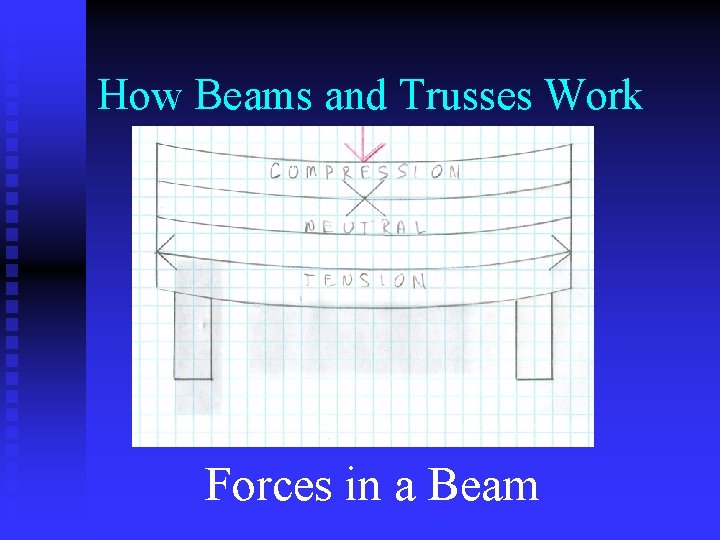
How Beams and Trusses Work Forces in a Beam
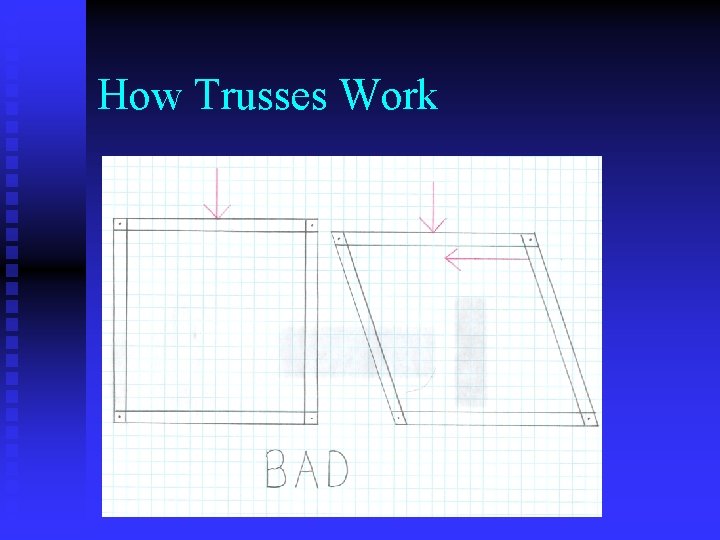
How Trusses Work
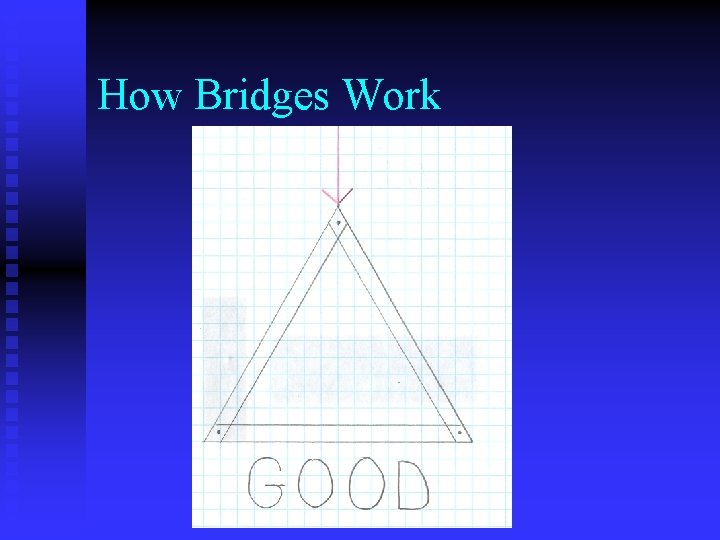
How Bridges Work

Parts of a Truss Bridge
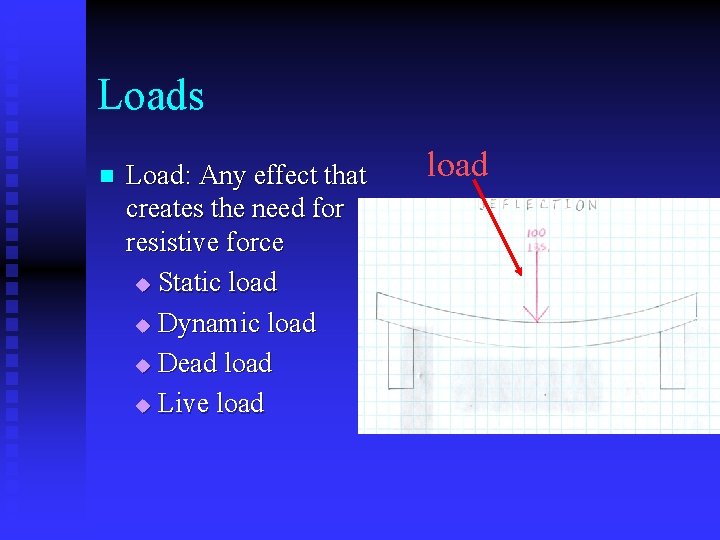
Loads n Load: Any effect that creates the need for resistive force u Static load u Dynamic load u Dead load u Live load
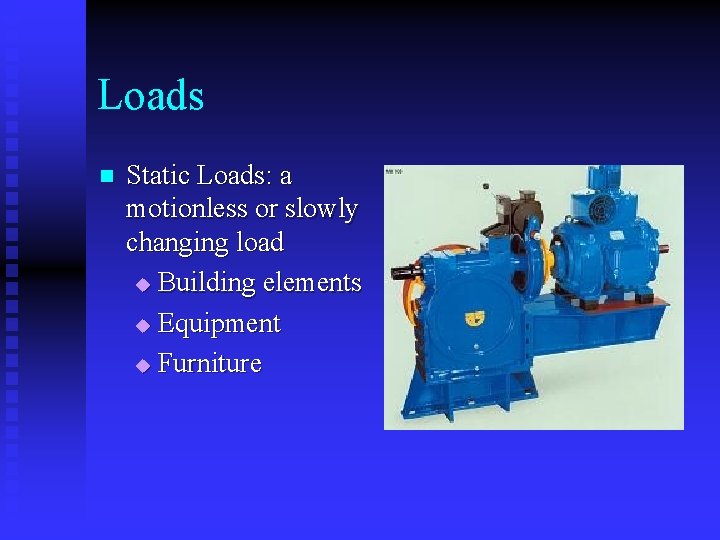
Loads n Static Loads: a motionless or slowly changing load u Building elements u Equipment u Furniture
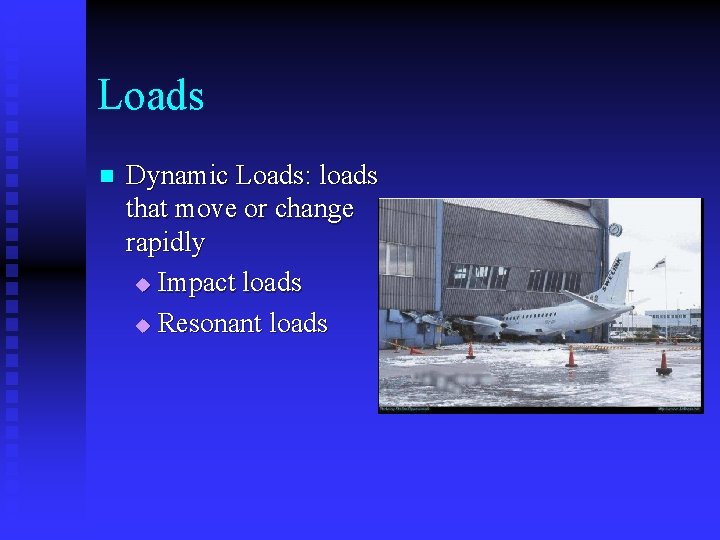
Loads n Dynamic Loads: loads that move or change rapidly u Impact loads u Resonant loads

Loads
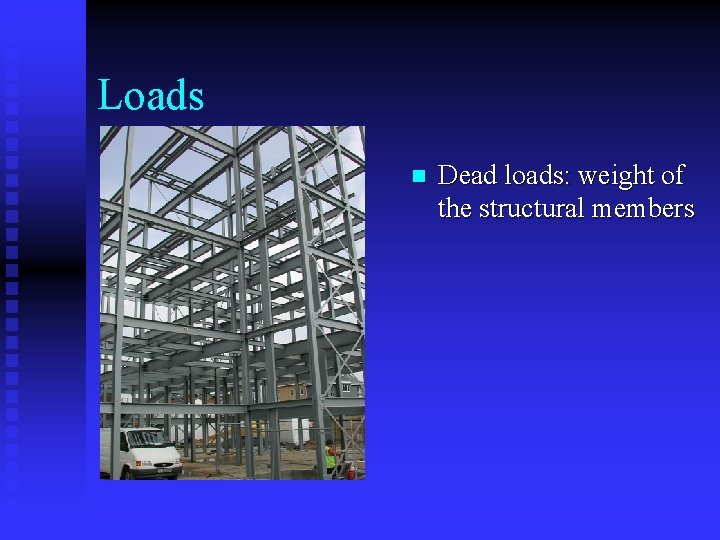
Loads n Dead loads: weight of the structural members
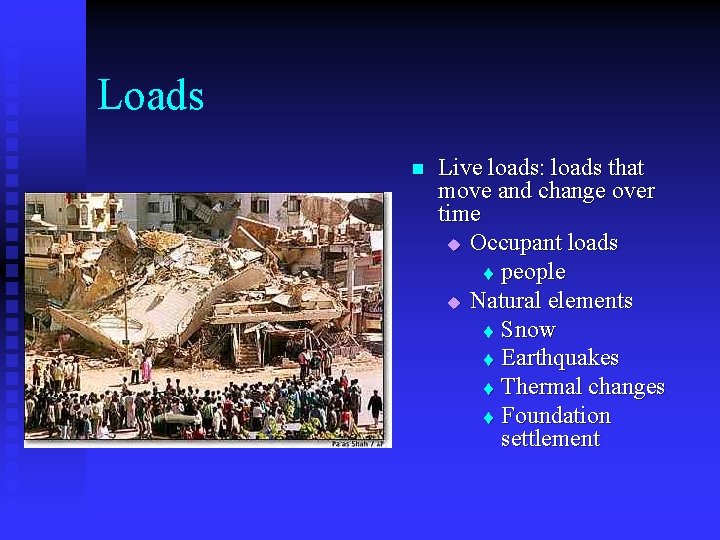
Loads n Live loads: loads that move and change over time u Occupant loads t people u Natural elements t Snow t Earthquakes t Thermal changes t Foundation settlement
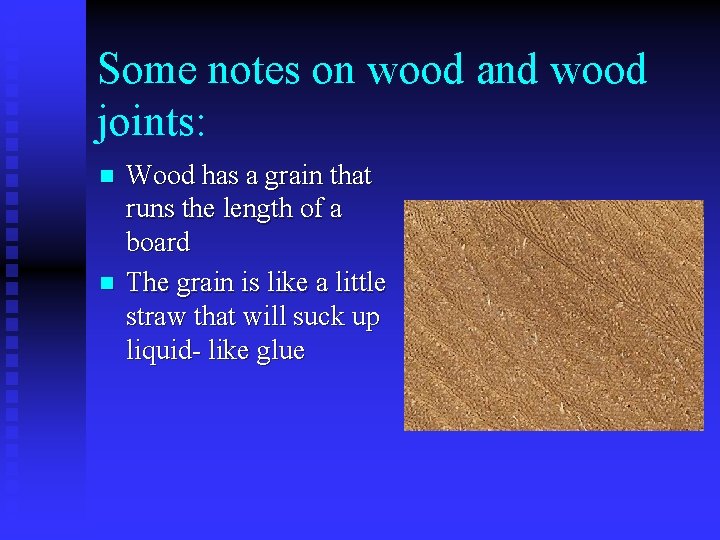
Some notes on wood and wood joints: n n Wood has a grain that runs the length of a board The grain is like a little straw that will suck up liquid- like glue
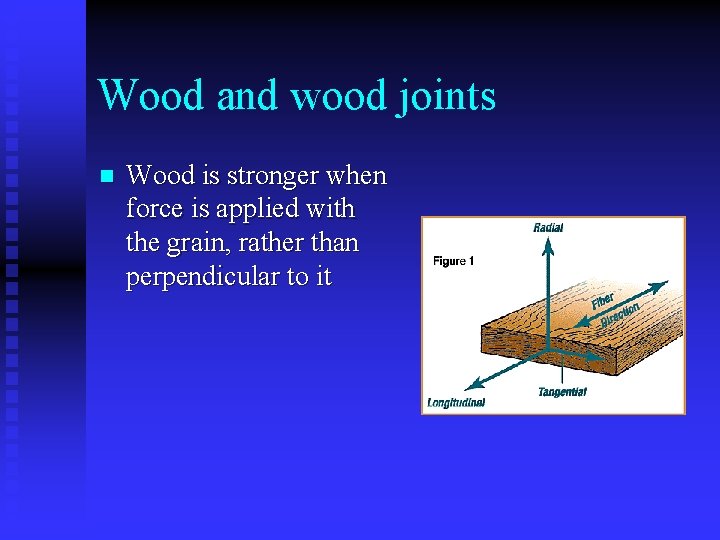
Wood and wood joints n Wood is stronger when force is applied with the grain, rather than perpendicular to it
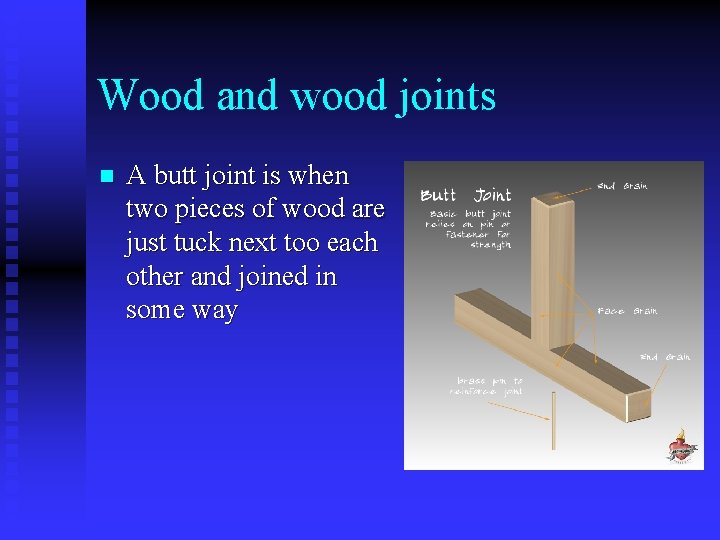
Wood and wood joints n A butt joint is when two pieces of wood are just tuck next too each other and joined in some way
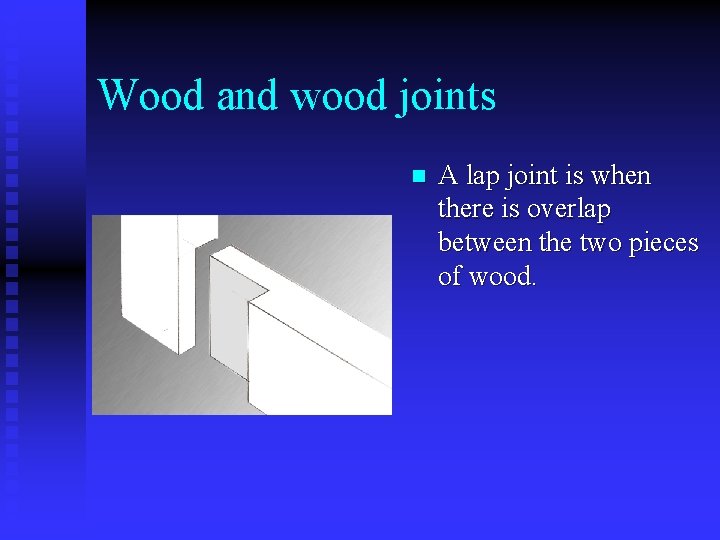
Wood and wood joints n A lap joint is when there is overlap between the two pieces of wood.
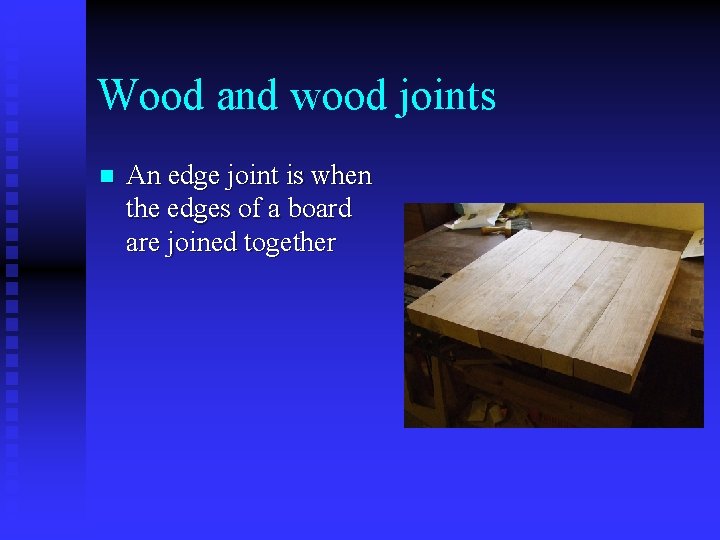
Wood and wood joints n An edge joint is when the edges of a board are joined together
- Slides: 36