
Introduction to Bonding Bonding Forces q Electron electron

Introduction to Bonding

Bonding Forces q Electron – electron repulsive forces q Proton – proton repulsive forces q Electron – proton attractive forces
Vocabulary Chemical Bond electrical attraction between nuclei and valence e- of neighboring atoms that binds the atoms together bonds form in order to… decrease PE increase stability
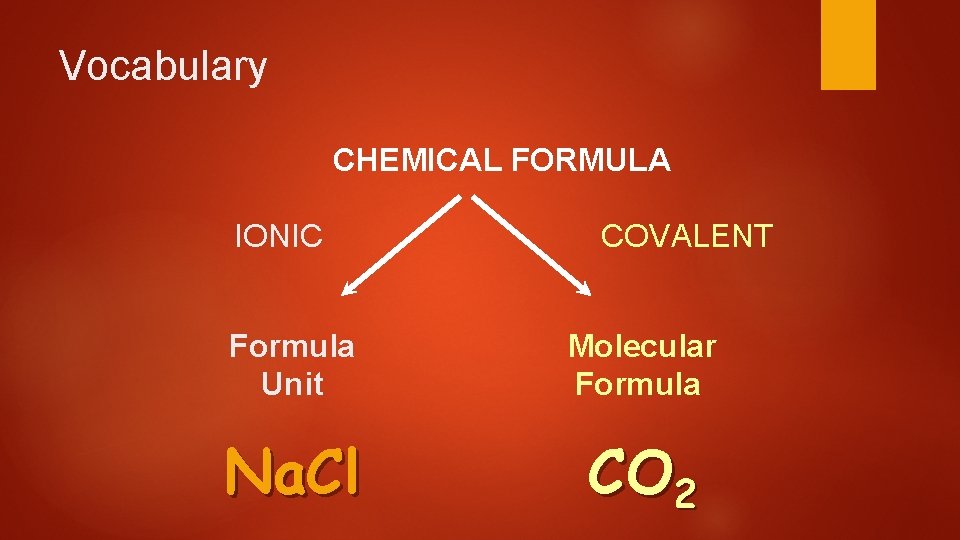
Vocabulary CHEMICAL FORMULA IONIC COVALENT Formula Unit Molecular Formula Na. Cl CO 2
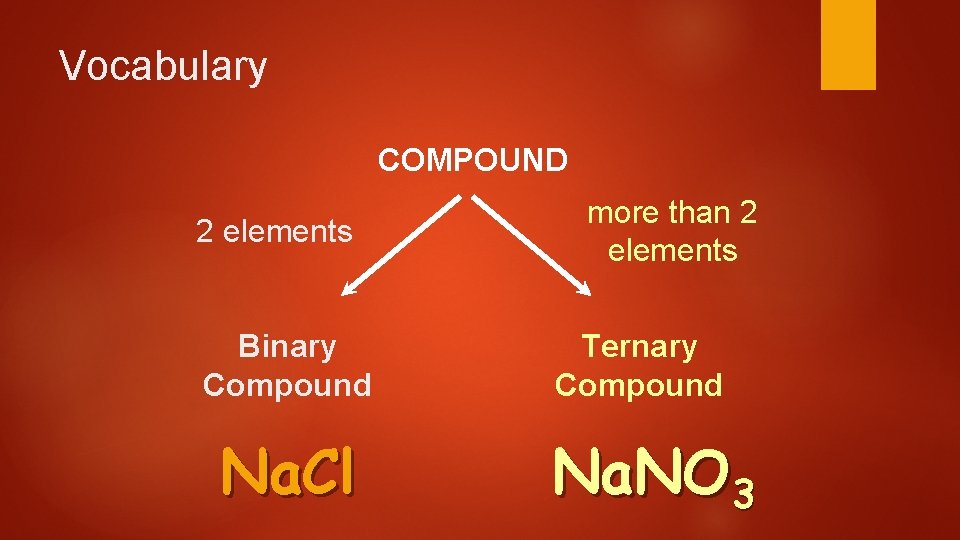
Vocabulary COMPOUND 2 elements Binary Compound Na. Cl more than 2 elements Ternary Compound Na. NO 3
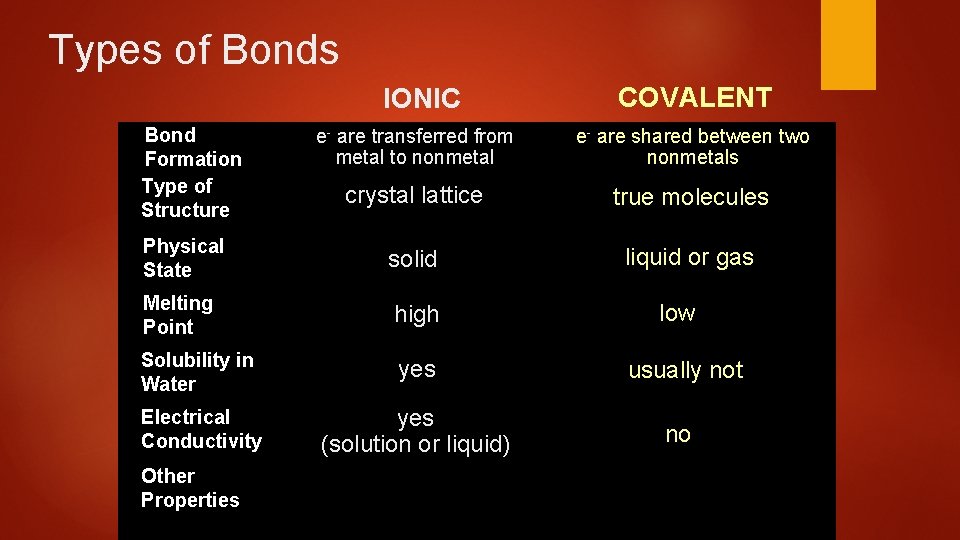
Types of Bonds IONIC Bond Formation Type of Structure COVALENT e- are transferred from metal to nonmetal e- are shared between two nonmetals crystal lattice true molecules Physical State solid liquid or gas Melting Point high Solubility in Water yes usually not Electrical Conductivity yes (solution or liquid) no Other Properties low
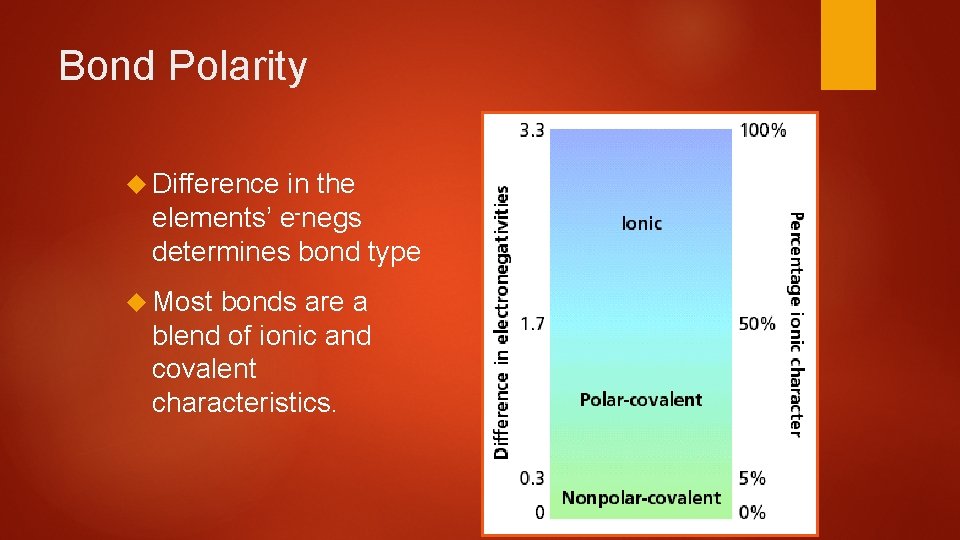
Bond Polarity Difference in the elements’ e-negs determines bond type Most bonds are a blend of ionic and covalent characteristics.
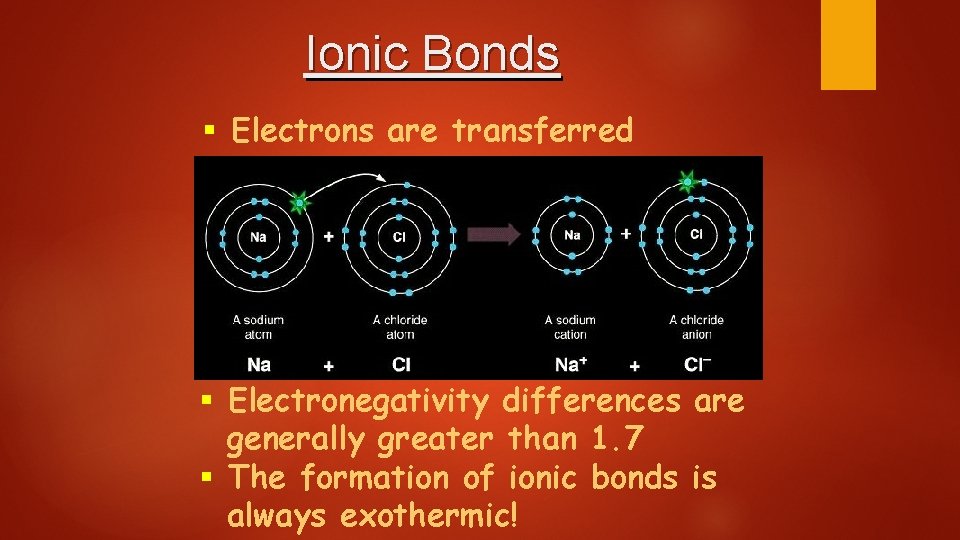
Ionic Bonds § Electrons are transferred § Electronegativity differences are generally greater than 1. 7 § The formation of ionic bonds is always exothermic!
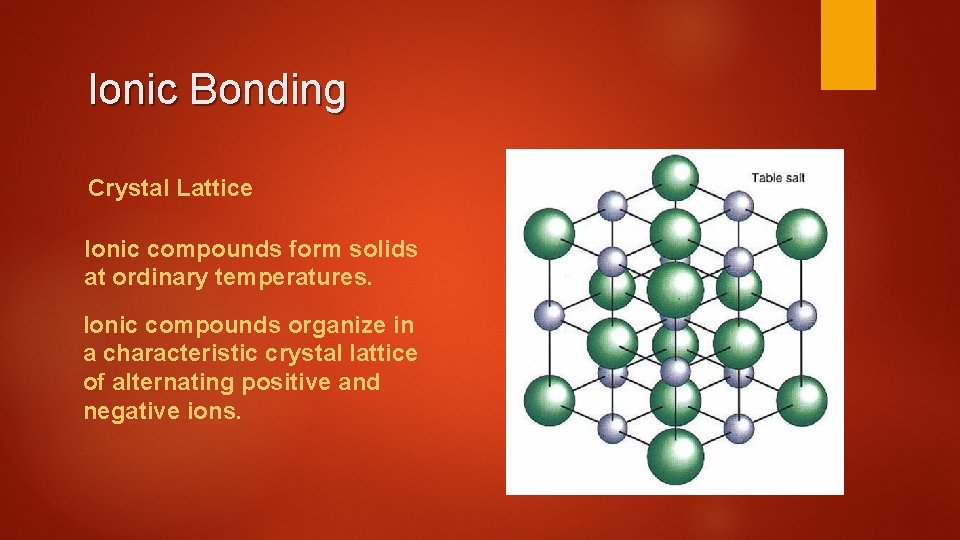
Ionic Bonding Crystal Lattice Ionic compounds form solids at ordinary temperatures. Ionic compounds organize in a characteristic crystal lattice of alternating positive and negative ions.
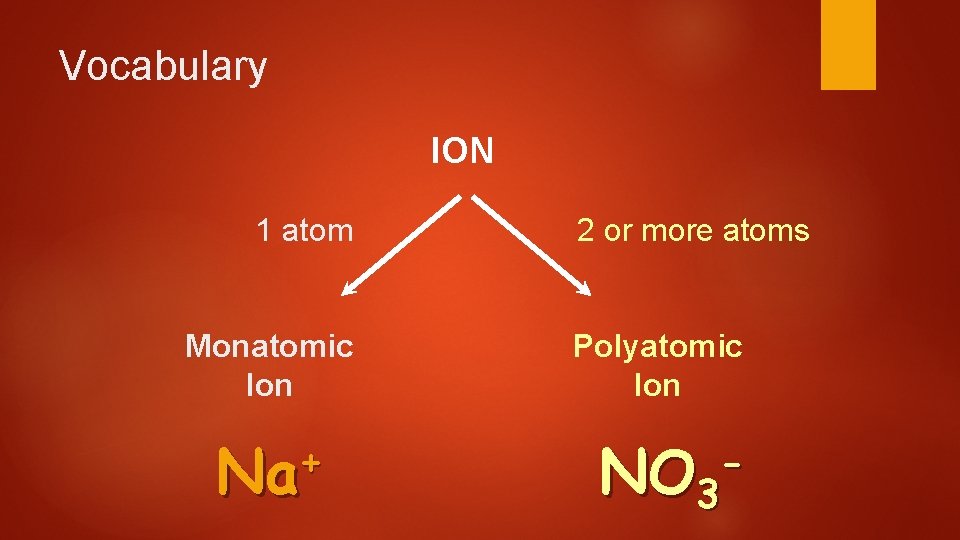
Vocabulary ION 1 atom Monatomic Ion + Na 2 or more atoms Polyatomic Ion NO 3
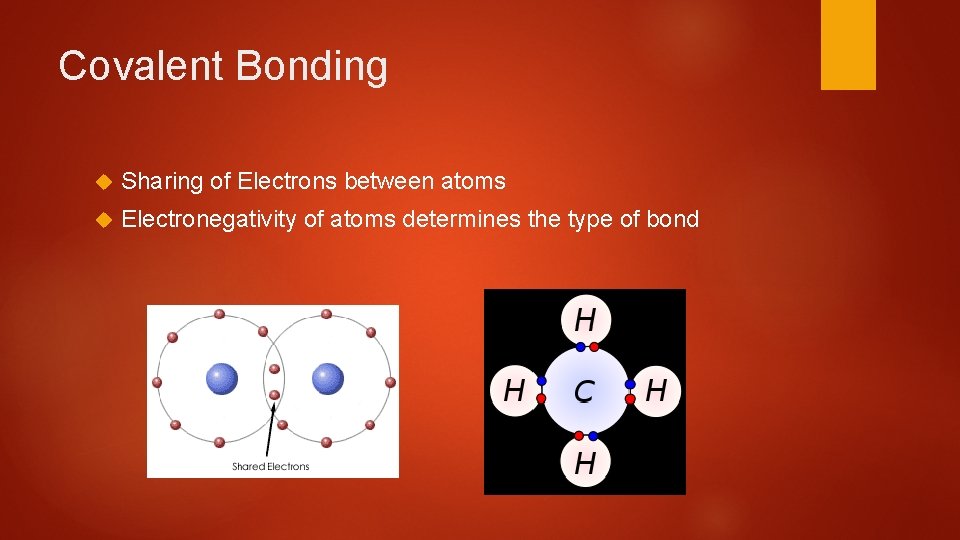
Covalent Bonding Sharing of Electrons between atoms Electronegativity of atoms determines the type of bond
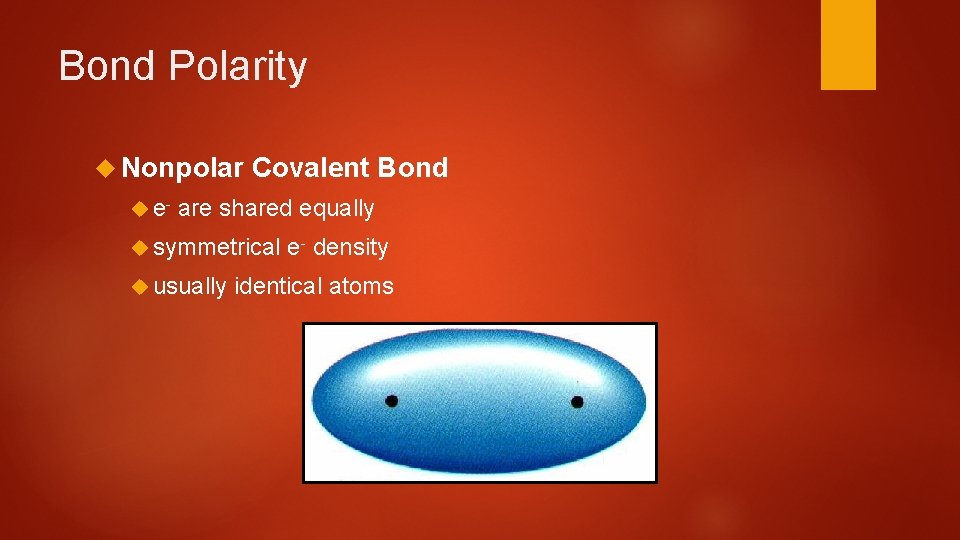
Bond Polarity Nonpolar e- Covalent Bond are shared equally symmetrical usually e- density identical atoms
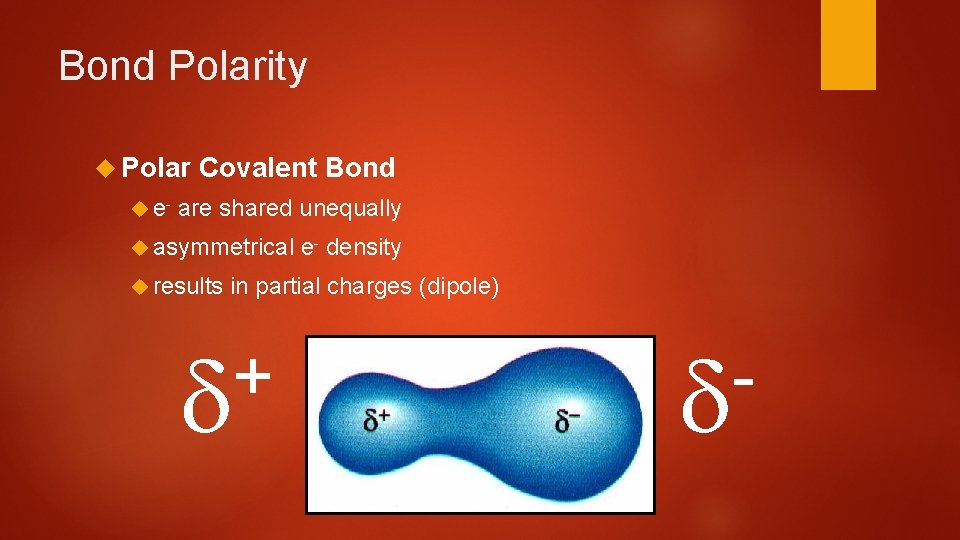
Bond Polarity Polar e- Covalent Bond are shared unequally asymmetrical results e- density in partial charges (dipole) +
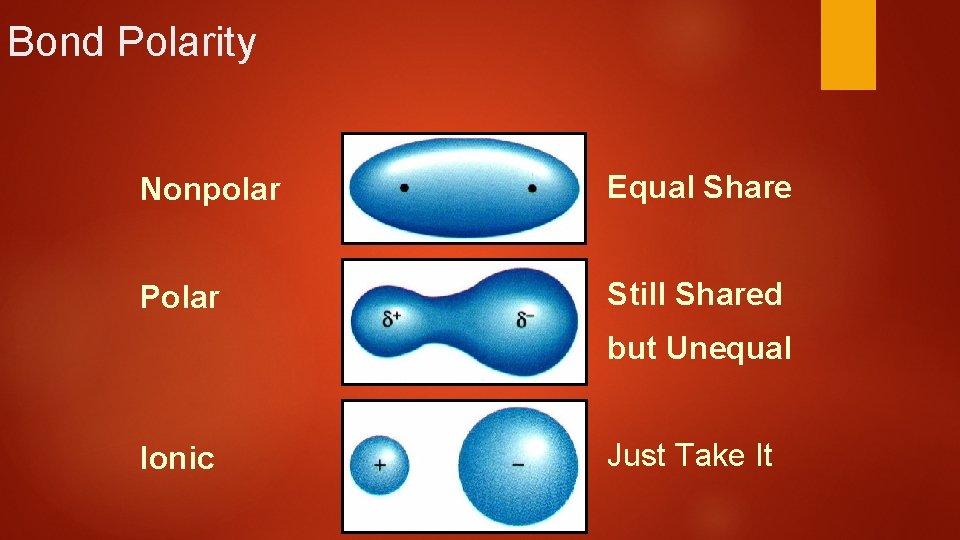
Bond Polarity Nonpolar Equal Share Polar Still Shared but Unequal Ionic Just Take It
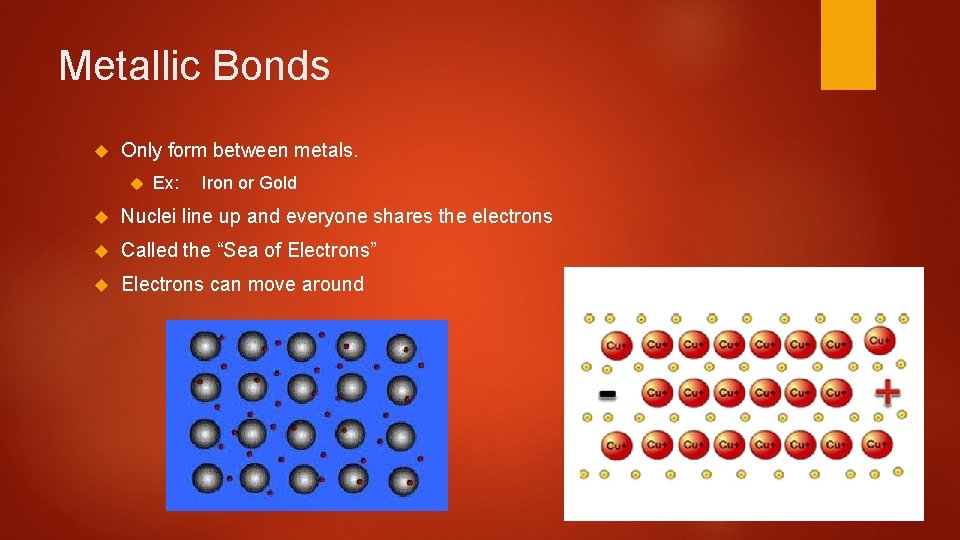
Metallic Bonds Only form between metals. Ex: Iron or Gold Nuclei line up and everyone shares the electrons Called the “Sea of Electrons” Electrons can move around
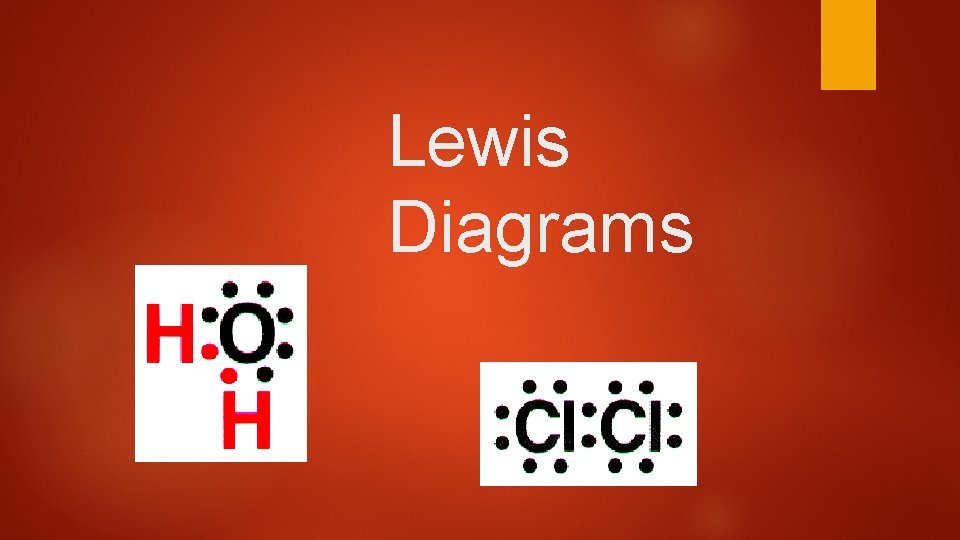
Lewis Diagrams
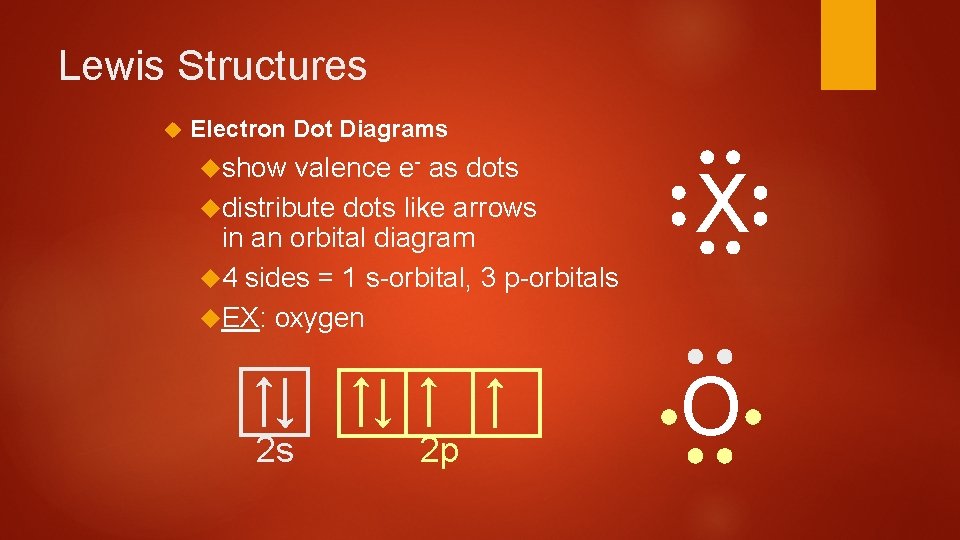
Lewis Structures Electron Dot Diagrams show valence e- as dots distribute dots like arrows in an orbital diagram 4 sides = 1 s-orbital, 3 p-orbitals EX: oxygen 2 s 2 p X O
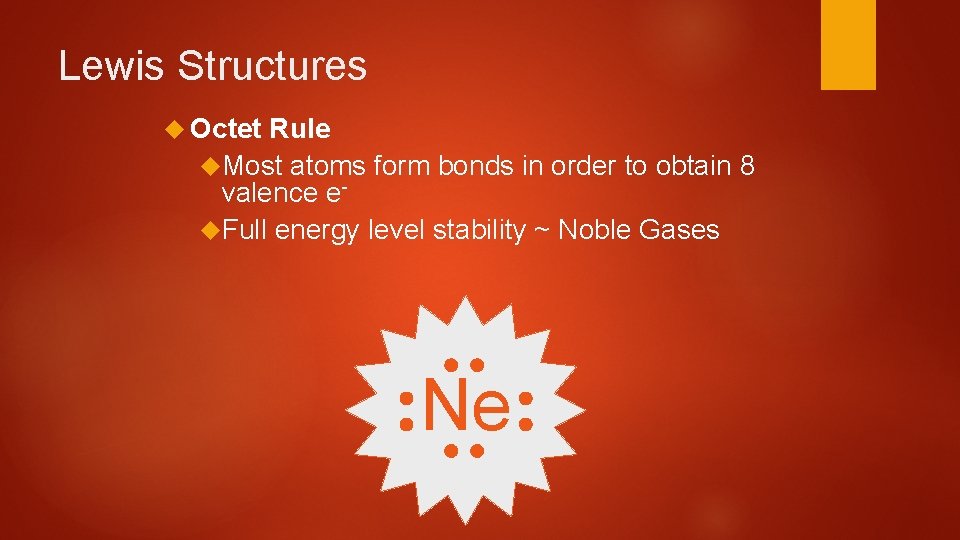
Lewis Structures Octet Rule Most atoms form bonds in order to obtain 8 valence e Full energy level stability ~ Noble Gases Ne
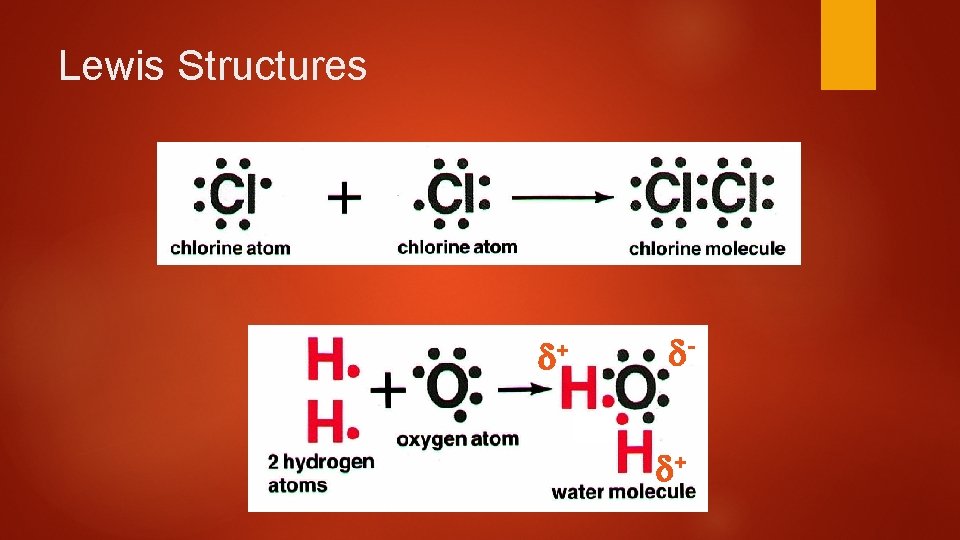
Lewis Structures + +
Drawing Lewis Diagrams Valence e-: Find the Total Arrange atoms: singular atom is usually in the middle Form bonds: Start between atoms (each bond = 2 e-) Octets: Double Distribute remaining e-’s to give each atom an octet or Triple Bonds: If there aren’t enough e-’s to go around, form double or triple bonds.
Drawing Lewis Diagrams 1. Valence e-‘s 2. Arrange atoms 3. Form bonds 4. Octets 5. Double or Triple bonds.

Drawing Lewis Diagrams CF 4 1 C × 4 ve- = 4 e 4 F × 7 ve- = 28 e 32 e- 8 e 24 e- F F C F F
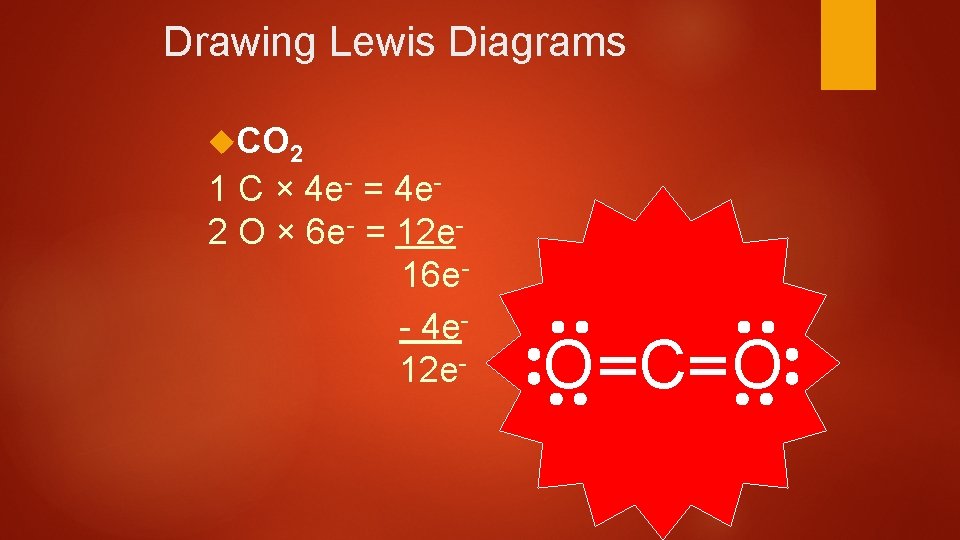
Drawing Lewis Diagrams CO 2 1 C × 4 e- = 4 e 2 O × 6 e- = 12 e 16 e- 4 e 12 e- O C O
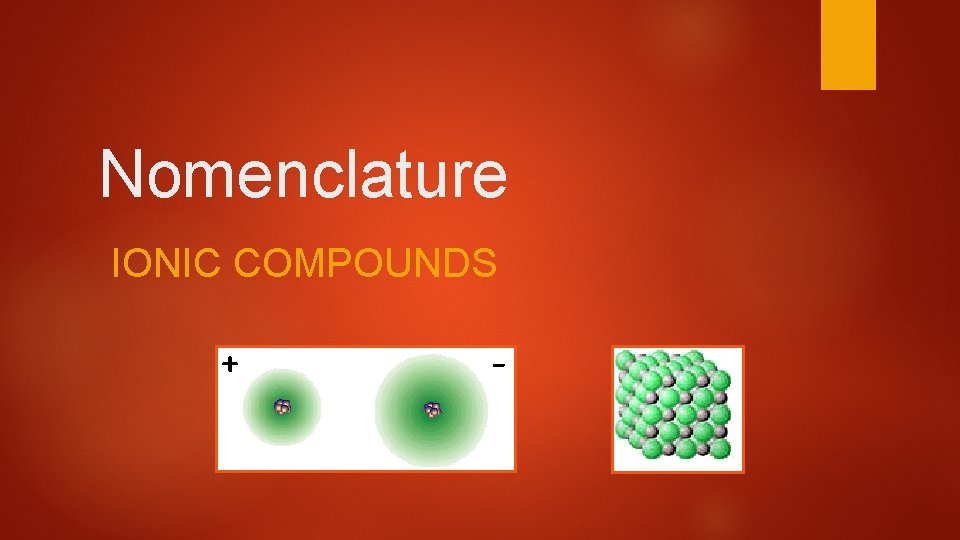
Nomenclature IONIC COMPOUNDS

Identifying Bond Type Subtract e- neg’s 0. 0 -0. 3 = Non-Polar 0. 3 -1. 7 = Polar 1. 7 -3. 3 = Ionic Is there a Trend? YES! Metal have LOW e- neg’s Nonmetals have HIGH e- neg’s So…. Metals/Nonmetal bonds = Ionic Nonmetal/Nonmetal bonds = Covalent
Ionic Nomenclature Ionic Names Write the names of both ions, cation first. Change ending of monatomic ions to -ide. Polyatomic ions have special names.
Ionic Nomenclature Ionic Formulas Write each ion, cation first. Don’t show charges in the final formula. Overall charge must equal zero. If charges cancel, just write symbols. If not, use subscripts to balance charges. Use parentheses to show more than one polyatomic ion. Stock System - Roman numerals indicate the ion’s charge.
Ionic Nomenclature Consider Does the following: it contain a polyatomic ion? -ide, 2 elements no -ate, -ite, 3+ elements yes Does it contain a Roman numeral? Check No the table for metals not in Groups 1 or 2. prefixes!
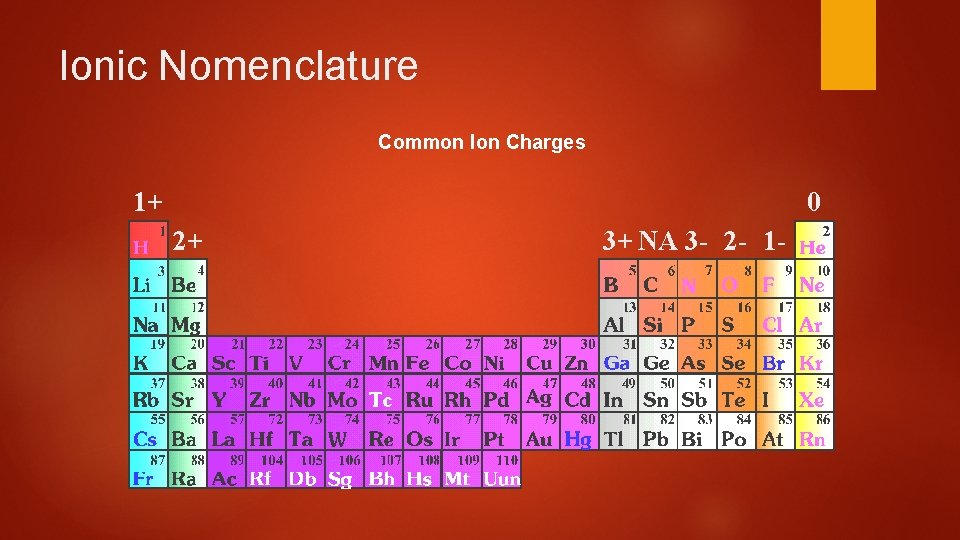
Ionic Nomenclature Common Ion Charges 1+ 0 2+ 3+ NA 3 - 2 - 1 -

Ionic Nomenclature Ø potassium chloride l K+ Cl- KCl Ø magnesium nitrate l Mg 2+ NO 3 - Mg(NO 3)2 Ø copper(II) chloride l Cu 2+ Cl- Cu. Cl 2
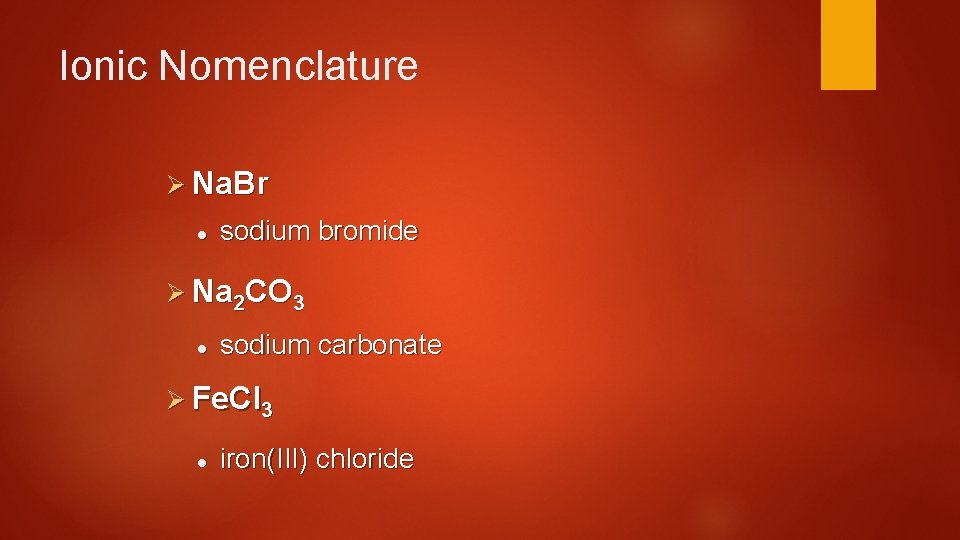
Ionic Nomenclature Ø Na. Br l sodium bromide Ø Na 2 CO 3 l sodium carbonate Ø Fe. Cl 3 l iron(III) chloride
Nomenclature MOLECULAR COMPOUNDS
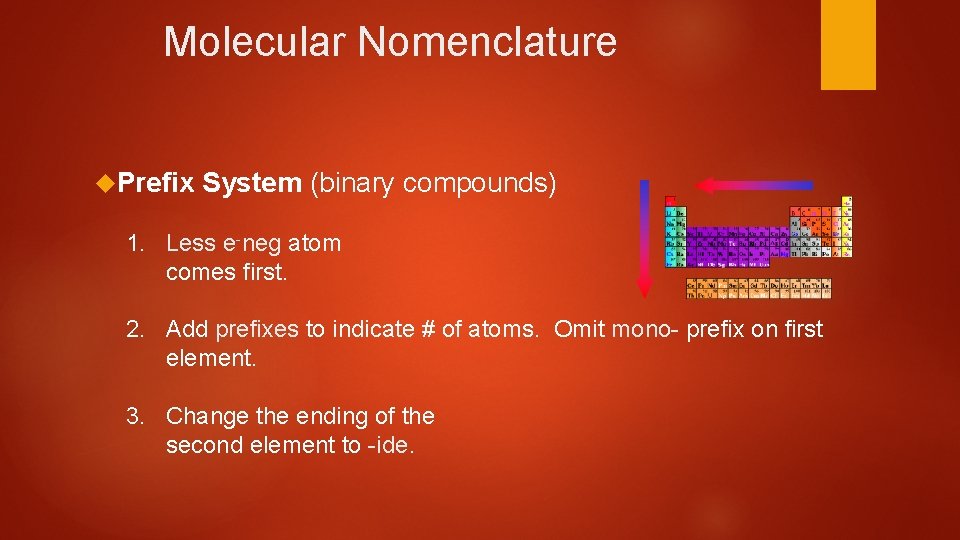
Molecular Nomenclature Prefix System (binary compounds) 1. Less e-neg atom comes first. 2. Add prefixes to indicate # of atoms. Omit mono- prefix on first element. 3. Change the ending of the second element to -ide.
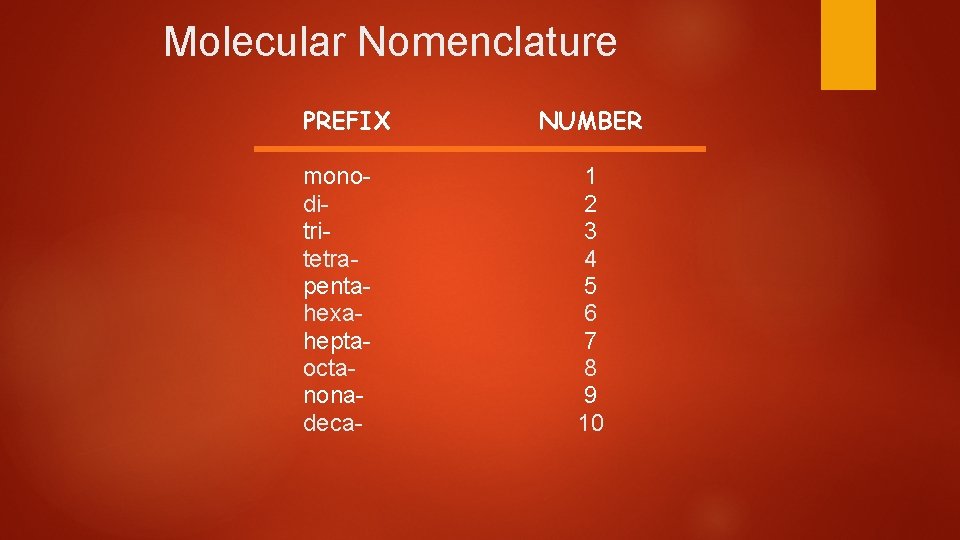
Molecular Nomenclature PREFIX monoditritetrapentahexaheptaoctanonadeca- NUMBER 1 2 3 4 5 6 7 8 9 10
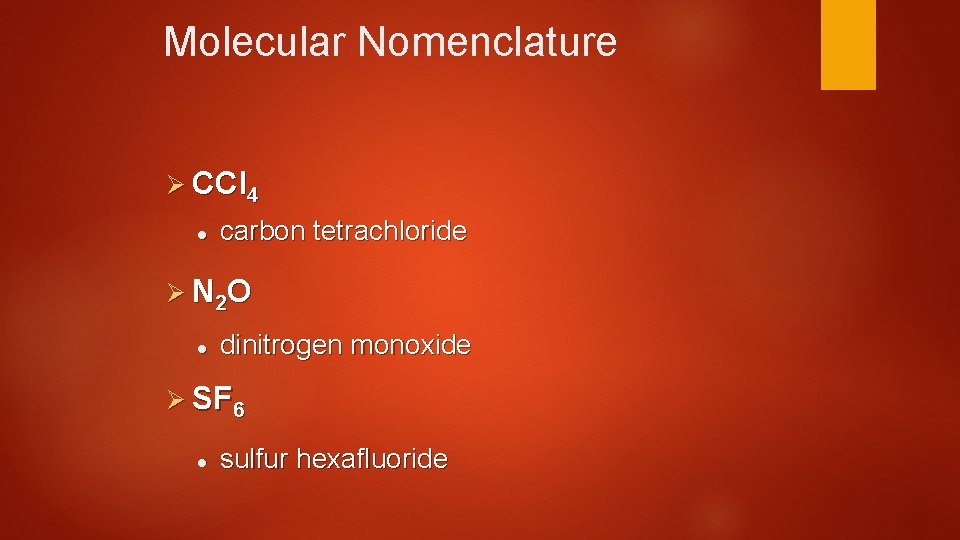
Molecular Nomenclature Ø CCl 4 l carbon tetrachloride Ø N 2 O l dinitrogen monoxide Ø SF 6 l sulfur hexafluoride
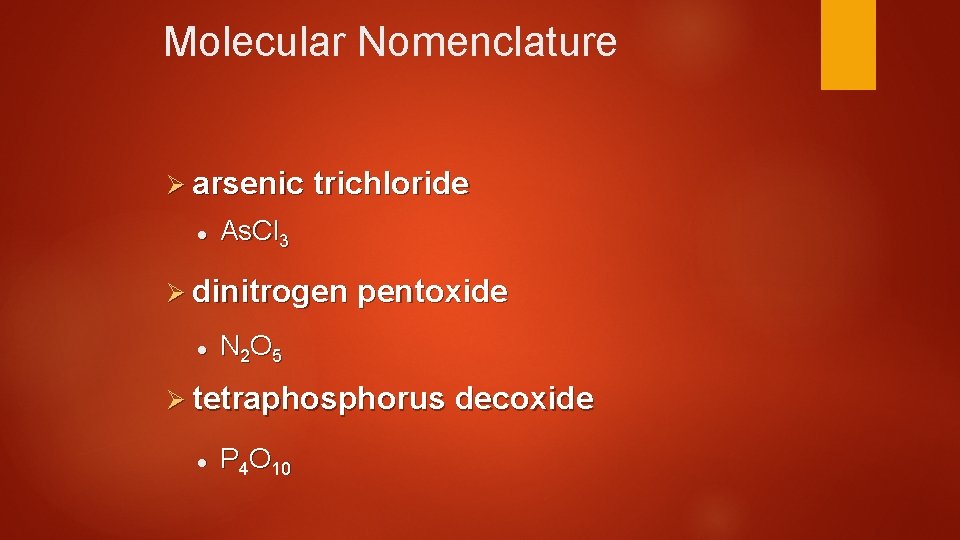
Molecular Nomenclature Ø arsenic trichloride l As. Cl 3 Ø dinitrogen pentoxide l N 2 O 5 Ø tetraphosphorus decoxide l P 4 O 10
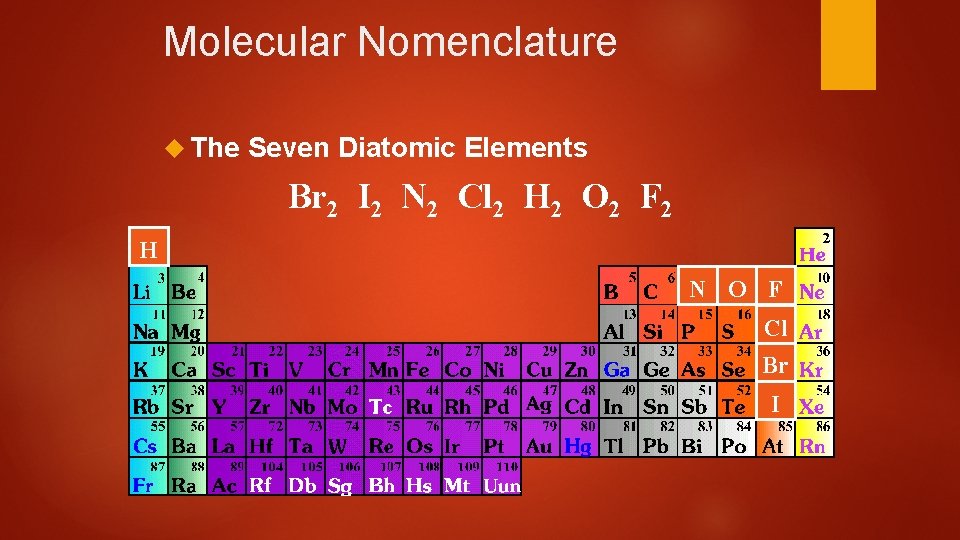
Molecular Nomenclature The Seven Diatomic Elements Br 2 I 2 N 2 Cl 2 H 2 O 2 F 2 H N O F Cl Br I
- Slides: 37