
Introduction to Blood Interesting things about blood Blood
Introduction to Blood
Interesting things about blood • Blood has a salty taste due to the large amount of sodium it carries • Blood is 5 times thicker than water • Blood is at a basic p. H between 7. 3 -7. 5 • Blood accounts for 8% of you body weight • Humans have around 1. 5 gallons of blood in their bodies
What does blood do? • Blood has three main jobs: distribution, regulation, & protection • Distribution • Delivers oxygen from lungs & nutrients to cells • Transports wastes to areas where they can be expelled • Transports hormones for our endocrine system
What does blood do? • Regulation • Blood is the most important factor in changing body temperature • Blood maintains the body’s p. H…too low or too high a p. H leads to cell death • Maintains adequate fluid within the body
What does blood do? • Protection • Clotting • Preventing sickness & infection
Blood Basics • Blood – not what typically comes to mind: 2 parts, • Plasma – Straw-colored, waterbased fluid. 90% water, 10% solutes (mostly the protein albumin)…Functions to absorb heat and also provide a medium for the other component of the blood to flow in
Blood Basics • Elements or Formed Elements – these are the actual cells that flow through the fluid. These make up a smaller portion of the actual fluid. • 3 types of cells make up the elements • Erythrocytes • Leukocytes • Platelets
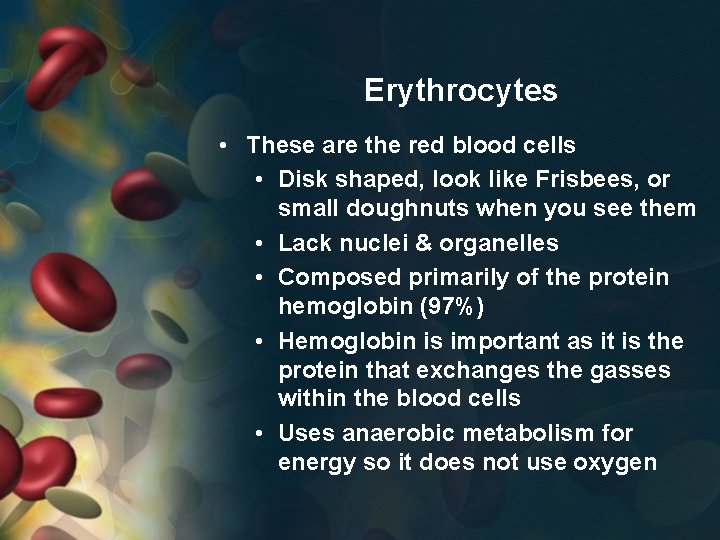
Erythrocytes • These are the red blood cells • Disk shaped, look like Frisbees, or small doughnuts when you see them • Lack nuclei & organelles • Composed primarily of the protein hemoglobin (97%) • Hemoglobin is important as it is the protein that exchanges the gasses within the blood cells • Uses anaerobic metabolism for energy so it does not use oxygen
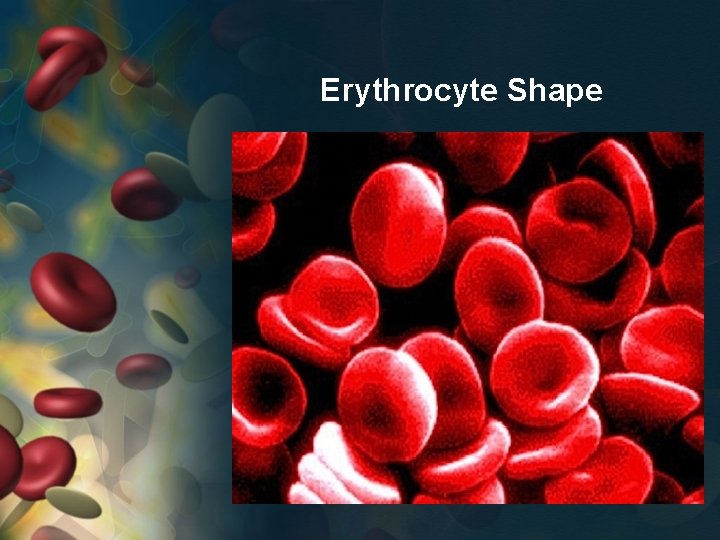
Erythrocyte Shape
Hemoglobin • Two different components: • Globin protein – four polypeptide chained protein. • Heme pigment – Atom of iron around which the four globin proteins bind • This means 1 molecule of hemoglobin carry 4 molecules of oxygen • A typical RBC can carry 250, 000 molecules of hemoglobin…that’s 1, 000, 000 molecules of oxygen
Making Blood • Our red blood cells are made in a process called hematopoiesis • This process occurs in the red bone marrow • Blood cells mature within the bones, and once “of age” they migrate through the bone out into the blood stream
RBC Problems • There are many problems associated with faulty RBC’s: • Anemia: Blood has low oxygen carrying capacity • Hemoglobin deficiency: RBC’s carry too few hemo. molecules • Sickle-Cell Anemia: RBC’s are misshapen to be spiky & sharp instead of smooth & round • Polycythemia: too many RBC’s causing blood to be too thick
Leukocytes (2 nd type) • Leukocytes are also known as white blood cells • Contain nuclei and organelles • Less than 1% of you body’s blood • Function as the body’s defense • Classified into 2 different types: • Granulocytes: spherical, large, function as phagocytes • Agranulocytes: spherical, smaller, responsible for immune responses and antibodies
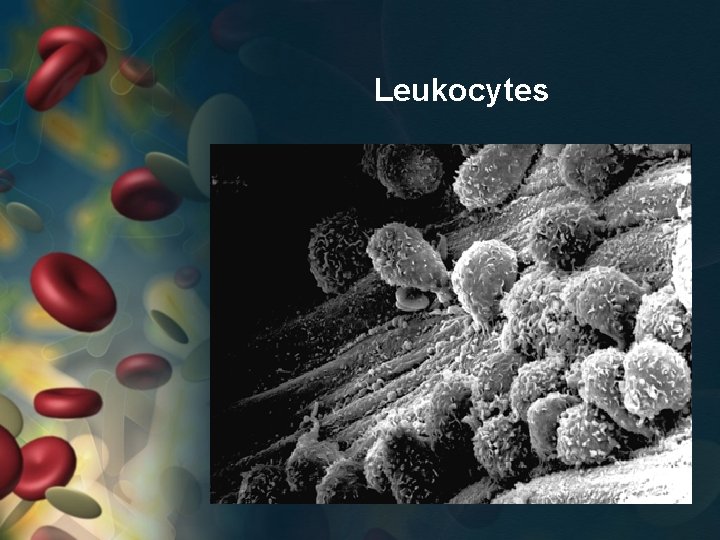
Leukocytes • These are normally sphere shaped, without the doughnut hole • Prevents damage in body from bacteria, viruses, parasites, toxins, & tumors • Not confined to the circulatory system • Diapedsis – when white blood cells leave the circulatory system and affect other tissues • When they leave the blood stream, they move like simple organisms using their cytoplasm like legs
Leukocytes
Leukocyte Production • Produced in the same fashion as RBC’s, just in a different place • Produced in just the bone marrow, not the red bone marrow
Leukocyte Malfunction • Like RBC’s, WBC’s can malfunction causing bodily harm: • Leukemia: cancer of the white blood cells…one white blood cells has it, it keeps multiplying until it overruns the normal WBC’s • Mono: Mono causes an actual excess of WBC’s that are attacking healthy cells, making patient feel weak and tired
Platelet (3 rd Type) • Large cells within the circulatory system • Platelets are what causes our blood to clot • Do not contain nuclei, but do have membranes that are chemically designed to stick together • Contain proteins actin and myosin (the same proteins muscles have) which allows platelets to pull areas close together
Clotting • Platelets clot blood in 3 steps • Vascular Spasms – Vasoconstriction of the injured blood vessel • Platelet Plug Formation – Platelets aggregate together, sticking to each other pulling the injured vessel back together • Coagulation – blood turns from liquid to gel in area where there is injury
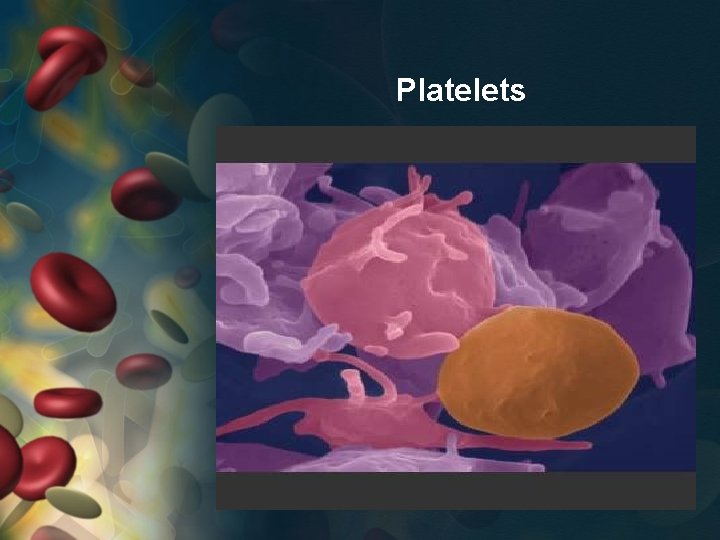
Platelets
Platelet Malfunctions • Thrombus – blood clots in a vessel that is not damaged, causing a blockage • Thrombocytopenia – low number of platelets. Causes spontaneous bleeding of small vessels all over the body • Hemophilia – platelets are unable to stick together, meaning that blood cannot clot. Causes prolonged bleeding on minor cuts
- Slides: 21