
Introduction to Biomedical Engineering Design Chapter 1 What
Introduction to Biomedical Engineering Design Chapter 1
What is Design? • Is NOT research or craftsmanship! • Involves devices, processes, re-engineering, systems, optimization, regulations, finances, innovation, invention, entrepreneurship, etc.
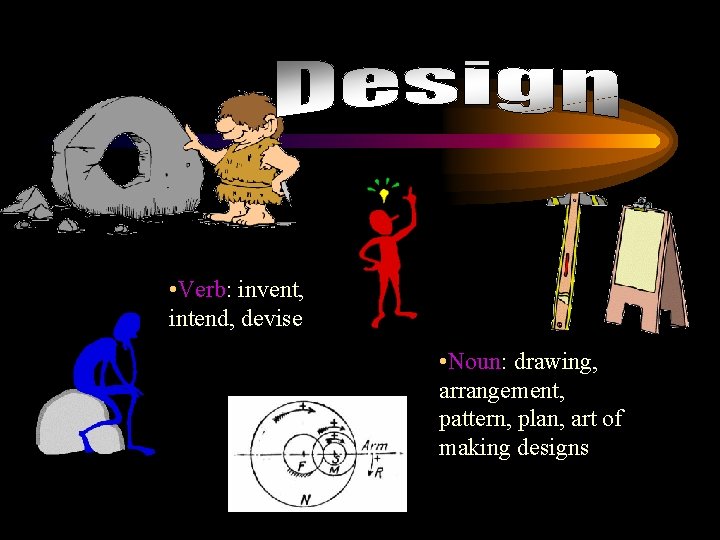
• Verb: invent, intend, devise • Noun: drawing, arrangement, pattern, plan, art of making designs
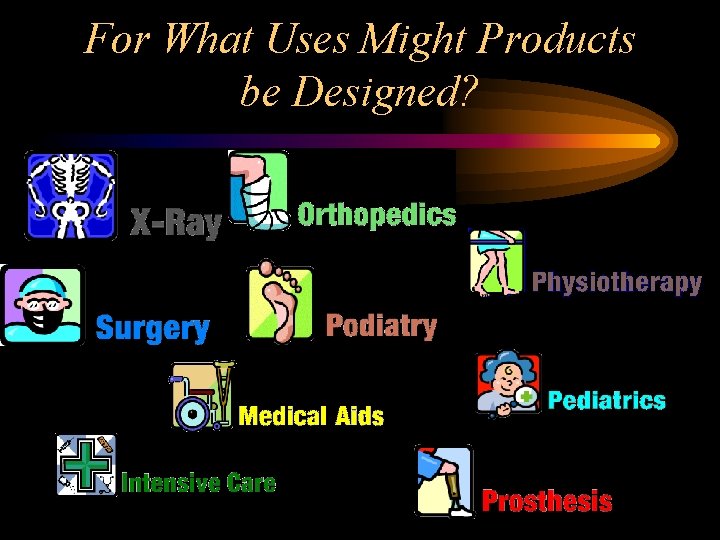
For What Uses Might Products be Designed?
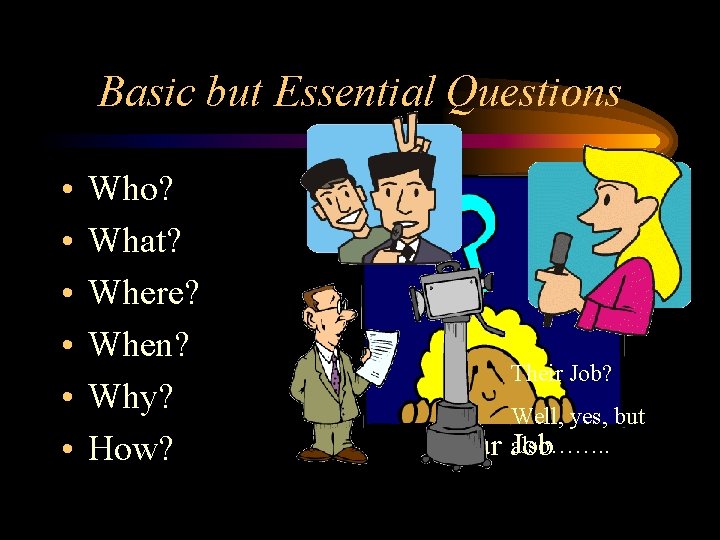
Basic but Essential Questions • • • Who? What? Where? When? Why? How? Their Job? Your Well, yes, but also……. . Job
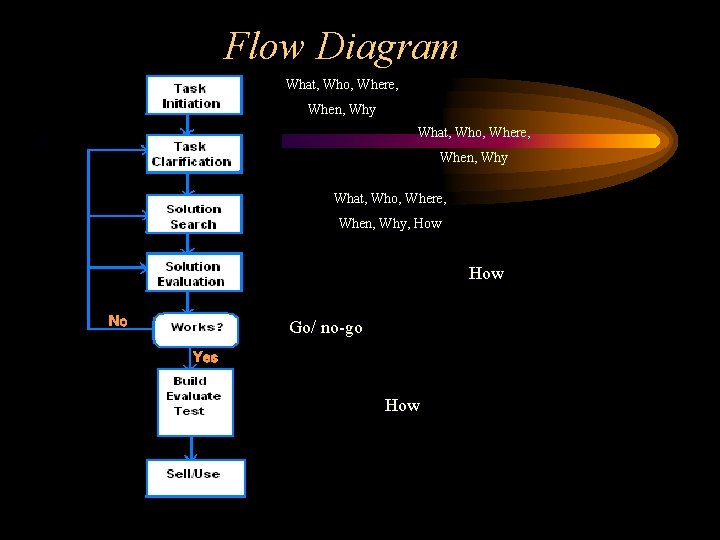
Flow Diagram What, Who, Where, When, Why, How No. No Go/ no-go Yes How
Design: National Academy of Science • Product refers to hardware, service, or mission. • Process refers to the means by which a product is manufactured and supported • Development refers to the refinement of products and processes to correct problems. (Re-engineering, sometimes reverse engineering, …)
Design: NAS 1. Mission requirements analysis/Product system strategy - high level engineering analysis - requirements definition
Design: NAS 2. Product specification - product strategy - voice of the customer!!! (QFD, etc. ) - environment (EPA) & regulatory (FDA!!!) - planned product specification
Design: NAS 3. Concept development - target setting (cost, schedule, performance, etc. ) - brainstorming on product & process alternatives - development of product and process concepts.
Design: NAS 4. Preliminary Product and/or Process design - high level definition of product and process designs - evaluation of same v. targets - high level system trade-offs
Design: NAS 5. Refinement & verification of detail product and process designs - development of designs for components, subsystems & manufacturing - Geometry creation - prediction & evaluation of attributes - tracking & trade-offs
Design: NAS 6. System Prototype Development - experimental evaluation of attributes that do not meet target values 7. Preparation for production - refine process for manufacture 8. Production, Testing, Certification, Delivery 9. Operation, support, decommissioning, disposal
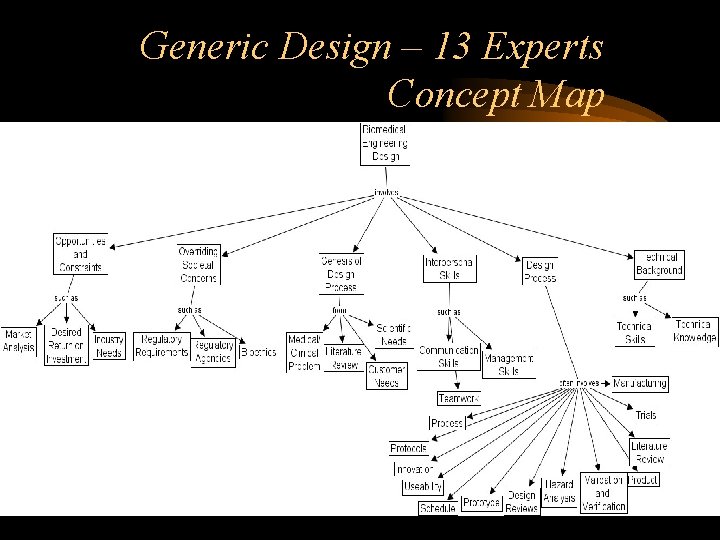
Generic Design – 13 Experts Concept Map
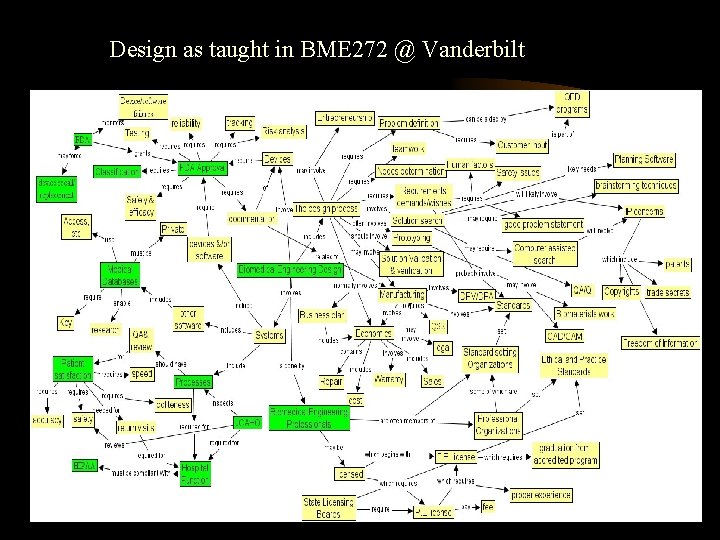
Design as taught in BME 272 @ Vanderbilt
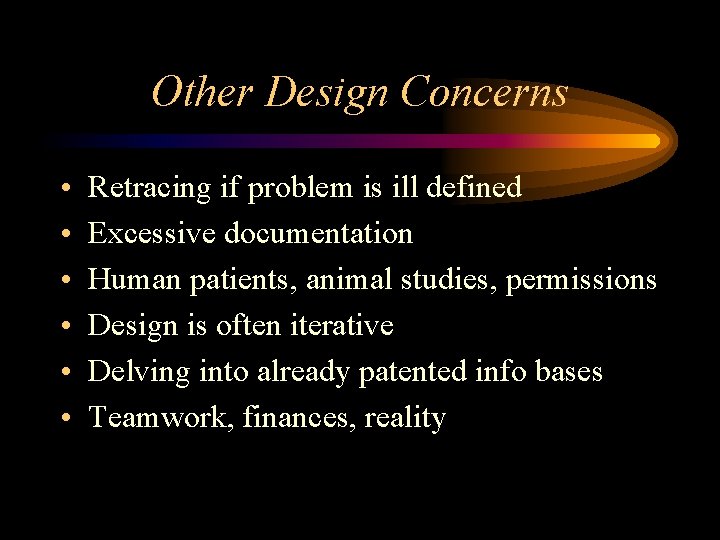
Other Design Concerns • • • Retracing if problem is ill defined Excessive documentation Human patients, animal studies, permissions Design is often iterative Delving into already patented info bases Teamwork, finances, reality
- Slides: 17