
Introduction to Biology Characteristics of Life STEM Science
Introduction to Biology Characteristics of Life
• STEM~ –Science –Technology –Engineering –Mathematics They are all connected; you can’t have 1 without the others!
• Science is a way to test an idea by doing an experiment. You analyze the data, consider alternative explanations, and draw conclusions from what you learn in the experiment. • Engineering continually checks for alternatives, risks, costs and benefits, so that new designs are better.
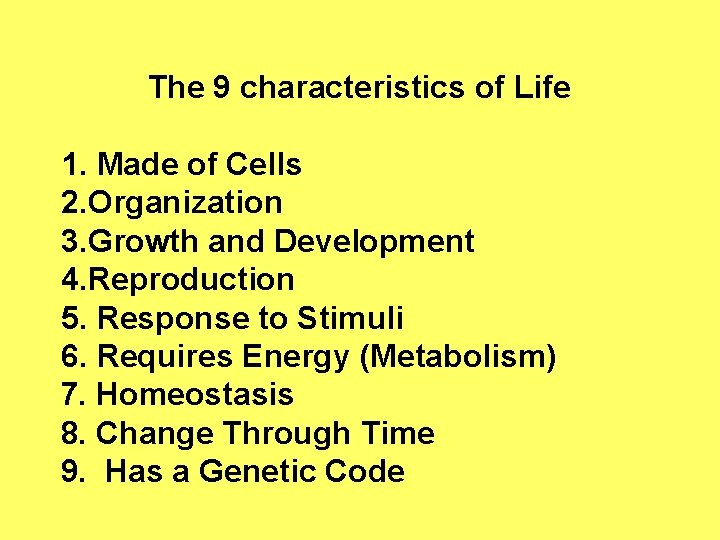
The 9 characteristics of Life 1. Made of Cells 2. Organization 3. Growth and Development 4. Reproduction 5. Response to Stimuli 6. Requires Energy (Metabolism) 7. Homeostasis 8. Change Through Time 9. Has a Genetic Code
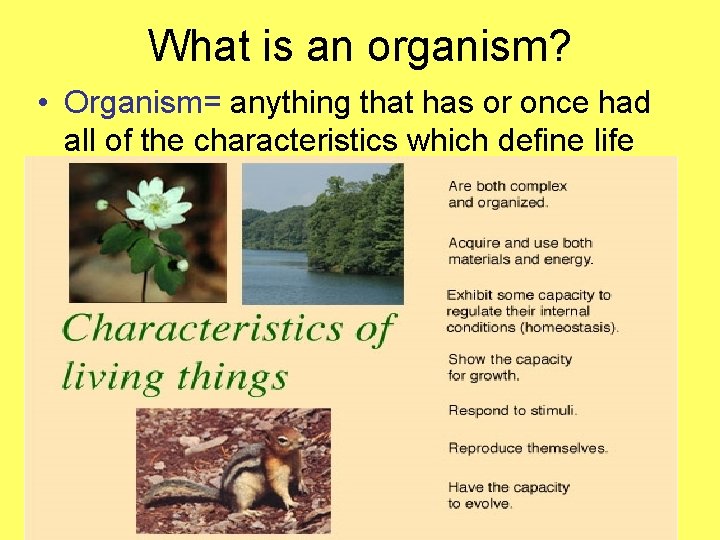
What is an organism? • Organism= anything that has or once had all of the characteristics which define life
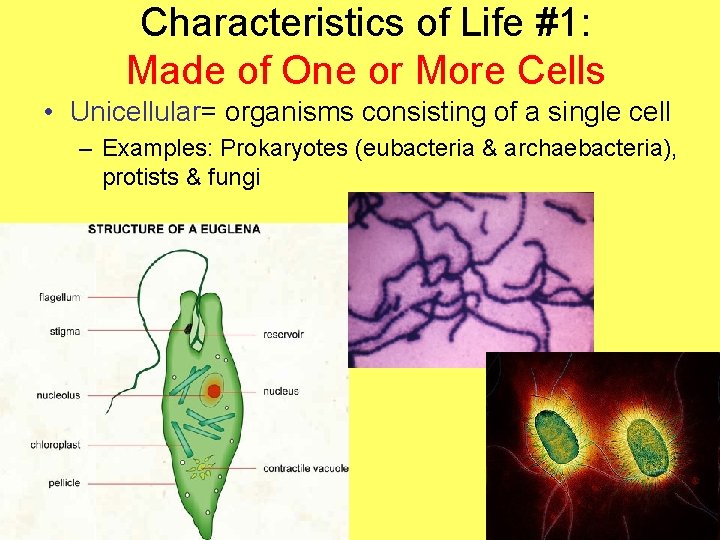
Characteristics of Life #1: Made of One or More Cells • Unicellular= organisms consisting of a single cell – Examples: Prokaryotes (eubacteria & archaebacteria), protists & fungi
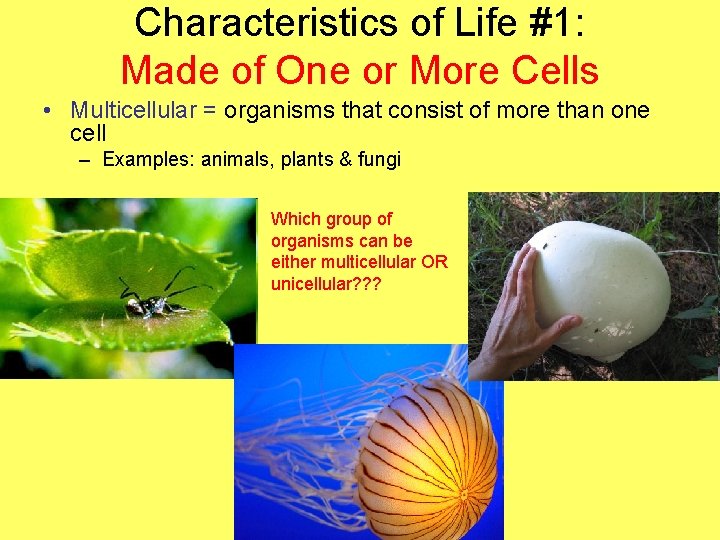
Characteristics of Life #1: Made of One or More Cells • Multicellular = organisms that consist of more than one cell – Examples: animals, plants & fungi Which group of organisms can be either multicellular OR unicellular? ? ?
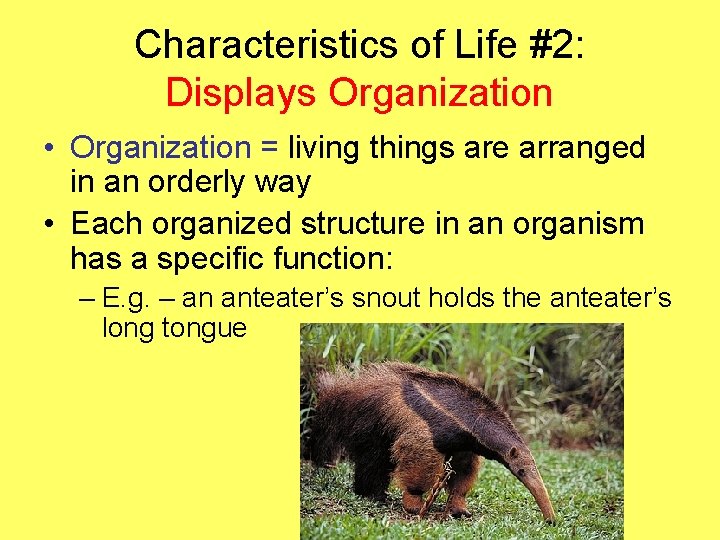
Characteristics of Life #2: Displays Organization • Organization = living things are arranged in an orderly way • Each organized structure in an organism has a specific function: – E. g. – an anteater’s snout holds the anteater’s long tongue
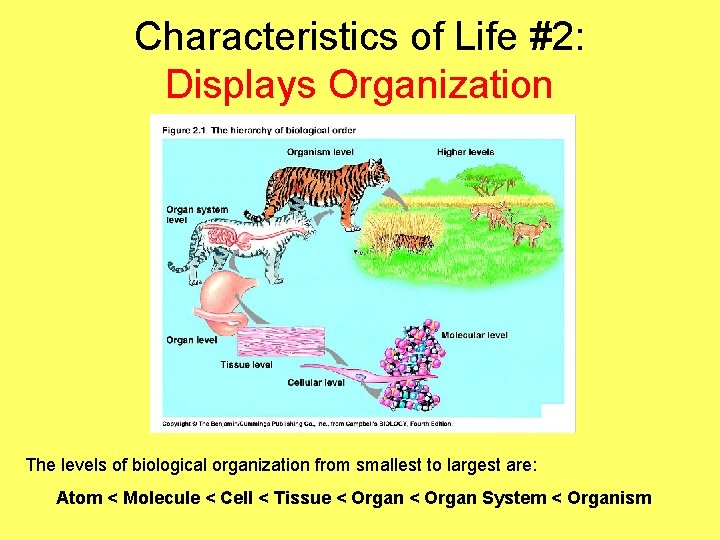
Characteristics of Life #2: Displays Organization The levels of biological organization from smallest to largest are: Atom < Molecule < Cell < Tissue < Organ System < Organism
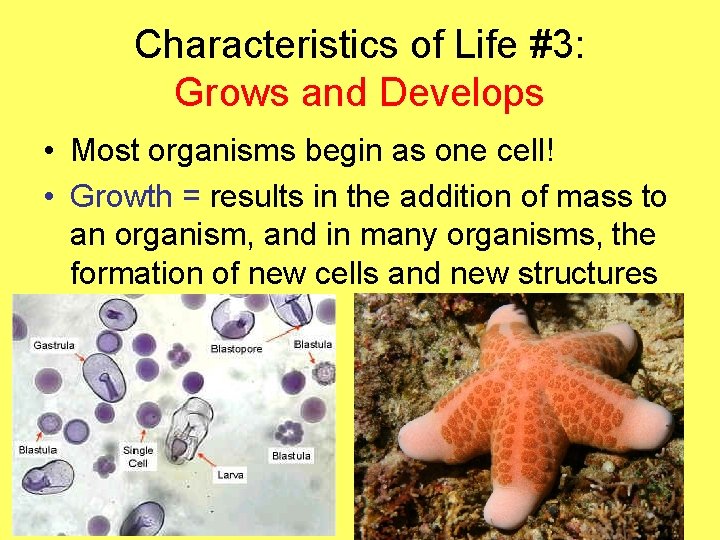
Characteristics of Life #3: Grows and Develops • Most organisms begin as one cell! • Growth = results in the addition of mass to an organism, and in many organisms, the formation of new cells and new structures
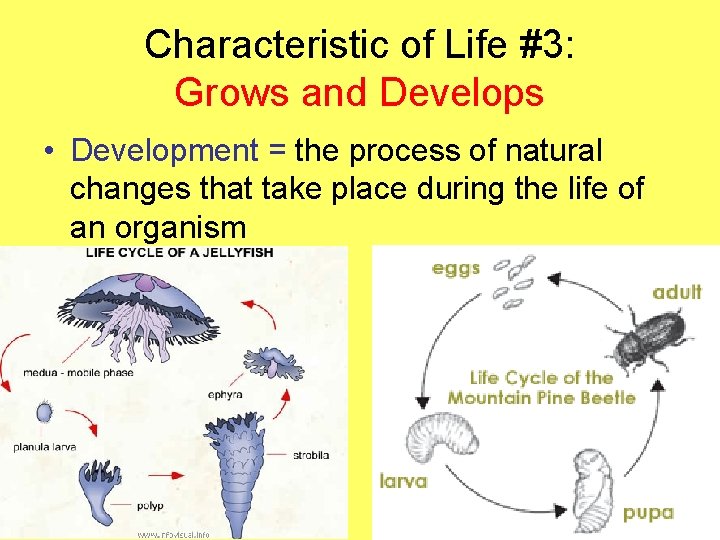
Characteristic of Life #3: Grows and Develops • Development = the process of natural changes that take place during the life of an organism
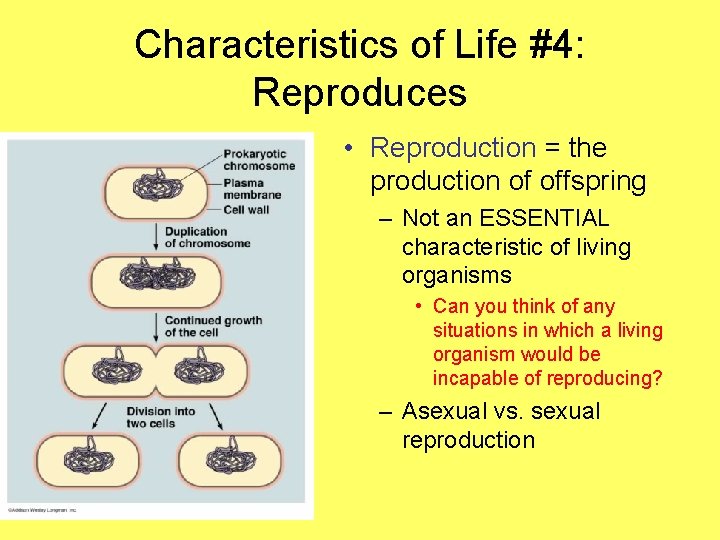
Characteristics of Life #4: Reproduces • Reproduction = the production of offspring – Not an ESSENTIAL characteristic of living organisms • Can you think of any situations in which a living organism would be incapable of reproducing? – Asexual vs. sexual reproduction
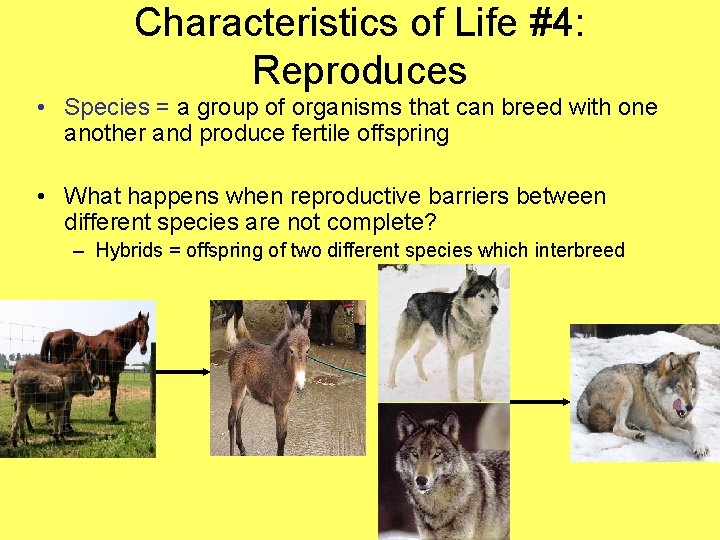
Characteristics of Life #4: Reproduces • Species = a group of organisms that can breed with one another and produce fertile offspring • What happens when reproductive barriers between different species are not complete? – Hybrids = offspring of two different species which interbreed
Characteristics of Life #5: Responds to Stimuli • Organism’s Internal Environment = all things inside of an organism • Organism’s External Environment = all things surrounding an organism – E. g. air, water, soil, rocks, and other organisms
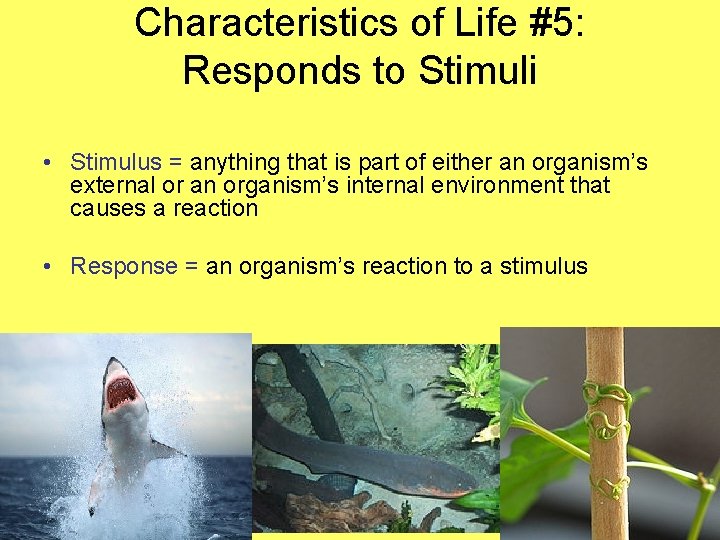
Characteristics of Life #5: Responds to Stimuli • Stimulus = anything that is part of either an organism’s external or an organism’s internal environment that causes a reaction • Response = an organism’s reaction to a stimulus
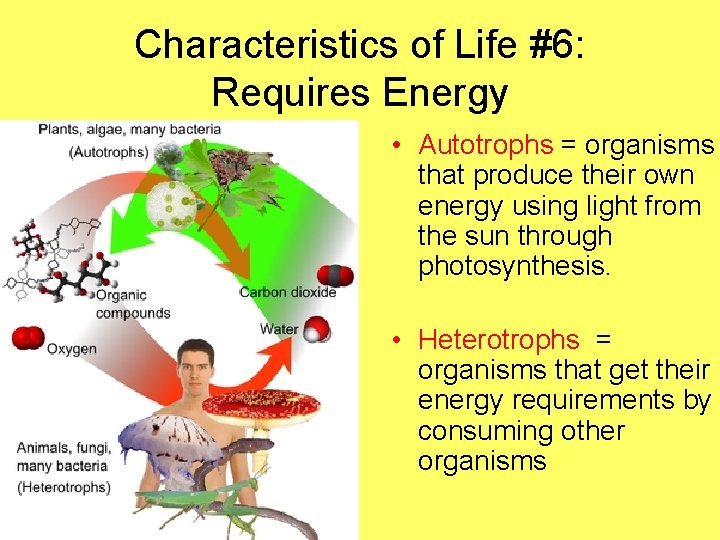
Characteristics of Life #6: Requires Energy • Autotrophs = organisms that produce their own energy using light from the sun through photosynthesis. • Heterotrophs = organisms that get their energy requirements by consuming other organisms
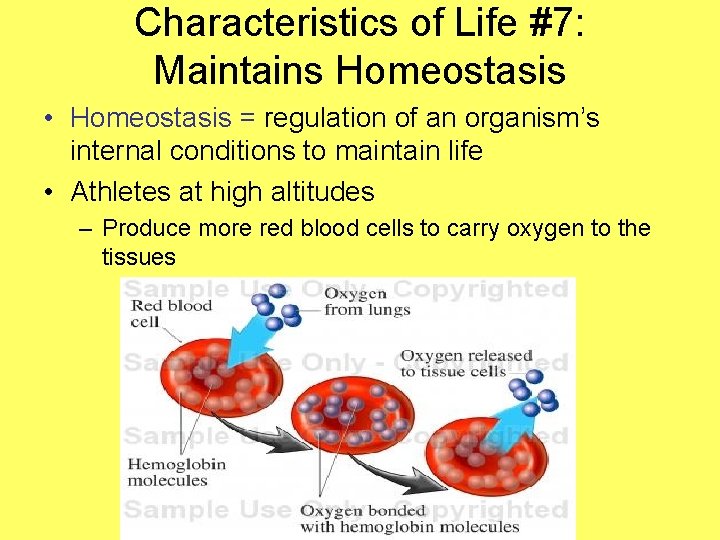
Characteristics of Life #7: Maintains Homeostasis • Homeostasis = regulation of an organism’s internal conditions to maintain life • Athletes at high altitudes – Produce more red blood cells to carry oxygen to the tissues
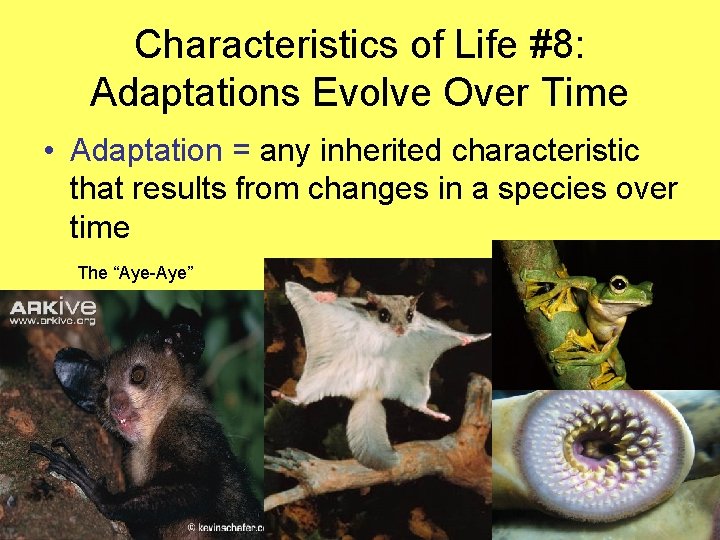
Characteristics of Life #8: Adaptations Evolve Over Time • Adaptation = any inherited characteristic that results from changes in a species over time The “Aye-Aye”
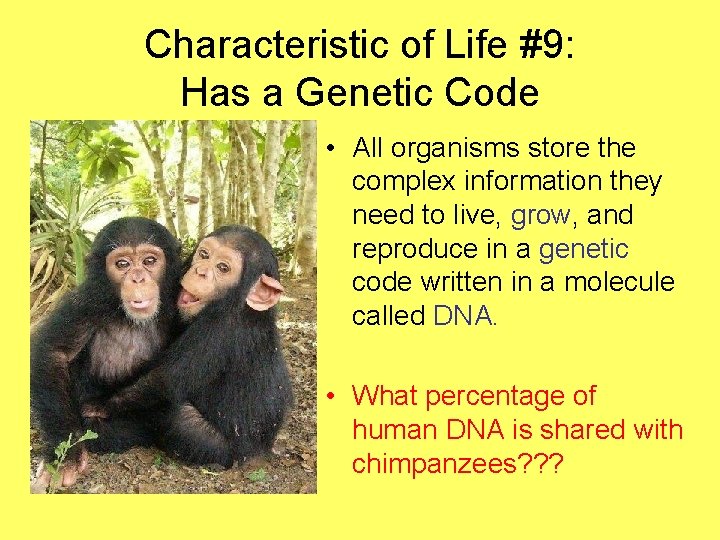
Characteristic of Life #9: Has a Genetic Code • All organisms store the complex information they need to live, grow, and reproduce in a genetic code written in a molecule called DNA. • What percentage of human DNA is shared with chimpanzees? ? ?
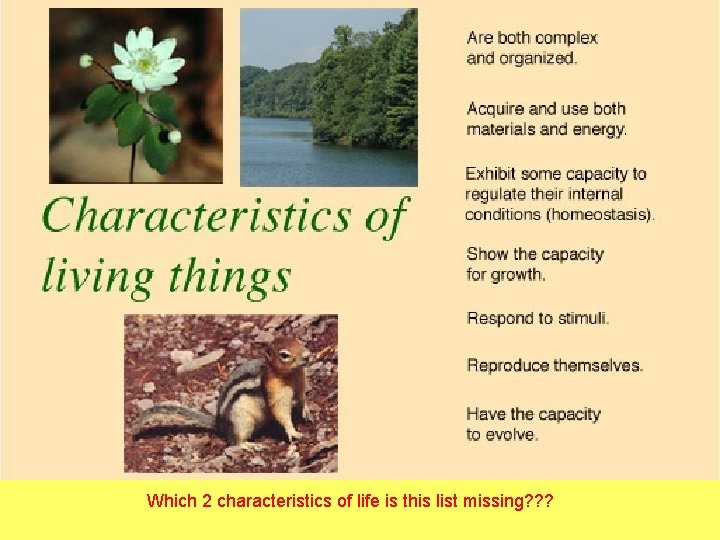
Which 2 characteristics of life is this list missing? ? ?
What is Science?
Definition of Science • Science = an organized way of using evidence to learn about the natural world AND • Science = the body of knowledge scientists have built up over the years using this process
What is Science? ? ? 1. 2. 3. 4. 5. 6. Relies on evidence Expands scientific knowledge Challenges accepted theories Questions results Tests claims Undergoes peer review – Peer review = a process by which the procedures used during an experiment and the results are evaluated by other scientists. 7. Uses the metric system (Meter, gram, liter, second)
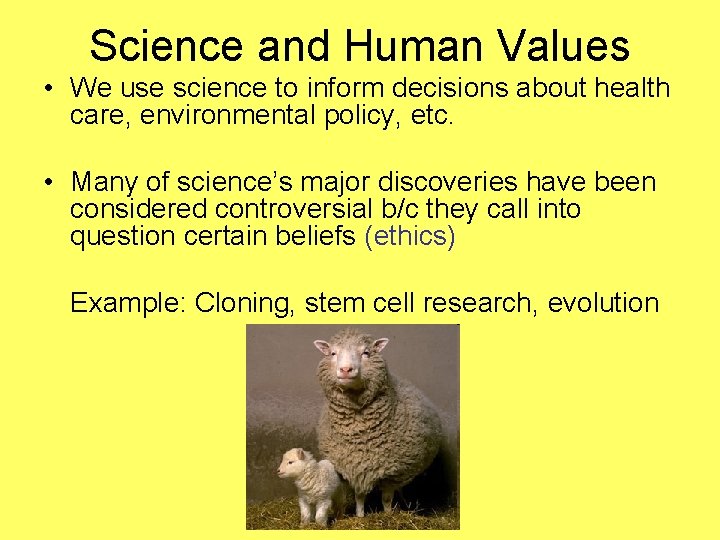
Science and Human Values • We use science to inform decisions about health care, environmental policy, etc. • Many of science’s major discoveries have been considered controversial b/c they call into question certain beliefs (ethics) Example: Cloning, stem cell research, evolution
The Scientific Method Big Bang Theory – Scientific Method Mythbusters – Bull in a China Shop
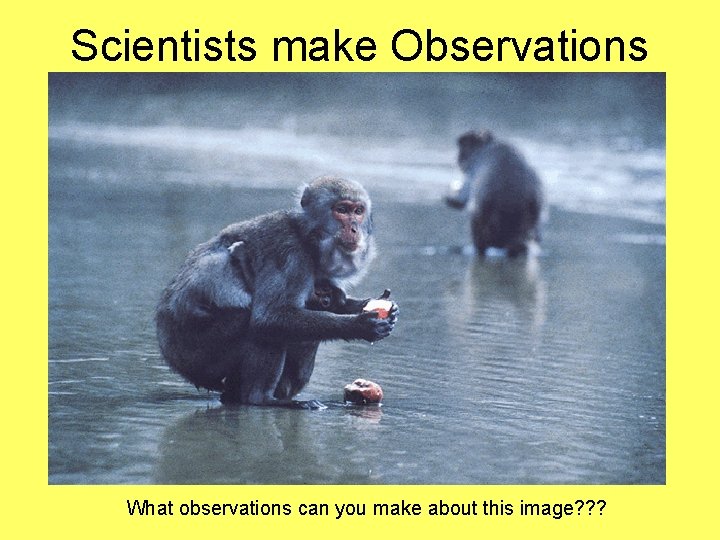
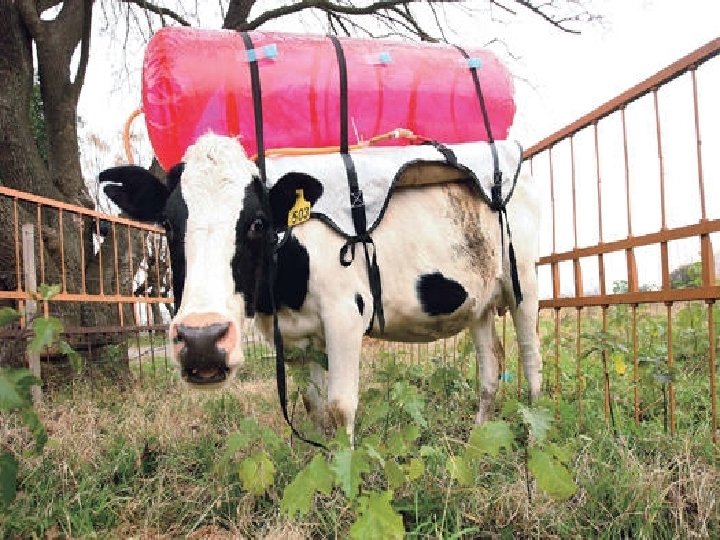
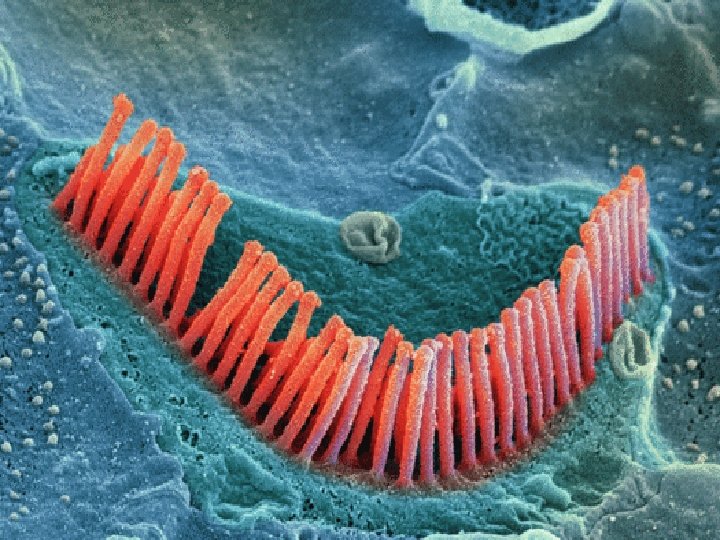
Scientists make Observations What observations can you make about this image? ? ?
Observations vs. Inferences • Observation = a direct method of gathering information in an orderly way – Recording information from the five senses • Inference = combining what you know with what you have learned and beginning the process of making logical conclusions – Recording opinions Let’s practice making observations with some new images!!!
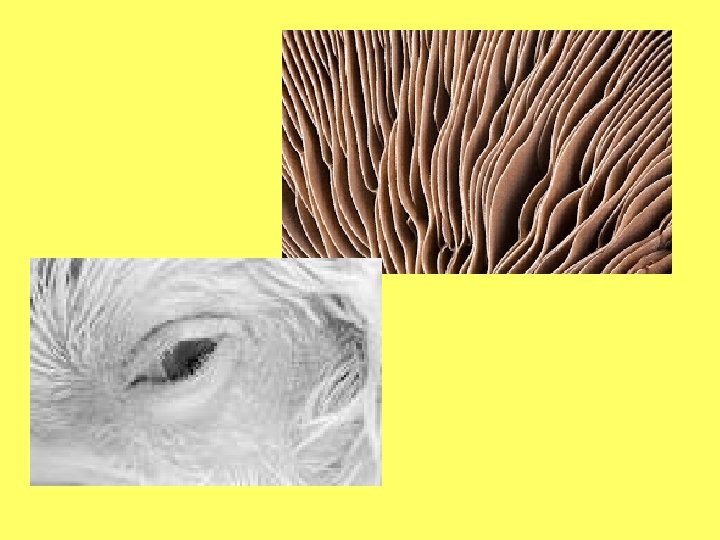
• An inference is a logical conclusion based on observations. If you saw your girl/boy friend kissing someone else in the hall (observation), you could infer that they were cheating on you. You could be wrong, someone may have needed immediate mouth to mouth, but most likely, you are single again. • Cookie Monster Mystery Box : Video • Cookie Monster
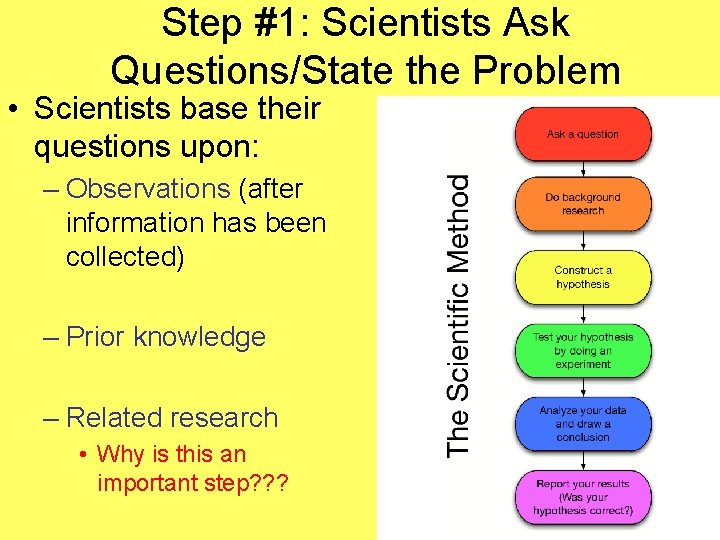
Step #1: Scientists Ask Questions/State the Problem • Scientists base their questions upon: – Observations (after information has been collected) – Prior knowledge – Related research • Why is this an important step? ? ?
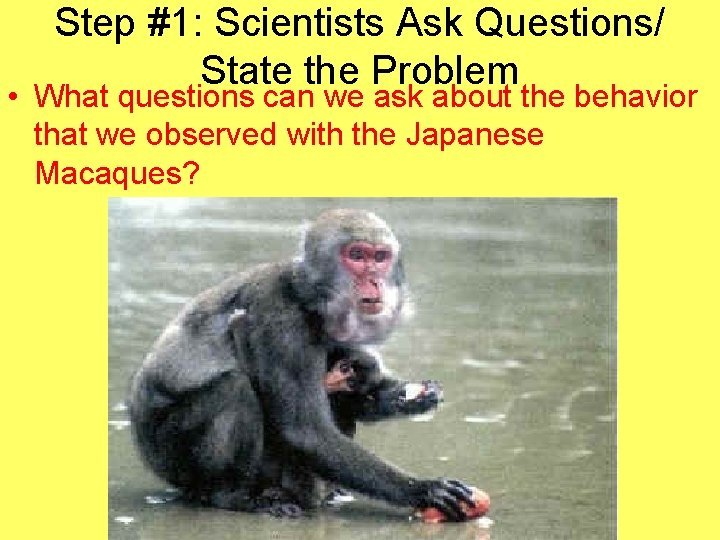
Step #1: Scientists Ask Questions/ State the Problem • What questions can we ask about the behavior that we observed with the Japanese Macaques?
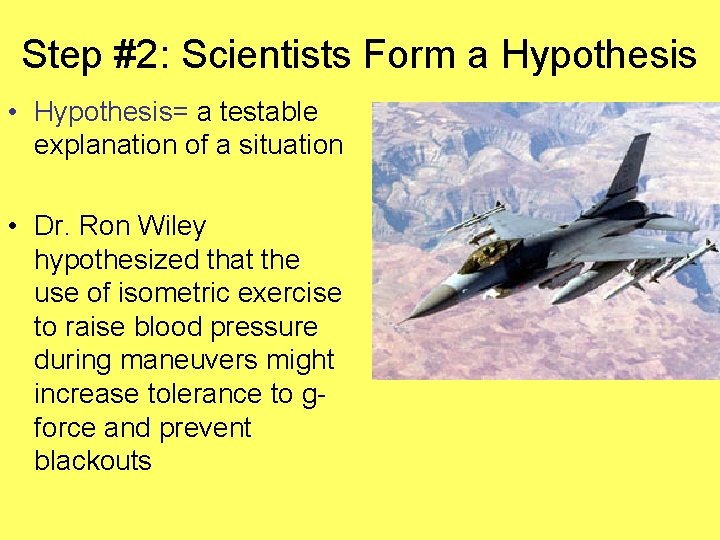
Step #2: Scientists Form a Hypothesis • Hypothesis= a testable explanation of a situation • Dr. Ron Wiley hypothesized that the use of isometric exercise to raise blood pressure during maneuvers might increase tolerance to gforce and prevent blackouts
Step #2: Scientists Form a Hypothesis • Hypothesis= a testable explanation of a situation • Theory = a well-tested explanation that unifies a broad range of observations
Step #2: Scientists Form a Hypothesis • Let’s form a hypothesis about why our Japanese Macaques are exhibiting this behavior – Make sure that this is a testable hypothesis! http: //www. arkive. org/japanese-macaque/macaca-fuscata/video-08 c. html
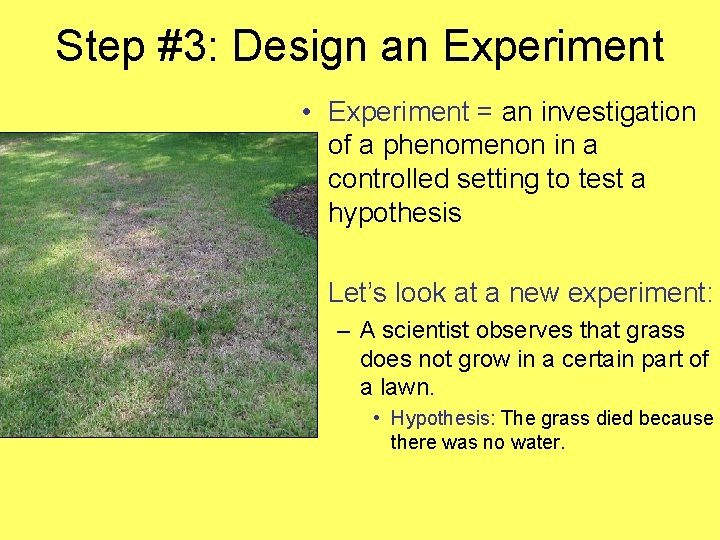
Step #3: Design an Experiment • Experiment = an investigation of a phenomenon in a controlled setting to test a hypothesis • Let’s look at a new experiment: – A scientist observes that grass does not grow in a certain part of a lawn. • Hypothesis: The grass died because there was no water.
Step #3: Design an Experiment • Control Group = a group used for comparison. – The plot of grass that was not given extra water. • Experimental Group = the group exposed to the variable that is being tested. – The plot of grass that was given extra water.
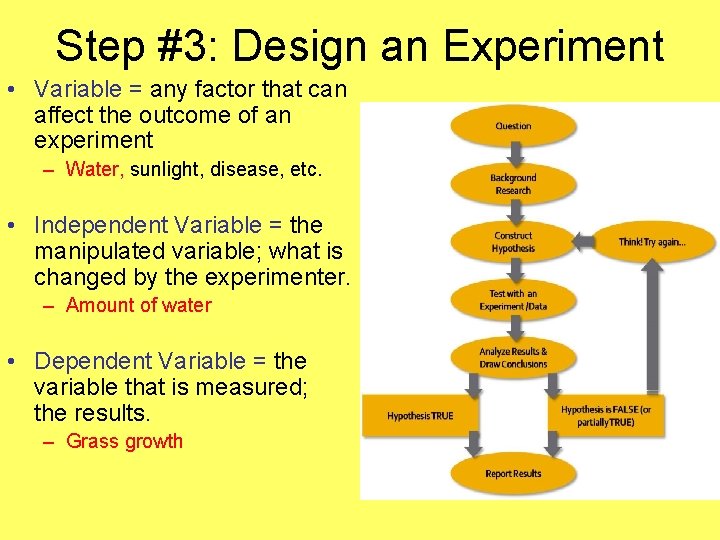
Step #3: Design an Experiment • Variable = any factor that can affect the outcome of an experiment – Water, sunlight, disease, etc. • Independent Variable = the manipulated variable; what is changed by the experimenter. – Amount of water • Dependent Variable = the variable that is measured; the results. – Grass growth
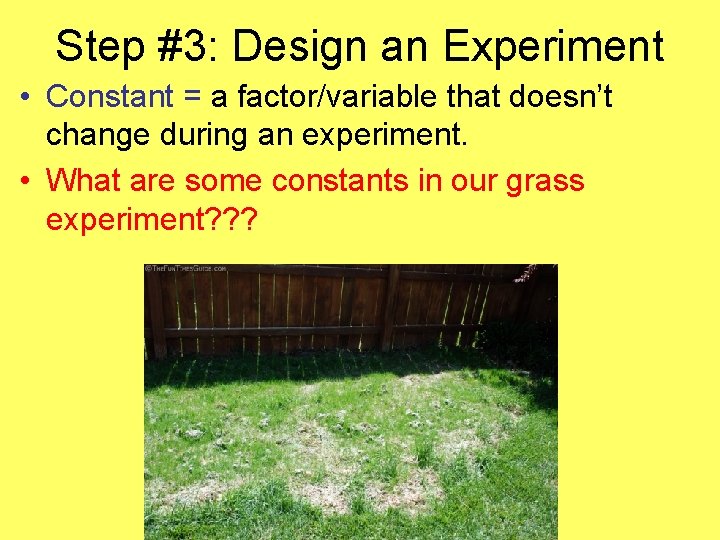
Step #3: Design an Experiment • Constant = a factor/variable that doesn’t change during an experiment. • What are some constants in our grass experiment? ? ?
Step #4: Perform an Experiment/Gather Data • Data = Information gained from observations – Quantitative Data: numerical data (measurements of time, temperature, length, mass, area, etc. ) • Grass experiment = Area of healthy grass vs. area of dead grass – Qualitative Data: descriptions of what our senses detect • Grass experiment = More healthy grass vs. less dead grass
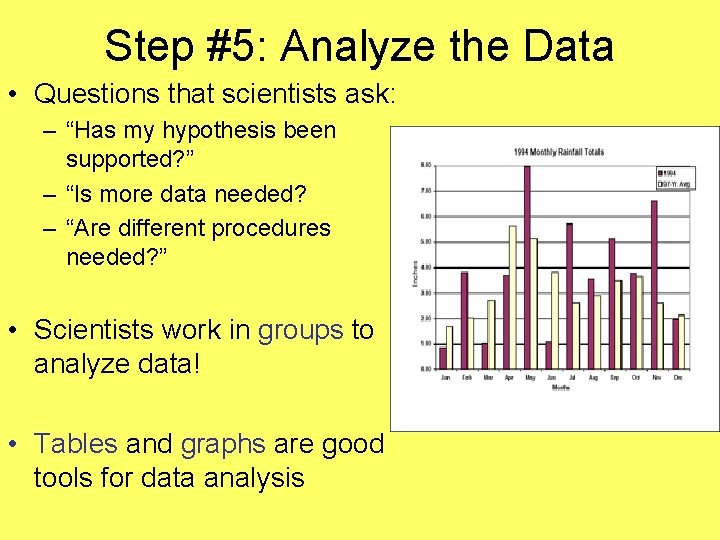
Step #5: Analyze the Data • Questions that scientists ask: – “Has my hypothesis been supported? ” – “Is more data needed? – “Are different procedures needed? ” • Scientists work in groups to analyze data! • Tables and graphs are good tools for data analysis
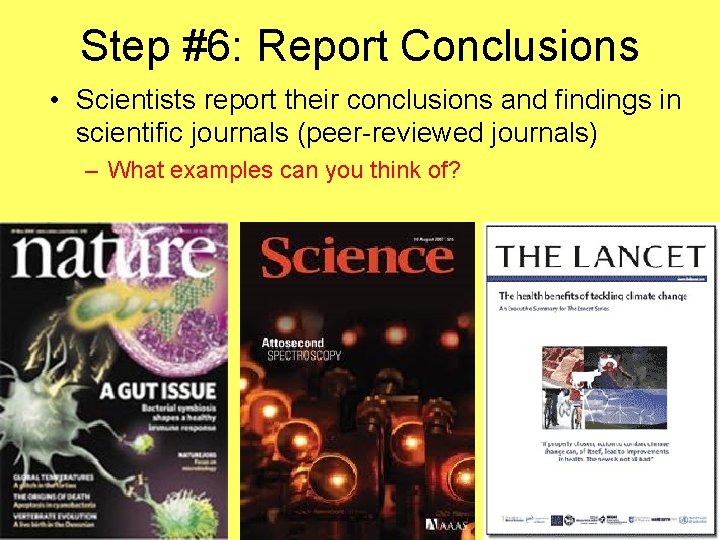
Step #6: Report Conclusions • Scientists report their conclusions and findings in scientific journals (peer-reviewed journals) – What examples can you think of?
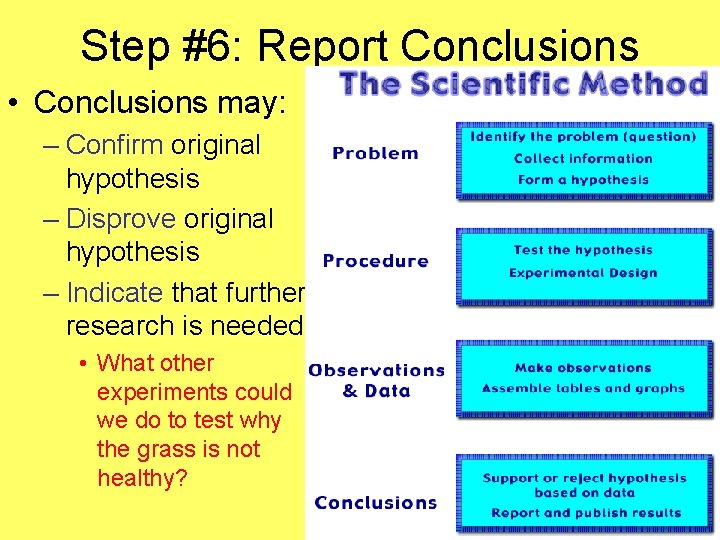
Step #6: Report Conclusions • Conclusions may: – Confirm original hypothesis – Disprove original hypothesis – Indicate that further research is needed • What other experiments could we do to test why the grass is not healthy?
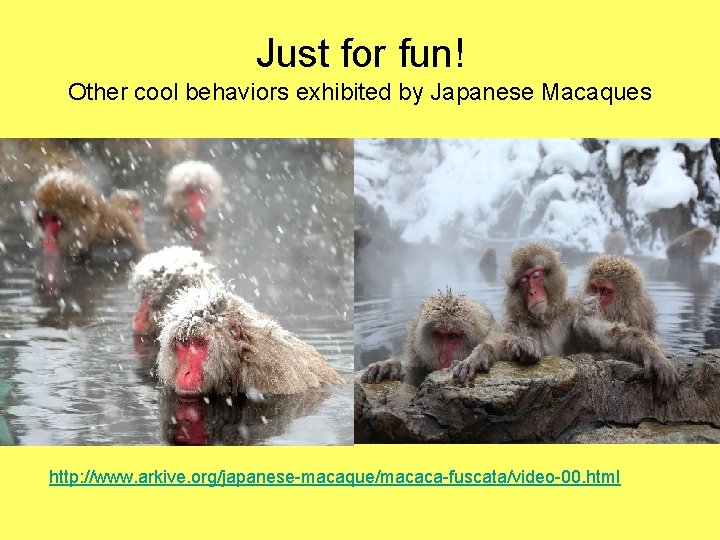
Just for fun! Other cool behaviors exhibited by Japanese Macaques http: //www. arkive. org/japanese-macaque/macaca-fuscata/video-00. html
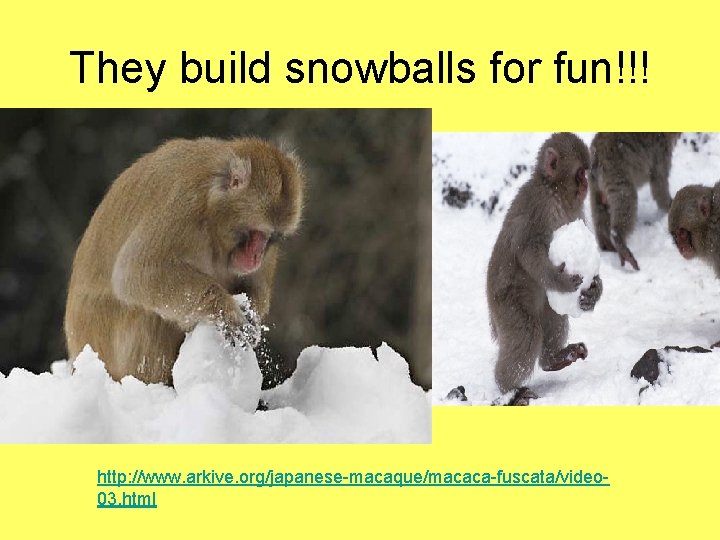
They build snowballs for fun!!! http: //www. arkive. org/japanese-macaque/macaca-fuscata/video 03. html
They groom other animals! http: //www. arkive. org/japanese-macaque/macaca-fuscata/video-11. html
A Historical Example of the Scientific Method: Spontaneous Generation • Spontaneous Generation = theory that life can arise from nonliving matter • Biogenesis Generation = theory that living things come only from other living things How are these two theories different? ? ?
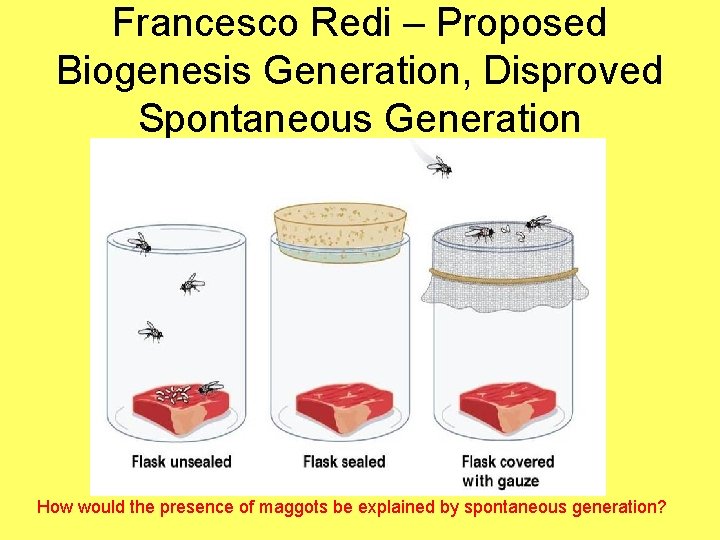
Francesco Redi – Proposed Biogenesis Generation, Disproved Spontaneous Generation How would the presence of maggots be explained by spontaneous generation?
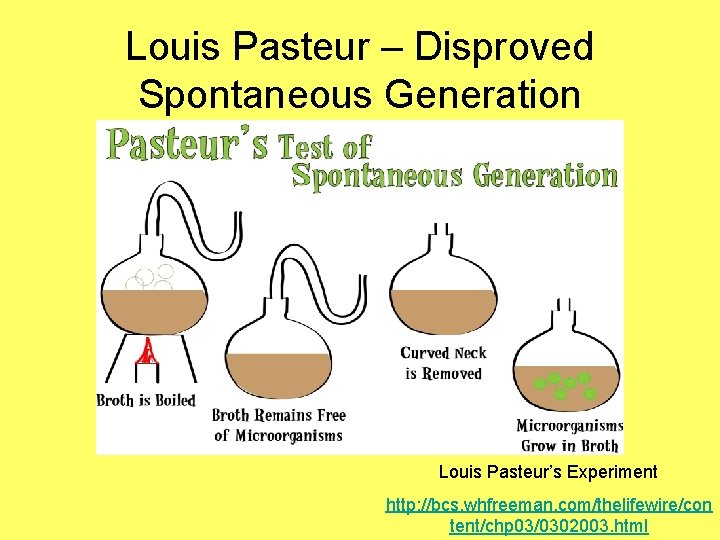
Louis Pasteur – Disproved Spontaneous Generation Louis Pasteur’s Experiment http: //bcs. whfreeman. com/thelifewire/con tent/chp 03/0302003. html
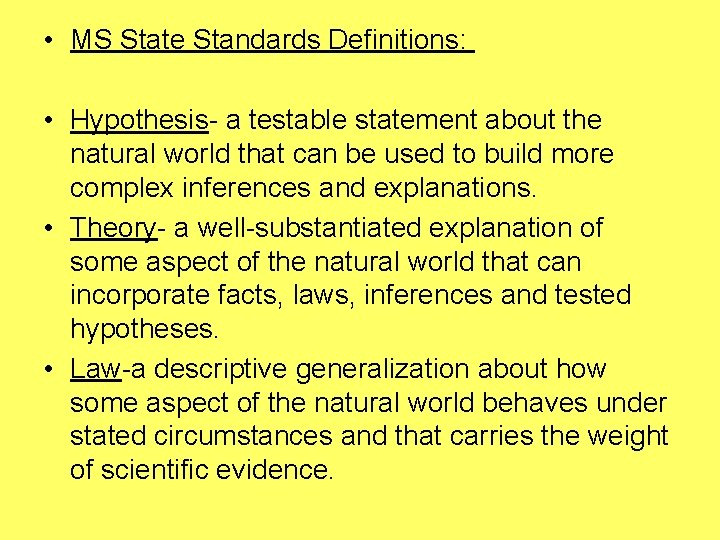
• MS State Standards Definitions: • Hypothesis- a testable statement about the natural world that can be used to build more complex inferences and explanations. • Theory- a well-substantiated explanation of some aspect of the natural world that can incorporate facts, laws, inferences and tested hypotheses. • Law-a descriptive generalization about how some aspect of the natural world behaves under stated circumstances and that carries the weight of scientific evidence.
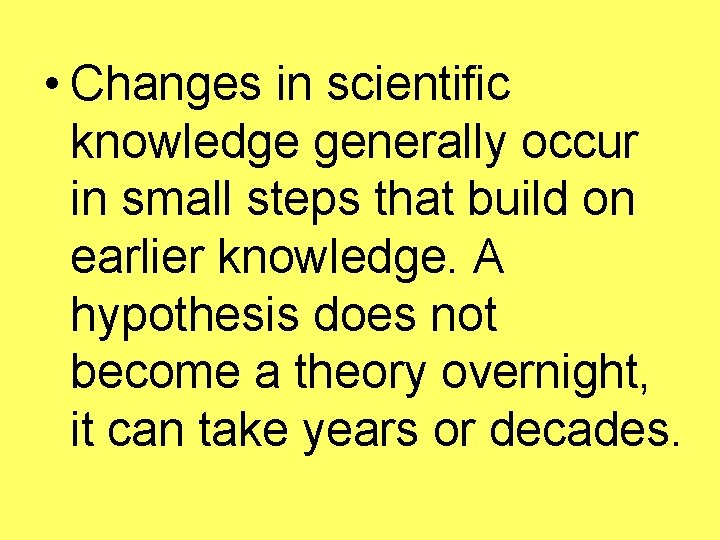
• Changes in scientific knowledge generally occur in small steps that build on earlier knowledge. A hypothesis does not become a theory overnight, it can take years or decades.
• Scientific and technological developments, as well as new evidence, can challenge accepted theories including, but not limited to: cell theory, atomic theory, theory of evolution, plate tectonic theory, germ theory of disease, and the big bang theory. • Theories change! They are not written in stone.
1. 2. 3. 4. Tiny Quiz Should scientists share data and results and try to copy someone else’s experiment? Would someone building a bridge consider themselves more of an engineer or a scientist? Is my computer alive? Why? Is a new idea first a law, hypothesis or theory?
5. Which statement describes science? a. It is a mostly American activity b. It is practiced in the Western world c. People of all cultures do science
6. Green roofs are used because roof drainage is a huge problem when it comes to constructing buildings. Sometimes engineers need to redesign the roofs. Match the redesign concern with the best reason for the redesign.
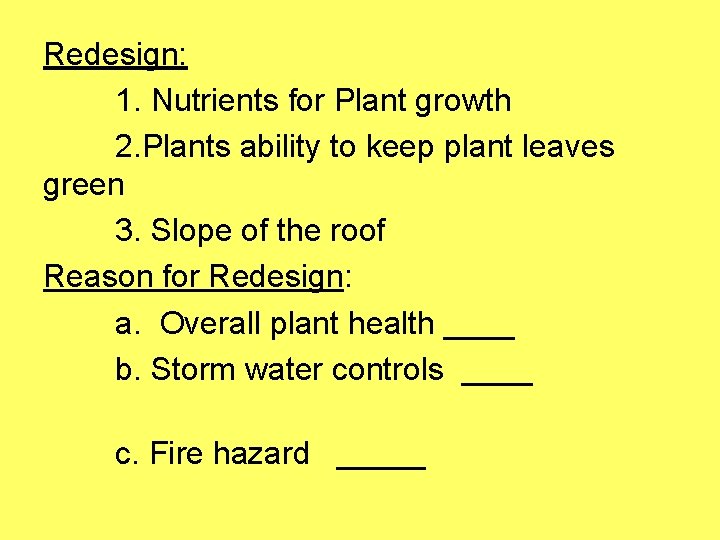
Redesign: 1. Nutrients for Plant growth 2. Plants ability to keep plant leaves green 3. Slope of the roof Reason for Redesign: a. Overall plant health ____ b. Storm water controls ____ c. Fire hazard _____
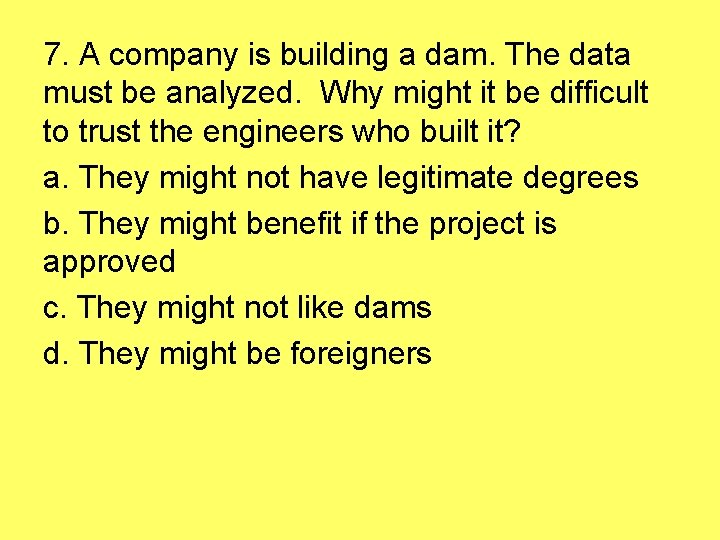
7. A company is building a dam. The data must be analyzed. Why might it be difficult to trust the engineers who built it? a. They might not have legitimate degrees b. They might benefit if the project is approved c. They might not like dams d. They might be foreigners
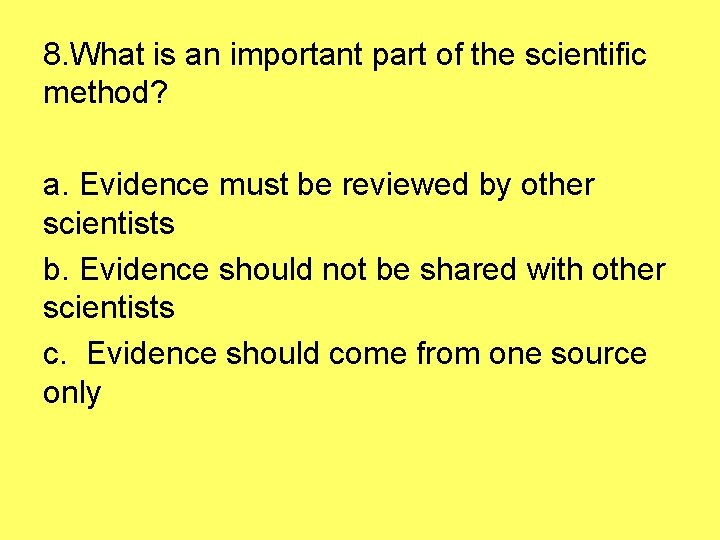
8. What is an important part of the scientific method? a. Evidence must be reviewed by other scientists b. Evidence should not be shared with other scientists c. Evidence should come from one source only
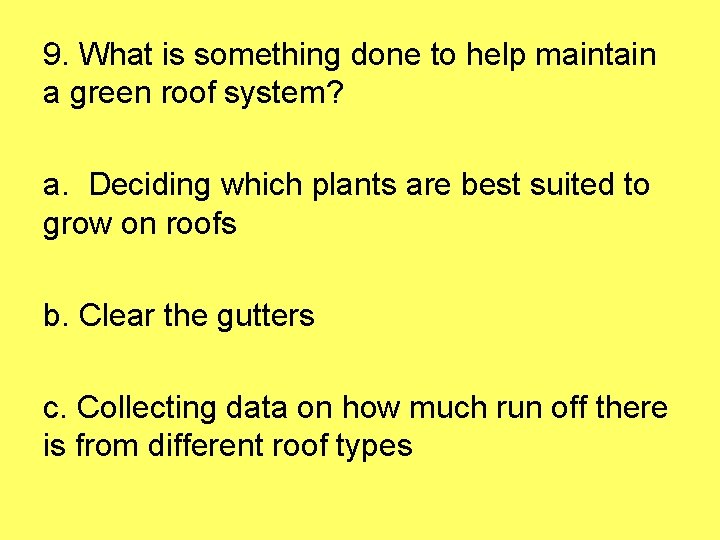
9. What is something done to help maintain a green roof system? a. Deciding which plants are best suited to grow on roofs b. Clear the gutters c. Collecting data on how much run off there is from different roof types
10. The misuse of antibiotics leads to antibiotic resistance. Bacteria can evolve and become resistant to certain types of drugs. Scientists are studying this and seeing how effective antibiotics are. They give one group of patients antibitics and another they give a placebo.
• If the scientists used 2 groups, one of adults and one of teenagers, what would be wrong with the study? a. They would have too many subjects b. They would have more than 1 variable that is changing c. The placebo patients might feel relief just because of the placebo effect
Welcome to the Wonderful World of Biology!! Huzzah!
- Slides: 63