
Introduction to Bioidentical Hormone Replacement Therapy Enrique Jacome
Introduction to Bioidentical Hormone Replacement Therapy Enrique Jacome, MD, FACOG
Why Compounded Hormones? Bioidentical hormones: Regulated vs customized compounded (FDA) Prescription-regulated bioidentical hormones Customized compounded bioidentical hormones Chemically identical to human hormones FDA Marketing Application No FDA application, regulate with 503 B Published scientific research Doses exactly reproducible Doses flexible based on need Proven efficacy for indicated use Growing volume of clinical validation for hormone optimization Pattimakiel, L. , & Tacker, H. (2011). Bioidentical hormone therapy: Clarifying the misconceptions. Cleveland Clinic Journal of Medicine, 78(12), 829 -836
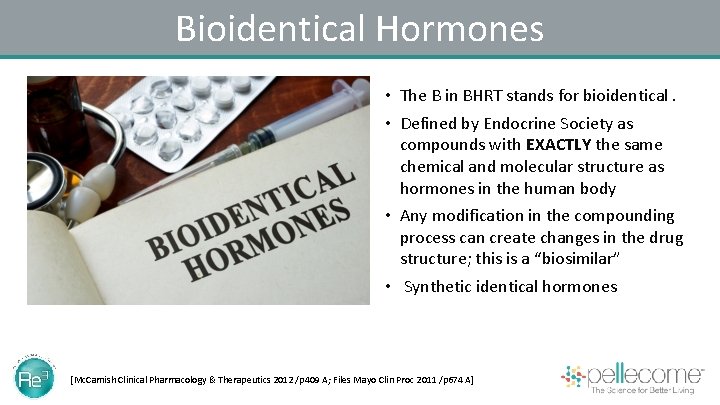
Bioidentical Hormones • The B in BHRT stands for bioidentical. • Defined by Endocrine Society as compounds with EXACTLY the same chemical and molecular structure as hormones in the human body • Any modification in the compounding process can create changes in the drug structure; this is a “biosimilar” • Synthetic identical hormones [Mc. Camish Clinical Pharmacology & Therapeutics 2012 /p 409 A; Files Mayo Clin Proc 2011 /p 674 A]
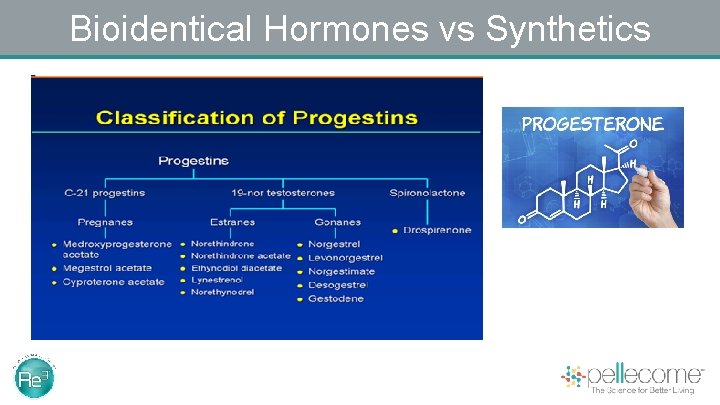
Bioidentical Hormones vs Synthetics

Bioidentical Hormones vs Synthetics • Do bioidentical hormones work better than synthetics? – Meta-analysis done by Holtorf in 2009 Symptomatic Relief and QOL – Progesterone versus progestins • • 30% reduction in sleep issues 50% reduction in anxiety 60% reduction in depression 30% reduction in somatic symptoms 25% menstrual bleeding 40% reduction in cognitive difficulties 30% improvement in sexual function OVERALL 65% felt it worked better Holtorf, K. (2009). Are bioidentical hormones (estradiol, estriol, and progesterone safer or more efficacious that commonly used synthetic version in hormone replacement therapy? Postgraduate Medicine, 121(1). https: //doi. org/10. 3810/pgm. 2009. 01. 1949
Bioidentical Hormones vs Synthetics Breast Cancer Risk • Synthetic progestins increase estrogen stimulated mitotic activity and proliferation in the breast while progesterone inhibits it • WHI showed synthetic progestin increased risk for breast cancer. • Nurses’ Health Study showed a 60% increase in breast cancer when progestin was added to estrogen Holtorf, K. (2009). Are bioidentical hormones (estradiol, estriol, and progesterone safer or more efficacious that commonly used synthetic version in hormone replacement therapy? Postgraduate Medicine, 121(1). https: //doi. org/10. 3810/pgm. 2009. 01. 1949 Holtorf, H. What’s the difference between bioidentical HRT and synthetic HRT? + Which one is better? Holtorf Medical Group
Bioidentical Hormones vs Synthetics Cardiovascular Risk • From WHI study when Progestin was added to Premarin resulted in substantial increase on the risk of stroke and heart attack • Progestin reduces HDL, Increases vasoconstriction, promotes atherosclerotic plaque formation • PEPI trial showed estrogen and progesterone improved HDL over estrogen and medroxyprogesterone Holtorf, K. (2009). Are bioidentical hormones (estradiol, estriol, and progesterone safer or more efficacious that commonly used synthetic version in hormone replacement therapy? Postgraduate Medicine, 121(1). https: //doi. org/10. 3810/pgm. 2009. 01. 1949 Holtorf, H. What’s the difference between bioidentical HRT and synthetic HRT? + Which one is better? Holtorf Medical Group
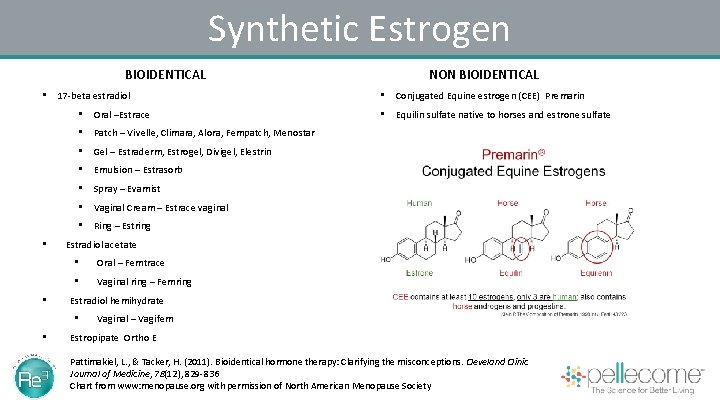
Synthetic Estrogen BIOIDENTICAL • 17 -beta estradiol • Oral –Estrace NON BIOIDENTICAL • Conjugated Equine estrogen (CEE) Premarin • Equilin sulfate native to horses and estrone sulfate • Patch – Vivelle, Climara, Alora, Fempatch, Menostar • Gel – Estraderm, Estrogel, Divigel, Elestrin • Emulsion – Estrasorb • Spray – Evamist • Vaginal Cream – Estrace vaginal • Ring – Estring • • Estradiol acetate • Oral – Femtrace • Vaginal ring – Femring Estradiol hemihydrate • • Vaginal – Vagifem Estropipate Ortho E Pattimakiel, L. , & Tacker, H. (2011). Bioidentical hormone therapy: Clarifying the misconceptions. Cleveland Clinic Journal of Medicine, 78(12), 829 -836 Chart from www: menopause. org with permission of North American Menopause Society
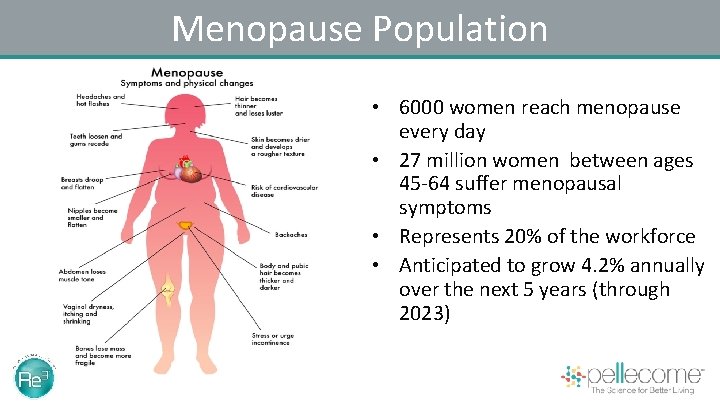
Menopause Population • 6000 women reach menopause every day • 27 million women between ages 45 -64 suffer menopausal symptoms • Represents 20% of the workforce • Anticipated to grow 4. 2% annually over the next 5 years (through 2023)
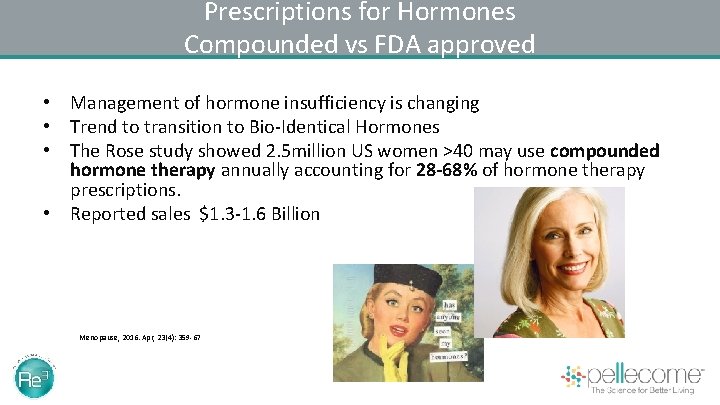
Prescriptions for Hormones Compounded vs FDA approved • Management of hormone insufficiency is changing • Trend to transition to Bio-Identical Hormones • The Rose study showed 2. 5 million US women >40 may use compounded hormone therapy annually accounting for 28 -68% of hormone therapy prescriptions. • Reported sales $1. 3 -1. 6 Billion Menopause, 2016. Apr, 23(4): 359 -67
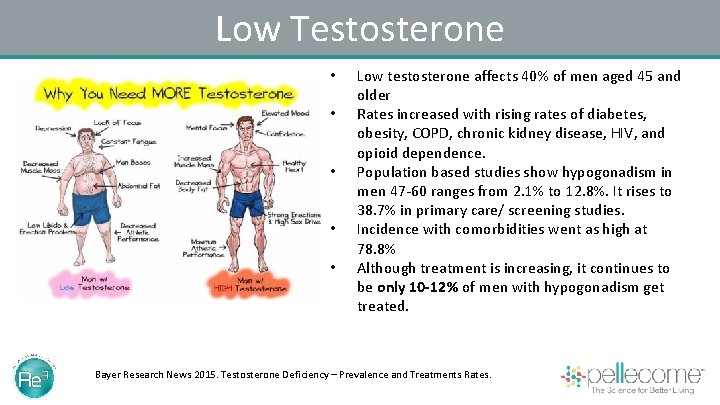
Low Testosterone • • • Low testosterone affects 40% of men aged 45 and older Rates increased with rising rates of diabetes, obesity, COPD, chronic kidney disease, HIV, and opioid dependence. Population based studies show hypogonadism in men 47 -60 ranges from 2. 1% to 12. 8%. It rises to 38. 7% in primary care/ screening studies. Incidence with comorbidities went as high at 78. 8% Although treatment is increasing, it continues to be only 10 -12% of men with hypogonadism get treated. Bayer Research News 2015. Testosterone Deficiency – Prevalence and Treatments Rates.
Pellecome Objectives • Founded by Dr. Enrique Jacome who has over 30 years of experience in hormone management and over 30, 000 insertions. • Our goal was to completely re-design the surgical device and refine the surgical technique. • Additionally we sought to improve the manufacturing process in such a way that it would meet or exceed FDA expectations for standardization • Train and educate medical personnel on the use of implants as an option for long lasting hormone replacement therapy • Become the largest distributor of FDA approved manufactured pellets around the globe
- Slides: 12