
Introduction to Beowulf Oral vs written text Many
Introduction to Beowulf • Oral vs. written text • Many ancient works were memorized and recited—and were not written down until centuries later (Odyssey, Iliad, Beowulf) • Only surviving Beowulf manuscript dates from late 10 th century • Probably composed mid-8 th century
Introduction to Beowulf • The scop: Anglo-Saxon equivalent of a singing poet • Oral techniques: alliteration, caesura, kennings

Beowulf Manuscript (Note the burn marks on the top and sides—the ms. was severely damaged in a fire)
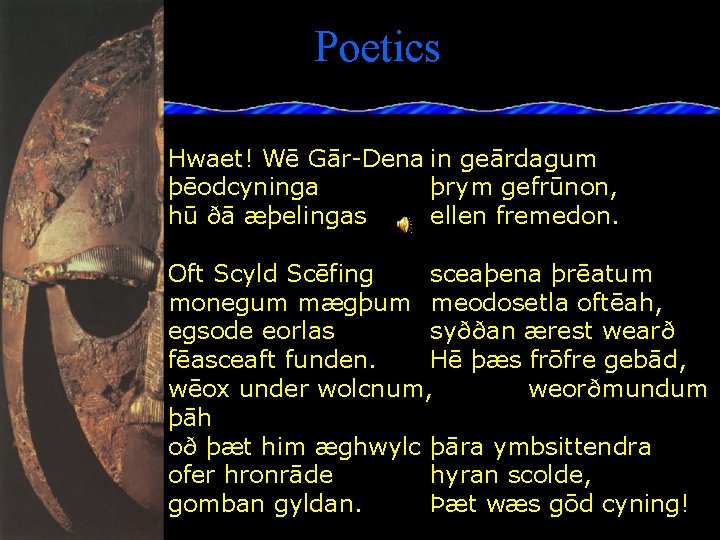
Poetics Hwaet! Wē Gār-Dena in geārdagum þēodcyninga þrym gefrūnon, hū ðā æþelingas ellen fremedon. Oft Scyld Scēfing sceaþena þrēatum monegum mægþum meodosetla oftēah, egsode eorlas syððan ærest wearð fēasceaft funden. Hē þæs frōfre gebād, wēox under wolcnum, weorðmundum þāh oð þæt him æghwylc þāra ymbsittendra ofer hronrāde hyran scolde, gomban gyldan. Þæt wæs gōd cyning!
Alliteration and Caesura • Poetry had no rhyme. • Words began with the same sound (alliteration) • Had a pause in the midst of the line (caesura) Example: Now the hard helmet…hammered with gold
Kennings • A metaphorical expression used in place of a noun Examples: Sea = “whale-road” or “swan’s way” Joints, ligaments = “bone-locks” Sun = “sky-candle” Icicles = “water-ropes”
Anglo-Saxon Society • Tribal society with kinship bonds and a heroic code of behavior – bravery – loyalty to one's lord, one's warband (comitatus), and one's kin – willingness to avenge one's warband or lord at all costs – death preferable to exile. – generosity of lord to thanes and of hero to warband lord--gift-giving – heroism (i. e. , great deeds) brings honor, eternal fame, and political power
The Musician • Bard or scop • Would insure a warrior’s immortality, and that of the tribe, by composing and passing down songs of their brave deeds. • This was the only afterlife they might expect.
Warrior’s Code • He must exhibit bravery and courage at all times. • He then could achieve “fame”. • He must defend the ring-giver (king) even with his life • Weirguild -“manprice”: - IF a warrior was killed even by accident, his relatives would demand either his “man-price” or vengeance from the slayer.
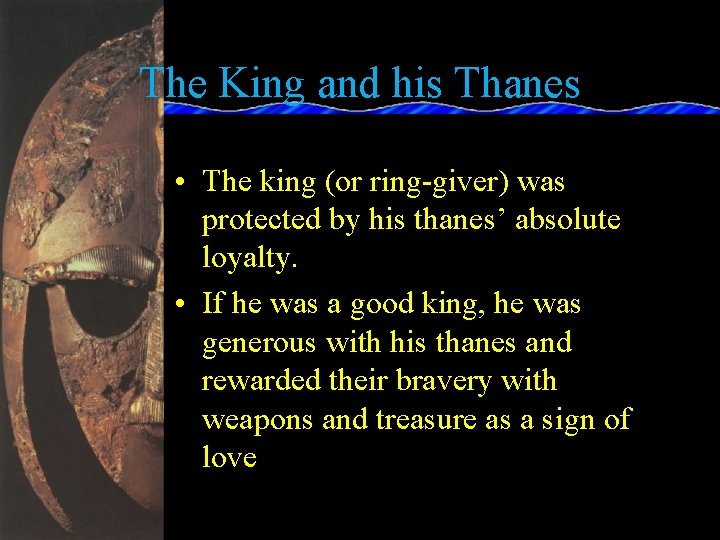
The King and his Thanes • The king (or ring-giver) was protected by his thanes’ absolute loyalty. • If he was a good king, he was generous with his thanes and rewarded their bravery with weapons and treasure as a sign of love.
Anglo-Saxon values • Loyalty – Fighting for one’s king – Avenging one’s kinsmen – Keeping one’s word • Generosity -- gifts symbolize bonds • Brotherly love -- not romantic love • Heroism – Physical strength – Skill and resourcefulness in battle – Courage • Public reputation, not private conscience
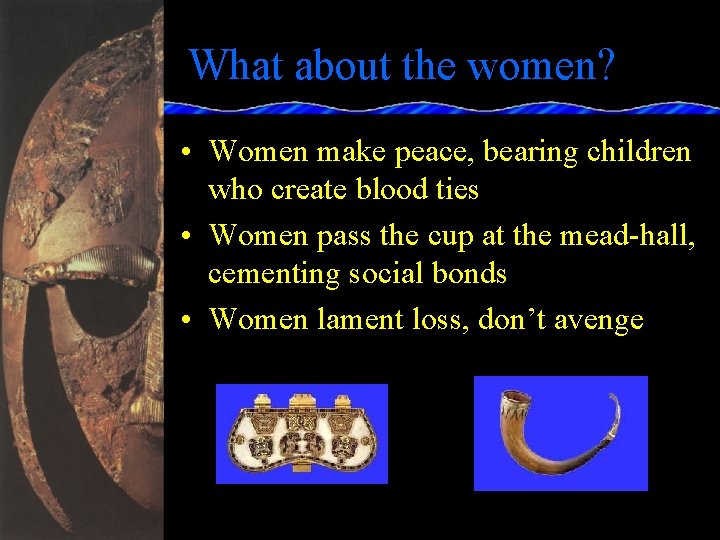
What about the women? • Women make peace, bearing children who create blood ties • Women pass the cup at the mead-hall, cementing social bonds • Women lament loss, don’t avenge
Religion in Anglo Saxon Times • Mix of pagan and Christian values-often in conflict. – Pagan (secular (non-religious) lineage vs. Christian lineage; – Eternal earthly fame through deeds vs afterlife in hell or heaven; – honor & gift-giving vs. sin of pride (hubris); – revenge vs pacifist view (forgiveness); – Wyrd (Anglo-Saxon "Fate") vs God's will, etc.
Gods and Goddesses • Wyrd (Fate/Fortuna): goddess of fortune. • Wyrd knew if the warrior was doomed, and if he was not doomed, then courage might save him in battle. • Fate would send tests to the warrior, especially if he boasted.
Monsters and Dragons • Believed in as if they were real. • The thanes believed in them. • When they boasted they might kill one, they had best be prepared to meet one.
Epic hero traits • Is significant and glorified • Is on a quest • Has superior or superhuman strength, intelligence, and/or courage • Is ethical Risks death for glory or for the greater good of society • Is a strong and responsible leader • Performs brave deeds • Reflects ideals of a particular society
- Slides: 16