
INTRODUCTION TO BEOWULF AngloSaxon History Background HISTORY OF
INTRODUCTION TO BEOWULF Anglo-Saxon History & Background

HISTORY OF BEOWULF Setting � Between 8 th & 11 th Centuries � Britain � However, it was written in Scandanavia. Most people believe Beowulf is part of an oral tradition: � Stories that are passed down from generation to generation and from tribe to tribe by word of mouth � These are not written down. � Told by scops.
HISTORY OF BEOWULF Scops Composers and storytellers who traveled from court to court Entertainers of their times Expected to: • know a broad repertoire of tales • Be able to compose tales in tribute to the patrons that financed them
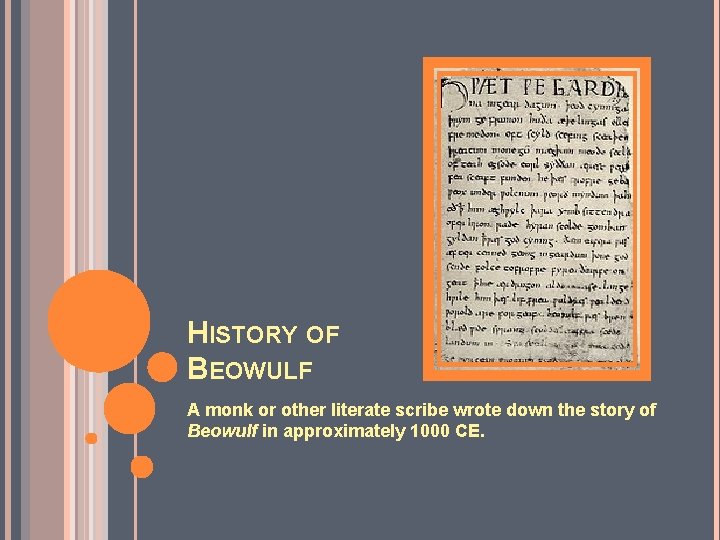
HISTORY OF BEOWULF A monk or other literate scribe wrote down the story of Beowulf in approximately 1000 CE.
HISTORY OF BEOWULF Mix of Pagan & Christian beliefs in the story. � Anglo-Saxons were not Christians � Scops could have added Christian elements slowly over time as Christianity gained popularity. � Scribe may have added references to Christianity
OLD ENGLISH HISTORY How did the culture presented in the novel develop?
OLD ENGLISH HISTORY Britain was originally occupied by Celts Shortly after, Romans inhabited Britain � Built cities, roads, and other advancements for civilization � Withdrew from Britain in the 5 th Century, leaving Britain vulnerable to attacks from invaders. Vikings
OLD ENGLISH HISTORY Scandinavia sent help to protect Britain � Help was made of 3 tribes Angles Saxons Jutes � Eventually became known as Anglo-Saxons
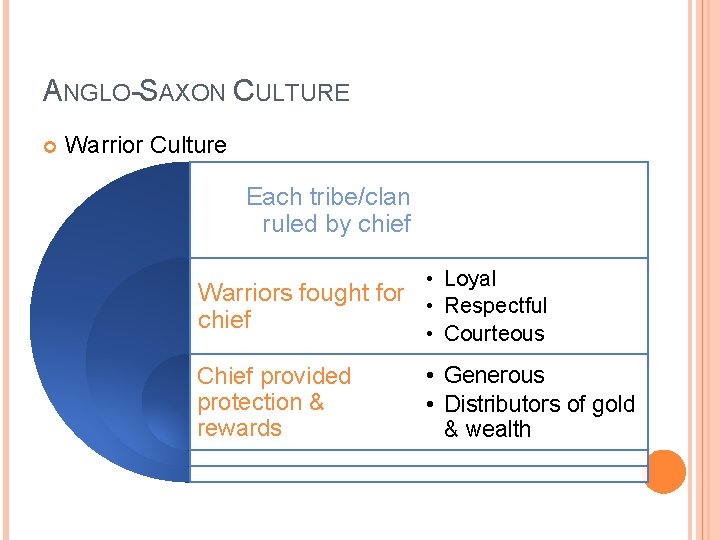
ANGLO-SAXON CULTURE Warrior Culture Each tribe/clan ruled by chief • Loyal Warriors fought for • Respectful chief • Courteous Chief provided protection & rewards • Generous • Distributors of gold & wealth

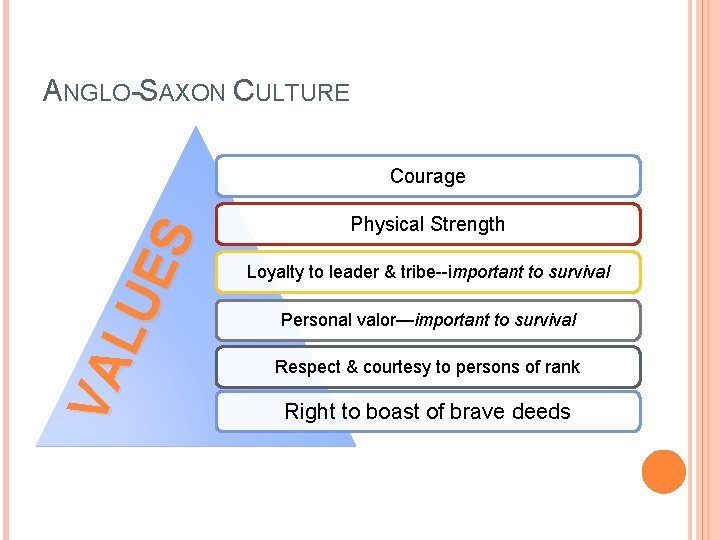
ANGLO-SAXON CULTURE VA LU ES Courage Physical Strength Loyalty to leader & tribe--important to survival Personal valor—important to survival Respect & courtesy to persons of rank Right to boast of brave deeds
ANGLO-SAXON CULTURE Belief in Supernatural � Used this to explain events they cannot understand Highly developed feeling for beauty Fate was impersonal & governed most of life � Resigned acceptance of fate � Heroic human will & courage allowed individuals to control their response to fate. Courage & loyalty won fame
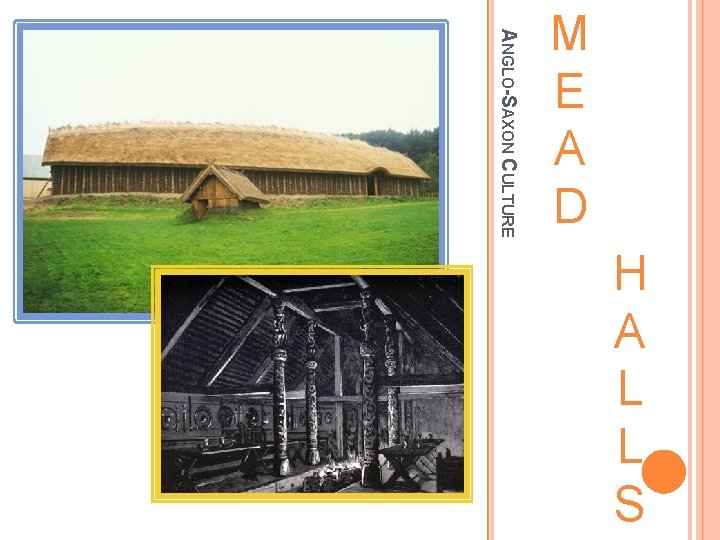
ANGLO-SAXON CULTURE M E A D H A L L S
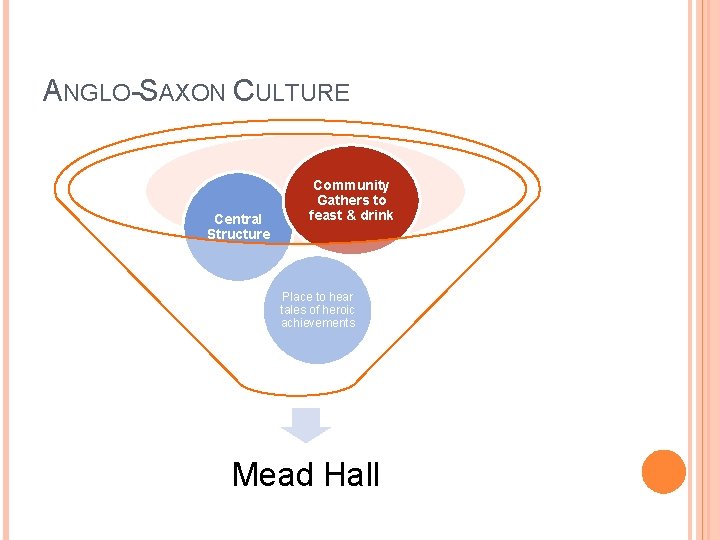
ANGLO-SAXON CULTURE Central Structure Community Gathers to feast & drink Place to hear tales of heroic achievements Mead Hall
ANGLO-SAXONS &RELIGION Move to Christianity
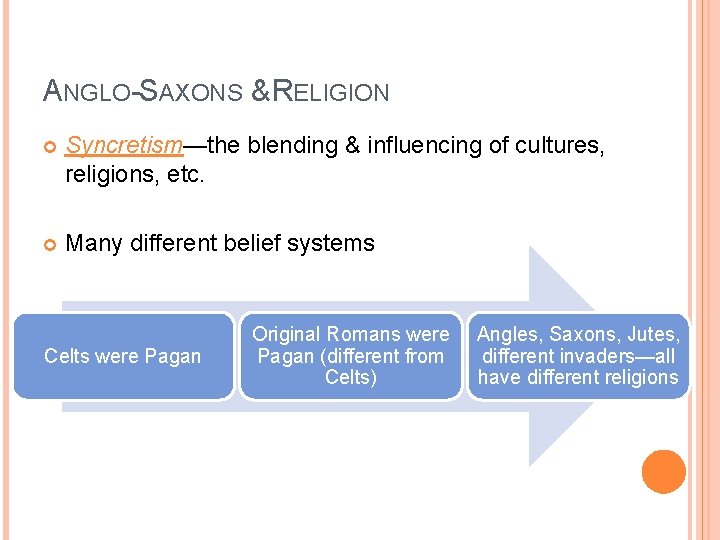
ANGLO-SAXONS & RELIGION Syncretism—the blending & influencing of cultures, religions, etc. Many different belief systems Celts were Pagan Original Romans were Pagan (different from Celts) Angles, Saxons, Jutes, different invaders—all have different religions
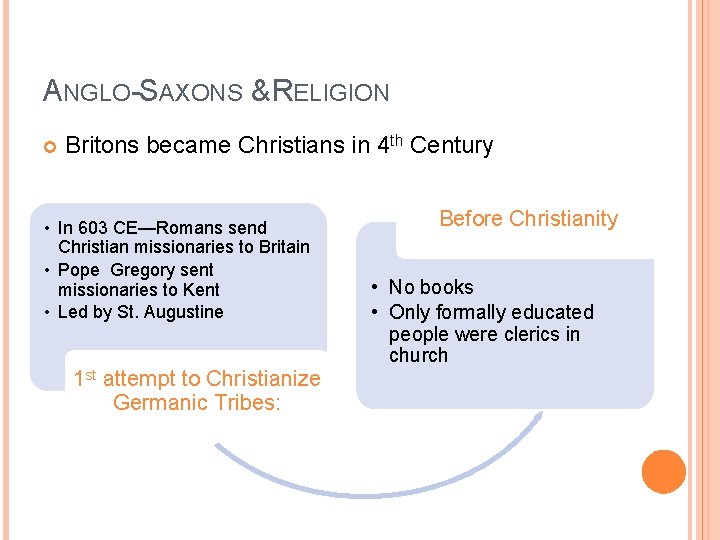
ANGLO-SAXONS & RELIGION Britons became Christians in 4 th Century • In 603 CE—Romans send Christian missionaries to Britain • Pope Gregory sent missionaries to Kent • Led by St. Augustine 1 st attempt to Christianize Germanic Tribes: Before Christianity • No books • Only formally educated people were clerics in church
INTRODUCTION TO BEOWULF
INTRODUCTION TO BEOWULF Only surviving manuscript dates from late 10 th century Was damaged in a fire in 1731 � Destroyed many other medieval manuscripts
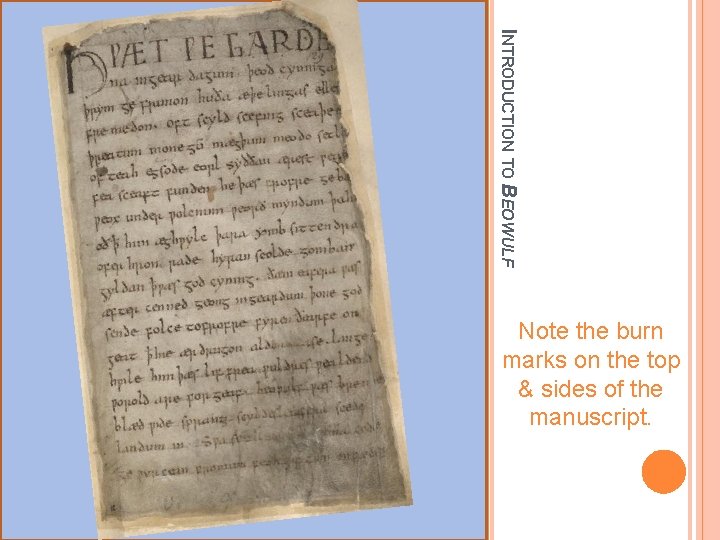
INTRODUCTION TO BEOWULF Note the burn marks on the top & sides of the manuscript.
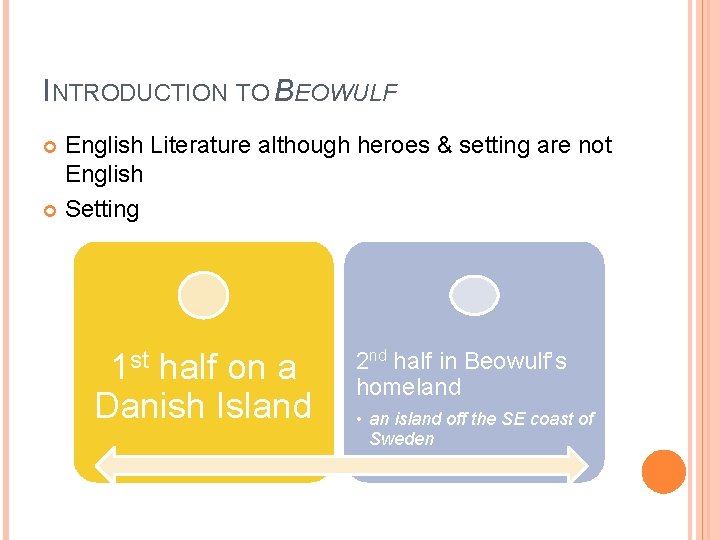
INTRODUCTION TO BEOWULF English Literature although heroes & setting are not English Setting 1 st half on a Danish Island 2 nd half in Beowulf’s homeland • an island off the SE coast of Sweden

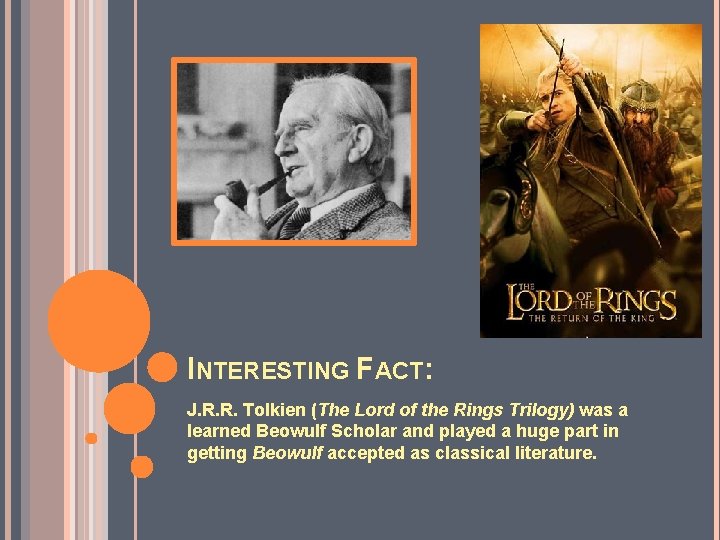
INTERESTING FACT: J. R. R. Tolkien (The Lord of the Rings Trilogy) was a learned Beowulf Scholar and played a huge part in getting Beowulf accepted as classical literature.
INTRODUCTION TO BEOWULF Epic Tradition Follows values and characteristics of Anglo-Saxons Portrays a strong sense of fatalism—acceptance of death � Warriors accepted mortality in a way that seems casual to readers
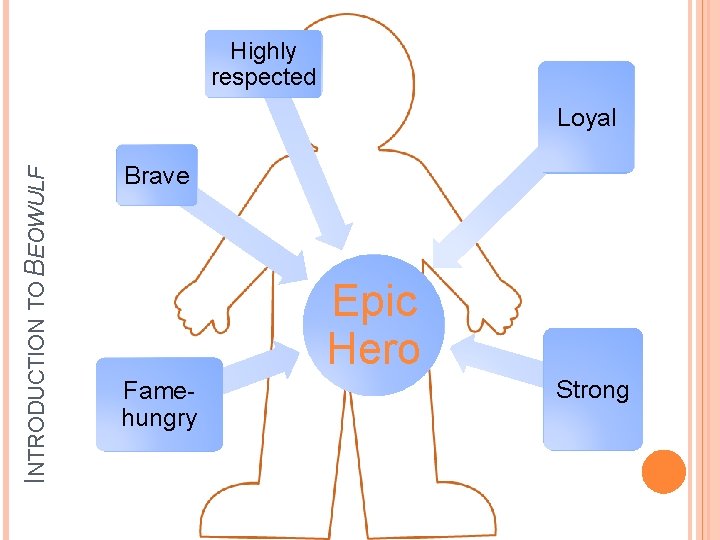
Highly respected INTRODUCTION TO BEOWULF Loyal Brave Epic Hero Famehungry Strong

LITERARY ELEMENTS
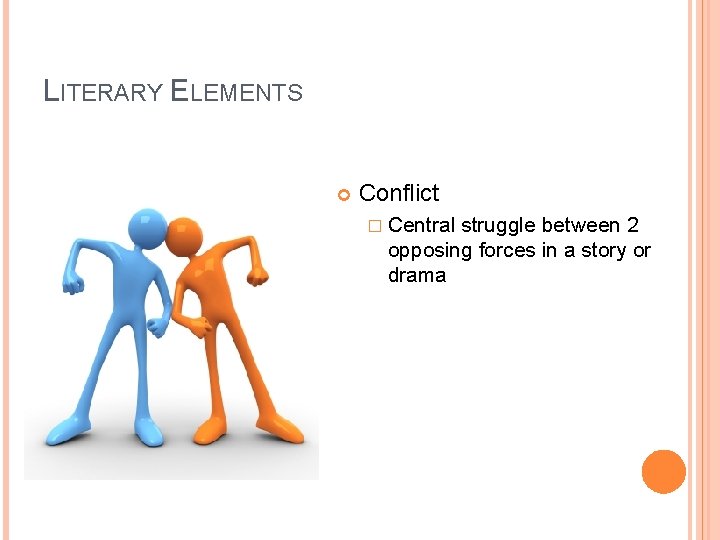
LITERARY ELEMENTS Conflict � Central struggle between 2 opposing forces in a story or drama
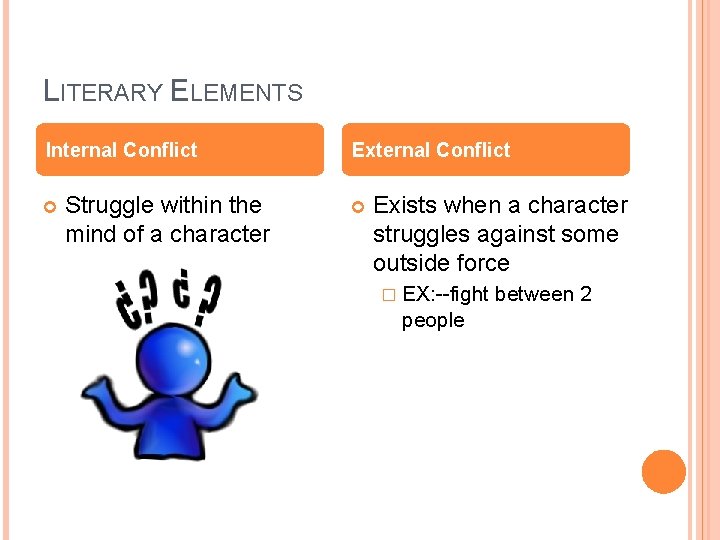
LITERARY ELEMENTS Internal Conflict Struggle within the mind of a character External Conflict Exists when a character struggles against some outside force � EX: --fight people between 2
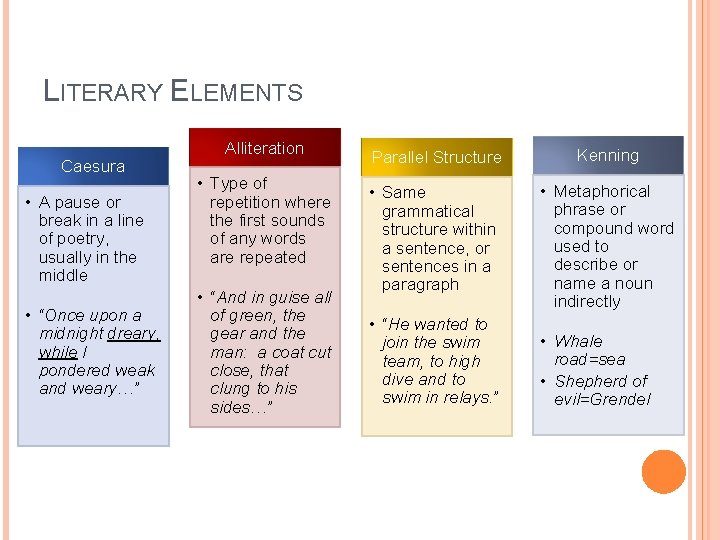
LITERARY ELEMENTS Caesura • A pause or break in a line of poetry, usually in the middle • “Once upon a midnight dreary, while I pondered weak and weary…” Alliteration • Type of repetition where the first sounds of any words are repeated • “And in guise all of green, the gear and the man: a coat cut close, that clung to his sides…” Parallel Structure Kenning • Same grammatical structure within a sentence, or sentences in a paragraph • Metaphorical phrase or compound word used to describe or name a noun indirectly • “He wanted to join the swim team, to high dive and to swim in relays. ” • Whale road=sea • Shepherd of evil=Grendel
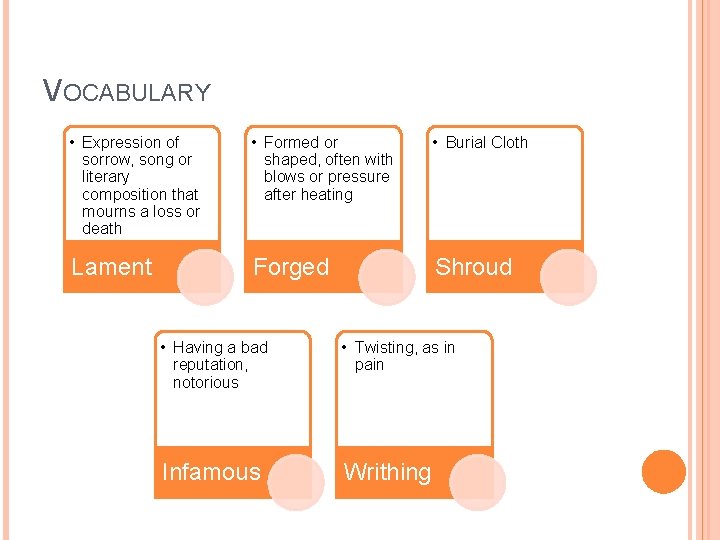
VOCABULARY • Expression of sorrow, song or literary composition that mourns a loss or death • Formed or shaped, often with blows or pressure after heating • Burial Cloth Lament Forged Shroud • Having a bad reputation, notorious • Twisting, as in pain Infamous Writhing
- Slides: 32