
Introduction to Behavioral Pediatrics Jodi Polaha Ph D

Introduction to Behavioral Pediatrics Jodi Polaha, Ph. D. Assistant Professor, Pediatrics Munroe-Meyer Institute University of Nebraska Medical Center
Overview Encopresis ¢ Enuresis ¢ An empirically-supported approach to day time toilet training ¢ An empirically-supported approach to night time toilet training ¢
Encopresis ¢ ¢ Repeated passage of feces into inappropriate places whether involuntary or intentional At least one such event a month for 3 months At least 4 years old Not due to direct effects of substance or medical condition except constipation l l With constipation and overflow incontinence Without constipation and overflow incontinence
Encopresis Medical Workup/Management ¢ Bowel habits assessment ¢ Education ¢ Diet assessment/Changes ¢ Compliance/Behavioral protocol ¢
Encopresis ¢ Medical Workup/Management l Assessment of etiology • Slow moving bowels vs. Spina Bifida or Hirschsprung’s disease If constipation – “clean out” l Laxatives, stool softeners, or fiber for maintenance l
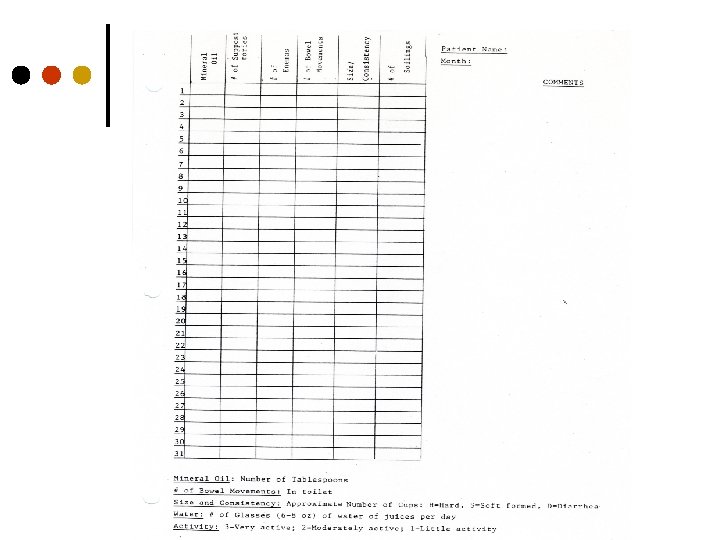
Encopresis Medical Workup/Management ¢ Bowel habits assessment ¢
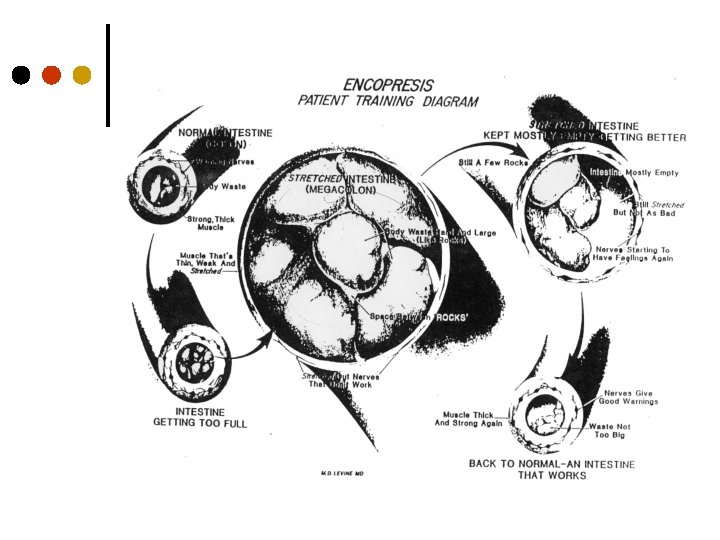
Encopresis Medical Workup/Management ¢ Education ¢ Symptoms of constipation l Functioning of bowel l Behavioral “causes” l Diet l
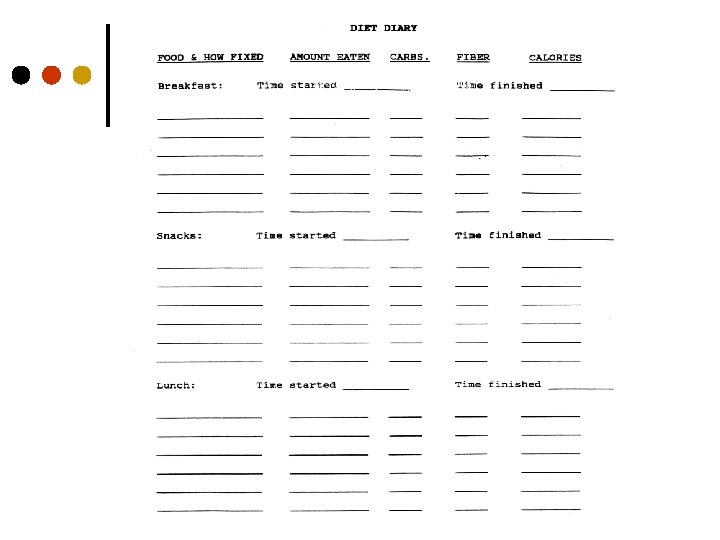
Encopresis Medical Workup/Management ¢ Education ¢ Diet assessment/Changes ¢ Diet diary l Behavioral protocol to increase fiber l • Premack principle
Encopresis Medical Workup/Management ¢ Education ¢ Diet assessment/Changes ¢ Behavioral Protocol (to be discussed) ¢
Enuresis Repeated voiding of urine into bed or clothes (whether involuntary or intentional) ¢ Behavior is clinically significant (at least 2 x/wk for 3 mos or causes impairment) ¢ At least 5 years old (developmentally) ¢ Not due to substance/medical condition ¢
Enuresis Primary vs. secondary ¢ Nocturnal vs. diurnal ¢
Enuresis Medical evaluation ¢ Assessment of compliance ¢ Behavioral protocol ¢
First time toilet training Among top concerns expressed by mothers on internet, call-in services ¢ Most frustrating ¢ Lots of “lore” ¢
First-time toilet training ¢ Passive l l l “child-oriented” Brazelton, 1962 Physical maturity, interest, and “psychological readiness” “relax, be patient” ¢ Intensive l l l “toilet-training in a day” Azrin & Foxx, 1974 Physiological readiness and compliance Principles of operant conditioning
Empirically supported toilet training ¢ Thinking time question #1 a: l How could you provide a child with lots of practice in toileting?
Empirically supported toilet training ¢ Thinking time question #1 a, b: How could you provide a child with lots of practice in toileting? l How could you provide predictabilty in structuring programming? l
Empirically supported toilet training ¢ Thinking time question #1 a, b, c: How could you provide a child with lots of practice in toileting? l How could you provide predictabilty in structuring programming? l How could you provide a high contrast to help skill acquisition? l
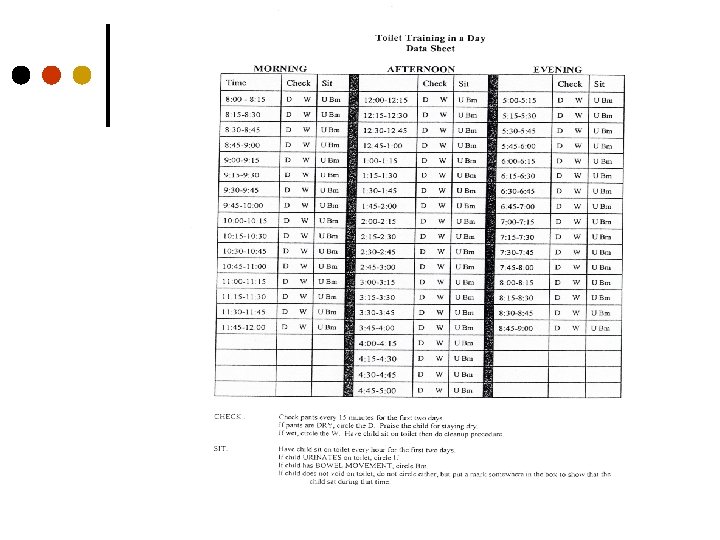
Empirically supported toilet training ¢ Toilet Training in a Day (Azrin & Foxx) l Repetition • Fluid load • Frequent toilet sits • Pants checks
Empirically supported toilet training ¢ Toilet Training in a Day (Azrin & Foxx) l Repetition • Fluid load • Frequent toilet sits • Pants checks l High Contrast • Rewards for compliance with sits, successful voiding in toilet, and dry pants • Clean-up and overcorrection for wetting
Empirically supported toilet training ¢ Toilet Training in a Day (Azrin & Foxx) l Repetition • Fluid load • Frequent toilet sits • Pants checks l High Contrast • Rewards for compliance with sits, successful voiding in toilet, and dry pants • Clean-up and overcorrection for wetting l Predictability • Consistent schedule for toilet sits/pants checks • Star chart with grab bag • Use of attention
Empirically supported toilet training Institutionalized incontinent adults ¢ Typically developing children with toileting resistance ¢ Mass audience of first-time learners ¢
Empirically supported toilet training ¢ Thinking time question #2: l What if the child refuses to sit on the toilet?
Encopresis ¢ Thinking time question #3: l What would be a good behavioral protocol for a child who is soiling daily after school?
Enuresis ¢ Thinking time question #4: l What would be a good behavioral protocol for a child who is wetting daily at daycare?
Empirically supported treatment for nocturnal enuresis Assessment ¢ Education ¢ Urine alarm ¢ Support to maintain integrity ¢
Empirically supported treatment for nocturnal enuresis Assessment ¢ Education ¢ Prevalence l Medication vs. Urine alarm l
Empirically supported treatment for nocturnal enuresis Assessment ¢ Education ¢ Urine alarm ¢ Overlearning l Dry-bed training l Arousal Training l • Reward for waking to moisture alarm
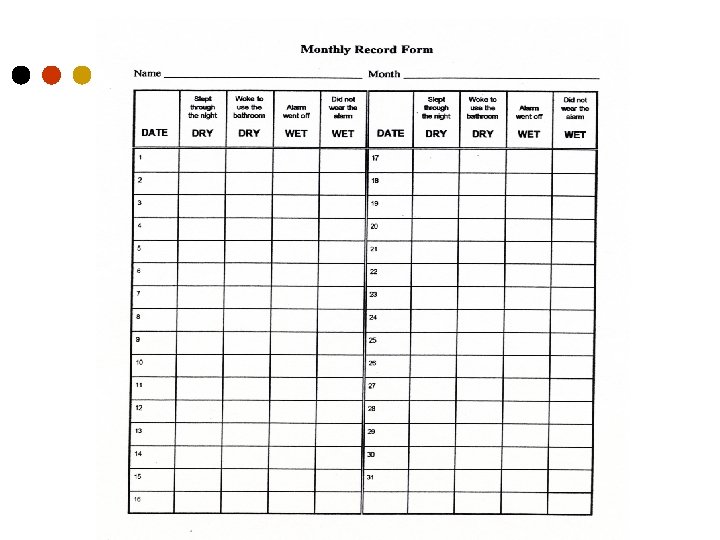
Empirically supported treatment for nocturnal enuresis Assessment ¢ Education ¢ Urine alarm ¢ Support to maintain integrity ¢
Nocturnal enuresis ¢ Thinking time question #5: What if the child won’t wake to the alarm?
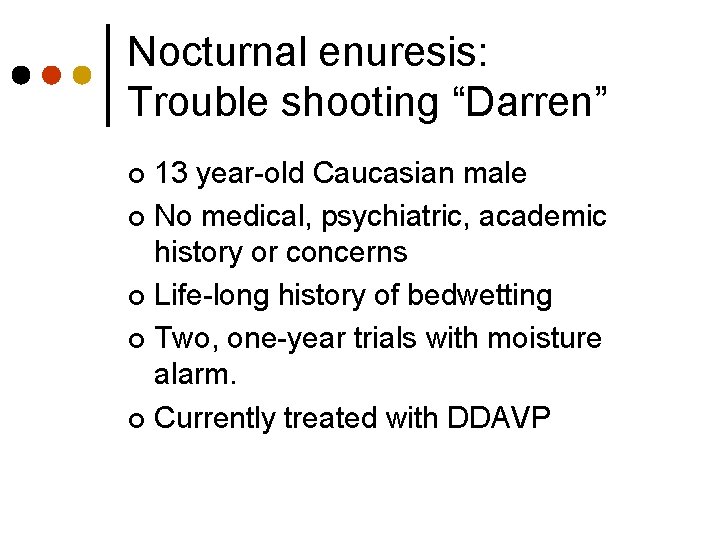
Nocturnal enuresis: Trouble shooting “Darren” 13 year-old Caucasian male ¢ No medical, psychiatric, academic history or concerns ¢ Life-long history of bedwetting ¢ Two, one-year trials with moisture alarm. ¢ Currently treated with DDAVP ¢
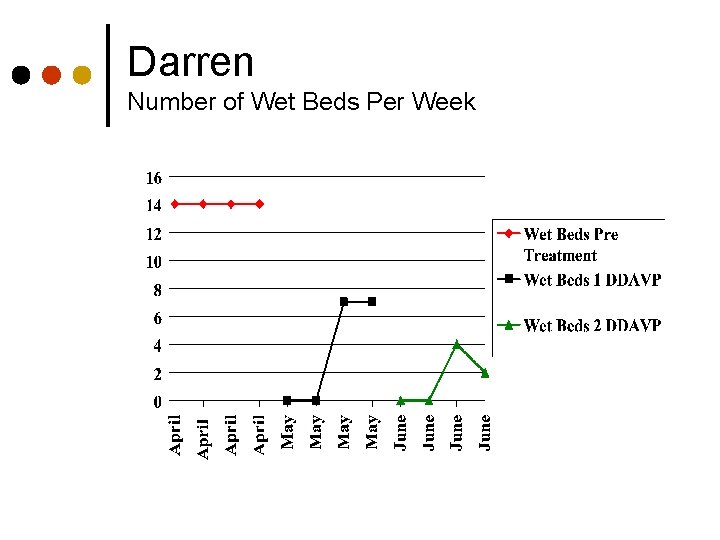
Darren Number of Wet Beds Per Week
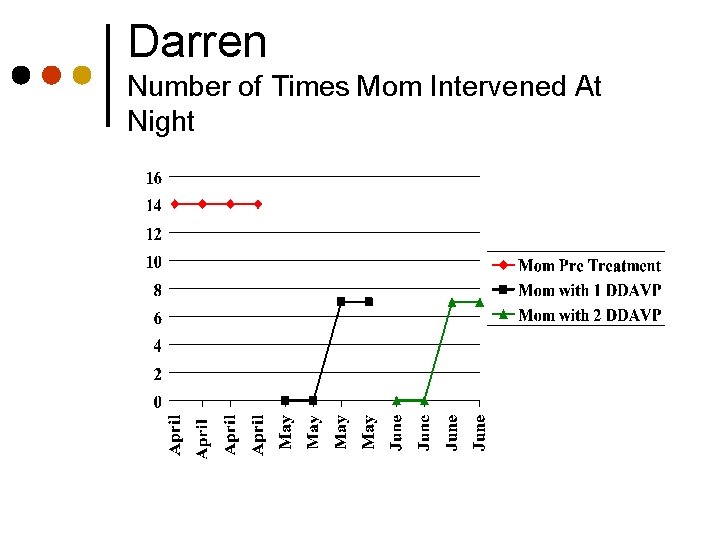
Darren Number of Times Mom Intervened At Night
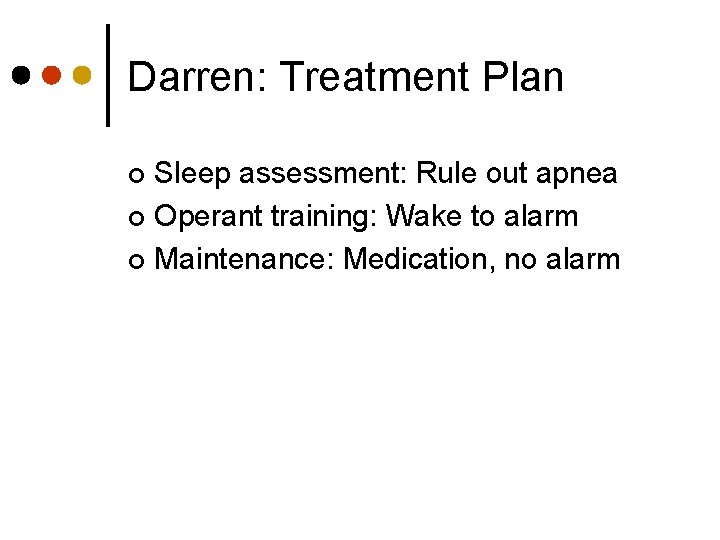
Darren: Treatment Plan Sleep assessment: Rule out apnea ¢ Operant training: Wake to alarm ¢ Maintenance: Medication, no alarm ¢
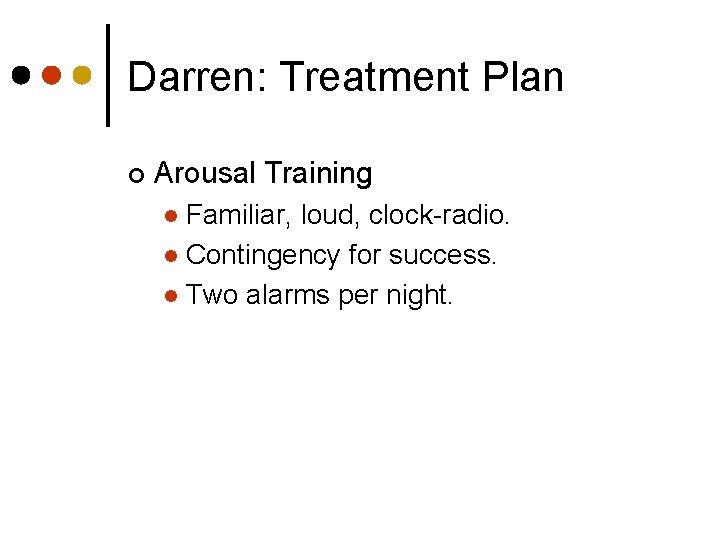
Darren: Treatment Plan ¢ Arousal Training Familiar, loud, clock-radio. l Contingency for success. l Two alarms per night. l
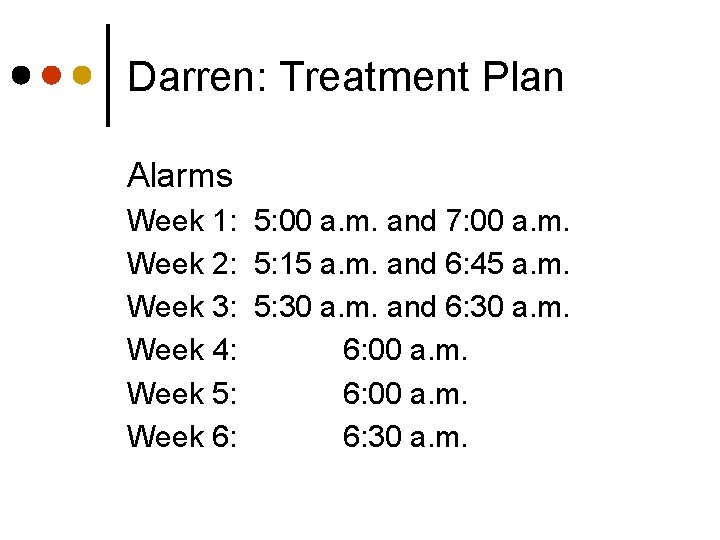
Darren: Treatment Plan Alarms Week 1: 5: 00 a. m. and 7: 00 a. m. Week 2: 5: 15 a. m. and 6: 45 a. m. Week 3: 5: 30 a. m. and 6: 30 a. m. Week 4: 6: 00 a. m. Week 5: 6: 00 a. m. Week 6: 6: 30 a. m.
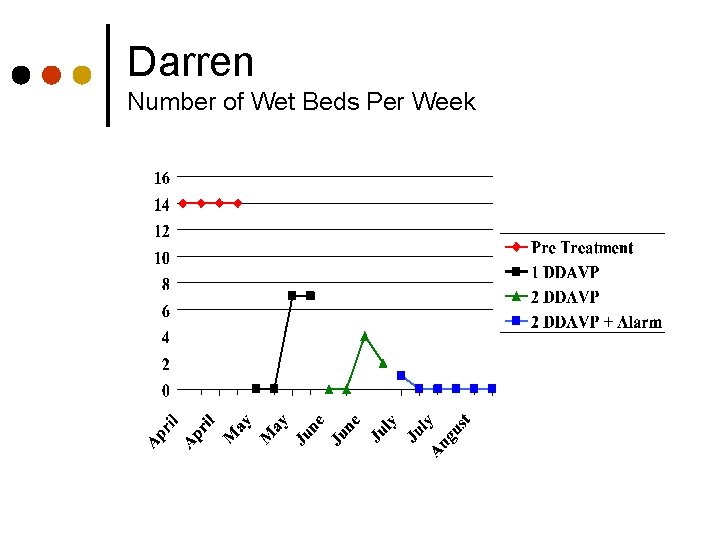
Darren Number of Wet Beds Per Week
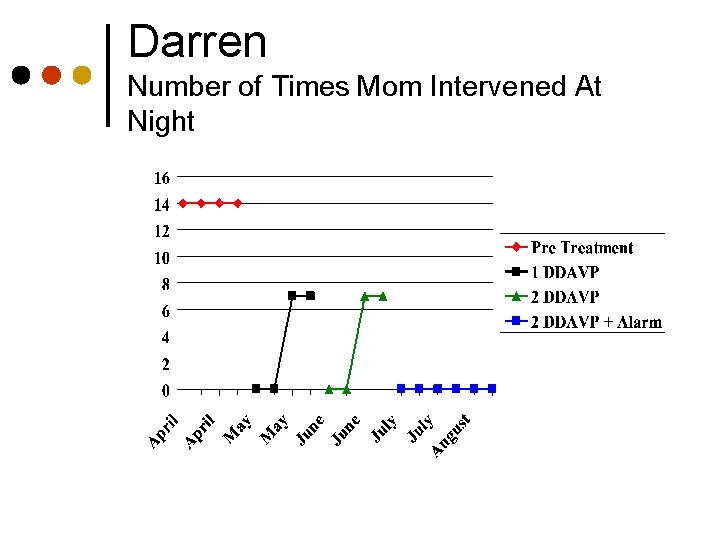
Darren Number of Times Mom Intervened At Night
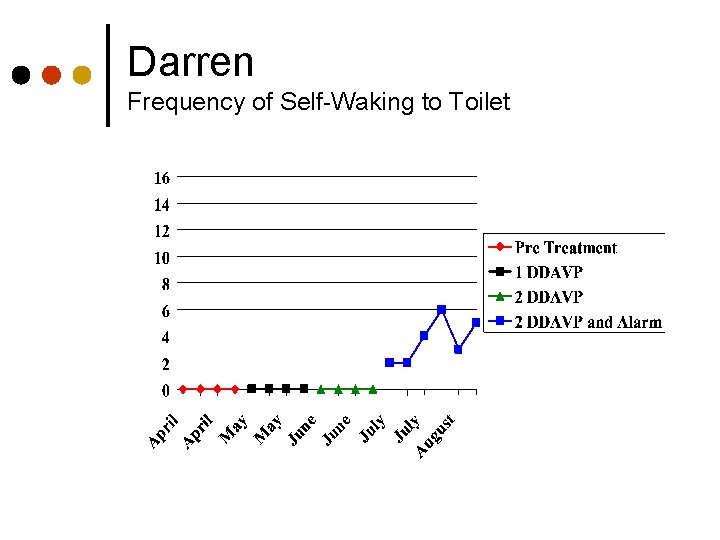
Darren Frequency of Self-Waking to Toilet
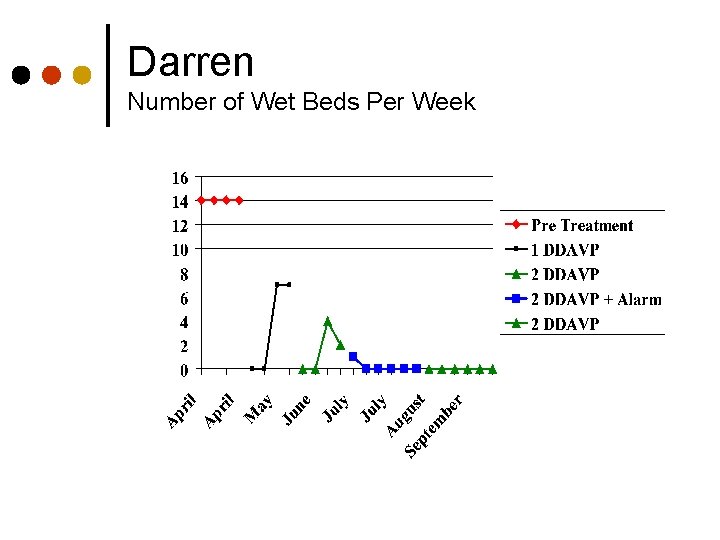
Darren Number of Wet Beds Per Week
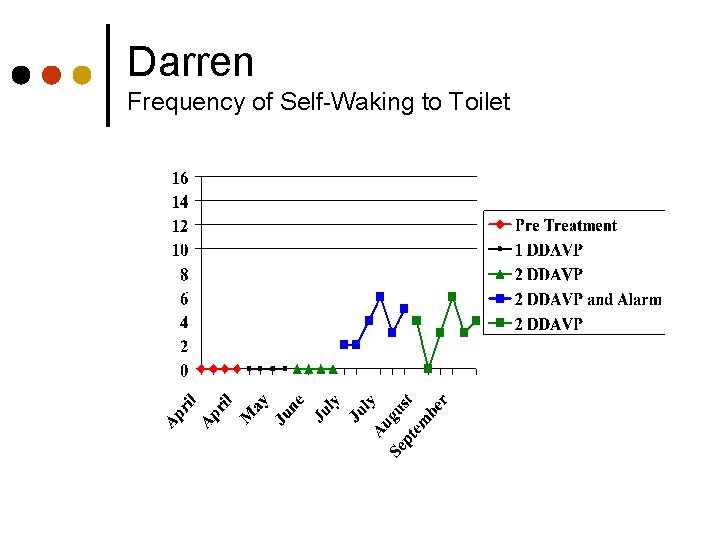
Darren Frequency of Self-Waking to Toilet
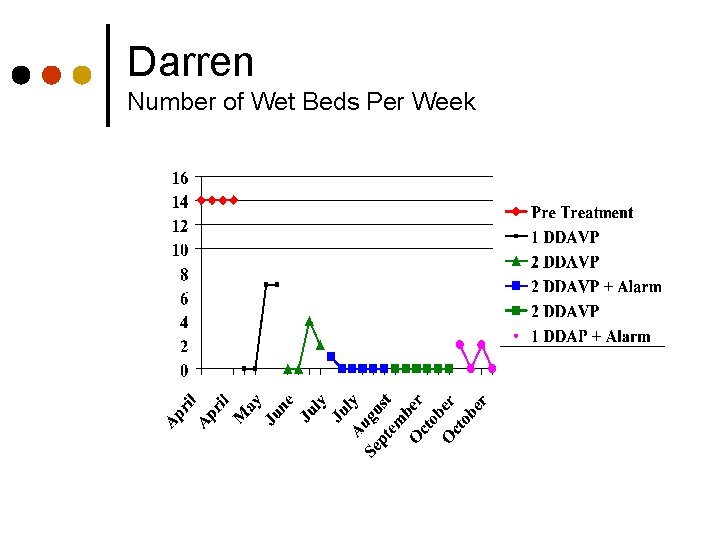
Darren Number of Wet Beds Per Week
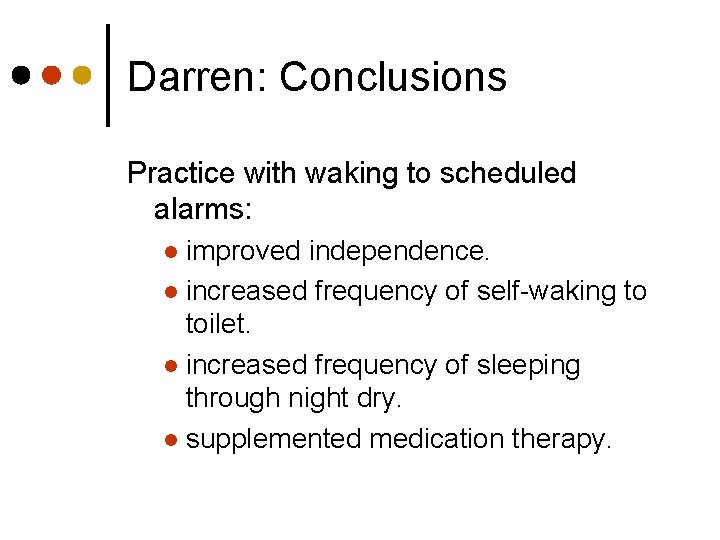
Darren: Conclusions Practice with waking to scheduled alarms: improved independence. l increased frequency of self-waking to toilet. l increased frequency of sleeping through night dry. l supplemented medication therapy. l
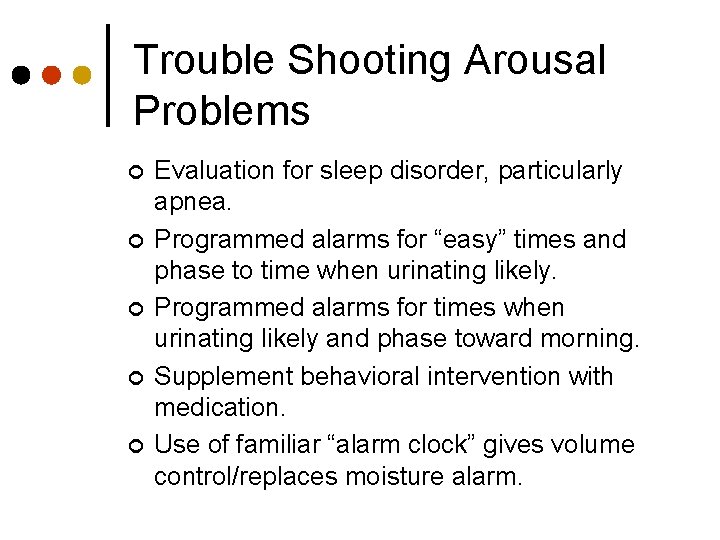
Trouble Shooting Arousal Problems ¢ ¢ ¢ Evaluation for sleep disorder, particularly apnea. Programmed alarms for “easy” times and phase to time when urinating likely. Programmed alarms for times when urinating likely and phase toward morning. Supplement behavioral intervention with medication. Use of familiar “alarm clock” gives volume control/replaces moisture alarm.
- Slides: 48