
Introduction to Basic Nutrition Concepts Learning Objectives By
Introduction to Basic Nutrition Concepts
Learning Objectives By the end of this module, participants will be able to: • Define terms nutrition, a balanced diet and nutritional status • Explain the different forms of malnutrition • Analyse the consequences and the costs of malnutrition
Definitions
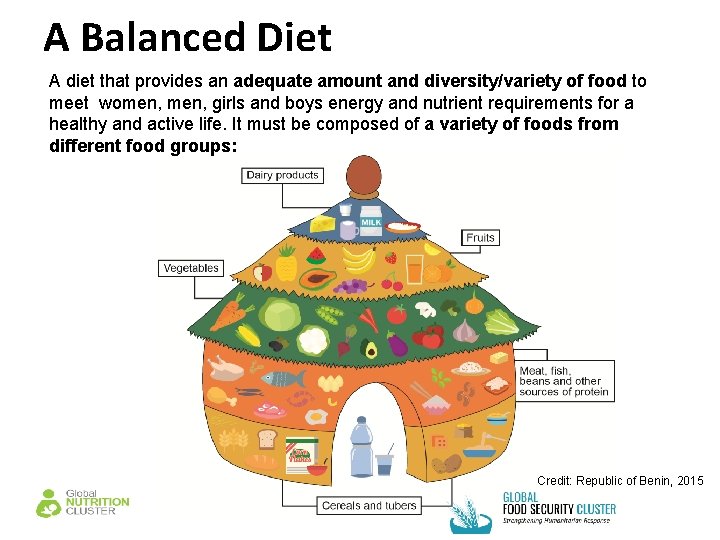
A Balanced Diet A diet that provides an adequate amount and diversity/variety of food to meet women, girls and boys energy and nutrient requirements for a healthy and active life. It must be composed of a variety of foods from different food groups: Credit: Republic of Benin, 2015
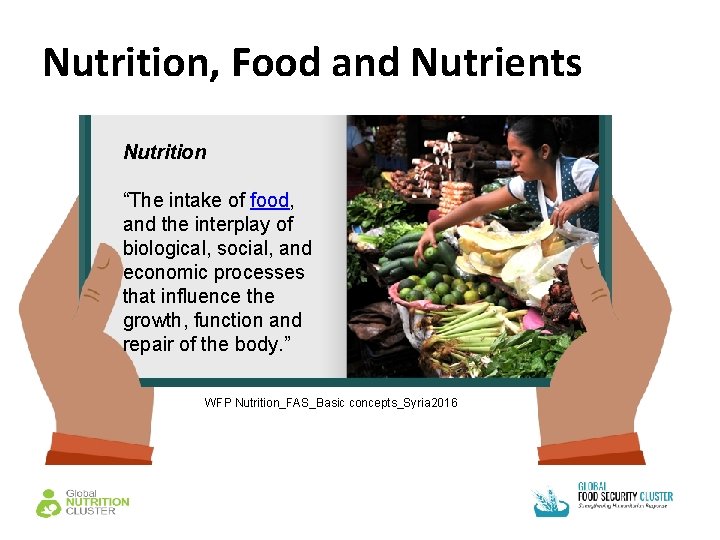
Nutrition, Food and Nutrients Nutrition “The intake of food, and the interplay of biological, social, and economic processes that influence the growth, function and repair of the body. ” WFP Nutrition_FAS_Basic concepts_Syria 2016
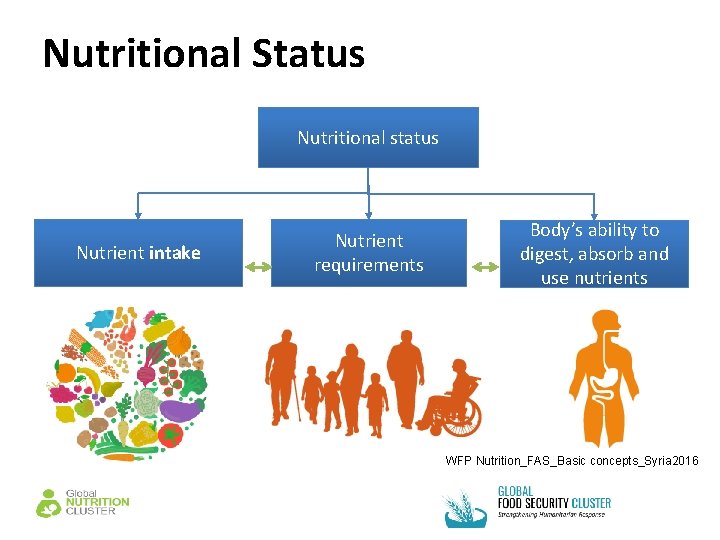
Nutritional Status Nutritional status Nutrient intake Nutrient requirements Body’s ability to digest, absorb and use nutrients WFP Nutrition_FAS_Basic concepts_Syria 2016
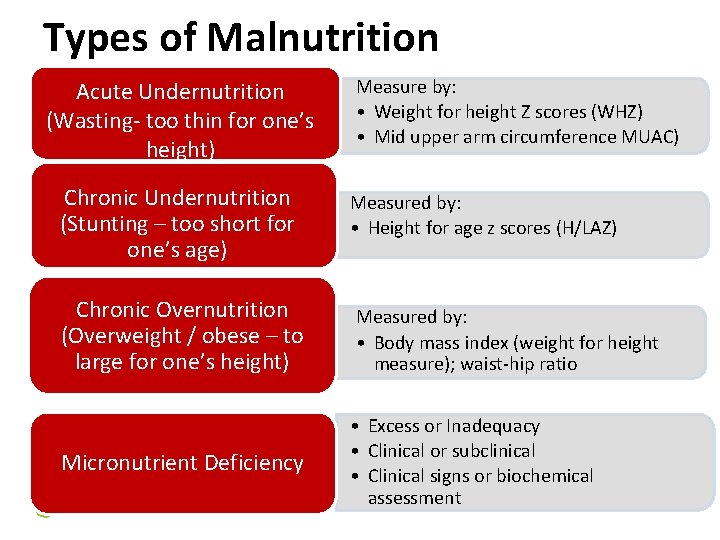
Types of Malnutrition Acute Undernutrition (Wasting- too thin for one’s height) Chronic Undernutrition (Stunting – too short for one’s age) Chronic Overnutrition (Overweight / obese – to large for one’s height) Micronutrient Deficiency Measure by: • Weight for height Z scores (WHZ) • Mid upper arm circumference MUAC) Measured by: • Height for age z scores (H/LAZ) Measured by: • Body mass index (weight for height measure); waist-hip ratio • Excess or Inadequacy • Clinical or subclinical • Clinical signs or biochemical assessment
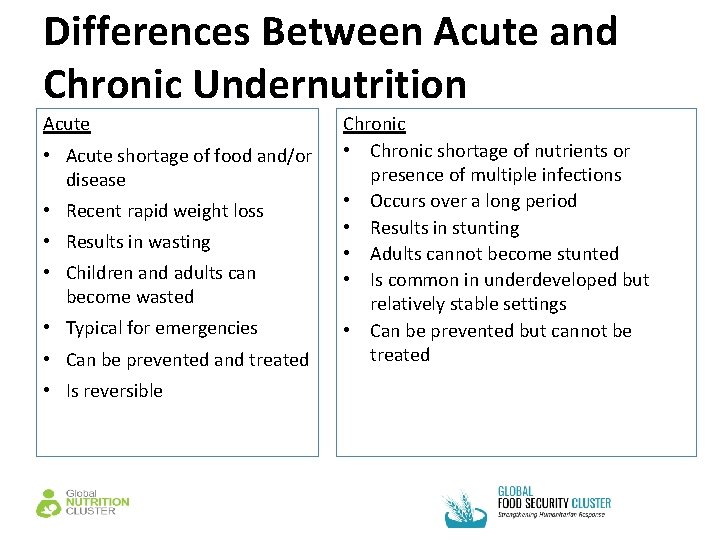
Differences Between Acute and Chronic Undernutrition Acute • Acute shortage of food and/or disease • Recent rapid weight loss • Results in wasting • Children and adults can become wasted • Typical for emergencies • Can be prevented and treated • Is reversible Chronic • Chronic shortage of nutrients or presence of multiple infections • Occurs over a long period • Results in stunting • Adults cannot become stunted • Is common in underdeveloped but relatively stable settings • Can be prevented but cannot be treated
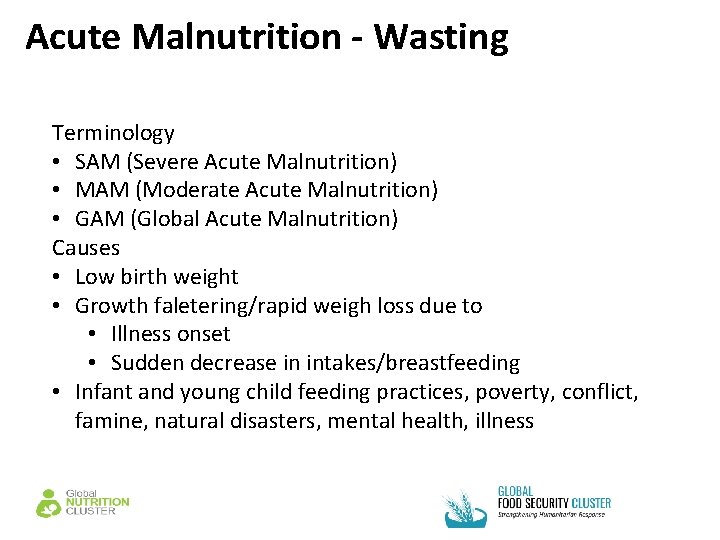
Acute Malnutrition - Wasting Terminology • SAM (Severe Acute Malnutrition) • MAM (Moderate Acute Malnutrition) • GAM (Global Acute Malnutrition) Causes • Low birth weight • Growth faletering/rapid weigh loss due to • Illness onset • Sudden decrease in intakes/breastfeeding • Infant and young child feeding practices, poverty, conflict, famine, natural disasters, mental health, illness
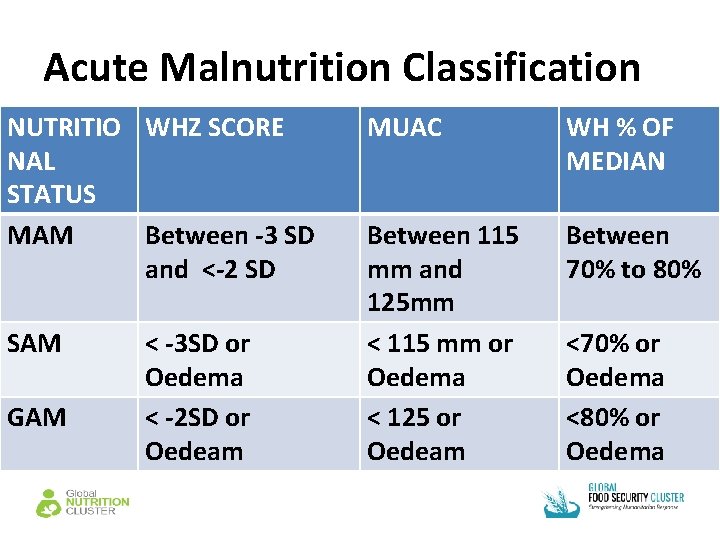
Acute Malnutrition Classification NUTRITIO WHZ SCORE NAL STATUS MAM Between -3 SD and <-2 SD SAM GAM < -3 SD or Oedema < -2 SD or Oedeam MUAC WH % OF MEDIAN Between 115 mm and 125 mm < 115 mm or Oedema < 125 or Oedeam Between 70% to 80% <70% or Oedema <80% or Oedema
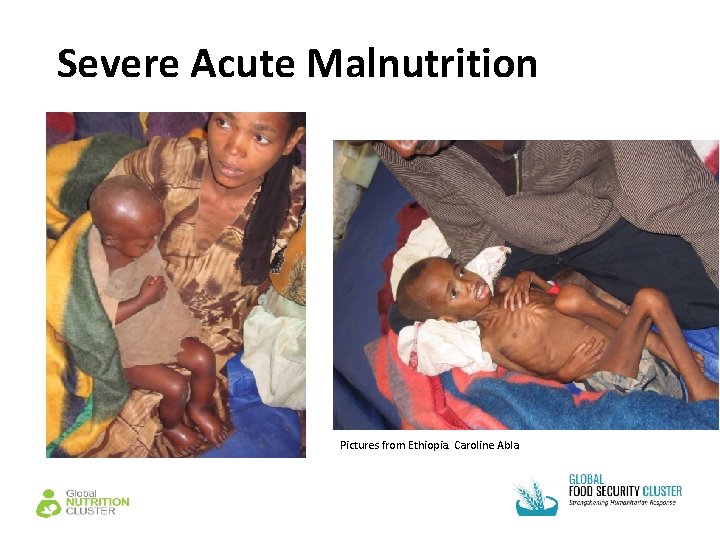
Severe Acute Malnutrition Pictures from Ethiopia. Caroline Abla
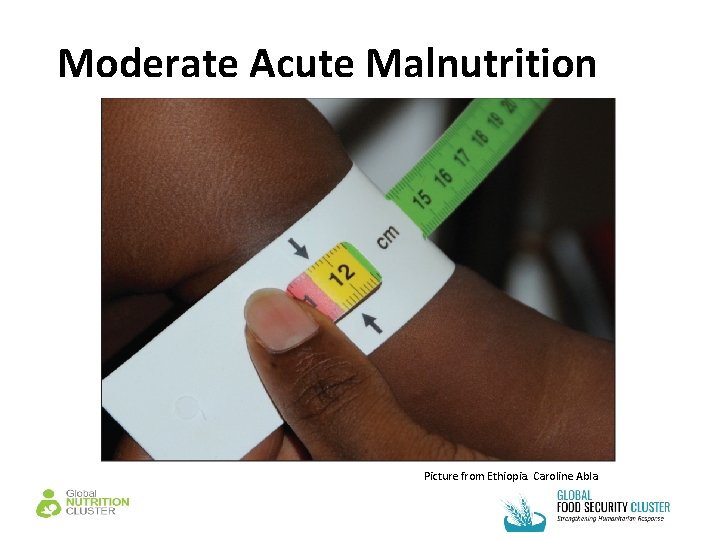
Moderate Acute Malnutrition Picture from Ethiopia. Caroline Abla
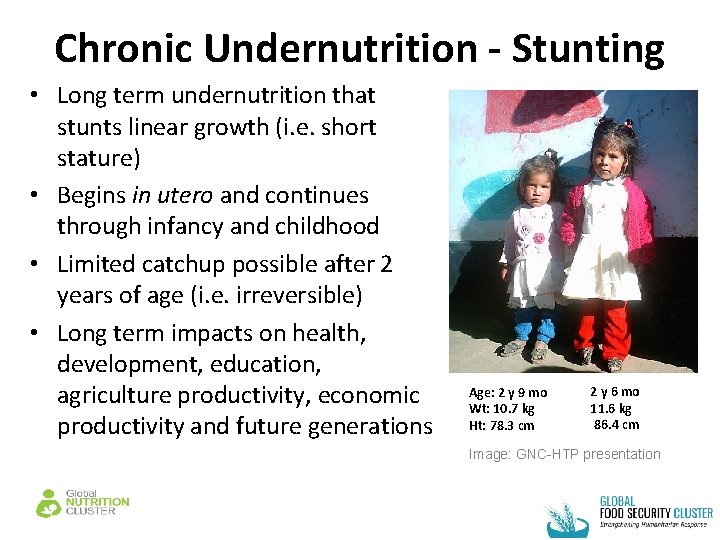
Chronic Undernutrition - Stunting • Long term undernutrition that stunts linear growth (i. e. short stature) • Begins in utero and continues through infancy and childhood • Limited catchup possible after 2 years of age (i. e. irreversible) • Long term impacts on health, development, education, agriculture productivity, economic productivity and future generations Age: 2 y 9 mo Wt: 10. 7 kg Ht: 78. 3 cm 2 y 6 mo 11. 6 kg 86. 4 cm Image: GNC-HTP presentation

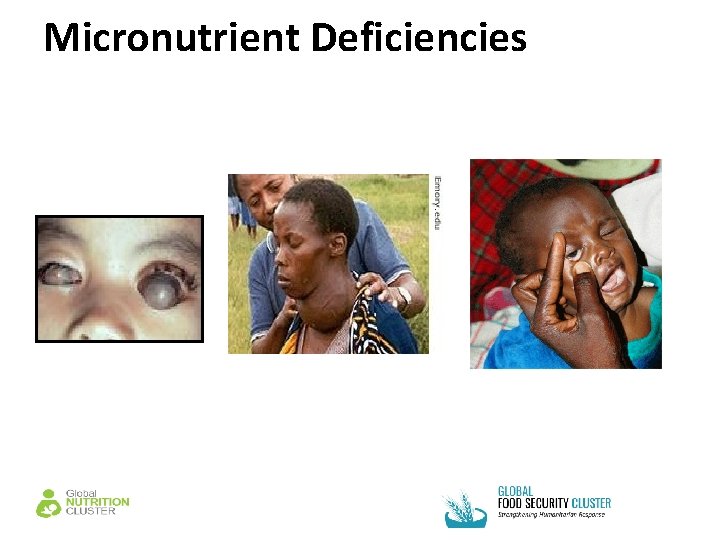
Micronutrient Deficiencies
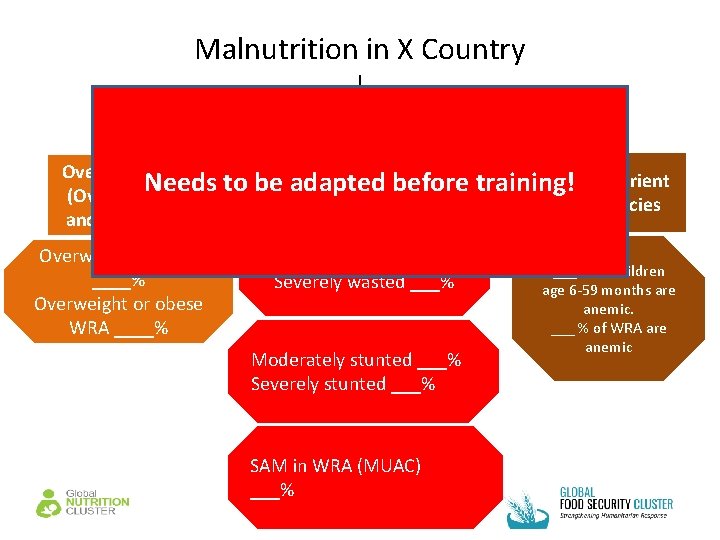
Malnutrition in X Country Overnutrition Needs (Overweight and Obesity) Overweight in <5 yo ____% Overweight or obese WRA ____% to be Undernutrition (Stunting and adapted before Wasting in <5 yo) Moderately wasted ___% Severely wasted ___% Moderately stunted ___% Severely stunted ___% SAM in WRA (MUAC) ___% Micronutrient training! Deficiencies ___ % of children age 6 -59 months are anemic. ___ % of WRA are anemic
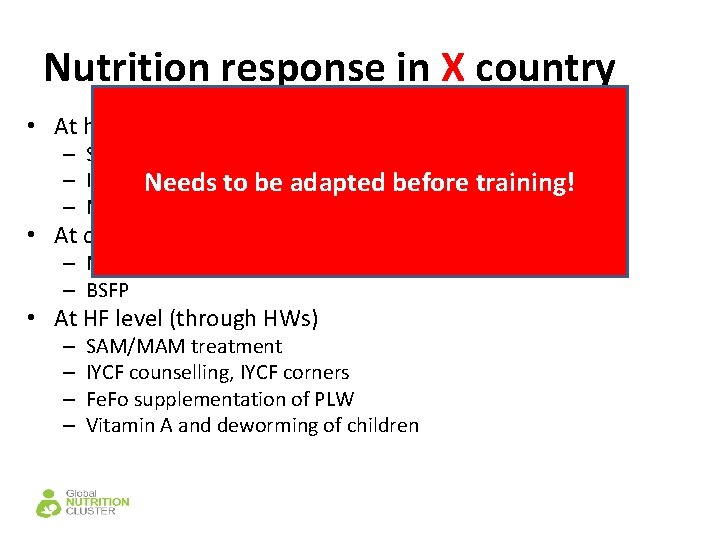
Nutrition response in X country • At household level (through CHVs) – Screening and referral of children and PLW with AM – IYCF counselling Needs to be adapted before training! – MNPs distribution • At community level – Mother to mother support groups with CHVs support – BSFP • At HF level (through HWs) – – SAM/MAM treatment IYCF counselling, IYCF corners Fe. Fo supplementation of PLW Vitamin A and deworming of children
Inadequate care for children and women in X country • • Exclusive breastfeeding under 6 months Needs to be adapted before training! Continued breastfeeding at 1 year Continued breastfeeding at 2 years Introduction of solid, semi-solid or soft foods by 6 months of age
Determinants/Causes, Consequences and Costs of Malnutrition
Exercise: Case Study • What you think the causes of Amina’s malnutrition are? Can you see any different levels in these causes, from more to less direct? • How do they compare to the causes of malnutrition in the country you are working in?
UNICEF Malnutrition Conceptual Framework
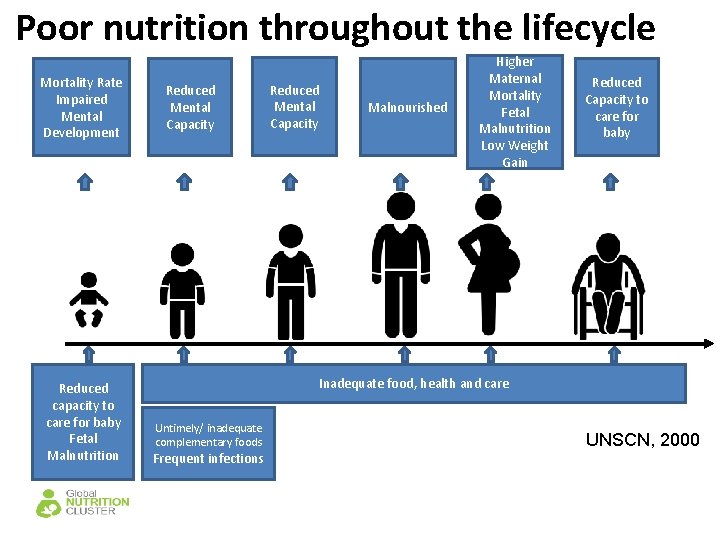
Poor nutrition throughout the lifecycle Mortality Rate Impaired Mental Development Reduced capacity to care for baby Fetal Malnutrition Reduced Mental Capacity Malnourished Higher Maternal Mortality Fetal Malnutrition Low Weight Gain Reduced Capacity to care for baby Inadequate food, health and care Untimely/ inadequate complementary foods Frequent infections UNSCN, 2000
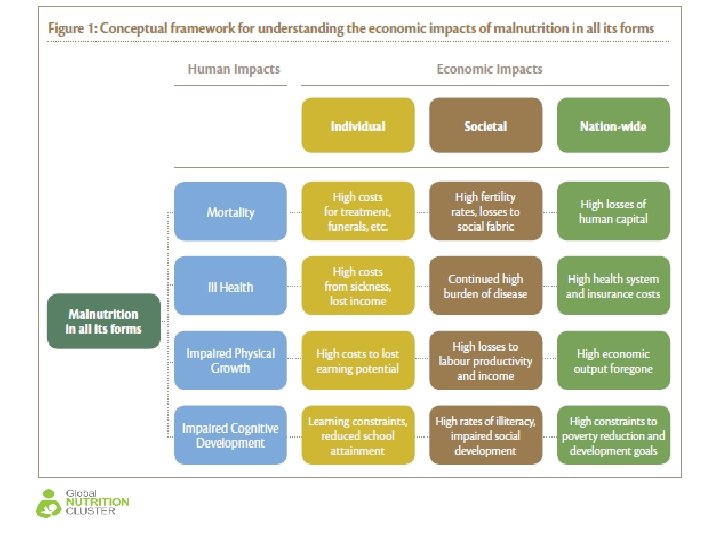
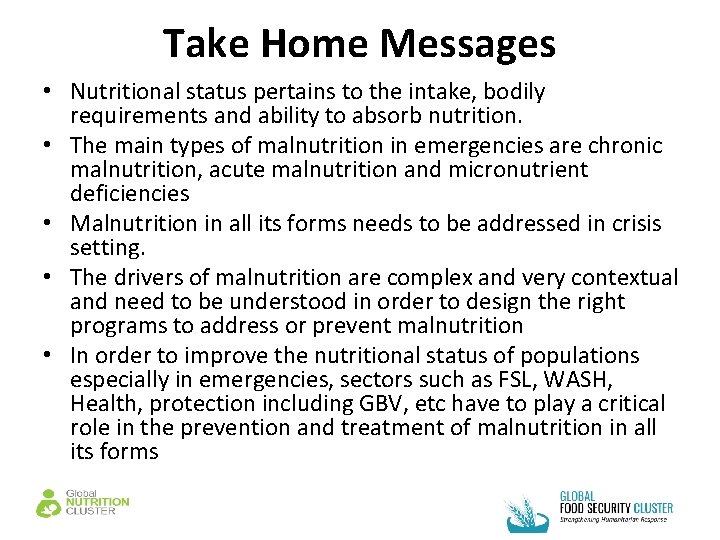
Take Home Messages • Nutritional status pertains to the intake, bodily requirements and ability to absorb nutrition. • The main types of malnutrition in emergencies are chronic malnutrition, acute malnutrition and micronutrient deficiencies • Malnutrition in all its forms needs to be addressed in crisis setting. • The drivers of malnutrition are complex and very contextual and need to be understood in order to design the right programs to address or prevent malnutrition • In order to improve the nutritional status of populations especially in emergencies, sectors such as FSL, WASH, Health, protection including GBV, etc have to play a critical role in the prevention and treatment of malnutrition in all its forms
Acknowledgements This training package was developed by the Intercluster Nutrition Working Group This training package was funded by This training package was developed with the technical support of
- Slides: 25