
Introduction to Automobile Types of vehicle bodies Vehicle
Introduction to Automobile Types of vehicle bodies
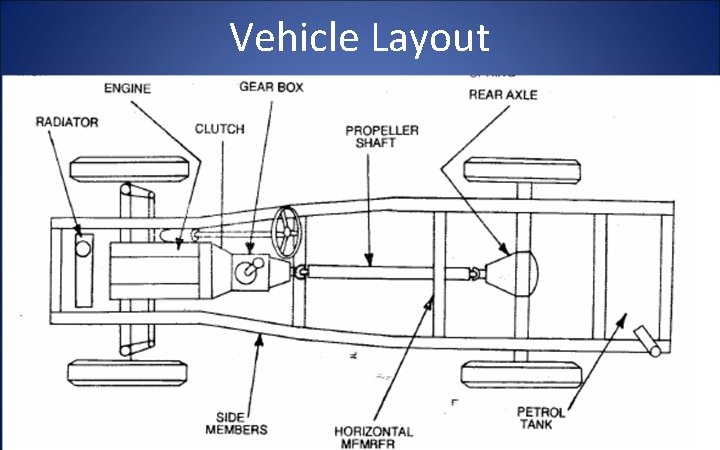
Vehicle Layout
2. Suspension System • The objects of the suspension are: – To prevent the road shocks from being transmitted to the vehicle components – To safeguard the occupants from road shocks – To preserve the stability of the vehicle while in motion
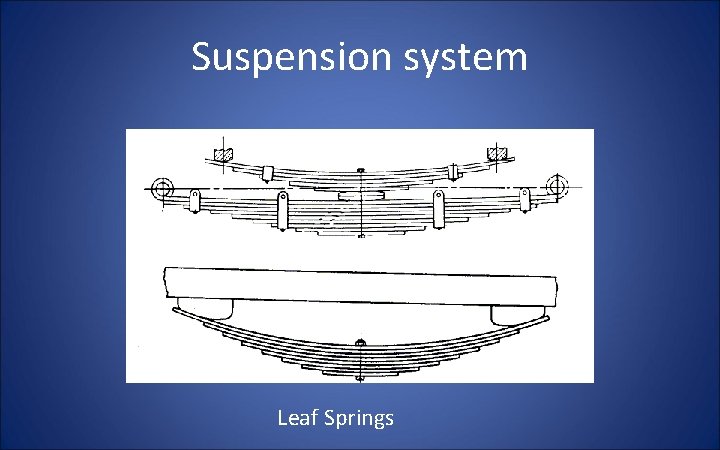
Suspension system Leaf Springs
Suspension system • There are two distinct types of suspension systems: – The conventional system, in which the road springs are attached to a rigid beam axle. – The independent system, in which there is no rigid axle beam and each wheel is free to move vertically
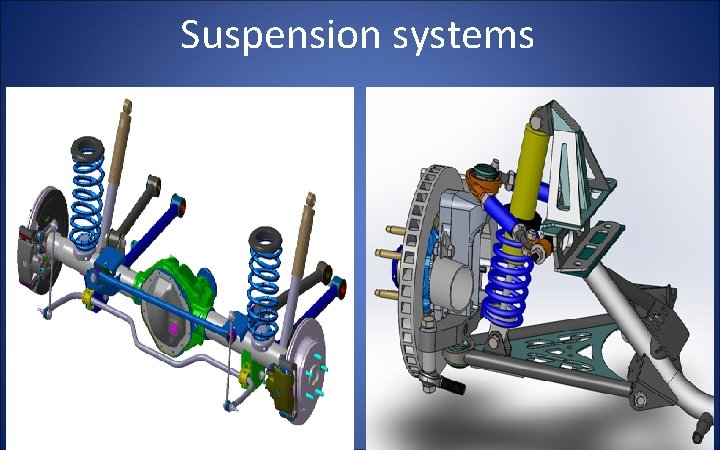
Suspension systems
3. Axles • It is the wait carrying members, may be on the rear or front, are beams supported at ends. • Axles are subjects to different kinds of loads: – Vertical load due to self weight – A fore and aft load due to driving and braking – Torque reactions due to drive and brake – Side thrust due to centrifugal force during conference
Axles • There are three different types live rear axles a) Fully floating type b) Three quarter floating type c) Semi-floating type
4. Wheels • Different types of wheels have been used in automobiles over generations according to the requirement Ø Wire-spoked wheels Ø Pressed steel wheels Ø Light alloy wheels
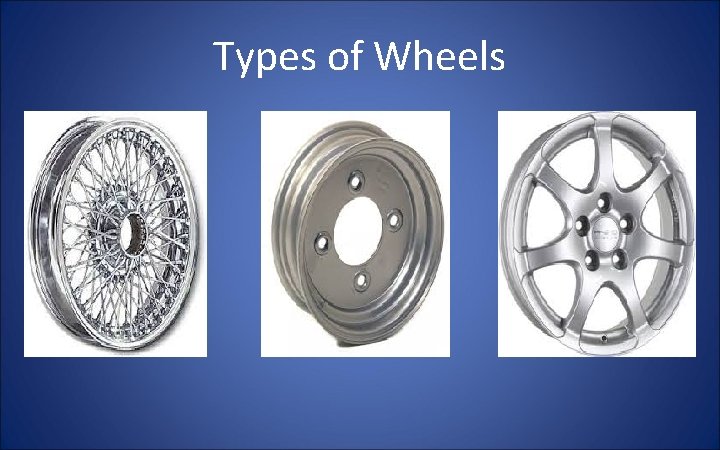
Types of Wheels
Classification Automobiles can be classified in different in ways according to: 1. Use i. iii. iv. Mopeds Motor cycles, scooters Cars, jeeps Buses and trucks
Classifications 2. Capacity i. Heavy transport ii. Light weight transport 3. Make and model i. Honda, Bajaj, TVS, etc. ii. Maruti Suzuki, Tata, Mahindra etc. iii. BMW, Audi, Ford, Mitsubishi etc.
Classifications 4. Fuel Used i. Petrol vehicles ii. Diesel vehicles 5. Body style i. Closed cars e. g. , sedan, coupe etc. ii. Open cars e. g. , convertible iii. Special styles e. g. , estate cars, station wagons etc.
Classifications 6. Transmission i. Manual ii. Semi-automatic iii. Fully-automatic iv. Continuously variable transmission v. Automated manual
Car Body Styles I. Closed cars: a. Sedan – has two or four doors, single compartment with two rows of seats. b. Hatchback – A sedan with a door at the back c. Coupe – only one row of seats for two persons. Only two doors are provided.
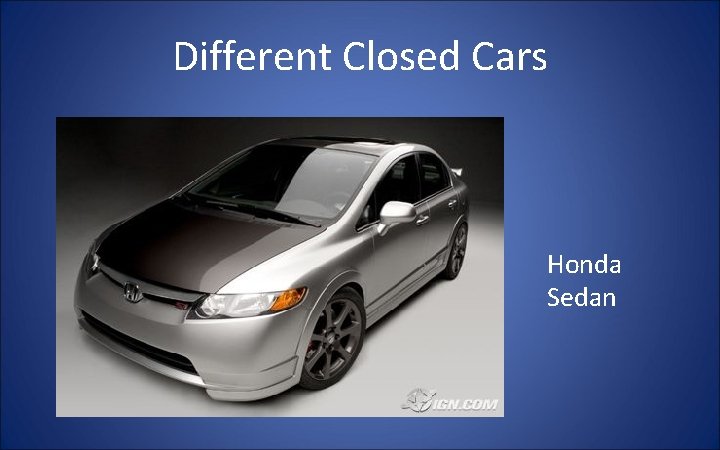
Different Closed Cars Honda Sedan
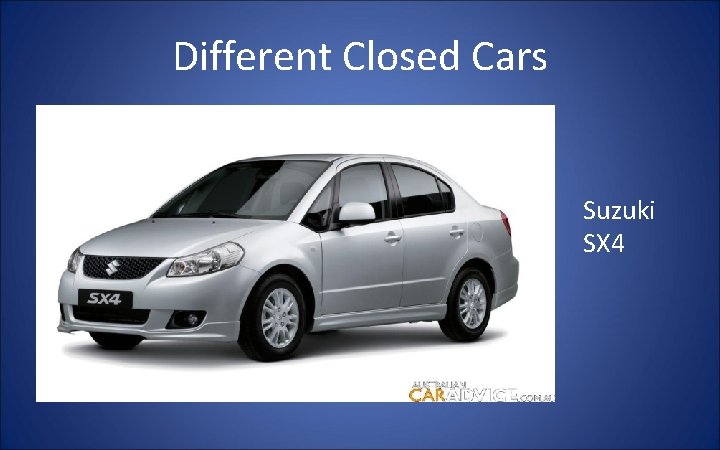
Different Closed Cars Suzuki SX 4
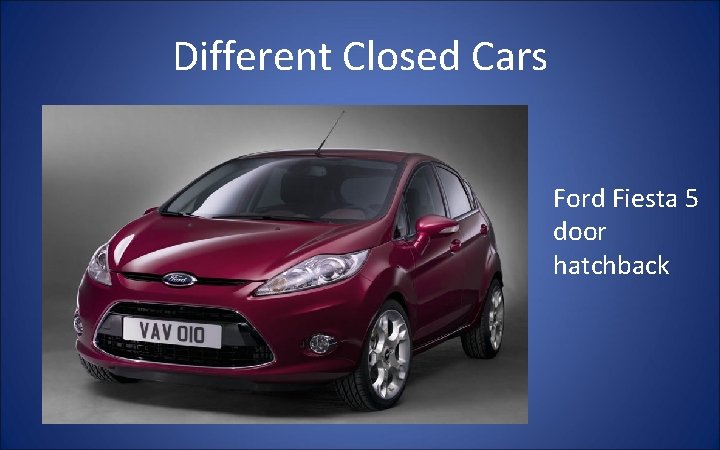
Different Closed Cars Ford Fiesta 5 door hatchback
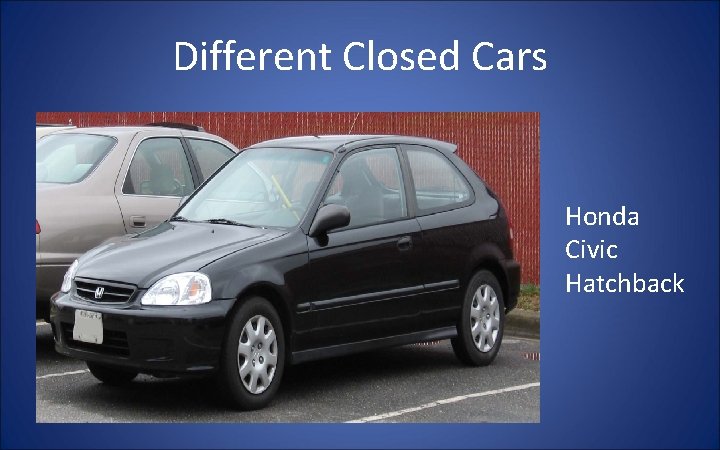
Different Closed Cars Honda Civic Hatchback
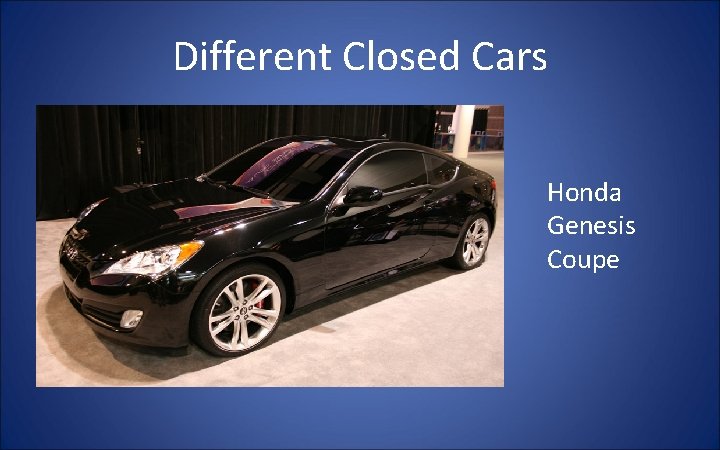
Different Closed Cars Honda Genesis Coupe
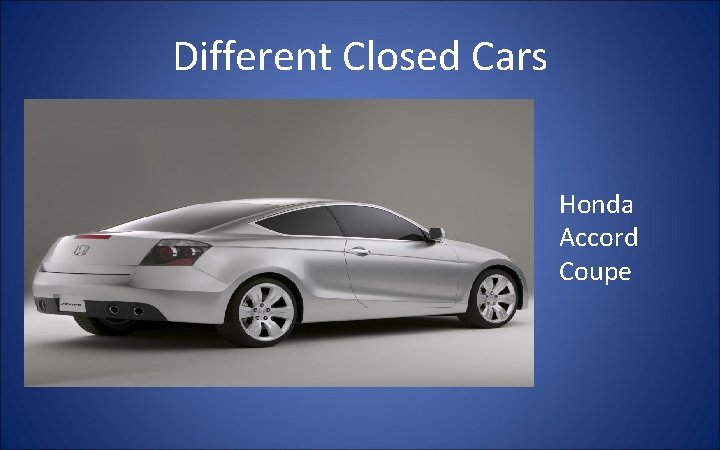
Different Closed Cars Honda Accord Coupe
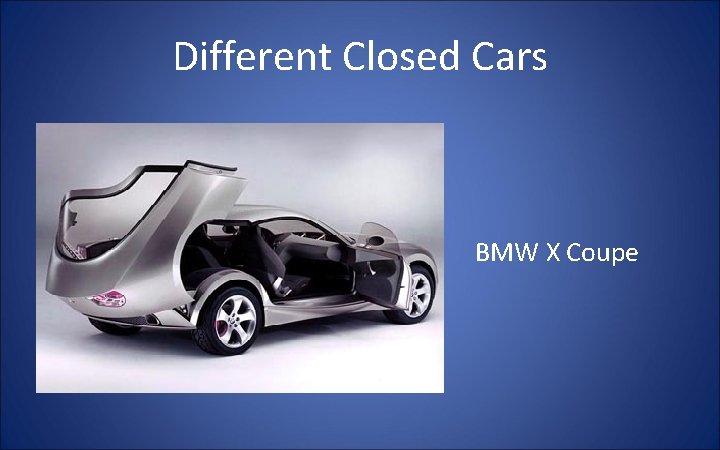
Different Closed Cars BMW X Coupe
Car Body Styles II. Open cars a) Sports – Has two doors or less, provided with a collapsible hood, a fold-flat windscreen and removable side-screen. b) Convertible – Roof in this is of folding type. So the car roof can be closed or opened.
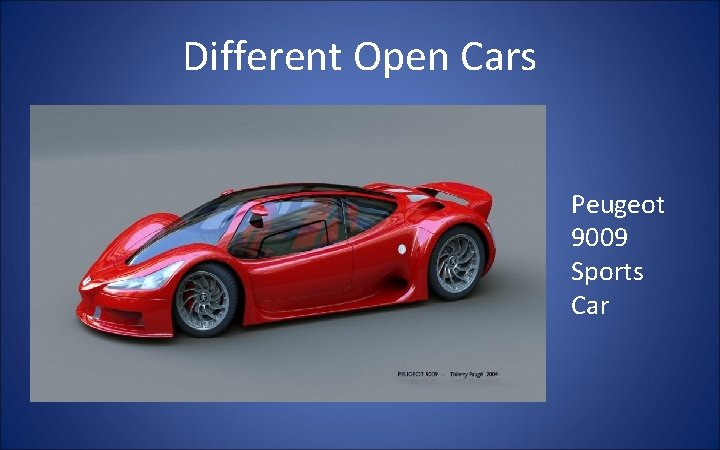
Different Open Cars Peugeot 9009 Sports Car
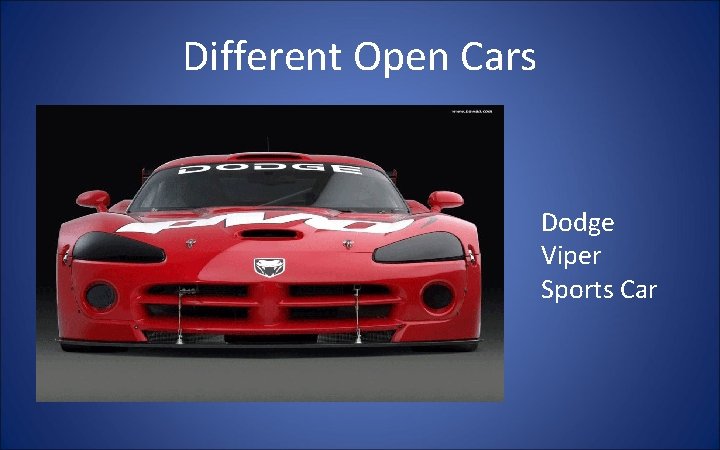
Different Open Cars Dodge Viper Sports Car
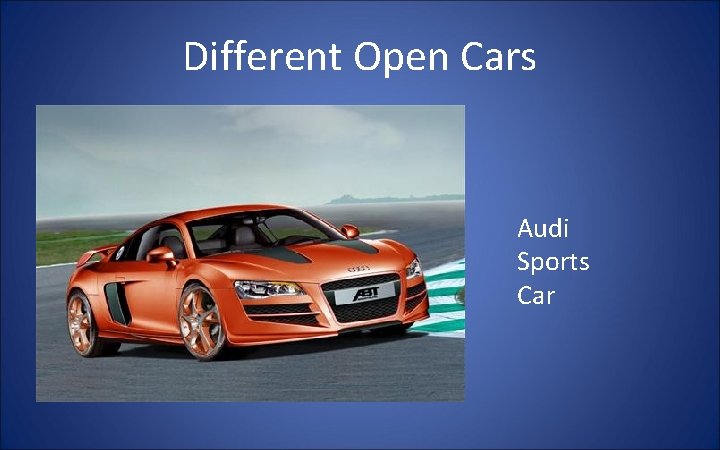
Different Open Cars Audi Sports Car
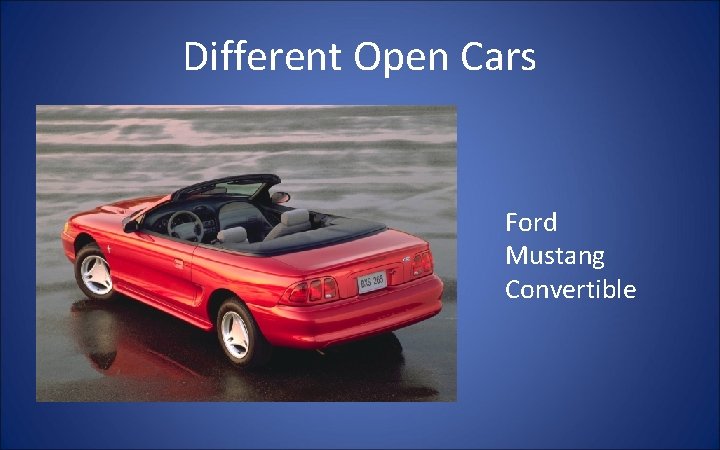
Different Open Cars Ford Mustang Convertible
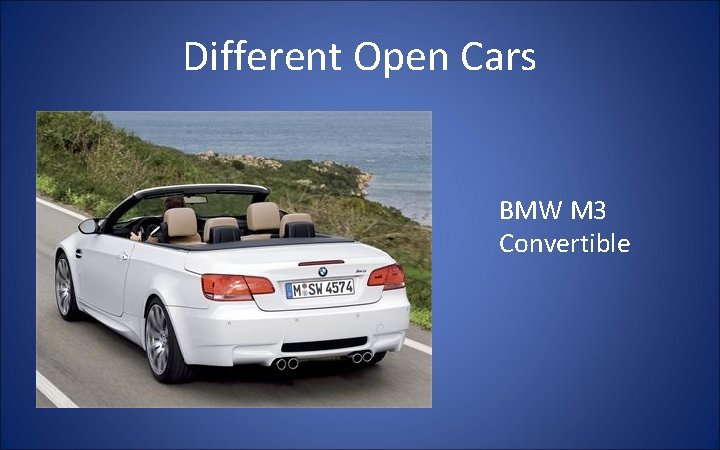
Different Open Cars BMW M 3 Convertible
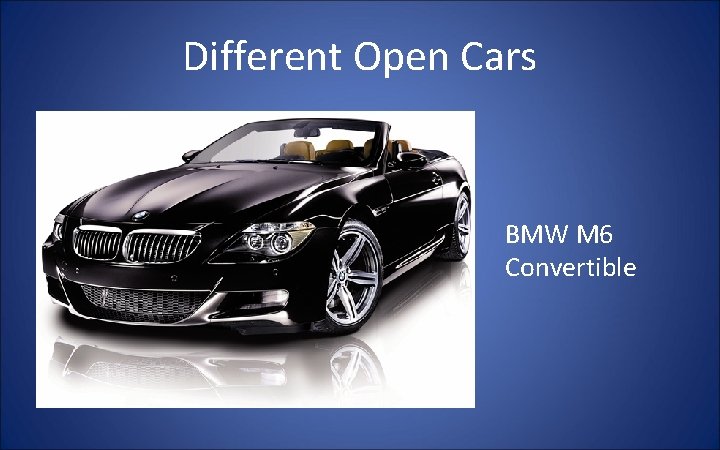
Different Open Cars BMW M 6 Convertible
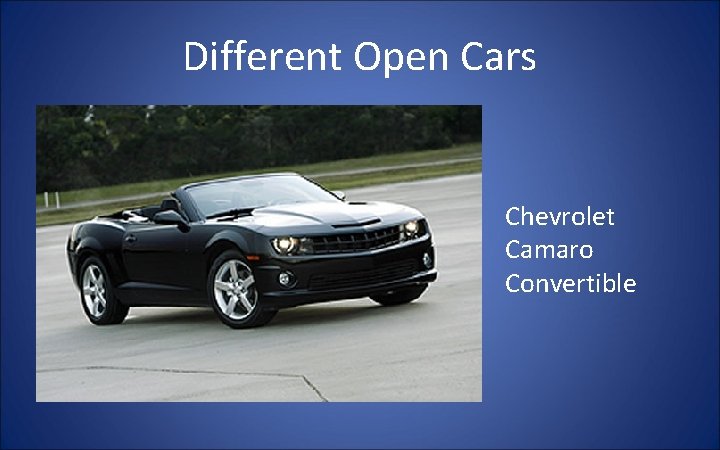
Different Open Cars Chevrolet Camaro Convertible
Car Body Styles III. Special styles a) Estate car – A sedan with the passenger roof extended up to rear end. Rear seats are usually collapsible for loading. b) Station wagon – Rear doors and four or five person seating capacity.
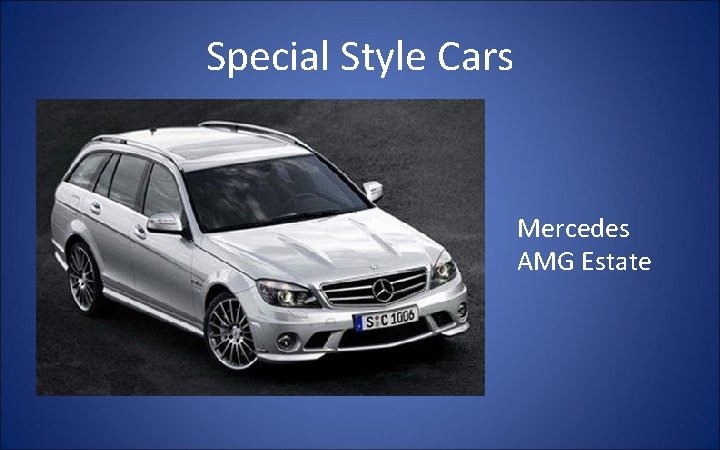
Special Style Cars Mercedes AMG Estate
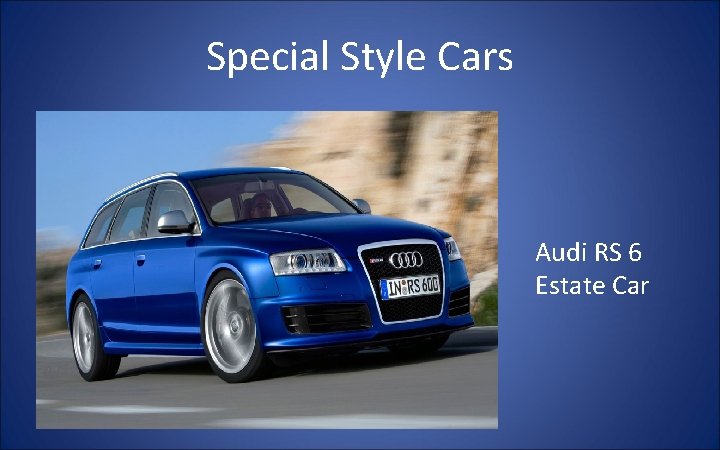
Special Style Cars Audi RS 6 Estate Car
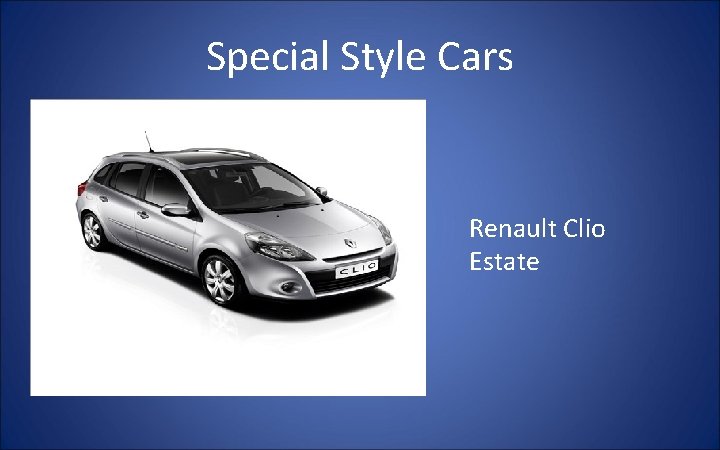
Special Style Cars Renault Clio Estate
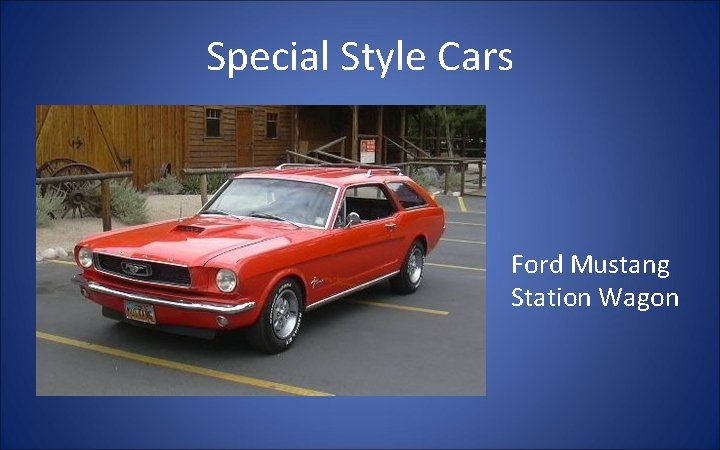
Special Style Cars Ford Mustang Station Wagon
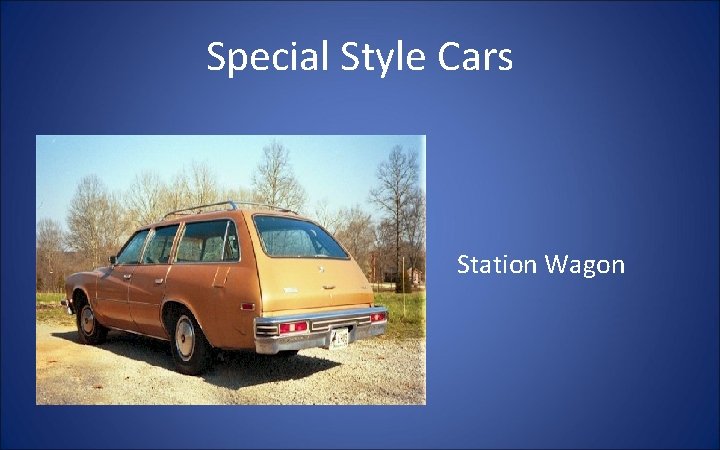
Special Style Cars Station Wagon
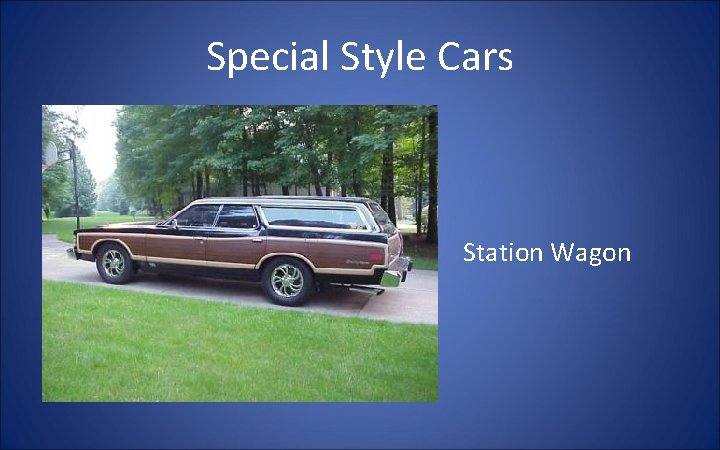
Special Style Cars Station Wagon
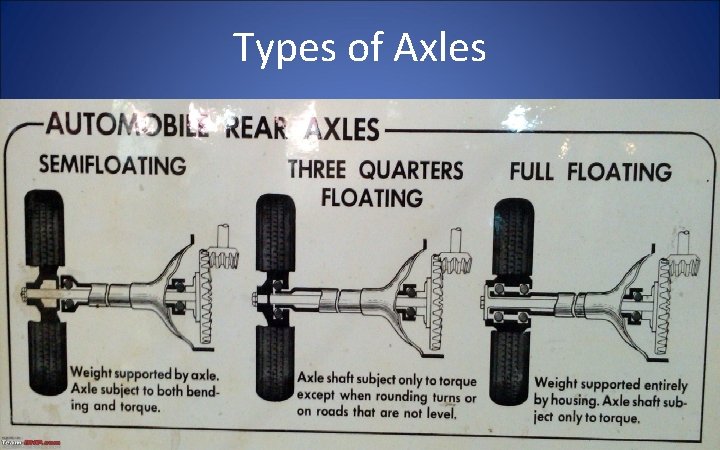
Types of Axles

Thank You
- Slides: 39