
Introduction to Atomic Models Diagramming the Atom http
- Slides: 5
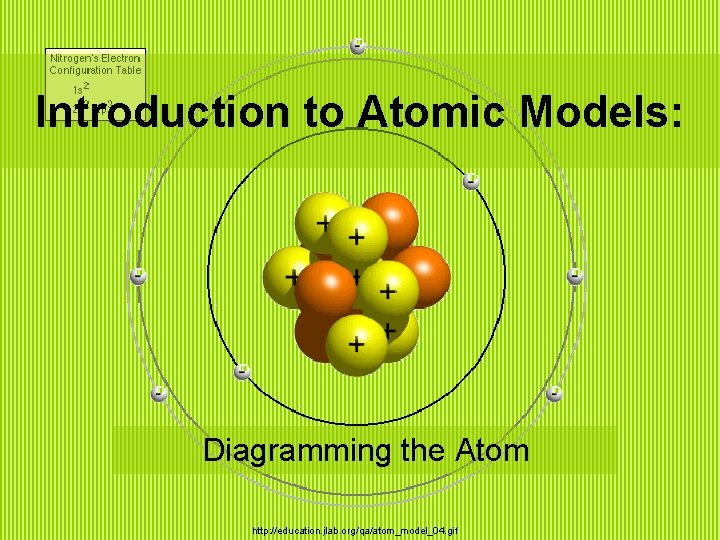
Introduction to Atomic Models: Diagramming the Atom http: //education. jlab. org/qa/atom_model_04. gif
Advantages of the Atomic Diagram: • 2 Dimensional – can easily show on a piece of paper • Electron energy levels can be shown with rings – closer to nucleus means lower energy electrons • Conventionally (traditionally) used – so understood worldwide • Easily identifies an atom by clearly showing protons, neutrons & electrons
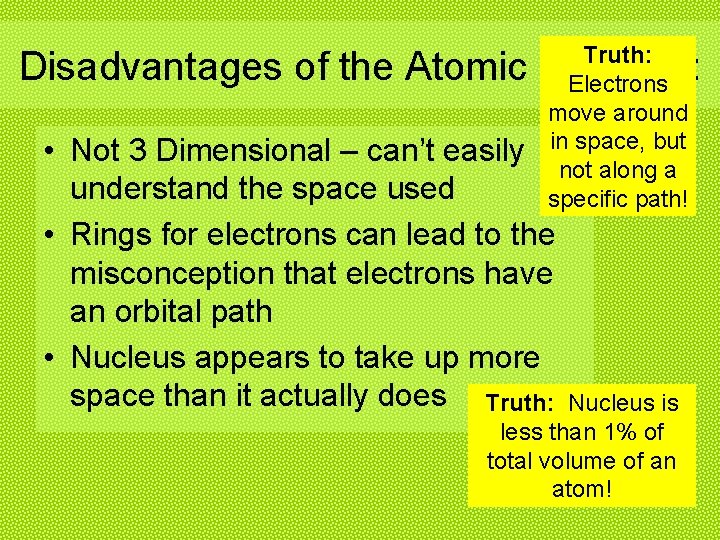
Truth: Electrons move around in space, but not along a specific path! Disadvantages of the Atomic Diagram: • Not 3 Dimensional – can’t easily understand the space used • Rings for electrons can lead to the misconception that electrons have an orbital path • Nucleus appears to take up more space than it actually does Truth: Nucleus is less than 1% of total volume of an atom!
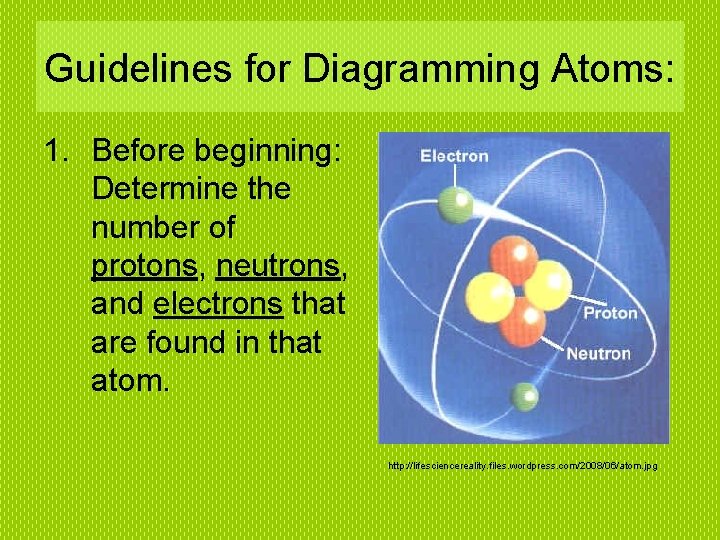
Guidelines for Diagramming Atoms: 1. Before beginning: Determine the number of protons, neutrons, and electrons that are found in that atom. http: //lifesciencereality. files. wordpress. com/2008/06/atom. jpg
2. “Rules” about electron energy levels: a. Lowest electron energy level is closest to the nucleus. b. Electron energy level increases moving away from the nucleus. c. Electron energy levels can only hold a certain number of electrons. d. Sometimes, electron energy levels can overlap. e. Electron energy levels fill up starting with the lowest energy level first.