
INTRODUCTION TO ARCHAEA WHAT DO BACTERIA EAT FOR
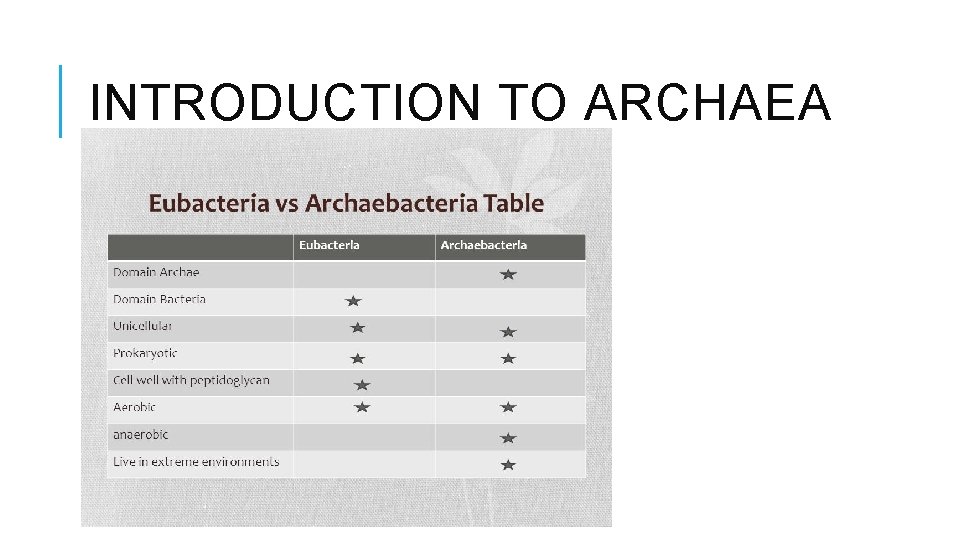
INTRODUCTION TO ARCHAEA
WHAT DO BACTERIA EAT FOR FOOD? Most bacteria depend on outside source of organic compounds to feed on Either aerobic (depend on oxygen to use this energy) or anaerobic (does not require oxygen) Some can photosynthesize: using the energy from the sun to make food Cyanobacteria

COMMON ARCHAEA Thermoacidophiles: able to live in extreme temperatures / p. H environments Methanogens: anaerobic environments Found in swamps, lake sediments, hot springs, guts of animals Halophiles: salty environments
STAINING CHARACTERISTICS Gram positive: thick polysaccharide cell wall Gram negative: protein or glycoprotein surface layer Archaea have a special cell membrane (lipid bilayer with branched side chains) This makes them tolerant to acid & heat
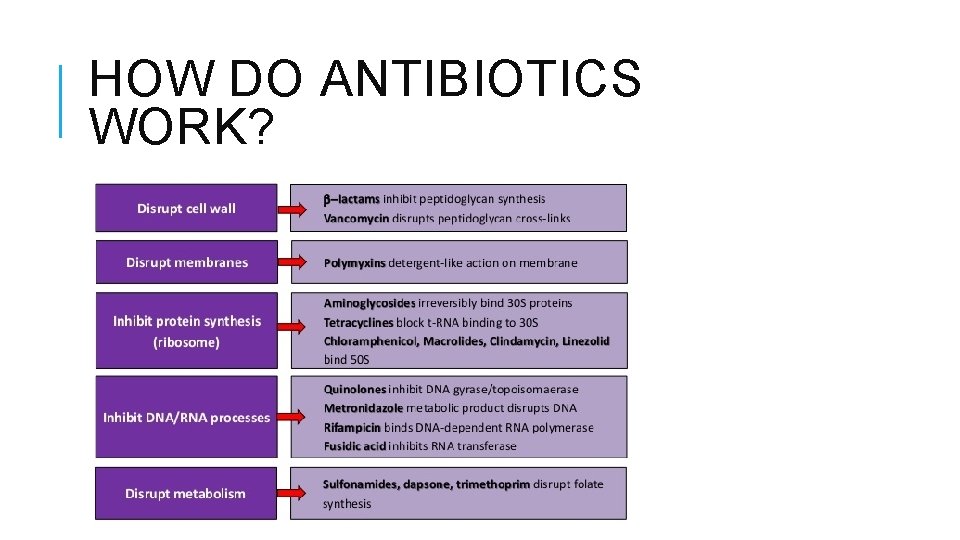
HOW DO ANTIBIOTICS WORK?
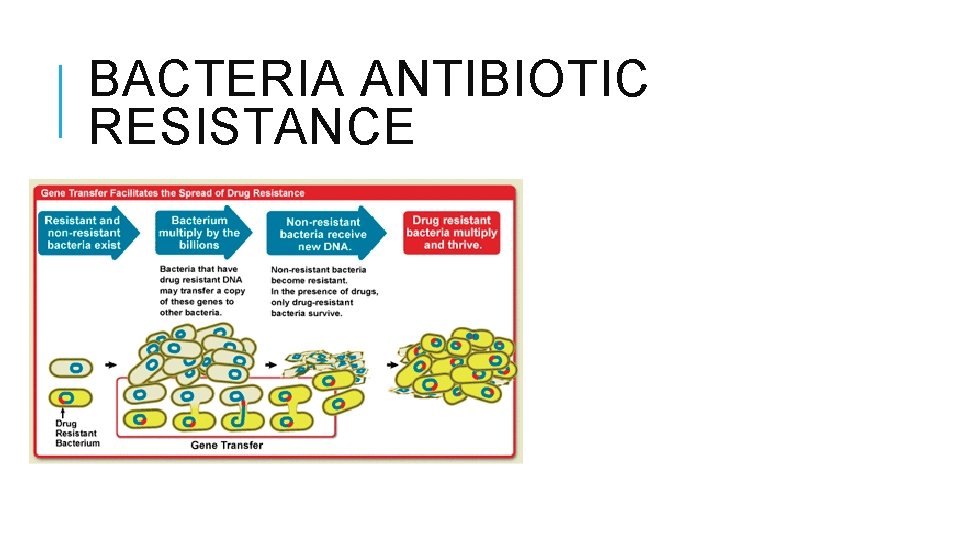
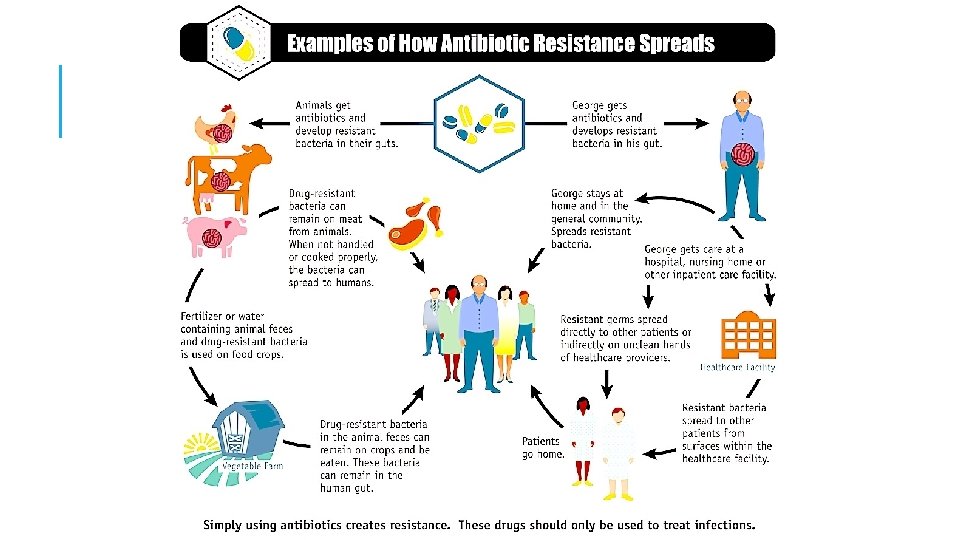
BACTERIA ANTIBIOTIC RESISTANCE

WHAT ABOUT DISINFECTANTS & ANTISEPTICS?
USE OF LOW BIOCIDAL CHEMICALS Bacteria’s ability to adapt leads to development of antibiotic resistance Those with the resistance gene is selected over those without the gene by the process of Natural selection
NATURAL SELECTION OF BACTERIA 1. Variation exists within species 2. Variation is inherited • Favourable traits are passed on and accumulate over long periods of time. 3. Organisms compete for basic necessities, which keeps their growth in check • Food, mates, shelter, etc. 4. Populations adapt over time based on the environmental selection of advantageous characteristics
PREVENTING SPREAD OF ANTIBIOTIC RESISTANCE What are some ways of preventing the spread of antibiotics resistance?
INFECTIOUS DISEASES
WHAT IS INFECTIOUS DISEASE? “A disease due to the presence of an infective particle, especially a microbial pathogenic agent that is capable of being transmitted to another host. ” - From biology-online. org/dictionary Microbial pathogenic agent can be bacteria, virus or fungi
PANDEMIC VS. EPIDEMIC VS. ENDEMIC Pandemic = when an infectious disease spreads throughout a number of continents or the whole world “Pan” meaning “all” in Greek “-demic” from the Greek “demos” meaning “people” Examples: H 1 N 1 Epidemic = a widespread occurrence of an infectious disease in a community (one city, region or country) at a particular time “Epi” meaning “on” in Greek Endemic = regularly found among particular people or in a certain area Examples: chickenpox
PAN-, EPI-, ENDEMIC Pandemic > Epidemic > Endemic
- Slides: 15