
Introduction to AP Human Geography REGION Mr Stepek
- Slides: 14
Introduction to AP Human Geography: REGION Mr. Stepek
Region: commonalities between places • 3 ways to DISCUSS a region • Remember its about how you’re describing it. • Some “regions” can fit multiple categories, for instance if you are discussing Chicago you could be discussing it as a formal, functional or vernacular region (example to follow) • 1) Formal or uniform = homogeneous characteristics • You are describing the region by a trait that is commonly shared • area where everybody speaks the same language • uniform terrain or physical features • jurisdictions (everyone is subject to same laws) • These areas can have exceptions, you are discussing it based on a predominant or common characteristic.
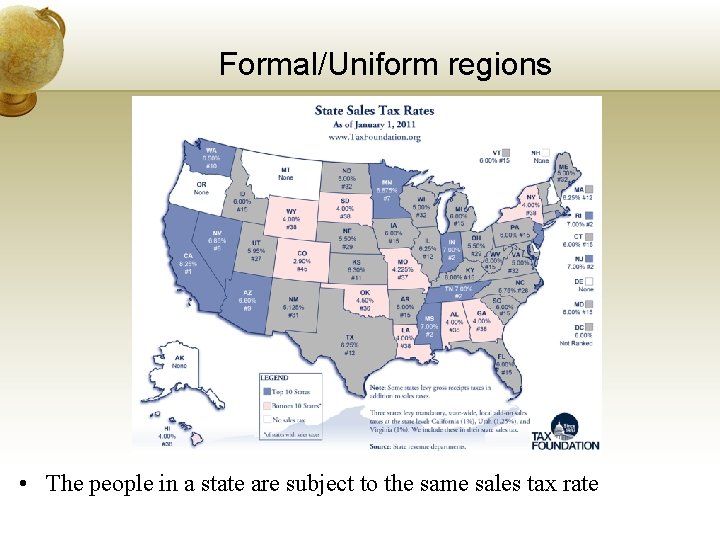
Formal/Uniform regions • The people in a state are subject to the same sales tax rate
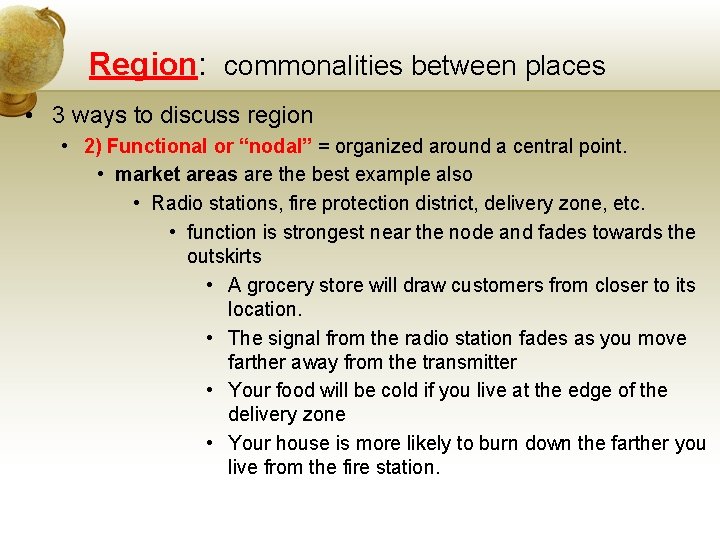
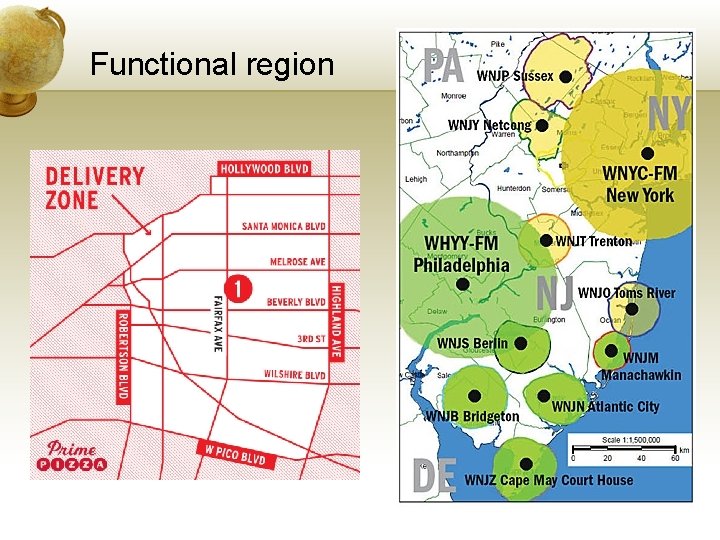
Region: commonalities between places • 3 ways to discuss region • 2) Functional or “nodal” = organized around a central point. • market areas are the best example also • Radio stations, fire protection district, delivery zone, etc. • function is strongest near the node and fades towards the outskirts • A grocery store will draw customers from closer to its location. • The signal from the radio station fades as you move farther away from the transmitter • Your food will be cold if you live at the edge of the delivery zone • Your house is more likely to burn down the farther you live from the fire station.
Functional region
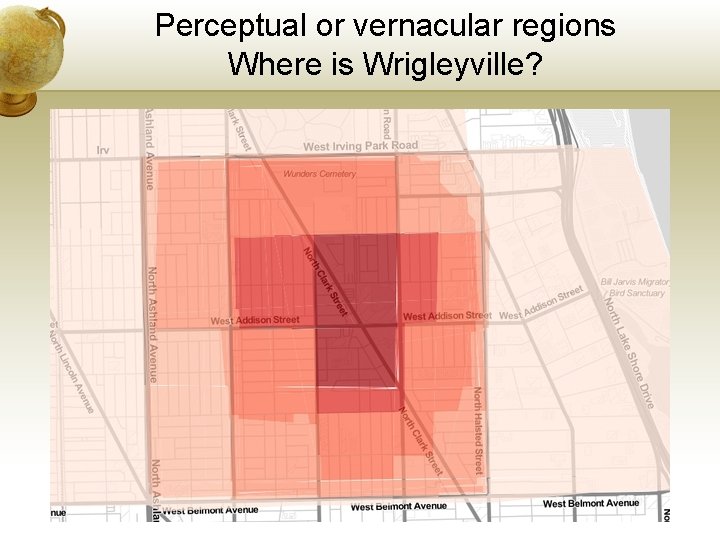
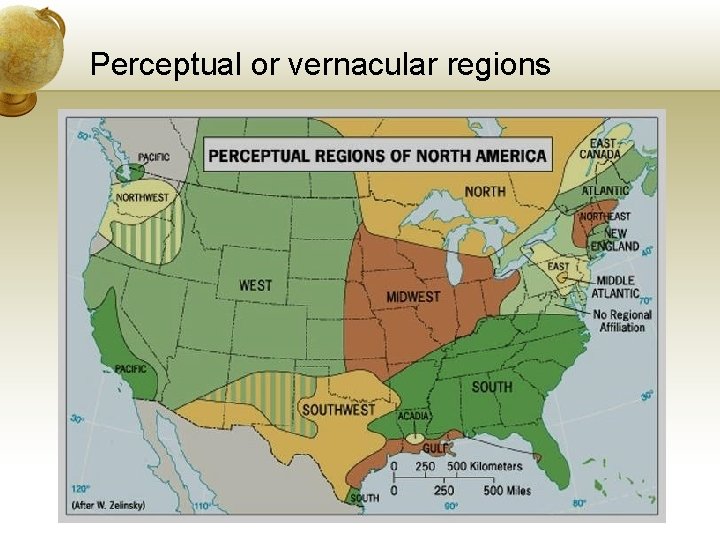
Region: commonalities between places • 3 ways to discuss region • 3) Perceptual or vernacular = based on a person’s cultural identity, shared values, cultural landscape, “in our minds” = mental map • Area? What’s included? What are the boundaries? • Midwest, South • Neighborhood designations • Tricky because sometimes people think they are describing a formal region, BUT their idea is more based on their perceptions/values
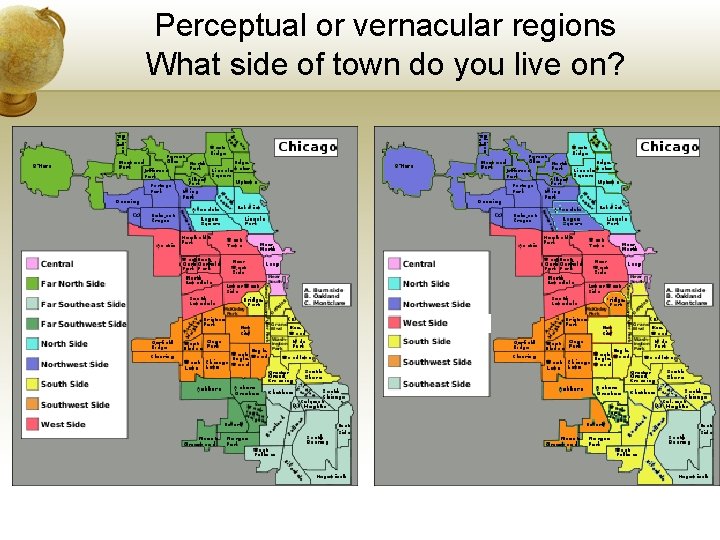
Perceptual or vernacular regions Where is Wrigleyville?
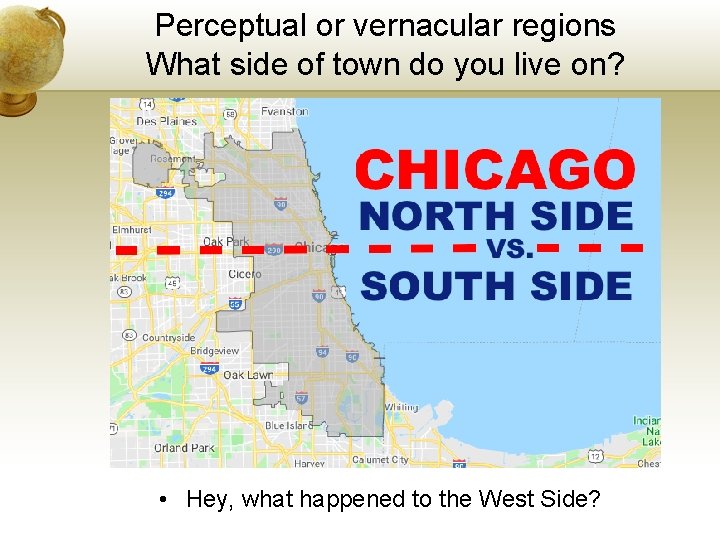
Perceptual or vernacular regions What side of town do you live on? • Hey, what happened to the West Side?
Perceptual or vernacular regions What side of town do you live on?
Perceptual or vernacular regions
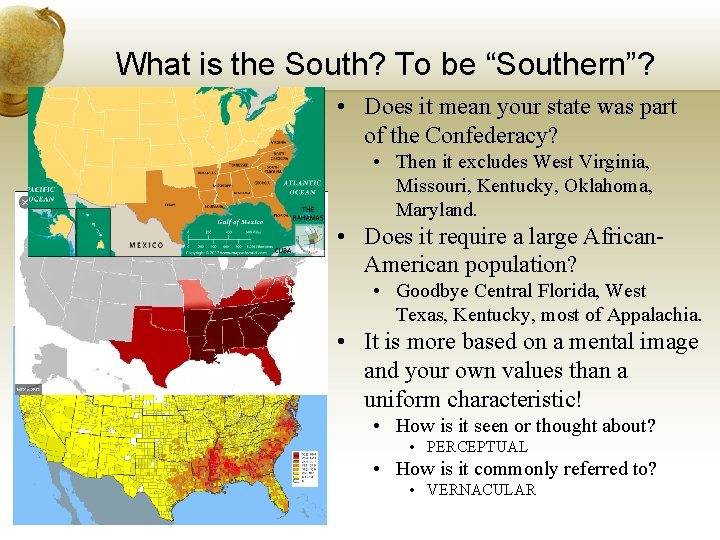
What is the South? To be “Southern”? • Does it mean your state was part of the Confederacy? • Then it excludes West Virginia, Missouri, Kentucky, Oklahoma, Maryland. • Does it require a large African. American population? • Goodbye Central Florida, West Texas, Kentucky, most of Appalachia. • It is more based on a mental image and your own values than a uniform characteristic! • How is it seen or thought about? • PERCEPTUAL • How is it commonly referred to? • VERNACULAR
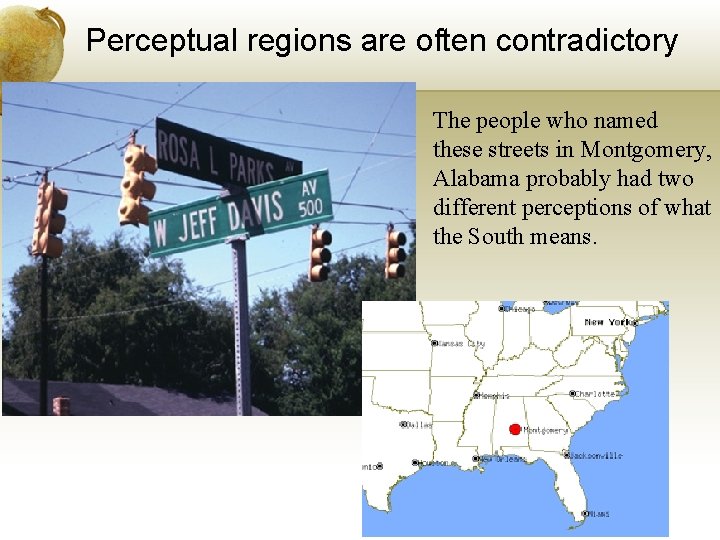
Perceptual regions are often contradictory The people who named these streets in Montgomery, Alabama probably had two different perceptions of what the South means.
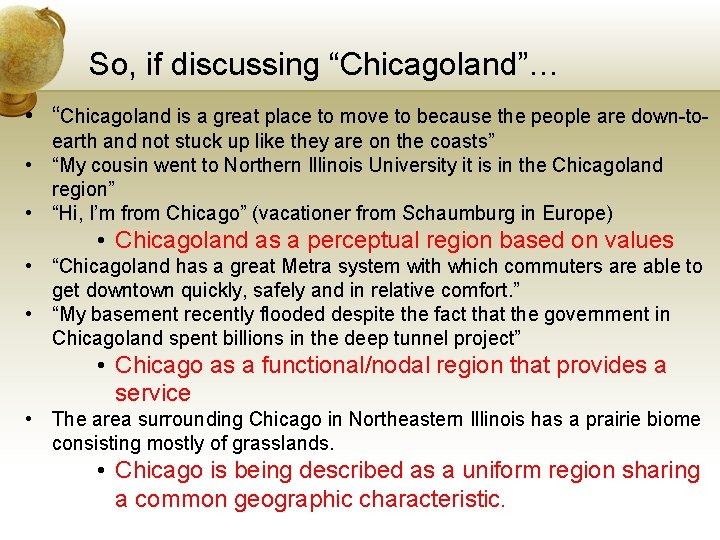
So, if discussing “Chicagoland”… • “Chicagoland is a great place to move to because the people are down-toearth and not stuck up like they are on the coasts” • “My cousin went to Northern Illinois University it is in the Chicagoland region” • “Hi, I’m from Chicago” (vacationer from Schaumburg in Europe) • Chicagoland as a perceptual region based on values • “Chicagoland has a great Metra system with which commuters are able to get downtown quickly, safely and in relative comfort. ” • “My basement recently flooded despite the fact that the government in Chicagoland spent billions in the deep tunnel project” • Chicago as a functional/nodal region that provides a service • The area surrounding Chicago in Northeastern Illinois has a prairie biome consisting mostly of grasslands. • Chicago is being described as a uniform region sharing a common geographic characteristic.
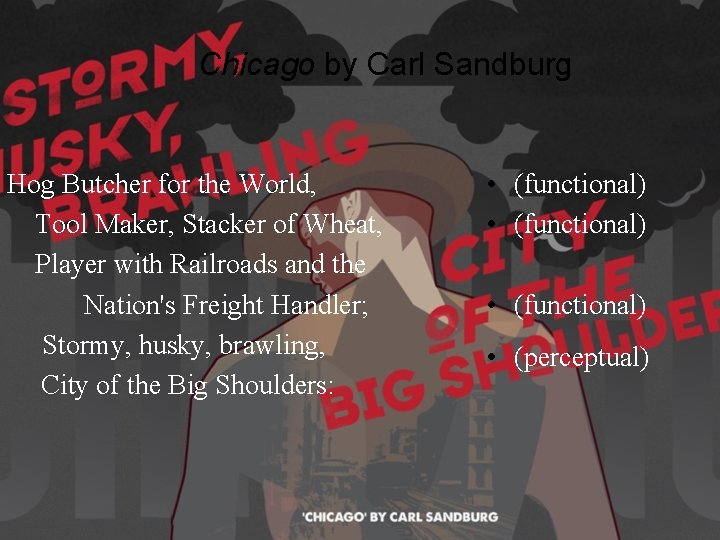
Chicago by Carl Sandburg Hog Butcher for the World, Tool Maker, Stacker of Wheat, Player with Railroads and the Nation's Freight Handler; Stormy, husky, brawling, City of the Big Shoulders: • (functional) • (perceptual)