
Introduction to AP Human Geography Place Mr Stepek
- Slides: 9
Introduction to AP Human Geography: Place Mr. Stepek
Place: how can a location be described? Physical • Natural landscape • climate and vegetation • see GR #37 and #38 People
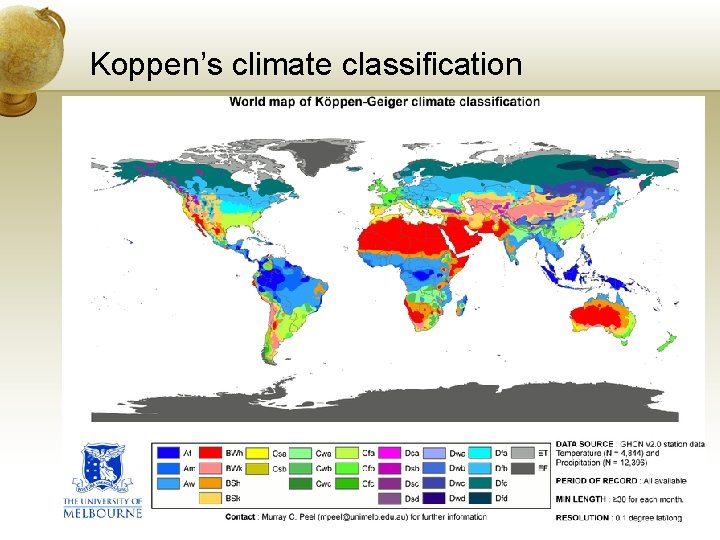
Koppen’s climate classification
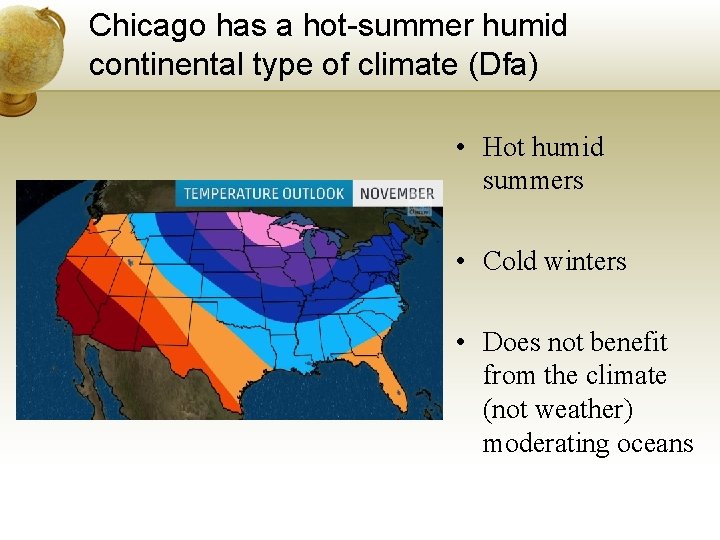
Chicago has a hot-summer humid continental type of climate (Dfa) • Hot humid summers • Cold winters • Does not benefit from the climate (not weather) moderating oceans
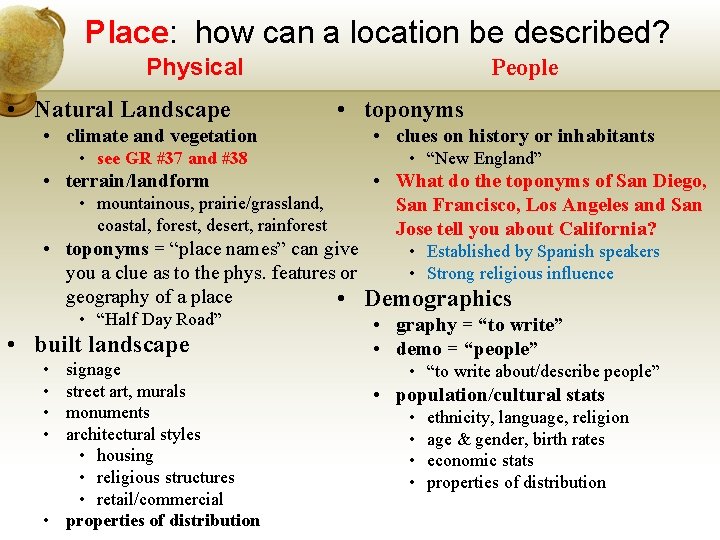
Place: how can a location be described? Physical • Natural Landscape • climate and vegetation • see GR #37 and #38 • terrain/landform • mountainous, prairie/grassland, coastal, forest, desert, rainforest People • toponyms • clues on history or inhabitants • “New England” • What do the toponyms of San Diego, San Francisco, Los Angeles and San Jose tell you about California? • toponyms = “place names” can give • Established by Spanish speakers you a clue as to the phys. features or • Strong religious influence geography of a place • Demographics • “Half Day Road” • graphy = “to write” • built landscape • demo = “people” • • signage street art, murals monuments architectural styles • housing • religious structures • retail/commercial • properties of distribution • “to write about/describe people” • population/cultural stats • • ethnicity, language, religion age & gender, birth rates economic stats properties of distribution
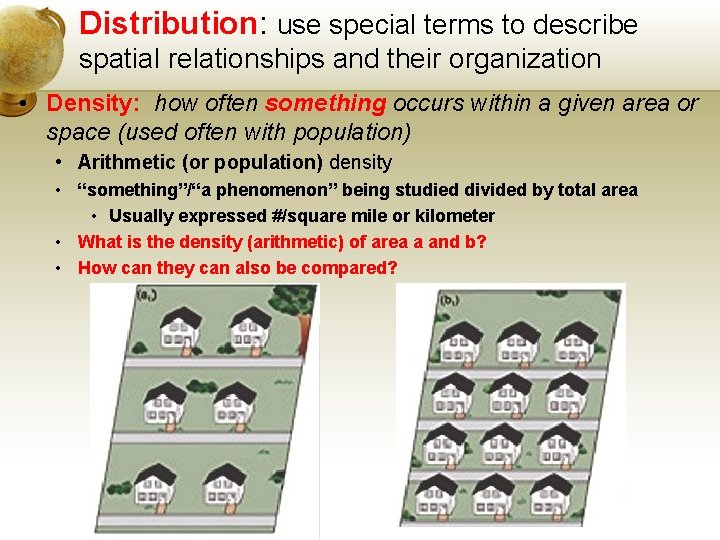
Distribution: use special terms to describe spatial relationships and their organization • Density: how often something occurs within a given area or space (used often with population) • Arithmetic (or population) density • “something”/“a phenomenon” being studied divided by total area • Usually expressed #/square mile or kilometer • What is the density (arithmetic) of area a and b? • How can they can also be compared?
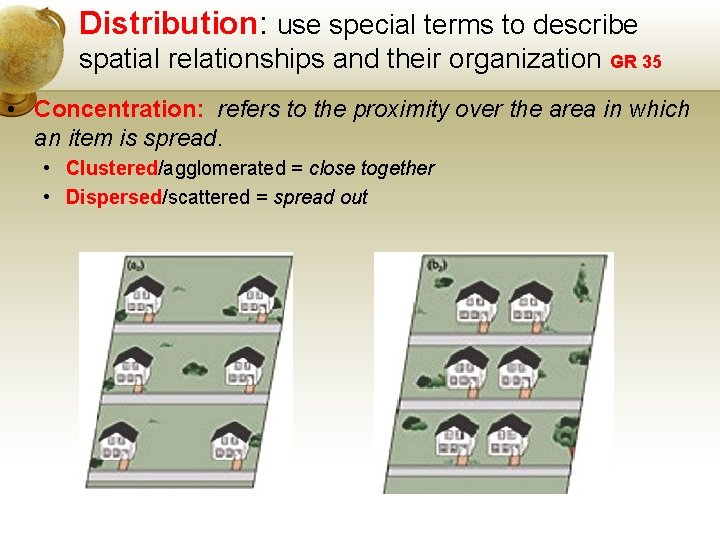
Distribution: use special terms to describe spatial relationships and their organization GR 35 • Concentration: refers to the proximity over the area in which an item is spread. • Clustered/agglomerated = close together • Dispersed/scattered = spread out
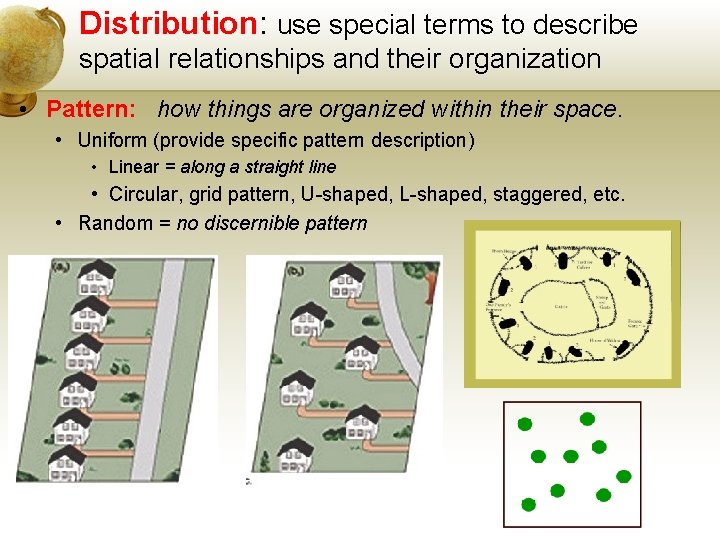
Distribution: use special terms to describe spatial relationships and their organization • Pattern: how things are organized within their space. • Uniform (provide specific pattern description) • Linear = along a straight line • Circular, grid pattern, U-shaped, L-shaped, staggered, etc. • Random = no discernible pattern