
Introduction to AP Human Geography Patterns of Diffusion
- Slides: 10
Introduction to AP Human Geography Patterns of Diffusion Mr. Stepek
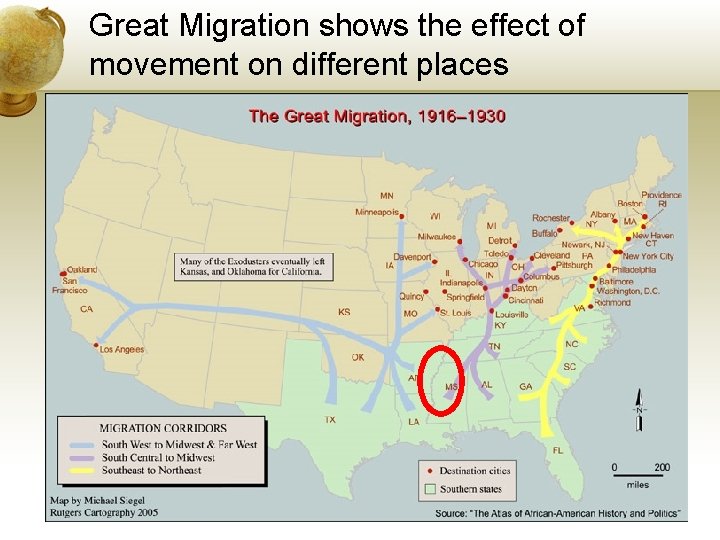
Movement affects locations • Places reflect the movement of people, ideas and goods/services through their location. • Example: • Chicago becomes the “Blues Capital of the World” because during the Great Migration, African-Americans who came to Chicago were mostly from the Mississippi Delta region. • Blues originated in the Mississippi Delta • Places like NYC, Boston and Philadelphia were less influenced by the Blues because their stream of African-Americans did not originate in the Delta but from the Eastern seaboard region (NC, SC, Georgia, etc. )
Great Migration shows the effect of movement on different places
Movement Patterns of Diffusion • Movement of people = migration (Unit 2) • “diffusion” = Movement of ideas/culture • hearth = place of origination • Two “categories” or types of diffusion • 1) Relocation diffusion spread through migration • In this type of diffusion there is LESS presence in the “hearth” or place of origin and more in the new location. There is no overall growth unless it is through natural population growth. • Transfer NOT growth • 2) Expansion diffusion = relocation not req’d • snowball effect as MORE people are exposed. • Place of origination retains its number but NEW members are gained = “expansion”
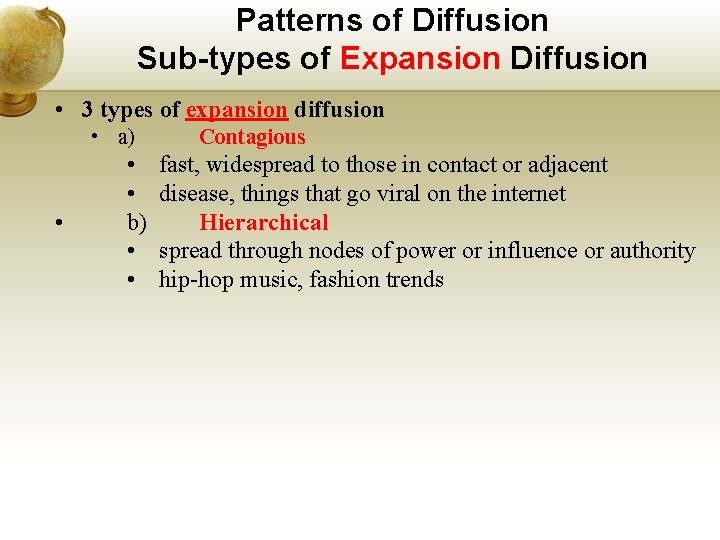
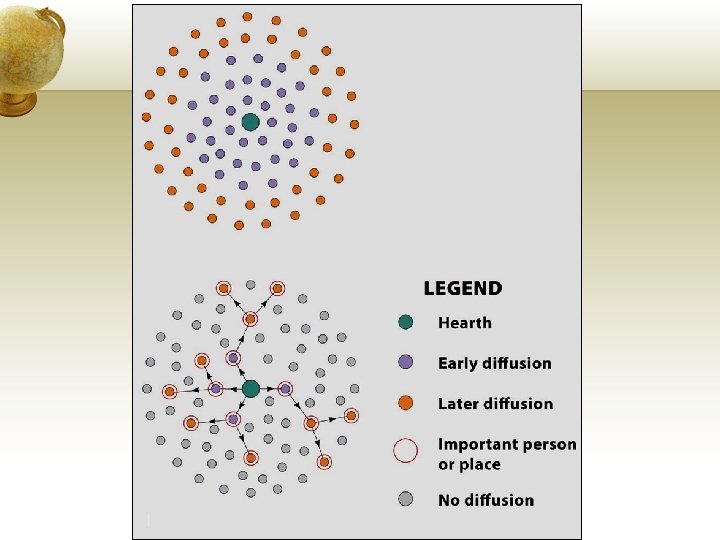
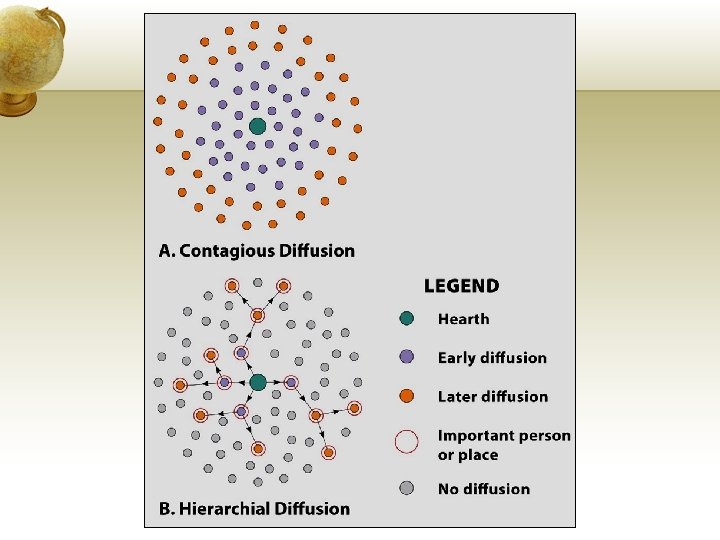
Patterns of Diffusion Sub-types of Expansion Diffusion • 3 types of expansion diffusion • a) • • • b) • • Contagious fast, widespread to those in contact or adjacent disease, things that go viral on the internet Hierarchical spread through nodes of power or influence or authority hip-hop music, fashion trends
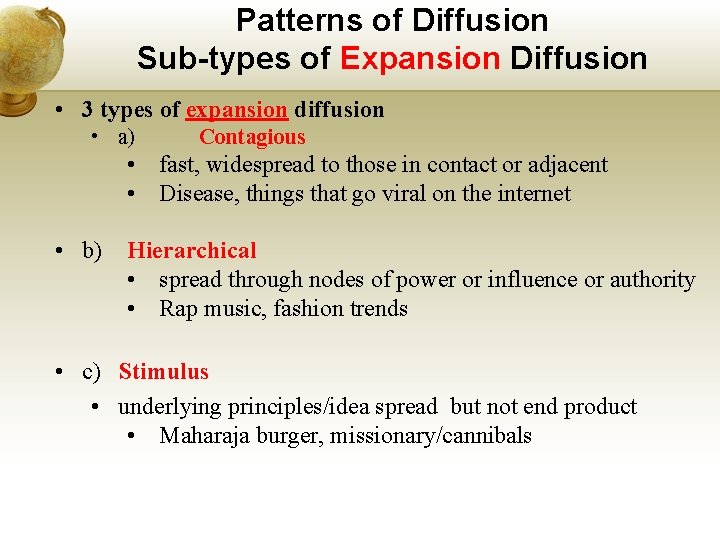
Patterns of Diffusion Sub-types of Expansion Diffusion • 3 types of expansion diffusion • a) Contagious • fast, widespread to those in contact or adjacent • Disease, things that go viral on the internet • b) Hierarchical • spread through nodes of power or influence or authority • Rap music, fashion trends • c) Stimulus • underlying principles/idea spread but not end product • Maharaja burger, missionary/cannibals
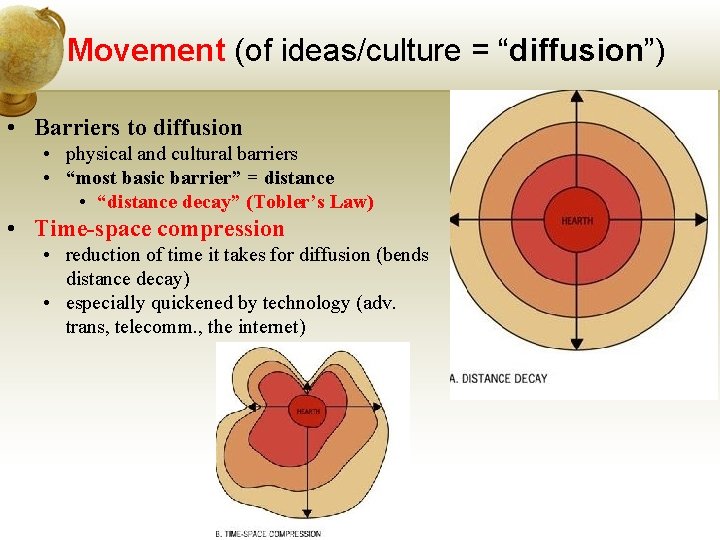
Movement (of ideas/culture = “diffusion”) • Barriers to diffusion • physical and cultural barriers • “most basic barrier” = distance • “distance decay” (Tobler’s Law) • Time-space compression • reduction of time it takes for diffusion (bends distance decay) • especially quickened by technology (adv. trans, telecomm. , the internet)
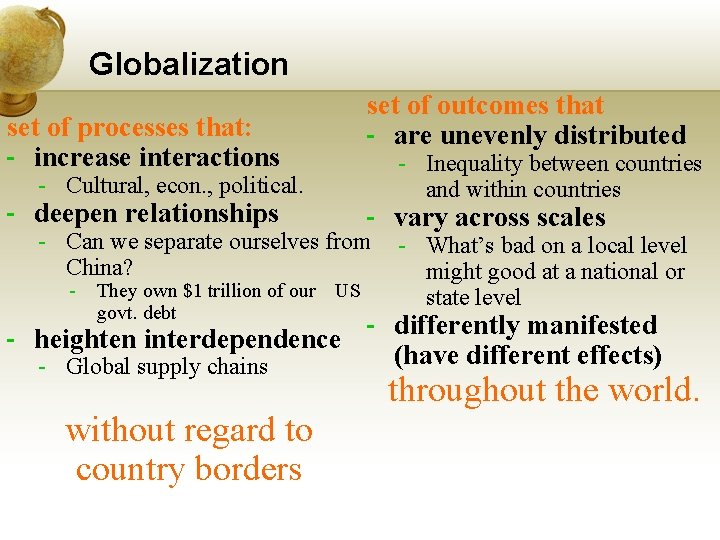
Globalization set of outcomes that - are unevenly distributed set of processes that: - increase interactions - Inequality between countries and within countries - Cultural, econ. , political. - deepen relationships - vary across scales - Can we separate ourselves from China? - They own $1 trillion of our govt. debt US - What’s bad on a local level might good at a national or state level - heighten interdependence - differently manifested (have different effects) - Global supply chains without regard to country borders throughout the world.