
Introduction to AP Economics Economics is defined as
- Slides: 21
Introduction to AP Economics
� Economics is defined as the social science concerned with the efficient use of scarce resources to achieve the maximum satisfaction of economic wants. � The study of economics explains how productive resources are used to provide the goods and services that satisfy human wants and needs.
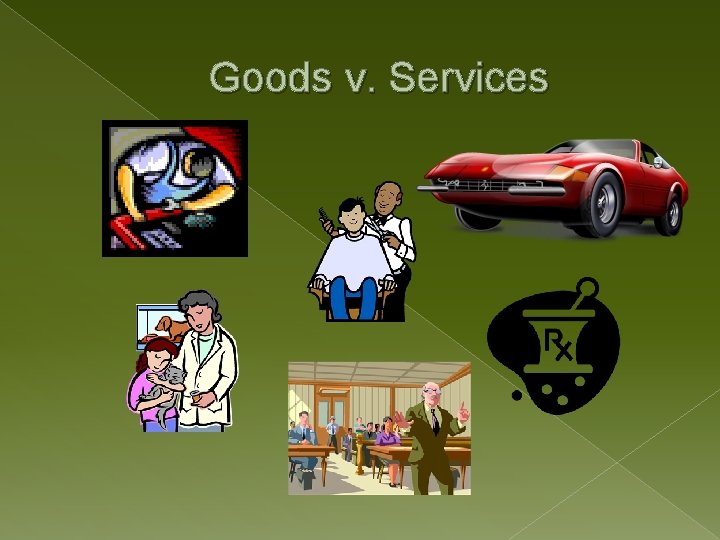
Goods v. Services
� Scarcity is the fundamental economic problem facing all societies. We have limited resources and unlimited needs and wants. � Economic wants exceed productive capacity. Resources are scarce and choices must be made.
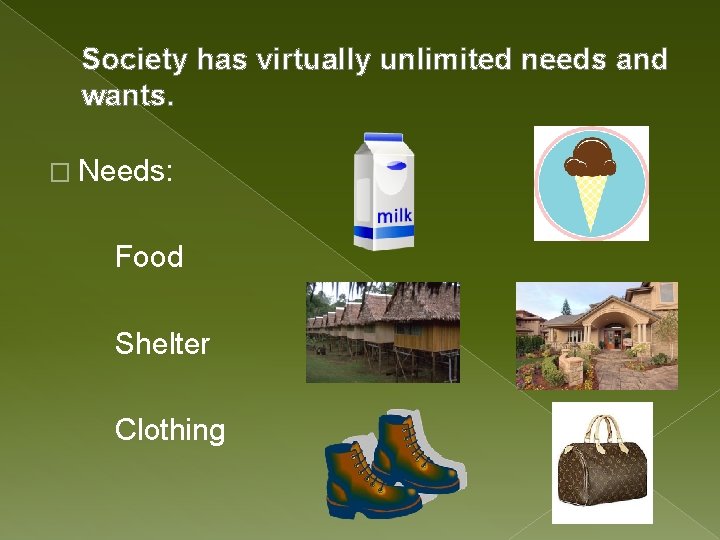
Society has virtually unlimited needs and wants. � Needs: Food Shelter Clothing
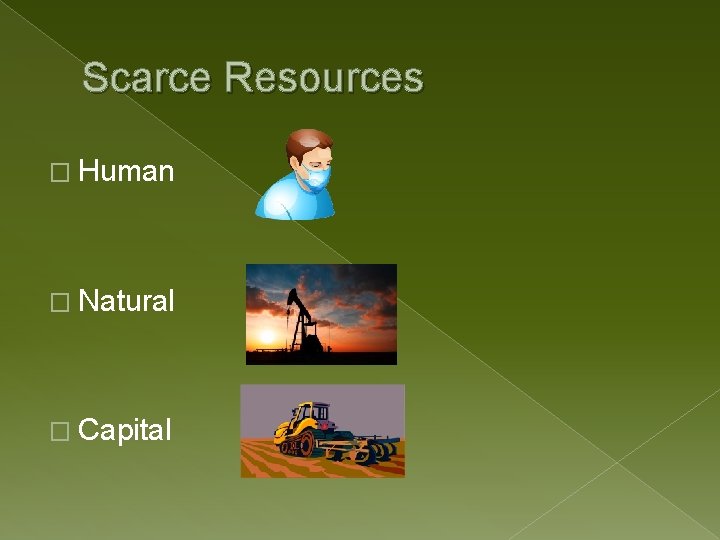
Scarce Resources � Human � Natural � Capital
Scarce Resources = Factors of Production: � Land (natural resources) � Labor (human resources) � Capital (equipment, machinery) � Entrepreneurship(takes initiative, make decisions, innovates and takes risks. )
Basic economic questions: � What goods and services will be produced? � How will goods and services be produced? � Who will consume the goods and services? (How should it be shared? )
The study of economics… � Economics is considered a social science. Why? � What do economists do? is the difference between microeconomics and macroeconomics?
Microeconomics examines decision making by individual units. � Macroeconomics examines either the economy as a whole or its basic subdivisions or aggregates. � Positive economics deals with economic facts, i. e. “the unemployment rate is 9. 8%. ” � Normative economics is a subjective perspective of the economy, i. e. “the unemployment rate is too high. ” �
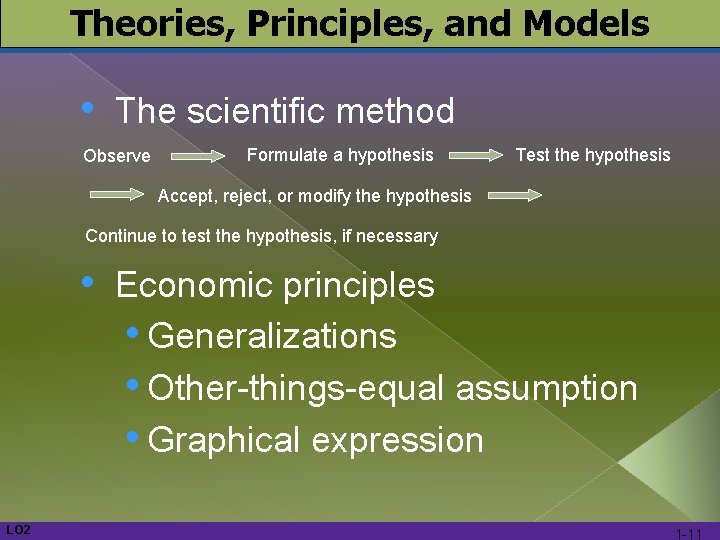
Theories, Principles, and Models • The scientific method Observe Formulate a hypothesis Test the hypothesis Accept, reject, or modify the hypothesis Continue to test the hypothesis, if necessary • LO 2 Economic principles • Generalizations • Other-things-equal assumption • Graphical expression 1 -11
Economic Goals Theoretical economics helps economists use facts to analyze and explain the economy and develop policies. � Economic policies are designed to explain a number of economic goals including: economic growth, full employment, economic efficiency, price-level stability, economic freedom, equitable distribution of income, economic security and balance of trade. �
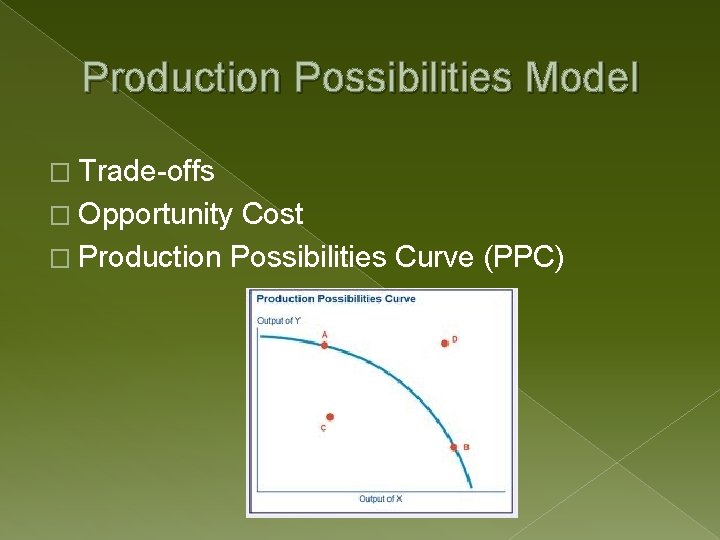
Production Possibilities Model � Trade-offs � Opportunity Cost � Production Possibilities Curve (PPC)
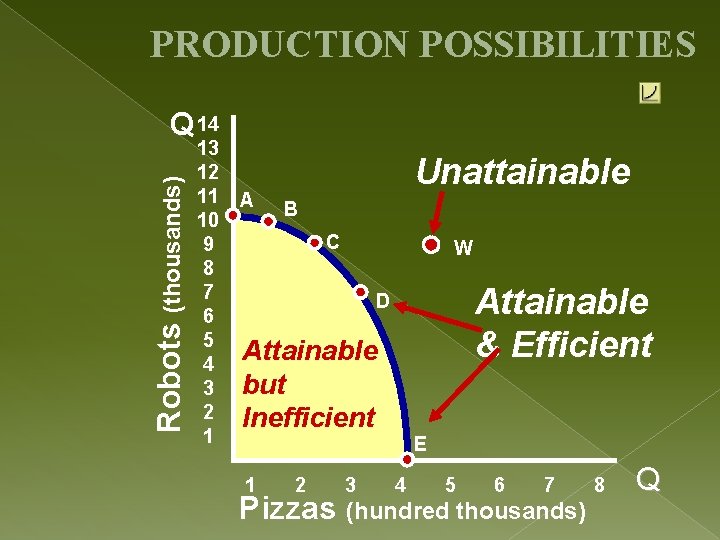
A Production Possibilities Curve (PPC) illustrates production choices and assumes: �Full employment �Fixed resources �Fixed technology �Two goods. � Limited or fixed resources means that at any point in time, a full-employment, full production economy must sacrifice some of product X to obtain more of product Y. �
PRODUCTION POSSIBILITIES Robots (thousands) Q 14 13 12 11 10 9 8 7 6 5 4 3 2 1 A Unattainable B C W Attainable & Efficient D Attainable but Inefficient 1 2 3 E 4 5 6 7 Pizzas (hundred thousands) 8 Q
PRODUCTION POSSIBILITIES Applications. . . • Unemployment and Productive Inefficiency • Tradeoffs and Opportunity Costs
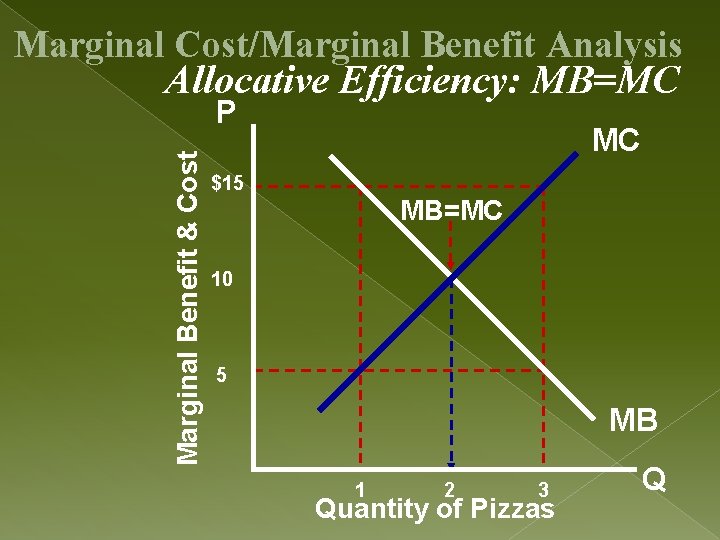
Marginal Cost/Marginal Benefit Analysis Allocative Efficiency: MB=MC Marginal Benefit & Cost P MC $15 MB=MC 10 5 MB 1 2 3 Quantity of Pizzas Q
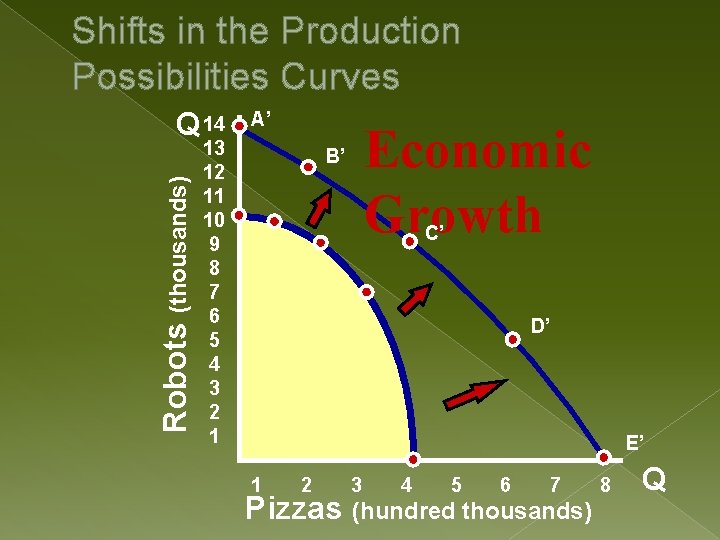
Shifts in the Production Possibilities Curves Robots (thousands) Q 14 A’ 13 12 11 10 9 8 7 6 5 4 3 2 1 Economic Growth B’ C’ D’ E’ 1 2 3 4 5 6 7 Pizzas (hundred thousands) 8 Q
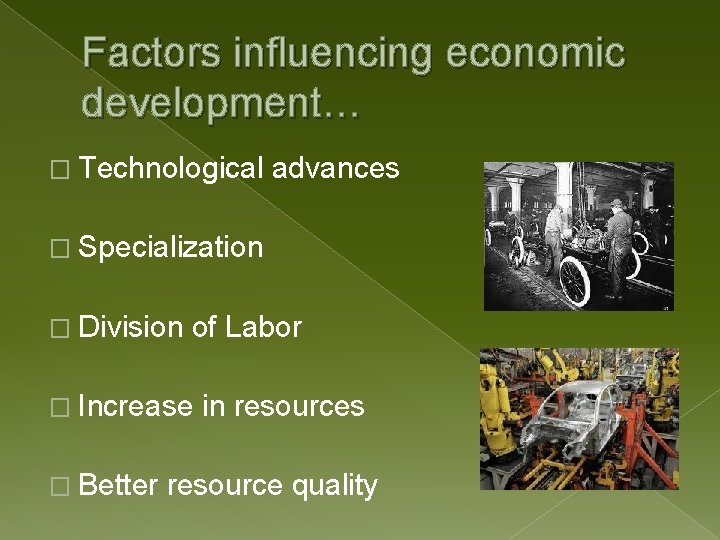
Factors influencing economic development… � Technological advances � Specialization � Division of Labor � Increase � Better in resources resource quality
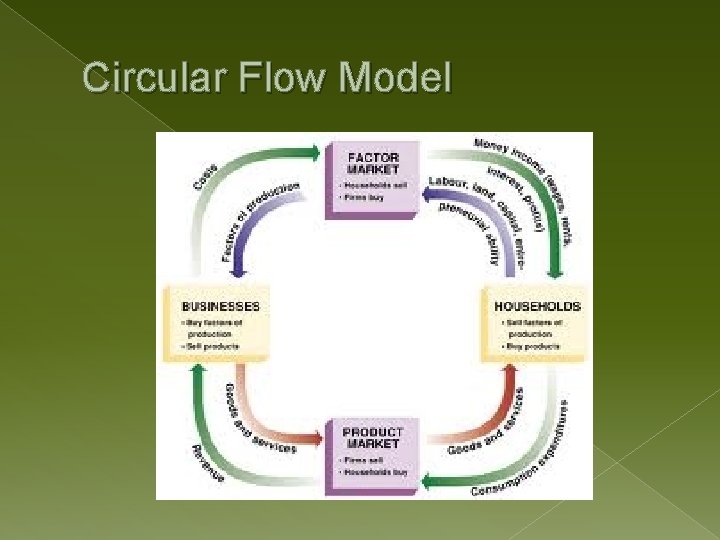
Circular Flow Model
A final thought…. It is important to study economics for two main reasons – personal financial benefits and good citizenship… Not just because you want to pass the AP test