Introduction to Antigone and Early Greek Theater ENGLISH

- Slides: 13
Introduction to Antigone and Early Greek Theater ENGLISH II Coach Helton
What comes to mind when you hear the word Greece?
What do you think of when you hear the word theater?
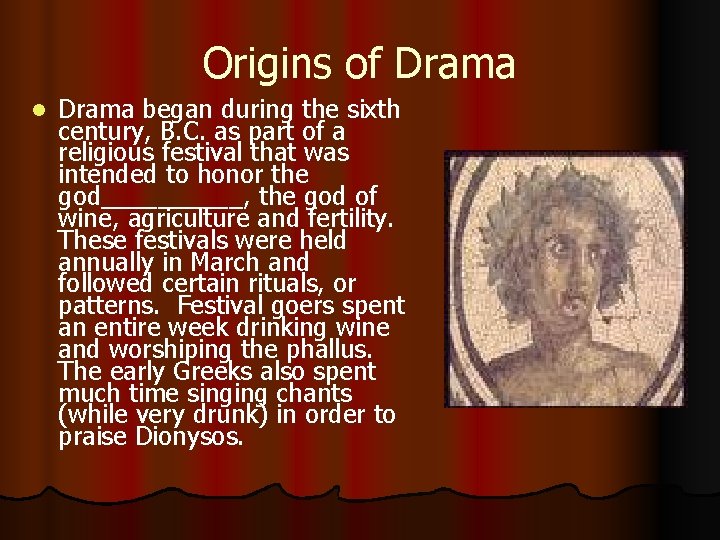
Origins of Drama l Drama began during the sixth century, B. C. as part of a religious festival that was intended to honor the god_____, the god of wine, agriculture and fertility. These festivals were held annually in March and followed certain rituals, or patterns. Festival goers spent an entire week drinking wine and worshiping the phallus. The early Greeks also spent much time singing chants (while very drunk) in order to praise Dionysos.
Origins of Drama While drunk and singing these songs of praise, worshipers also danced around an altar. This group of people were called a _______. Eventually a man named _____ began to write down these songs and revised them so that they would tell a story. l After a while Thespis decided to have one member of the chorus step away from the others to play the part of a hero or god. He wore a special mask and began talking to the chorus. This was the first ______! l
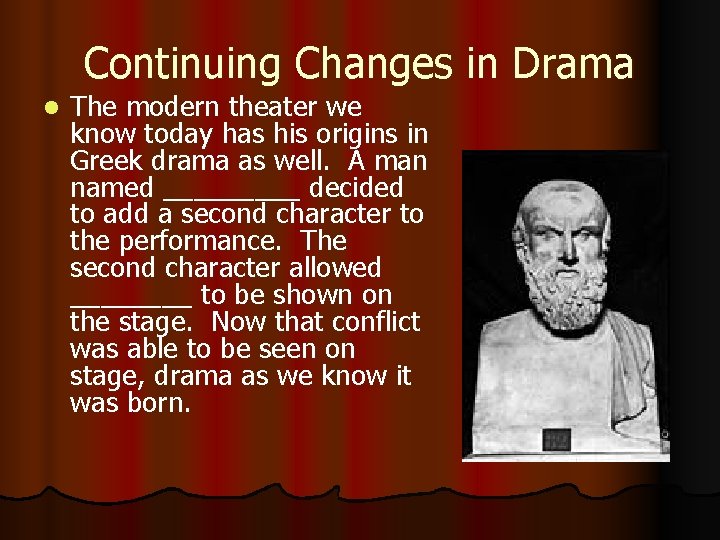
Continuing Changes in Drama l The modern theater we know today has his origins in Greek drama as well. A man named _____ decided to add a second character to the performance. The second character allowed ____ to be shown on the stage. Now that conflict was able to be seen on stage, drama as we know it was born.
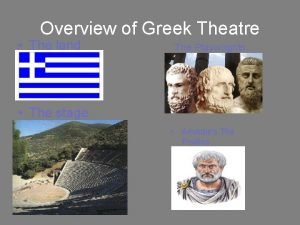
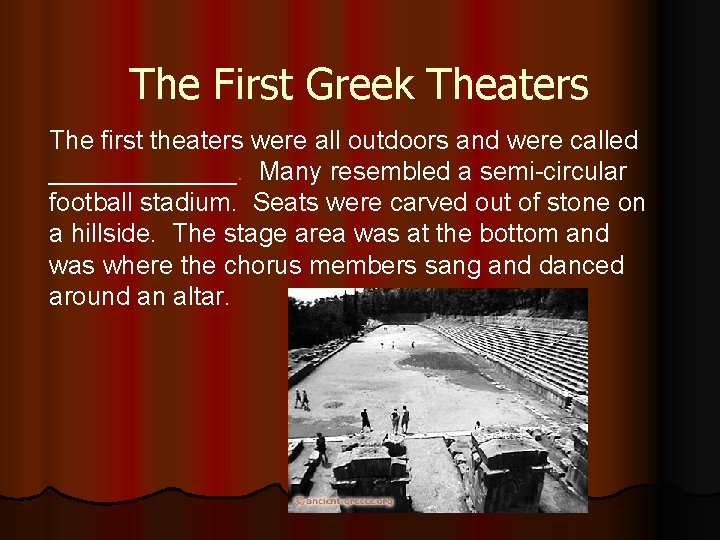
The First Greek Theaters The first theaters were all outdoors and were called _______. Many resembled a semi-circular football stadium. Seats were carved out of stone on a hillside. The stage area was at the bottom and was where the chorus members sang and danced around an altar.
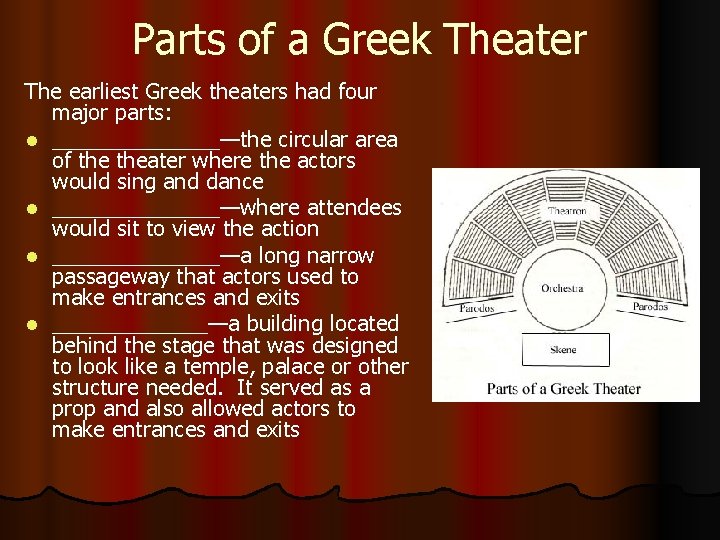
Parts of a Greek Theater The earliest Greek theaters had four major parts: l _______—the circular area of theater where the actors would sing and dance l _______—where attendees would sit to view the action l _______—a long narrow passageway that actors used to make entrances and exits l _______—a building located behind the stage that was designed to look like a temple, palace or other structure needed. It served as a prop and also allowed actors to make entrances and exits
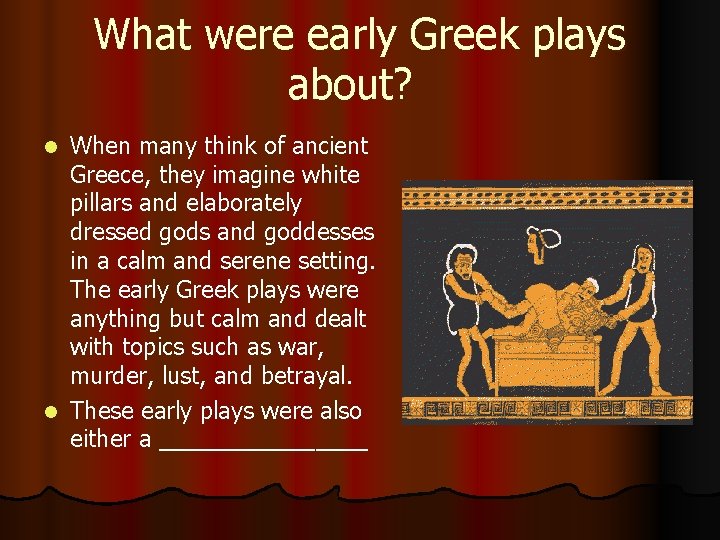
What were early Greek plays about? When many think of ancient Greece, they imagine white pillars and elaborately dressed gods and goddesses in a calm and serene setting. The early Greek plays were anything but calm and dealt with topics such as war, murder, lust, and betrayal. l These early plays were also either a ________ l
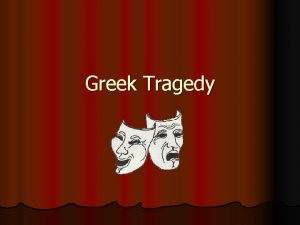
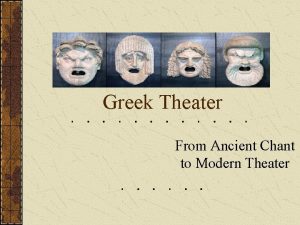
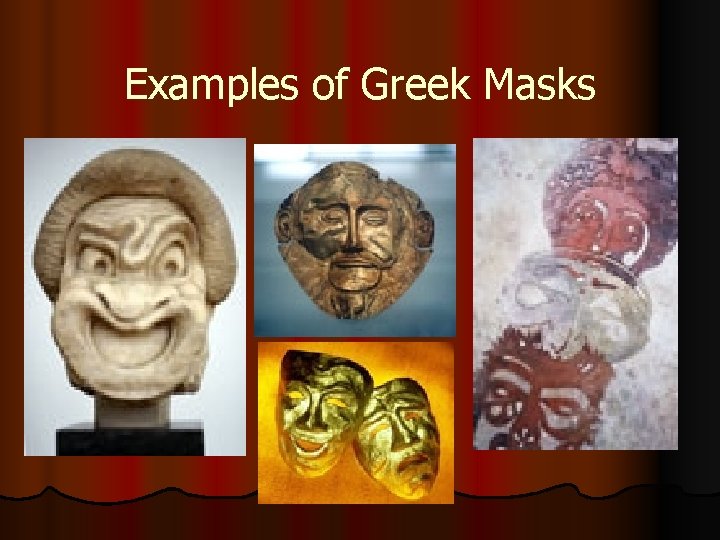
Costumes and Props in Early Greek Drama Actors in these early plays did not rely on elaborate costumes to tell the characters apart. Instead they used ______ to distinguish between characters. l The masks had very _______ that amplified the sound of the actors’ voices, and often had large eye openings as well. (Remember no microphones were available during this time. ) These masks usually represented familiar characters that would be easily recognized by the audience. l
Examples of Greek Masks
The First Actors l The first actors were ____, despite whether their role was male or female. l To represent a female character, the actor would use a mask with womanly features. l Because it was quick and easy to change the masks that distinguished characters, actors often played several roles within a single play.
Assignment Time Today we discussed the origins of Greek drama, and we learned that the actors relied on masks to help the audience distinguish between characters in the play. Create a mask that could have been used by these early Greeks. You may choose whether your character is male or female, but your mask must demonstrate the key characteristics of the early Greek masks. After your mask is complete, write a paragraph that explains why your mask is like those of the early Greeks.