
Introduction to Animals Taxonomy Breakdown Three Domains Six
Introduction to Animals

Taxonomy Breakdown • Three Domains: Six Kingdoms
Characteristics of Animals • All multicellular (metazoans) • Eukaryotes (cells with nucleus & organelles) • Ingestive heterotrophs (take in food and internally digest it) • Store food reserves as glycogen
Support Systems • Have some type of skeletal support • Endoskeleton inside and made of cartilage &/or bone • Exoskeletons found in arthropods – Cover the outside of the body – Limit size – Must be molted making animal vulnerable to predators
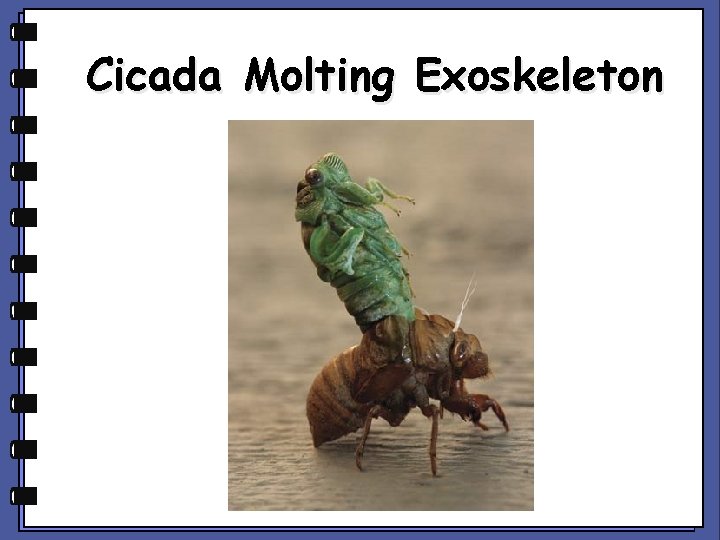
Cicada Molting Exoskeleton
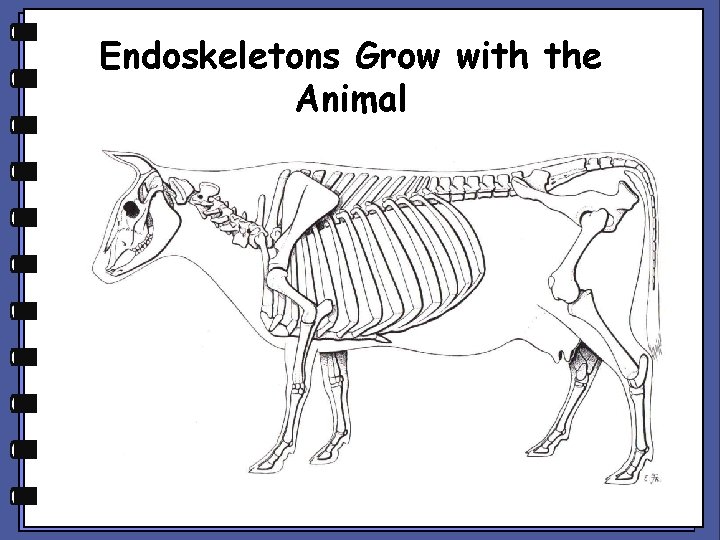
Endoskeletons Grow with the Animal
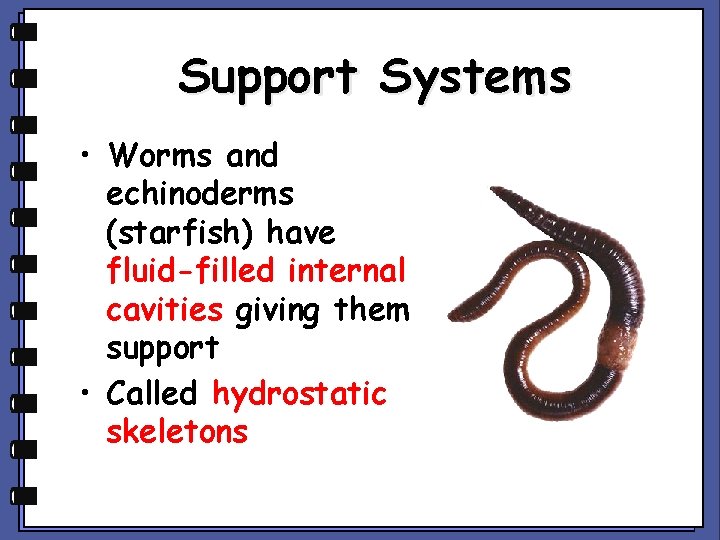
Support Systems • Worms and echinoderms (starfish) have fluid-filled internal cavities giving them support • Called hydrostatic skeletons
Movement • Animals such as sponges may be sessile (attached & non-moving) • Animals that move very little are said to be sedentary (clam) • Animals that can move are motile • Have muscular tissue to provide energy for movement
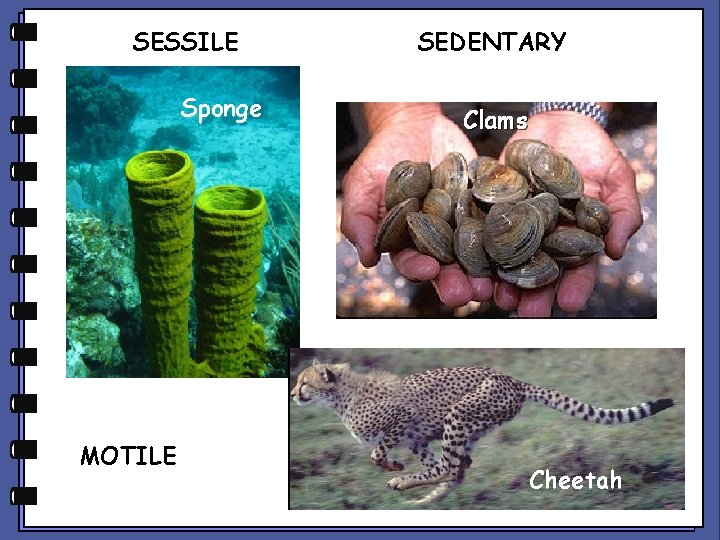
SESSILE Sponge MOTILE SEDENTARY Chiton Clams Cheetah
Levels of Organization • Sponges are the ONLY animals that have just the cellular level • All other animals show these levels – cell, tissue, organ, and system • Cells may specialize (take on different shapes and functions) • Cells are held together by cell junctions to form tissues
Invertebrate groups
Characteristics of Invertebrates • Simplest animals • Contain the greatest number of different species • Most are aquatic (found in water) • Do NOT have a backbone • Includes sponges, cnidarians, flatworms, roundworms, annelids, mollusks, arthropods, and echinoderms
Mollusca Facts • There are three distinct body zones: a headfoot, (sensory and motor organs); a visceral mass, (digestion, excretion, and reproduction); and a mantle, (secretes the shell). • The mantle cavity, a space between the mantle and the visceral mass, houses the gills; the digestive, excretory, and reproductive systems discharge into it.
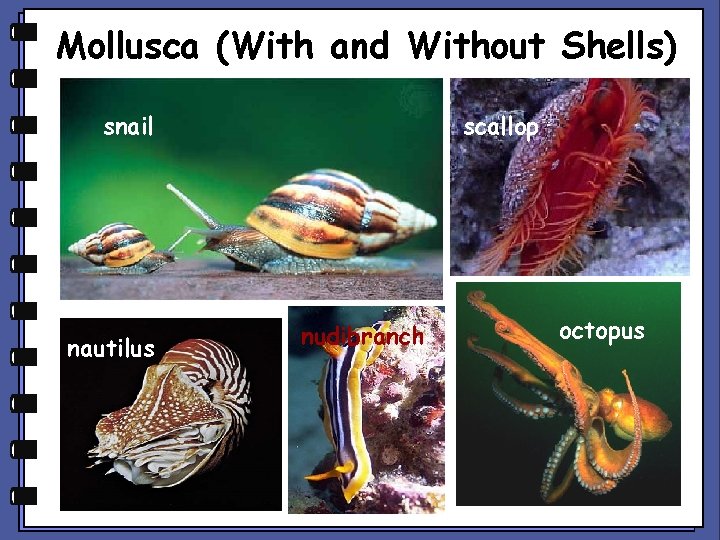
Mollusca (With and Without Shells) snail nautilus scallop nudibranch octopus
Arthropod Facts • Arthropods have • Arthropods are a segmented bodies. highly successful group of animals— • Arthropods have an they account for exoskeleton over three • During their life quarters of all cycle, arthropods currently known undergo a living and fossil transformation organisms. called metamorphosis.
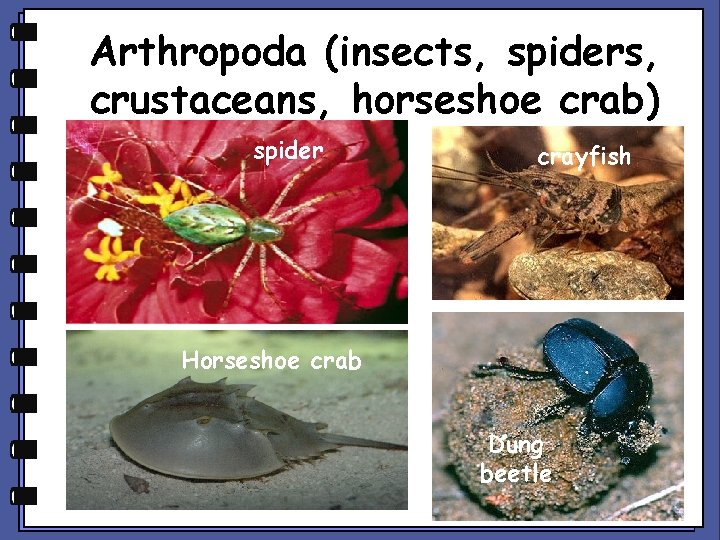
Arthropoda (insects, spiders, crustaceans, horseshoe crab) spider crayfish Horseshoe crab Dung beetle
Echinoderm Facts • 6, 000 species • Echinoderms are characterized by their radial symmetry, water vascular system and internal skeleton. • Sea stars are sometimes called star fish, but this is an incorrect name since they are not fish.
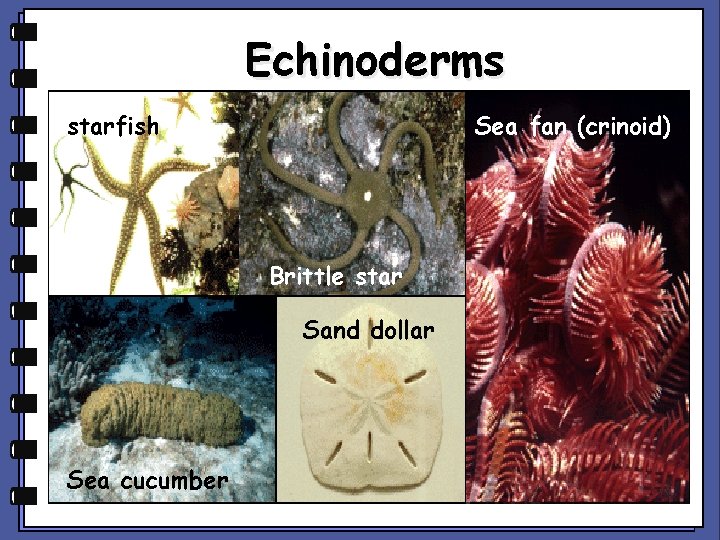
Echinoderms Sea fan (crinoid) starfish Brittle star Sand dollar Sea cucumber
Vertebrate Groups
Vertebrates • More complex animals • Most have a backbone made up of individual bones called vertebrae • From simplest to most complex, the phylum includes: fish, amphibians, reptiles, birds, and mammals
Vertebrates • Vertebrates have endoskeletons (internal) • Some vertebrates have skeletons of cartilage (sharks, rays, and skates) • Other vertebrates have skeletons of bone and cartilage (reptiles, birds, & mammals)
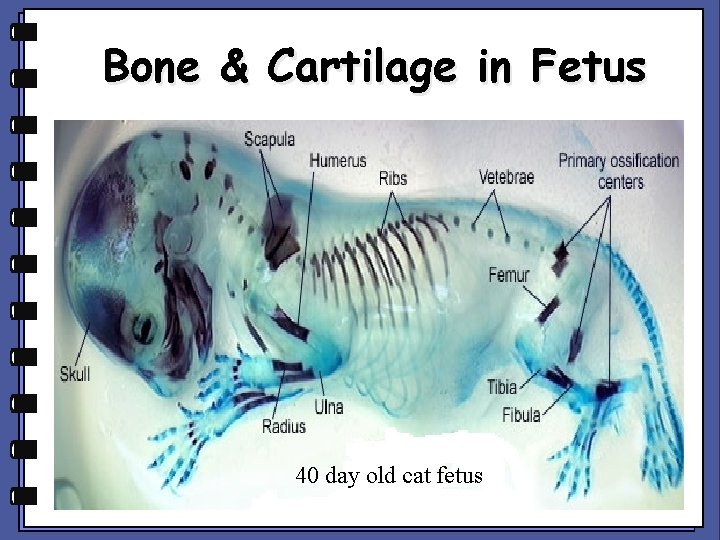
Bone & Cartilage in Fetus 40 day old cat fetus
Amphibian Facts • Three groups of amphibians are: Newts and Salamanders, Frogs and Toads, and Caecilians. • 5, 000 to 6, 000 known species. • Amphibians have delicate, permeable skin (moist skin). • The skin of amphibians lacks the protection that scales (reptiles) and hair (mammals) provides these other groups of animals. • They are ectothermic (controls body temperature through external means).
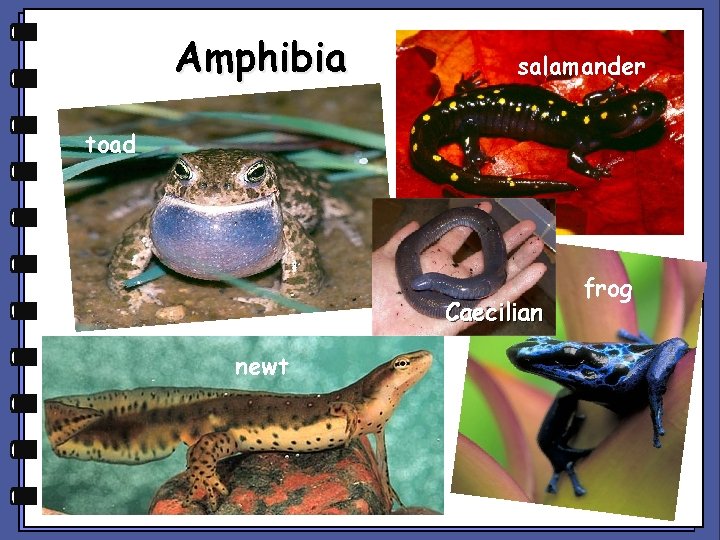
Amphibia salamander toad Caecilian newt frog
Reptile Facts • 8, 000 known species alive today. • Largest reptiles are leatherback turtle, komodo dragon and saltwater crocodile. • In many reptiles the sex of the young is determined by the temperature the embryos are exposed to during incubation. • Reptiles are coldblooded(Ectothermic). • Reptiles have scales.
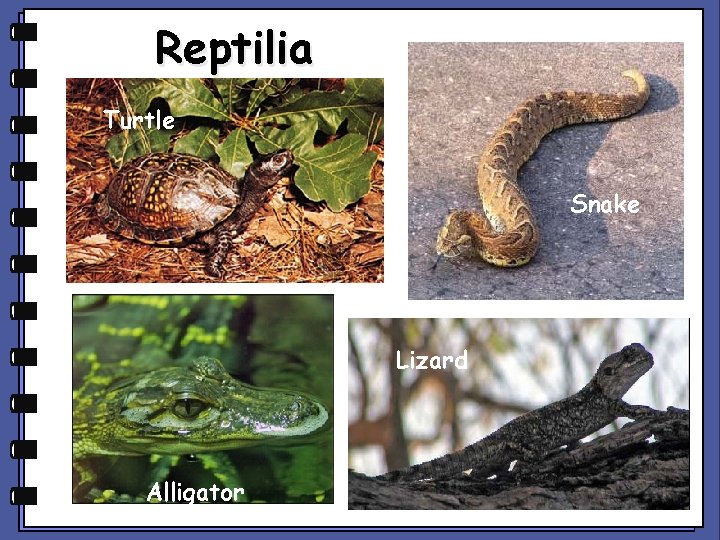
Reptilia Turtle Snake Lizard Alligator
Birds – Aves facts • • • Feathers. High metabolism. A four-chambered heart. A beak with no teeth. A lightweight but strong skeleton. • Production of hard-shelled eggs.
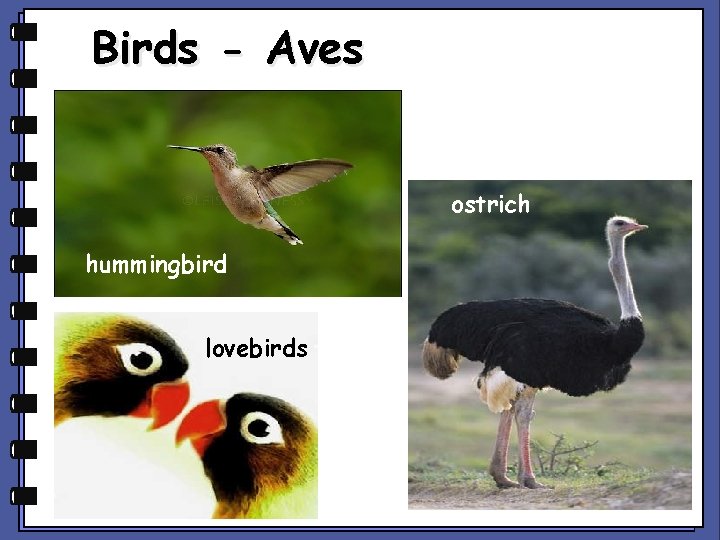
Birds - Aves ostrich hummingbird lovebirds
Mammal Facts • Mammals are divided • into 21 groups. • Mammals are • tetrapods. (4 legs/limbs) • Mammals are warmblooded • All mammals have hair The largest mammal is the blue whale The smallest mammal is the bumblebee bat.
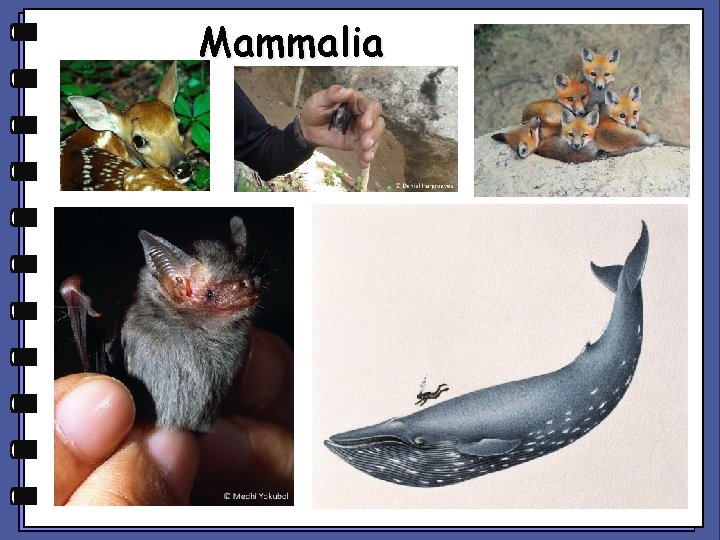
Mammalia
Body Areas
Surfaces • • Dorsal – back or upper surface Ventral – belly or lower surface Anterior – head or front end Posterior – tail or hind end opposite the head • Oral surface (echinoderms) – is where the mouth is located (underside) • Aboral surface (echinoderms) – is opposite the mouth (top side)
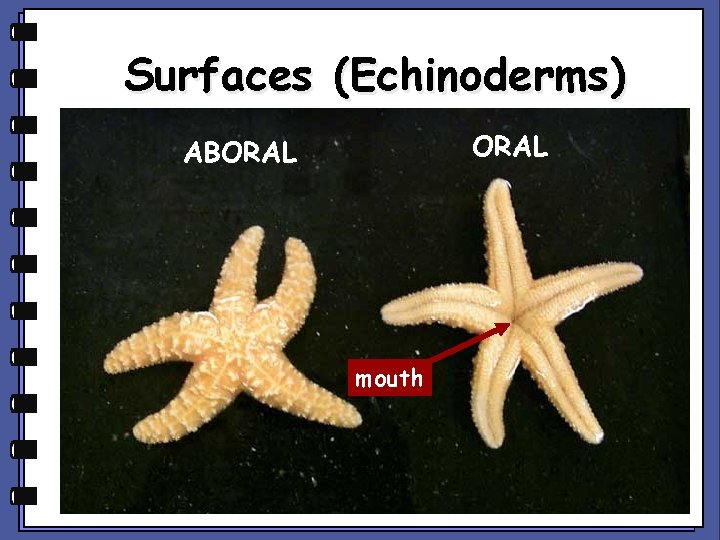
Surfaces (Echinoderms) ORAL ABORAL mouth
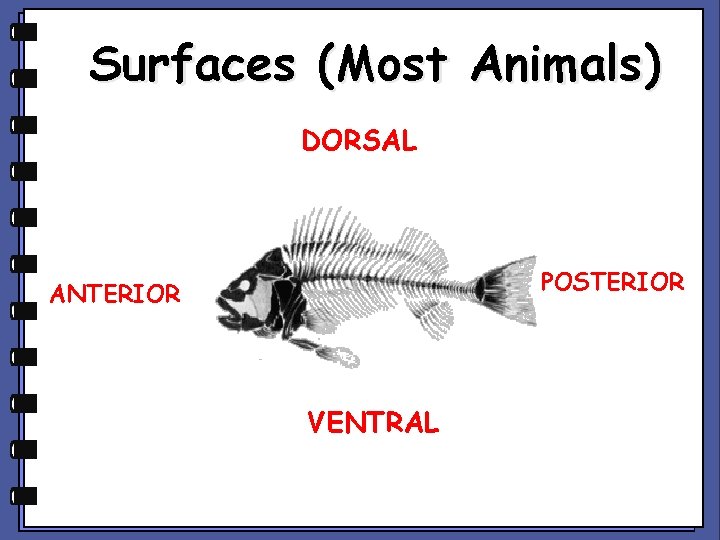
Surfaces (Most Animals) DORSAL POSTERIOR ANTERIOR VENTRAL
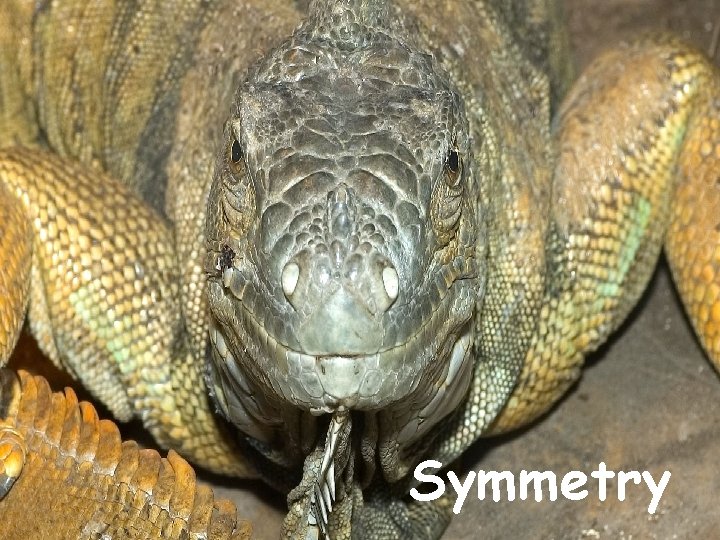
Symmetry
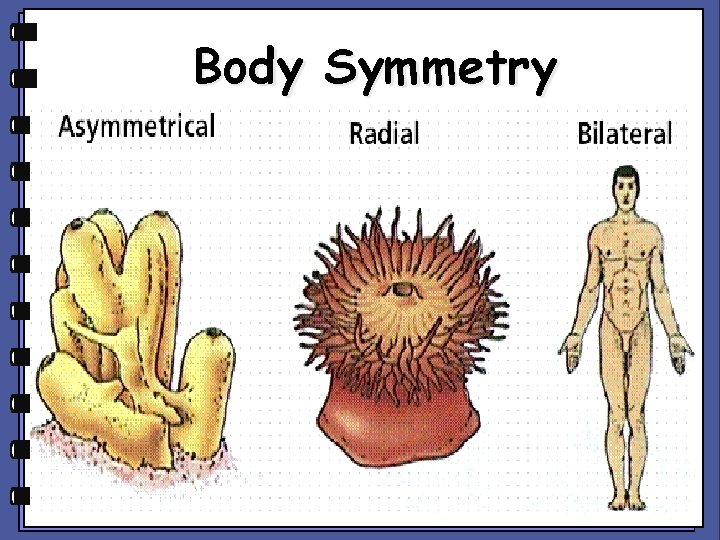
Body Symmetry
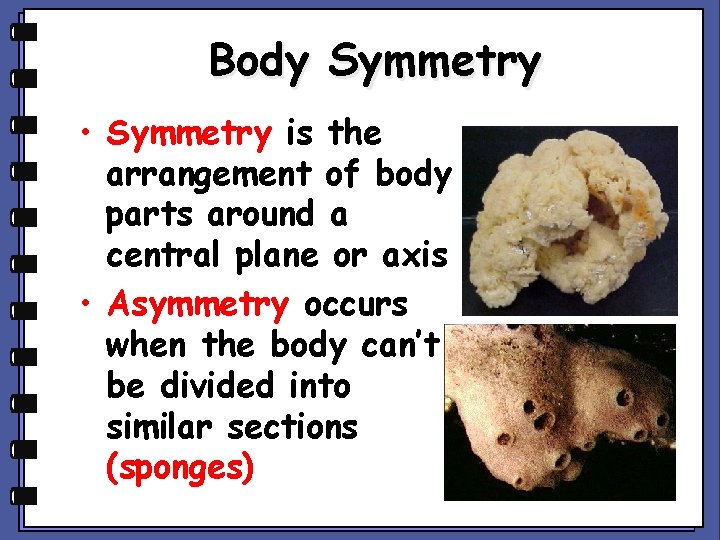
Body Symmetry • Symmetry is the arrangement of body parts around a central plane or axis • Asymmetry occurs when the body can’t be divided into similar sections (sponges)
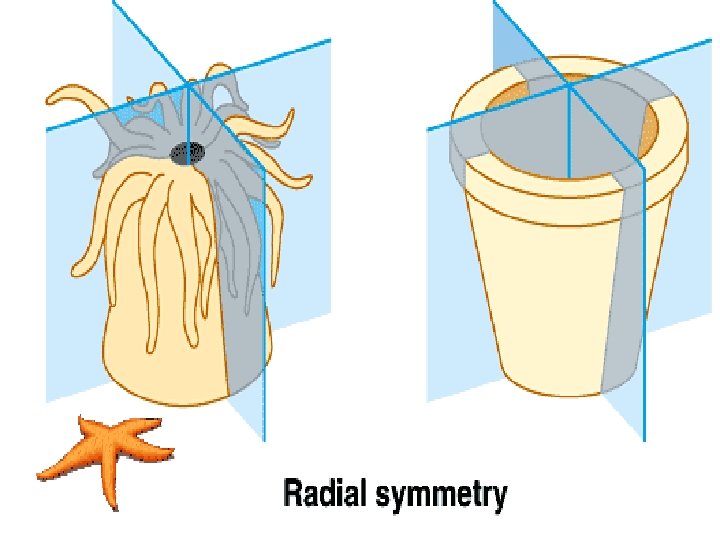
Body Symmetry • Radial symmetry occurs when body parts are arranged around a central point like spokes on a wheel (echinoderms) • Most animals with radial symmetry are sessile (attached) or sedentary (move very little)
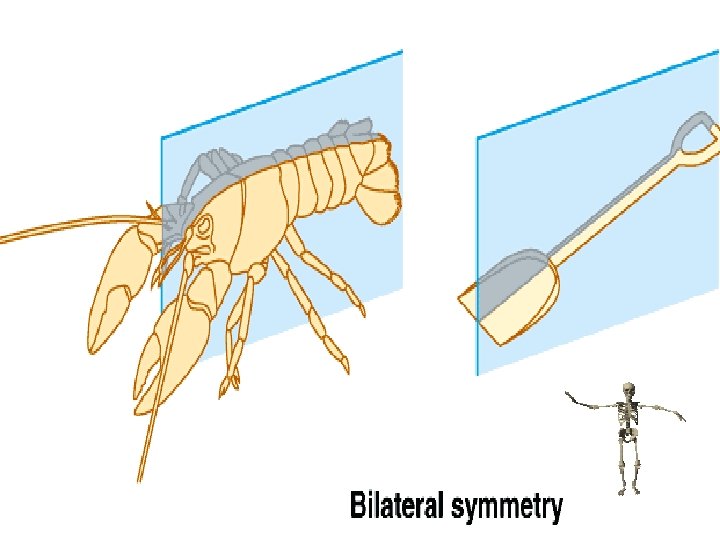
Body Symmetry • Bilateral symmetry occurs when animals can be divided into equal halves along a single plane • Organisms will have right and left sides that are mirror images of each other • More complex type of symmetry
Body Symmetry • Animals with bilateral symmetry are usually motile • Animals have an anterior and posterior ends • Show cephalization (concentration of sensory organs on the head or anterior end)
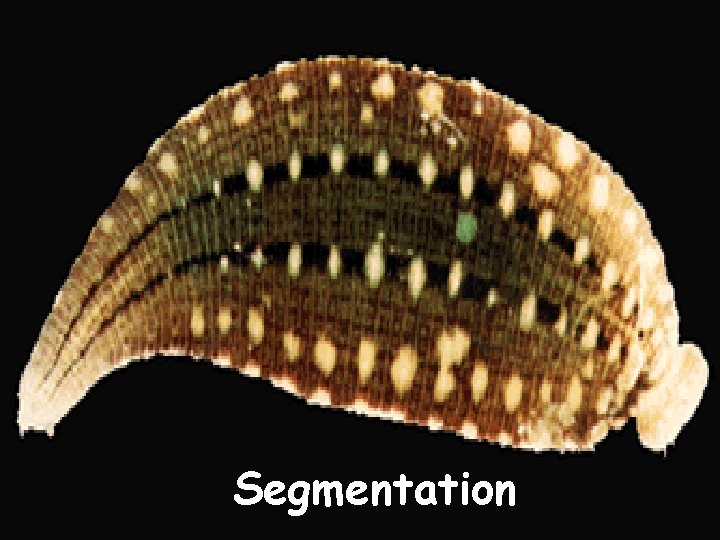
Segmentation
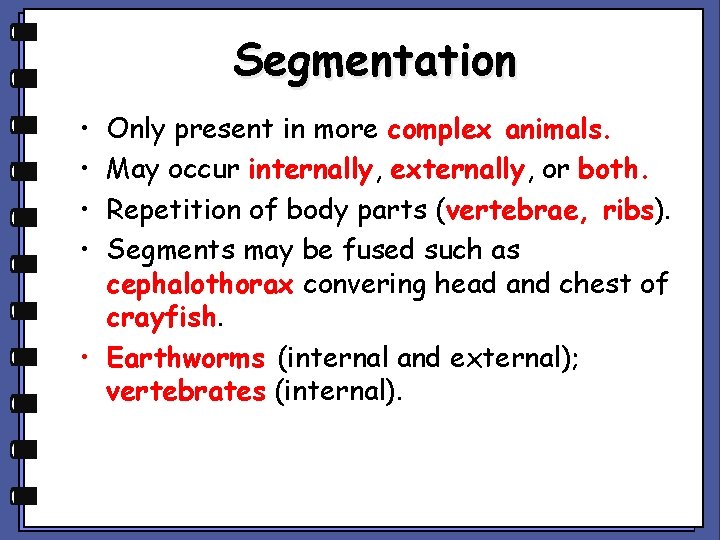
Segmentation • • Only present in more complex animals. May occur internally, externally, or both. Repetition of body parts (vertebrae, ribs). Segments may be fused such as cephalothorax convering head and chest of crayfish. • Earthworms (internal and external); vertebrates (internal).
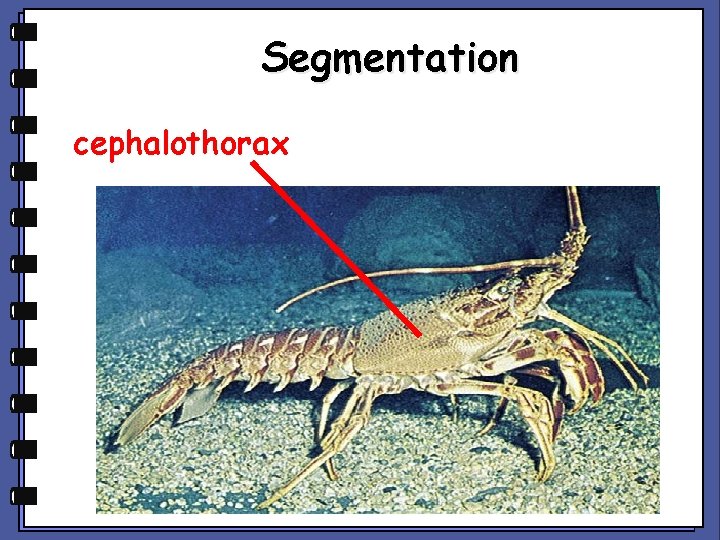
Segmentation cephalothorax
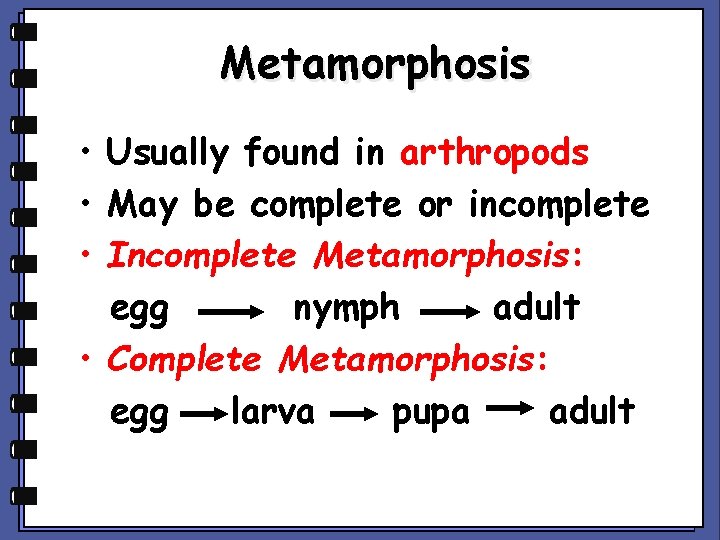
Metamorphosis • Usually found in arthropods • May be complete or incomplete • Incomplete Metamorphosis: egg nymph adult • Complete Metamorphosis: egg larva pupa adult
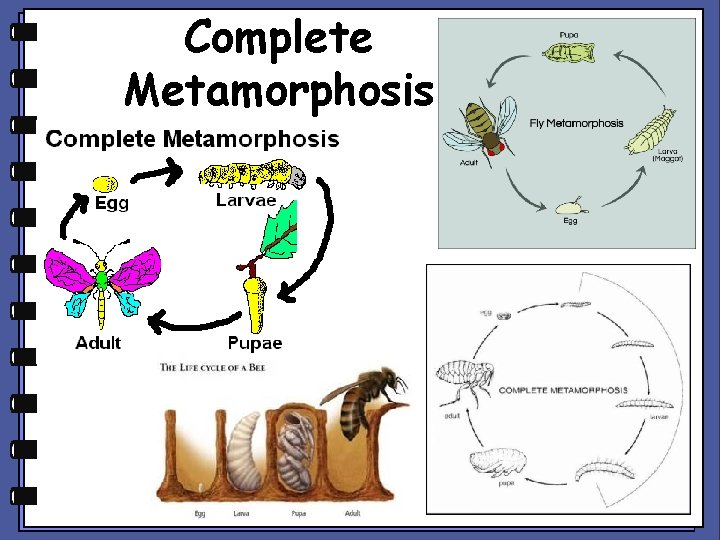
Complete Metamorphosis
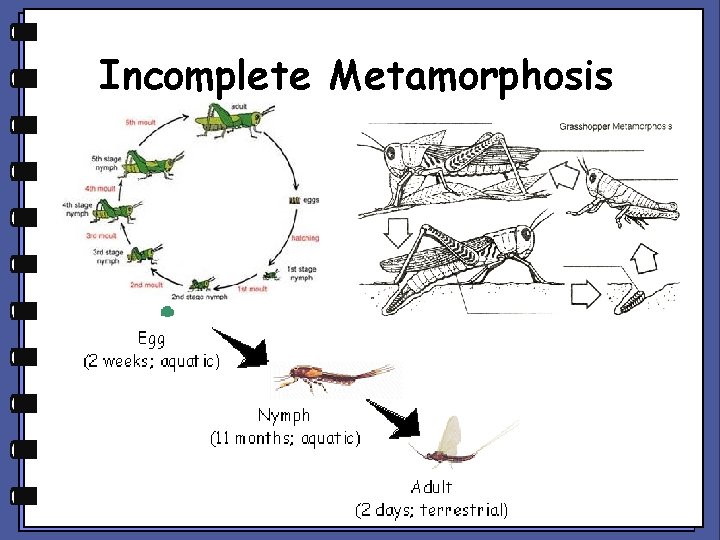
Incomplete Metamorphosis
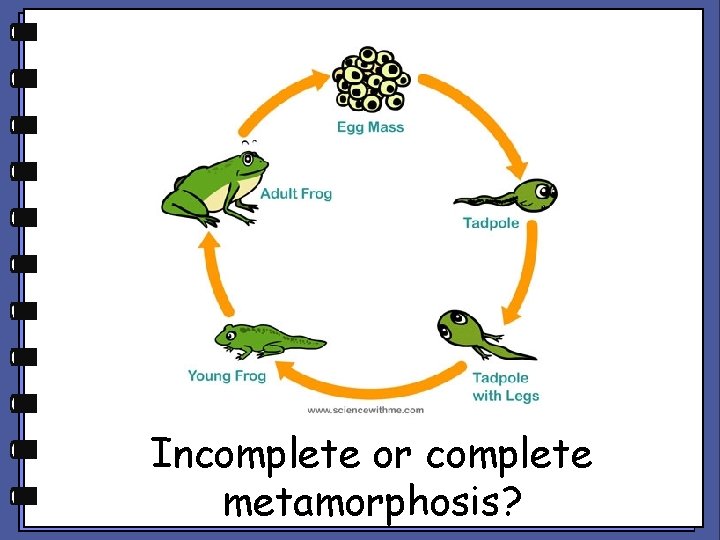
Incomplete or complete metamorphosis?
Digestive Systems • All animals are ingestive heterotrophs • Choanocytes - capture & digest food for sponges • Gastrovascular cavity with one opening in cnidarians and flatworms for food to enter & leave; called two-way digestive system
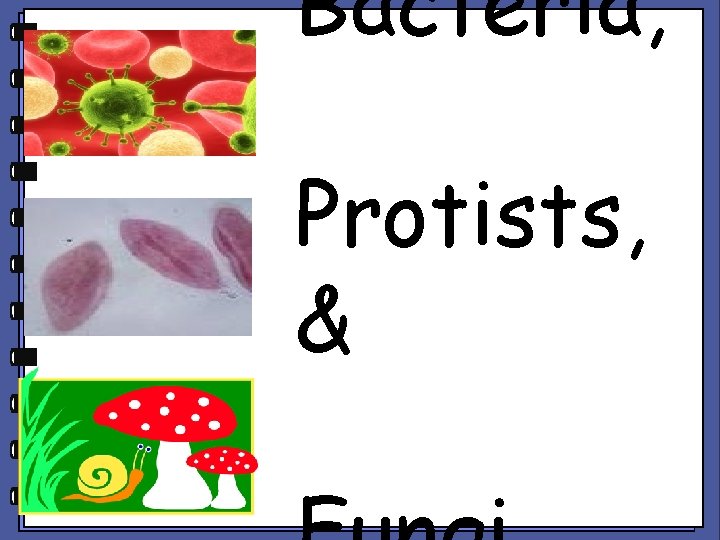
Bacteria, Protists, &
I. Bacteria A. Characteristics 1. They are tiny and unicellular 2. They are prokaryotic which means that their DNA is not housed in a nucleus. 3. They are very numerous – For example, there are 2. 5 billion bacteria in a gram of garden soil 4. They can live just about anywhere.
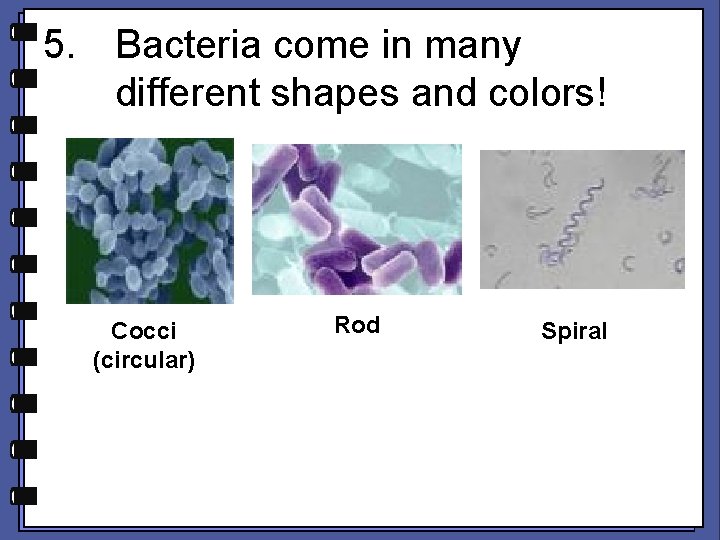
5. Bacteria come in many different shapes and colors! Cocci (circular) Rod Spiral
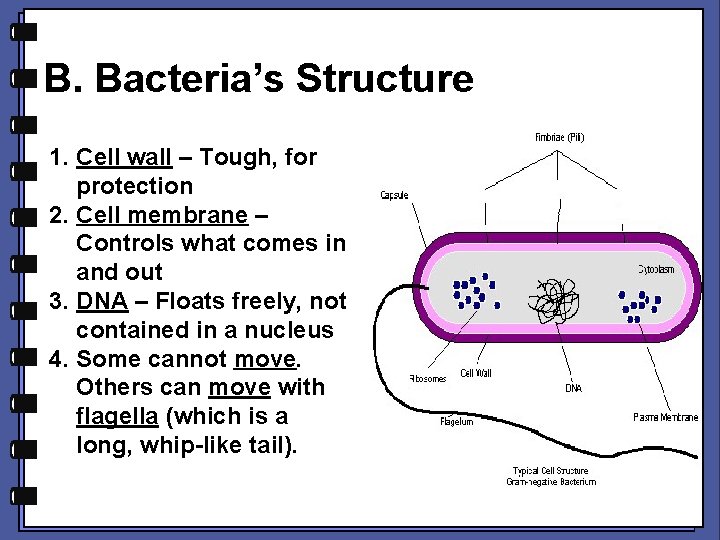
B. Bacteria’s Structure 1. Cell wall – Tough, for protection 2. Cell membrane – Controls what comes in and out 3. DNA – Floats freely, not contained in a nucleus 4. Some cannot move. Others can move with flagella (which is a long, whip-like tail).
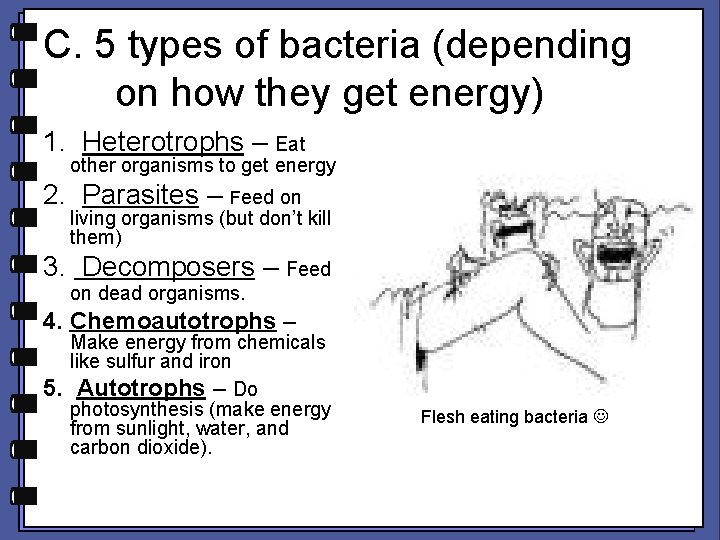
C. 5 types of bacteria (depending on how they get energy) 1. Heterotrophs – Eat other organisms to get energy 2. Parasites – Feed on living organisms (but don’t kill them) 3. Decomposers – Feed on dead organisms. 4. Chemoautotrophs – 5. Make energy from chemicals like sulfur and iron Autotrophs – Do photosynthesis (make energy from sunlight, water, and carbon dioxide). Flesh eating bacteria
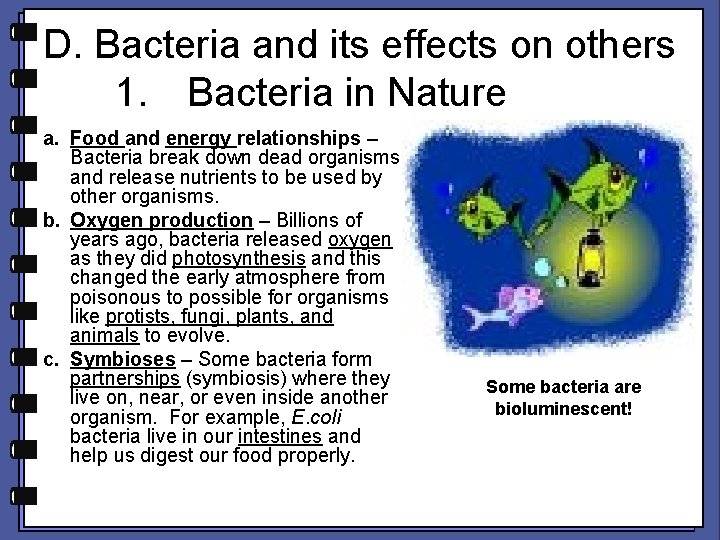
D. Bacteria and its effects on others 1. Bacteria in Nature a. Food and energy relationships – Bacteria break down dead organisms and release nutrients to be used by other organisms. b. Oxygen production – Billions of years ago, bacteria released oxygen as they did photosynthesis and this changed the early atmosphere from poisonous to possible for organisms like protists, fungi, plants, and animals to evolve. c. Symbioses – Some bacteria form partnerships (symbiosis) where they live on, near, or even inside another organism. For example, E. coli bacteria live in our intestines and help us digest our food properly. Some bacteria are bioluminescent!
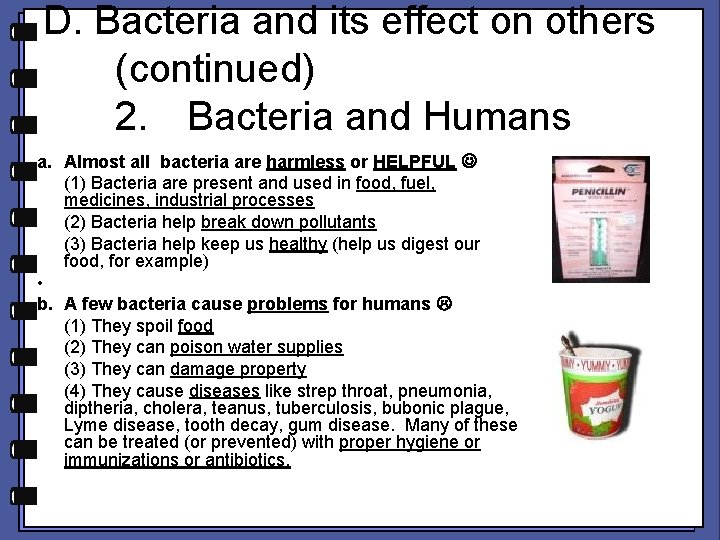
D. Bacteria and its effect on others (continued) 2. Bacteria and Humans a. Almost all bacteria are harmless or HELPFUL (1) Bacteria are present and used in food, fuel, medicines, industrial processes (2) Bacteria help break down pollutants (3) Bacteria help keep us healthy (help us digest our food, for example) • b. A few bacteria cause problems for humans (1) They spoil food (2) They can poison water supplies (3) They can damage property (4) They cause diseases like strep throat, pneumonia, diptheria, cholera, teanus, tuberculosis, bubonic plague, Lyme disease, tooth decay, gum disease. Many of these can be treated (or prevented) with proper hygiene or immunizations or antibiotics.
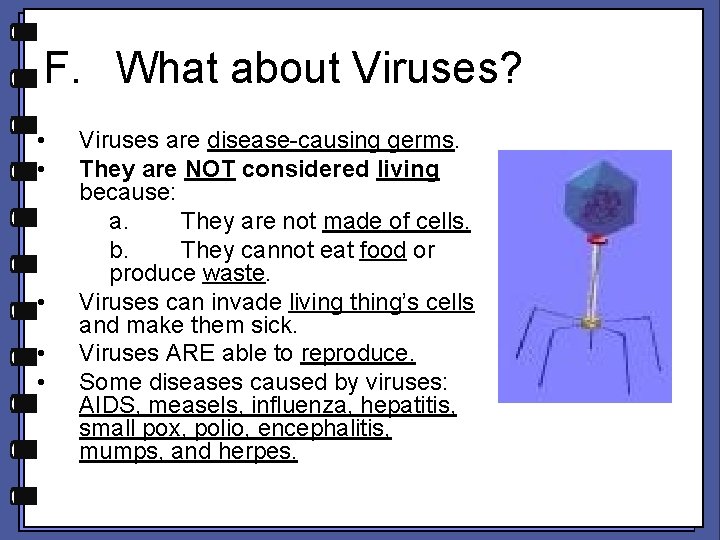
F. What about Viruses? • • • Viruses are disease-causing germs. They are NOT considered living because: a. They are not made of cells. b. They cannot eat food or produce waste. Viruses can invade living thing’s cells and make them sick. Viruses ARE able to reproduce. Some diseases caused by viruses: AIDS, measels, influenza, hepatitis, small pox, polio, encephalitis, mumps, and herpes.
Viruses §Host cell– cell in which a virus reproduces §bacteriophage – virus that infects bacteria
Characteristics of Viruses §inner core of nucleic acid (DNA or RNA) surrounded by 1 or 2 protein coats (called a capsid) §Variety of shapes determined by the proteins in their coats §CANNOT be killed by antibiotics
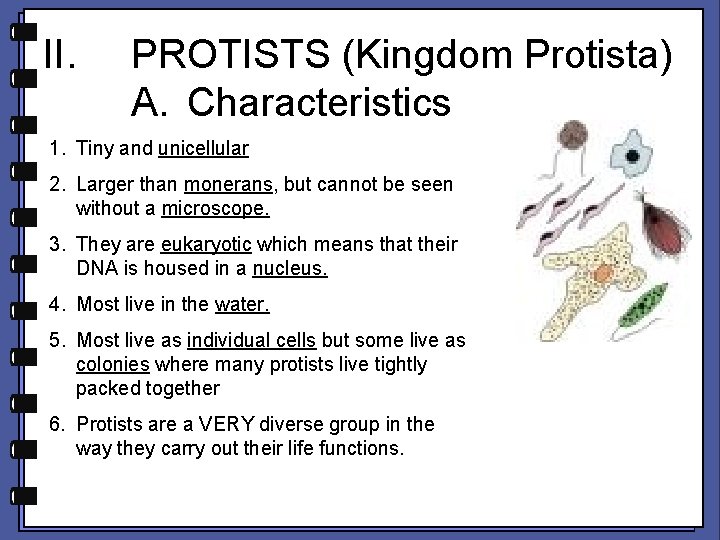
II. PROTISTS (Kingdom Protista) A. Characteristics 1. Tiny and unicellular 2. Larger than monerans, but cannot be seen without a microscope. 3. They are eukaryotic which means that their DNA is housed in a nucleus. 4. Most live in the water. 5. Most live as individual cells but some live as colonies where many protists live tightly packed together 6. Protists are a VERY diverse group in the way they carry out their life functions.
B. 3 types (Depending on how they get their energy) • Animal-like protists • Plant-like protists • Fungus-like protists
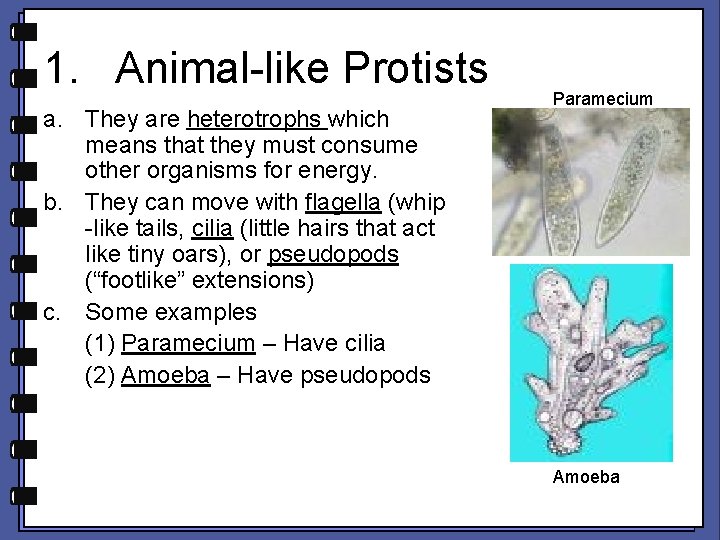
1. Animal-like Protists a. They are heterotrophs which means that they must consume other organisms for energy. b. They can move with flagella (whip -like tails, cilia (little hairs that act like tiny oars), or pseudopods (“footlike” extensions) c. Some examples (1) Paramecium – Have cilia (2) Amoeba – Have pseudopods Paramecium Amoeba
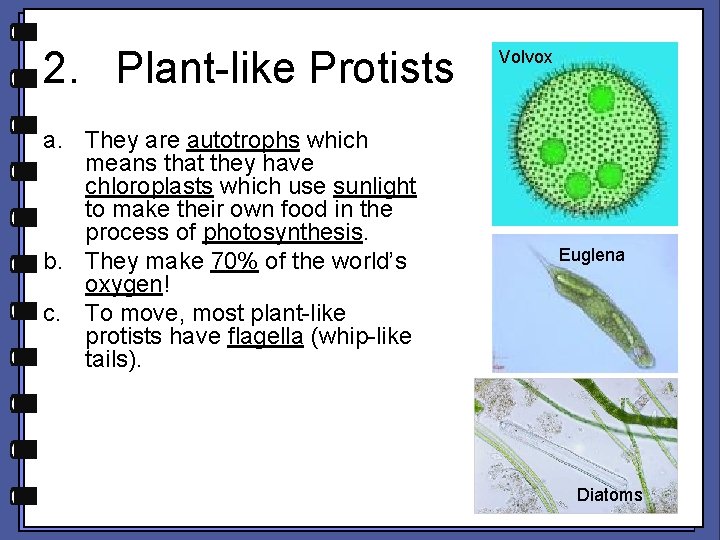
2. Plant-like Protists a. They are autotrophs which means that they have chloroplasts which use sunlight to make their own food in the process of photosynthesis. b. They make 70% of the world’s oxygen! c. To move, most plant-like protists have flagella (whip-like tails). Volvox Euglena Diatoms
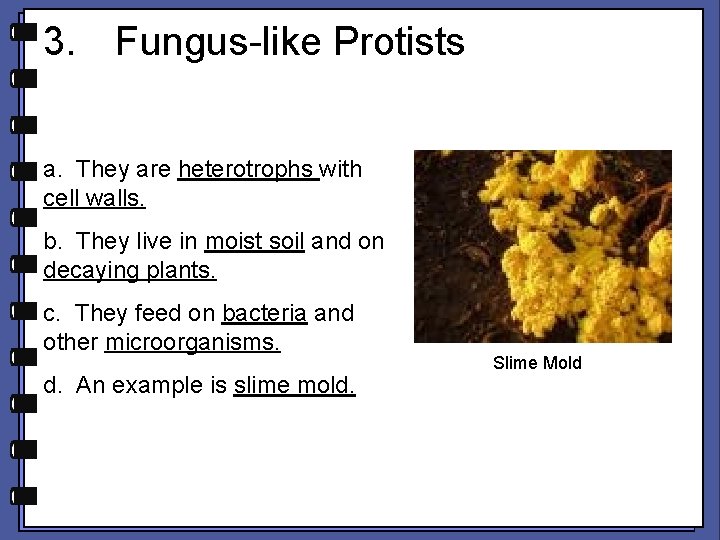
3. Fungus-like Protists a. They are heterotrophs with cell walls. b. They live in moist soil and on decaying plants. c. They feed on bacteria and other microorganisms. d. An example is slime mold. Slime Mold
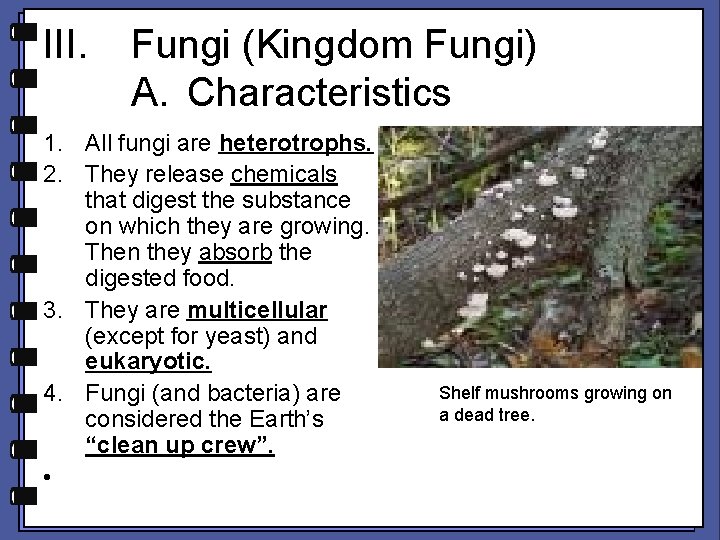
III. Fungi (Kingdom Fungi) A. Characteristics 1. All fungi are heterotrophs. 2. They release chemicals that digest the substance on which they are growing. Then they absorb the digested food. 3. They are multicellular (except for yeast) and eukaryotic. 4. Fungi (and bacteria) are considered the Earth’s “clean up crew”. • Shelf mushrooms growing on a dead tree.
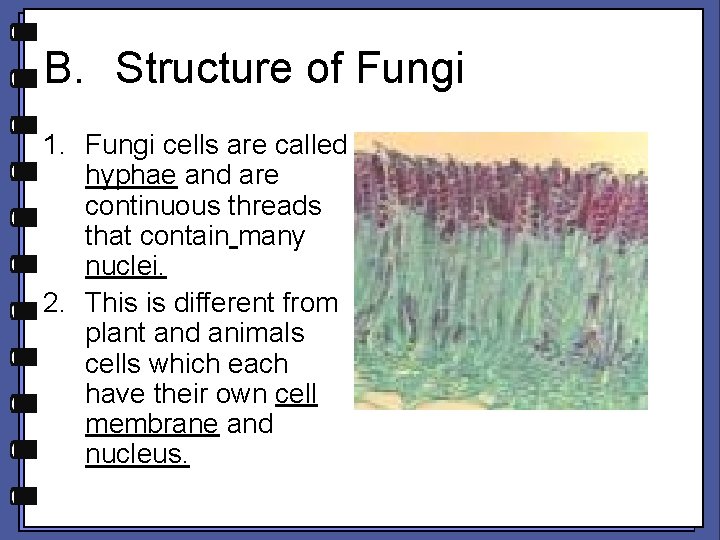
B. Structure of Fungi 1. Fungi cells are called hyphae and are continuous threads that contain many nuclei. 2. This is different from plant and animals cells which each have their own cell membrane and nucleus.
B. 3 types of fungi 1. Yeasts 2. Mushrooms 3. Mold
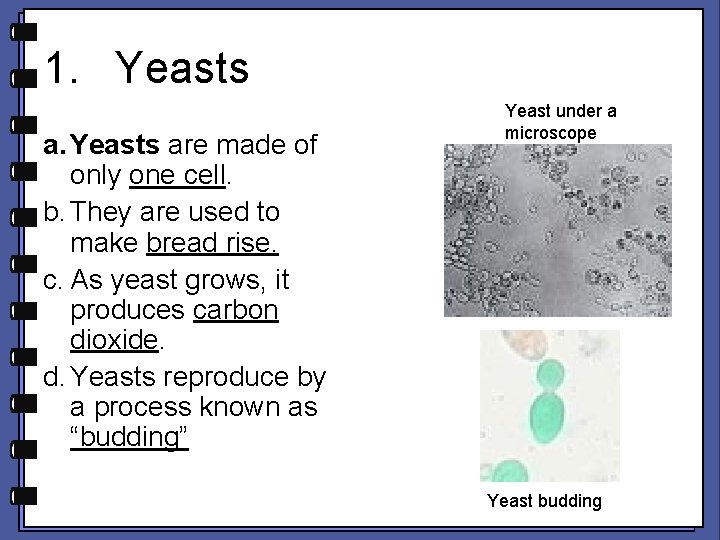
1. Yeasts are made of only one cell. b. They are used to make bread rise. c. As yeast grows, it produces carbon dioxide. d. Yeasts reproduce by a process known as “budding” Yeast under a microscope Yeast budding

2. Mushrooms a. Shaped like an umbrella b. Some can be eaten but others are poisonous. c. Reproduce with spores which are reproductive cells that get carried by the wind to a new location and start a new mushroom.
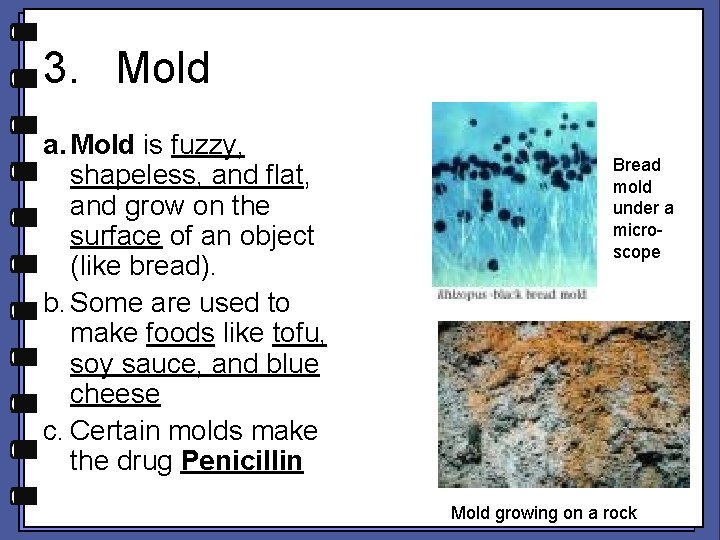
3. Mold a. Mold is fuzzy, shapeless, and flat, and grow on the surface of an object (like bread). b. Some are used to make foods like tofu, soy sauce, and blue cheese c. Certain molds make the drug Penicillin Bread mold under a microscope Mold growing on a rock
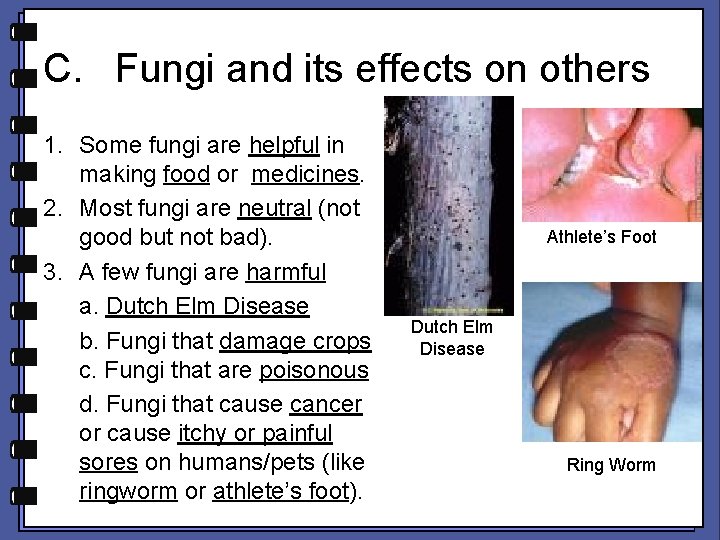
C. Fungi and its effects on others 1. Some fungi are helpful in making food or medicines. 2. Most fungi are neutral (not good but not bad). 3. A few fungi are harmful a. Dutch Elm Disease b. Fungi that damage crops c. Fungi that are poisonous d. Fungi that cause cancer or cause itchy or painful sores on humans/pets (like ringworm or athlete’s foot). Athlete’s Foot Dutch Elm Disease Ring Worm
- Slides: 72