
Introduction to Animals Development Symmetry Tissues Classification Biology
Introduction to Animals Development, Symmetry, Tissues, Classification Biology
Defining Characteristics of Animals Multicellular Heterotrophs Sexual reproduction followed by development of body tissues and organs from layers of embryonic tissue Slide 2 of 21
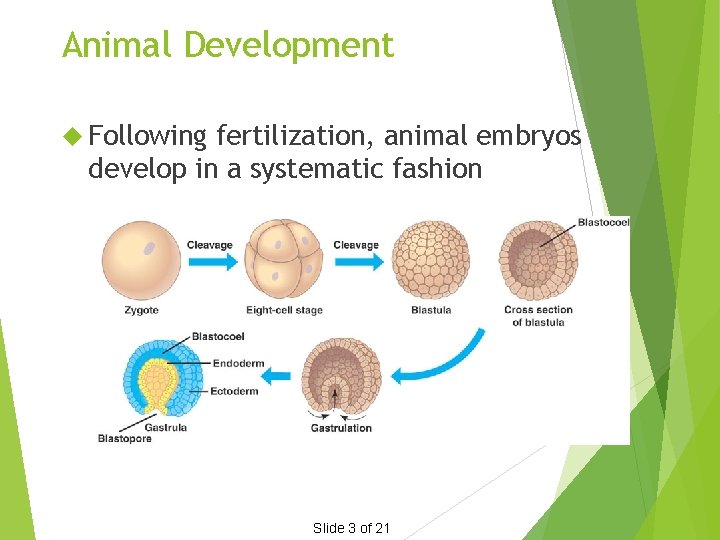
Animal Development Following fertilization, animal embryos develop in a systematic fashion Slide 3 of 21
Body Symmetry 3 different categories of body symmetry No symmetry (Asymmetrical) Ex. Radial Ex. Sponges (Porifera) symmetry Jellyfish (Cnidaria) Bilateral Ex. symmetry Humans (Mammalia) Slide 5 of 21
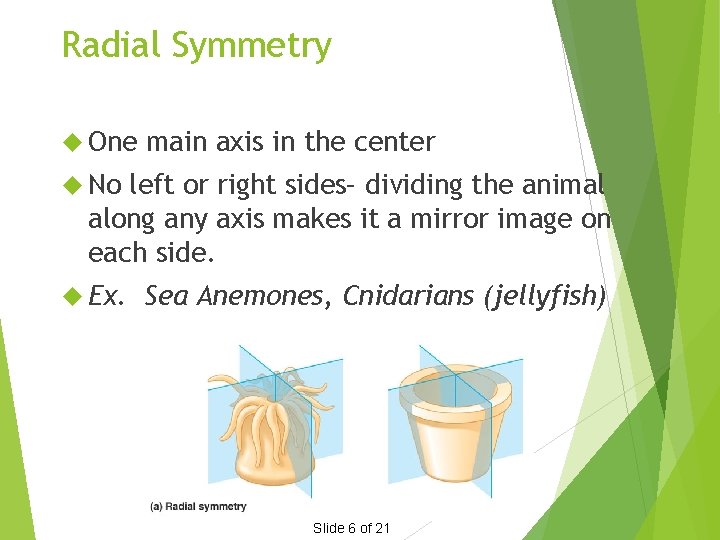
Radial Symmetry One main axis in the center No left or right sides– dividing the animal along any axis makes it a mirror image on each side. Ex. Sea Anemones, Cnidarians (jellyfish) Slide 6 of 21
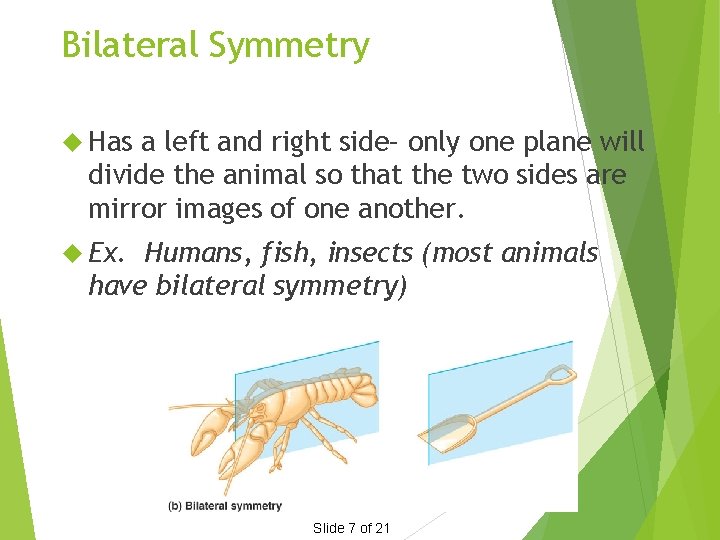
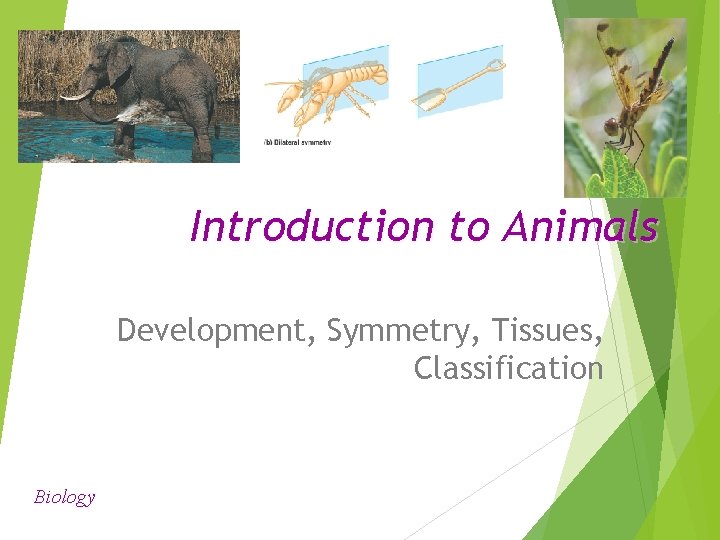
Bilateral Symmetry Has a left and right side– only one plane will divide the animal so that the two sides are mirror images of one another. Ex. Humans, fish, insects (most animals have bilateral symmetry) Slide 7 of 21
Directional Terms There are certain directional terms that can be associated with bilateral symmetry Dorsal = top side (think dorsal fin on dolphins) Ventral = bottom side Anterior = the end towards the head Posterior = the end towards the tail Slide 8 of 21
Embryonic Germ Layers Adult body parts develop from embryonic germ layers There are 3 different germ layers Ectoderm Mesoderm Endoderm Slide 9 of 21
Ectoderm Outermost layer Develops into skin, nervous system, sensory organs Slide 10 of 21
Mesoderm Middle layer Develops into muscles, bones, circulatory system, excretory system, most of reproductive system Not all animals have mesoderm Slide 11 of 21
Endoderm Inner most layer Develops into the digestive system, respiratory system Slide 12 of 21
Body Cavities Most animals have a body cavity (fluid filled space) between the endoderm and ectoderm Coelom = body cavity lined with mesoderm Type of body cavity influences how the animal moves Slide 13 of 21
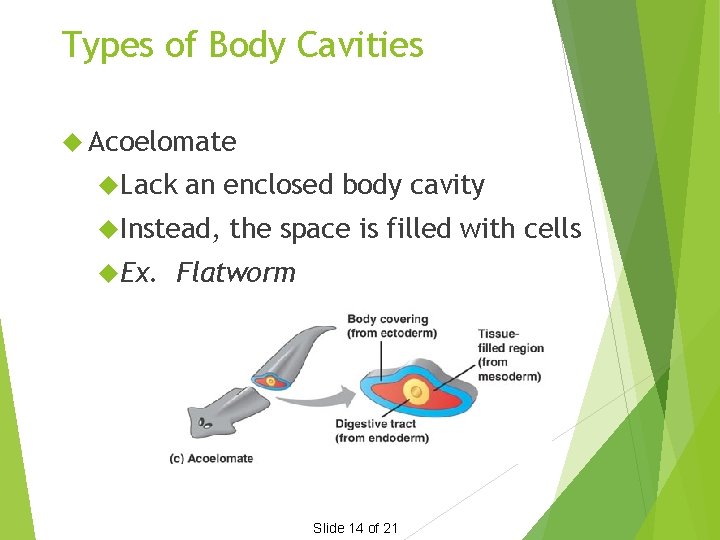
Types of Body Cavities Acoelomate Lack an enclosed body cavity Instead, Ex. the space is filled with cells Flatworm Slide 14 of 21
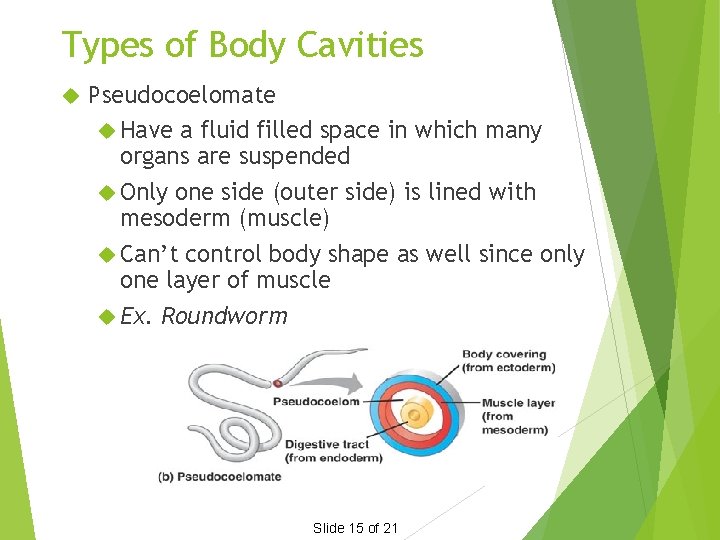
Types of Body Cavities Pseudocoelomate Have a fluid filled space in which many organs are suspended Only one side (outer side) is lined with mesoderm (muscle) Can’t control body shape as well since only one layer of muscle Ex. Roundworm Slide 15 of 21
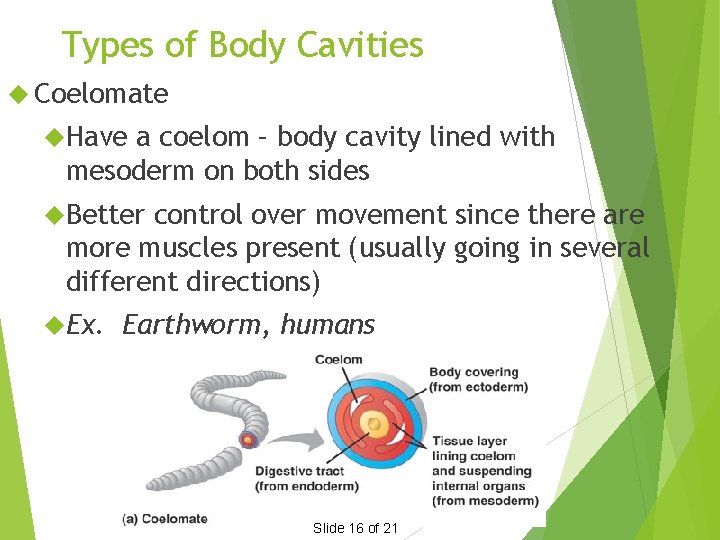
Types of Body Cavities Coelomate Have a coelom – body cavity lined with mesoderm on both sides Better control over movement since there are more muscles present (usually going in several different directions) Ex. Earthworm, humans Slide 16 of 21
Protostomes vs. Deuterostomes Excluding sponges, cnidarians and ctenophores, all other animals can be classified as either a protostome or a deuterostome. Classification has to do with how the embryo develops. Early in development a cavity forms Blastopore = opening to the cavity Slide 17 of 21
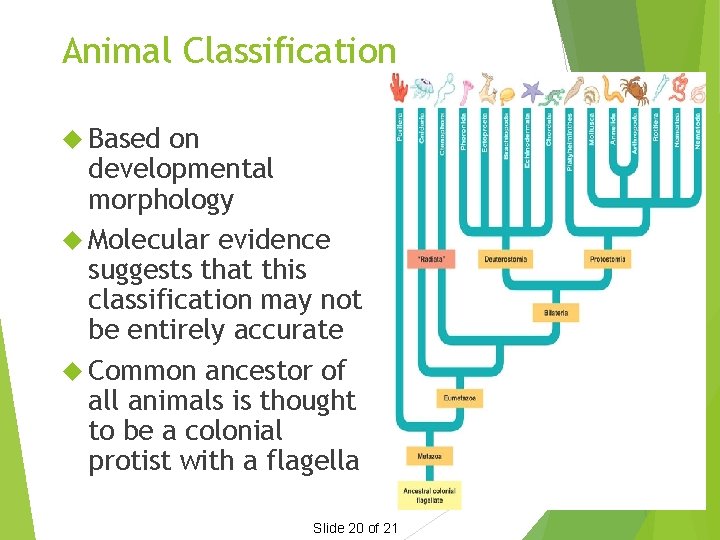
Animal Classification Based on developmental morphology Molecular evidence suggests that this classification may not be entirely accurate Common ancestor of all animals is thought to be a colonial protist with a flagella Slide 20 of 21
Scientific Names for Animals Porifera = sponges Cnidarians = jellyfish Platyhelminthes = flatworms Nematodes = roundworms Annelids = Earthworms Arthropods = insects, crustaceans Echinoderms = starfish Chordates = humans, birds, fish, amphibians Slide 21 of 21
- Slides: 18