
Introduction to Animals Characteristics of Animals Heterotrophs Multicellular
- Slides: 17
Introduction to Animals
Characteristics of Animals • Heterotrophs • Multicellular • Eukaryotic • Cells lack cell walls
Types of Animals • Invertebrates – More than 95% of all animal species – At least 33 phyla – Examples: sea stars, jellyfishes, worms, insects • Chordates – Fewer than 5% of all animal species – Phylum Chordata – Examples: fishes, amphibians, reptiles, birds and mammals
Phylum Chordata • Have the following 4 characteristics during at least one stage of life – Dorsal, hollow nerve cord – Notochord – Tail that extends beyond the anus – Pharyngeal pouches
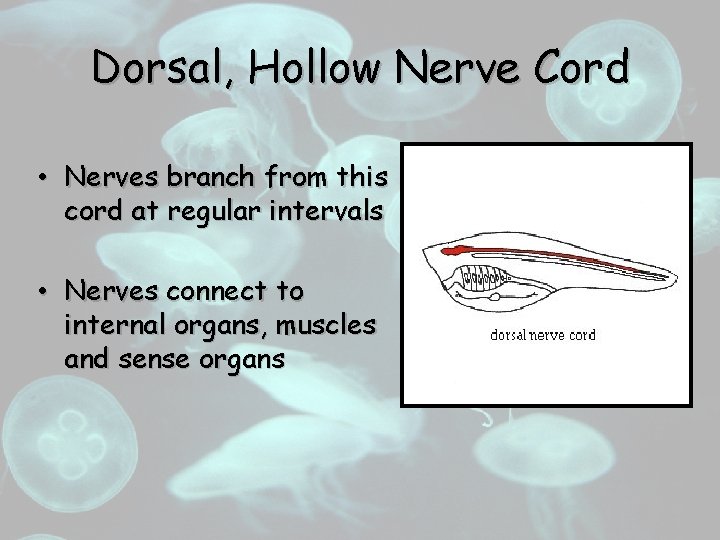
Dorsal, Hollow Nerve Cord • Nerves branch from this cord at regular intervals • Nerves connect to internal organs, muscles and sense organs
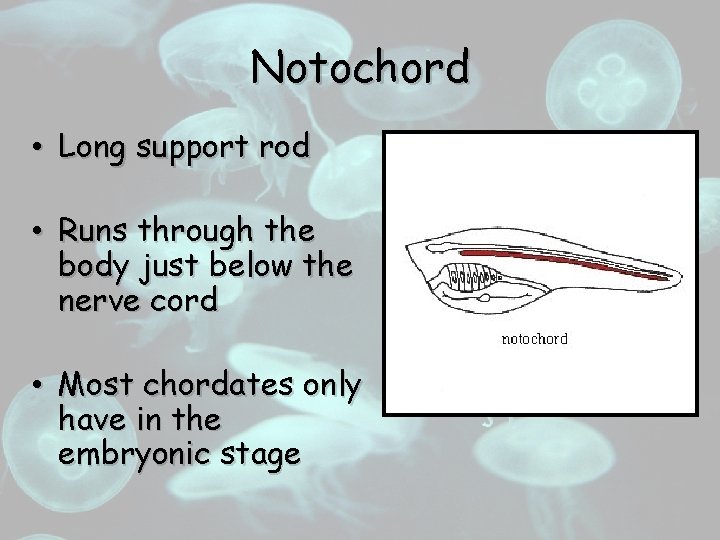
Notochord • Long support rod • Runs through the body just below the nerve cord • Most chordates only have in the embryonic stage
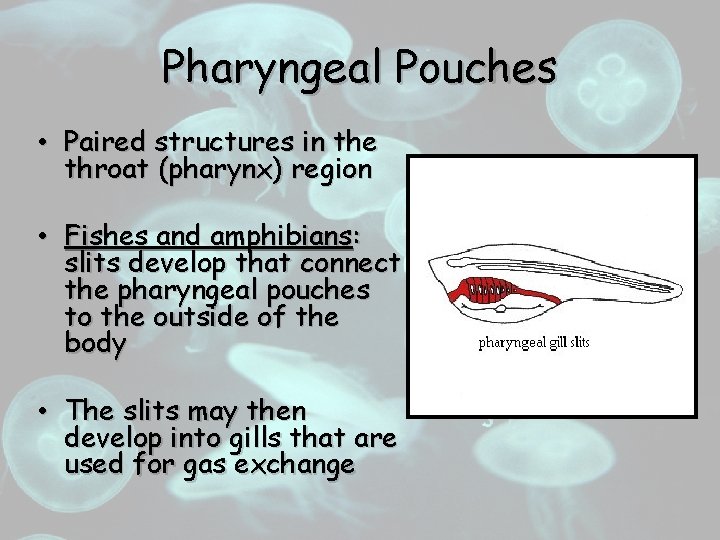
Pharyngeal Pouches • Paired structures in the throat (pharynx) region • Fishes and amphibians: slits develop that connect the pharyngeal pouches to the outside of the body • The slits may then develop into gills that are used for gas exchange
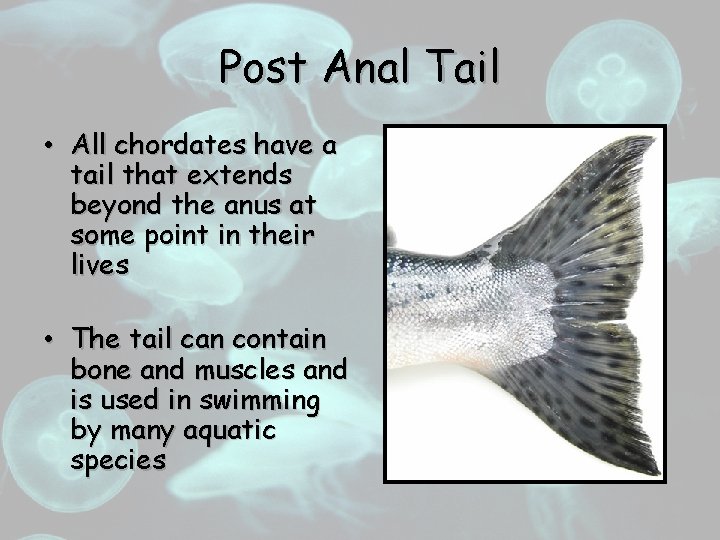
Post Anal Tail • All chordates have a tail that extends beyond the anus at some point in their lives • The tail can contain bone and muscles and is used in swimming by many aquatic species
What Animals Do to Survive • Maintain Homeostasis – Feedback Inhibition (Negative Feedback) • Gather and Respond to Information • Obtain and Distribute O 2 & Nutrients • Collect and Eliminate CO 2 & Other Wastes • Reproduce
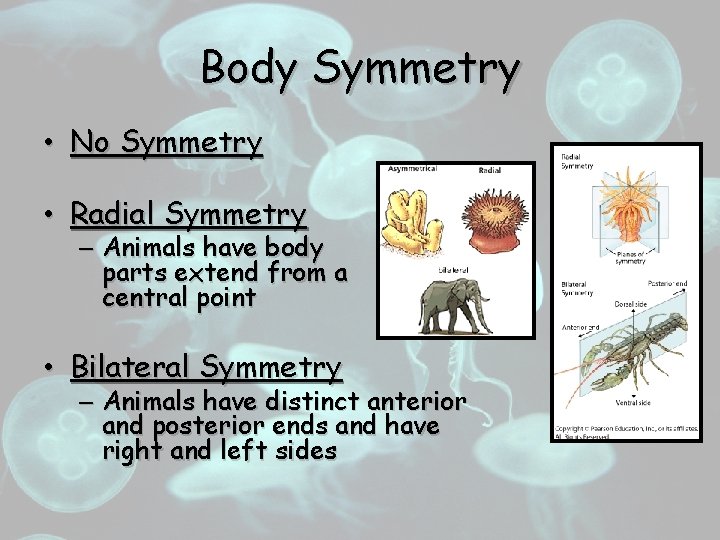
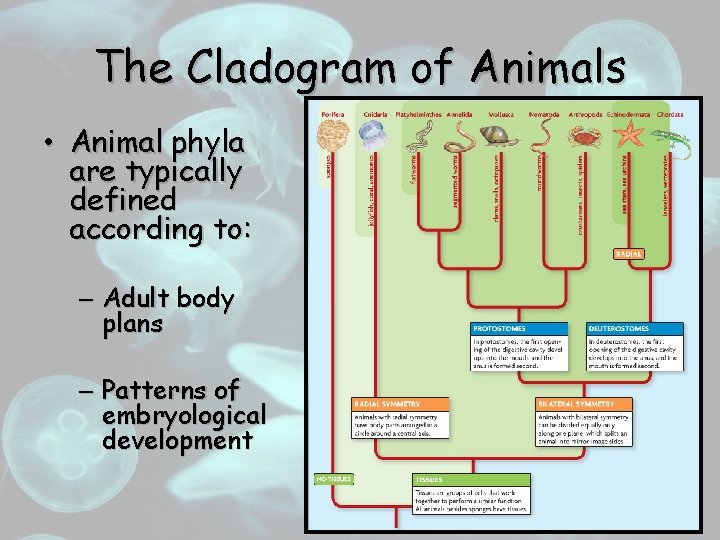
Body Symmetry • No Symmetry • Radial Symmetry – Animals have body parts extend from a central point • Bilateral Symmetry – Animals have distinct anterior and posterior ends and have right and left sides
Differentiation of Germ Layers • Endoderm – Innermost germ layer – Develops into the linings of the digestive tract & much of the respiratory system • Mesoderm – Middle layer – Develops into muscles & much of the circulatory, reproductive, & excretory systems • Ectoderm – Outermost layer – Produces sense organs, nerves, & outer layer of the skin
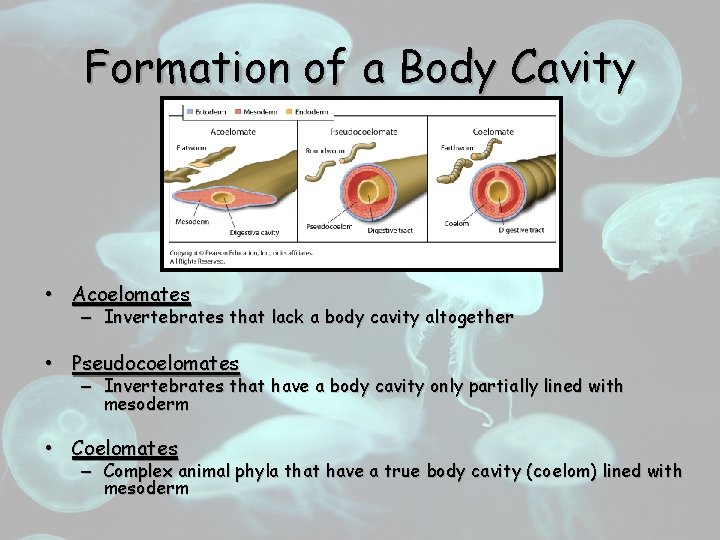
Formation of a Body Cavity • Acoelomates – Invertebrates that lack a body cavity altogether • Pseudocoelomates – Invertebrates that have a body cavity only partially lined with mesoderm • Coelomates – Complex animal phyla that have a true body cavity (coelom) lined with mesoderm
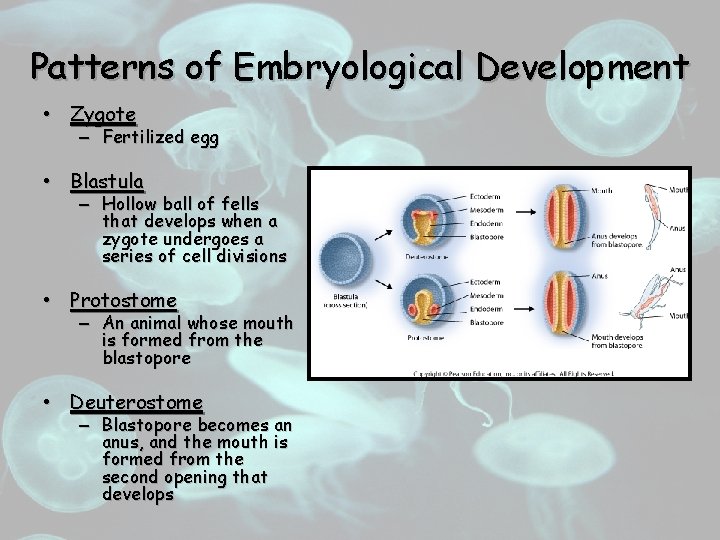
Patterns of Embryological Development • Zygote – Fertilized egg • Blastula – Hollow ball of fells that develops when a zygote undergoes a series of cell divisions • Protostome – An animal whose mouth is formed from the blastopore • Deuterostome – Blastopore becomes an anus, and the mouth is formed from the second opening that develops
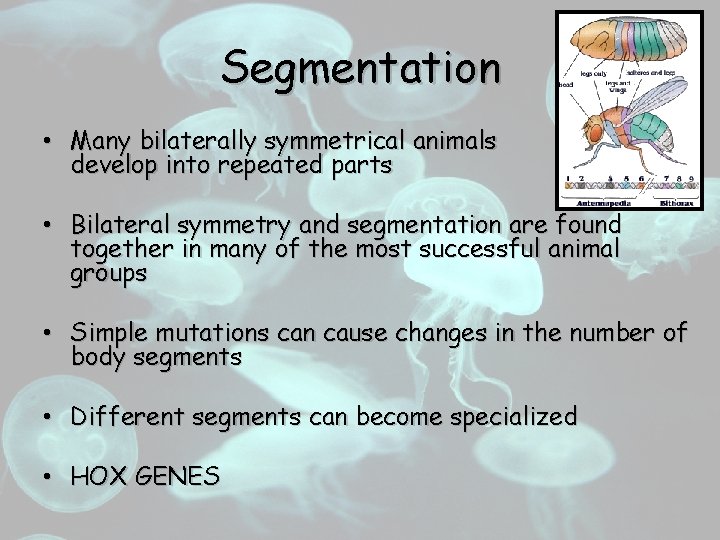
Segmentation • Many bilaterally symmetrical animals develop into repeated parts • Bilateral symmetry and segmentation are found together in many of the most successful animal groups • Simple mutations can cause changes in the number of body segments • Different segments can become specialized • HOX GENES
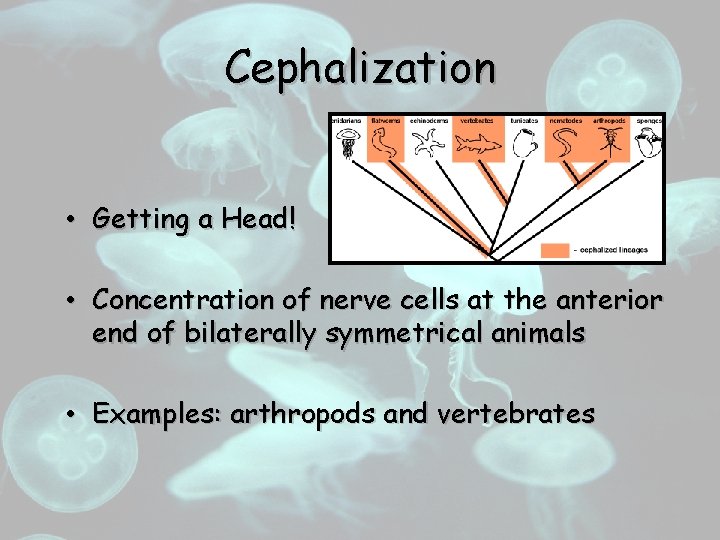
Cephalization • Getting a Head! • Concentration of nerve cells at the anterior end of bilaterally symmetrical animals • Examples: arthropods and vertebrates
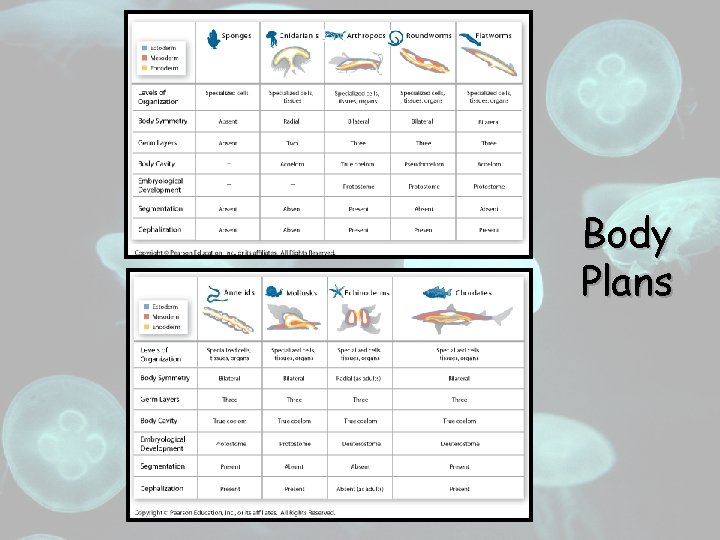
Body Plans
The Cladogram of Animals • Animal phyla are typically defined according to: – Adult body plans – Patterns of embryological development