
INTRODUCTION TO ANIMALS Chapters 26 33 Animal Basics
INTRODUCTION TO ANIMALS Chapters 26 -33
Animal Basics 4 Defining Characteristics u Morphology (animal bodies) u Invertebrates versus vertebrates u
4 DEFINING CHARACTERISTICS: 1. eukaryotic, multi-cellular (no cell walls) 2. heterotrophic 3. sexual reproduction and development 4. movement
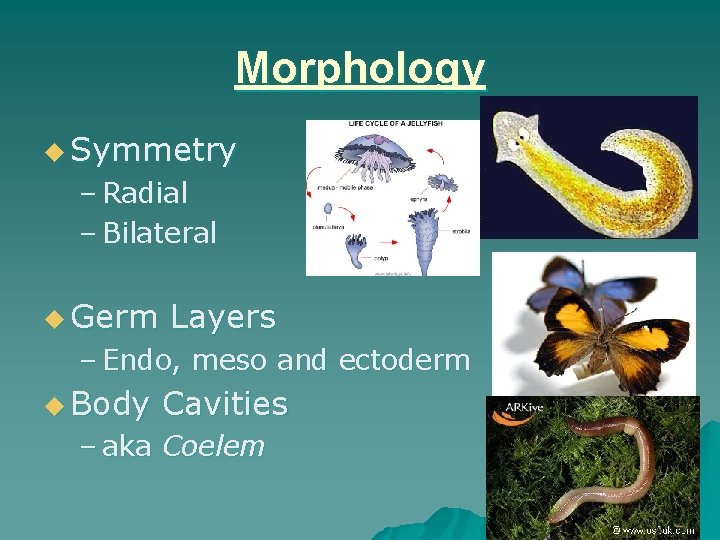
Morphology u Symmetry – Radial – Bilateral u Germ Layers – Endo, meso and ectoderm u Body Cavities – aka Coelem
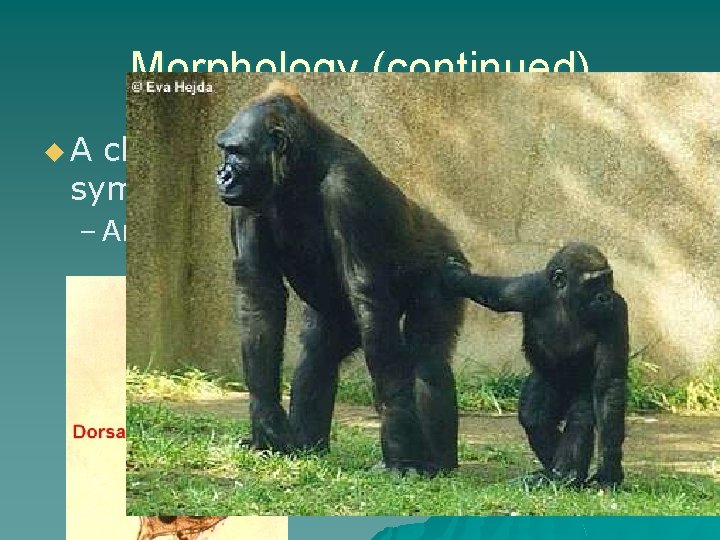
Morphology (continued) u. A closer look at bilateral body symmetry – Anatomy terms
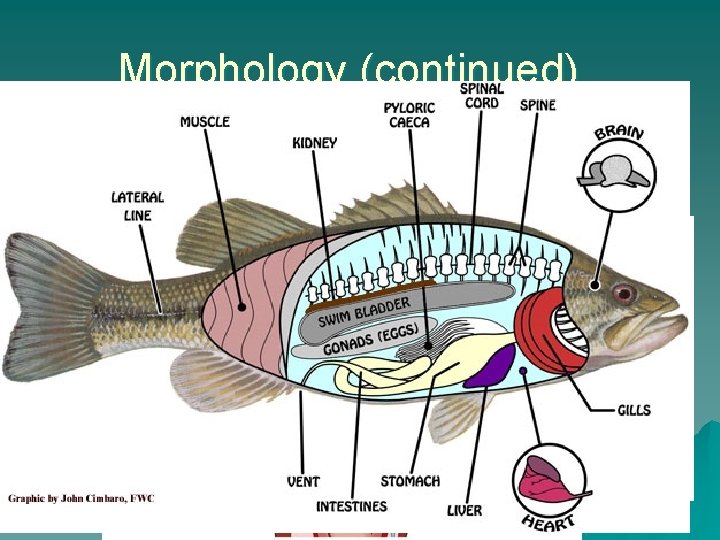
Morphology (continued) u Cephalization – concentration of sensory and brain structures in anterior region
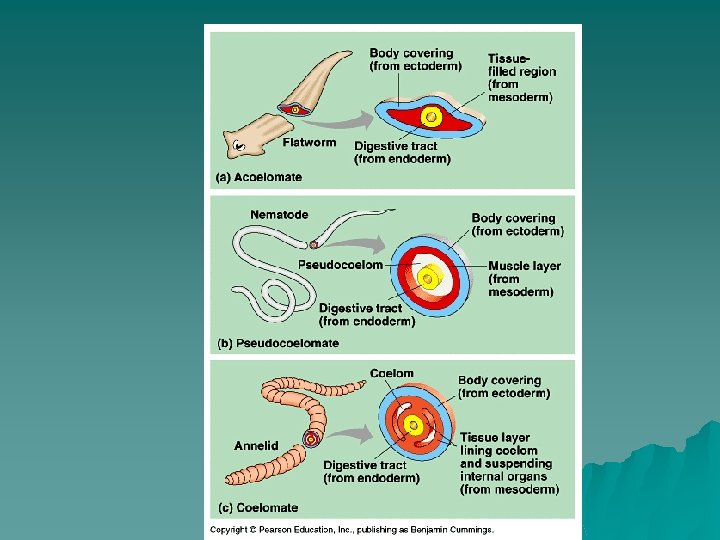
Morphology (continued) closer look at germ layers and body cavities u. A – Animals are either u Acoelomates: no body cavity u Pseudocoelomates: false body cavity u Coelomates: true body cavity
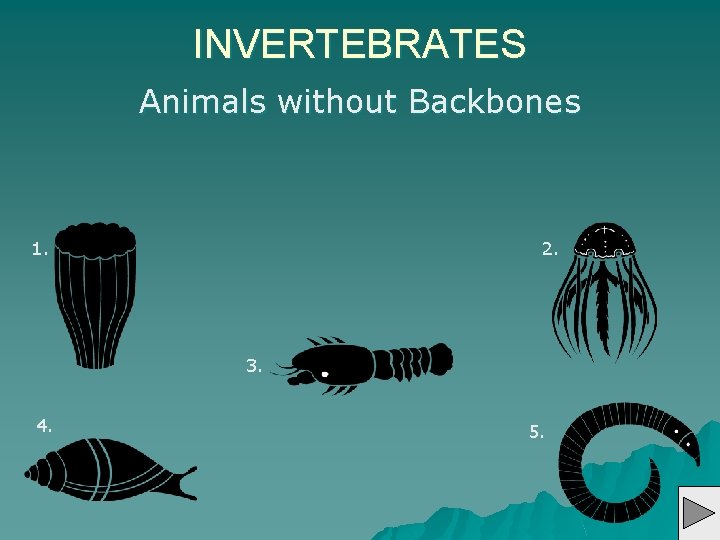
INVERTEBRATES Animals without Backbones 1. 2. 3. 4. 5.
REVIEW: ANIMALS CHARACTERISTICS: Ø 1. Ø 2. Ø 3. Ø 4.
REVIEW: ANIMALS CHARACTERISTICS: Ø 1. eukaryotic, multi-cellular (no cell walls) Ø 2. heterotrophic Ø 3. sexual reproduction and development Ø 4. movement
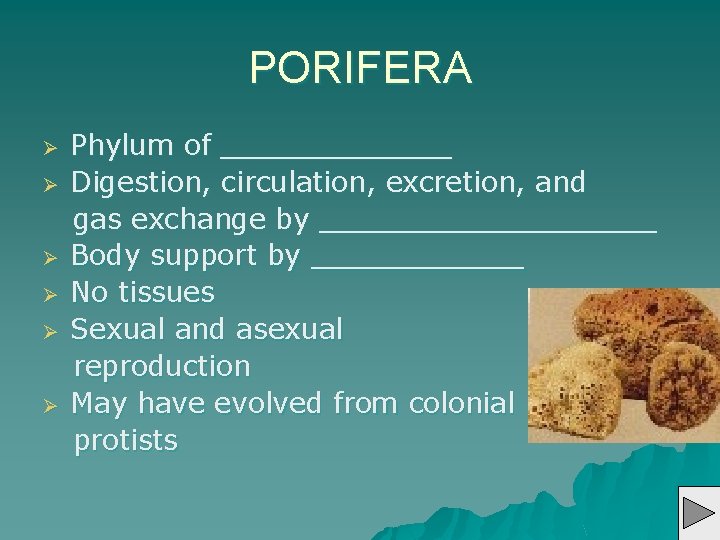
PORIFERA Ø Ø Ø Phylum of _______ Digestion, circulation, excretion, and gas exchange by __________ Body support by ______ No tissues Sexual and asexual reproduction May have evolved from colonial protists
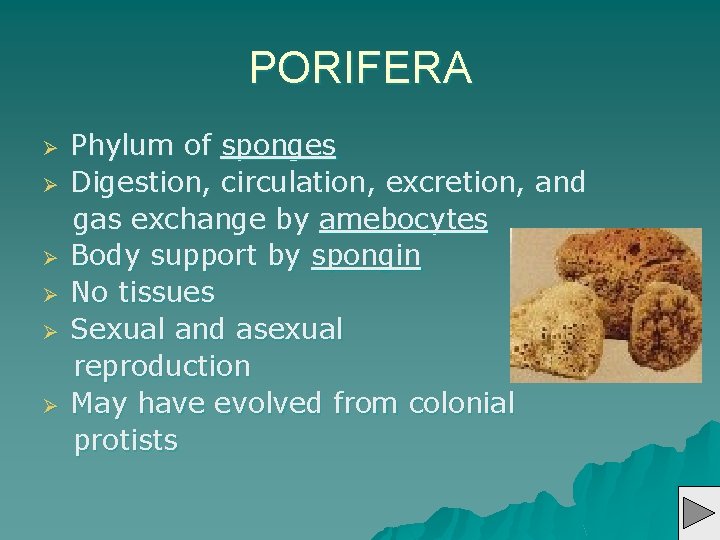
PORIFERA Ø Ø Ø Phylum of sponges Digestion, circulation, excretion, and gas exchange by amebocytes Body support by spongin No tissues Sexual and asexual reproduction May have evolved from colonial protists
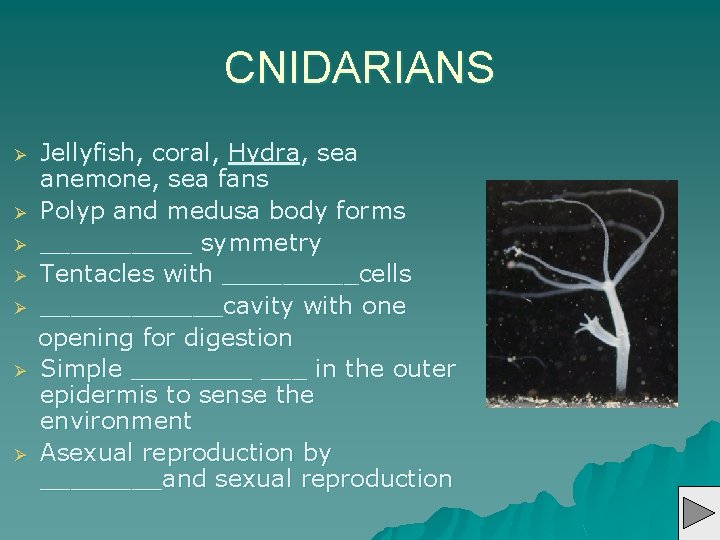
CNIDARIANS Ø Ø Ø Ø Jellyfish, coral, Hydra, sea anemone, sea fans Polyp and medusa body forms _____ symmetry Tentacles with _____cells ______cavity with one opening for digestion Simple ____ ___ in the outer epidermis to sense the environment Asexual reproduction by ____and sexual reproduction
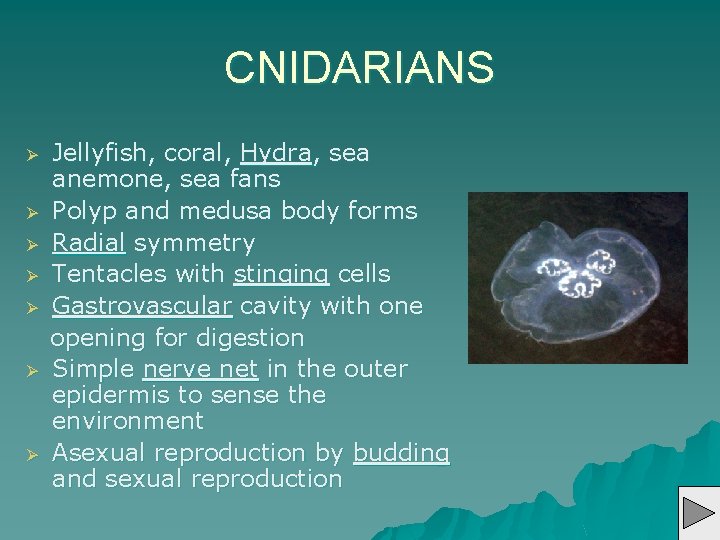
CNIDARIANS Ø Ø Ø Ø Jellyfish, coral, Hydra, sea anemone, sea fans Polyp and medusa body forms Radial symmetry Tentacles with stinging cells Gastrovascular cavity with one opening for digestion Simple nerve net in the outer epidermis to sense the environment Asexual reproduction by budding and sexual reproduction
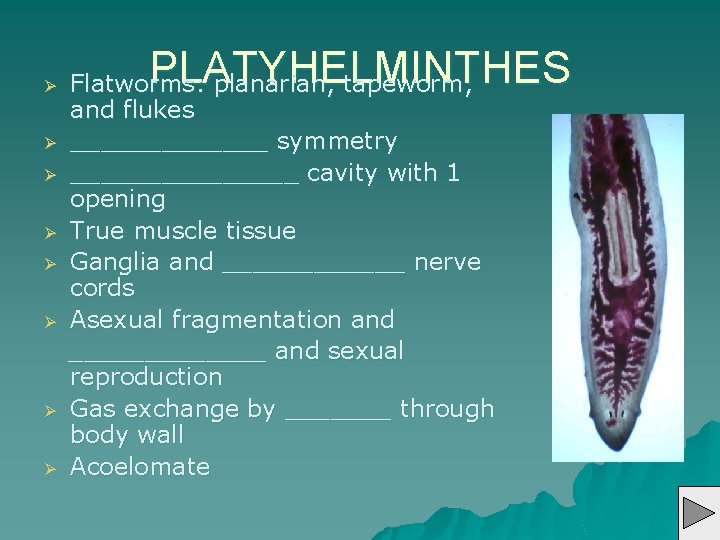
Ø Ø Ø Ø PLATYHELMINTHES Flatworms: planarian, tapeworm, and flukes _______ symmetry ________ cavity with 1 opening True muscle tissue Ganglia and ______ nerve cords Asexual fragmentation and _______ and sexual reproduction Gas exchange by _______ through body wall Acoelomate
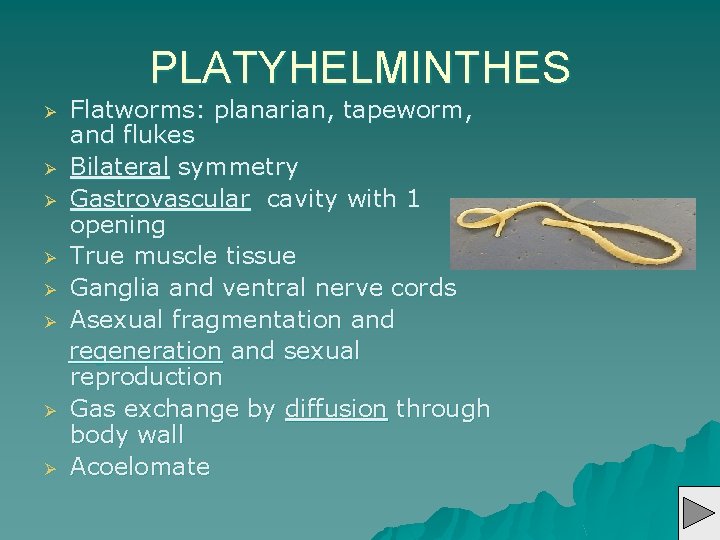
PLATYHELMINTHES Ø Ø Ø Ø Flatworms: planarian, tapeworm, and flukes Bilateral symmetry Gastrovascular cavity with 1 opening True muscle tissue Ganglia and ventral nerve cords Asexual fragmentation and regeneration and sexual reproduction Gas exchange by diffusion through body wall Acoelomate
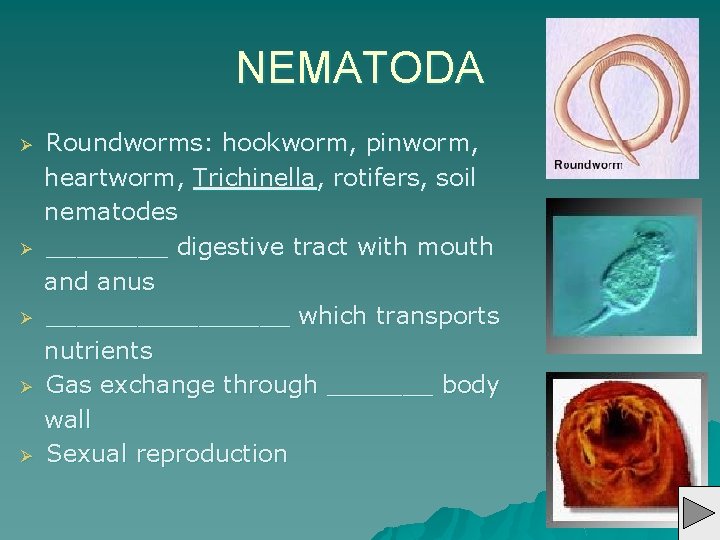
NEMATODA Ø Ø Ø Roundworms: hookworm, pinworm, heartworm, Trichinella, rotifers, soil nematodes ____ digestive tract with mouth and anus ________ which transports nutrients Gas exchange through _______ body wall Sexual reproduction
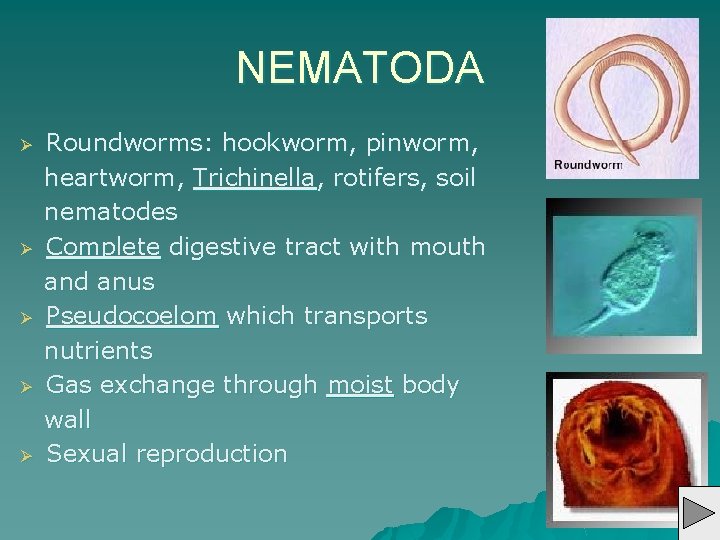
NEMATODA Ø Ø Ø Roundworms: hookworm, pinworm, heartworm, Trichinella, rotifers, soil nematodes Complete digestive tract with mouth and anus Pseudocoelom which transports nutrients Gas exchange through moist body wall Sexual reproduction
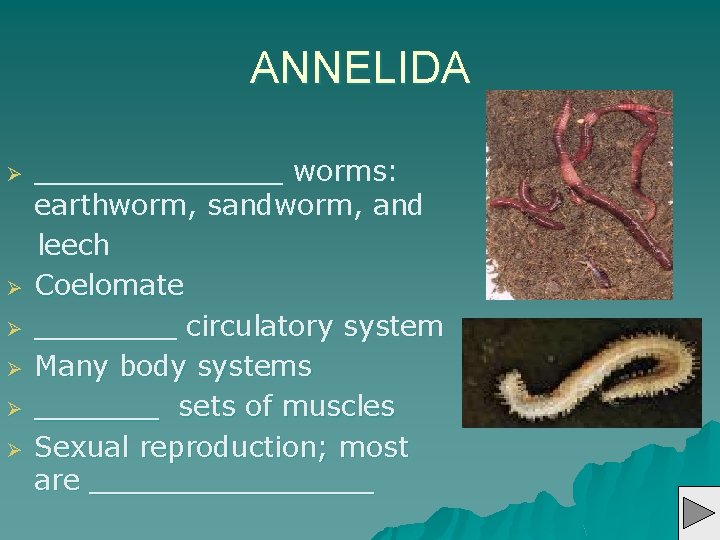
ANNELIDA Ø Ø Ø _______ worms: earthworm, sandworm, and leech Coelomate ____ circulatory system Many body systems _______ sets of muscles Sexual reproduction; most are ________
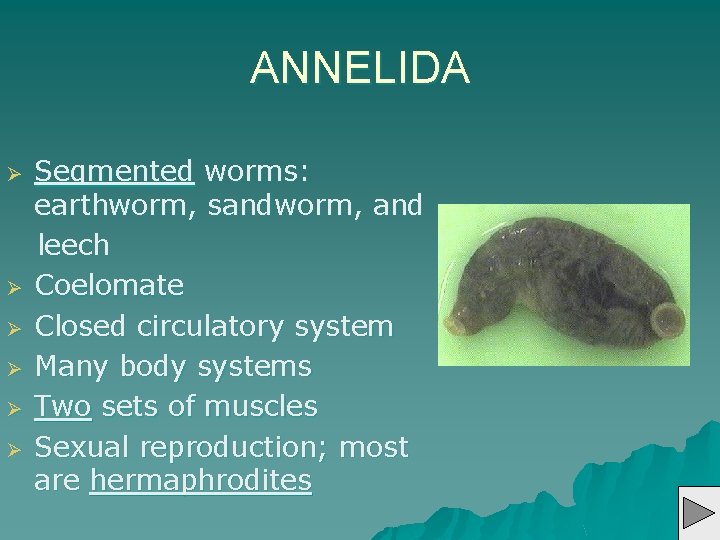
ANNELIDA Ø Ø Ø Segmented worms: earthworm, sandworm, and leech Coelomate Closed circulatory system Many body systems Two sets of muscles Sexual reproduction; most are hermaphrodites
MOLLUSCA Ø Ø Mollusks: snails, sea slugs; bivalves such as clams, scallops, oysters, and mussels; octopus, squid, and chambered nautilus (cephalopods) All have a _____ and a _____ that produces a shell in most species _____ circulatory system Gas exchange by _______ in mantle cavity in water forms or mantle cavity serves as a ____ in land forms
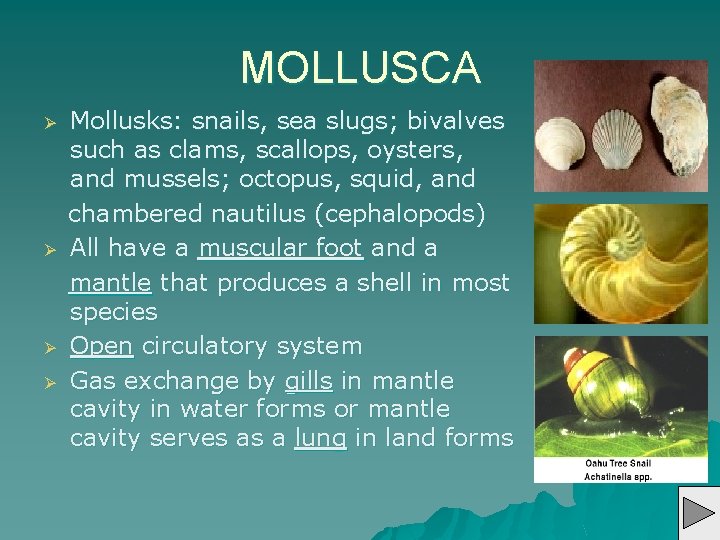
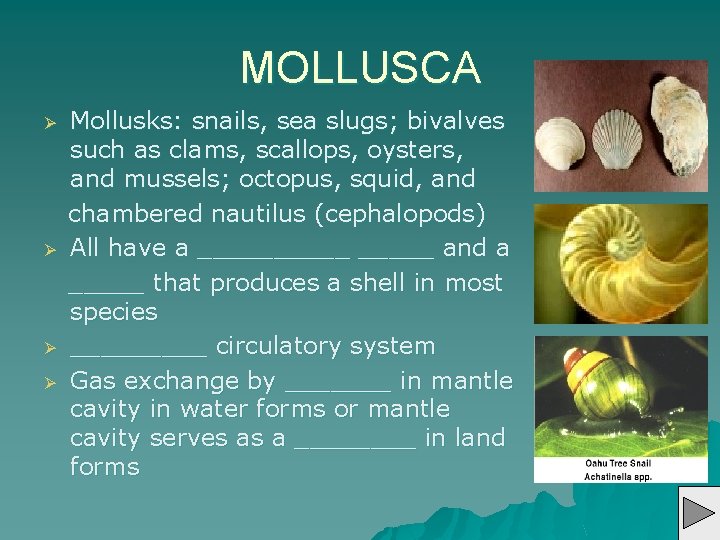
MOLLUSCA Ø Ø Mollusks: snails, sea slugs; bivalves such as clams, scallops, oysters, and mussels; octopus, squid, and chambered nautilus (cephalopods) All have a muscular foot and a mantle that produces a shell in most species Open circulatory system Gas exchange by gills in mantle cavity in water forms or mantle cavity serves as a lung in land forms
ARTHROPODA Ø Ø Ø Ø Insects, crustaceans, spiders (Arachnids), centipedes, millipedes ______of protein and chitin; _____ appendages _____ circulatory system ________ tubules in insects and arachnids remove liquid wastes _______and/or book lungs in terrestrial forms; gills in aquatic species for gas exchange _______eyes and antennae in many forms Sexual reproduction with separate sexes and _______ fertilization
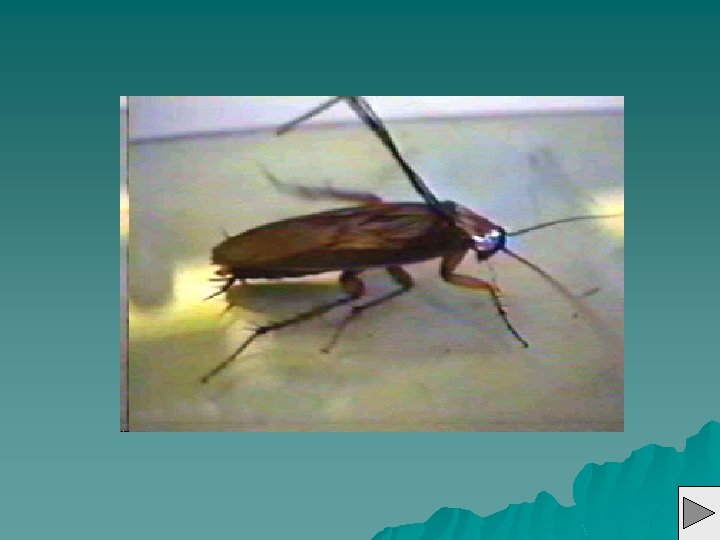
ARTHROPODA Ø Ø Ø Ø Insects, crustaceans, spiders (Arachnids), centipedes, millipedes Exoskeleton of protein and chitin; jointed appendages Open circulatory system Malpighian tubules in insects and arachnids remove liquid wastes Tracheal tubes and/or book lungs in terrestrial forms; gills in aquatic species for gas exchange Compound eyes and antennae in many forms Sexual reproduction with separate sexes and internal fertilization
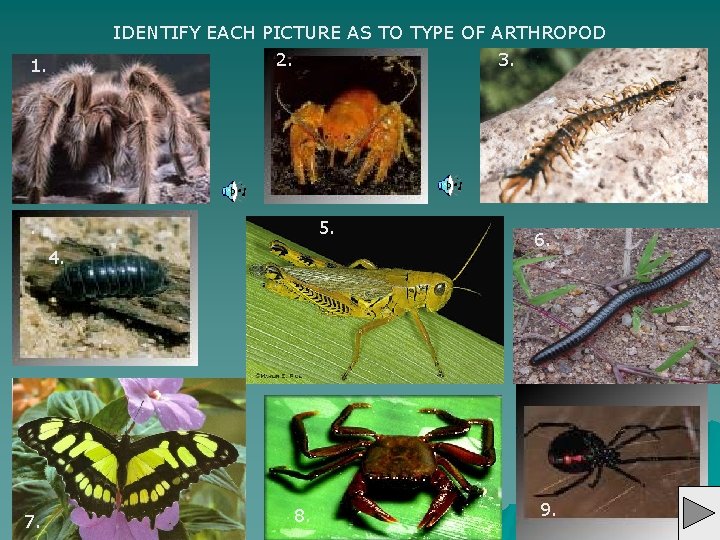
IDENTIFY EACH PICTURE AS TO TYPE OF ARTHROPOD 2. 3. 1. . 5. 4. 7. 8. 6. 9.
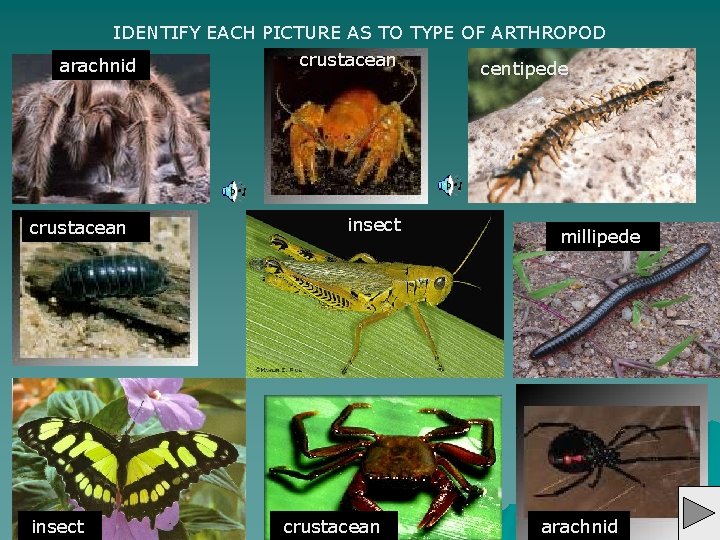
IDENTIFY EACH PICTURE AS TO TYPE OF ARTHROPOD crustacean arachnid centipede crustacean insect crustacean millipede arachnid
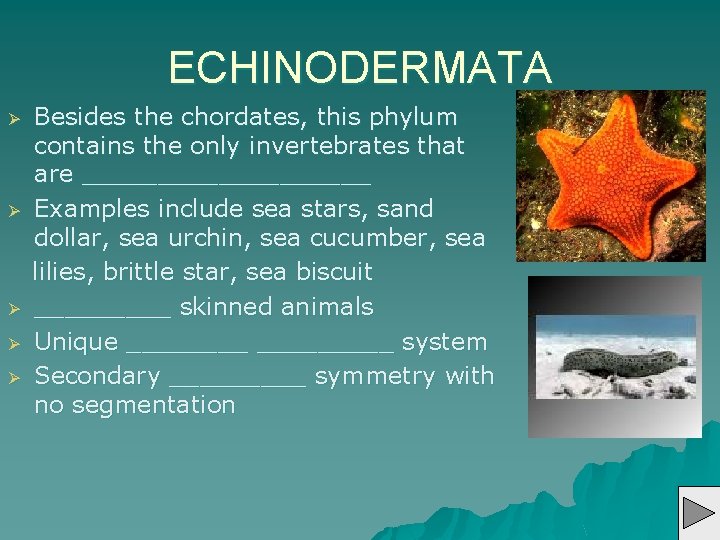
ECHINODERMATA Ø Ø Ø Besides the chordates, this phylum contains the only invertebrates that are __________ Examples include sea stars, sand dollar, sea urchin, sea cucumber, sea lilies, brittle star, sea biscuit _____ skinned animals Unique _________ system Secondary _____ symmetry with no segmentation
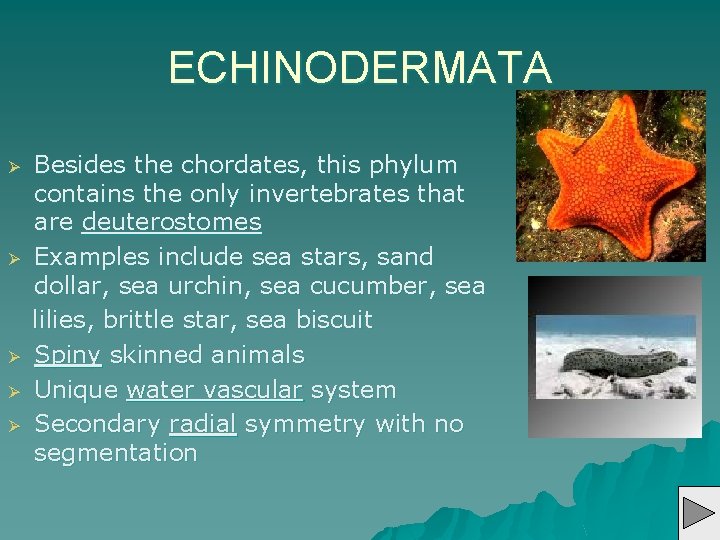
ECHINODERMATA Ø Ø Ø Besides the chordates, this phylum contains the only invertebrates that are deuterostomes Examples include sea stars, sand dollar, sea urchin, sea cucumber, sea lilies, brittle star, sea biscuit Spiny skinned animals Unique water vascular system Secondary radial symmetry with no segmentation
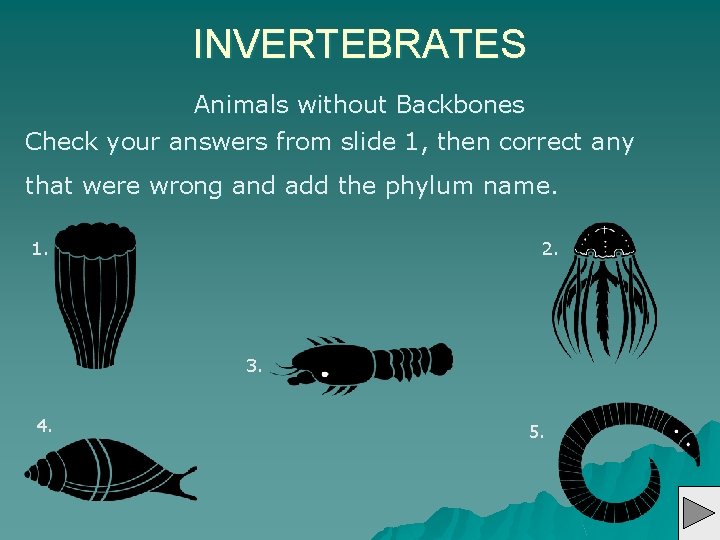
INVERTEBRATES Animals without Backbones Check your answers from slide 1, then correct any that were wrong and add the phylum name. 1. 2. 3. 4. 5.
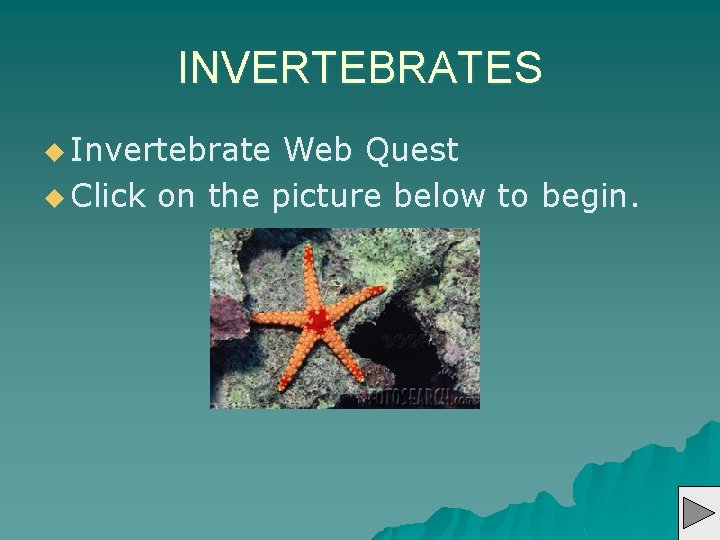
INVERTEBRATES u Invertebrate Web Quest u Click on the picture below to begin.
- Slides: 33