
Introduction to Animals All living things used to
- Slides: 37
Introduction to Animals
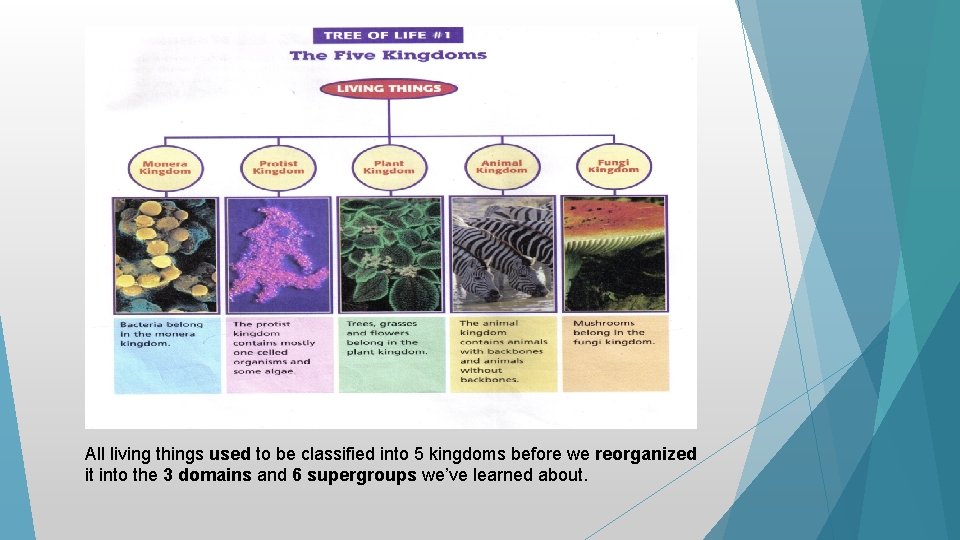
All living things used to be classified into 5 kingdoms before we reorganized it into the 3 domains and 6 supergroups we’ve learned about.
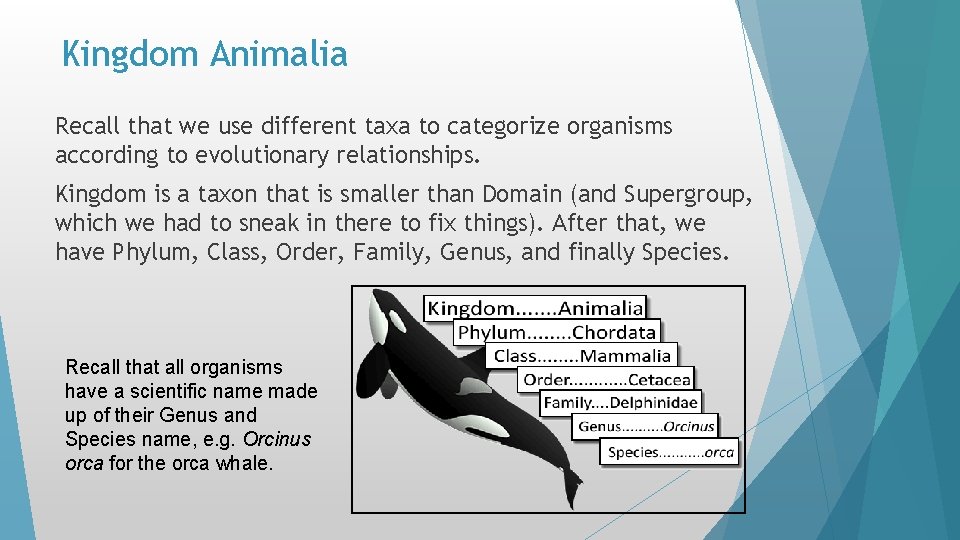
Kingdom Animalia Recall that we use different taxa to categorize organisms according to evolutionary relationships. Kingdom is a taxon that is smaller than Domain (and Supergroup, which we had to sneak in there to fix things). After that, we have Phylum, Class, Order, Family, Genus, and finally Species. Recall that all organisms have a scientific name made up of their Genus and Species name, e. g. Orcinus orca for the orca whale.
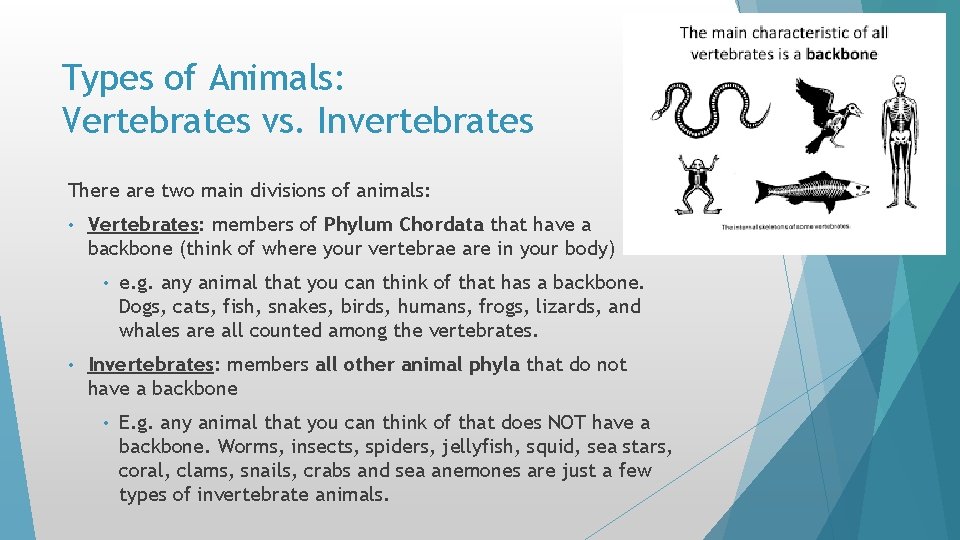
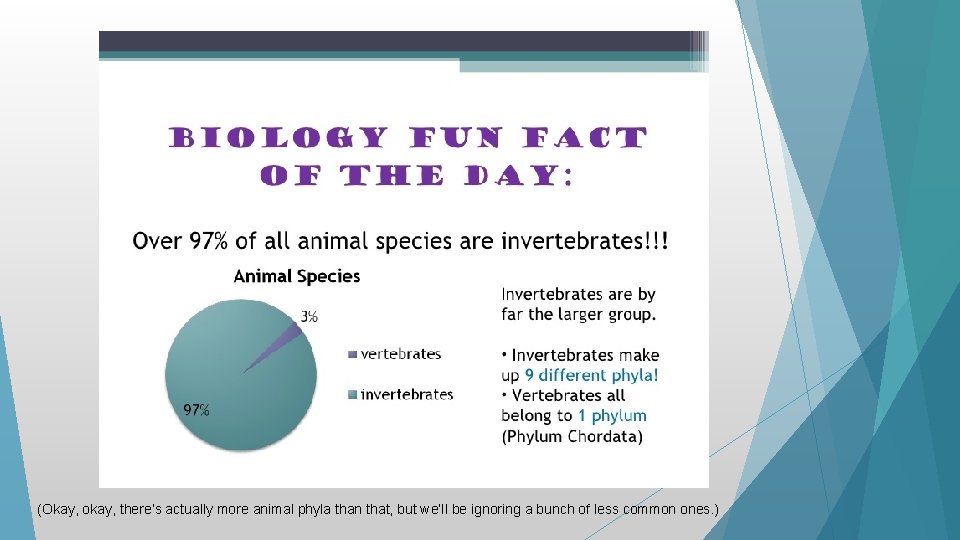
Types of Animals: Vertebrates vs. Invertebrates There are two main divisions of animals: • Vertebrates: members of Phylum Chordata that have a backbone (think of where your vertebrae are in your body) • • e. g. any animal that you can think of that has a backbone. Dogs, cats, fish, snakes, birds, humans, frogs, lizards, and whales are all counted among the vertebrates. Invertebrates: members all other animal phyla that do not have a backbone • E. g. any animal that you can think of that does NOT have a backbone. Worms, insects, spiders, jellyfish, squid, sea stars, coral, clams, snails, crabs and sea anemones are just a few types of invertebrate animals.
(Okay, okay, there’s actually more animal phyla than that, but we’ll be ignoring a bunch of less common ones. )
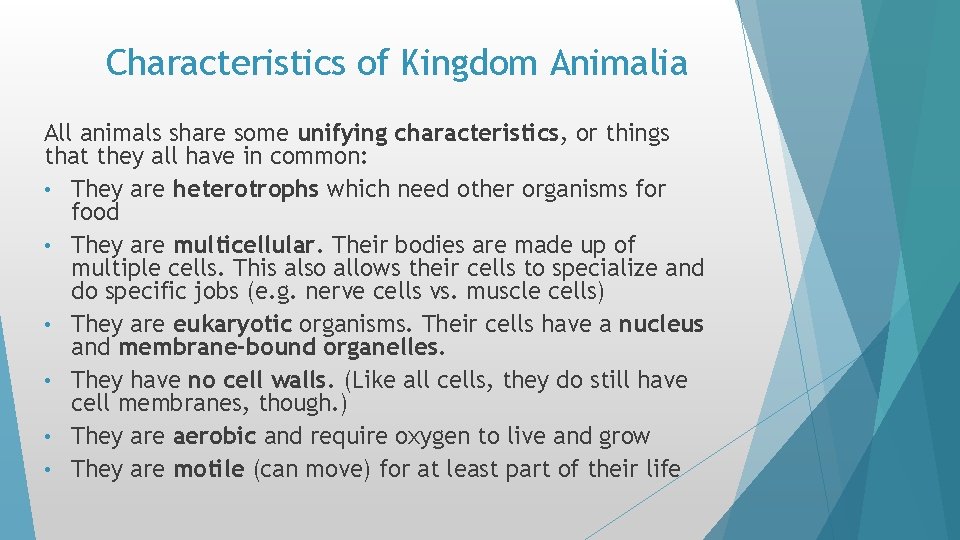
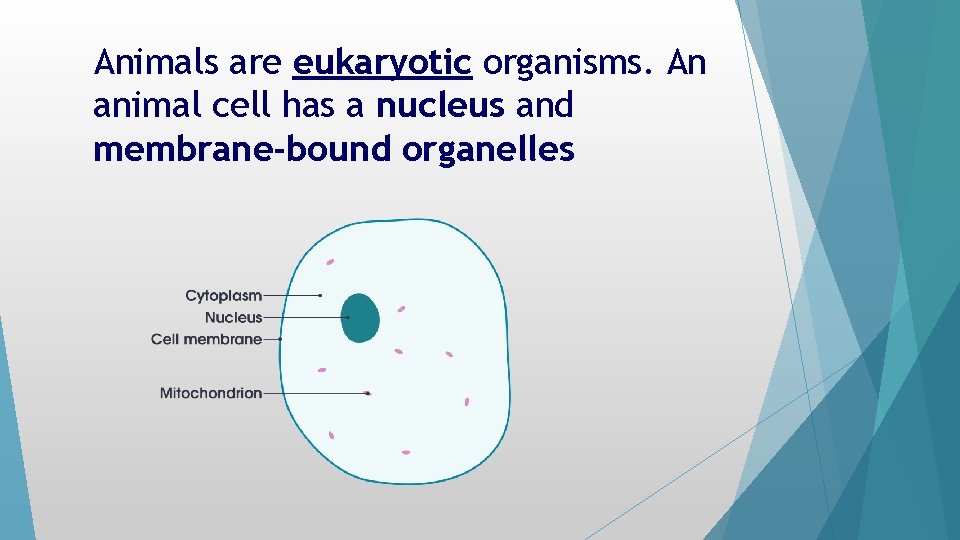
Characteristics of Kingdom Animalia All animals share some unifying characteristics, or things that they all have in common: • They are heterotrophs which need other organisms for food • They are multicellular. Their bodies are made up of multiple cells. This also allows their cells to specialize and do specific jobs (e. g. nerve cells vs. muscle cells) • They are eukaryotic organisms. Their cells have a nucleus and membrane-bound organelles. • They have no cell walls. (Like all cells, they do still have cell membranes, though. ) • They are aerobic and require oxygen to live and grow • They are motile (can move) for at least part of their life
Animals are eukaryotic organisms. An animal cell has a nucleus and membrane-bound organelles
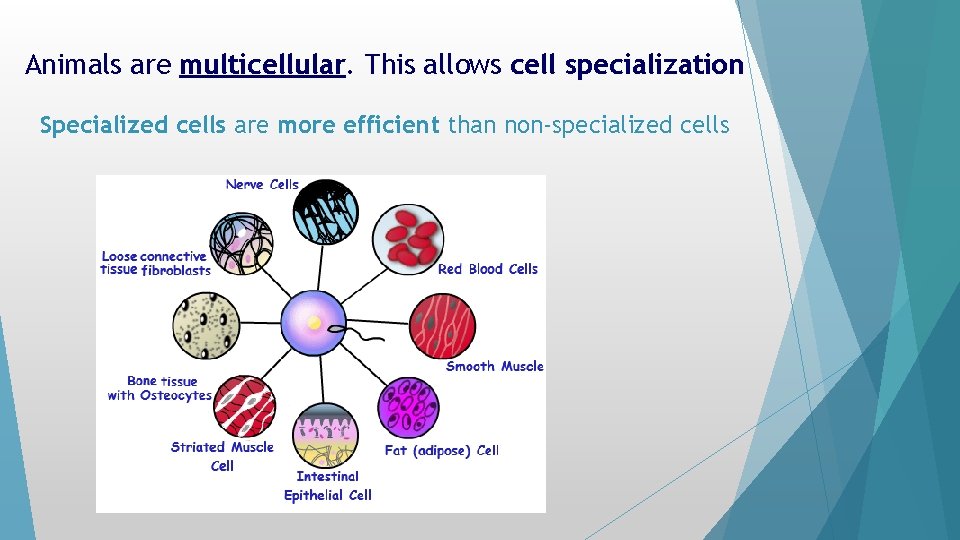
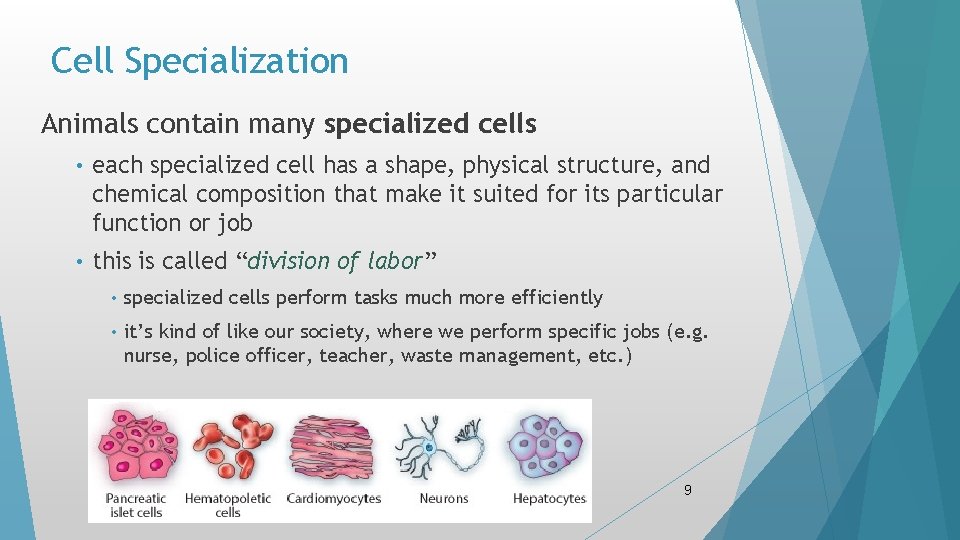
Animals are multicellular. This allows cell specialization Specialized cells are more efficient than non-specialized cells
Cell Specialization Animals contain many specialized cells • each specialized cell has a shape, physical structure, and chemical composition that make it suited for its particular function or job • this is called “division of labor” • specialized cells perform tasks much more efficiently • it’s kind of like our society, where we perform specific jobs (e. g. nurse, police officer, teacher, waste management, etc. ) 9
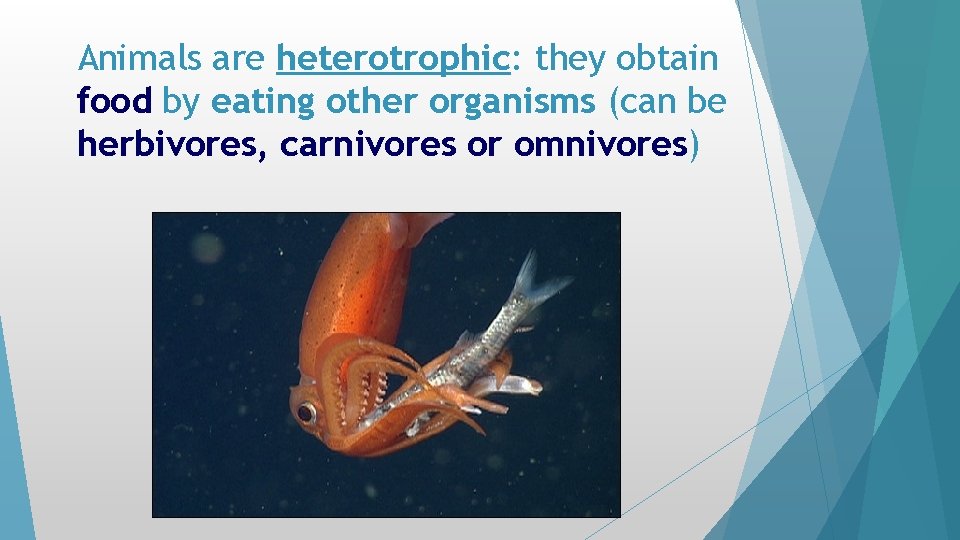
Animals are heterotrophic: they obtain food by eating other organisms (can be herbivores, carnivores or omnivores)
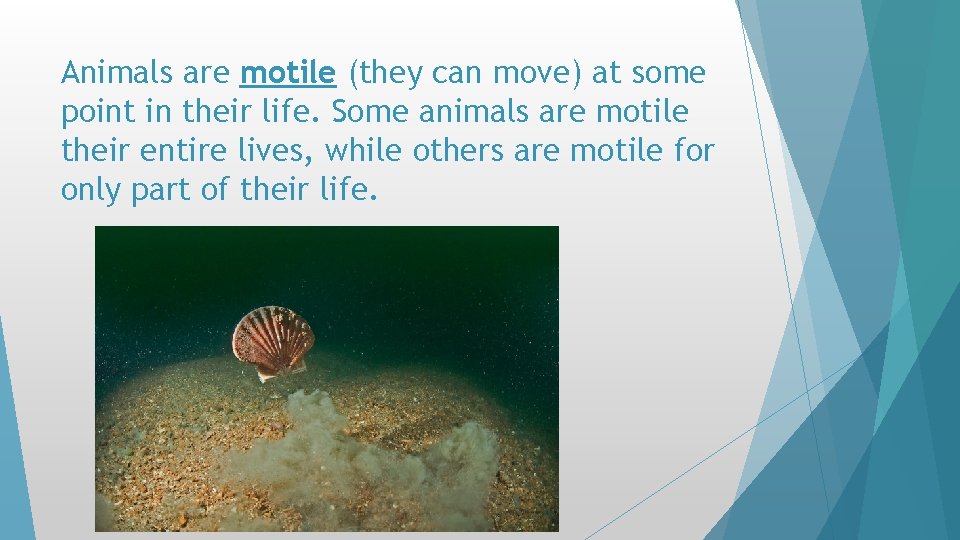
Animals are motile (they can move) at some point in their life. Some animals are motile their entire lives, while others are motile for only part of their life.
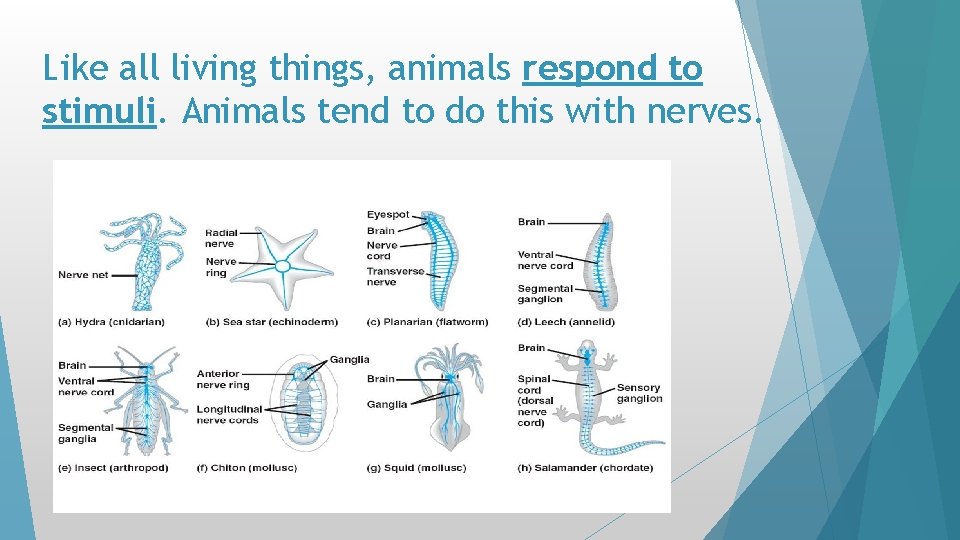
Like all living things, animals respond to stimuli. Animals tend to do this with nerves.
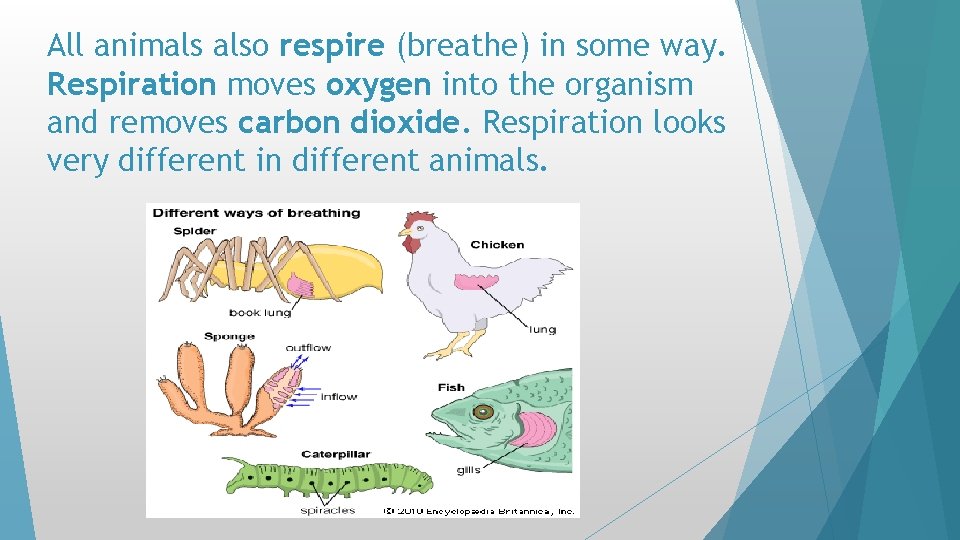
All animals also respire (breathe) in some way. Respiration moves oxygen into the organism and removes carbon dioxide. Respiration looks very different in different animals.
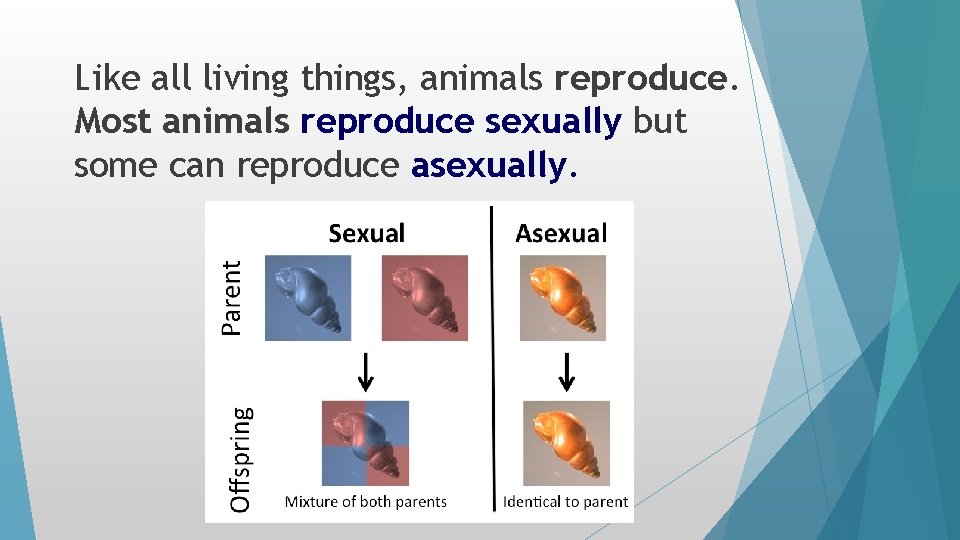
Like all living things, animals reproduce. Most animals reproduce sexually but some can reproduce asexually.
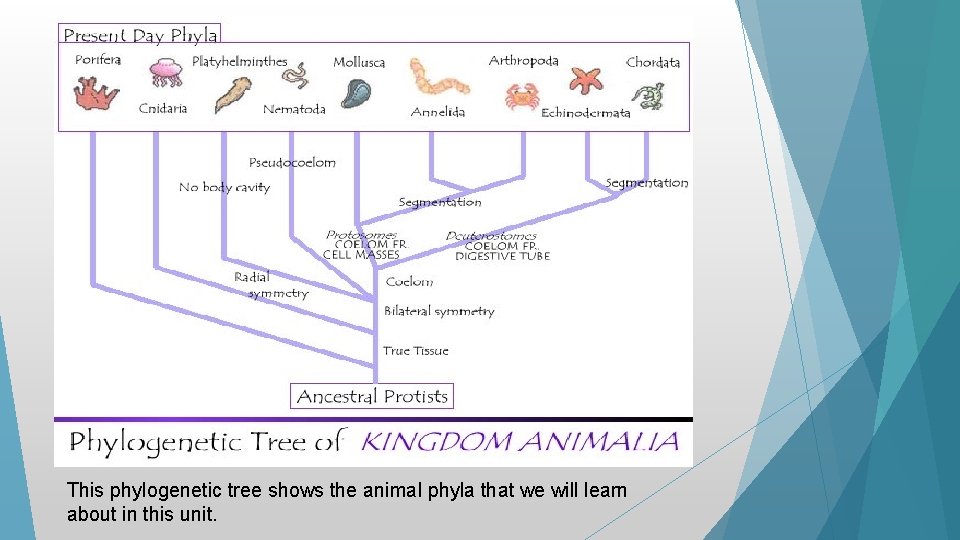
This phylogenetic tree shows the animal phyla that we will learn about in this unit.
What Are Trends in Animal Evolution? Remember, all animals are well adapted to their environments and have ways to successfully accomplish their life processes. Something simple is not worse or less evolved than something complex. It’s just simpler. That said, there are some things that tend to change as organisms become more complex. We see patterns and there are certain features or characteristics that we see with higher degrees of complexity. We call these trends in the evolution of animals.
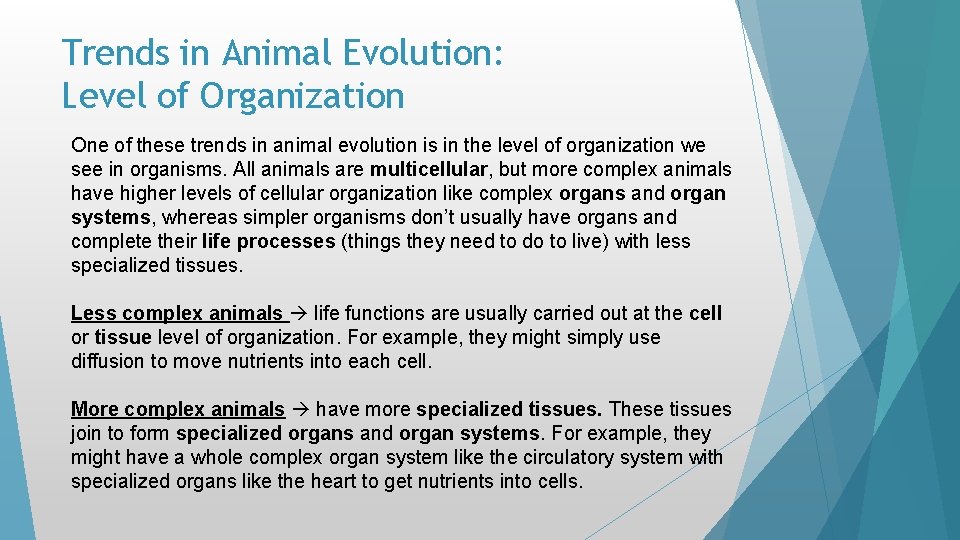
Trends in Animal Evolution: Level of Organization One of these trends in animal evolution is in the level of organization we see in organisms. All animals are multicellular, but more complex animals have higher levels of cellular organization like complex organs and organ systems, whereas simpler organisms don’t usually have organs and complete their life processes (things they need to do to live) with less specialized tissues. Less complex animals life functions are usually carried out at the cell or tissue level of organization. For example, they might simply use diffusion to move nutrients into each cell. More complex animals have more specialized tissues. These tissues join to form specialized organs and organ systems. For example, they might have a whole complex organ system like the circulatory system with specialized organs like the heart to get nutrients into cells.
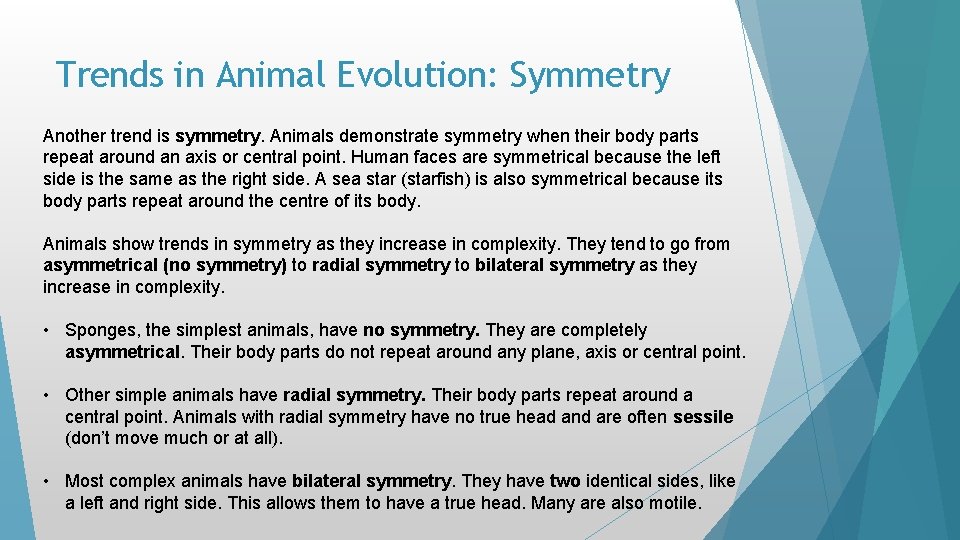
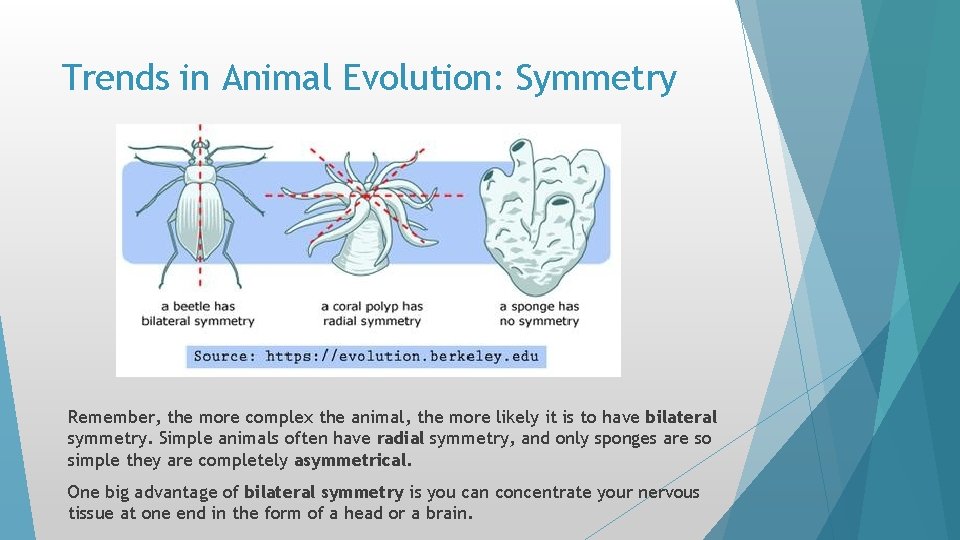
Trends in Animal Evolution: Symmetry Another trend is symmetry. Animals demonstrate symmetry when their body parts repeat around an axis or central point. Human faces are symmetrical because the left side is the same as the right side. A sea star (starfish) is also symmetrical because its body parts repeat around the centre of its body. Animals show trends in symmetry as they increase in complexity. They tend to go from asymmetrical (no symmetry) to radial symmetry to bilateral symmetry as they increase in complexity. • Sponges, the simplest animals, have no symmetry. They are completely asymmetrical. Their body parts do not repeat around any plane, axis or central point. • Other simple animals have radial symmetry. Their body parts repeat around a central point. Animals with radial symmetry have no true head and are often sessile (don’t move much or at all). • Most complex animals have bilateral symmetry. They have two identical sides, like a left and right side. This allows them to have a true head. Many are also motile.
Trends in Animal Evolution: Symmetry Remember, the more complex the animal, the more likely it is to have bilateral symmetry. Simple animals often have radial symmetry, and only sponges are so simple they are completely asymmetrical. One big advantage of bilateral symmetry is you can concentrate your nervous tissue at one end in the form of a head or a brain.
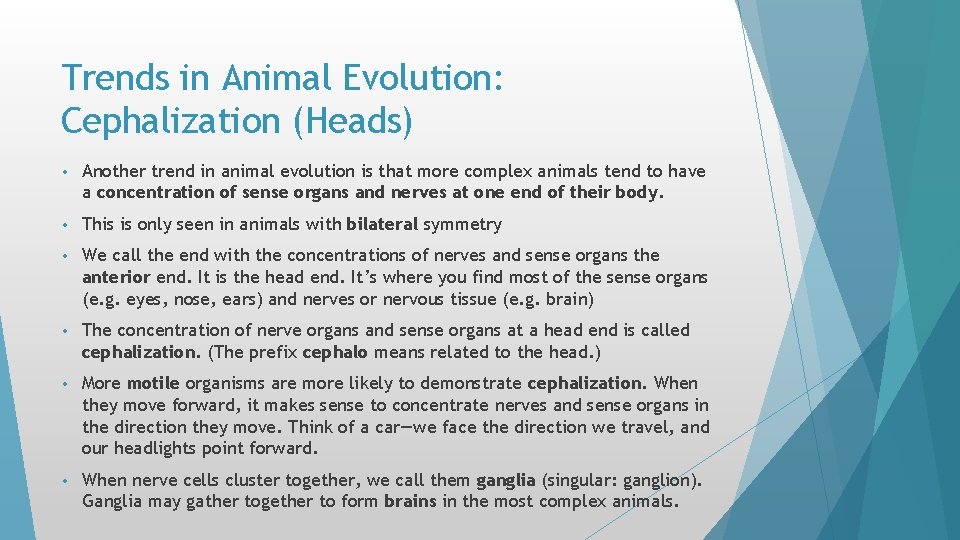
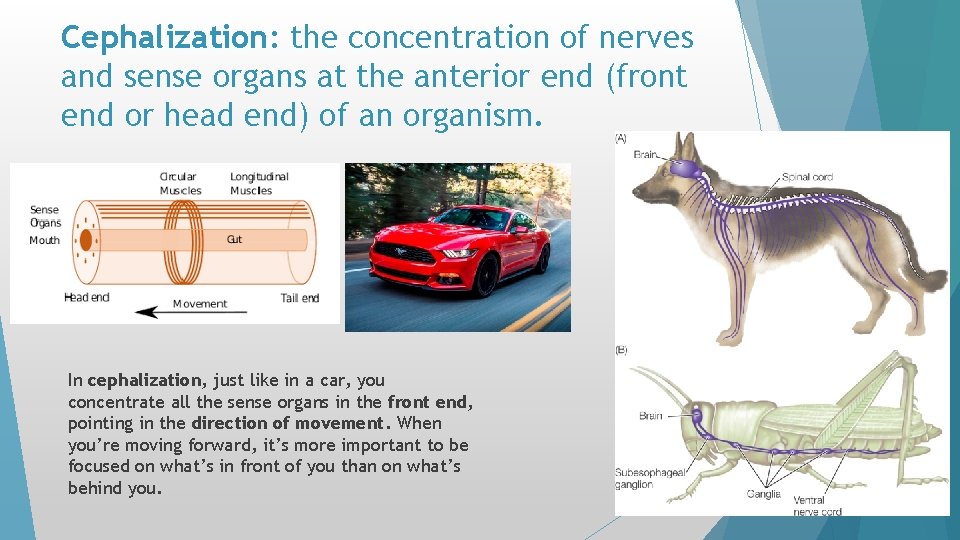
Trends in Animal Evolution: Cephalization (Heads) • Another trend in animal evolution is that more complex animals tend to have a concentration of sense organs and nerves at one end of their body. • This is only seen in animals with bilateral symmetry • We call the end with the concentrations of nerves and sense organs the anterior end. It is the head end. It’s where you find most of the sense organs (e. g. eyes, nose, ears) and nerves or nervous tissue (e. g. brain) • The concentration of nerve organs and sense organs at a head end is called cephalization. (The prefix cephalo means related to the head. ) • More motile organisms are more likely to demonstrate cephalization. When they move forward, it makes sense to concentrate nerves and sense organs in the direction they move. Think of a car—we face the direction we travel, and our headlights point forward. • When nerve cells cluster together, we call them ganglia (singular: ganglion). Ganglia may gather together to form brains in the most complex animals.
Cephalization: the concentration of nerves and sense organs at the anterior end (front end or head end) of an organism. In cephalization, just like in a car, you concentrate all the sense organs in the front end, pointing in the direction of movement. When you’re moving forward, it’s more important to be focused on what’s in front of you than on what’s behind you.
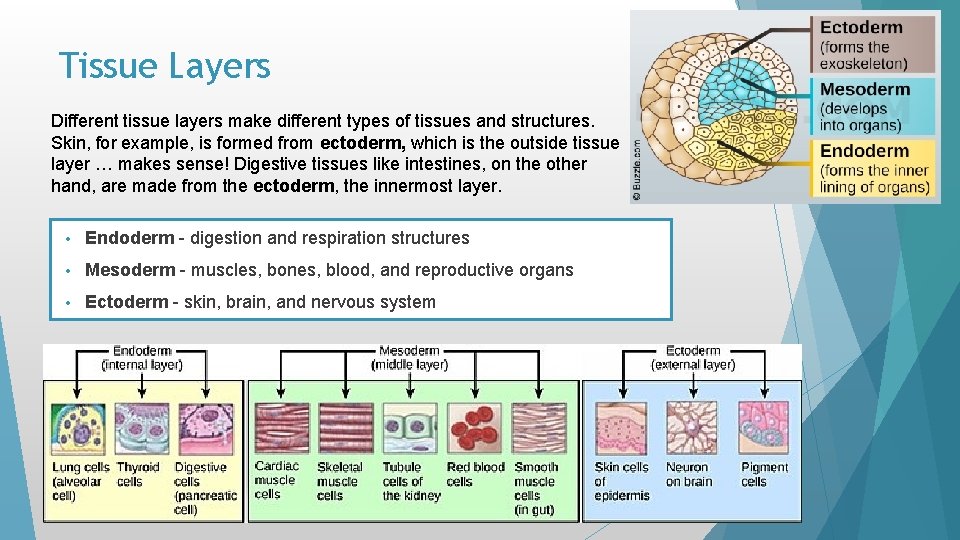
Trends in Animal Evolution: Number of Tissue Layers or Germ Layers A tissue (not the kind you sneeze into!) is a group of cells of the same type that have a similar structure or form and work together to perform a similar function or job. For example, your muscle cells join together to form muscle tissues, and nerve cells form nerve tissues. Very simple animals (*cough* Sponges! *cough*) have no tissues. Their bodies are made of cells, but those cells don’t specialize into true tissues. Slightly more complex animals, like jellyfish, anemones and corals, have true tissues that are divided into two germ layers or tissue layers: ectoderm (outside layer) and endoderm (inside layer). They are called diploblasts. Even more complex animals (worms, insects, molluscs, etc. ) have true tissues that are divided into three tissue layers: ectoderm (outside layer), mesoderm (middle layer) and endoderm (inside layer). They are called triploblasts.
Tissue Layers Different tissue layers make different types of tissues and structures. Skin, for example, is formed from ectoderm, which is the outside tissue layer … makes sense! Digestive tissues like intestines, on the other hand, are made from the ectoderm, the innermost layer. • Endoderm - digestion and respiration structures • Mesoderm - muscles, bones, blood, and reproductive organs • Ectoderm - skin, brain, and nervous system
Trends in Animal Evolution: Gastrulation You kind of take for granted that you don’t poop out your mouth, don’t you? That’s because as humans we benefit from complete gastrulation—our digestive tract is a oneway street (occasional bouts of nausea excluded), and food goes in the mouth and anything undigested goes out the anus. But it isn’t so for all animals! • The very simplest animals (we’re looking at you again, sponges) don’t even have mouths or digestive systems. • Slightly more complex animals like anemones, jellyfish and many flatworms have incomplete gastrulation. They have a singular gastrovascular cavity with one opening. So, what goes in must come out the same way. Eww. • More complex animals benefit from complete gastrulation, meaning that their digestive tract is a one way tube through their body. Food passes from mouth to stomach to intestine and out the anus. This means it has two openings (mouth and anus). Which one develops first, the mouth or the anus, will eventually be another way we examine to tell apart organisms (protostomes vs. deuterostomes) but we’ll get to that much later.
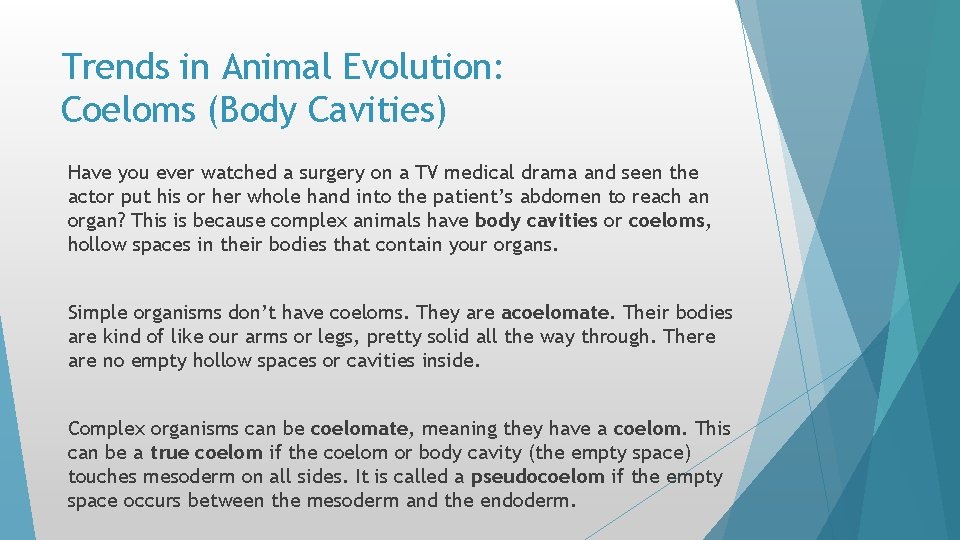
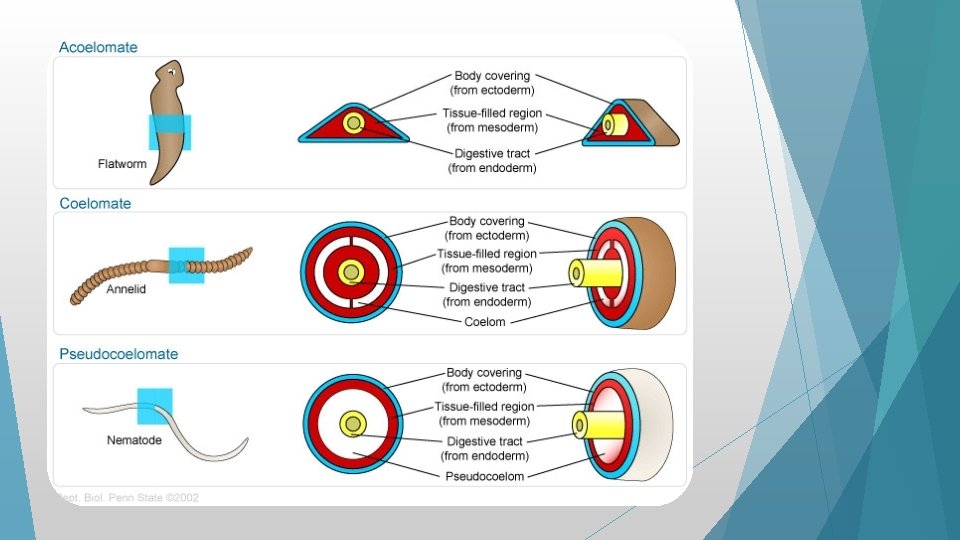
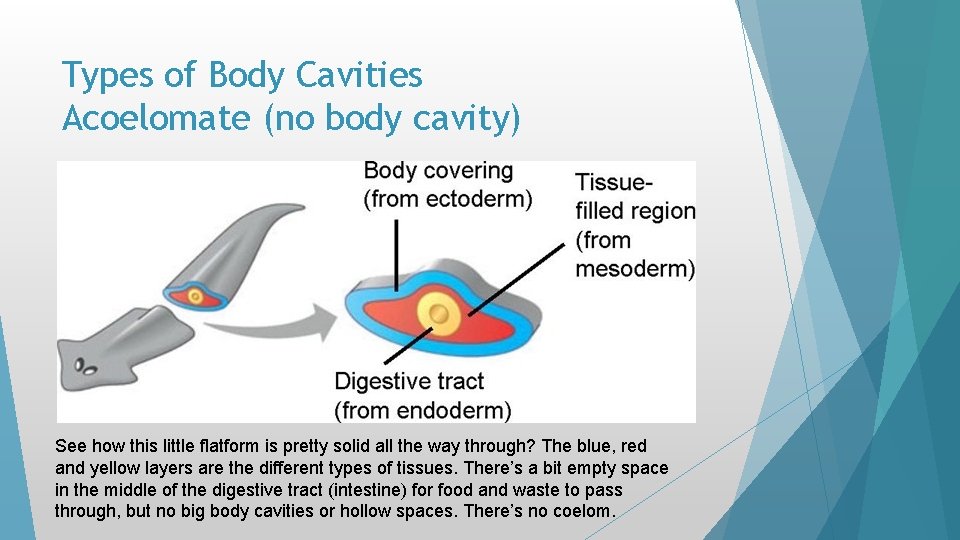
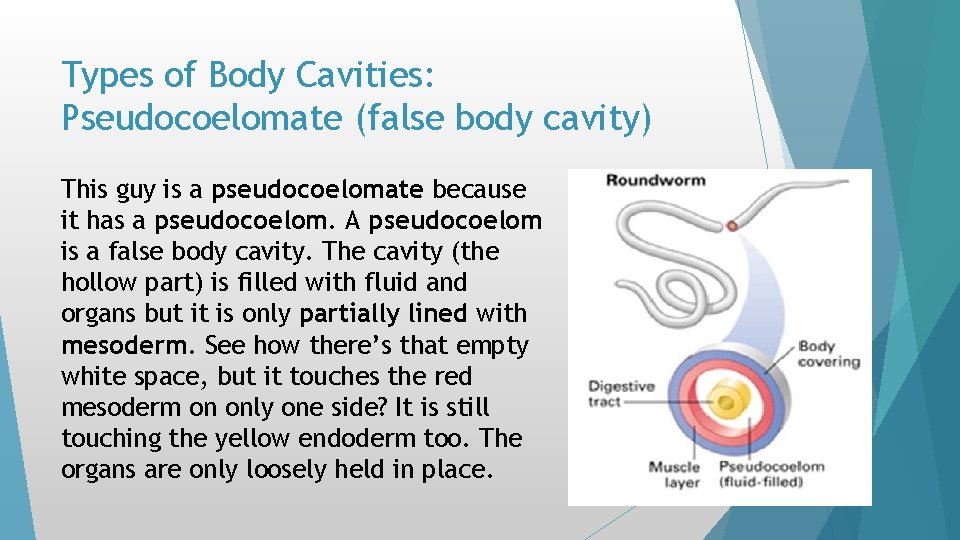
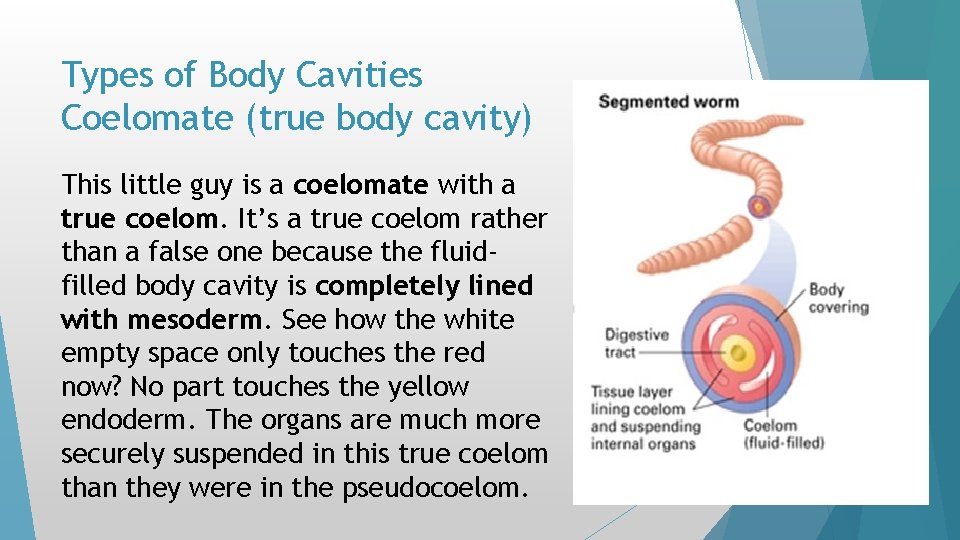
Trends in Animal Evolution: Coeloms (Body Cavities) Have you ever watched a surgery on a TV medical drama and seen the actor put his or her whole hand into the patient’s abdomen to reach an organ? This is because complex animals have body cavities or coeloms, hollow spaces in their bodies that contain your organs. Simple organisms don’t have coeloms. They are acoelomate. Their bodies are kind of like our arms or legs, pretty solid all the way through. There are no empty hollow spaces or cavities inside. Complex organisms can be coelomate, meaning they have a coelom. This can be a true coelom if the coelom or body cavity (the empty space) touches mesoderm on all sides. It is called a pseudocoelom if the empty space occurs between the mesoderm and the endoderm.
Types of Body Cavities Acoelomate (no body cavity) See how this little flatform is pretty solid all the way through? The blue, red and yellow layers are the different types of tissues. There’s a bit empty space in the middle of the digestive tract (intestine) for food and waste to pass through, but no big body cavities or hollow spaces. There’s no coelom.
Types of Body Cavities: Pseudocoelomate (false body cavity) This guy is a pseudocoelomate because it has a pseudocoelom. A pseudocoelom is a false body cavity. The cavity (the hollow part) is filled with fluid and organs but it is only partially lined with mesoderm. See how there’s that empty white space, but it touches the red mesoderm on only one side? It is still touching the yellow endoderm too. The organs are only loosely held in place.
Types of Body Cavities Coelomate (true body cavity) This little guy is a coelomate with a true coelom. It’s a true coelom rather than a false one because the fluidfilled body cavity is completely lined with mesoderm. See how the white empty space only touches the red now? No part touches the yellow endoderm. The organs are much more securely suspended in this true coelom than they were in the pseudocoelom.
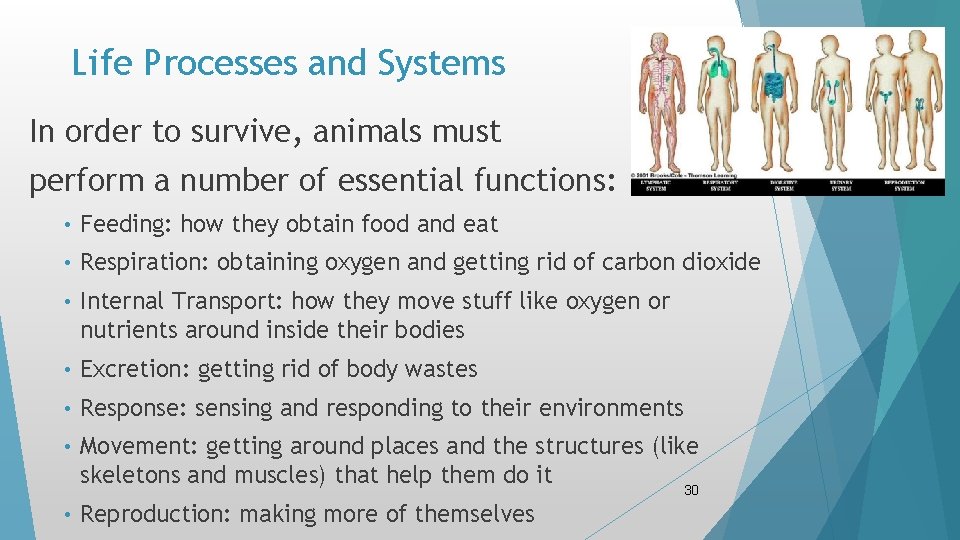
Life Processes and Systems In order to survive, animals must perform a number of essential functions: • Feeding: how they obtain food and eat • Respiration: obtaining oxygen and getting rid of carbon dioxide • Internal Transport: how they move stuff like oxygen or nutrients around inside their bodies • Excretion: getting rid of body wastes • Response: sensing and responding to their environments • Movement: getting around places and the structures (like skeletons and muscles) that help them do it 30 • Reproduction: making more of themselves
The 7 Essential Life Processes 1. Feeding – all animals are heterotrophs, but they obtain food in different ways. Some are parasites, some are filter feeders, some are herbivores, some are carnivores, and some are omnivores. 2. Respiration – all animals required oxygen and need to get rid of carbon dioxide. This is called gas exchange, but animals do it in different ways. Small, simple animals can use simple diffusion to exchange gases through their skin and tissues. Larger, more complex animals may have fully developed complex organ systems like respiratory systems with lungs to exchange gases.
The 7 Essential Life Processes 3. Internal Transport – all animals need to move nutrients, gases and waste products around their bodies, but they do it in different ways. Very small, simple animals can sometimes use diffusion for internal transport. Other animals have fully developed circulatory systems. Some circulatory systems, like ours, are closed circulatory systems, meaning all the blood stays contained in blood vessels, like water in a series of pipes. Other animals have open circulatory systems where the bloodlike fluid is not contained in blood vessels and bathes all the organs in a big open cavity. It’s more like a pool—the heart is like a pump moving the fluid around, but most of the time it’s just sitting there in a big pool.
The 7 Essential Life Processes 4. Excretion – All animals have to remove body wastes. Undigested food is excreted through the digestive system (poop) and carbon dioxide is excreted by the respiratory system (like when we exhale), but cells also produce nitrogenous waste. In small, simple organisms, this is sometimes excreted through the skin via diffusion. In more complex animals, the excretory system may have specialized organs to excrete nitrogenous waste, such as kidneys that filter it out as urine.
The 7 Essential Life Processes 5. Response – All animals respond to their environments, but some respond more (or more quickly) than others. Sense organs help animals perceive their environments, and nerve cells and specialized nervous tissues like brains help animals respond to what they’re sensing. Some animals are very simple, with basic nerves but no brains. (Sponges don’t even have nerves!) Others have well-developed complex nervous systems and big brains.
The 7 Essential Life Processes 6. Movement – all animals are motile (can move) at some point in their lives. Some move a lot more (or more quickly!) than others. They have different body structures that help them move, such as muscles and different types of skeletons. Some animals, like us, have endoskeletons (skeletons on the inside), while others have exoskeletons, tough shells or exteriors on the outside of their bodies. Some, like jellyfish, have no hard parts at all!
The 7 Essential Life Processes 7. Reproduction – All animals reproduce themselves. Most animals reproduce sexually. Some animals reproduce asexually, such as through fission (splitting in half), budding (creates a small bud that eventually breaks off and becomes its own organism) or fragmentation (when a part breaks off the animal, it can regrow a new animal from that part). Even sexual reproduction has its share of variation! Some animals have separate sexes (male and female), but some species are hermaphroditic and individuals can produce both sperm and eggs.
What should I do next? • Try to take some notes or create a graphic organizer to summarize what you’ve learned. • We’re starting a new unit, so there are lots of new vocabulary words! Try creating some vocabulary cards or a glossary to help you practice any unfamiliar new terms. • Go watch Crash Course Biology #16 – Animal Development: We’re Just Tubes. https: //www. youtube. com/watch? v=k_9 MTZg. Ahv 0 It explains how animals grow from a single cell into a full organism and it introduces some of the trends in animal evolution and complexity that we’ll be looking at in this unit. • I also recommend this Introduction to Animal Diversity video by Craig Savage: https: //www. youtube. com/watch? v=Tvrs 9 j. A 3 SP 0 It’s a great intro video. My only peeves are that he spells pseudocoelom wrong and he pronounces coelom funny. (Should be “see-lum” not “seh-loam” as he says. ) • When you’re ready, go write the Introduction to Animal Biology quiz.