
Introduction to Animal Evolution What is an animal




- Slides: 23
Introduction to Animal Evolution
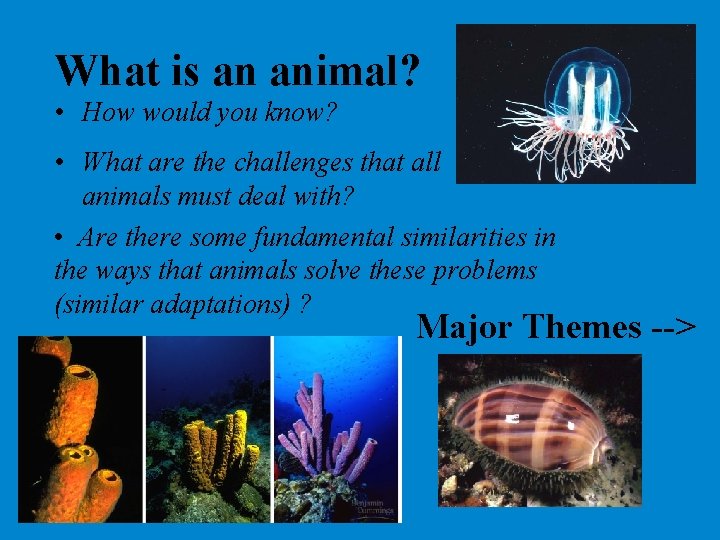
What is an animal? • How would you know? • What are the challenges that all animals must deal with? • Are there some fundamental similarities in the ways that animals solve these problems (similar adaptations) ? Major Themes -->
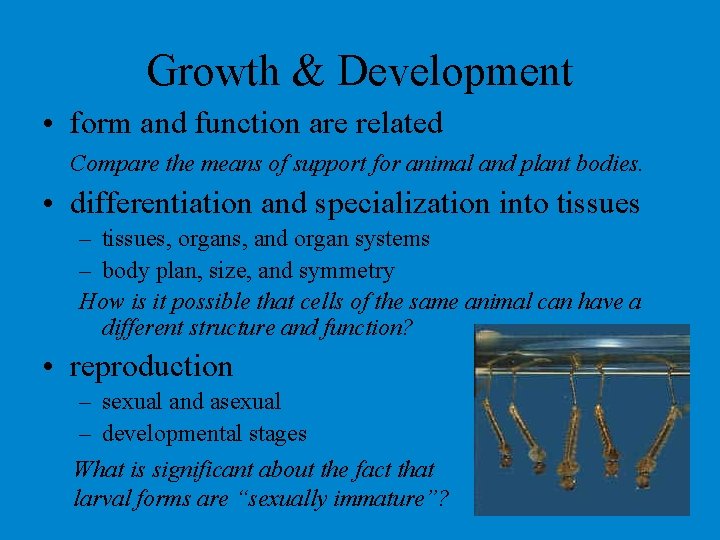
Growth & Development • form and function are related Compare the means of support for animal and plant bodies. • differentiation and specialization into tissues – tissues, organs, and organ systems – body plan, size, and symmetry How is it possible that cells of the same animal can have a different structure and function? • reproduction – sexual and asexual – developmental stages What is significant about the fact that larval forms are “sexually immature”?
Sensing and Responding to the Environment • sensory systems Describe what is meant by “environment” in this context. Provide some examples of conditions that are monitored. • motor systems (locomotion) What special tissue(s) enable this kind of movement? • feeding and digestive functions Describe some examples of how body structure is related to feeding style.
Internal Regulation • energy balance What factors may influence an animal’s “energy budget”? • transport – water – nutrients and wastes – gas exchange How do animals cope with abiotic stresses? • intercellular communication – local – long distance Provide one example of each type of intercellular communication.
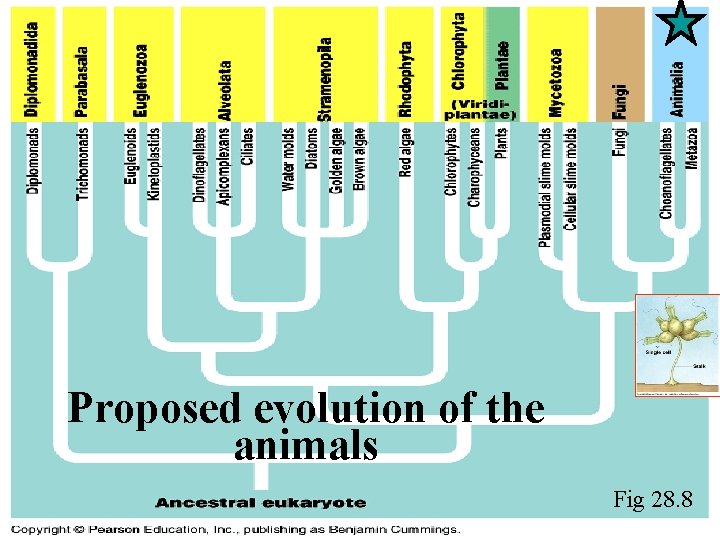
Proposed evolution of the animals Fig 28. 8
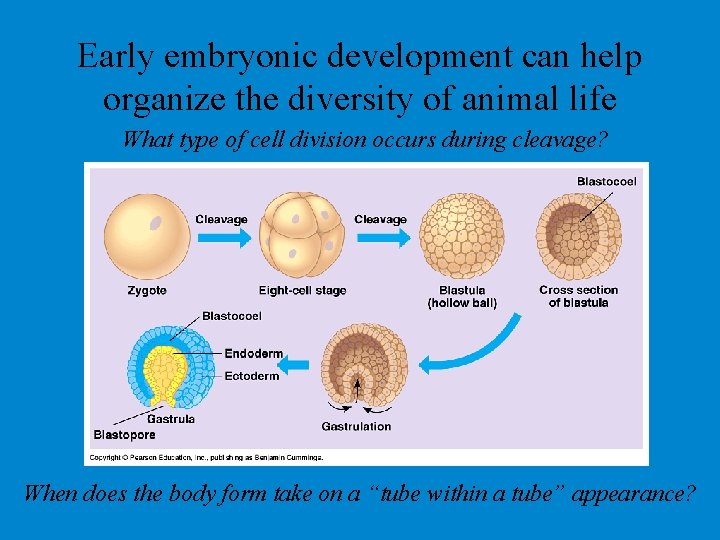
Early embryonic development can help organize the diversity of animal life What type of cell division occurs during cleavage? When does the body form take on a “tube within a tube” appearance?
Patterns in Animal Evolution • Simple to more complex body form • Hypothesized colonial flagellated protist ancestor • Cell aggregates, to a gastrula-like (or tissue-grade) “protoanimal” to Fig. 32. 3 Which stages demonstrate cell differentiation? … morphogenesis?
“pore-bearers” The Parazoa - Phylum Porifera Describe at least two functions of amoebocytes. How would you describe the feeding strategy? • No gastrulation occurs during development; no true tissues If sponges have no muscle or nerve tissues, how do they accomplish movement of water into the spongocoel?
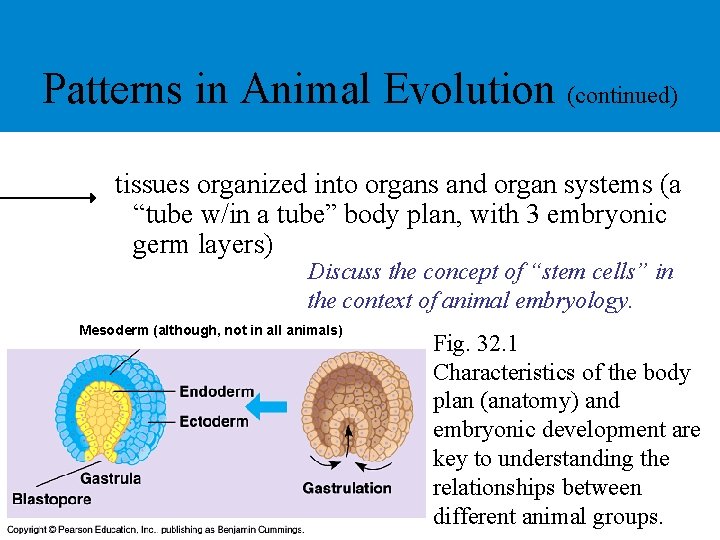
Patterns in Animal Evolution (continued) tissues organized into organs and organ systems (a “tube w/in a tube” body plan, with 3 embryonic germ layers) Discuss the concept of “stem cells” in the context of animal embryology. Mesoderm (although, not in all animals) Fig. 32. 1 Characteristics of the body plan (anatomy) and embryonic development are key to understanding the relationships between different animal groups.
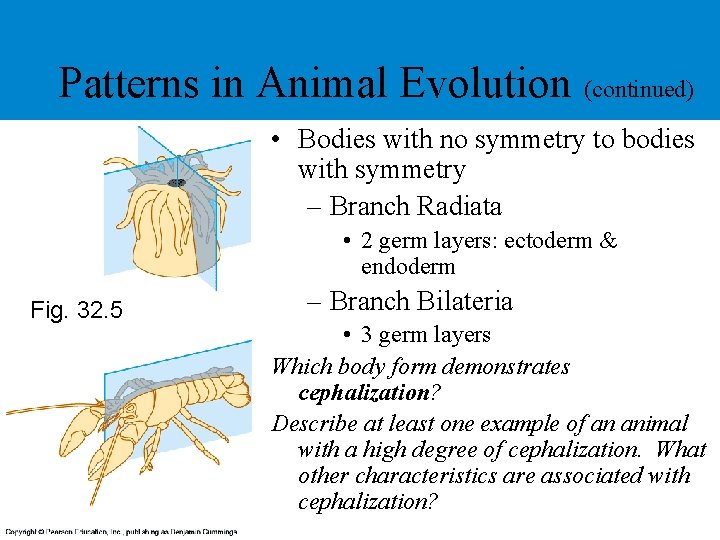
Patterns in Animal Evolution (continued) • Bodies with no symmetry to bodies with symmetry – Branch Radiata • 2 germ layers: ectoderm & endoderm Fig. 32. 5 – Branch Bilateria • 3 germ layers Which body form demonstrates cephalization? Describe at least one example of an animal with a high degree of cephalization. What other characteristics are associated with cephalization?
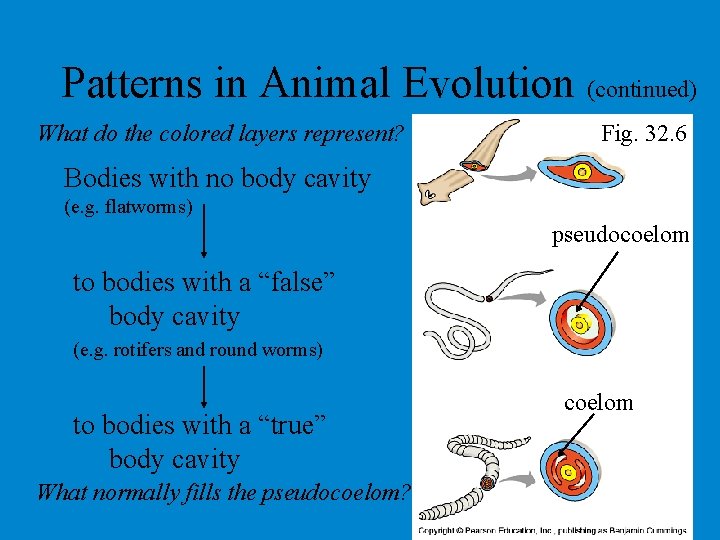
Patterns in Animal Evolution (continued) What do the colored layers represent? Fig. 32. 6 Bodies with no body cavity (e. g. flatworms) pseudocoelom to bodies with a “false” body cavity (e. g. rotifers and round worms) to bodies with a “true” body cavity What normally fills the pseudocoelom? coelom
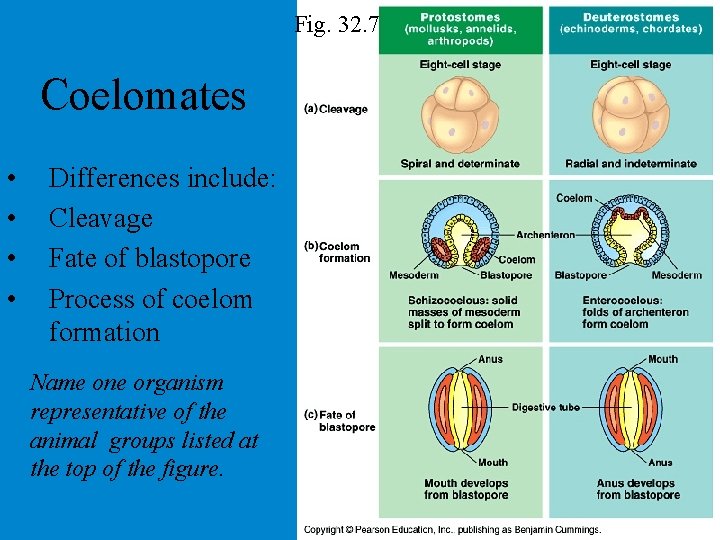
Fig. 32. 7 Coelomates • • Differences include: Cleavage Fate of blastopore Process of coelom formation Name one organism representative of the animal groups listed at the top of the figure.
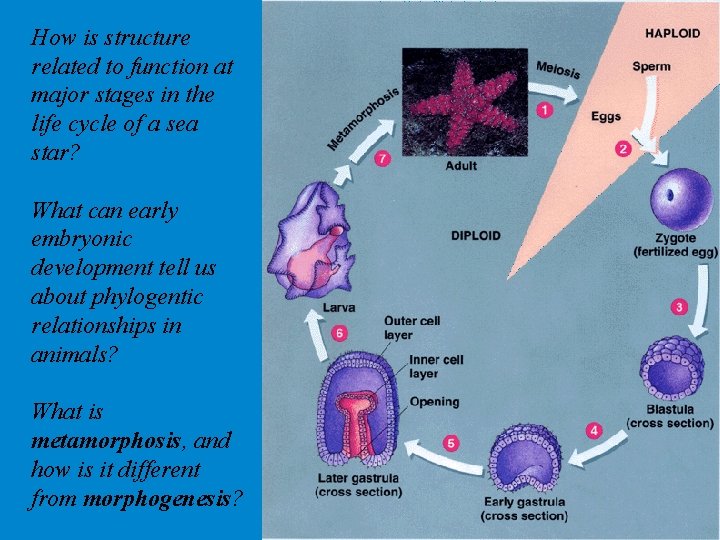
How is structure related to function at major stages in the life cycle of a sea star? What can early embryonic development tell us about phylogentic relationships in animals? What is metamorphosis, and how is it different from morphogenesis?
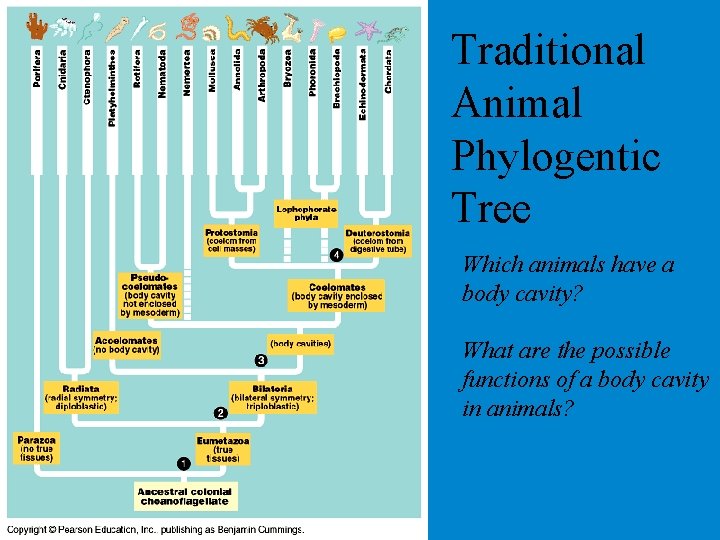
Traditional Animal Phylogentic Tree Which animals have a body cavity? What are the possible functions of a body cavity in animals?
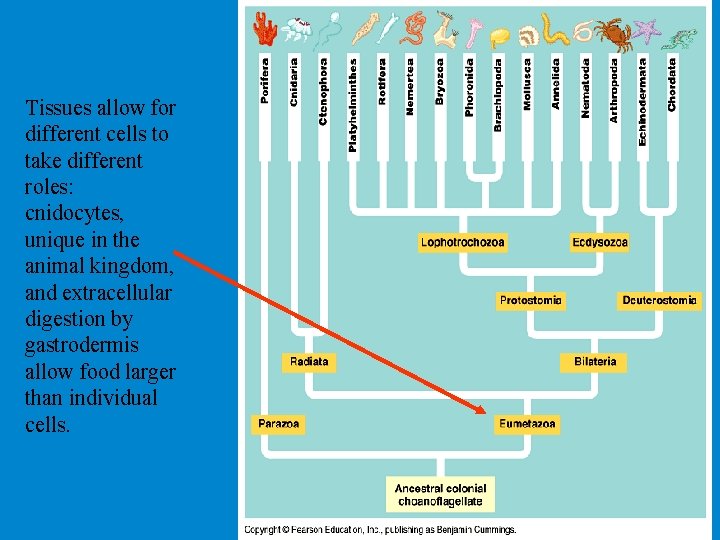
Animal Phylogeny – Modern • Based on sequences in ribosomal RNA (molecular systematics) • Acoelomate flatworms lost their coelom • Coelom development happened early • Combine phyla with lophophore and trocophore larvae • Combine phyla that molt (ecdysis) Fig 32. 8
X Tissues allow for different cells to take different roles: cnidocytes, unique in the animal kingdom, and extracellular digestion by gastrodermis allow food larger than individual cells. X XX
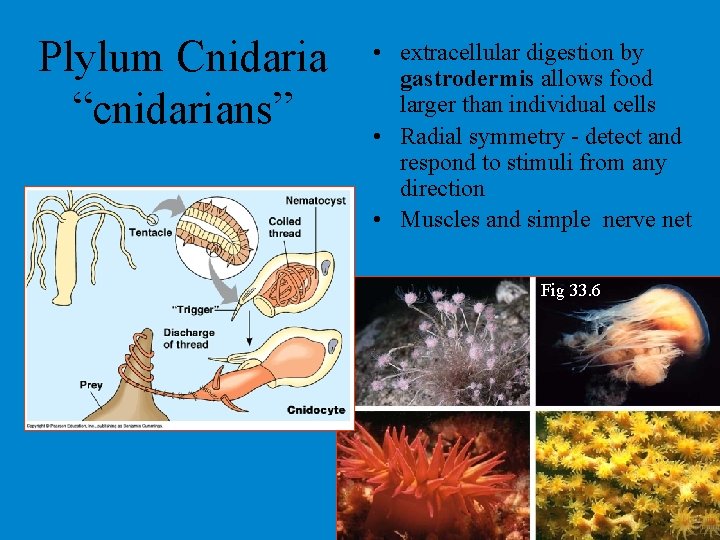
Plylum Cnidaria “cnidarians” • extracellular digestion by gastrodermis allows food larger than individual cells • Radial symmetry - detect and respond to stimuli from any direction • Muscles and simple nerve net Fig 33. 6
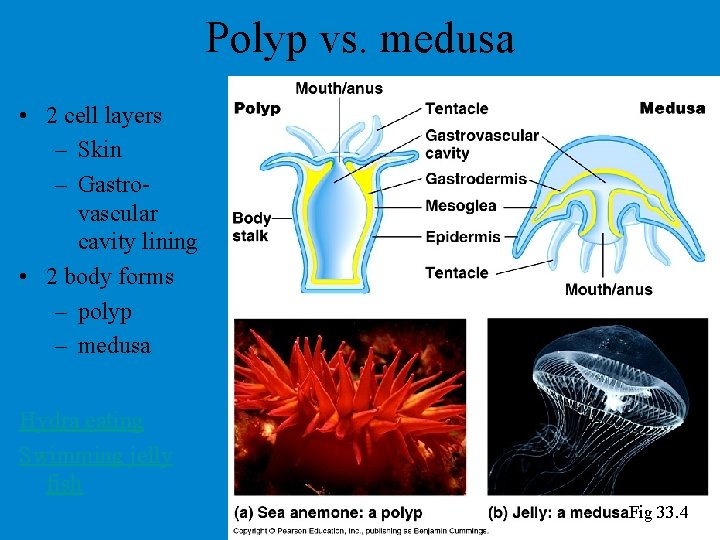
Polyp vs. medusa • 2 cell layers – Skin – Gastrovascular cavity lining • 2 body forms – polyp – medusa Hydra eating Swimming jelly fish Fig 33. 4
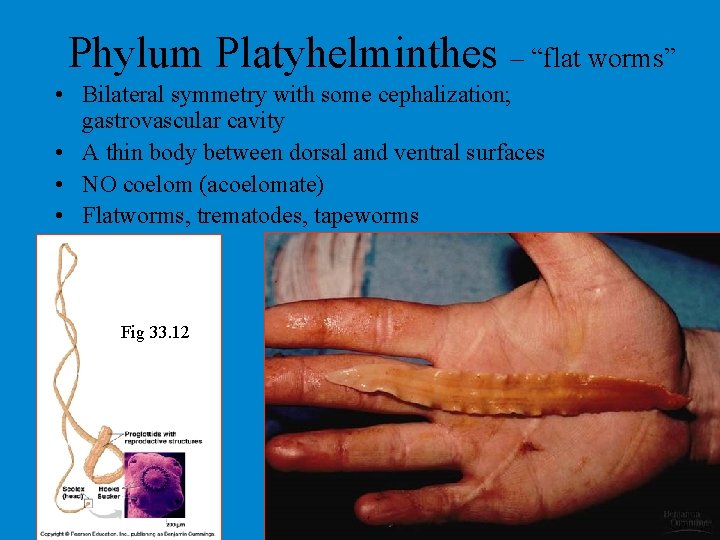
Phylum Platyhelminthes – “flat worms” • Bilateral symmetry with some cephalization; gastrovascular cavity • A thin body between dorsal and ventral surfaces • NO coelom (acoelomate) • Flatworms, trematodes, tapeworms Fig 33. 12
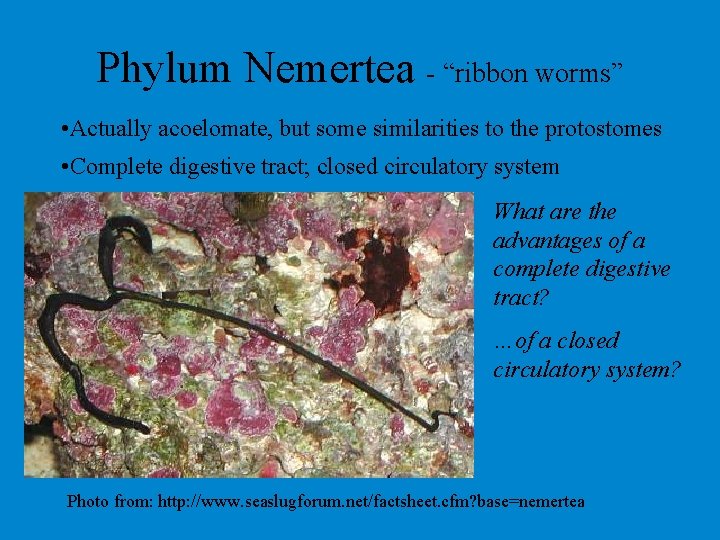
Phylum Nemertea - “ribbon worms” • Actually acoelomate, but some similarities to the protostomes • Complete digestive tract; closed circulatory system What are the advantages of a complete digestive tract? …of a closed circulatory system? Photo from: http: //www. seaslugforum. net/factsheet. cfm? base=nemertea
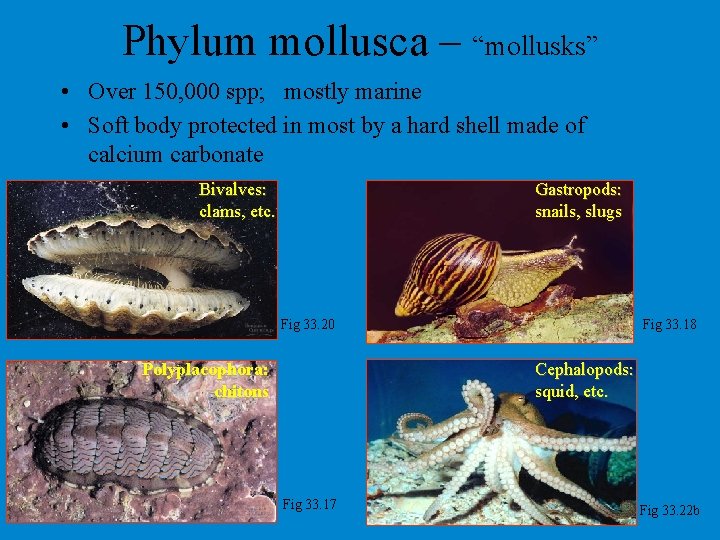
Phylum mollusca – “mollusks” • Over 150, 000 spp; mostly marine • Soft body protected in most by a hard shell made of calcium carbonate Bivalves: clams, etc. Gastropods: snails, slugs Fig 33. 18 Fig 33. 20 Polyplacophora: chitons Cephalopods: squid, etc. Fig 33. 17 Fig 33. 22 b
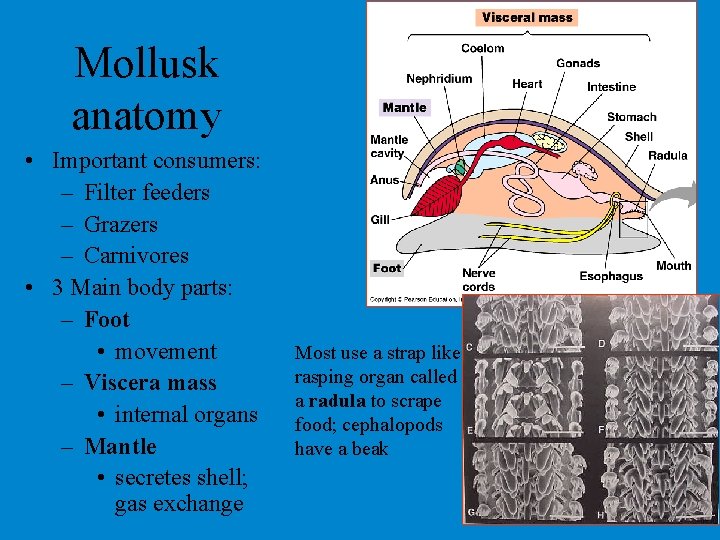
Mollusk anatomy • Important consumers: – Filter feeders – Grazers – Carnivores • 3 Main body parts: – Foot • movement – Viscera mass • internal organs – Mantle • secretes shell; gas exchange Most use a strap like rasping organ called a radula to scrape food; cephalopods have a beak