
Introduction to Animal Diversity and more animal diversity
- Slides: 16
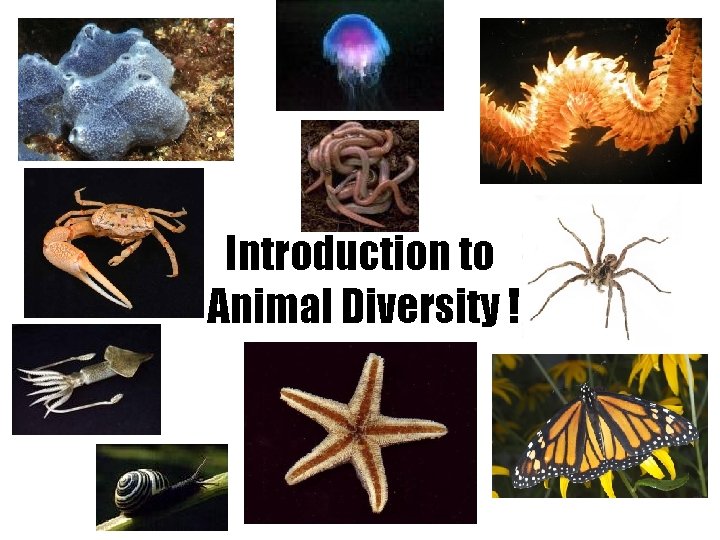
Introduction to Animal Diversity !
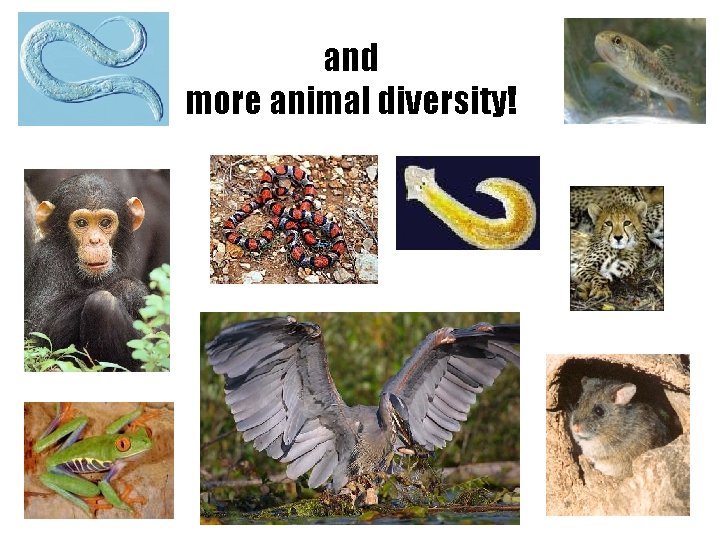
and more animal diversity!
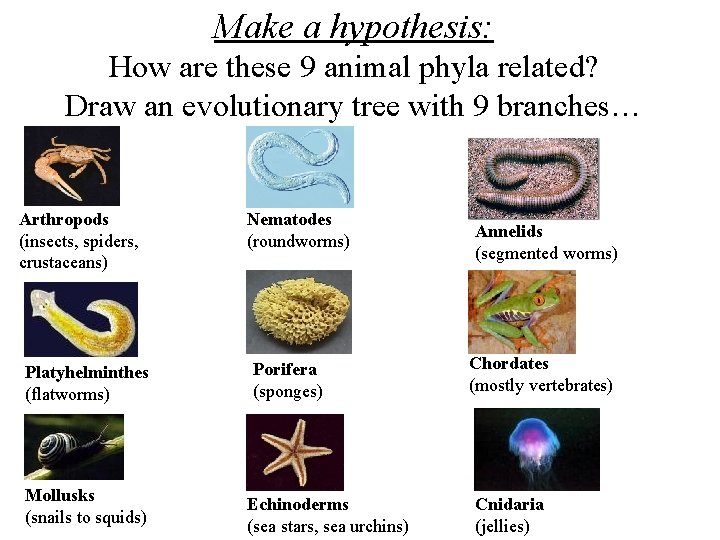
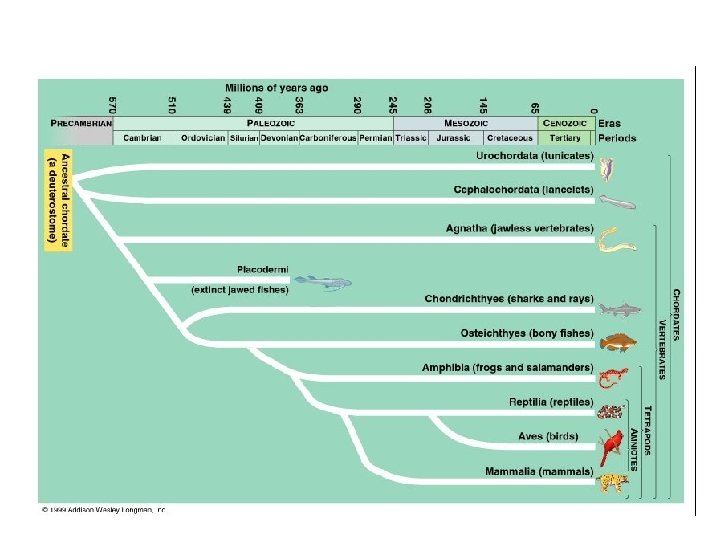
Make a hypothesis: How are these 9 animal phyla related? Draw an evolutionary tree with 9 branches… Arthropods (insects, spiders, crustaceans) Platyhelminthes (flatworms) Mollusks (snails to squids) Nematodes (roundworms) Porifera (sponges) Echinoderms (sea stars, sea urchins) Annelids (segmented worms) Chordates (mostly vertebrates) Cnidaria (jellies)
What do all animals have in common? • Multicellular with no cell walls • Heterotrophs that ingest food • Specialized cells capable of movement
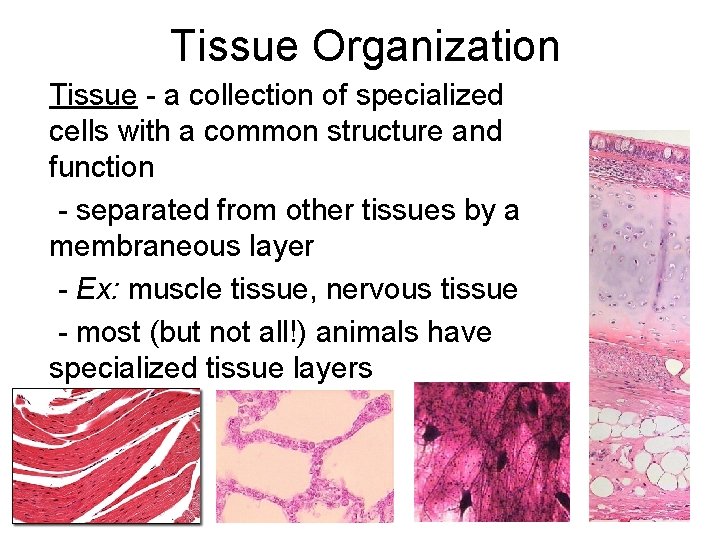
Tissue Organization Tissue - a collection of specialized cells with a common structure and function - separated from other tissues by a membraneous layer - Ex: muscle tissue, nervous tissue - most (but not all!) animals have specialized tissue layers
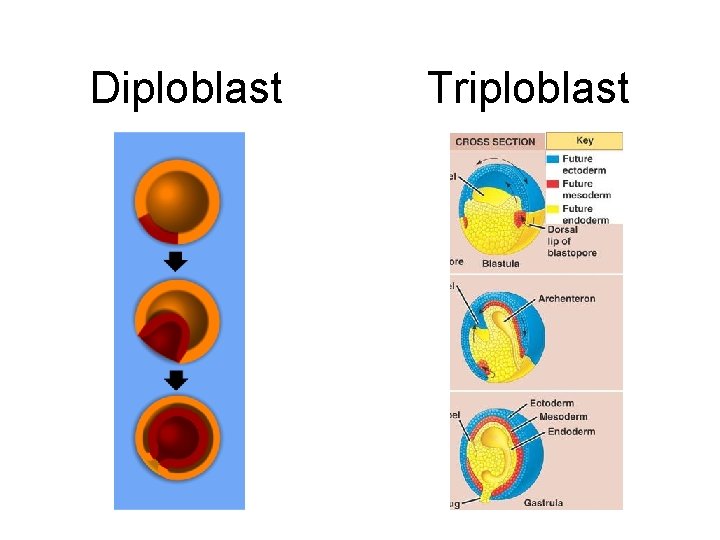
Tissue Layers • Form during embryological development (gastrulation) • Blastula (ball of cells) develops germ layers – Ectoderm - Endoderm - Mesoderm • Embryos with two layers (ecto and endo only) are diploblastic • Embryos with all three layers are triploblastic
Diploblast Triploblast
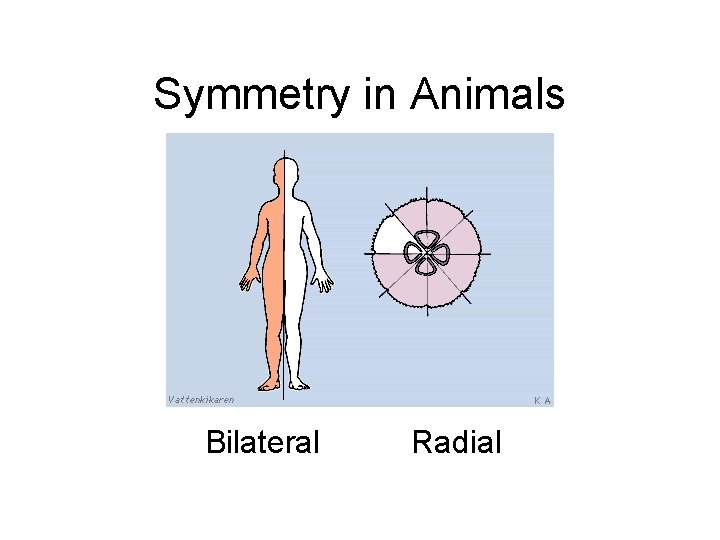
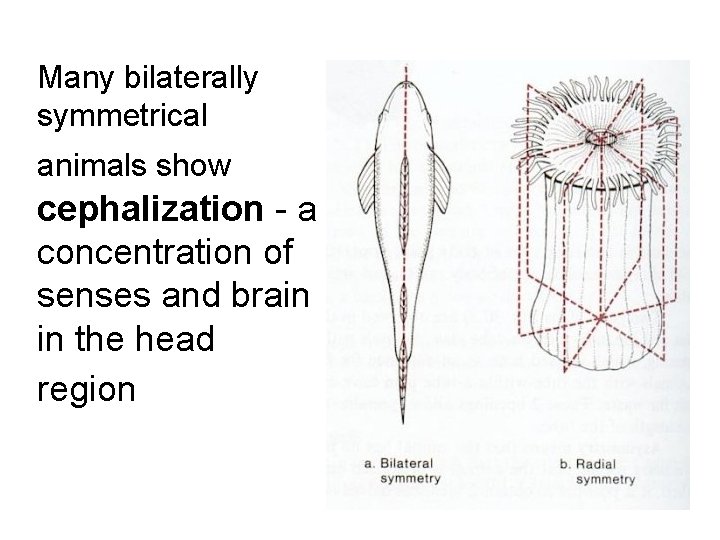
Symmetry in Animals Bilateral Radial
Many bilaterally symmetrical animals show cephalization - a concentration of senses and brain in the head region
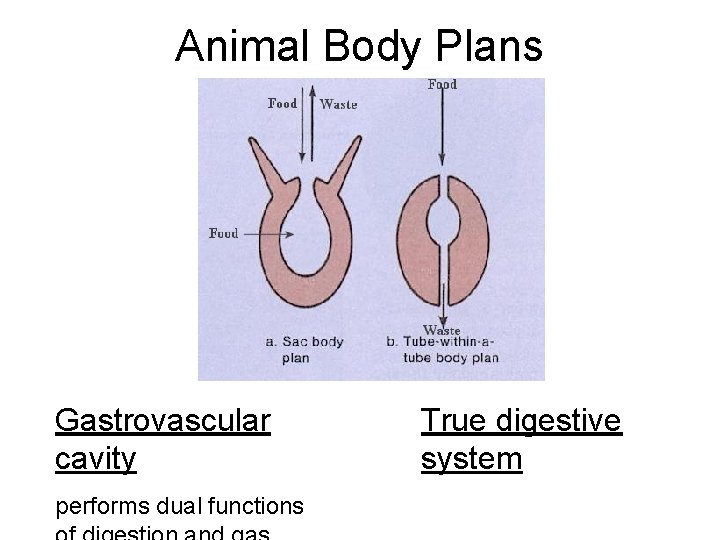
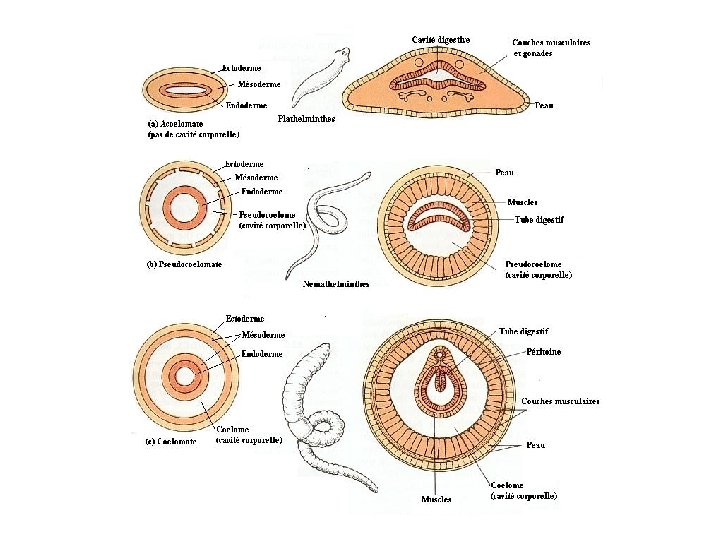
Animal Body Plans Gastrovascular cavity performs dual functions True digestive system
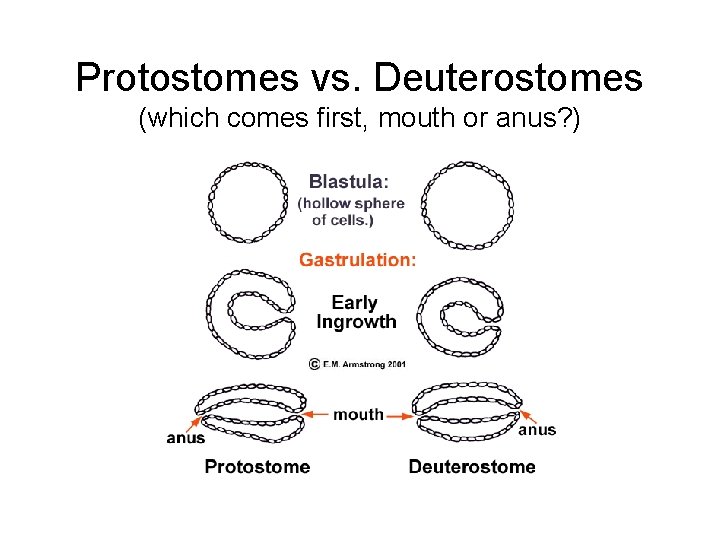
Protostomes vs. Deuterostomes (which comes first, mouth or anus? )
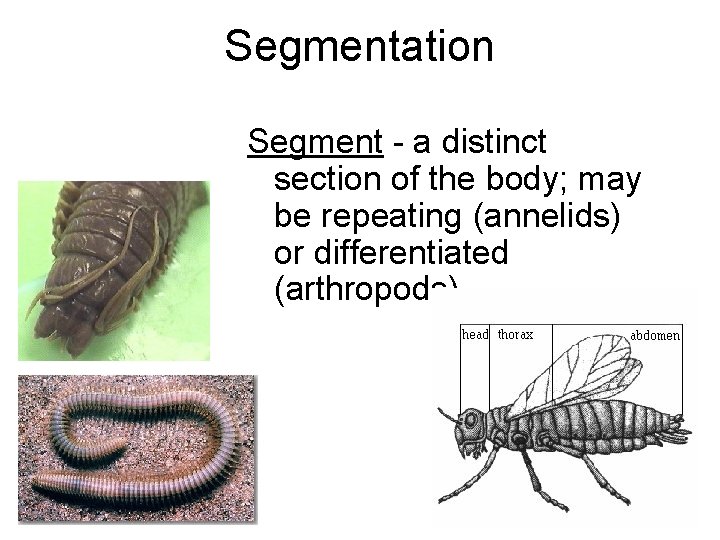
Segmentation Segment - a distinct section of the body; may be repeating (annelids) or differentiated (arthropods)
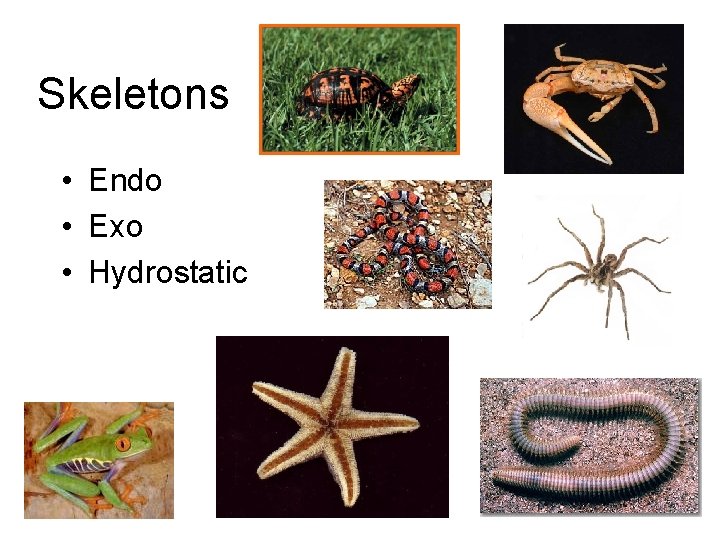
Skeletons • Endo • Exo • Hydrostatic