
Introduction to Anatomy Chapter 1 Study of Anatomy
- Slides: 27
Introduction to Anatomy Chapter 1
Study of: Anatomy - Internal and external structure - Physical relationships among body parts Gross anatomy Microscopic anatomy
Physiology Study of: - human body function Anatomy & physiology are always related. Under normal circumstances – structure determines function
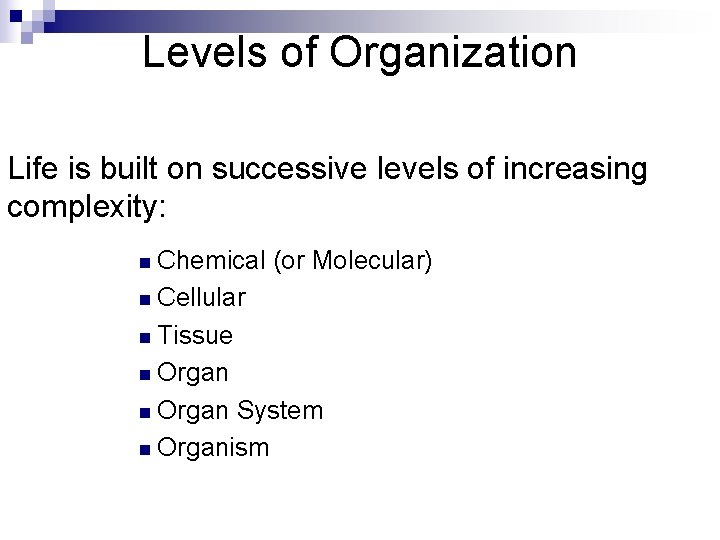
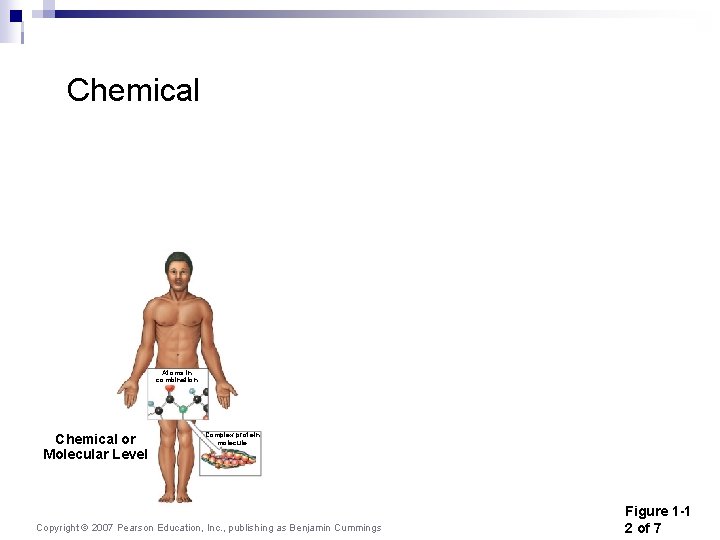
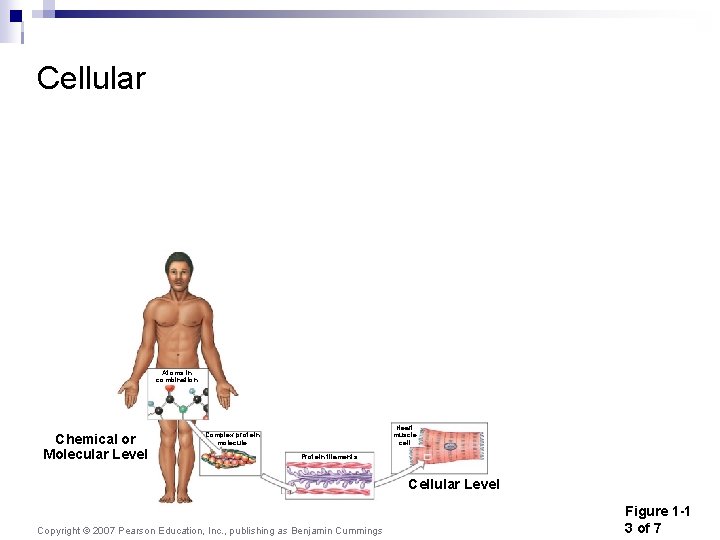
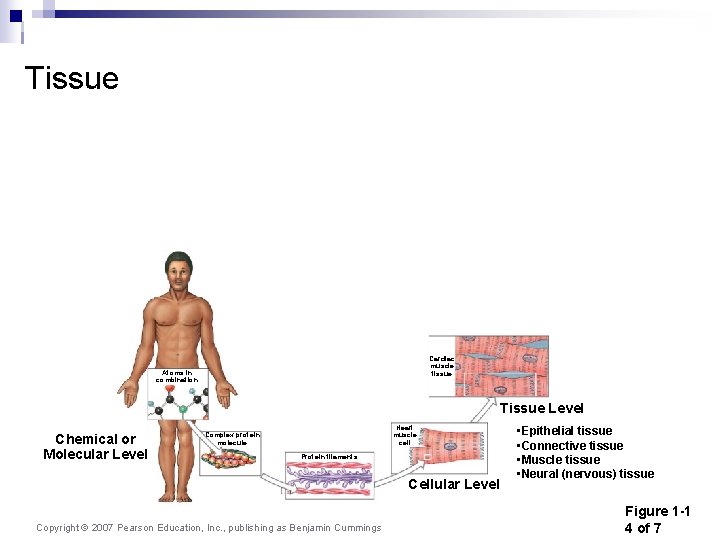
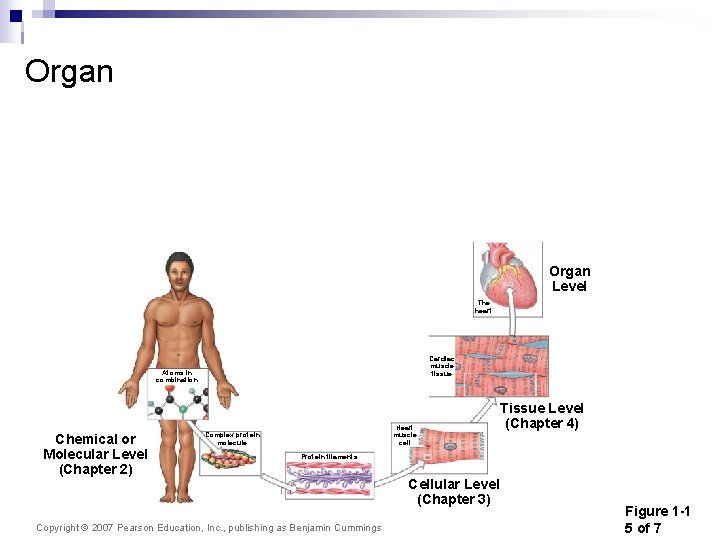
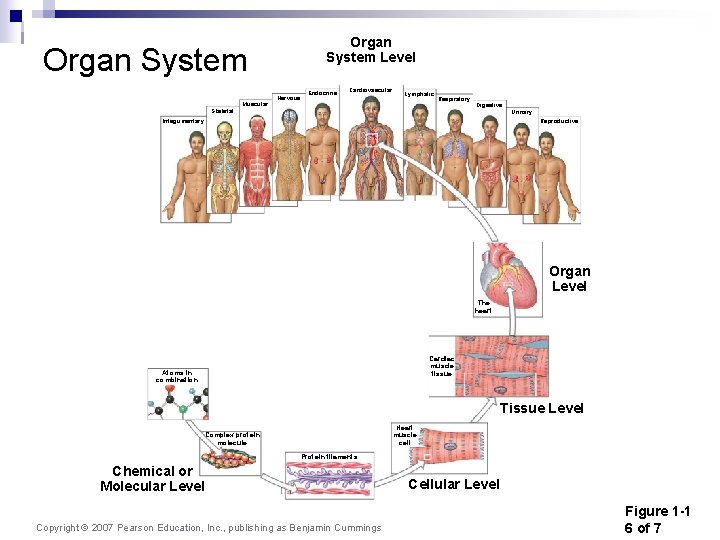
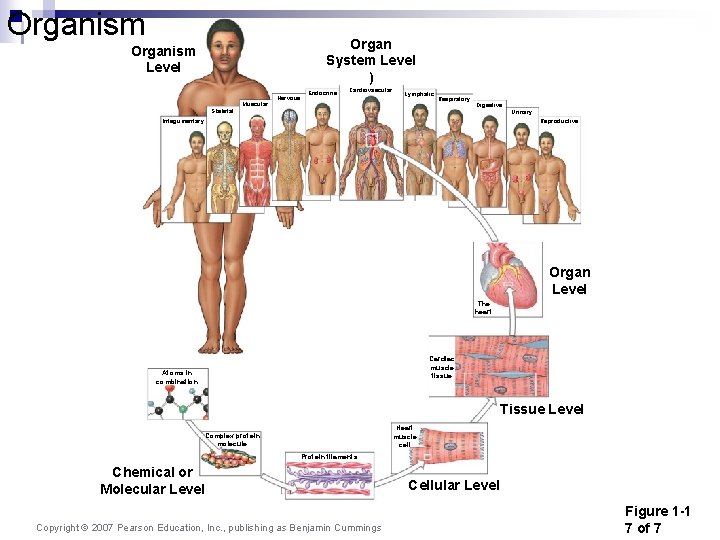
Levels of Organization Life is built on successive levels of increasing complexity: n Chemical (or Molecular) n Cellular n Tissue n Organ System n Organism
Chemical Atoms in combination Chemical or Molecular Level Complex protein molecule Copyright © 2007 Pearson Education, Inc. , publishing as Benjamin Cummings Figure 1 -1 2 of 7
Cellular Atoms in combination Chemical or Molecular Level Heart muscle cell Complex protein molecule Protein filaments Cellular Level Copyright © 2007 Pearson Education, Inc. , publishing as Benjamin Cummings Figure 1 -1 3 of 7
Tissue Cardiac muscle tissue Atoms in combination Tissue Level Chemical or Molecular Level Heart muscle cell Complex protein molecule Protein filaments Cellular Level Copyright © 2007 Pearson Education, Inc. , publishing as Benjamin Cummings • Epithelial tissue • Connective tissue • Muscle tissue • Neural (nervous) tissue Figure 1 -1 4 of 7
Organ Cardiovascular Organ Level The heart Cardiac muscle tissue Atoms in combination Chemical or Molecular Level (Chapter 2) Heart muscle cell Complex protein molecule Tissue Level (Chapter 4) Protein filaments Copyright © 2007 Pearson Education, Inc. , publishing as Benjamin Cummings Cellular Level (Chapter 3) Figure 1 -1 5 of 7
Organ System Level Organ System Muscular Nervous Endocrine Cardiovascular Lymphatic Respiratory Skeletal Digestive Urinary Integumentary Reproductive Organ Level The heart Cardiac muscle tissue Atoms in combination Tissue Level Heart muscle cell Complex protein molecule Protein filaments Chemical or Molecular Level Copyright © 2007 Pearson Education, Inc. , publishing as Benjamin Cummings Cellular Level Figure 1 -1 6 of 7
Organism Organ System Level ) Organism Level Muscular Nervous Endocrine Cardiovascular Lymphatic Respiratory Skeletal Digestive Urinary Integumentary Reproductive Organ Level The heart Cardiac muscle tissue Atoms in combination Tissue Level Heart muscle cell Complex protein molecule Protein filaments Chemical or Molecular Level Copyright © 2007 Pearson Education, Inc. , publishing as Benjamin Cummings Cellular Level Figure 1 -1 7 of 7
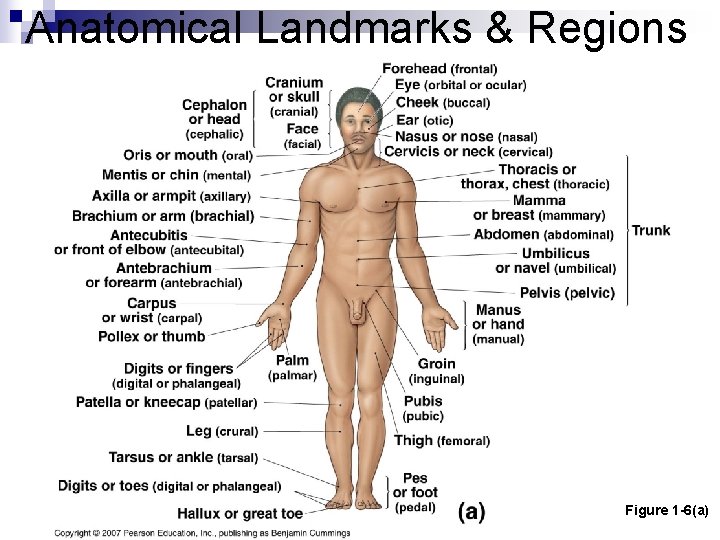
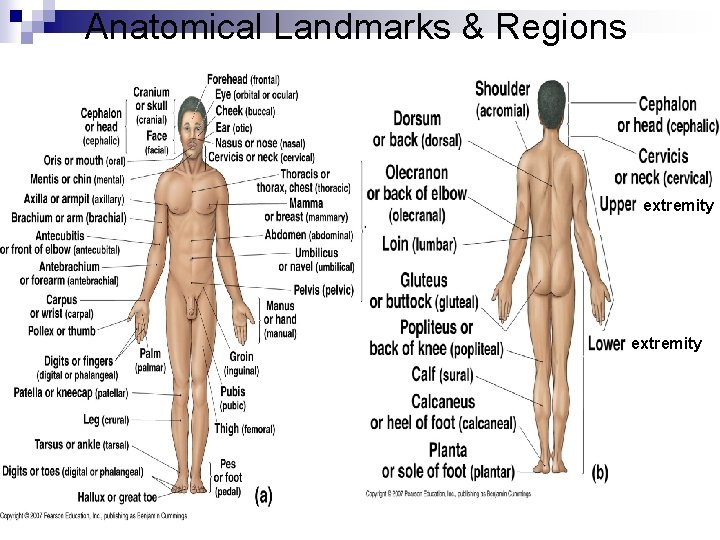
Anatomical Landmarks & Regions Figure 1 -6(a)
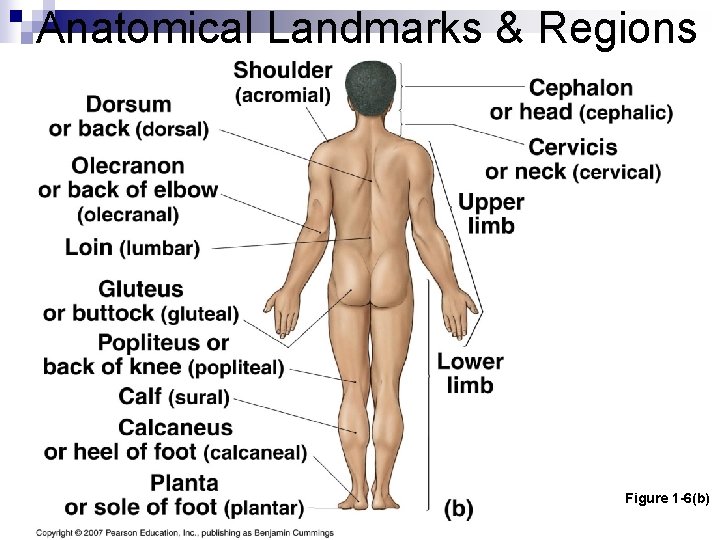
Anatomical Landmarks & Regions Figure 1 -6(b)
Anatomical Landmarks & Regions extremity
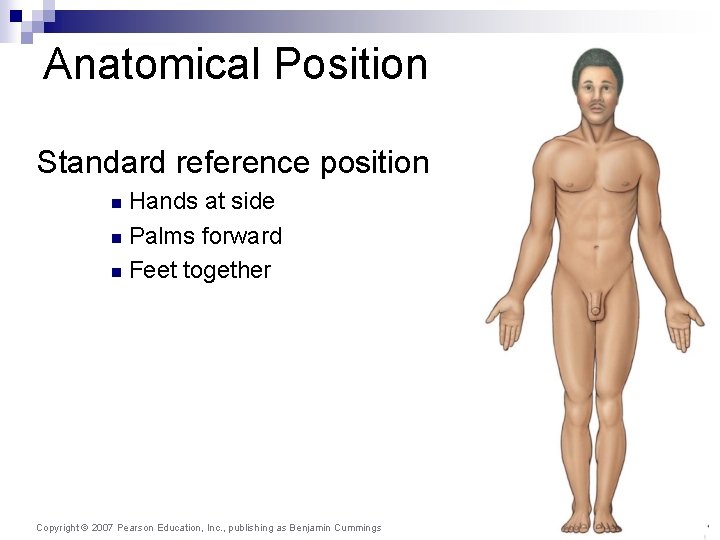
Anatomical Position Standard reference position Hands at side n Palms forward n Feet together n Copyright © 2007 Pearson Education, Inc. , publishing as Benjamin Cummings
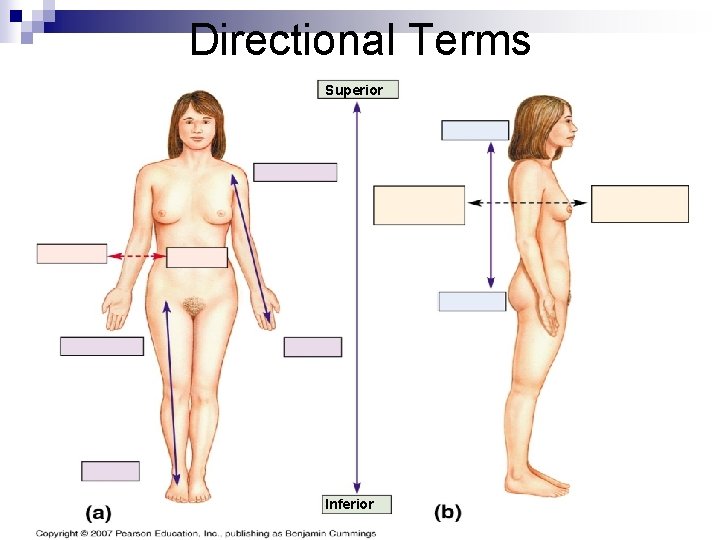
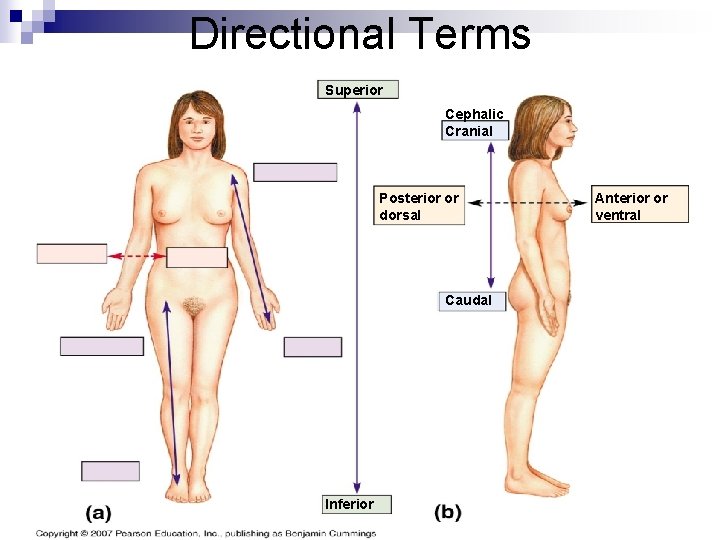
Directional Terms Superior Inferior
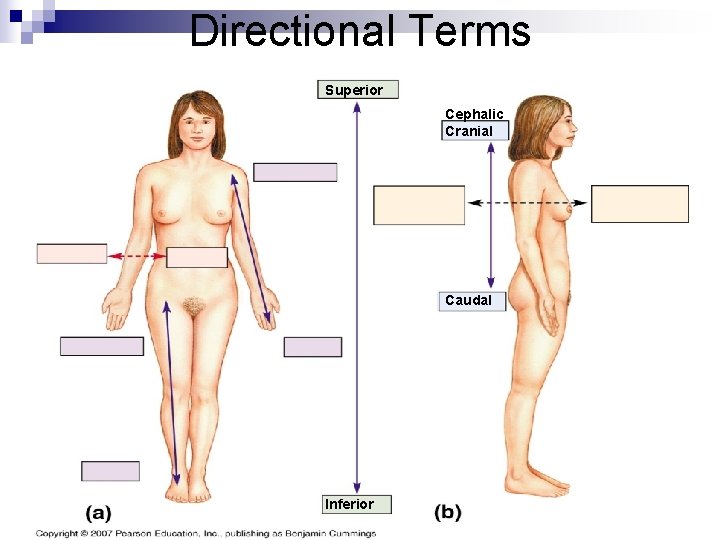
Directional Terms Superior Cephalic Cranial Caudal Inferior
Directional Terms Superior Cephalic Cranial Posterior or dorsal Caudal Inferior Anterior or ventral
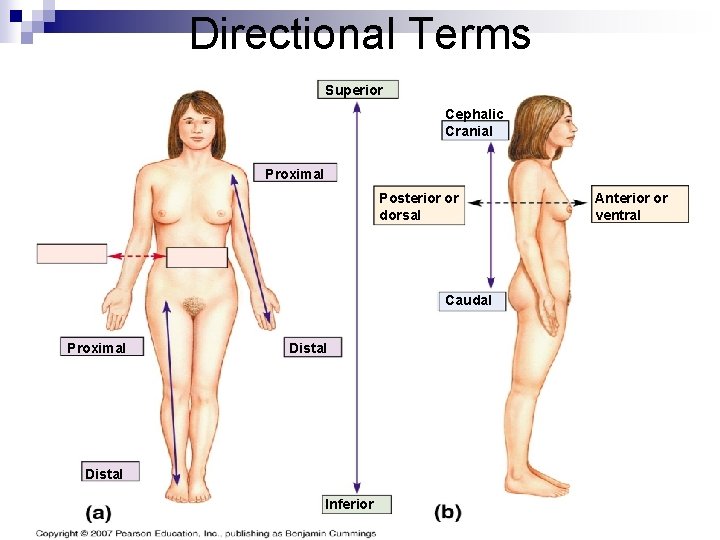
Directional Terms Superior Cephalic Cranial Proximal Posterior or dorsal Caudal Proximal Distal Inferior Anterior or ventral
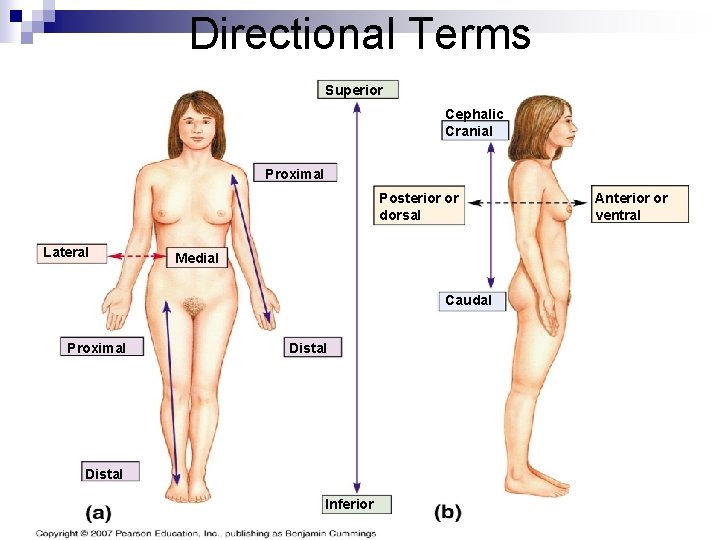
Directional Terms Superior Cephalic Cranial Proximal Posterior or dorsal Lateral Medial Caudal Proximal Distal Inferior Anterior or ventral
Directional Terms Superficial Deep Ipsilateral Contralateral Bilateral Prone Supine
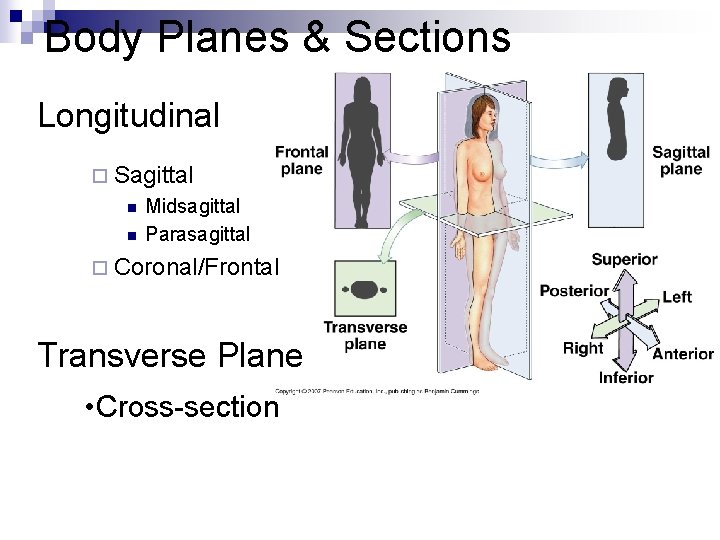
Body Planes & Sections Longitudinal ¨ Sagittal n n Midsagittal Parasagittal ¨ Coronal/Frontal Transverse Plane • Cross-section
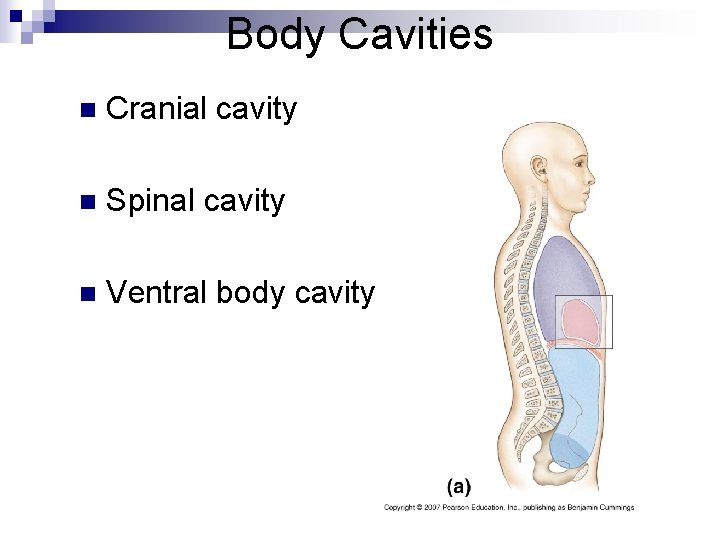
Body Cavities n Cranial cavity n Spinal cavity n Ventral body cavity
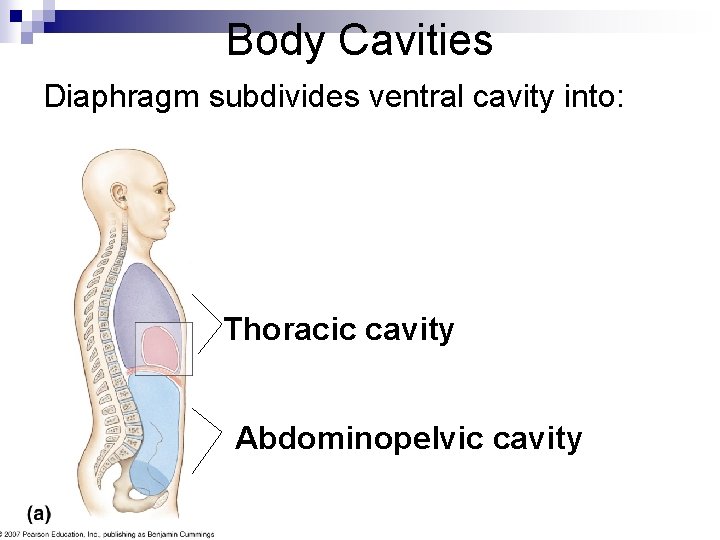
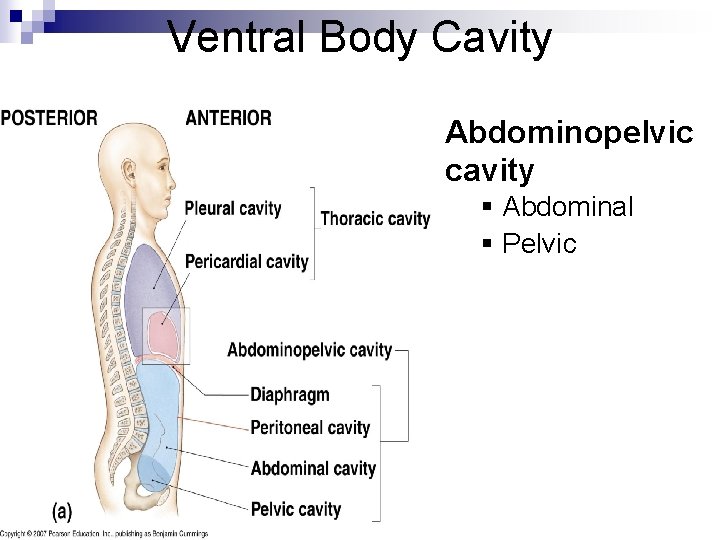
Body Cavities Diaphragm subdivides ventral cavity into: Thoracic cavity Abdominopelvic cavity
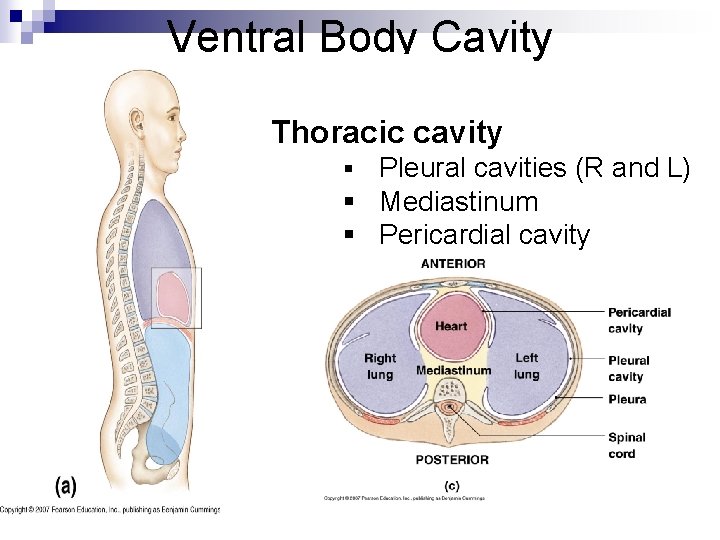
Ventral Body Cavity Thoracic cavity Pleural cavities (R and L) § Mediastinum § Pericardial cavity §
Ventral Body Cavity Abdominopelvic cavity § Abdominal § Pelvic
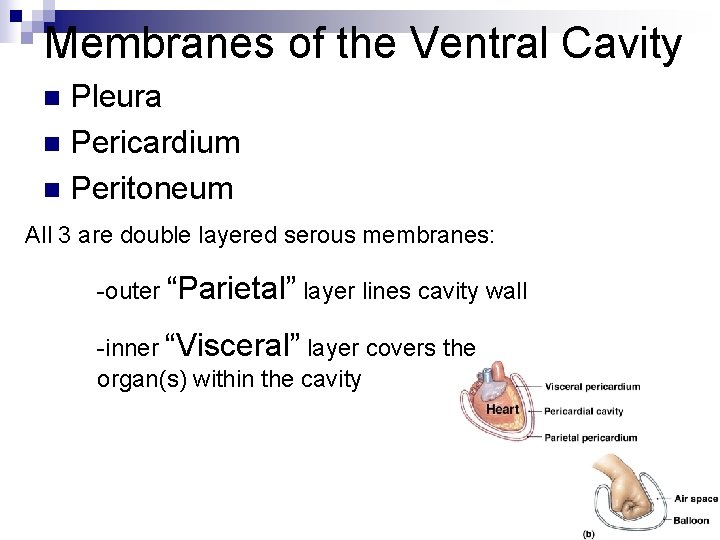
Membranes of the Ventral Cavity Pleura n Pericardium n Peritoneum n All 3 are double layered serous membranes: -outer “Parietal” layer lines cavity wall -inner “Visceral” layer covers the organ(s) within the cavity
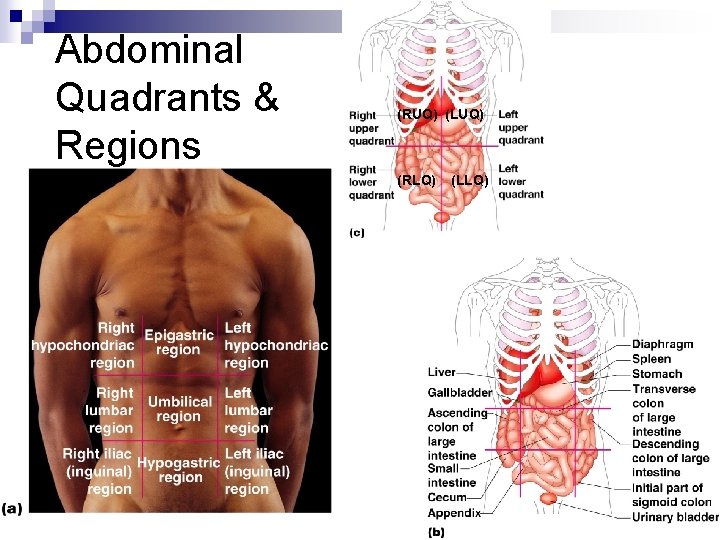
Abdominal Quadrants & Regions (RUQ) (LUQ) (RLQ) (LLQ)