
Introduction to Anatomy Athletic Training 2018 Anatomical Position
- Slides: 12
Introduction to Anatomy Athletic Training 2018
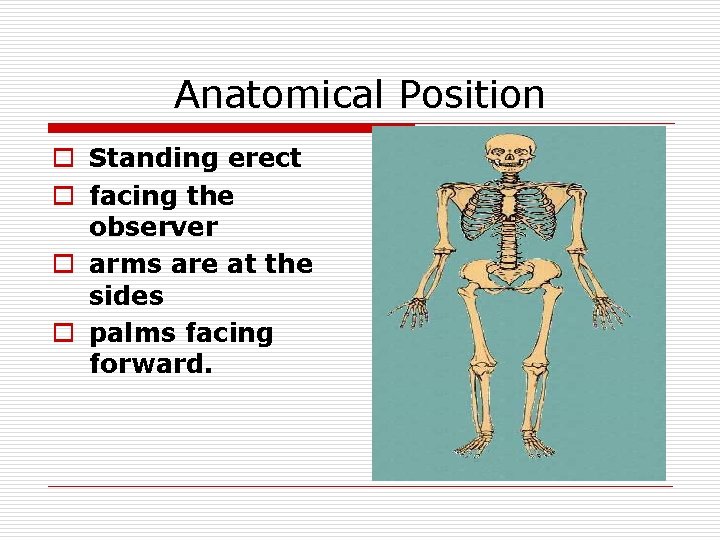
Anatomical Position o Standing erect o facing the observer o arms are at the sides o palms facing forward.
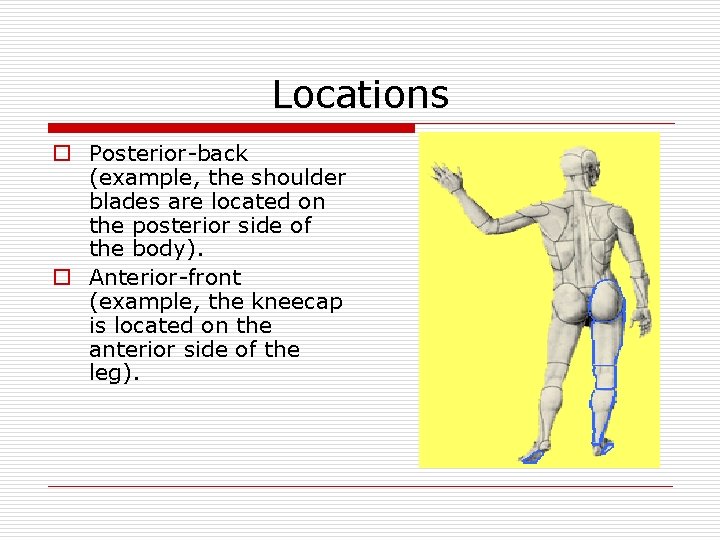
Locations o Posterior-back (example, the shoulder blades are located on the posterior side of the body). o Anterior-front (example, the kneecap is located on the anterior side of the leg).
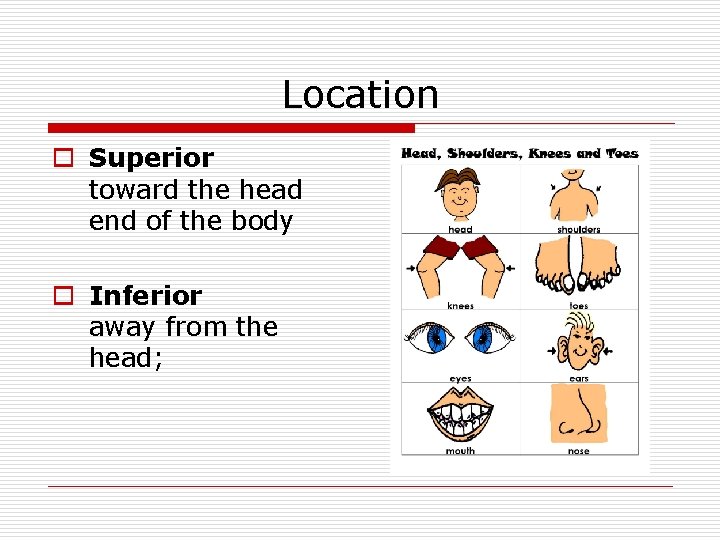
Location o Superior toward the head end of the body o Inferior away from the head;
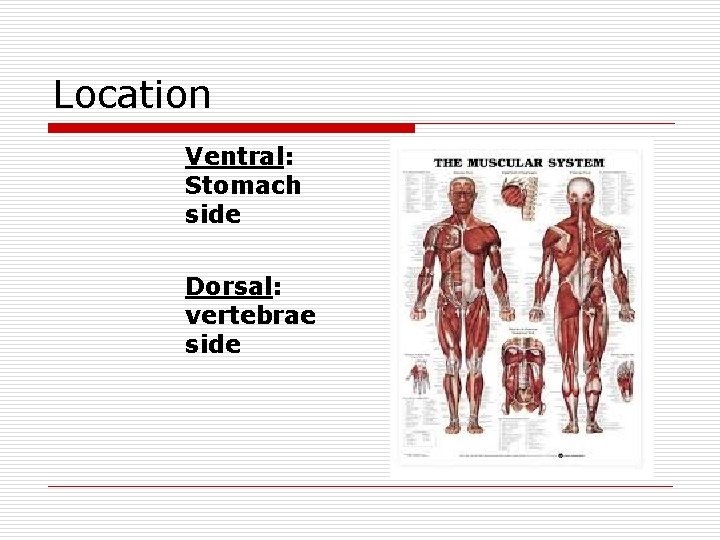
Location Ventral: Stomach side Dorsal: vertebrae side
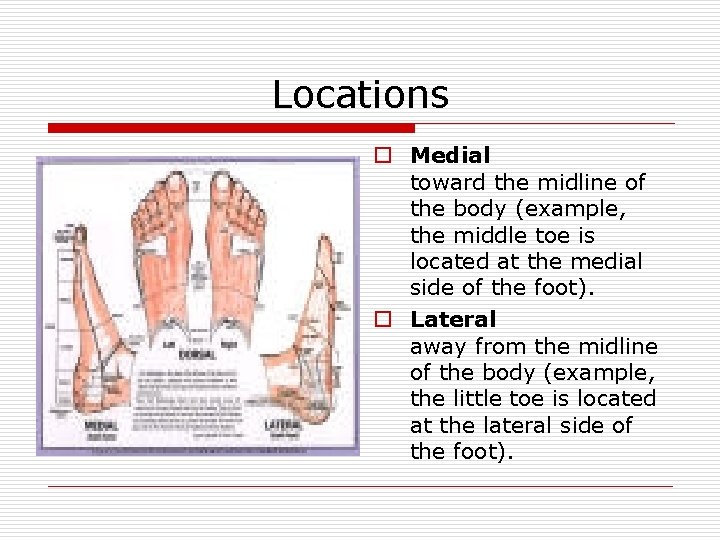
Locations o Medial toward the midline of the body (example, the middle toe is located at the medial side of the foot). o Lateral away from the midline of the body (example, the little toe is located at the lateral side of the foot).
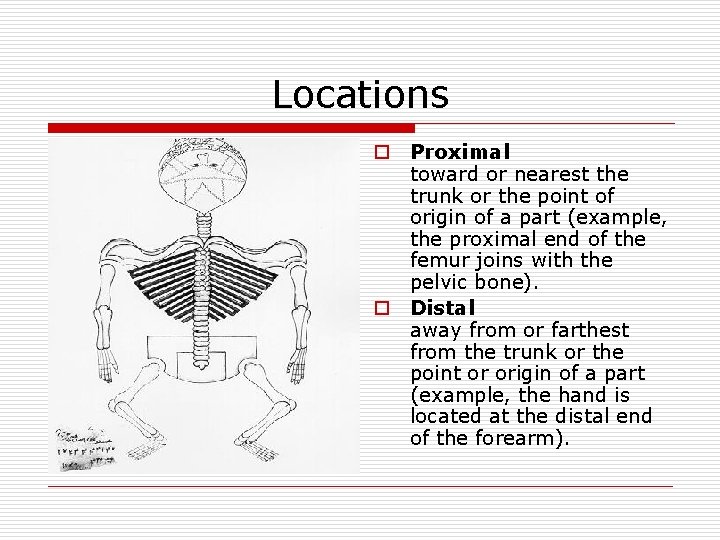
Locations o Proximal toward or nearest the trunk or the point of origin of a part (example, the proximal end of the femur joins with the pelvic bone). o Distal away from or farthest from the trunk or the point or origin of a part (example, the hand is located at the distal end of the forearm).
Movements o Abduction: A movement from a midline o Adduction: A movement toward a midline
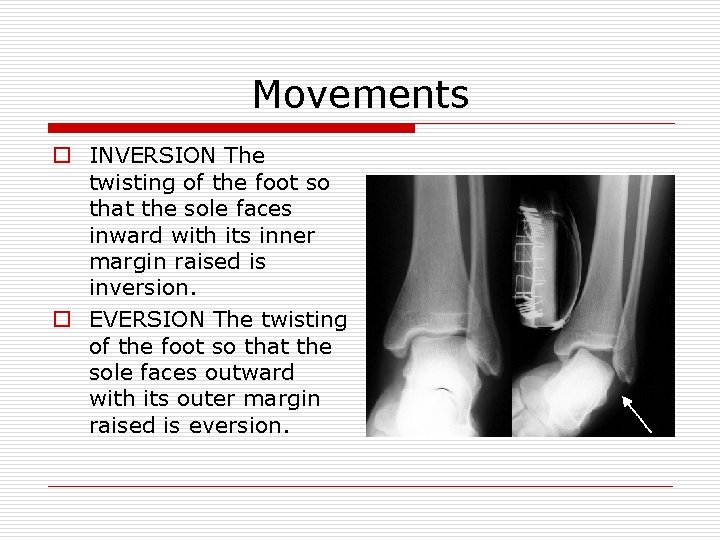
Movements o INVERSION The twisting of the foot so that the sole faces inward with its inner margin raised is inversion. o EVERSION The twisting of the foot so that the sole faces outward with its outer margin raised is eversion.
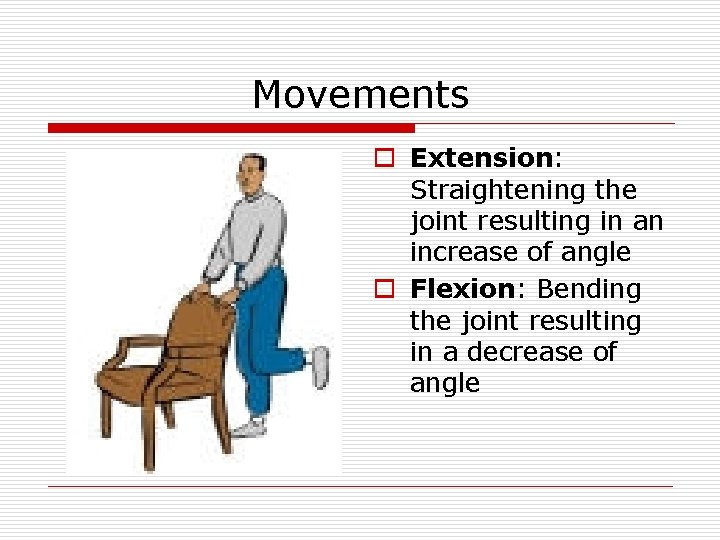
Movements o Extension: Straightening the joint resulting in an increase of angle o Flexion: Bending the joint resulting in a decrease of angle
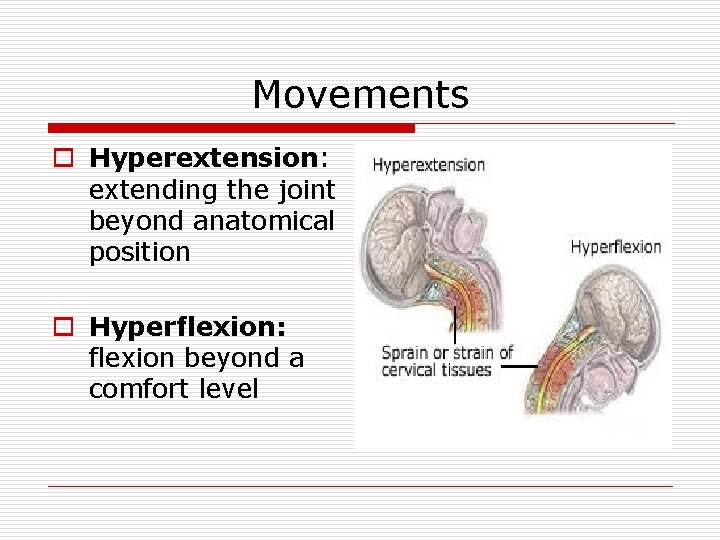
Movements o Hyperextension: extending the joint beyond anatomical position o Hyperflexion: flexion beyond a comfort level
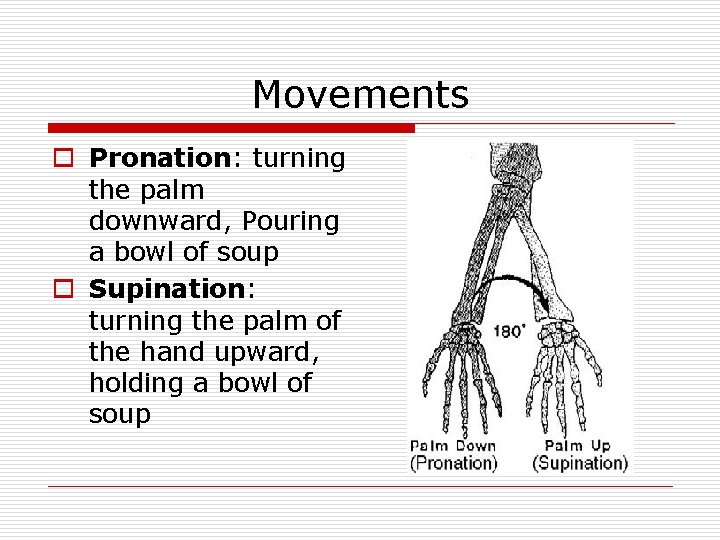
Movements o Pronation: turning the palm downward, Pouring a bowl of soup o Supination: turning the palm of the hand upward, holding a bowl of soup