
Introduction to Air Quality MonitoringExposure Assessment FOR CONTAMINANTS
![Example of Regulations brought about by OSHA �Hazard Communication (Haz. Com [4]) - Also](https://slidetodoc.com/presentation_image/b3783fd837b8bb67e59ed8ecff5c3eab/image-8.jpg "Example of Regulations brought about by OSHA �Hazard Communication (Haz. Com [4]) - Also")
- Slides: 35
Introduction to Air Quality Monitoring/Exposure Assessment FOR CONTAMINANTS IN THE WORKPLACE EMSA 22 Yeggie Dearborn CCSF SKC Slides included with permission
Objectives �What is Air sampling? �Sampling strategies; Why is it done? �Agencies regulating exposure to chemicals/Biological contaminants �How is Air sampling conducted? Examples of most common air sampling equipments �Lab Module 3 - Air sampling Pump calibration- Measuring Co 2 in indoor air
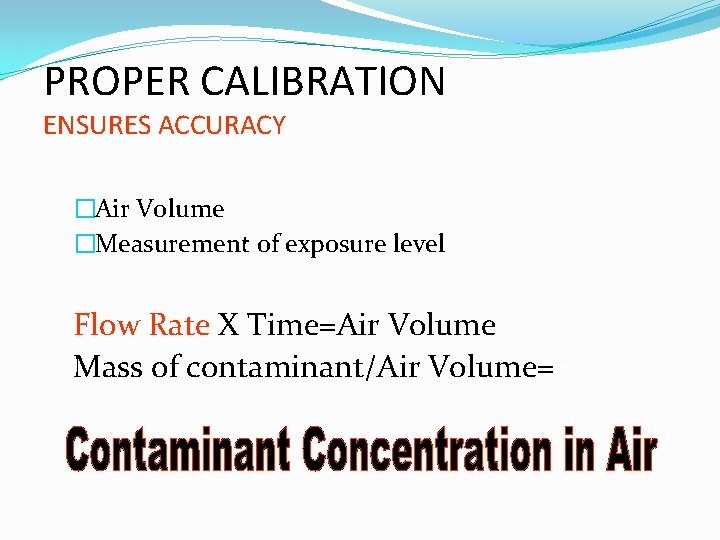
What is air sampling? �Capturing the contaminant from a known volume of air and measuring the results as a concentration. �Air is taken through a filter medium �Volume of air is calculated by multiplying the flow rate through the filter by the times in minutes �The amount of contaminant captured is expressed as mg/m 3 or parts per million (ppm) �Correct amount of flow, and concentration of contaminant captured depends on proper Calibration which should be carried out before and after sampling.
Types of Contaminants �Three types of contaminants according to physical properties: �Particulates (Dust, aerosols, fibers, fumes, smokes, mists) �Gases (CO 2, Carbon monoxide, formaldehyde etc. . ) �Vapors (hydrocarbons, petroleum products)
Sampling Strategies Air monitoring may be conducted for a number of reasons listed below: 1. Regulatory compliance (e. g. OSHA) 2. Validation of controls (e. g. properly functioning local exhaust ventilation) 3. Employee concern 4. Characterization of potential exposure to an air contaminant
Primary Agency regulating Occupational Exposure to Chemicals/Biological Contaminants 1. Occupational Safety and Health (OSHA) is an agency of the United States Department of Labor. Created by Congress on 1970. Its mission is to prevent work-related injuries, illnesses, and occupational fatality by issuing and enforcing rules called standards for workplace safety and health. The agency is headed by a Deputy Assistant Secretary of Labor.
Example of Regulations brought about by OSHA �Permissible exposure limits (PEL) - Maximum concentrations of chemicals stipulated by regulation for chemicals and dusts. They cover around 600 chemicals. Most are based on standards issued by other organizations in 1968 or before. �Personal protective equipment (PPE) - broader use of respirators, gloves, coveralls, and other protective equipment when handling hazardous chemicals; goggles, face shields, ear protection in typical industrial environments
Example of Regulations brought about by OSHA �Hazard Communication (Haz. Com [4]) - Also known as the "Right to Know" standard, was issued as 29 CFR 1910. 1200 on November 25, 1983 (48 FR 53280), requires developing and communicating information on the hazards of chemical products used in the workplace. Expousre to LEAD or Chemicals that cause Cancer �Exposure to asbestos - OSHA has established requirements in 29 CFR 1910. 1001 for occupational exposure to asbestos. These requirements apply to most workplaces - most notably excepted is construction work. "Construction work" means work for construction, alteration and/or repair including painting and decorating. Occupational exposure requirements for asbestos in construction work can be found in 29 CFR 1926. 1101.
Other Agencies Collaborating with OSHA � EPA- National air quality standards (Clean Air Act-1970) protect the general public from exposure to airborne contaminants that are known to be hazardous to human health. EPA deals with primarily with ambiant air monitoring � The National Institute for Occupational Safety and Health (or NIOSH) federal agency responsible for conducting research and making recommendations for the prevention of work-related injury and illness. NIOSH is part of the Centers for Disease Control and Prevention (CDC) within the U. S. Department of Health and Human Services. � The American Conference of Governmental Industrial Hygienists (ACGIH) is a professional association of industrial hygienists and practitioners of related professions-provides supplemental guidelines to OSHA chemical exposure limits
Regulatory Standards Affecting Air Monitoring �OSHA is usually the primary source of regulations that address work related air monitoring and worker protection. It should be noted that a number of substances (e. g. formaldehyde and lead) have specific standards, so the applicable section of OSHA must be consulted regarding sampling Air Monitoring for these specific chemcials �When OSHA does not address a particular substance, other recognized standards developed by ACGIH, NIOSH, EPA are enacted as industry standards. �When no recognized standards exist, professional judgment shall be used to evaluate the acceptable exposure level.
AIR TESTING EQUIPMENT: SO MANY CHOICES We will concentrate on two General Categories: • Survey Tools • Air Sampling equipments
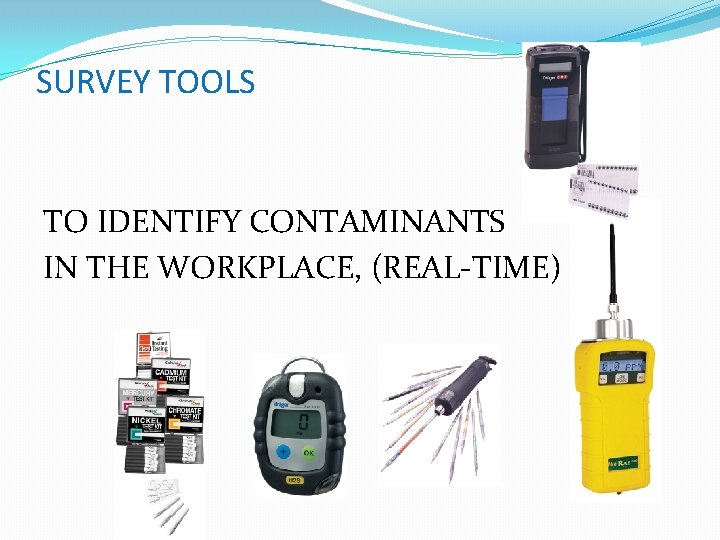
SURVEY TOOLS TO IDENTIFY CONTAMINANTS IN THE WORKPLACE, (REAL-TIME)
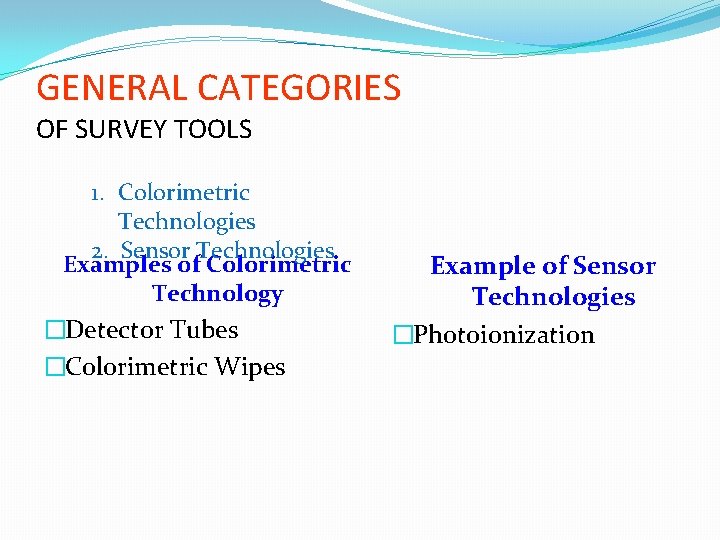
GENERAL CATEGORIES OF SURVEY TOOLS 1. Colorimetric Technologies 2. Sensor Technologies Examples of Colorimetric Technology �Detector Tubes �Colorimetric Wipes Example of Sensor Technologies �Photoionization
Example of Survey Tool: DETECTOR TUBES A FIRST LINE OF DEFENSE �Classical measurement technique with first patent in 1919 �Glass tube containing a chemical media that reacts with the contaminant of interest by changing color �Concentration is read directly from a printed scale on the tube �Tubes now available for measurement of over 200 gases/vapors. [We will use detector tubes to night for CO 2 (carbon dioxide)
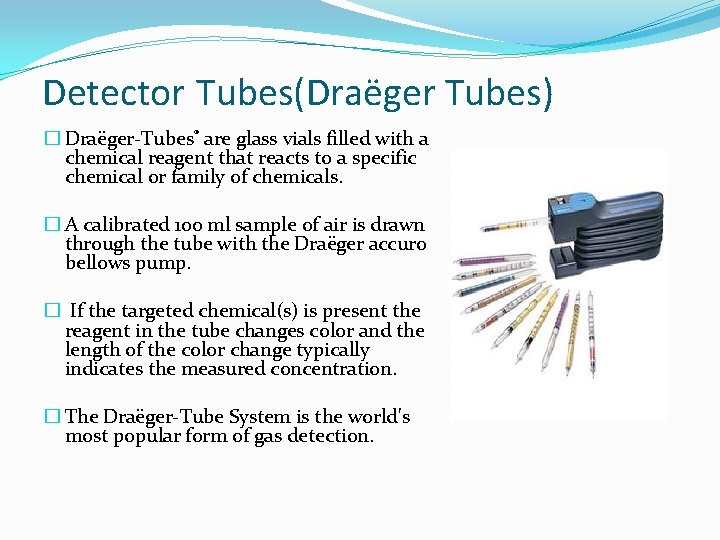
Detector Tubes(Draëger Tubes) � Draëger-Tubes® are glass vials filled with a chemical reagent that reacts to a specific chemical or family of chemicals. � A calibrated 100 ml sample of air is drawn through the tube with the Draëger accuro bellows pump. � If the targeted chemical(s) is present the reagent in the tube changes color and the length of the color change typically indicates the measured concentration. � The Draëger-Tube System is the world's most popular form of gas detection.
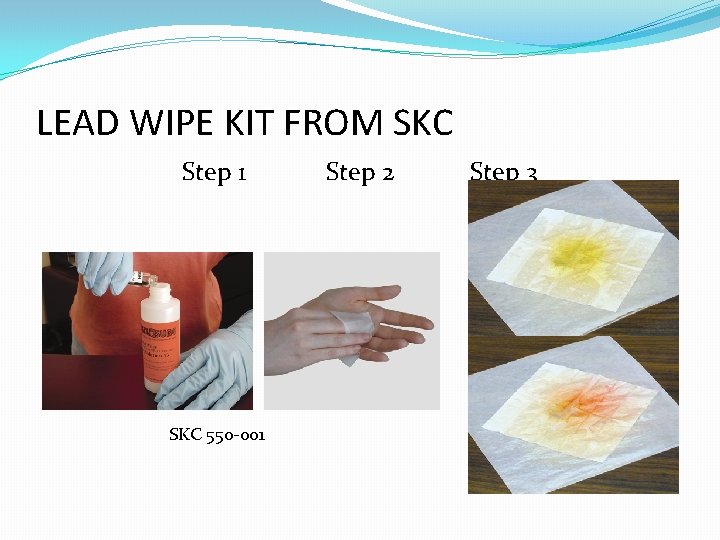
Example of Survey Tool: COLORIMETRIC WIPES-FOR CHEMICALS ON SURFACES �Chemicals in air will eventually deposit on surfaces and may pose a risk to workers by skin absorption or ingestion. �Chemical residue on shoes, lunch boxes, and other personal items may inadvertently become a takehome toxin for worker’s family members.
FULL DISCLOSURE WIPES FOR LEAD ON SKIN OR SURFACES �Developed by US NIOSH; NIOSH Method 9105 �Licensed by SKC �Scientific breakthrough- Colorimetric wipe for lead on skin or surfaces �Behavior modification tool-Allows workers to determine if their hand washing has been thorough enough �Limit of ID is 18 ug of lead
LEAD WIPE KIT FROM SKC Step 1 SKC 550 -001 Step 2 Step 3
SURVEY TOOLS USING SENSOR TECHNOLOGIESPHOTOIONIZATION DETECTORS BROAD SPECTRUM VOC MONITORS �Also known as a type of Direct Reading Instrument �Based on the principle that some chemicals can be ionized when hit with high-energy UV light. The instrument measures the resulting current which is proportional to concentration of the gas/vapor in air. �Instrument manufacturers publish technical documents with lists of chemicals that can be detected using UV lamps with various energy levels.
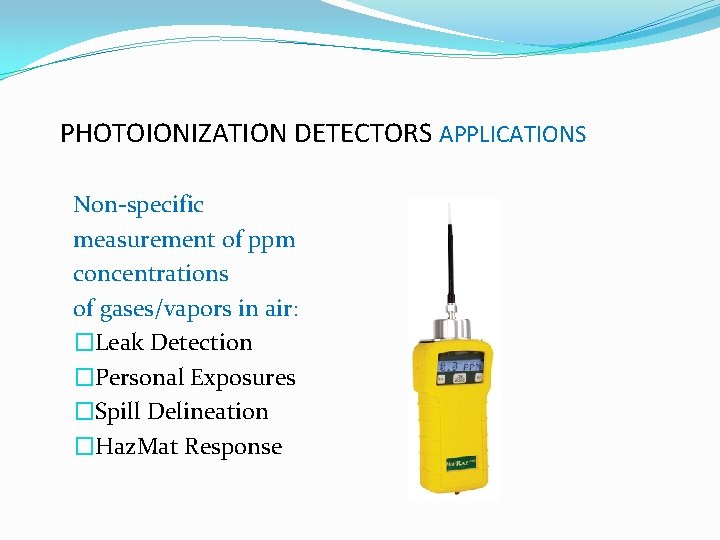
PHOTOIONIZATION DETECTORS APPLICATIONS Non-specific measurement of ppm concentrations of gases/vapors in air: �Leak Detection �Personal Exposures �Spill Delineation �Haz. Mat Response
PHOTOIONIZATION DETECTORS SOURCES OF ERROR �Non-specific-can not identify specific VOC �Does not detect all VOCs or compounds such as carbon monoxide, hydrogen, methane, oxygen �Humidity can cause lamp fogging resulting in lower readings �Sensor drift �All direct-reading instruments must be calibrated properly and regularly. �Both factory and user calibrations are required
GENERAL CATEGORIES OF SAMPLING EQUIPMENT Active Sampling for Gases/Vapors or Particulates Example: �Pump �Collection Media �Pump Calibrator Passive Sampling for Gases/Vapors Example: �Badge with sorbent
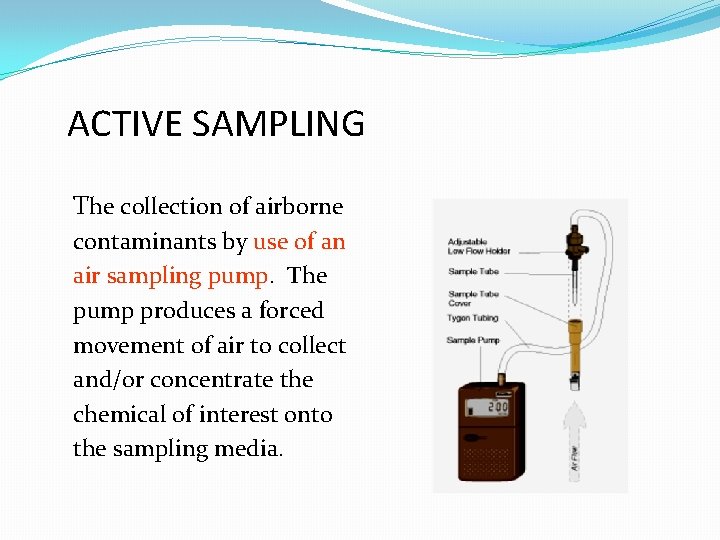
ACTIVE SAMPLING The collection of airborne contaminants by use of an air sampling pump. The pump produces a forced movement of air to collect and/or concentrate the chemical of interest onto the sampling media.
SAMPLING PUMPS THE HEART OF ACTIVE SAMPLING For most Industrial Hygiene/Occupational Exposure applications�GASES AND VAPORS are sampled at low flow rates to allow effective adsorption to occur onto the sorbent material. �PARTICULATES including Mold /Bacteria are sampled at high flow rates so that airborne particles can be effectively trapped onto the filter material.
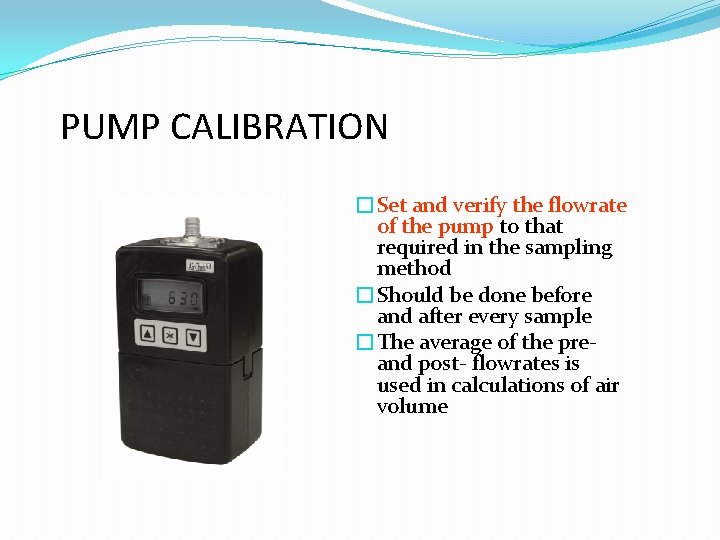
PUMP CALIBRATION �Set and verify the flowrate of the pump to that required in the sampling method �Should be done before and after every sample �The average of the pre- and post- flowrates is used in calculations of air volume
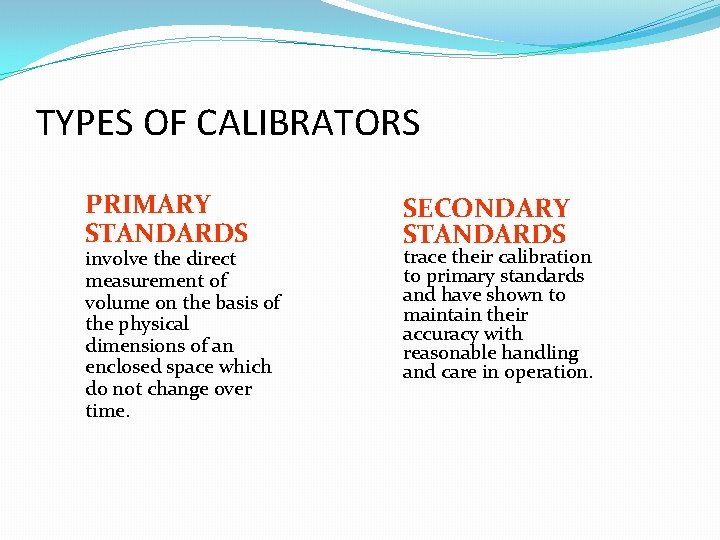
TYPES OF CALIBRATORS PRIMARY STANDARDS involve the direct measurement of volume on the basis of the physical dimensions of an enclosed space which do not change over time. SECONDARY STANDARDS trace their calibration to primary standards and have shown to maintain their accuracy with reasonable handling and care in operation.
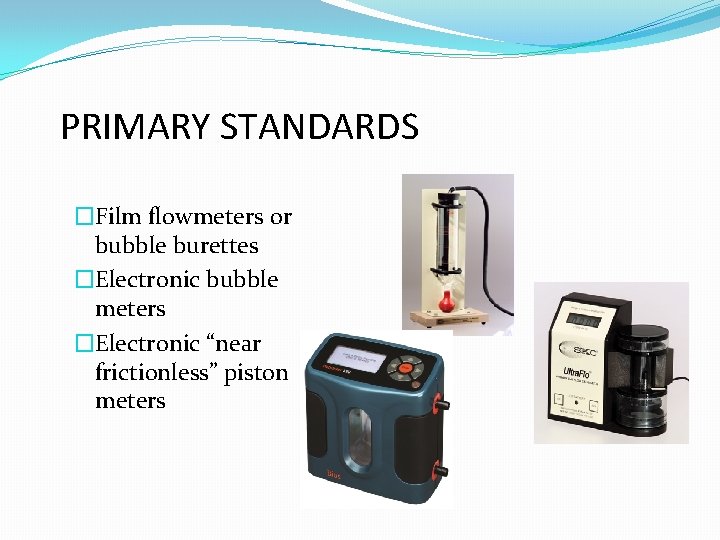
PRIMARY STANDARDS �Film flowmeters or bubble burettes �Electronic bubble meters �Electronic “near frictionless” piston meters
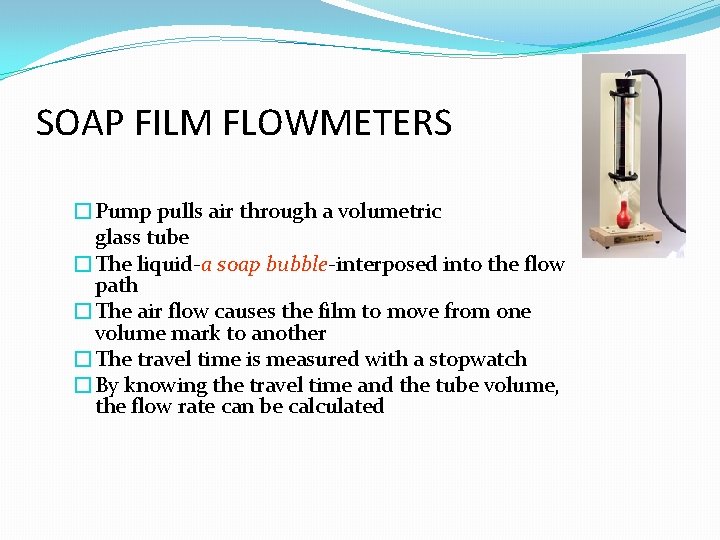
SOAP FILM FLOWMETERS �Pump pulls air through a volumetric glass tube �The liquid-a soap bubble-interposed into the flow path �The air flow causes the film to move from one volume mark to another �The travel time is measured with a stopwatch �By knowing the travel time and the tube volume, the flow rate can be calculated
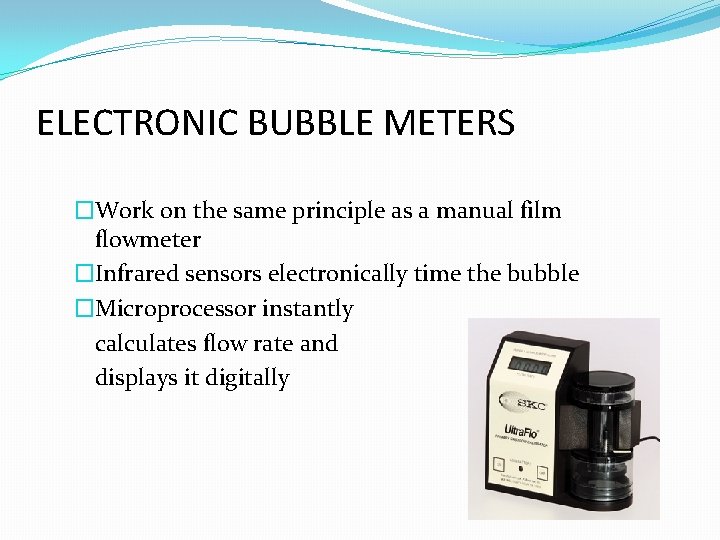
ELECTRONIC BUBBLE METERS �Work on the same principle as a manual film flowmeter �Infrared sensors electronically time the bubble �Microprocessor instantly calculates flow rate and displays it digitally
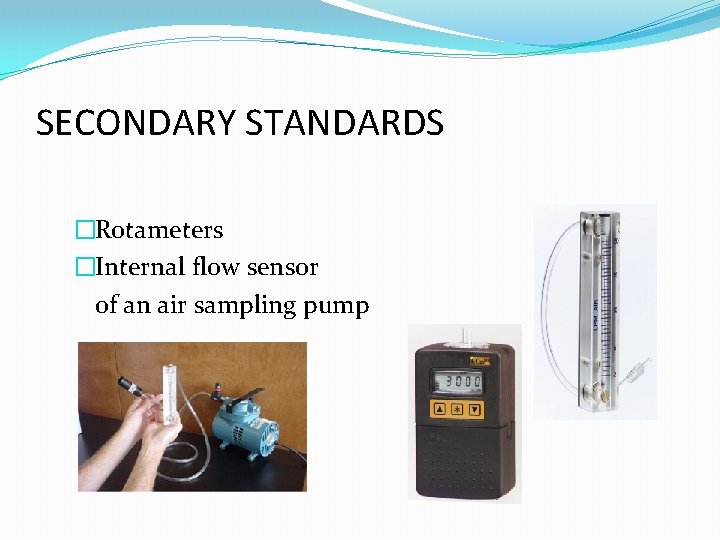
SECONDARY STANDARDS �Rotameters �Internal flow sensor of an air sampling pump
COMMON MISTAKES IN PUMP CALIBRATION �Not calibrating pumps with a primary standard or a calibrated secondary standard Calibration should be done using a primary standard or by a secondary standard such as a rotameter that traces its calibration to a primary standard and is regularly recalibrated.
COMMON MISTAKES IN PUMP CALIBRATION �Using a rotameter at a different temperature and atmospheric pressure than those that existed during rotameter calibration using a primary standard Rotameters are affected by atm pressure and temperature. Rotameters should be calibrated using primary standards under conditions of use or a mathematical correction of the readings should be made.
COMMON MISTAKES IN PUMP CALIBRATION �Not calibrating with the representative sampling media in-line Various types of sampling media produce pressure drops for which the pump must compensate. For this reason, it is recommended that pumps be calibrated to within +/-5% of the recommended flow rate with the media in-line.
PROPER CALIBRATION ENSURES ACCURACY �Air Volume �Measurement of exposure level Flow Rate X Time=Air Volume Mass of contaminant/Air Volume==
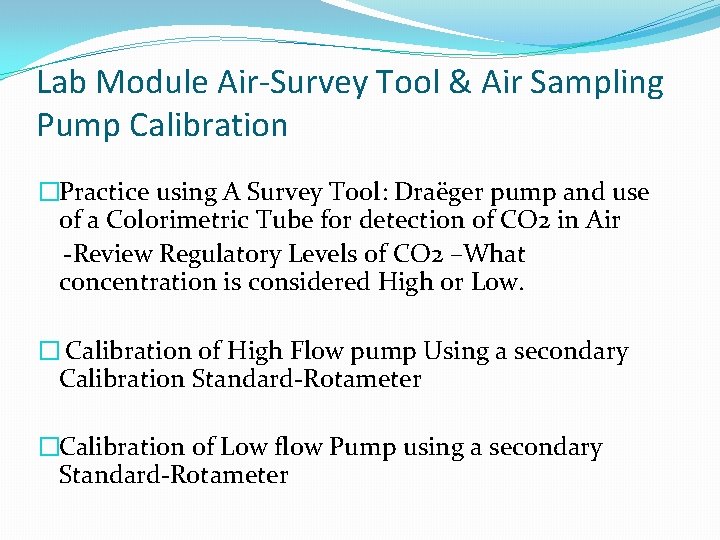
Lab Module Air-Survey Tool & Air Sampling Pump Calibration �Practice using A Survey Tool: Draëger pump and use of a Colorimetric Tube for detection of CO 2 in Air -Review Regulatory Levels of CO 2 –What concentration is considered High or Low. � Calibration of High Flow pump Using a secondary Calibration Standard-Rotameter �Calibration of Low flow Pump using a secondary Standard-Rotameter