
Introduction to Agricultural and Natural Resources Overview of
- Slides: 28
Introduction to Agricultural and Natural Resources Overview of Macroeconomics FREC 150 Dr. Steven E. Hastings
Overview of Macroeconomics • • • Major Topics Definition Circular Flow of Income (Again) Macroeconomic Indicators National Income Accounts Summary: Where are We Going? – Macroeconomics – Stock Market – Food and Fiber System
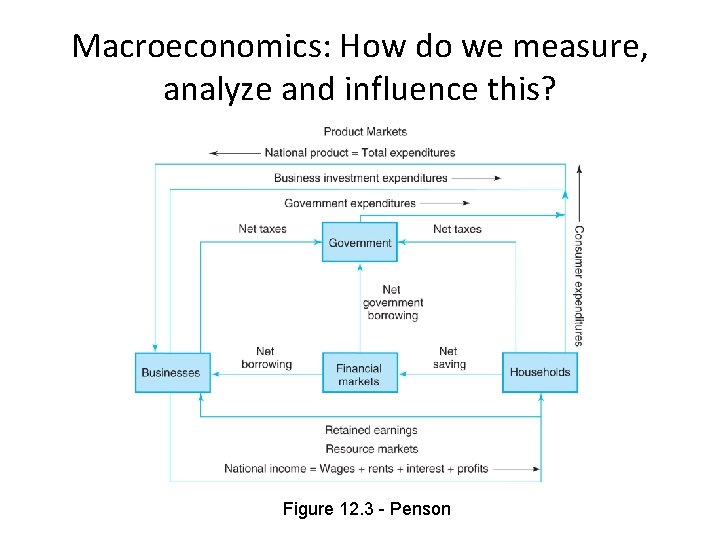
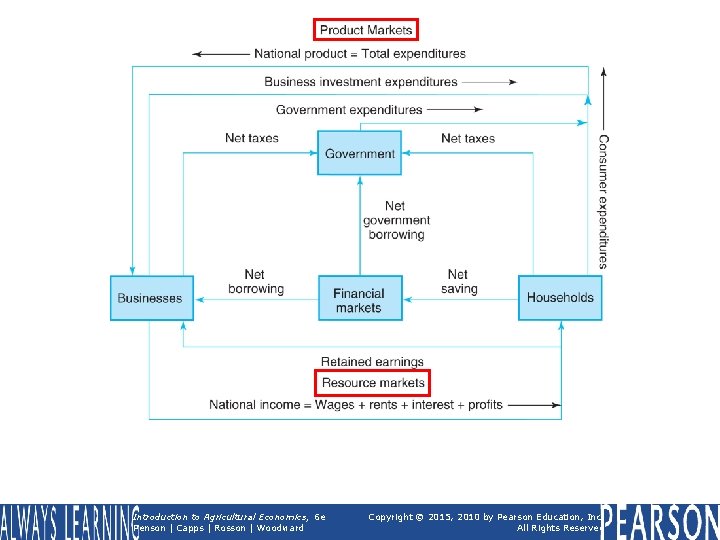
Overview of Macroeconomics • Macroeconomics focuses on the “Circular Flow of Income, Resources and Products” as a whole, not individual entities (firms, consumers, etc. ) • Macroeconomics focuses on broad aggregates such as GDP, unemployment and inflation. Penson et al. 2009 • “Macroeconomists study aggregated indicators such as GDP, unemployment rates, and price indices to understand how the whole economy functions. ” http: //en. wikipedia. org/wiki/Macroeconomics
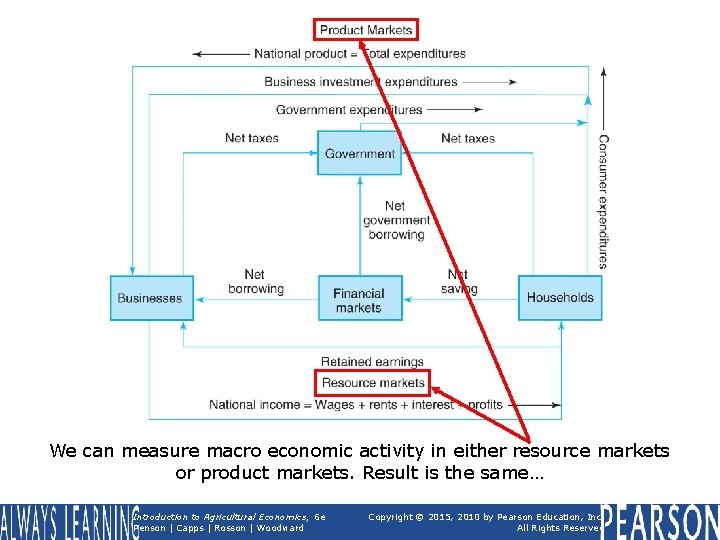
Macroeconomics: How do we measure, analyze and influence this? Figure 12. 3 - Penson
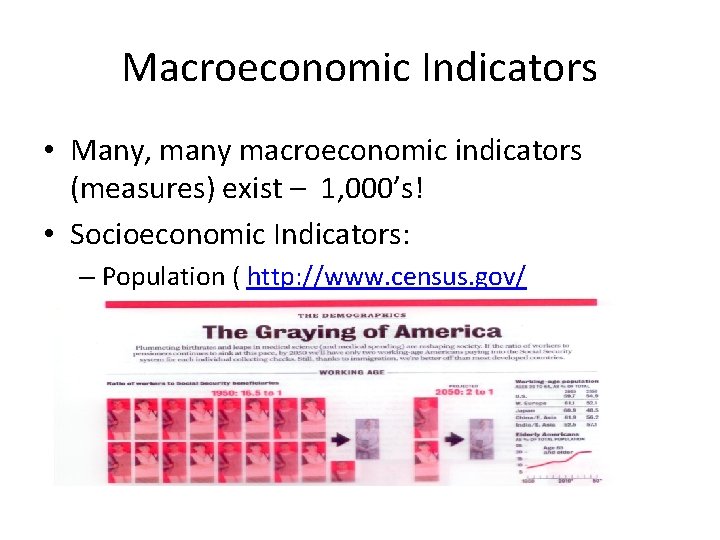
Macroeconomic Indicators • Many, many macroeconomic indicators (measures) exist – 1, 000’s! • Socioeconomic Indicators: – Population ( http: //www. census. gov/ – Income (www. census. gov)
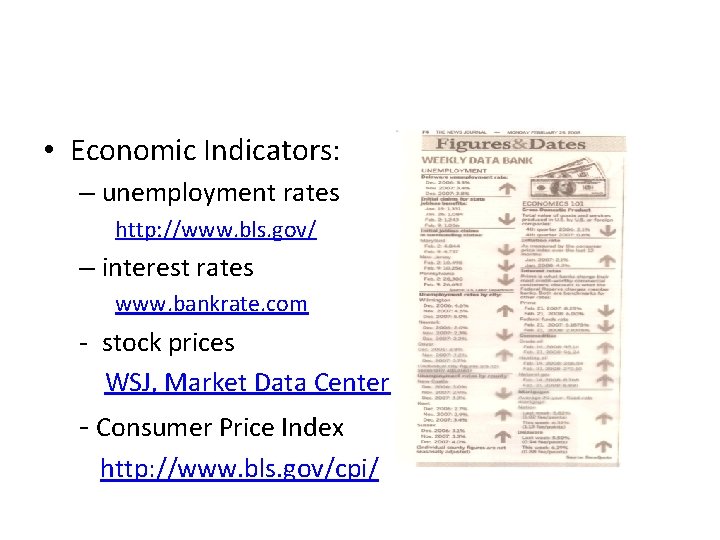
• Economic Indicators: – unemployment rates http: //www. bls. gov/ – interest rates www. bankrate. com - stock prices WSJ, Market Data Center - Consumer Price Index http: //www. bls. gov/cpi/
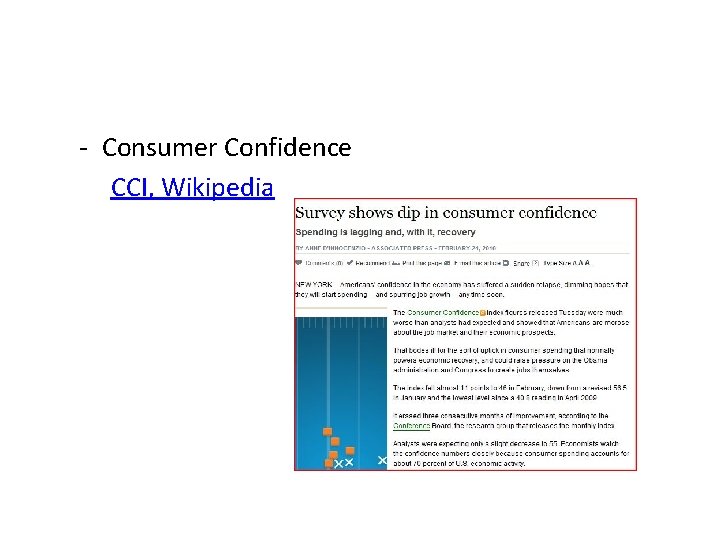
- Consumer Confidence CCI, Wikipedia
National Income and Product Accounts • A national accounting system (much like a business would use) started in the 1930’s (post-Depression) to measure and monitor the value of economic activity in the U. S. economy. • Viewed the economy much like a business. – Focused on income, expenditures and products produced. – Continually modified and improved.
National Income Acounts • Most important measure • Gross Domestic Product (GDP) – a single dollar value of the total of all goods and services produced in the United States whether by domestic or foreign resources. • A measure of growth in the economy and a basis for other measures.
Introduction to Agricultural Economics, 6 e Penson | Capps | Rosson | Woodward Copyright © 2015, 2010 by Pearson Education, Inc. All Rights Reserved
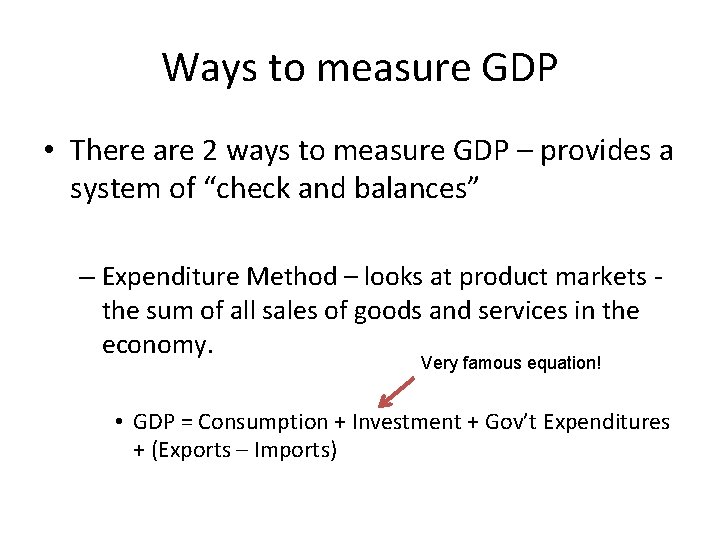
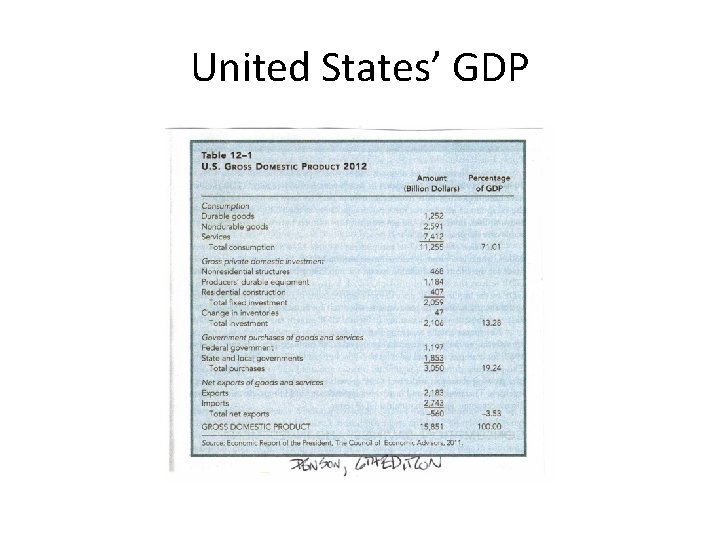
Ways to measure GDP • There are 2 ways to measure GDP – provides a system of “check and balances” – Expenditure Method – looks at product markets the sum of all sales of goods and services in the economy. Very famous equation! • GDP = Consumption + Investment + Gov’t Expenditures + (Exports – Imports)
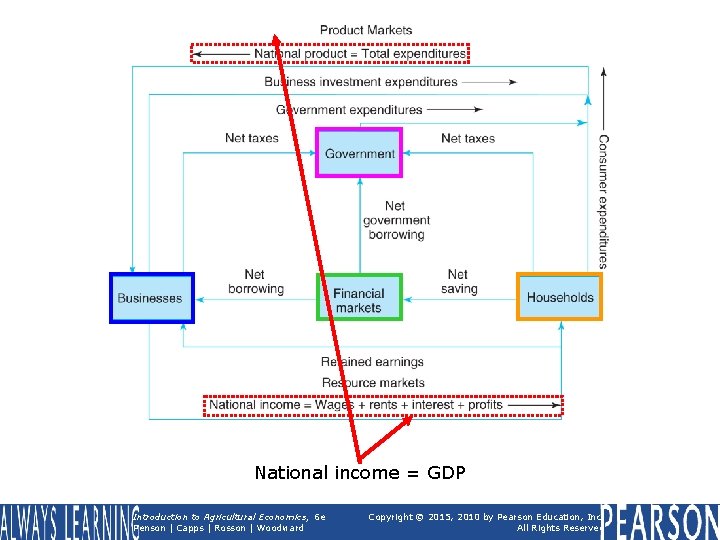
We can measure macro economic activity in either resource markets or product markets. Result is the same… Introduction to Agricultural Economics, 6 e Penson | Capps | Rosson | Woodward Copyright © 2015, 2010 by Pearson Education, Inc. All Rights Reserved
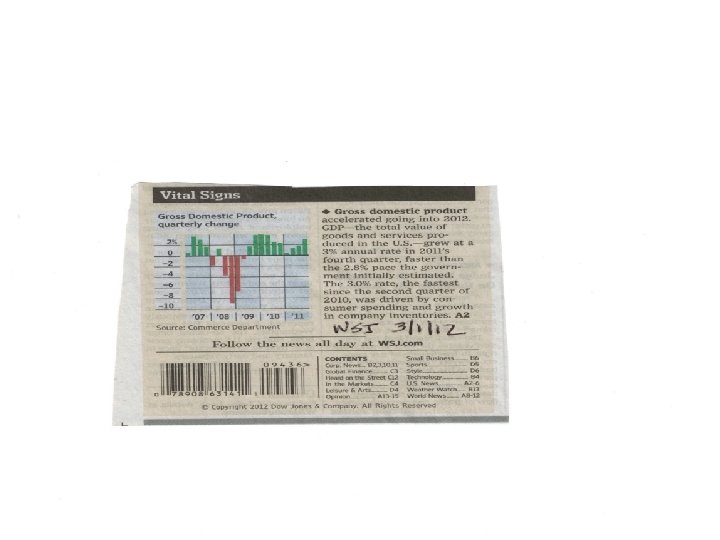
United States’ GDP
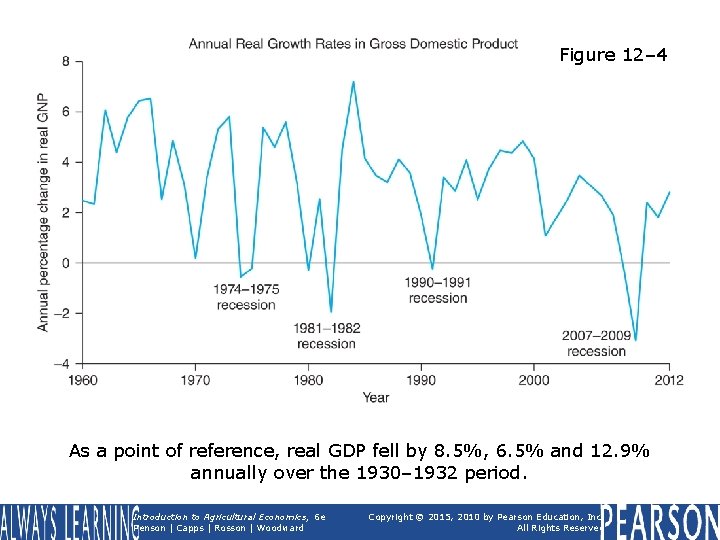
Figure 12– 4 As a point of reference, real GDP fell by 8. 5%, 6. 5% and 12. 9% annually over the 1930– 1932 period. Introduction to Agricultural Economics, 6 e Penson | Capps | Rosson | Woodward Copyright © 2015, 2010 by Pearson Education, Inc. All Rights Reserved
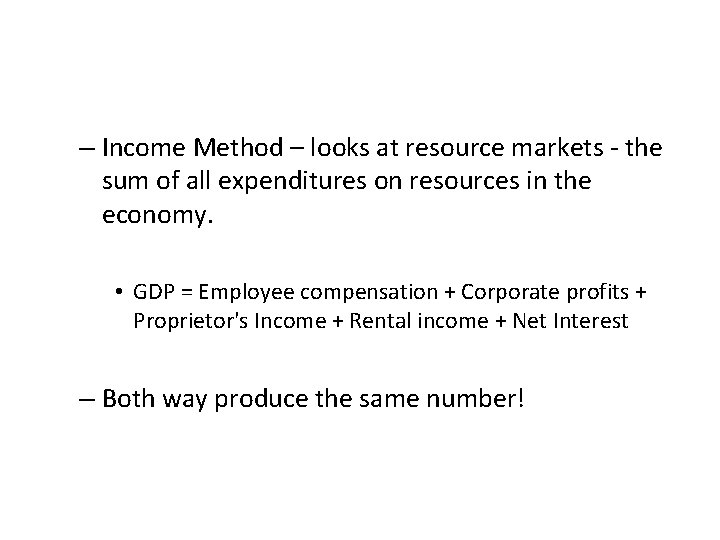
– Income Method – looks at resource markets - the sum of all expenditures on resources in the economy. • GDP = Employee compensation + Corporate profits + Proprietor's Income + Rental income + Net Interest – Both way produce the same number!
National income = GDP Introduction to Agricultural Economics, 6 e Penson | Capps | Rosson | Woodward Copyright © 2015, 2010 by Pearson Education, Inc. All Rights Reserved
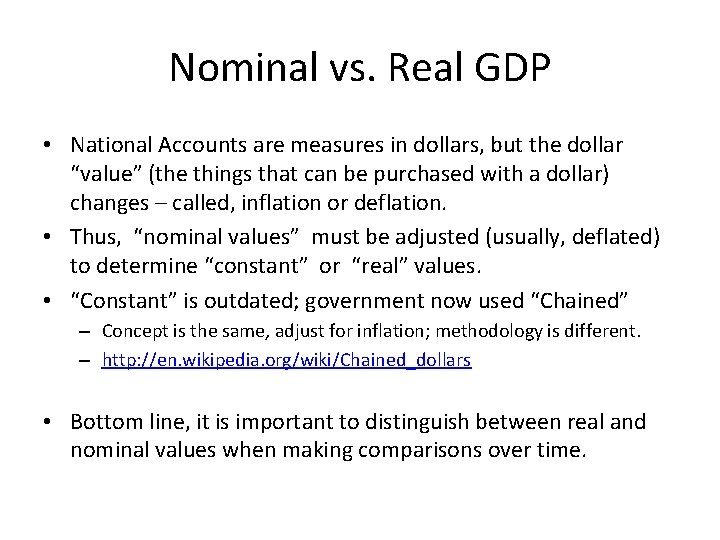
Nominal vs. Real GDP • National Accounts are measures in dollars, but the dollar “value” (the things that can be purchased with a dollar) changes – called, inflation or deflation. • Thus, “nominal values” must be adjusted (usually, deflated) to determine “constant” or “real” values. • “Constant” is outdated; government now used “Chained” – Concept is the same, adjust for inflation; methodology is different. – http: //en. wikipedia. org/wiki/Chained_dollars • Bottom line, it is important to distinguish between real and nominal values when making comparisons over time.
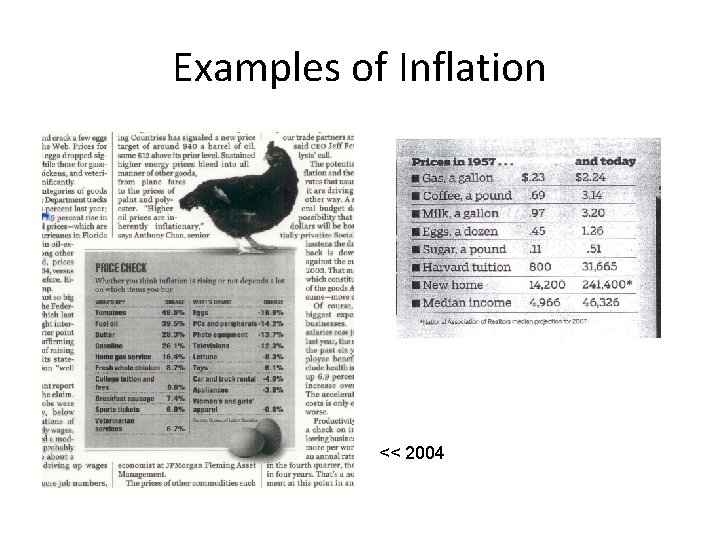
Examples of Inflation << 2004
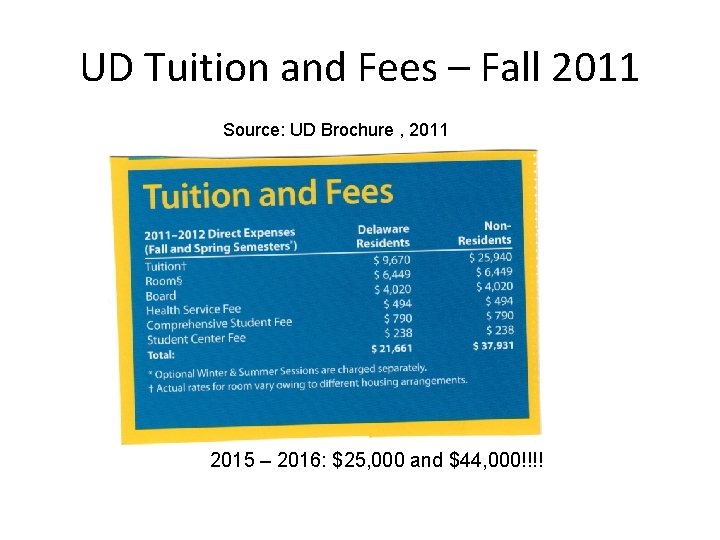
UD Tuition and Fees – Fall 2011 Source: UD Brochure , 2011 2015 – 2016: $25, 000 and $44, 000!!!!
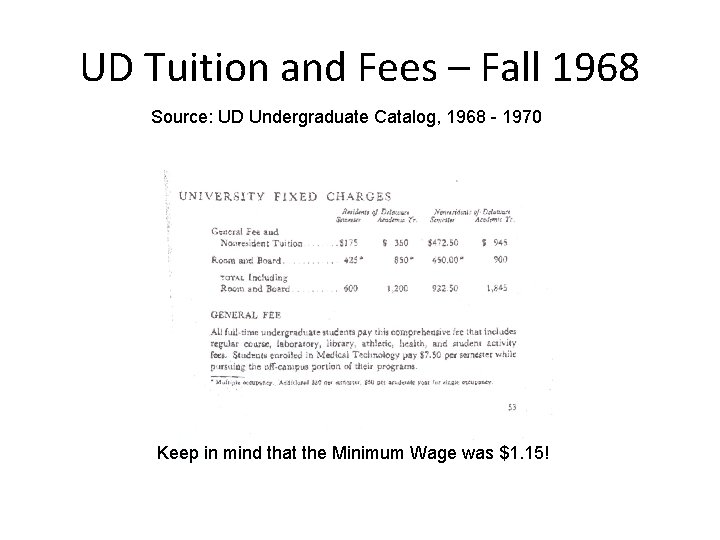
UD Tuition and Fees – Fall 1968 Source: UD Undergraduate Catalog, 1968 - 1970 Keep in mind that the Minimum Wage was $1. 15!
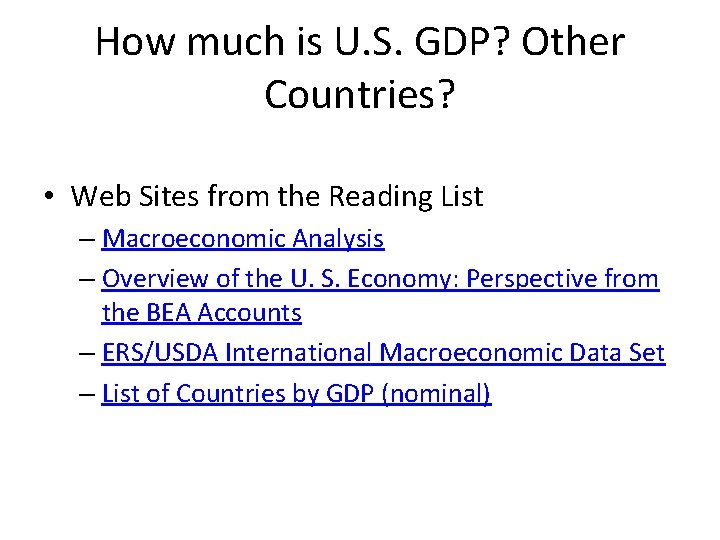
How much is U. S. GDP? Other Countries? • Web Sites from the Reading List – Macroeconomic Analysis – Overview of the U. S. Economy: Perspective from the BEA Accounts – ERS/USDA International Macroeconomic Data Set – List of Countries by GDP (nominal)
Related Measures in the National Income Accounts • Basis for a series of related measures: • Gross National Product • Net National Product and Net National Income • Personal Income and Disposable Personal Income • See the U. S. Statistical Abstract
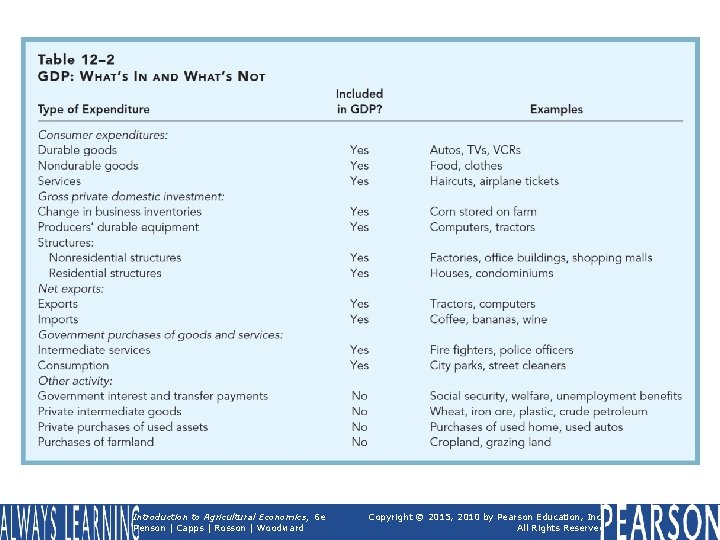
Table 12– 2 GDP: What's In and What's Not Introduction to Agricultural Economics, 6 e Penson | Capps | Rosson | Woodward Copyright © 2015, 2010 by Pearson Education, Inc. All Rights Reserved
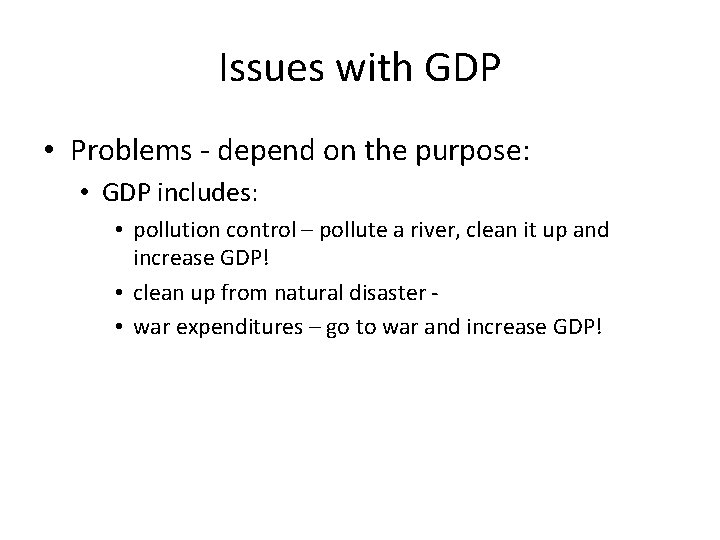
Issues with GDP • Problems - depend on the purpose: • GDP includes: • pollution control – pollute a river, clean it up and increase GDP! • clean up from natural disaster • war expenditures – go to war and increase GDP!
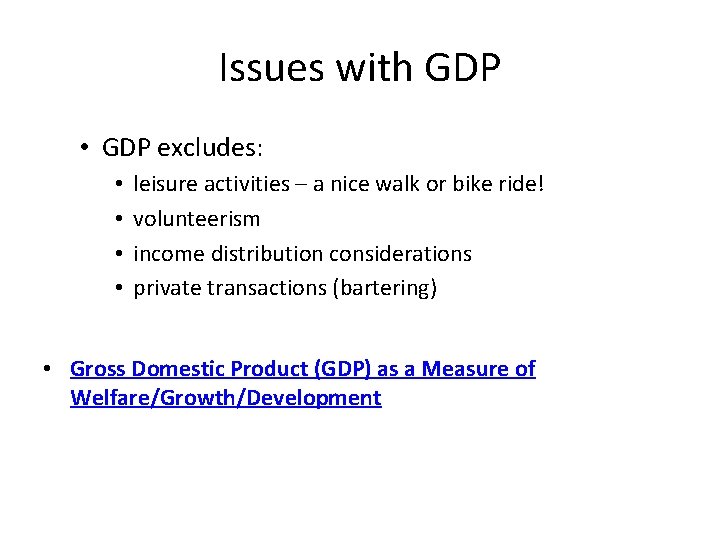
Issues with GDP • GDP excludes: • • leisure activities – a nice walk or bike ride! volunteerism income distribution considerations private transactions (bartering) • Gross Domestic Product (GDP) as a Measure of Welfare/Growth/Development
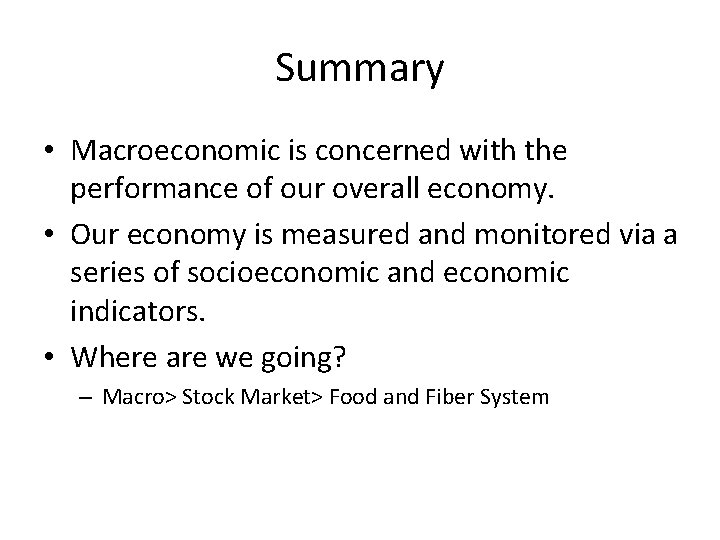
Summary • Macroeconomic is concerned with the performance of our overall economy. • Our economy is measured and monitored via a series of socioeconomic and economic indicators. • Where are we going? – Macro> Stock Market> Food and Fiber System