
Introduction to Advocacy Techniques and Key Considerations for
- Slides: 30
Introduction to Advocacy (Techniques and Key Considerations for CSOs) OFFICE OF THE HIGH COMMISSIONER FOR HUMAN RIGHTS EAST AFRICA REGIONAL OFFICE (OHCHR EARO), ADDIS ABABA, ETHIOPIA
Introduction to Advocacy (Techniques and Key Considerations for CSOs)
Learning Objective q Explore Advocacy and its value in the promotion and protection of Environmental issues and rights q Provide information different types of advocacy and its use
Outcome q CSOs are acquainted with advocacy skills q CSOs better able to know what type of advocacy to employ in differing circumstances.
Human Rights Obligations of States 4 categories of state obligations: q Respect q Protect q Fulfill q Promote
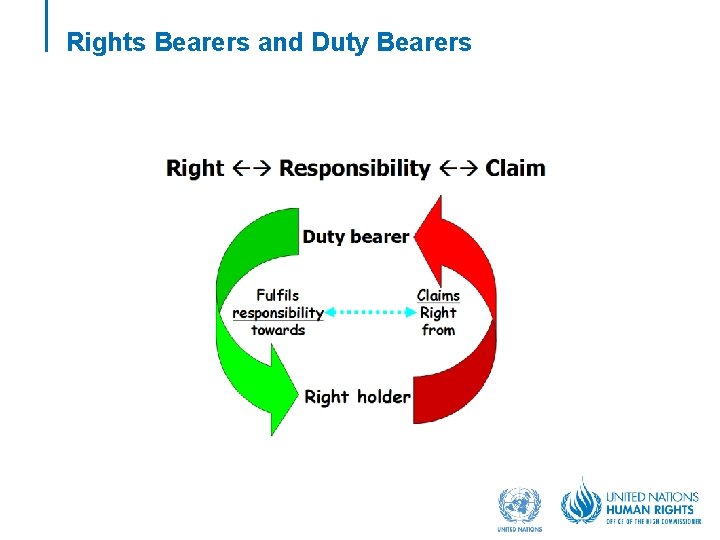
Rights Bearers and Duty Bearers
General Definition - ADVOCACY q (Advocacy is) the process of managing information and knowledge strategically to change and/or influence policies practices that affect the lives of people § Advocacy is a means to an end. and
Advocacy – Underpinning Human Rights Principles Advocacy is about speaking out on human rights issues and taking action to improve a situation. q Core Principles: q Universality: All individuals are equal as human beings and by virtue of the inherent dignity of each human person. q Inalienablility: All people everywhere in the world are entitled to human rights. A person cannot voluntarily give them up. Nor can others take them away from him or her.
Advocacy – Underpinning Human Rights Principles CONTD. q Indivisibility and interrelatedness: Rights are completely interdependent and depend on each other for their effectiveness. q Non-discrimination: Everyone is entitled to human rights without discrimination q Accountability: Governments have certain duties and obligations to respect, protect and fulfil human rights. (Individuals and non-state actors also have duties to others)
Types of advocacy q COMPRISES OF; q Self-advocacy – standing up for yourself q Individual advocacy – standing up for someone else’s rights § focuses on changing the situation for an individual and protecting his/her rights q Systemic advocacy – change a system to address structural causes
Types of advocacy contd. q Systemic advocacy means efforts to change policy and practice at the local, national or international level; § to change the situation for groups of individuals who share similar problems. q Systems advocacy works to improve the system to the benefit of individuals, § it is a long-term approach to problem solving requiring sustained effort
PURPOSE/ Why Advocacy q SERIES OF organized efforts and actions based on the reality On the ground q Seeks to highlight critical issues that have been ignored and submerged, q Influence attitudes, laws and public policies q Visions of “what should be” in a just, decent society become a reality. q Bring a clear improvement in people’s lives. q Results in enjoyment and protection of Environmental/Human rights.
PURPOSE/ Why Advocacy CONTD. q Consists of both strategy and action to achieve an objective. q Actions to achieve the objective typically occur over time, and incrementally. q Rarely is success achieved first time, rather, success must be achieved step-by-step through a persistent and long-term commitment to the advocacy goal.
Characteristics/Elements of Advocacy q People based and people driven activity. ADVOCACY IS ABOUT PEOPLE q Value-Based (i. e. , for a Just Cause): q Respects and protects human/environmental rights. q Preserves the dignity of all people, regardless of differences. q Provides space to challenge unjust behaviors/structures.
Types of Advocacy Messages q (a) Indirect messages – implicit advocacy § Many interventions do not require a firm message or denunciation. It may be sufficient to; q Raise an issue, q Ask questions and show concern, but without making explicit demands. q Asking questions or clarifications on a situation is a particularly effective, yet indirect way of making a point, as it shows q Respect for the interlocutor’s opinion while conveying concern.
Types of Advocacy Contd. q (b) Direct messages – informal, discreet or confidential advocacy § An important communication mechanism is the use of confidential discussion and cooperation towards reform. q (c)Public advocacy- at times a strategy will require a more public reaction, such as a public statement, a call for public ACTION by others or explicit criticism in a public report.
Types of Advocacy Contd. q (d) Written messages – official written advocacy § Eg. sometimes a meeting has more impact if it is followed by a brief message of thanks, a restatement or a reminder to all parties of the commitments each may have made.
Advocacy Objectives q What do we want our ADVOCACY to achieve? q Are our objectives Specific, measurable, actionable, reasonable and time specific (SMART)?
ADVOCACY STRATEGY; HR q Effective strategy should incorporate both practical and policy/ systems change activities. q Reflect specific conditions or individual concerns. q Focus on improving the health system at all levels, q Every interaction is a political and diplomatic event requiring judicious communication choices and advocacy skills.
ADVOCACY STRATEGY q INCLUSIVE AND ENGAGING q PROPOSE SOLUTIONS q OPEN UP SPACE FOR INTERACTION/discussions/ q RESULT IN ACTION THAT ADDRESSES health RIGHTS CONCERNS
Key steps in planning and implementing advocacy strategies § Identify the related health rights ISSUE/CONCERNS § Learn what the government is doing to address the issue, IF ANY § Find out what Federal or Regional States say. § Find out who is already taking action on the issue. § Decide on a course of action. § Try to understand the root causes behind the problem. (Brainstorm ideas that would help to address those root causes and choose one or two actions that seem the most possible and likely to make the biggest difference. )
Key Steps Contd. q IDENTIFY AUDIENCE q Primary § Who can directly affect policy on your issue? q Secondary § Who can influence those policymakers? § Obstacle? q Know your audiences § Who do the key decision makers listen to? § What are the best ways to reach them?
Key Steps Contd. q Organize § Build a coalition of support - It is often easier to work with other people to achieve your goals. § Try to get support from as many different sectors as possible; Identify roles and leadership structure § Forming partnerships can be challenging
Key Steps Contd. q TAKE ACTION. § Carry out your plan and do not give up if things do not work out exactly as planned. § Making change happen takes time. § Problem solving means eliminating all the things that do not work until you find something that does.
Key Steps Contd. § EVALUATE AND FOLLOW UP. § After action, take time to think and talk about what happened. § PERFORMANCE; § Were all the activities implemented/ delivered? Try to define some indicators for what progress means. § IMPACT; § Did activities bring about the desired change?
Key Steps CONTD. q REVIEW; § Were specific commitments made? If so, which ones? What is the timeline? Is there any particular follow-up to commitments needed? § INTERVENTIONS FOR CORRECTIVE ACTION WITH THE AUTHORITIES DO NOT ALWAYS TURN OUT AS EXPECTED SOMETIMES. § What could have BEEN done better? § Are some efforts effective and others not?
Key Steps CONTD. § CONSIDER ALTERNATIVE OR COMPLEMENTARY STRATEGIES q Strategy? § Was the relationship with the authority strengthened or weakened? If so, why? § What lessons can be learned (e. g. , mistakes)? § Is there a need to change strategy? § Consider alternative or complementary
Important issues/principles to note § Obtain informed consent from victims (individual cases) § Consider whether intervention could potentially harm or endanger anyone, or § contribute to a deterioration of the human rights situation, . § Carefully assess what information to share, taking into account concerns about security and confidentiality. § REPHRASE AND BE CONCISE AND CLEAR especially if the contents or results can be misinterpreted or manipulated by the counterpart.
Conclusion § Questions? § THANK YOU!!!!!!!
Q&As For further information, please visit: www. ohchr. org