
Introduction Technology refers to the application of skills
- Slides: 24
Introduction �Technology refers to the application of skills, knowledge and the ideas to the production or improvement of goods and services. �It is the application of scientific knowledge and tries to find ways and means by which these can interact with the society and environment in
�With the increase in Liberalisation and Globalisation leading to increase in market competition, emergence of innovation –based competition is imperative. �The field of e-commerce, e-cash, e-money, e-retailing have specifically revolutionized all the
Status Of Technological Development In India A. Indicators Of Technology Development India houses some of the greatest technological mind. However, the lack of proper infrastructure and support from incentives has kept technological development far away from India. • The following observations can be made about the following trends in India : •
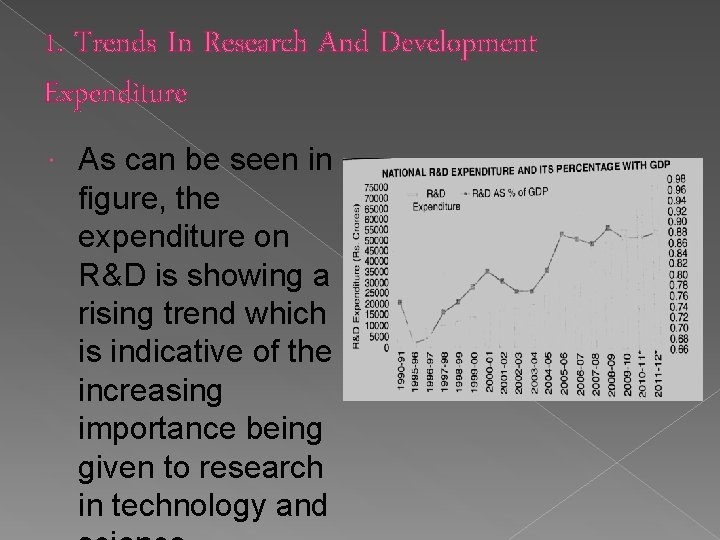
1. Trends In Research And Development Expenditure As can be seen in figure, the expenditure on R&D is showing a rising trend which is indicative of the increasing importance being given to research in technology and
2. Total number of technical foreign collaborations: �Foreign Technology Collaboration in India permits transfer of technology by the means of Government approval or through the automatic route delegated by RBI. �The basic objective of technical collaboration is to induce technological development and
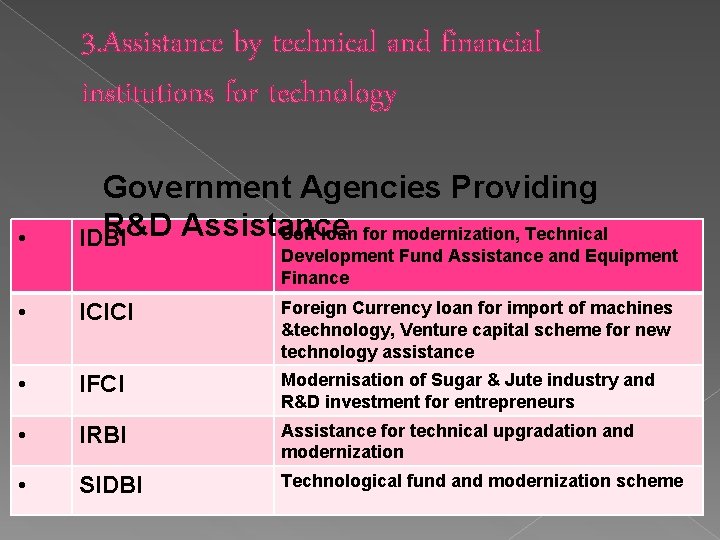
3. Assistance by technical and financial institutions for technology • Government Agencies Providing R&D Assistance Soft loan for modernization, Technical IDBI • ICICI Foreign Currency loan for import of machines &technology, Venture capital scheme for new technology assistance • IFCI Modernisation of Sugar & Jute industry and R&D investment for entrepreneurs • IRBI Assistance for technical upgradation and modernization • SIDBI Technological fund and modernization scheme Development Fund Assistance and Equipment Finance
4. Investment in R&D infrastructure �Indian firms rely largely on foreign technology, more specifically on imports of capital goods, increase in R&D expenditure at an average rate of 4% per annum seems to be encouraging for a developing country like India.
B. Government Incentives Establishment of technological and research institute. 2. Positive Technical Policy. 3. High Growth Rate of Information Technology in India. 4. Incentive for promoting Technology In India. 1.
C. Corporate Sector Contribution � The corporate sector has slowly woken up to investing in technology. The factors that are responsible for the increasing role of corporate sector in technological development. They are : 1. Difficulty in licensing or purchase of technology from foreign and restrictions on the royalty rates to be charged etc. 2. Amendments in Indian Patent Act. 3. Reduction in ‘relative price’ of foreign
E-Commerce �According to Treese and Stewart, ”E-commerce is the use of internet for sale and purchase of goods and services, including services and support after the sale. The internet may be an efficient mechanism for advertising and distributing product information but focus is on enabling
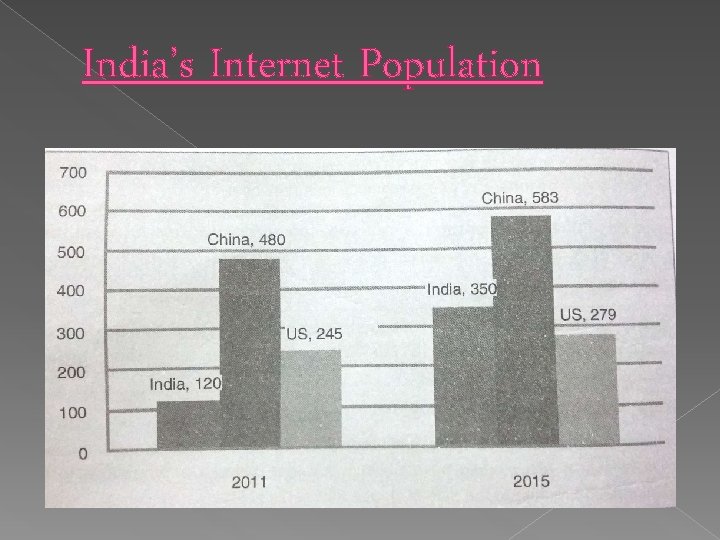
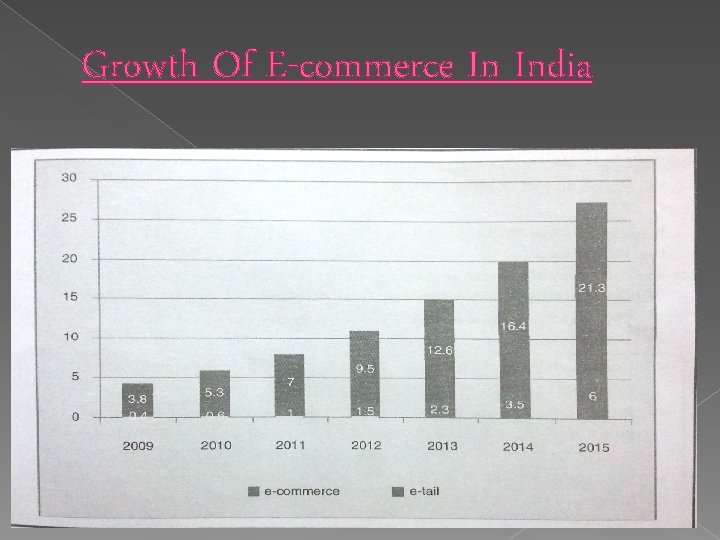
Digital Technology And E-commerce in India : Key Features Growth Of E-Commerce Activities In India Ø India has embraced the digital revolution with open arms. Internet has become an integral part of the growing urban Indian population. Ø Indian internet users are expected to outnumber those in the USA. Ø India will emerge as the country having second largest internet users population in 2015. A.
India’s Internet Population
Growth Of E-commerce In India
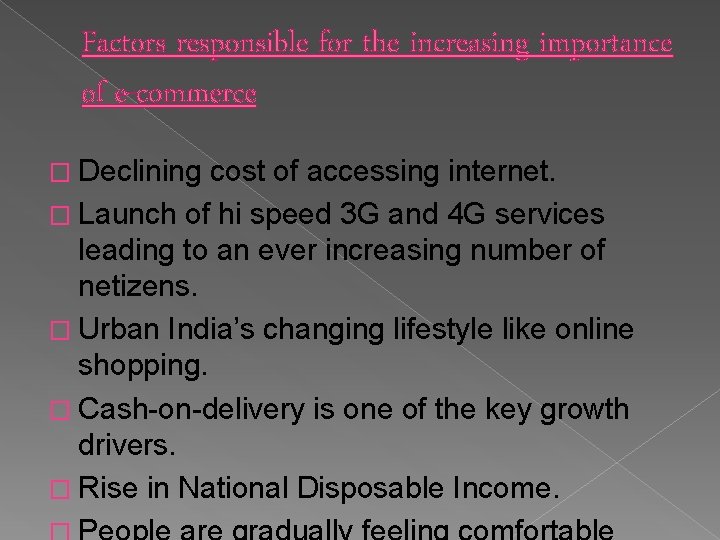
Factors responsible for the increasing importance of e-commerce � Declining cost of accessing internet. � Launch of hi speed 3 G and 4 G services leading to an ever increasing number of netizens. � Urban India’s changing lifestyle like online shopping. � Cash-on-delivery is one of the key growth drivers. � Rise in National Disposable Income.
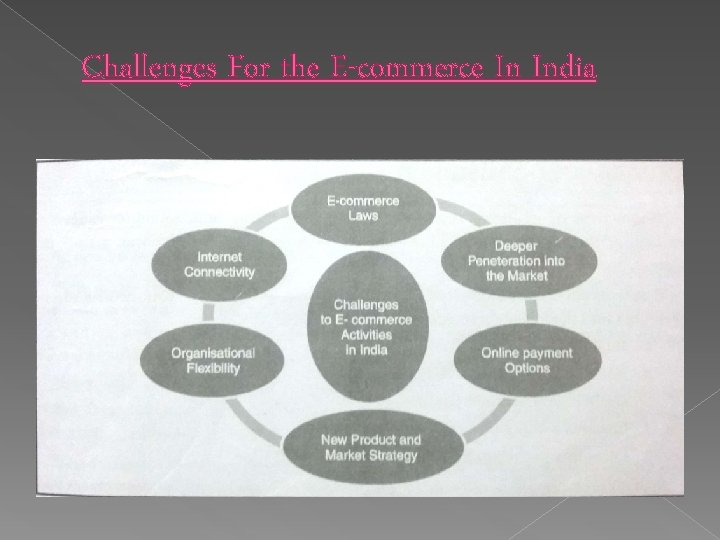
Challenges For the E-commerce In India
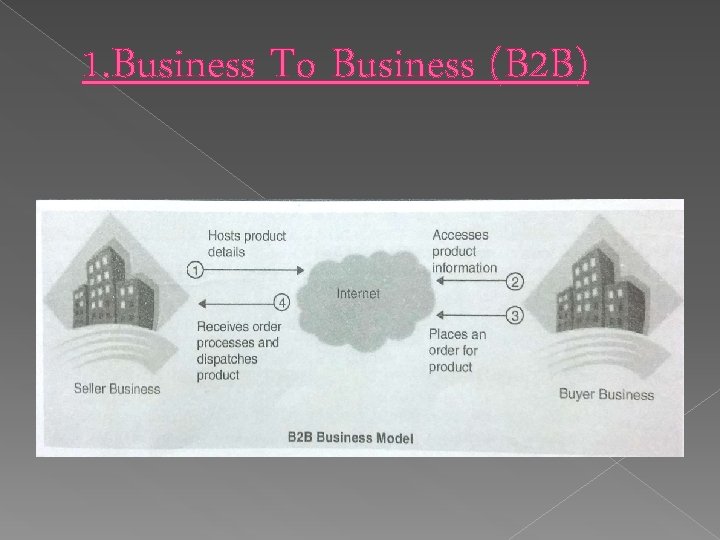
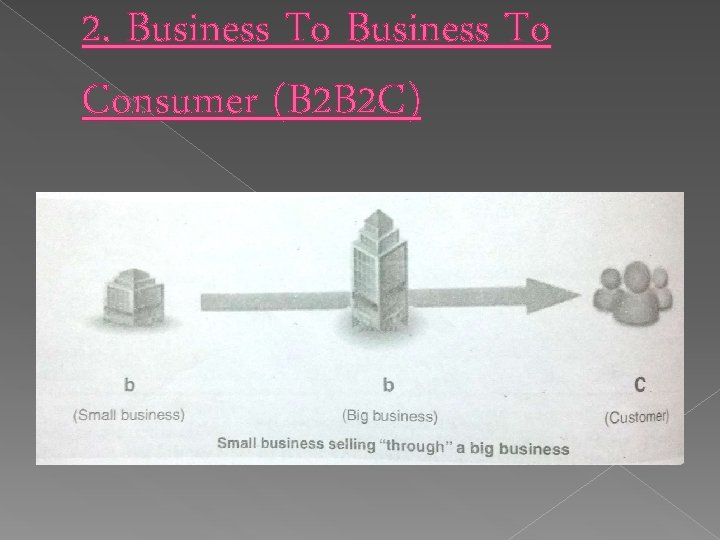
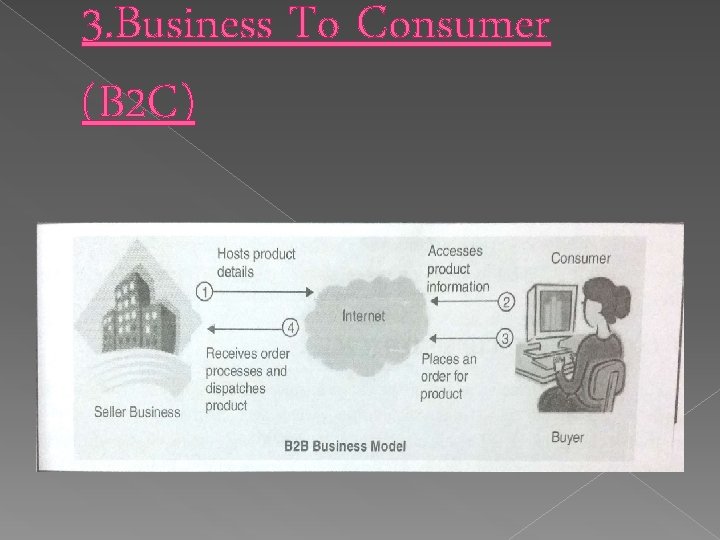
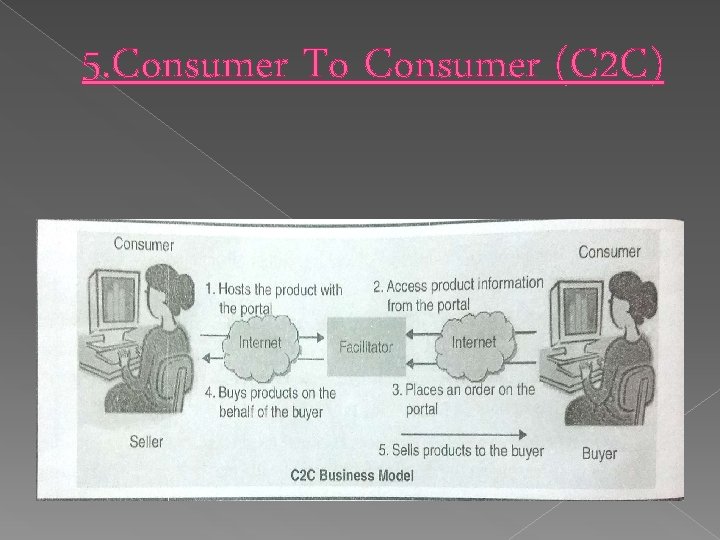
Models Of E-Commerce � Based 1. 2. 3. 4. 5. on participants in the transaction ecommerce transactions can be segmented in the following categories : Business To Business (B 2 B) Business To Consumer (B 2 B 2 C) Business To consumer(B 2 C) Consumer To Business (C 2 B) Consumer To Consumer (C 2 C)
1. Business To Business (B 2 B)
2. Business To Consumer (B 2 B 2 C)
3. Business To Consumer (B 2 C)
4. Consumer To Business (C 2 B) �As the name implies involves a transaction between a consumer and a business. �It is a complete reversal of business to consumer model. �This category includes individuals who sell the products and
5. Consumer To Consumer (C 2 C)
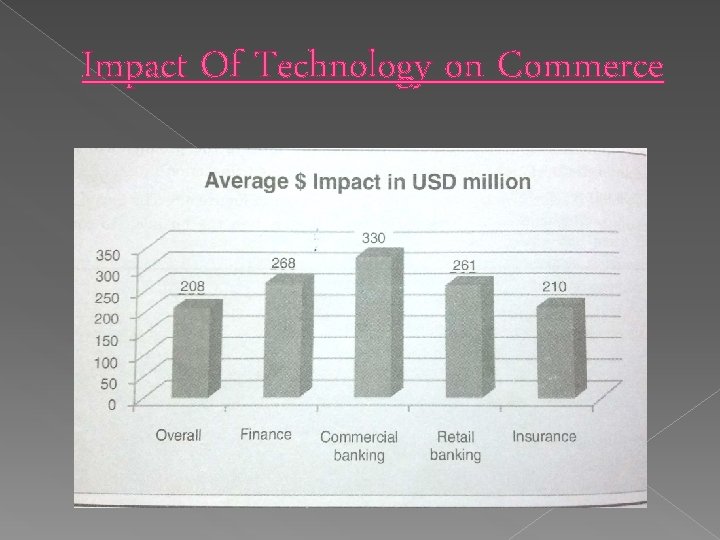
Impact Of Technology on Commerce
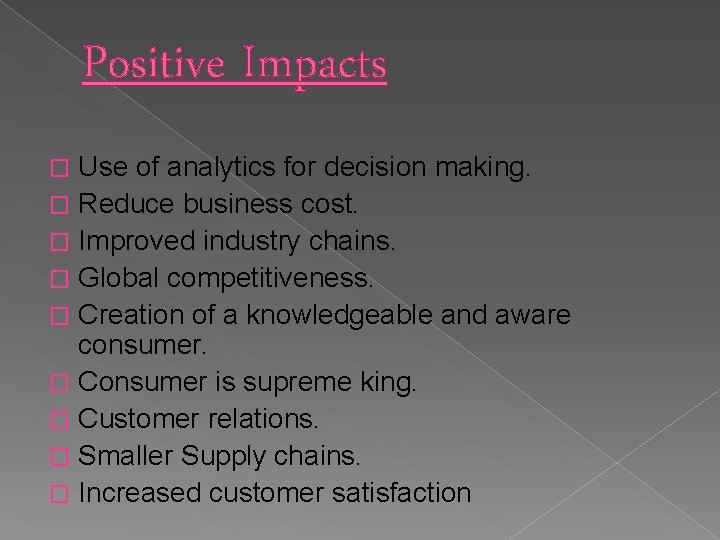
Positive Impacts Use of analytics for decision making. � Reduce business cost. � Improved industry chains. � Global competitiveness. � Creation of a knowledgeable and aware consumer. � Consumer is supreme king. � Customer relations. � Smaller Supply chains. � Increased customer satisfaction �
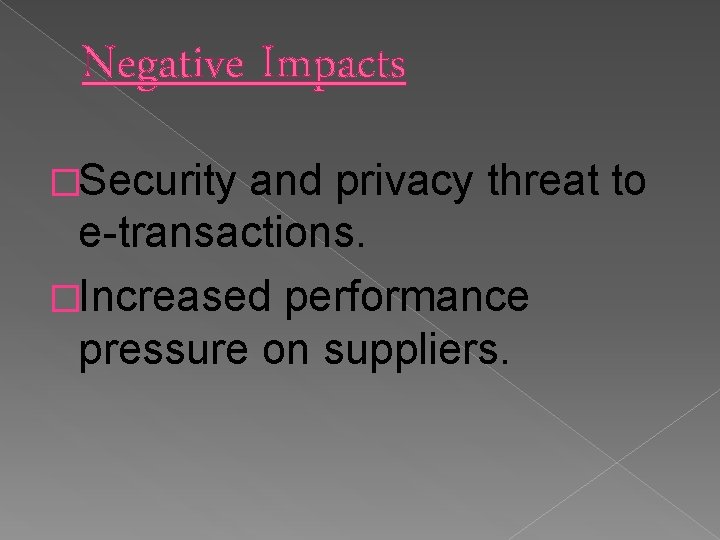
Negative Impacts �Security and privacy threat to e-transactions. �Increased performance pressure on suppliers.