
Introduction Supports for Special Education Referrals Objectives How
Introduction Supports for Special Education Referrals
Objectives • How data from the multi-tiered system of supports (MTSS) framework inform the referral process • How MTSS data can be used as a component of student evaluation • How MTSS data can inform individualized education program (IEP) development for eligible students
How MTSS Data Inform the Referral Process
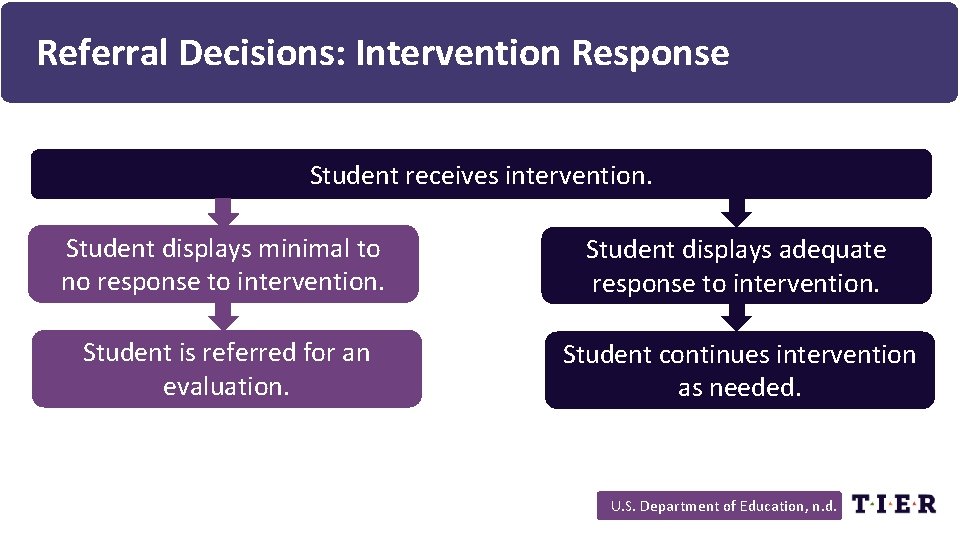
Referral Decisions: Intervention Response Student receives intervention. Student displays minimal to no response to intervention. Student displays adequate response to intervention. Student is referred for an evaluation. Student continues intervention as needed. U. S. Department of Education, n. d.
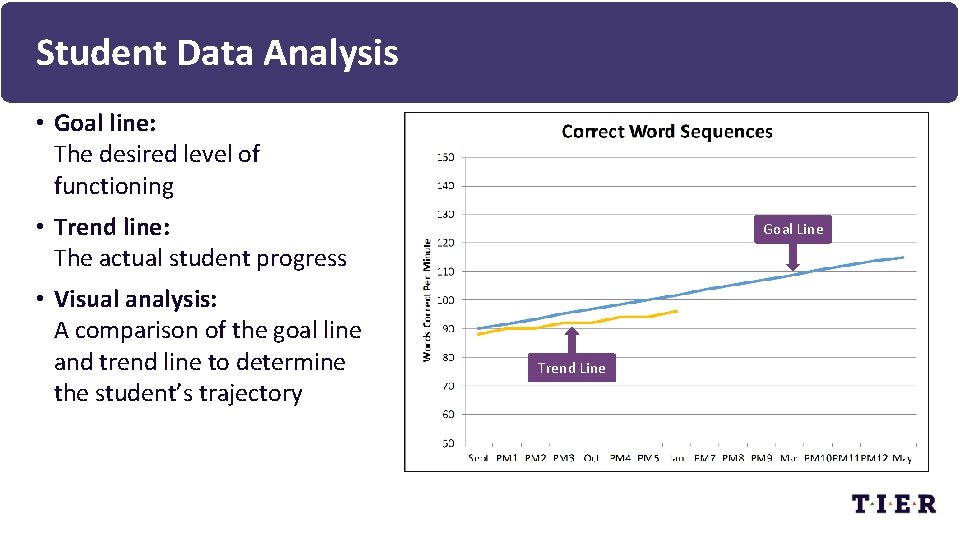
Student Data Analysis • Goal line: The desired level of functioning • Trend line: The actual student progress • Visual analysis: A comparison of the goal line and trend line to determine the student’s trajectory Goal Line Trend Line
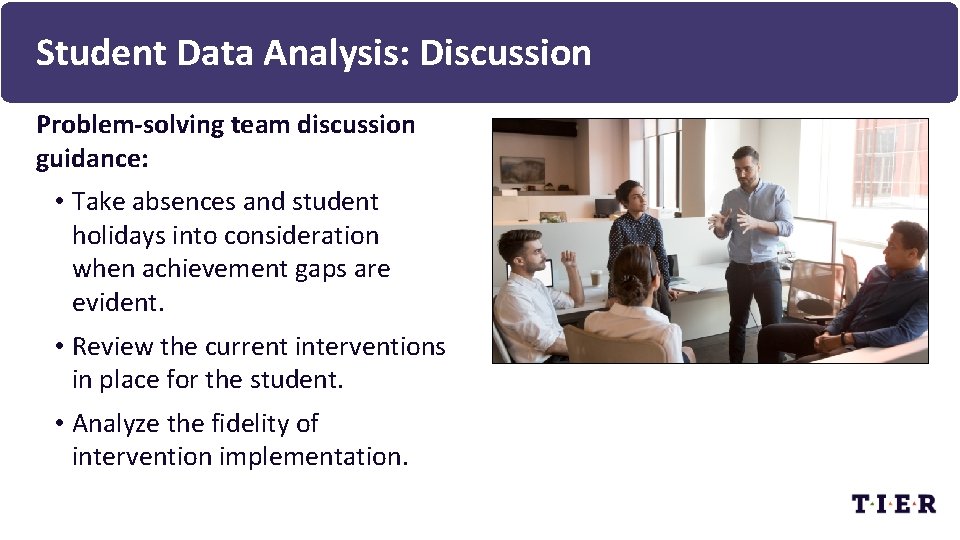
Student Data Analysis: Discussion Problem-solving team discussion guidance: • Take absences and student holidays into consideration when achievement gaps are evident. • Review the current interventions in place for the student. • Analyze the fidelity of intervention implementation.
Referral Decisions: Lack of Response When intervention data lead the team to suspect a disability and need for special education services: • Promptly refer the student for an evaluation, following district special education procedures. • Continue providing intervention and collecting data throughout the special education referral and evaluation process.
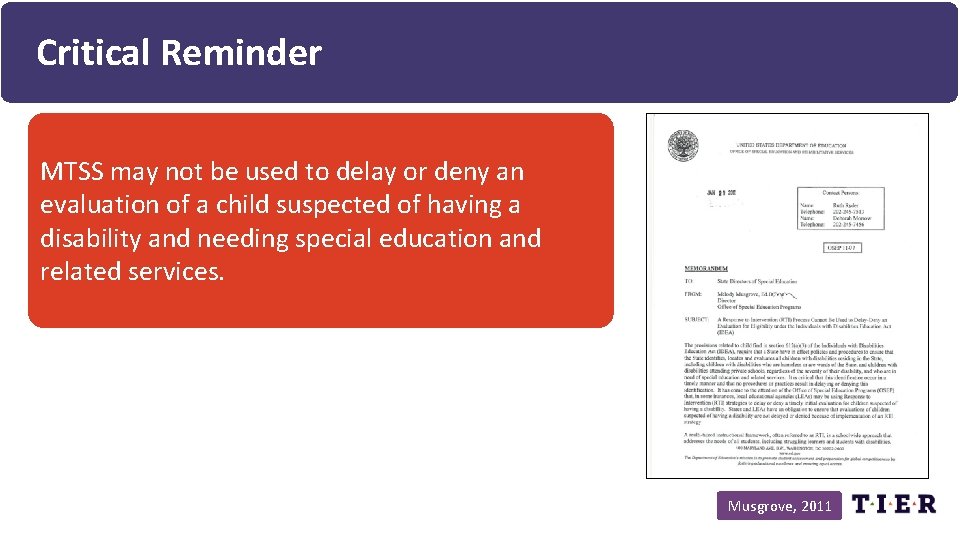
Critical Reminder MTSS may not be used to delay or deny an evaluation of a child suspected of having a disability and needing special education and related services. Musgrove, 2011
How MTSS Data Can Be Used as a Component of Student Evaluation
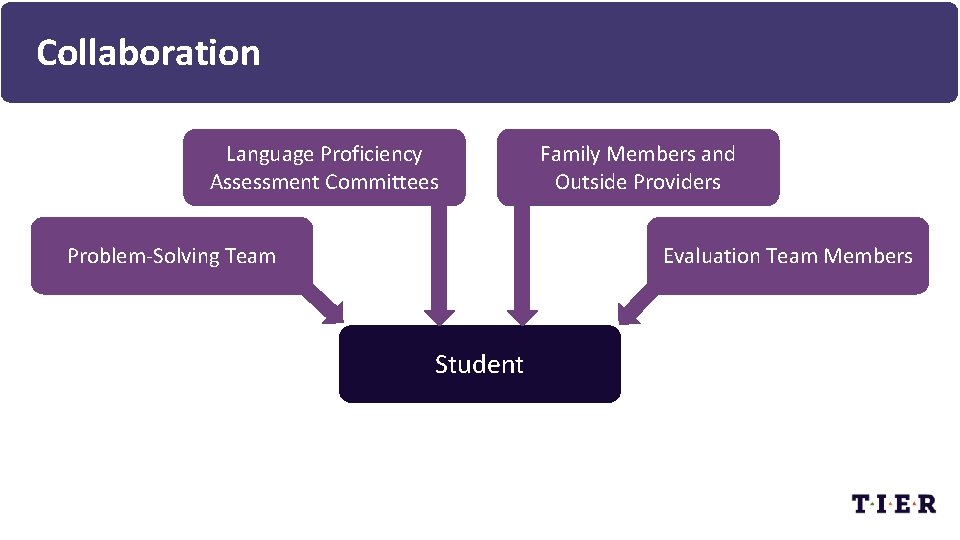
Collaboration Language Proficiency Assessment Committees Problem-Solving Team Family Members and Outside Providers Evaluation Team Members Student
Individuals With Disabilities Education Act (IDEA): Evaluation The local education agency must conduct a comprehensive evaluation, using a variety of assessment tools to gather relevant functional, developmental, and academic information about the student. U. S. Department of Education, n. d.
IDEA: Specific Learning Disability (SLD) The SLD eligibility criteria in IDEA explain that a state: • Must adopt criteria for determining whether a child has an SLD • Must not require the use of a severe discrepancy between intellectual ability and achievement for determining whether a child has an SLD • Must permit the use of a process based on the child’s response to scientific, research-based intervention • May permit the use of other alternative research-based procedures for determining whether a child has an SLD U. S. Department of Education, 2006 a
SLD Identification in Texas Consistent with IDEA and Texas Administrative Code, local education agencies must use one of the following methods for determining the existence of an SLD: • A pattern of strengths and weaknesses (PSW) model OR • A student’s response to scientific, research-based intervention (RTI) model Office of Special Education and Rehabilitative Services, 2014
IDEA: SLD Requirements To ensure that underachievement in a student suspected of having an SLD is not due to lack of appropriate instruction, the following must be considered: • Data that demonstrate the student was provided appropriate instruction within general education settings delivered by qualified personnel • Data-based documentation of repeated assessments of achievement at reasonable intervals, reflecting formal evaluation of student progress during instruction U. S. Department of Education, 2006 b
IDEA: SLD Requirements • Data-based documentation of repeated assessments may include, but is not limited to, response to intervention (RTI) progressmonitoring results, in-class tests on gradelevel curriculum, or other regularly administered assessments. • Intervals are considered reasonable if consistent with the assessment requirements of a student’s specific instructional program. U. S. Department of Education, 2006
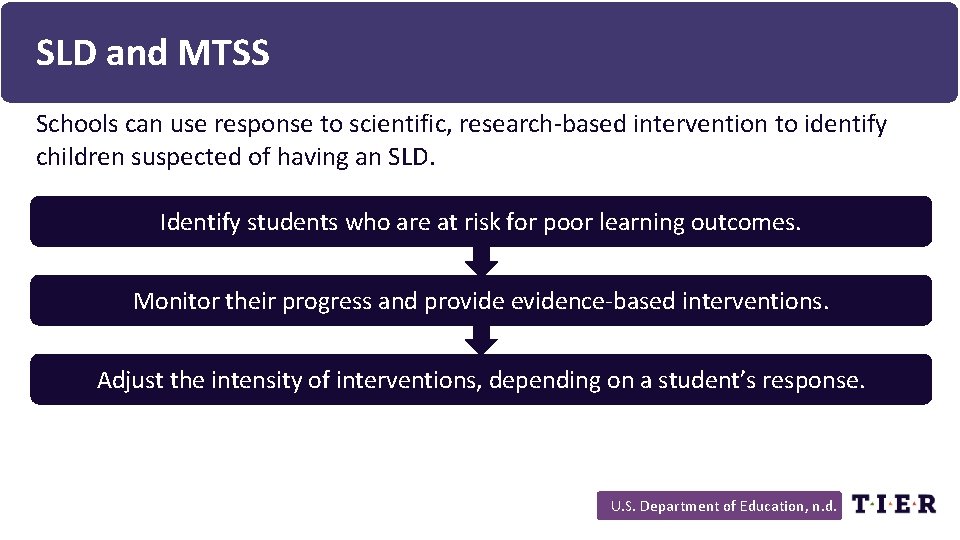
SLD and MTSS Schools can use response to scientific, research-based intervention to identify children suspected of having an SLD. Identify students who are at risk for poor learning outcomes. Monitor their progress and provide evidence-based interventions. Adjust the intensity of interventions, depending on a student’s response. U. S. Department of Education, n. d.
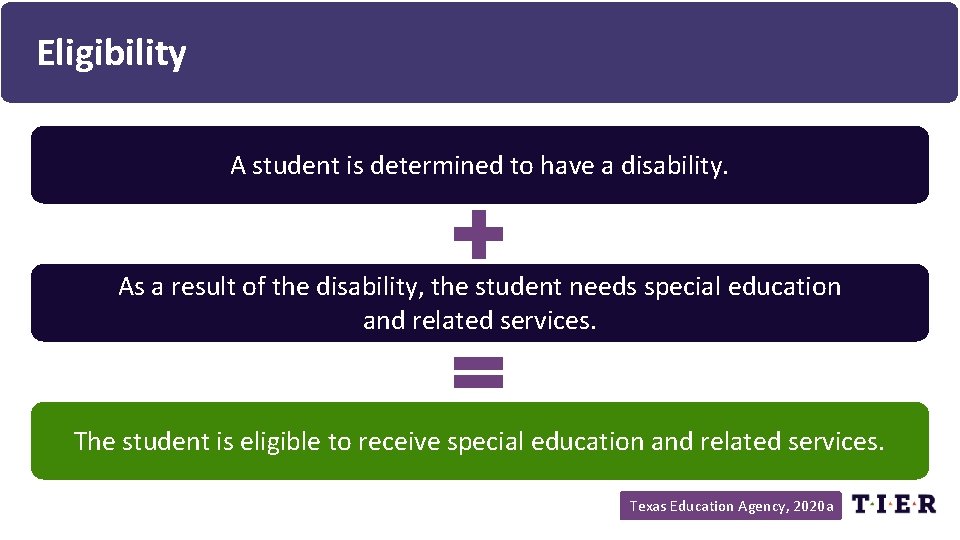
Eligibility A student is determined to have a disability. As a result of the disability, the student needs special education and related services. The student is eligible to receive special education and related services. Texas Education Agency, 2020 a
How MTSS Data Can Inform IEP Development for Eligible Students
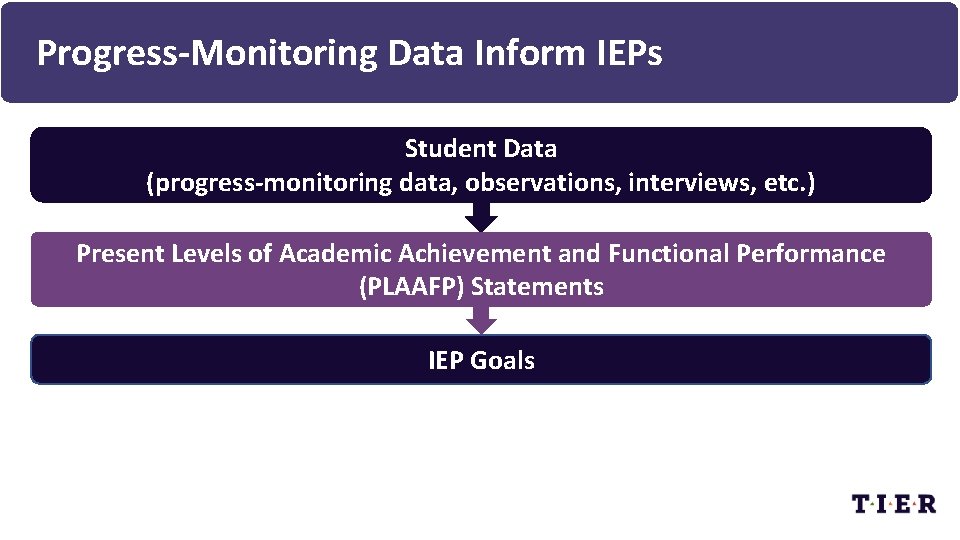
Progress-Monitoring Data Inform IEPs Student Data (progress-monitoring data, observations, interviews, etc. ) Present Levels of Academic Achievement and Functional Performance (PLAAFP) Statements IEP Goals
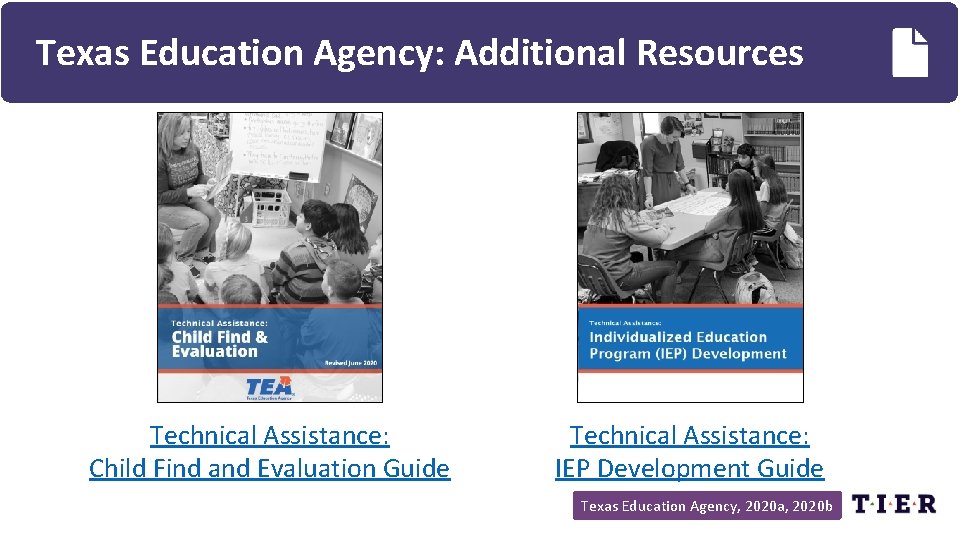
Texas Education Agency: Additional Resources Technical Assistance: Child Find and Evaluation Guide Technical Assistance: IEP Development Guide Texas Education Agency, 2020 a, 2020 b
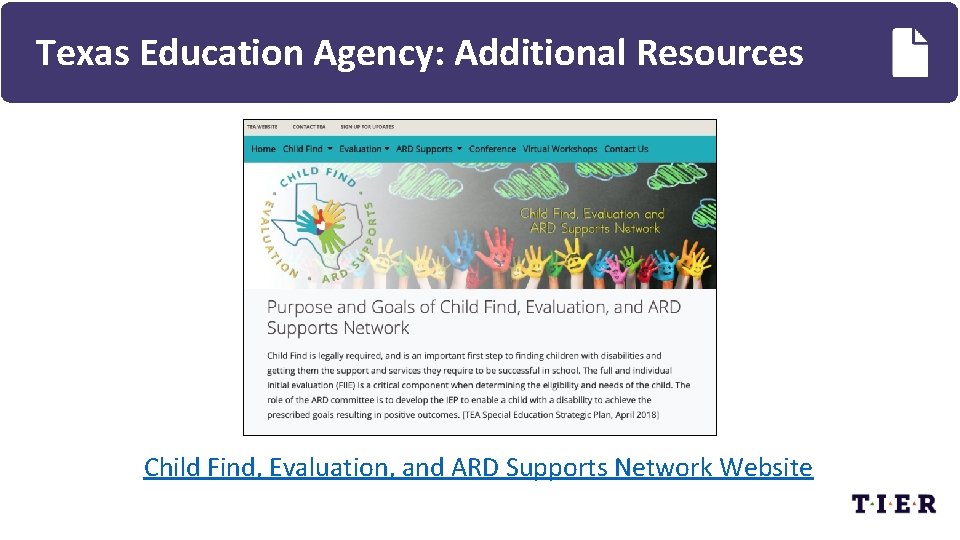
Texas Education Agency: Additional Resources Child Find, Evaluation, and ARD Supports Network Website
Additional Resources The Identification of Specific Learning Disabilities A Resource for Student Evaluation Personnel in Schools Implementing RTI Fletcher & Miciak, 2019; The Meadows Center for Preventing Educational Risk, 2018
IDEA: Question-and-Answer Resources Response to Intervention and Early Intervening Services IEPs, Evaluations, and Re-evaluations Office of Special Education and Rehabilitative Services, 2007, 2011
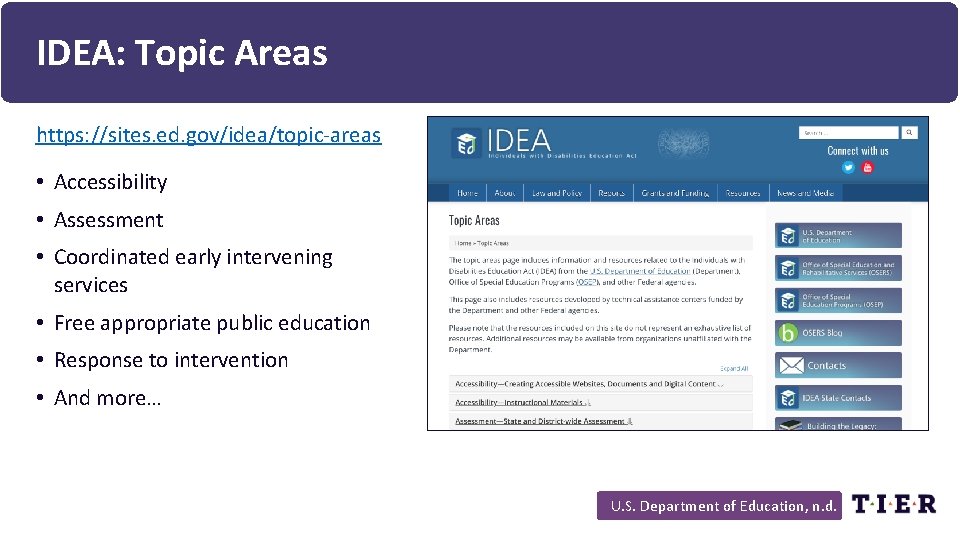
IDEA: Topic Areas https: //sites. ed. gov/idea/topic-areas • Accessibility • Assessment • Coordinated early intervening services • Free appropriate public education • Response to intervention • And more… U. S. Department of Education, n. d.
- Slides: 25