
Introduction Summary Internet overview whats a protocol network
- Slides: 5
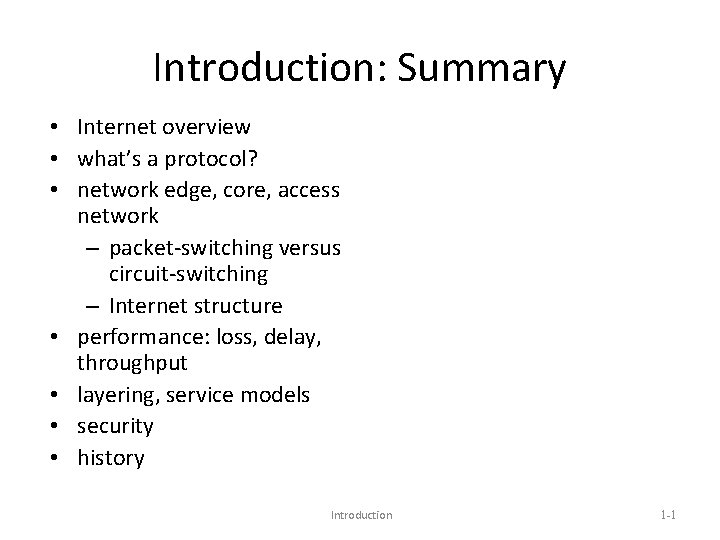
Introduction: Summary • Internet overview • what’s a protocol? • network edge, core, access network – packet-switching versus circuit-switching – Internet structure • performance: loss, delay, throughput • layering, service models • security • history Introduction 1 -1
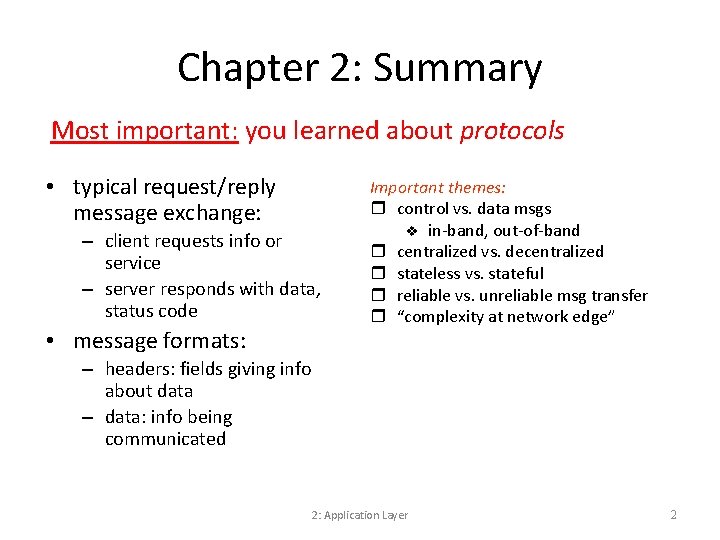
Chapter 2: Summary Most important: you learned about protocols • typical request/reply message exchange: – client requests info or service – server responds with data, status code • message formats: Important themes: r control vs. data msgs v in-band, out-of-band r centralized vs. decentralized r stateless vs. stateful r reliable vs. unreliable msg transfer r “complexity at network edge” – headers: fields giving info about data – data: info being communicated 2: Application Layer 2
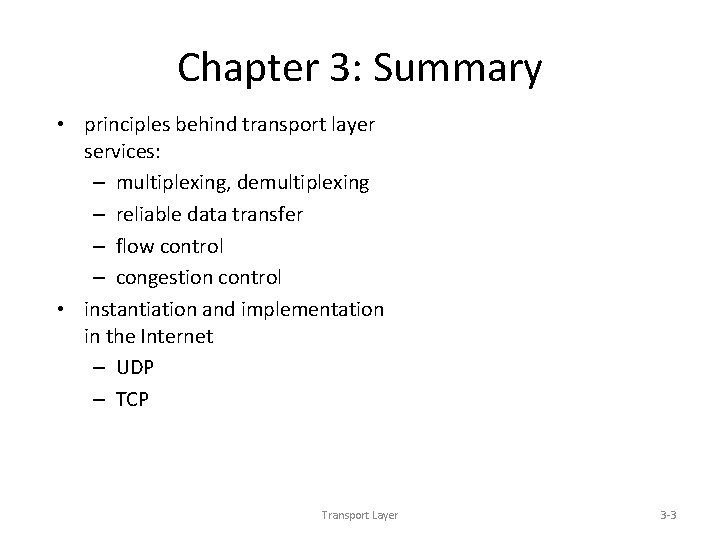
Chapter 3: Summary • principles behind transport layer services: – multiplexing, demultiplexing – reliable data transfer – flow control – congestion control • instantiation and implementation in the Internet – UDP – TCP Transport Layer 3 -3
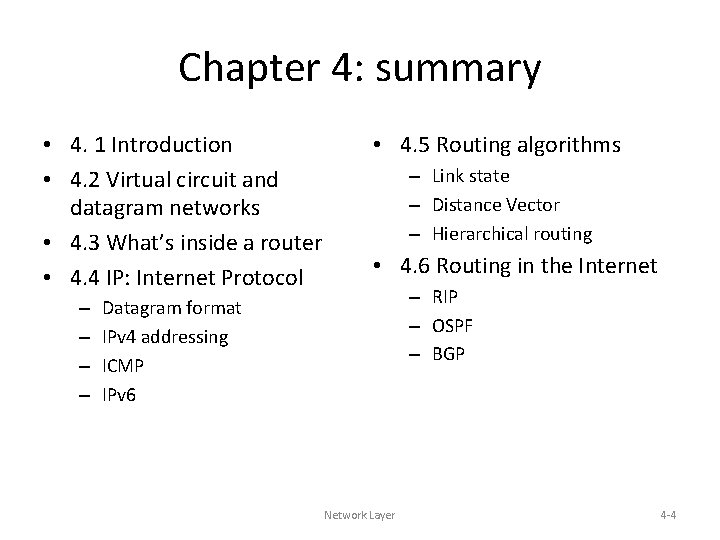
Chapter 4: summary • 4. 1 Introduction • 4. 2 Virtual circuit and datagram networks • 4. 3 What’s inside a router • 4. 4 IP: Internet Protocol – – • 4. 5 Routing algorithms – Link state – Distance Vector – Hierarchical routing • 4. 6 Routing in the Internet – RIP – OSPF – BGP Datagram format IPv 4 addressing ICMP IPv 6 Network Layer 4 -4
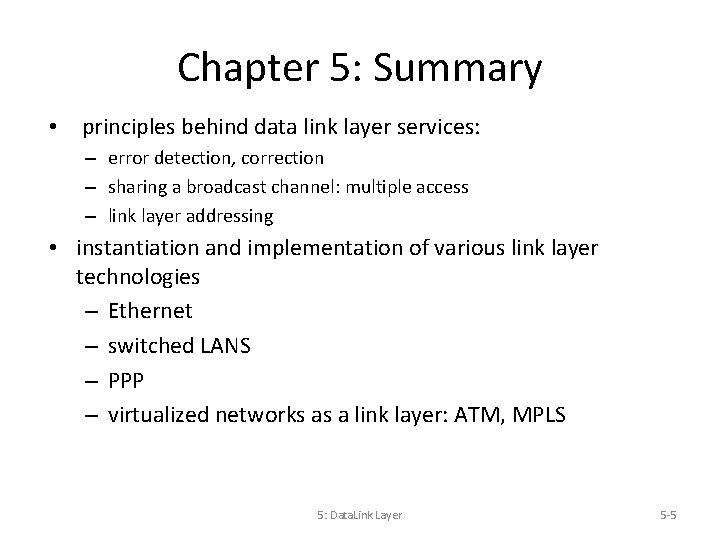
Chapter 5: Summary • principles behind data link layer services: – error detection, correction – sharing a broadcast channel: multiple access – link layer addressing • instantiation and implementation of various link layer technologies – Ethernet – switched LANS – PPP – virtualized networks as a link layer: ATM, MPLS 5: Data. Link Layer 5 -5