
Introduction stages and steps of participatory rangeland management
- Slides: 13
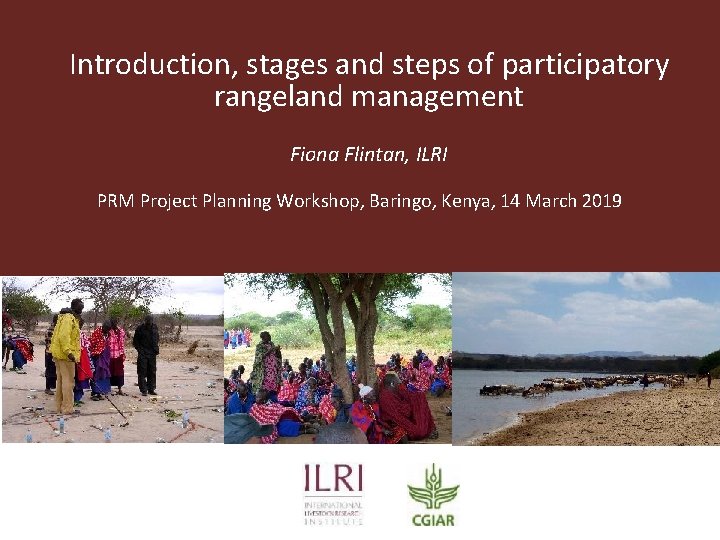
Introduction, stages and steps of participatory rangeland management Fiona Flintan, ILRI PRM Project Planning Workshop, Baringo, Kenya, 14 March 2019 Right click and open hyperlink to download pictures
History 1994 Participatory forest management 2010 Publication of introductory guidelines 2010 Piloting of PRM in Ethiopia 2014 Upscaling – 5. 6 million hectares (PRIME)
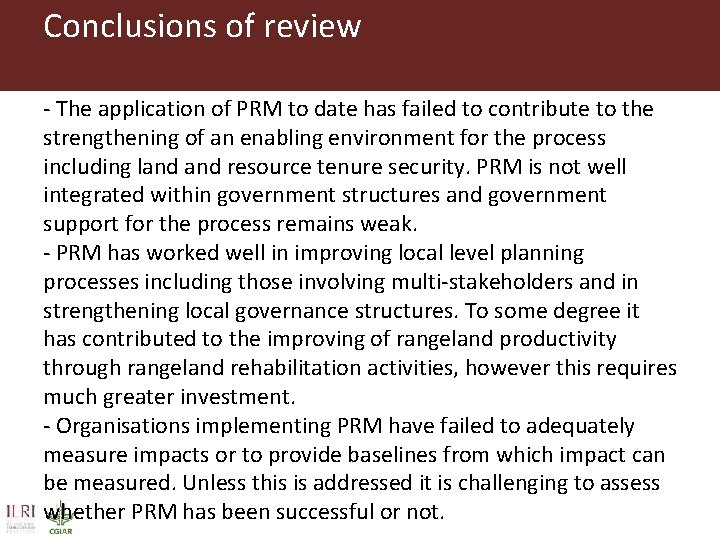
Conclusions of review - The application of PRM to date has failed to contribute to the strengthening of an enabling environment for the process including land resource tenure security. PRM is not well integrated within government structures and government support for the process remains weak. - PRM has worked well in improving local level planning processes including those involving multi-stakeholders and in strengthening local governance structures. To some degree it has contributed to the improving of rangeland productivity through rangeland rehabilitation activities, however this requires much greater investment. - Organisations implementing PRM have failed to adequately measure impacts or to provide baselines from which impact can be measured. Unless this is addressed it is challenging to assess whether PRM has been successful or not.
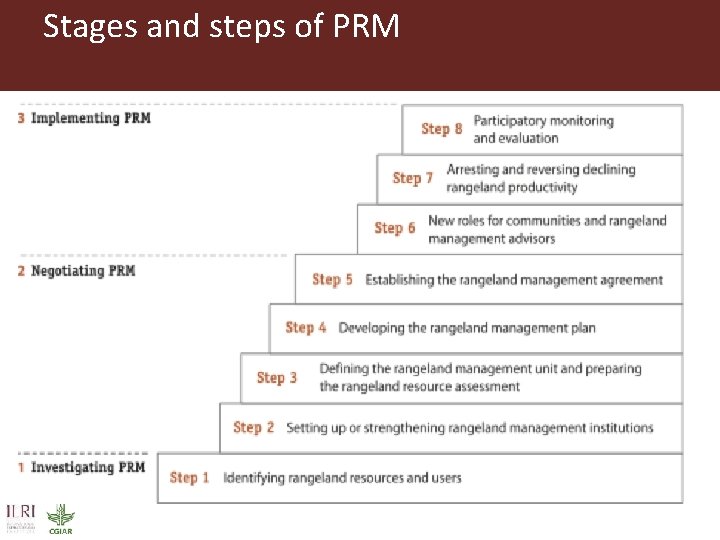
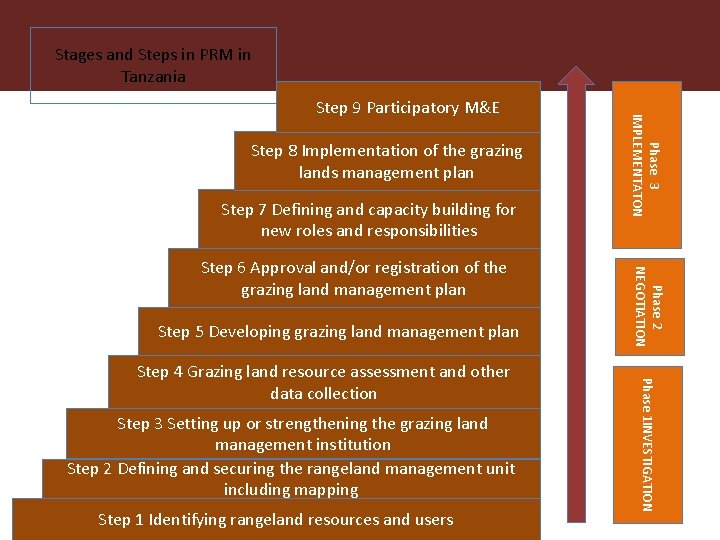
Stages and steps of PRM
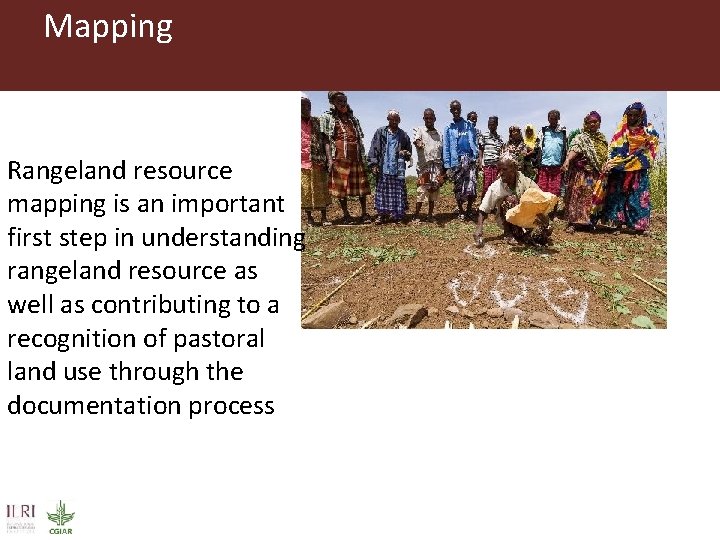
Mapping Rangeland resource mapping is an important first step in understanding rangeland resource as well as contributing to a recognition of pastoral land use through the documentation process
Summary of process in Ethiopia • Mapping and rangeland resource assessment • Establishment of Rangeland Management Council • Development of Rangeland Management Plan • Signing of Rangeland Management Agreement • Limited implementation
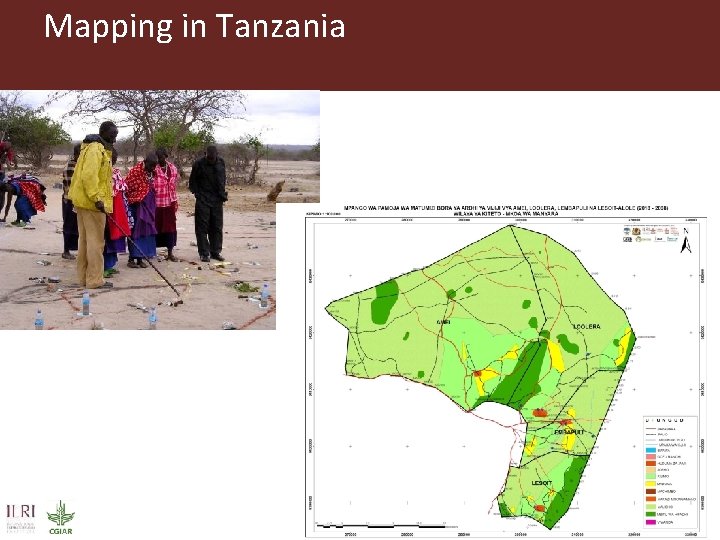
Mapping in Tanzania
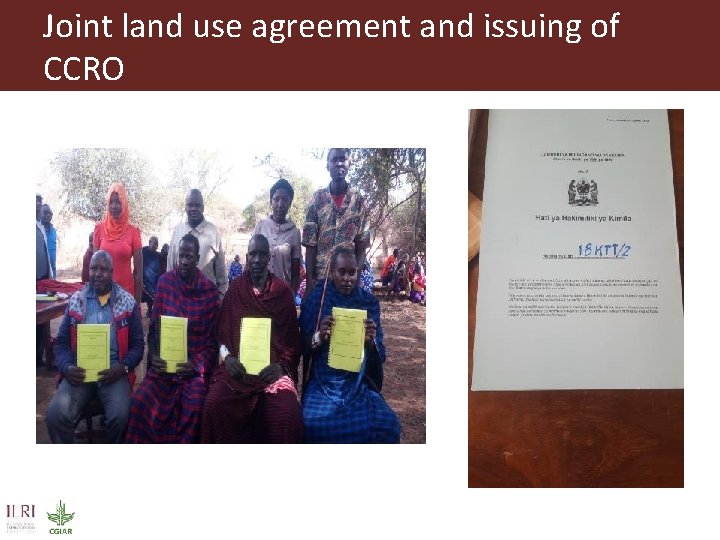
Summary of process in Tanzania • Mapping of rangeland resources (and rangeland resource assessment) • Village council, grazing committee, Village land use planning/joint village land use planning; • Livestock keepers association established and issuing of Certificate of Customary Rights of Occupancy • Need to do Rangeland Management Plan • Need to implement RMP
Joint land use agreement and issuing of CCRO
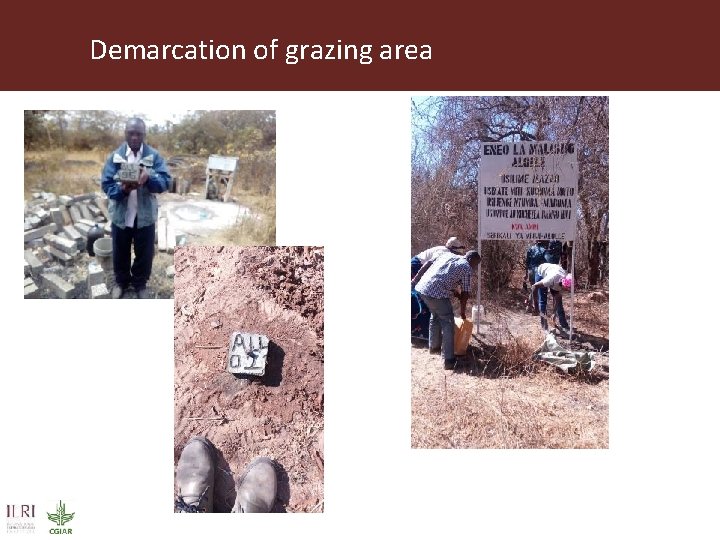
Demarcation of grazing area
Stages and Steps in PRM in Tanzania Step 8 Implementation of the grazing lands management plan Step 7 Defining and capacity building for new roles and responsibilities Step 5 Developing grazing land management plan Step 3 Setting up or strengthening the grazing land management institution Step 2 Defining and securing the rangeland management unit including mapping Step 1 Identifying rangeland resources and users Phase 1 INVESTIGATION Step 4 Grazing land resource assessment and other data collection Phase 2 NEGOTIATION Step 6 Approval and/or registration of the grazing land management plan Phase 3 IMPLEMENTATON Step 9 Participatory M&E
Acknowledgements This work is financed by ILC, WRI, PIM-CRP Flagship 5 on land governance It contributes to the CGIAR Research Program on Livestock Agrifood Systems and the Program on Policies, Institutions and Markets
better lives through livestock ilri. org ILRI thanks all donors and organizations who globally supported its work through their contributions to the CGIAR system This presentation is licensed for use under the Creative Commons Attribution 4. 0 International Licence.